Reviewed · TICKETS
Brussels: Entry Ticket to Mini-Europe
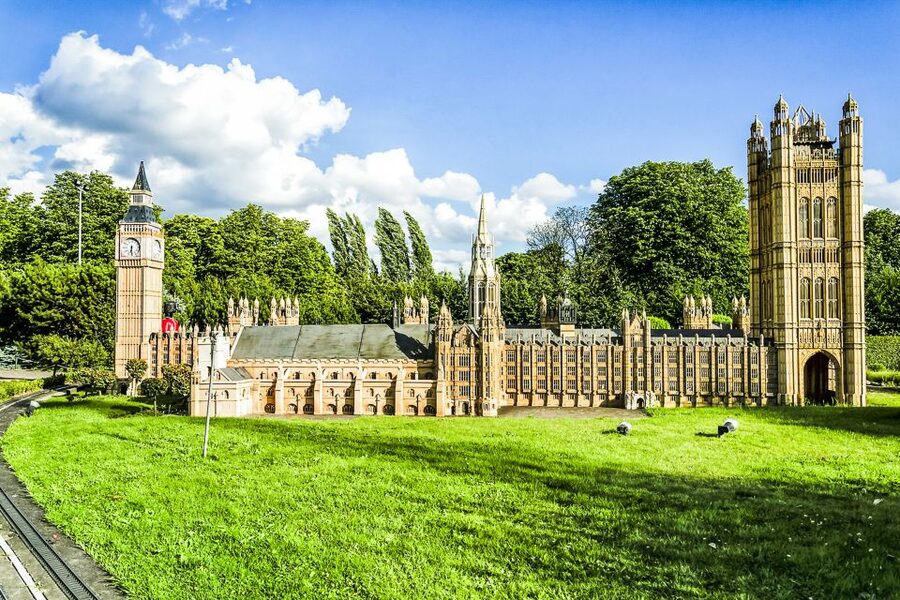
Small buildings, big fun. Mini-Europe turns a walk through Brussels into a quick tour of the continent, with around 350 miniature monuments, moving displays, sound effects, and short history lessons along the way. You can see Big Ben, the Eiffel Tower, Grand-Place, the Acropolis, Kinderdijk windmills, and the Doge’s Palace without leaving Bruparck.
I especially like the careful craftsmanship of the models and the way the park rewards slow looking. I also like the interactive buttons and live-action scenes, which give children something to do while adults study the architecture. The main drawback is the amount of walking and the limited shade, so you should allow more time than a quick photo stop and bring protection on a sunny day.
In This Review
- Key points at a glance
- What your $23 ticket actually gives you
- Starting at Bruparck beside the Atomium
- The models reward careful looking
- From the Acropolis to Kinderdijk
- Push the buttons and make Europe move
- The Spirit of Europe is worth saving for last
- How long should you allow?
- Family-friendly, but not only for children
- Where Mini-Europe falls short
- Practical planning for a smoother visit
- Should you book Mini-Europe?
- FAQ
- Where is Mini-Europe located?
- How long is the Mini-Europe ticket valid?
- How much does admission cost?
- Are children under a certain height free?
- Is a guide included?
- Is Mini-Europe wheelchair accessible?
- What should I bring?
- Are pets, skateboards, or skates allowed?
Key points at a glance
- Around 350 monuments: See major European buildings and landmarks gathered in one open-air park.
- Big scale in small form: Big Ben reaches 4 meters, while the Eiffel Tower rises 13 meters above the park.
- Hands-on displays: Trigger the Vesuvius eruption, launch the Ariane rocket, operate windmills, and activate other scenes.
- A useful EU finale: The indoor Spirit of Europe section uses games, quizzes, models, and music to explain the European Union.
- Plan for 90 minutes to 2 hours: You can rush through in 15 or 20 minutes, but that means skipping much of the detail.
- Easy family value: Children under 115 centimeters do not need a ticket, and the site is wheelchair accessible.
What your $23 ticket actually gives you
At about $23 per person, Mini-Europe is not the cheapest short attraction in Brussels. Its value depends on how you use it. If you race through the paths and take only a few pictures, the price may feel high. If you spend 90 minutes to two hours examining the models, operating the displays, and reading the guidebook, the ticket becomes much easier to justify.
Your admission includes a multilingual guidebook, which adds useful background to the monuments. You do not get a personal guide, so the booklet and signs provide the interpretation. That suits independent visitors who like to set their own pace, but anyone wanting a detailed spoken explanation should know that this is a self-guided visit.
The ticket is valid for one day, with entry times depending on availability. Skip-the-ticket-line access saves time at the entrance, although you still need to go to ticket control at Mini-Europe in Bruparck. Bring a passport or identity card, as this is listed among the required items.
A 4.5 rating from 2,870 ratings reflects the attraction’s broad appeal. The strongest points are consistent: the models look impressively lifelike, the park contains more walking than expected, and the displays work well for both children and adults.
More things to do in Brussels:
- Brussels: Atomium Entry Ticket with Design Museum Ticket
★ 4.4 · 9,254 reviews - From Brussels: Guided Day Trip to Bruges and Ghent
★ 4.6 · 8,353 reviews - From Brussels: Bruges & Ghent Day Tour – 2 Fairytale Cities
★ 4.7 · 8,242 reviews
Starting at Bruparck beside the Atomium
Mini-Europe is in Bruparck, the recreation area beside Brussels’ Atomium. You begin at the park’s ticket control and finish back at the same meeting point. The location makes it easy to pair Mini-Europe with other attractions in the area, and the Atomium provides a memorable reference point during your visit.
The setting also helps you plan a fuller outing. Several ratings describe spending time around the Atomium, nearby parks, and walking paths on the same day. I would avoid squeezing Mini-Europe into the final hour before an appointment. The last entrance is one hour before closing, and the park can take much longer than its compact models suggest.
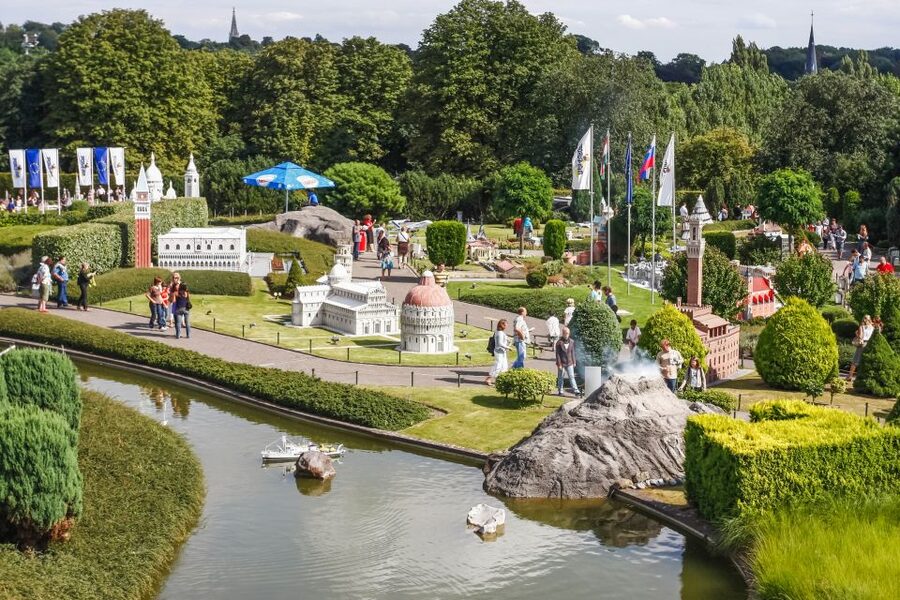
Once inside, you follow a route through Europe’s landmarks. The exact order can depend on the park layout and operating conditions, but the experience moves from one country and monument to another rather than presenting one traditional museum collection. You are walking outdoors, stopping often, and shifting between close-up model viewing and broader views across the grounds.
The models reward careful looking
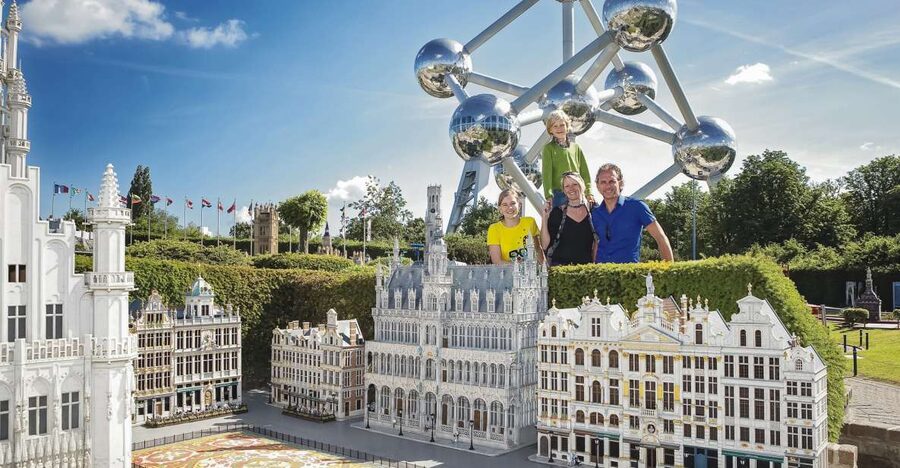
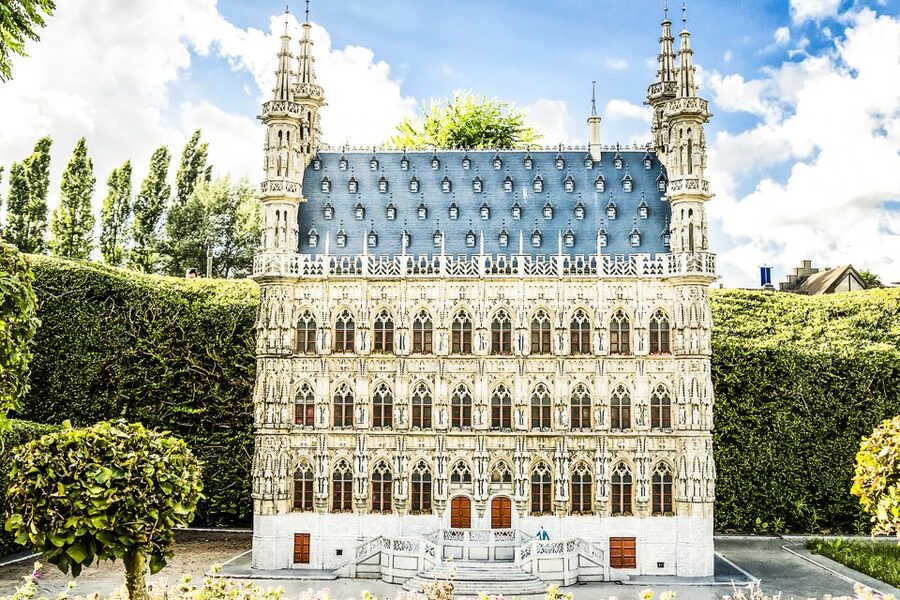
The first impression is visual, but the small details keep the visit interesting. Buildings are presented with surrounding features such as bonsai trees, flower beds, and dwarf trees. The greenery gives the models a sense of place instead of leaving them as isolated architectural blocks.
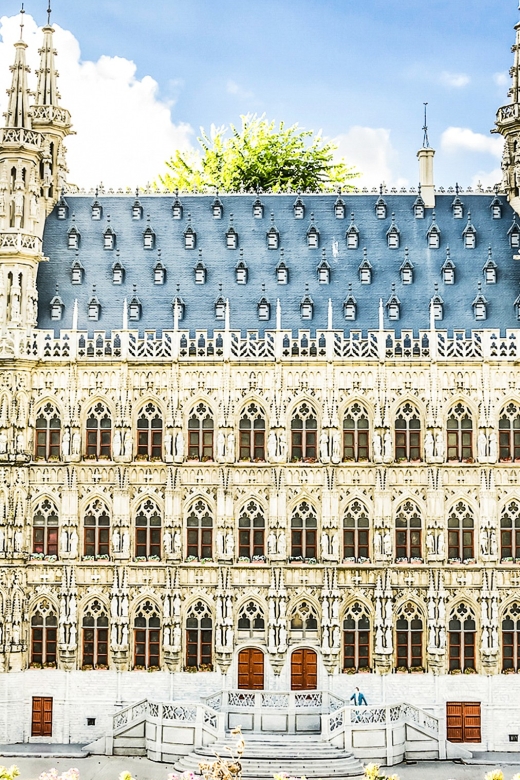
Grand-Place in Brussels receives special attention. Its statues are painted with real gold leaves, a detail that makes the miniature display more than a simple scale copy. You can compare familiar Brussels architecture with landmarks from elsewhere in Europe, which gives the visit a satisfying home-city starting point.
The proportions also make certain famous buildings surprisingly dramatic. Big Ben is about 4 meters tall, large enough to dominate its section of the park. The Eiffel Tower reaches 13 meters, making it taller than a three-story building and one of the easiest models to spot from a distance.
You may find yourself doing more than identifying famous sights. The scale invites questions about how large the original building is, how its details were reproduced, and how the surrounding city was reduced to fit the park. One useful guidebook detail is that the displayed buildings can prompt you to picture the full-size structures at roughly 25 times their model scale.
From the Acropolis to Kinderdijk
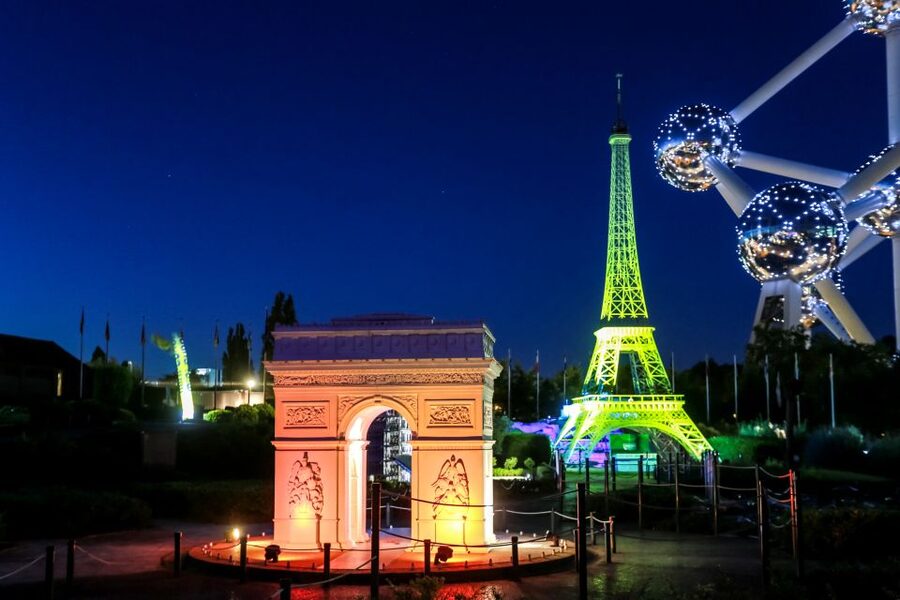
Mini-Europe works best when you treat it as a visual map of Europe rather than a checklist. Greek, Roman, Viking, and later European traditions appear across the route, alongside political changes connected to the modern European Union.
The Acropolis offers a clear link to the origins of democracy. Roman elements point to a different layer of European history, while Viking scenes bring a more playful sense of movement and adventure. These sections help children see that Europe is not just a group of pretty buildings. It is a collection of cultures, conflicts, inventions, and political changes.
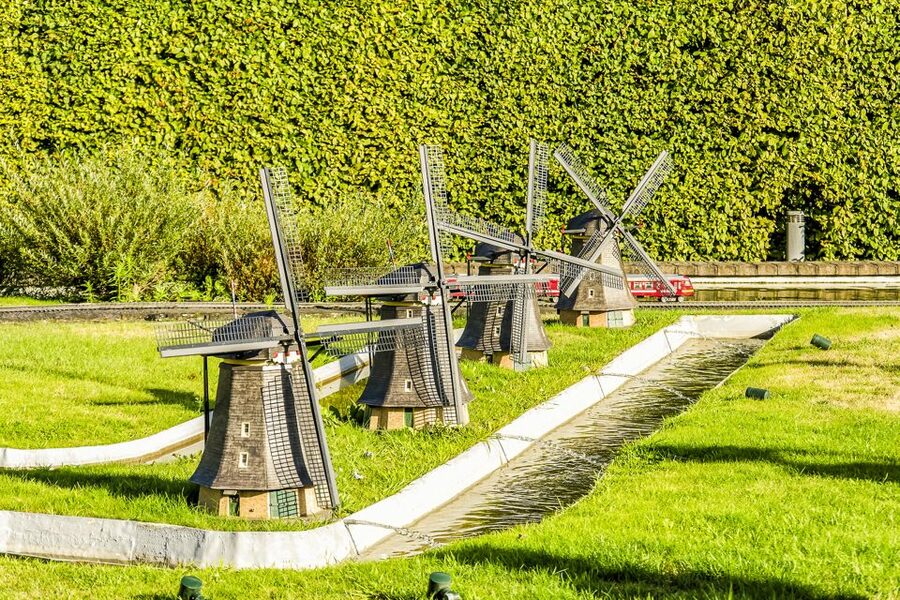
The park includes well-known landmarks such as the Doge’s Palace in Venice, where the gondolas help create the setting. Kinderdijk’s windmills are another strong example because the moving features make the Dutch display feel active rather than static. The bells of Stockholm provide sound, and national anthems can be heard at parts of the park.
Ireland is included, which may please you if you have visited the country or are hoping to go. The park’s focus is primarily on European Union countries, but the broader presentation also includes the United Kingdom and Ukraine in the Spirit of Europe section. One useful point to keep in mind is that Mini-Europe is closer to Mini-EU than a model of every part of the continent. Some European countries and landmarks may not appear.
A few more options to weigh up in Brussels
- Brussels: Train World Museum Entrance Ticket
★ 4.7 · 524 reviews - Brussels Train World Museum Entrance Ticket
★ 4.5 · 220 reviews - Brussels Autoworld Museum Entrance Ticket
★ 4.5 · 161 reviews - Brussels: LEGO® Discovery Centre Admission Ticket
★ 4.4 · 148 reviews
Push the buttons and make Europe move
The interactive features are the main reason Mini-Europe works for families. You are not only looking at models behind barriers. You can operate many of the scenes yourself, and the actions give the route a playful rhythm.
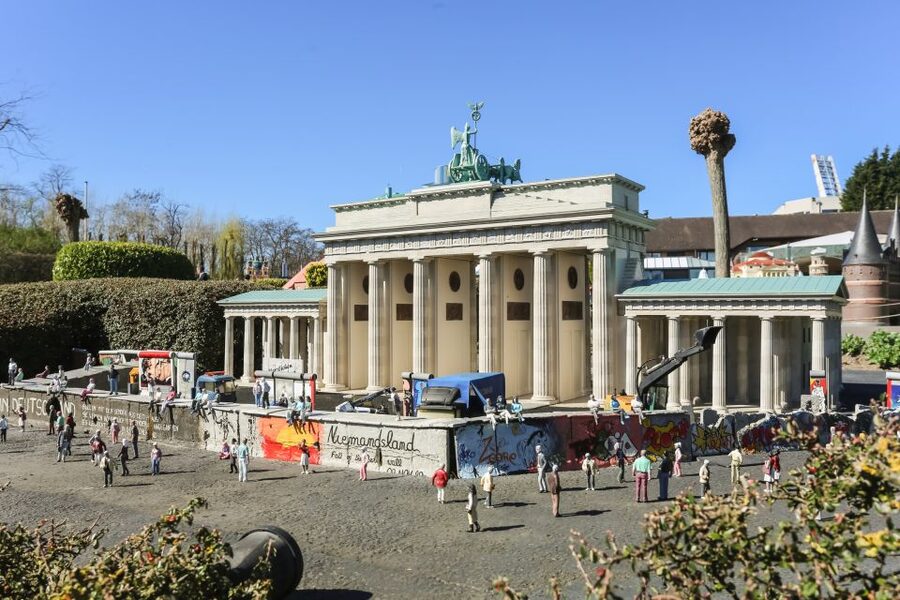
You can set off the eruption of Mount Vesuvius, launch an Ariane rocket, destroy part of the Berlin Wall, start an attack by Roman legionnaires, or frighten the Vikings. The tone is light, but the scenes connect to real events and historical themes. The Berlin Wall display, in particular, turns a major political change into something immediate and easy to understand.
Other buttons activate the bells of Stockholm or the windmills of Kinderdijk. These simple actions are effective because they give children a clear reason to stop at each model. Adults may enjoy the same displays for the engineering and small mechanical details.
The park also uses music. National anthems and other sounds add atmosphere, though the audio may not appeal to everyone if you prefer a quiet museum. Families will likely appreciate the energy. If you are mainly interested in architecture and photography, you can simply spend less time at the active displays.
The Spirit of Europe is worth saving for last
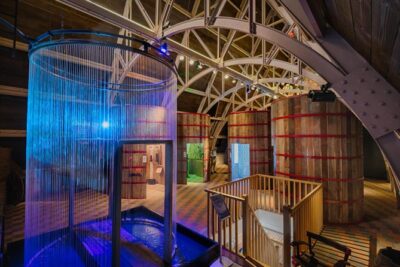
At the end of the park, the Spirit of Europe provides an indoor change of pace. This large section focuses on the 27 member states of the European Union, as well as the United Kingdom and Ukraine. It uses live-action models, games, quizzes, and other displays to test and build your understanding.
This section gives the visit more purpose than a collection of tiny landmarks. It connects the buildings you have just seen with Europe’s modern political story, including the changes of the 21st century. You can use the games to check what you know, or simply move through the displays at your own speed.
Children may enjoy the interactive challenges, while adults may appreciate the attempt to explain the EU in a direct, visual way. The educational content is not a substitute for a full history museum, but it makes a good closing chapter to the outdoor route.
Give yourself enough time to reach it without rushing. Several people have found themselves hurrying through the final section because they underestimated the size of the park or arrived too close to closing time.
How long should you allow?
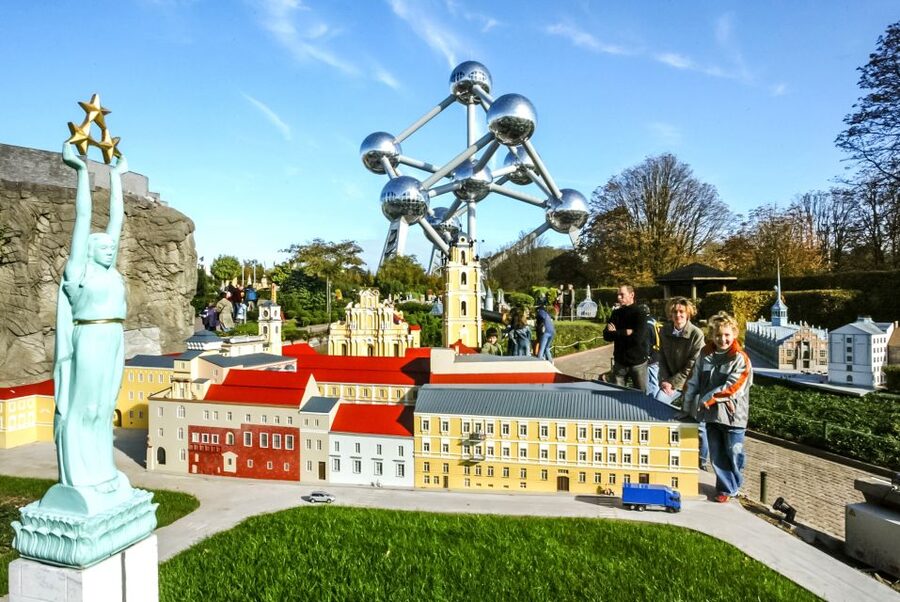
A fast visit can take 15 or 20 minutes, but that is best treated as a quick look rather than a full experience. I would plan on at least 90 minutes, and closer to two hours if you read the guidebook, stop for the interactive scenes, and take pictures.
The park is larger than the word miniature may suggest. You will walk between displays, pause to examine details, and often wait while children operate a button or animation. There are free toilets, which is a useful practical benefit during a family visit.
There is no need to follow a fixed starting time once you have entered, since the ticket is valid for one day. Still, check availability for the admission time and note the last-entry rule. Arriving earlier gives you more freedom to slow down at the models that interest you most.
Family-friendly, but not only for children
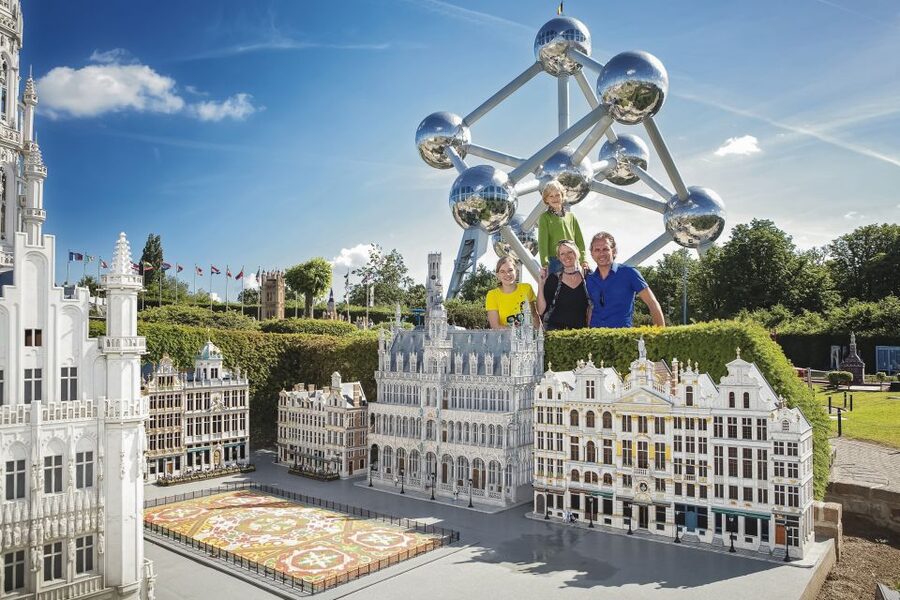
Mini-Europe is an easy choice for families because it combines recognizable buildings, movement, music, quizzes, and open-air walking. Children shorter than 115 centimeters do not require a ticket, which can reduce the total cost for families with small children.
The attraction also works well for adults. You can compare places you have already visited with places you want to see next. Seeing a familiar monument in miniature can bring back memories, while the collection may help you plan a future European trip.
I would also recommend it to first-time visitors who want a broad introduction to European architecture. It does not provide the depth of visiting the original sites, of course, but it helps you understand the range of styles and histories found across the continent.
People with limited mobility should note that the park is wheelchair accessible. The route still involves outdoor walking, so you should consider your own comfort and pace. The models are outdoors, and shade can be limited. An umbrella or sun protection is sensible on hot or bright days.
Pets, skateboards, and skates are not allowed. These rules keep the paths easier to use, especially around the interactive displays.
Where Mini-Europe falls short
The park’s main weakness is also part of its appeal: it tries to cover a huge subject in a relatively small space. Some visitors may wish for more monuments or wider coverage of Europe. The focus on EU-related countries means the name can sound broader than the actual collection.
The experience also depends on your interest in miniatures. If you prefer full-size architecture, art museums, or long historical explanations, you may find the displays too playful or brief. The guidebook supplies useful context, but you will not receive a private lecture or a detailed scholarly account of every building.
The outdoor layout can be tiring. With few shaded areas, a sunny day may make the walking feel harder than expected. A short visit is possible, but rushing reduces the value of the ticket and makes it harder to enjoy the craftsmanship.
Finally, the interactive elements are a strength, but some may be busy when families gather around them. You may need patience before you can operate a popular display.
Practical planning for a smoother visit
I would set aside two hours, especially if you are visiting with children or want good photographs. Start with the guidebook, then decide which sections deserve a closer look instead of trying to read every line at every stop.
Wear comfortable shoes. The route involves a fair amount of walking, and the park’s size surprises many people. Bring water and sun protection because shade is limited, and keep an umbrella handy if the forecast is uncertain.
Allow extra time if you are combining Mini-Europe with the Atomium or other nearby attractions. The site ends where it begins at Bruparck, making it simple to continue your day in the same area, but leaving no time between attractions gives you less room for the interactive displays.
The restaurant inside the park can also be useful during a longer visit. Keep your wallet and personal documents secure, just as you would at any busy attraction. A lost wallet was returned by restaurant staff, but it is better not to rely on luck or honesty after the fact.
Should you book Mini-Europe?
Book Mini-Europe if you want a light, visual introduction to Europe, especially if you are traveling with children, enjoy model architecture, or plan to visit the Atomium area. The combination of 350 monuments, working displays, music, and the Spirit of Europe section gives you more to do than a simple outdoor photo stop.
I would skip it if your Brussels schedule is very short and you want only full-size historic sights in the city center. The $23 price is fair when you spend 90 minutes to two hours exploring, but less convincing if you plan to hurry through.
For most families and curious adults, I think it earns its place in a Brussels itinerary. Go with time to spare, look closely at the tiny details, and save the indoor EU section for the end.
FAQ
Where is Mini-Europe located?
Mini-Europe is located at Bruparck in the Brussels area of Flanders, Belgium. The ticket-control meeting point is at Mini-Europe, and the visit ends back at the same meeting point.
How long is the Mini-Europe ticket valid?
The ticket is valid for one day. You should check availability for the available starting times.
How much does admission cost?
The listed price is $23 per person.
Are children under a certain height free?
Children shorter than 115 centimeters do not require a ticket.
Is a guide included?
A personal guide is not included. Admission includes a guidebook available in multiple languages.
Is Mini-Europe wheelchair accessible?
Yes. The attraction is wheelchair accessible.
What should I bring?
Bring a passport or identity card. Sun protection or an umbrella may also be useful because some parts of the park have limited shade.
Are pets, skateboards, or skates allowed?
No. Pets, skateboards, and skates are not allowed inside Mini-Europe.
Just added in Brussels
- Transfer from BRU Airport to Brussels city (any hotel or address)★ 5.0 · 1 review
- Standard vehicle from Brussels airport to city of Antwerp★ 5.0 · 4 reviews
- Standard Minivan from Brussels airport to city of Antwerp★ 5.0 · 1 review
- Private transfer from BRU Airport – Brussels GO BACK MB V-CLASS 7 PAX★ 5.0 · 2 reviews
- Private transfer from Brussels Airport to Brussels city Business car★ 5.0 · 1 review
- Transfer Brussels Airport -> Antwerp MB V-CLASS 7 PAX★ 5.0 · 1 review
- Private transfer from BRU Airport to Bruges with Mercedes V class 7 pax★ 5.0 · 1 review
- Private transfer from BRU Airport to Bruges with luxury limousine 3 pax★ 5.0 · 1 review
Tickets, compared.
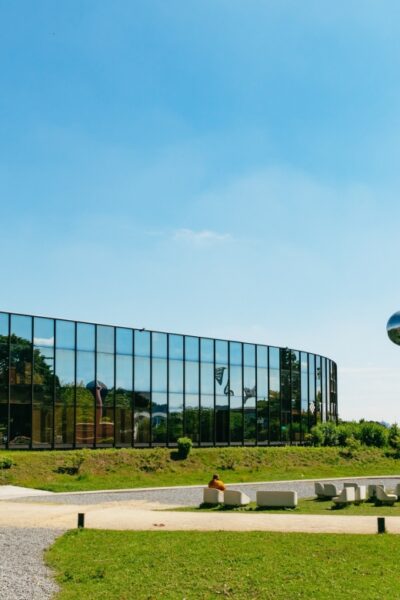
Atomium Entry Ticket with Design Museum Ticket
Read our review →