Reviewed · CITY TOURS
Brussels: Private Tour of the Upper and Lower City
Brussels reveals itself in layers. This private tour links the Lower City and Upper City, so you can follow the capital’s growth from river island and market square to cathedral, palace, museums, and elegant Sablon streets. It is a useful way to get your bearings fast while hearing how Brussels developed.
I like the route’s strong sense of place, especially the run from Grand Place to Saint-Géry and the Royal Galleries. I also like the chance to shape the guide’s style around your group, from entertaining to academic. The main consideration is pace: three hours covers a lot, and museum visits are mostly optional or outside the price.
In This Review
- Key points to know before booking
- Why the Upper and Lower City idea works
- Starting at Grand Place in the Lower City
- Saint-Géry and the old river setting
- De Brouckère, Monnaie, and the opera house
- Finishing the Lower City at the Royal Galleries
- Climbing toward the Upper City
- Royal Park and Place des Palais
- Museums, Magritte, and the arts quarter
- Petit Sablon and Grand Sablon
- What the private format is worth at $353
- Guides, languages, and the human side
- Who should book this Brussels walk?
- Should you book it?
- FAQ
- Where does the tour begin?
- How long does the tour last?
- What are the main Lower City sights?
- What are the main Upper City sights?
- Are museum tickets included?
- Are food and drinks included?
- Is transportation included?
- What languages are available?
- Is the tour wheelchair accessible?
Key points to know before booking
- Two-part Brussels route: See the Lower City’s squares, opera house, galleries, and famous landmarks, then climb to the Upper City’s cathedral, palace district, museums, and Sablon.
- Private guide for your group: The price is $353 per group of up to 20, with the practical information allowing groups of up to 25, so confirm the exact limit when booking.
- A useful first-day orientation: The tour connects major sights in a logical order, making it easier to plan later visits on your own.
- Local subjects beyond buildings: Ask about Art Nouveau, Belgian beer, chocolate, and the cultural life of Brussels.
- Museum choices are flexible: You may visit the Musical Instruments Museum or pass by the Magritte Museum and Palace of Fine Arts, but museum tickets are not included.
- Pickup and language flexibility: Hotel pickup in Brussels is possible, and guides are available in English, French, Dutch, German, Spanish, Italian, Russian, and Portuguese.
Why the Upper and Lower City idea works
Brussels can feel scattered at first. Grand Place, the cathedral, the royal district, the museums, Saint-Catherine, and Sablon are all central, but they do not form one simple straight line. This tour gives those places a framework.
The Lower City is the older commercial and working part of the center, with streets and squares connected to the Senne river. The Upper City brings you toward government, royalty, grand cultural buildings, and wealthy residential districts. You are not just ticking off monuments. You are seeing how geography and power shaped Brussels.
That structure is the tour’s best feature. A guide can point out why the city rises from the lower center toward the palace and museum quarter, then connect architecture to Belgian politics, art, food, and daily life.
The private format matters here. Your guide can spend more time on Art Nouveau if that interests you, or focus on beer, chocolate, architecture, or civic history. The itinerary can be adjusted for an entertaining, academic, or professional style, which makes this more adaptable than a fixed group walk.
More things to do in Brussels:
- Brussels: Atomium Entry Ticket with Design Museum Ticket
★ 4.4 · 9,254 reviews - From Brussels: Guided Day Trip to Bruges and Ghent
★ 4.6 · 8,353 reviews - From Brussels: Bruges & Ghent Day Tour – 2 Fairytale Cities
★ 4.7 · 8,242 reviews
Starting at Grand Place in the Lower City
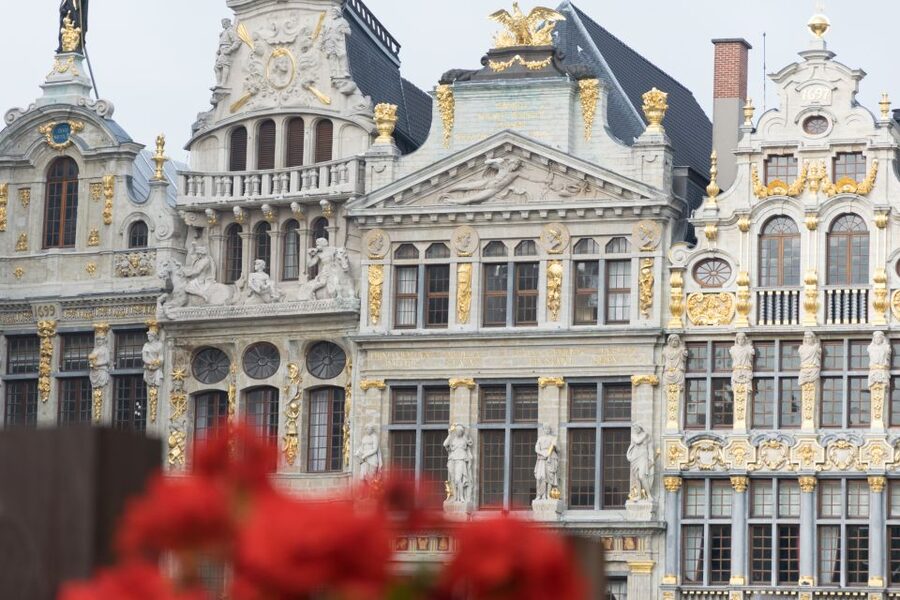
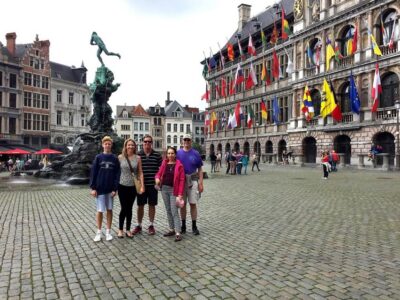
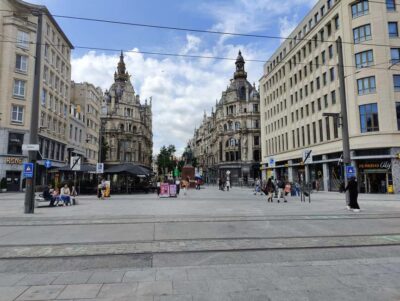
Grand Place is the natural starting point. This broad central square gathers some of Brussels’ most impressive historic buildings into one view, and it gives you an immediate sense of the city’s ceremonial side.
Your guide will use the square to explain the origins and development of Brussels before leading you onward. That opening context is useful because the rest of the Lower City route can otherwise feel like a string of attractive but disconnected stops.
From Grand Place, you head to Manneken Pis. The small bronze boy is one of Brussels’ best-known symbols, and its fame far exceeds its size. Expect a quick stop rather than a major monument visit. The value here is in the story, the local affection for the statue, and the contrast between its modest scale and the grand architecture nearby.
This is also a good moment to ask your guide about Belgian chocolate and beer. Both subjects fit naturally into a walk through the historic center, and they can turn a standard sightseeing route into a more useful introduction to Belgian culture. Drinks and food are not included, so plan to buy them separately if you want a taste along the way.
Saint-Géry and the old river setting
The route continues toward Saint-Géry island, once the largest island in the Senne river. That detail gives you a glimpse of an earlier Brussels, before modern changes altered the river and central city.
Saint-Géry helps explain why Brussels developed where it did. It is not simply another pretty quarter. Its connection to the Senne gives the city a physical starting point, and a guide can make that origin clearer than a quick walk through the streets alone.
You may find this part more rewarding if you enjoy urban history rather than only famous photo stops. The tour is at its best when it explains how a city works, not just what a building is called.
The walk then reaches Saint Catherine Square. The square adds another change of mood, with its connection to the old harbor area and a more open urban setting than the narrow streets around Grand Place. Since the itinerary covers several districts in a short time, listen for the links between them. Those transitions are where the private guide can add the most value.
De Brouckère, Monnaie, and the opera house
De Brouckère Square and Monnaie Square bring you into a part of Brussels shaped by theaters, shopping, public space, and city life. These are not merely stops for photographs. They show how the center changed as Brussels grew into a major Belgian capital.
A major highlight is the federal opera house of Belgium. The building adds cultural weight to the Lower City portion and gives your guide a chance to discuss performance, public life, and national identity.
This stretch may appeal most to travelers who enjoy architecture and city culture. If you prefer a slower visit inside each monument, the schedule may feel tight. The tour is designed to connect places and explain them, not to provide long interior visits at every stop.
That distinction is important. You receive a professional guide, but transport, museum admission, food, and drinks are extra. The price pays mainly for private guiding and a tailored route, not for a package of tickets.
More city tours in Brussels:
- Brussels: City Highlights Walking and Tasting Tour
★ 4.9 · 505 reviews - Brussels: City Highlights and Hidden Gems Bike Tour
★ 4.8 · 344 reviews - From Brussels: Guided Antwerp City Tour
★ 4.3 · 177 reviews - Brussels: City Center Guided Food Tour with Tastings
★ 4.8 · 174 reviews
Finishing the Lower City at the Royal Galleries
The Lower City section ends at the Saint-Hubert Royal Galleries, a group of glazed shopping arcades. Their covered design makes them a pleasant stop in uncertain weather, and the architecture gives the route a polished finish.
The galleries also show another side of Brussels. After public squares, river history, statues, and an opera house, you reach a place tied to shopping, display, and city life. Look up as you walk. The glass roof and decorative details are central to the experience.
This is a good place to pause and ask about Art Nouveau, even though the galleries themselves are not the whole story of that movement. Brussels is strongly associated with Art Nouveau, and a private guide can point out how the city’s architecture developed across different periods.
The first half of the route gives you a clear sequence: origin near the river, civic center at Grand Place, commercial districts, cultural buildings, and elegant arcades. That sequence is more useful than a random list of landmarks.
Climbing toward the Upper City
The Upper City section starts again at Grand Place and heads uphill. The repeated starting point is practical because it divides the experience into two recognizable sections, though it can feel slightly repetitive if both parts happen close together.
The climb leads to the Cathedral of St. Michael and St. Gudula. Inside, you can admire the stained-glass windows. This is one of the tour’s most worthwhile interior moments because it offers a change from street-level sightseeing and gives you time to look at the building’s details.
The cathedral also marks the shift from the lower commercial center to the grander Upper City. Your guide can connect religious architecture with Brussels’ political and cultural development, helping you understand why this part of the city feels different.
The route is wheelchair accessible, but any uphill city walk can still make pace and comfort important. If someone in your group needs a slower rhythm, mention it when arranging the private tour. The itinerary can be adapted to suit group needs and interests, within the time available.
Royal Park and Place des Palais
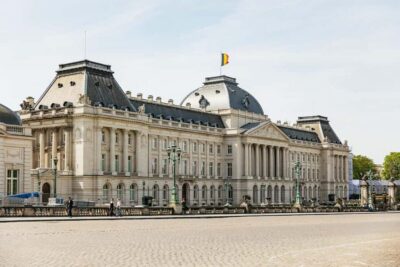
From the cathedral, you continue toward Place des Palais, the area of the royal park and palace. This section gives you a view of Brussels as a national capital, with ceremonial space and royal associations replacing the older market and river setting.
The royal park offers breathing room after the tighter streets of the historic center. Place des Palais helps you see the scale of the city’s official quarter, while the palace adds a direct link to Belgium’s monarchy and public institutions.
You should not expect a full palace visit based on the information provided. The route takes you to the area, and the focus is on seeing and understanding the district. Ask your guide what is open during your visit if entering a royal building matters to you.
This portion is especially useful for first-time visitors who want a broad picture of Brussels. In one morning or afternoon, you can move from medieval urban origins to the institutions of modern Belgium.
Museums, Magritte, and the arts quarter
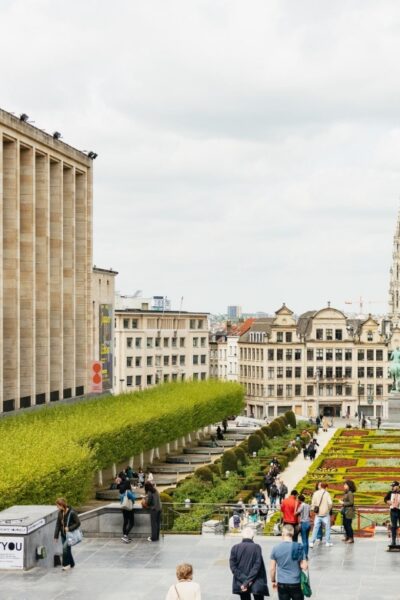
The itinerary gives you a choice around the museum district. You may visit the Musical Instruments Museum, or pass by the Magritte Museum and the Palace of Fine Arts before continuing to Sablon.
The Musical Instruments Museum is a particularly appealing option if you enjoy unusual collections and visual architecture. It gives the Upper City section a cultural focus beyond churches and royal buildings. Museum admission is not included, so budget separately for any entry.
Passing by the Magritte Museum and Palace of Fine Arts may suit a group that wants to keep moving or has limited interest in indoor collections. It also leaves you with a useful list of places to return to independently.
This flexibility is one of the private tour’s better features. You are not forced to spend the same amount of time at each sight. Tell the guide in advance if your priority is art, architecture, Belgian history, photography, or food culture.
Because the total duration is three hours, clarify how the Lower and Upper City sections will be timed. The description presents the Upper City as an afternoon continuation, but the stated duration is three hours. Confirm the start time and whether both portions are completed in one continuous tour.
Petit Sablon and Grand Sablon
The route finishes at Petit Sablon and Grand Sablon, two of Brussels’ most attractive squares. This is a fitting end because the area brings together gardens, sculpture, fine architecture, shops, and the city’s long connection with art and luxury goods.
Petit Sablon offers a more composed setting than the crowded central streets. Grand Sablon gives you a final look at one of Brussels’ refined historic quarters. Depending on your guide’s emphasis, this is a natural place to return later for chocolate shops, antiques, cafés, or additional architecture.
The Sablon area also makes a practical endpoint. You finish near several cultural and food-related interests rather than ending at an isolated transport point. Transport is not included, but hotel pickup in Brussels is possible at the start, so confirm the exact pickup arrangement when booking.
What the private format is worth at $353
The listed price is $353 per group of up to 20 people. That can be fair value for a large family, corporate group, or party of friends because the cost is shared rather than charged separately per person.
For two people, the price is much harder to justify if you only want a quick introduction to Grand Place and Manneken Pis. For a larger group, the private guide, language choice, hotel pickup option, and flexible focus become more meaningful.
The information also says tours are limited to 25 participants, while the price description specifies up to 20. That difference is worth checking before you pay. Ask how many people your booking covers and what happens if your group is larger.
The tour does not include museum tickets, transportation, meals, or drinks. This keeps the arrangement simple, but your final budget will be higher if you add the Musical Instruments Museum or stop for Belgian specialties.
I see the strongest value in the guide’s interpretation. The route covers many major areas, but a guide who adjusts the talk to your interests can save you planning time and help you decide which places deserve a return visit.
Guides, languages, and the human side
The guide is the experience. A strong guide can make a short city walk feel connected and memorable, while a weak one can turn a good route into a list of names.
The feedback includes specific praise for Mr. Boeykens, who was described as friendly, informative, and effective at keeping the group engaged despite cold weather. Another verified booking praised Emil for finding a good balance between the different periods of the city’s development.
Those details suggest the tour’s most praised quality is the guide’s ability to mix chronology with personality. That balance matters in Brussels, where medieval foundations, royal spaces, museums, beer culture, chocolate, and Art Nouveau all sit close together.
Guiding is available in English, French, Dutch, German, Spanish, Italian, Russian, and Portuguese. If language is important to your group, select it clearly at booking and use the private format to request the style you prefer.
The overall rating is 4.3 from 33 reviews, which points to a generally positive experience without suggesting that every tour is identical. Guide quality, weather, group interests, and the amount of time spent inside museums can shape your day.
Who should book this Brussels walk?
I would recommend it most for first-time visitors, families, small companies, and groups with mixed interests. You can see the city’s main quarters while asking for different levels of detail, and the route gives you a sensible map for the rest of your stay.
It also suits people who want a guide in a language other than English, or who prefer a professional, academic, or entertaining approach. The hotel pickup option can be useful if you are still finding your way around Brussels.
I would be more cautious if you want extensive museum time, a food tasting, included admissions, or a slow architectural study. Those are not built into the price. You may get more from the tour by treating it as an orientation walk, then returning to your favorite museum or neighborhood afterward.
The three-hour schedule also deserves attention. The route is ambitious, and the Upper City portion includes several major sights. Wear comfortable shoes, allow time for the uphill section, and tell the guide what matters most before the tour begins.
Should you book it?
Book this tour if you want a private introduction to Brussels that connects the Lower City’s river origins and central squares with the Upper City’s cathedral, palace district, museums, and Sablon. The flexible style, wide language choice, and guide-led storytelling are the main reasons to choose it.
Skip it if your priority is a long museum visit, included food and beer, or a low-cost walk for one or two people. For a larger group, the $353 group price can make good sense. For a small party, compare it with a shorter shared walk and use the savings for museum tickets and chocolate.
FAQ
Where does the tour begin?
The tour begins in the Lower City at Grand Place. Hotel pickup in Brussels is possible, so confirm the arrangement when booking.
How long does the tour last?
The stated duration is three hours. The route covers both the Lower City and Upper City, so confirm how the two sections are scheduled.
What are the main Lower City sights?
The Lower City route includes Grand Place, Manneken Pis, Saint-Géry island, Saint Catherine Square, De Brouckère Square, Monnaie Square, the federal opera house, and the Saint-Hubert Royal Galleries.
What are the main Upper City sights?
The Upper City route includes the Cathedral of St. Michael and St. Gudula, Place des Palais, the royal park and palace area, the Musical Instruments Museum or nearby museum sights, Petit Sablon, and Grand Sablon.
Are museum tickets included?
No. Tickets to museums are not included in the tour price.
Are food and drinks included?
No. Meals and drinks are not included.
Is transportation included?
No. Transport is not included, although pickup from a Brussels hotel is possible.
What languages are available?
Guiding is available in Spanish, Dutch, English, French, German, Italian, Russian, and Portuguese.
Is the tour wheelchair accessible?
Yes. The activity is described as wheelchair accessible. Because part of the route goes uphill, discuss any mobility needs when arranging the private tour.
Just added in Brussels
- Transfer from BRU Airport to Brussels city (any hotel or address)★ 5.0 · 1 review
- Standard vehicle from Brussels airport to city of Antwerp★ 5.0 · 4 reviews
- Standard Minivan from Brussels airport to city of Antwerp★ 5.0 · 1 review
- Private transfer from BRU Airport – Brussels GO BACK MB V-CLASS 7 PAX★ 5.0 · 2 reviews
- Private transfer from Brussels Airport to Brussels city Business car★ 5.0 · 1 review
- Transfer Brussels Airport -> Antwerp MB V-CLASS 7 PAX★ 5.0 · 1 review
- Private transfer from BRU Airport to Bruges with Mercedes V class 7 pax★ 5.0 · 1 review
- Private transfer from BRU Airport to Bruges with luxury limousine 3 pax★ 5.0 · 1 review