
Reviewed · WALLONIA TOURS
Mons : The Van Gogh House
Van Gogh began here, before fame. In Cuesmes, a small municipality in the Mons region, you can visit the modest house where Vincent van Gogh lived and worked between 1879 and 1880. This was a turning point: he arrived as a preacher and began moving toward art.
I like the authentic setting, where the house and garden help you picture Van Gogh’s early life. I also like the focused price, just $5 per person, which makes this an easy addition to a day in the Mons area. The main drawback is the scale: the house is small, information is limited in places, and there is no live guide included.
The visit is best for anyone who already knows a little about Van Gogh and wants to understand his beginnings. If you expect a large museum packed with paintings, you may leave wanting more. If you want a quiet place tied directly to his early years, this modest stop has real value.
In This Review
- Key points before you go
- Why Cuesmes matters in Van Gogh’s story
- Starting in the garden at the Van Gogh House
- The renovated pavilion adds the main introduction
- Inside the small modernized house
- The audio presentation puts Van Gogh in context
- What the $5 admission is really worth
- Getting to Cuesmes without a tour bus
- Who will enjoy this visit most?
- How to fit it into a Mons day
- Booking, timing, and practical cautions
- Should you book the Van Gogh House?
- FAQ
- Where is the Van Gogh House located?
- How much does admission cost?
- How long is the experience?
- Is a guided tour included?
- What languages are available?
- Can I cancel my booking?
- Can I reserve without paying immediately?
- How do I receive my entry ticket?
- How should I get to the Van Gogh House?
- Is the Van Gogh House wheelchair accessible?
Key points before you go
- Van Gogh lived here from 1879 to 1880: This is not a museum built around a distant connection. It is a place tied directly to the artist’s early adult life.
- The visit follows a simple route: You begin in the garden, continue through a renovated pavilion, enter the small modernized house, and finish with an audio presentation.
- The Borinage shaped Van Gogh: Working-class life, rural surroundings, and the local mining area helped form subjects and ideas he carried into later work.
- There is no guided tour included: You explore independently, with the audio installation providing the main historical explanation.
- The price is easy on the budget: At $5 per person, the visit works well as a short cultural stop rather than a major half-day attraction.
- Plan your transport: You must reach Cuesmes on your own, either by car or public transport, and bus times should be checked ahead of time.
Why Cuesmes matters in Van Gogh’s story
Van Gogh is usually presented through his famous Dutch and French periods: sunflowers, starry nights, Arles, Saint-Rémy, and Auvers-sur-Oise. Cuesmes gives you a different picture. Here, he was still searching for a direction.
Between 1879 and 1880, Van Gogh lived in the Borinage, a working-class area of Wallonia. He had been serving as a preacher, but his contact with poor mining communities changed how he looked at people and place. The experience pushed him toward drawing and, eventually, painting.
That makes this house important even though it does not contain the kind of famous artwork found in major Van Gogh museums. You are not coming to see a wall of masterpieces. You are coming to see the setting of a decision: the moment when a failed or uncertain preacher began becoming an artist.
I find that kind of place useful because it adds human scale to a familiar name. Van Gogh did not begin as a legend. He began in an ordinary house, surrounded by ordinary working people and countryside. The Borinage gave him subjects that remained important for the rest of his life.
More trips into Wallonia:
- Luxembourg and Dinant Day Trip from Brussels
★ 4.0 · 1,474 reviews - Bus day trip to Luxembourg and Dinant from Brussels
★ 4.0 · 72 reviews - Remembrance Tour: The Battle of the Bulge in the Ardennes
★ 5.0 · 51 reviews
Starting in the garden at the Van Gogh House
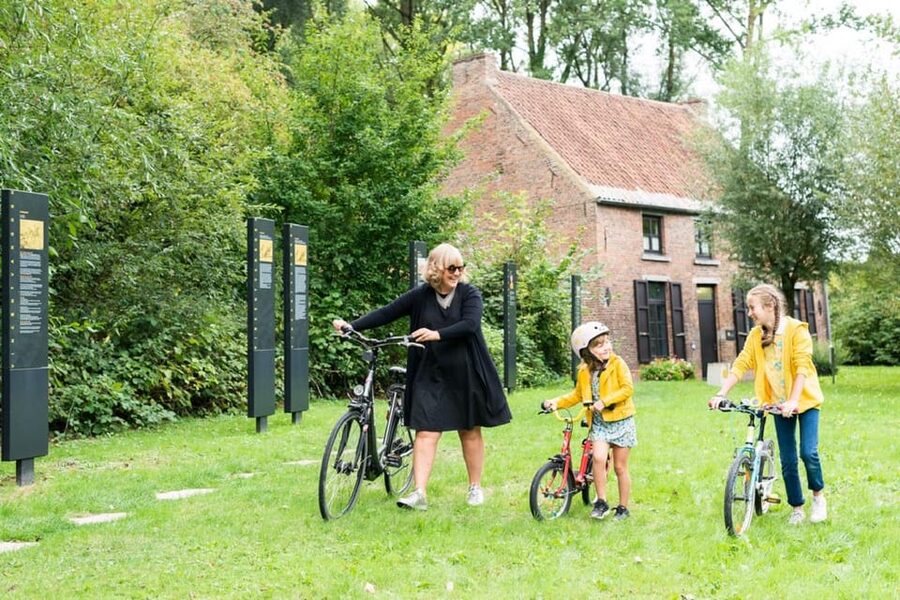
The visit begins at the entrance in the garden. This opening is more than a place to wait for admission. It gives you a first sense of the setting before you enter the displays.
The garden helps establish the contrast at the heart of the visit. Van Gogh would later be associated with dramatic color and intense movement, but this early period was rooted in simple surroundings and hard daily work. The greenery around the house gives you a visual pause before the more formal presentation begins.
You should take a moment here instead of rushing indoors. Look at the scale of the property and the relationship between the house and its surroundings. The setting is modest, which is part of its appeal. It also prepares you for the fact that this is a small site, not a large museum complex.
The garden is especially useful if you are visiting with children or students. It creates room to discuss what Van Gogh saw around him before the indoor material begins. A school group can also use the visit to connect art with work, religion, poverty, and place.
The renovated pavilion adds the main introduction
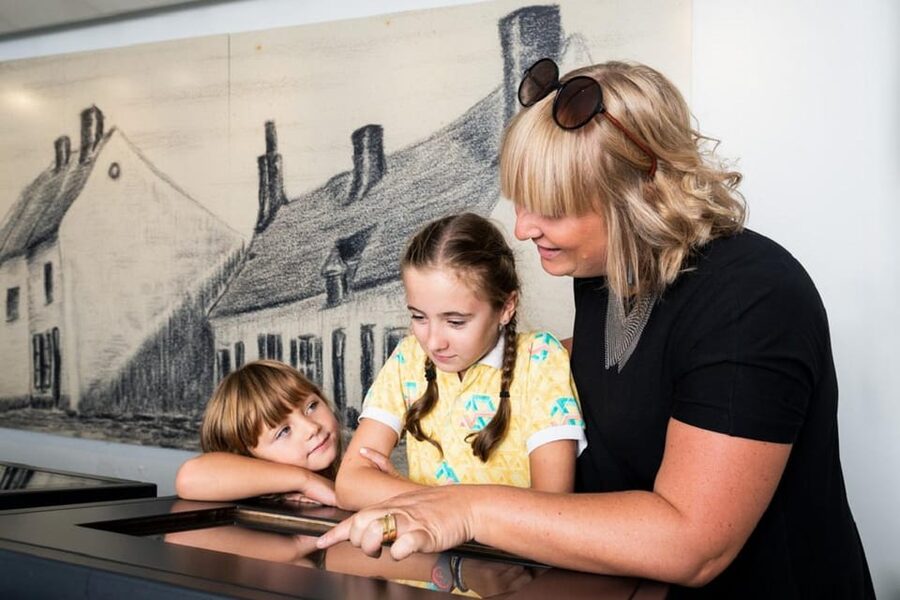
From the garden, the route continues into a renovated pavilion. This section provides the modern presentation of the site and helps explain why the Borinage mattered to Van Gogh.
The pavilion is a useful bridge between the physical house and the wider story. The building itself cannot explain every part of Van Gogh’s life, so the newer presentation supplies context about his time in the region and the influence of local working-class and rural life.
The presentation is designed as an initiation, so do not expect an enormous collection of objects. The purpose is to orient you. You are being introduced to the man Van Gogh was before his major artistic breakthroughs.
This is also where expectations matter. If you arrive with a strong interest in Van Gogh’s biography, you may find the material too brief. One visitor described the overall information as limited, and that is a fair caution for serious specialists. The site works better as a focused place of remembrance than as a complete Van Gogh museum.
The renovated pavilion does, however, give the visit a clearer structure. Without it, the house might feel like a preserved building with little explanation. With it, the house becomes part of a story about personal change.
Inside the small modernized house
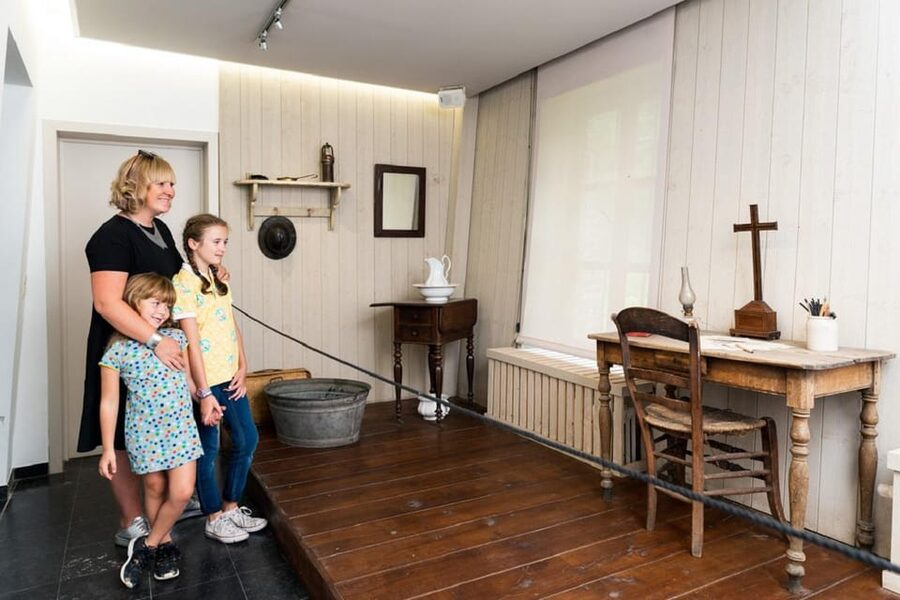
The house is the emotional center of the visit. It is small and modernized, so the experience is not about seeing an untouched nineteenth-century interior in every detail. Instead, the space allows you to consider how Van Gogh lived during this formative period.
The modest size is both a strength and a weakness. It makes the connection feel direct. You can understand that Van Gogh’s early life was not grand or comfortable. At the same time, you may move through the house quickly, especially if you are hoping for extensive rooms, original furnishings, or a large collection of drawings.
The house helps explain why the Borinage remained important to Van Gogh’s artistic outlook. The area offered powerful contrasts: religious conviction and hardship, open countryside and industrial work, individual lives and harsh economic conditions. These were not decorative subjects for him. They were part of the world he was trying to understand.
I would pay attention to the difference between the house’s physical simplicity and Van Gogh’s later fame. That gap is the point. This is a place where you can think about the early stages of an artist’s development, before the familiar style and reputation had formed.
The small scale also means that the experience may suit a short stop better than a full day. The ticket is valid for one day, but the site itself is not presented as a day-long program. Pair it with other sights in the Mons region if you want a fuller outing.
A completely different kind of day:
- Small Group Dinant’s, Castle and Beer Monastery Expedition
★ 5.0 · 42 reviews - Private Beer Bike Tour in Hotton in the Belgian Ardennes
★ 5.0 · 38 reviews - Mons : The Belfry
★ 3.6 · 17 reviews - Discover Dinant while playing! Escape game – The alchemist
★ 4.5 · 12 reviews
The audio presentation puts Van Gogh in context
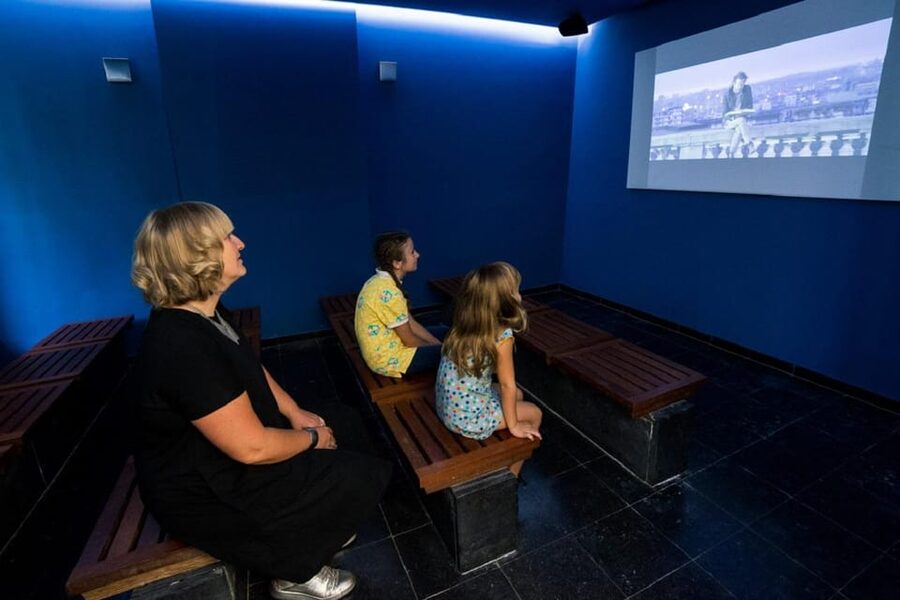
An audio installation concludes the visit. Its job is to place Van Gogh and his work within the history of the Borinage, rather than leaving you with only the house itself.
This final section is important because the building alone cannot show how the area affected his thinking. The audio material connects the preacher, the local population, and the future artist. It gives the visit a clear ending and returns the focus to the wider region.
The length may not suit everyone. A recent comment described the film as interesting but too long. That is useful to keep in mind, especially if you are visiting with young children or have a tight schedule. The audiovisual element adds information, but it may feel slower than the rest of the visit.
You should treat the audio section as the place where the broader explanation happens. If you skip it, you may understand where Van Gogh stayed but miss why the Borinage mattered. If you already know his biography well, some of the material may repeat familiar points.
The language options are Dutch, English, and French. That makes the experience practical for a wide range of visitors, though the booking information does not specify whether every part of the presentation is available in all three languages at every time.
What the $5 admission is really worth
At $5 per person, the Van Gogh House is priced as an accessible cultural stop. You are paying for entry to a meaningful place, not for a large collection or a guided museum program.
That is good value if you are already in the Mons region and have an interest in Van Gogh, Belgian art, or the social setting that influenced his early work. The cost is low enough that you do not need a perfect museum experience to feel you received fair value.
The price is less convincing if you are making a long journey solely for a large-scale Van Gogh attraction. The house is restricted in size, and the amount of information is not extensive. Serious Van Gogh specialists may want to combine it with other sites rather than treat it as the main cultural event of the day.
Food and drinks are not included, though this is simply an entry ticket and not a meal-based excursion. There is also no guided tour included. You should budget for any refreshments separately and arrive ready to explore without a personal guide.
For students, families, and budget-minded culture seekers, the low fee is a real advantage. It gives you access to a place that would otherwise be easy to overlook, while leaving room in your budget for other stops around Mons.
Getting to Cuesmes without a tour bus
The Van Gogh House is in Cuesmes, within the Mons region of Wallonia. You must arrange your own transport.
You can reach the site by your own vehicle or by public transport. If you plan to take a bus, check the timetable before setting out. The practical warning matters because a small site in a local municipality may not have the same frequent connections as a major city museum.
You should also allow time to find the entrance and present your ticket at reception. Your entry ticket is sent by email and must be shown when you arrive. Keeping it easy to access on your phone will save time.
One booking problem has been reported at reception, with a long wait while staff tried to locate a ticket on the booking company’s computer. The visit itself was considered worthwhile, but the delay was frustrating. I would arrive with the email open and, if possible, a saved copy of the ticket ready to display.
The selected time slot matters. You are asked to arrive during the time period you chose, so do not treat the booking as an open-ended arrival. This is particularly important if you are coordinating the house with public transport.
Who will enjoy this visit most?
I would recommend the Van Gogh House most strongly to four kinds of people:
- You already know Van Gogh’s famous paintings and want to understand his early years.
- You enjoy places connected to artists, even when the site is small and quiet.
- You are exploring Mons and want a low-cost cultural stop outside the city center.
- You are visiting with students who can discuss art, religion, working life, and social conditions.
The experience may be less satisfying if you want a large collection of original Van Gogh works. The house is not promoted as a gallery packed with paintings, and no guided tour is included.
Families can make it work, but the audio or film section may feel too long for some children. Adults with a focused interest in biography and early artistic development are likely to get more from the visit.
The site is wheelchair accessible, which makes it easier to include in a wider Mons itinerary. Host or greeter support is available in Dutch, English, and French, but you should not confuse that with a full guided tour. The admission covers entry, not personal interpretation throughout the visit.
How to fit it into a Mons day
The Van Gogh House works best as one part of a day rather than as the only scheduled activity. The ticket is valid for one day, and the attraction can give your Mons visit a strong local focus.
You might begin with the house while your attention is fresh, then continue exploring the Mons region. Alternatively, place it between other cultural stops if the transport schedule makes that easier. The key is to allow enough time for the garden, pavilion, house, and audio presentation without rushing.
If you are a dedicated Van Gogh enthusiast, prepare before you arrive. Think about his later works and ask what early themes you might recognize here: working people, plain surroundings, faith, and the tension between hardship and human dignity. That preparation will make a small site feel more substantial.
If you know little about him, the visit still provides a useful starting point. Just keep your expectations modest. This is an introduction to Van Gogh’s Borinage period, not a complete account of his life.
The setting also rewards a slower pace. You are visiting a place tied to his early search for meaning, not simply ticking off another famous name. The quieter atmosphere may be exactly what makes the stop worthwhile.
Booking, timing, and practical cautions
The experience offers free cancellation up to 24 hours before the scheduled time, and you can reserve now and pay later. Those options are useful if your Mons plans are still changing.
Your ticket arrives by email. Show it at the museum reception, and make sure the selected time slot matches your arrival. The site is open for a one-day booking validity, but you still need to check available starting times before choosing.
The entry is wheelchair accessible. Food and drinks are not part of the admission, and no guided tour is included.
The overall rating is 3.9 out of 5 from 22 ratings, which fits the attraction well. The most praised points are the interesting setting, the helpful reception in at least one school-group visit, and the value of seeing a genuine Van Gogh location. The main complaints concern the small size, limited information, a long audiovisual presentation, and occasional ticket trouble at reception.
That mix gives you a clear picture. The Van Gogh House can be rewarding, but it rewards interest and realistic expectations more than grand expectations.
Should you book the Van Gogh House?
Book it if you want place over spectacle. The $5 admission gives you access to a genuine site from Van Gogh’s formative years, along with a garden, renovated pavilion, small house, and historical audio presentation. It is a thoughtful stop for people who want to understand where his artistic direction began.
Skip it if you expect a major art museum, a large selection of original works, or a guided tour. The site is compact, the information can feel limited, and the final audiovisual section may take longer than you expect.
For most Van Gogh fans already visiting Mons, I think the low price makes it worth adding. Arrive with your ticket ready, check transport times, use the audio presentation for context, and let the modest setting do its work. This is not Van Gogh at the height of fame. It is Van Gogh before the world knew his name, and that is precisely why Cuesmes matters.
FAQ
Where is the Van Gogh House located?
The Van Gogh House is in Cuesmes, a municipality within the Mons region of Wallonia, Belgium.
How much does admission cost?
The entry price is $5 per person.
How long is the experience?
The booking is valid for one day, but a specific visit duration is not provided. The route includes the garden, renovated pavilion, small house, and audio installation.
Is a guided tour included?
No. The admission includes entry to the Van Gogh House, but a guided tour is not included.
What languages are available?
Dutch, English, and French are listed as available languages for the experience.
Can I cancel my booking?
Yes. You can cancel up to 24 hours in advance for a full refund.
Can I reserve without paying immediately?
Yes. The reserve now and pay later option allows you to book your spot without paying on the day of reservation.
How do I receive my entry ticket?
Your ticket is sent by email. You should present it at the museum reception.
How should I get to the Van Gogh House?
You must arrange your own transport, either by private vehicle or public transport. Bus timetables should be checked in advance.
Is the Van Gogh House wheelchair accessible?
Yes. The site is listed as wheelchair accessible.
Just added in Wallonia
- Discover Charleroi while playing! Escape game – The alchemist★ 5.0 · 1 review
- e-Scavenger hunt Spa: Explore the city at your own pace★ 4.5 · 7 reviews
- Discover Charleroi while escaping the zombies! Escape game★ 5.0 · 2 reviews
- Discovery pack★ 4.0 · 6 reviews
- Dinant Discovery Path to Adventure★ 5.0 · 1 review
- Discover Namur while playing! Escape game – The Walter case★ 4.5 · 2 reviews
- Namur: Escape Game in the city – The Alchemist★ 4.0 · 5 reviews
- Discover Dinant while playing! Escape game – The alchemist★ 4.5 · 12 reviews
Wallonia Tours, compared.
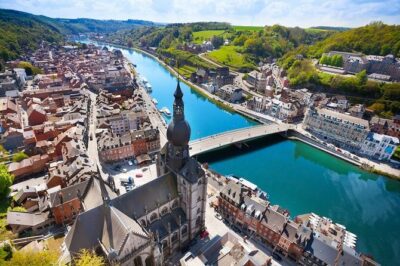
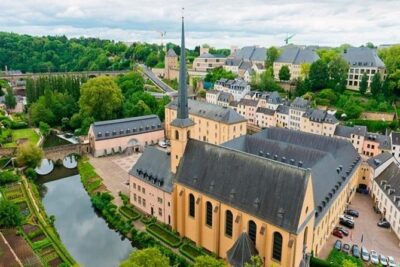
Bus day trip to Luxembourg and Dinant from Brussels
Read our review →
Remembrance Tour: The Battle of the Bulge in the Ardennes
Read our review →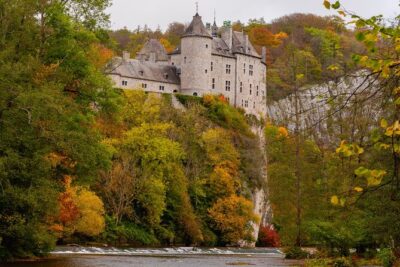
Small Group Dinant’s, Castle and Beer Monastery Expedition
Read our review →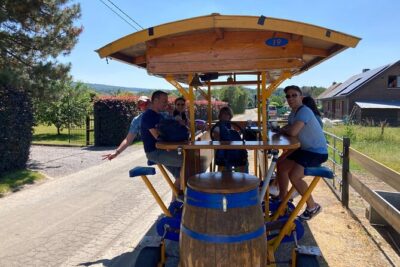
Private Beer Bike Tour in Hotton in the Belgian Ardennes
Read our review →

Discover Dinant while playing! Escape game – The alchemist
Read our review →
Napoleon Last Campaign (Waterloo, Ligny..) Day Tour from Brussels
Read our review →Browse the lists this tour appears in