
Reviewed · ART NOUVEAU TOURS
2-Hour Walking Tour in Brussels: Fall and Rise of Art Nouveau
Brussels keeps its best details above eye level. This two-hour walking tour through Saint-Gilles and Ixelles focuses on the city’s finest Art Nouveau façades, with a Spanish-speaking guide explaining the architects, symbols, and building techniques behind them. I like the route’s clear focus on architecture, and I like that it includes lesser-known houses alongside major works by Victor Horta and Paul Hankar. The main drawback is simple: every building is viewed from the street, so you will not enter the interiors.
The walk covers about three kilometers and may last closer to two hours and forty minutes when the guide takes time to explain the buildings. Samuel, the guide praised for his enjoyable and didactic style, has apparently allowed extra time for questions and detail. That is useful for architecture fans, but less ideal if you need a tightly timed activity.
In This Review
- Key points to know before booking
- Why Saint-Gilles and Ixelles are the right setting
- From Horta station to the Maison de Beck
- Saint-Gilles Town Hall and Paul Hamesse’s house
- A prison that looks like a castle
- Learning to read sgraffito and other Art Nouveau details
- Jules Brunfaut and a less obvious Art Nouveau façade
- Victor Horta’s home and the first Art Nouveau house
- Hankar, the Argentine Embassy, and the city’s best façades
- What $17.38 buys you
- Who should book this Spanish walking tour
- Should you book it?
- FAQ
- Is the tour conducted in English?
- How long does the walking tour last?
- How far is the walking route?
- Does the tour include interior visits?
- Where does the tour start?
- Where does the tour end?
- How many people can join the tour?
- Can I cancel for a full refund?
Key points to know before booking
- Spanish only: The professional guide conducts the entire tour in Spanish, with no English option stated.
- A three-kilometer architecture route: The walk links Saint-Gilles and Ixelles, two of Brussels’s strongest Art Nouveau areas.
- Exterior views only: You will see every house from the pavement, including the Horta Museum and Hotel Tassel.
- More than famous façades: The route covers sgraffito, frescoes, metro history, a prison, a town hall, and the remains of Victor Horta’s Maison du Peuple.
- A small-group feel: The maximum group size is 25 people, which should make street-side explanations easier to follow.
- Good value for architecture fans: At $17.38 per person, the tour costs little compared with an interior museum visit, but it does not include entry to any house.
Why Saint-Gilles and Ixelles are the right setting
Brussels is divided into 19 communes, or town councils. Saint-Gilles and Ixelles contain some of the city’s strongest collections of late 19th-century Art Nouveau, making them a smart place to study the movement on foot.
This part of Brussels is not a single open-air museum. It is a working urban area, with handsome townhouses mixed among ordinary streets and later buildings. That variety helps you see Art Nouveau as a practical style used for homes, public buildings, cinemas, embassies, and private studios.
The tour starts at Horta metro station, at Horta, 1060 Saint-Gilles. Beginning underground is a good choice because it gives the guide a chance to introduce Brussels through transport and design before the group moves into the streets. The station itself contains artistic details and architectural mysteries that are easy to miss if you are simply changing trains.
Bring comfortable shoes. Three kilometers is not a demanding distance, but the route involves continuous walking and repeated stops on city pavements. Since the activity can last up to two hours and forty minutes, you should allow extra time afterward rather than booking a tight connection or meal reservation.
More Walking Tours in Brussels
- Brussels: Historical Walking Tour with Chocolate & Waffle Tasting
★ 5.0 · 1,165 reviews - Brussels Walking and Tasting Tour (Beers,Chocolates&Fries/Waffle)
★ 5.0 · 929 reviews - Brussels Chocolate Walking Tour and Workshop
★ 4.5 · 885 reviews
From Horta station to the Maison de Beck
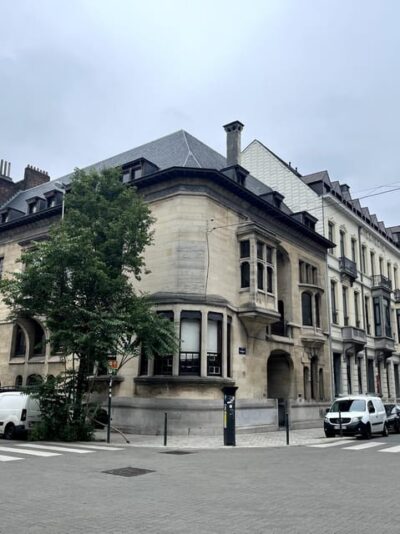
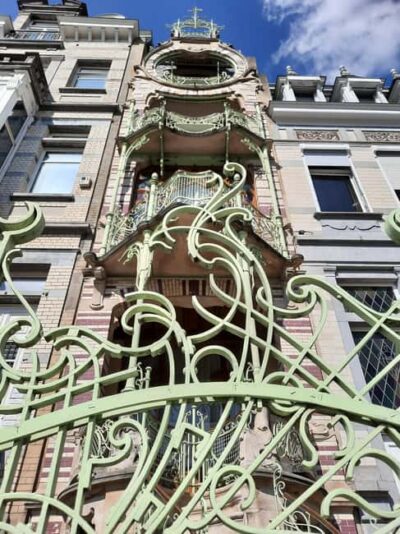
The first major stop is the Maison de Beck, described as one of the city’s less familiar but especially striking Art Nouveau houses. That is one of the route’s strengths. You are not being taken only to the buildings that appear in every Brussels guidebook.
The guide uses the house to ask a useful question: who created it, and what choices make it Art Nouveau? A good street tour teaches you how to look, not just where to look. You may begin noticing curved lines, decorative panels, ironwork, unusual windows, and the way a façade connects its separate floors.
Because you remain outside, the emphasis is on the front elevation and the architect’s visible decisions. You will not see how the plan works inside or how the decoration continues through stairwells and salons. Still, a careful explanation can make a street façade far more readable than it first appears.
Saint-Gilles Town Hall and Paul Hamesse’s house
Saint-Gilles is not only about Art Nouveau. Its town hall gives the route a broader architectural frame, showing how the commune expressed civic pride through a large public building rather than a private townhouse.
I like this change of scale. After studying individual façades, you get a sense of how the district was planned and how architecture shaped public life. The town hall also helps prevent the tour from becoming a parade of similar homes.
The route then turns to Paul Hamesse, an architect who is less famous than Horta or Hankar but whose work rewards a closer look. Hamesse designed the old Pathé Cinemas in central Brussels, and the tour pauses at the exterior of his personal home.
This stop is useful because it links an architect’s public work with his private life. You will hear about Hamesse and his career while examining the building he created for himself. As with the other houses, the view is limited to the street frontage, so the guide’s explanation supplies much of the context.
A prison that looks like a castle
One of the route’s most unusual stops is a prison that can easily be mistaken for a castle. Its appearance raises questions that architecture tours often overlook: why was it built in the middle of the city, and did the design serve a special purpose?
This is a welcome break from purely decorative analysis. Art Nouveau is often reduced to flowers, curves, and beautiful façades, but buildings also reflect public policy, social ideas, and the needs of a growing city.
The prison stop also gives you a chance to compare architecture meant for private comfort with architecture built for control and security. The supplied information does not identify the architect or provide a full account of its construction, so you should expect the guide to focus on the building’s role and appearance rather than a complete prison history.
More Art Nouveau walks in Brussels:
- Brussels 3-Hour Guided Art Nouveau Tour
★ 4.0 · 282 reviews - Brussels: Art Nouveau Pass – Entry to Three Locations
★ 4.0 · 108 reviews - Brussels: 2-hours “Art Nouveau” Walking Tour
★ 4.5 · 7 reviews - Brussels: Art Nouveau Walking Tour with a Local Guide
★ 5.0 · 5 reviews
Learning to read sgraffito and other Art Nouveau details
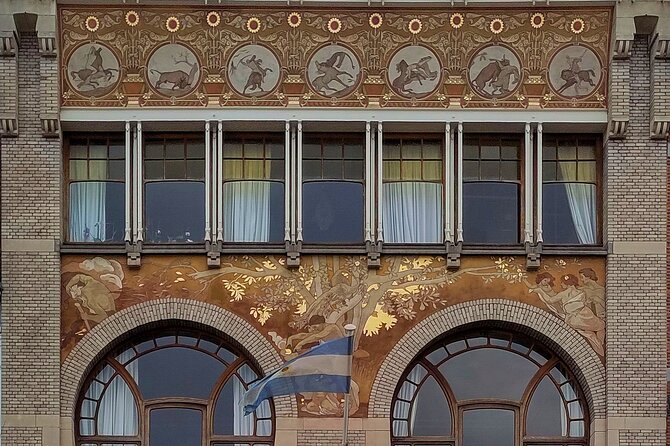
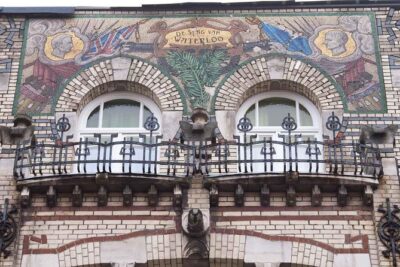
Sgraffito is one of the key techniques covered during the walk. It is a decorative method made by scratching through layers of plaster or coating to reveal a contrasting surface beneath. The result can look like a drawn or painted design set directly into the façade.
The guide also explains how sgraffito differs from fresco. That distinction matters because the two techniques are easy to confuse when you are looking at exterior decoration from a few meters away. You will learn to inspect the surface itself, not just the overall color and pattern.
The Maison Rosenbaum, also called Roosenboom, is an especially useful stop for this subject. Its decoration may remind you of the poster work associated with Alphonse Mucha, with flowing forms and ornamental figures that make the façade feel almost illustrated.
This is the kind of detail that makes a guided walk worth paying for. You can photograph a building alone, but you may not know why its surface looks different from painted plaster or how its decoration was produced. A Spanish explanation focused on materials and technique gives the street scene more meaning.
Jules Brunfaut and a less obvious Art Nouveau façade
Architect Jules Brunfaut appears on the route through the only house he built in the Art Nouveau style in Brussels. That single example gives the stop a clear purpose. Instead of seeing an entire body of work, you are looking at one building and asking how Brunfaut handled the style.
Another stop presents a façade that may seem disappointing at first glance, especially after several ornate houses. Its interest emerges through smaller features and later restoration work. The building is not described as the purest Art Nouveau example, and that honesty is useful.
Brussels architecture has changed over time. Restorations can clarify details, alter colors, or remove some of the original effect. Seeing a building with complications gives you a more accurate picture than a tour made only of perfect façades.
At another point, the route pairs two important works by Paul Hankar. One façade may leave you cold if you judge it quickly, but its details become more impressive with an explanation. The close relationship between the two Hankar works also lets you compare his handling of ornament, composition, and structure.
Victor Horta’s home and the first Art Nouveau house
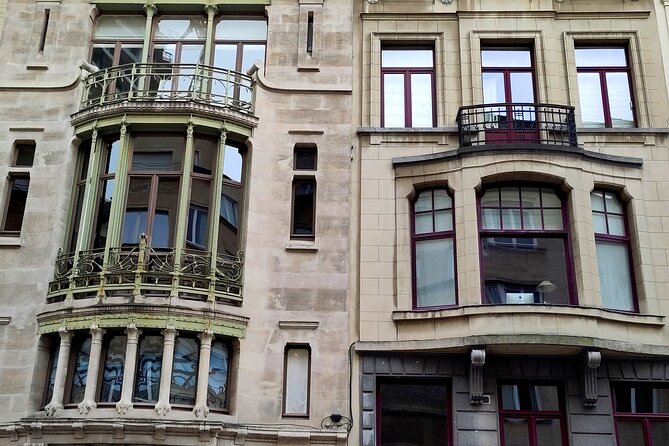
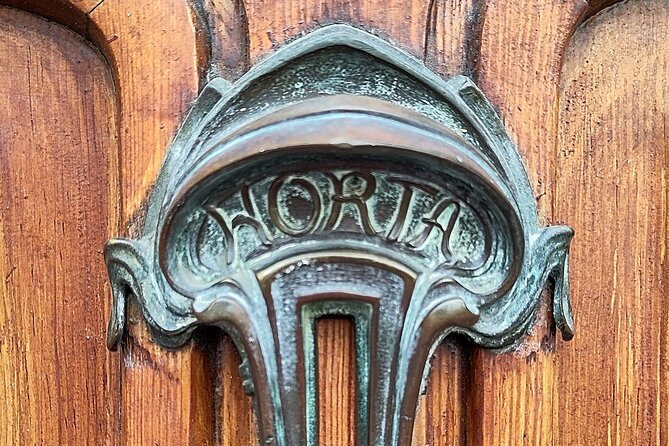
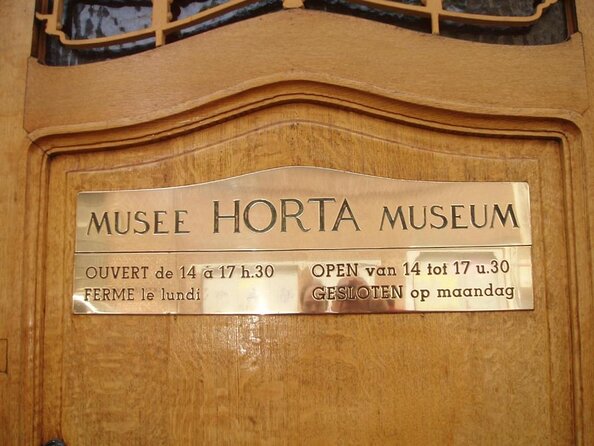
The tour reaches the home and studio of Victor Horta, Belgium’s most famous Art Nouveau architect. The building now functions as a museum dedicated to his work, but this walk views it from the street only.
That limitation is important. The Horta Museum’s interiors are among the main reasons architecture fans visit Brussels, and this tour does not include admission. If you want to see Horta’s famous staircases, ironwork, glass, and interior layout, you will need a separate visit.
Even so, the exterior stop gives the building a place within the wider route. By the time you arrive, you have already studied other architects and decorative techniques. You can compare Horta’s personal home with the façades by Hamesse, Brunfaut, Hankar, and the designers of the other houses.
The final major stop is Hotel Tassel, designed by Victor Horta and completed in 1893. It is considered the first Art Nouveau work in the world and was named a UNESCO World Heritage Site in 2000.
Hotel Tassel is a fitting endpoint because it represents the break from older architectural habits that made Art Nouveau so important. The tour ends in front of its façade on Rue Paul Emile Janson 6, close to the Bailli and Defacqz tram stations. Tram lines 8 and 93 serve the area.
The tour’s end point is practical for continuing your Brussels day. You can take public transport, walk elsewhere in the city, or arrange a separate visit to the Horta Museum. The route does not return to Horta metro station, so note the one-way design when planning your schedule.
Hankar, the Argentine Embassy, and the city’s best façades
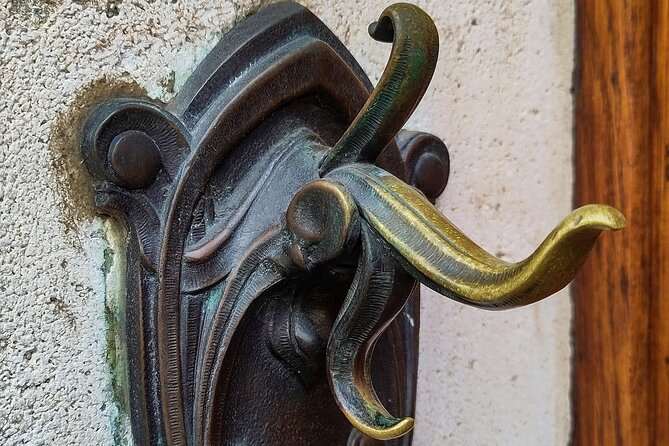
Paul Hankar’s personal home is another central stop. Along with Horta, Hankar is presented as one of the two essential modernist architects in Brussels. The guide explains what makes his residence special and how it fits into the development of the style.
The current Argentine Embassy is another strong visual point. Its façade contains particularly fine sgraffito and is described as one of the clearest Art Nouveau examples on the route. You will see it from outside, so the value lies in the façade, its decorative work, and the guide’s explanation rather than in an embassy visit.
The route does a good job of showing how Art Nouveau moved through different kinds of buildings. You see private homes, a civic building, a prison, an embassy, and the home of an architect. That mix makes the style feel less like a narrow art movement and more like a way of shaping daily urban life.
What $17.38 buys you
At $17.38 per person, the price is modest for a two to two-hour-forty-minute guided walk in Brussels. You are paying for a professional Spanish-speaking guide and a carefully arranged route through districts where many notable houses are spread across several streets.
The value is strongest if you care about architecture or speak Spanish comfortably. A guide can point out details you would likely pass without noticing, explain sgraffito and fresco, introduce lesser-known architects, and place Hotel Tassel within architectural history.
The value is weaker if you want interior access. No house entry is included, including the Horta Museum and Hotel Tassel. You should treat this as an architectural orientation walk, then decide if you want to pay separately for museums or interior visits.
The maximum group size is 25 people. That is not a private tour, but it is small enough for a guide to keep the group together on a three-kilometer route. Street noise, traffic, and the position of the group on a pavement may still affect how easily you hear every explanation.
Only one rating is currently recorded, and it is five out of five. The most useful praise concerns Samuel’s command of the subject and his enjoyable, instructional delivery. The walk lasted almost three hours because he took time to explain the planned material. That extra time is a plus for an interested audience and a possible problem for anyone counting on the advertised two-hour schedule.
Who should book this Spanish walking tour
I would choose this tour if you want a focused introduction to Brussels Art Nouveau and can follow a full tour in Spanish. It suits visitors who enjoy façades, building materials, urban design, and the stories behind architects rather than those looking for a general overview of Brussels.
It is also a good option early in your stay. The route can help you recognize Art Nouveau details during the rest of your time in the city, and it ends near tram connections for easy onward travel.
You may want to skip it if you need an English-language guide, have limited walking time, or strongly prefer interior visits. The experience is built around looking carefully from the street, and that is both its appeal and its boundary.
Service animals are allowed, public transport is nearby, and most people can take part. The tour requires a minimum number of participants. You can cancel for a full refund up to 24 hours before the start time, but changes or cancellations within 24 hours are not accepted.
Should you book it?
Book this walk if Art Nouveau is a main reason you are visiting Brussels, especially if you speak Spanish and want more than a quick photo stop at Hotel Tassel. The route covers famous names, overlooked houses, technical details, and surprising buildings such as the castle-like prison.
Skip it if you need guaranteed two-hour timing or interior access. For the low price, the tour offers a strong introduction to Saint-Gilles and Ixelles, with Samuel’s longer, explanation-heavy approach adding value for curious architecture fans.
FAQ
Is the tour conducted in English?
No. The professional guide conducts the tour only in Spanish.
How long does the walking tour last?
The stated duration is approximately two hours to two hours and forty minutes. It may run longer than two hours when the guide spends extra time explaining the buildings.
How far is the walking route?
The walk covers approximately three kilometers through the outskirts and architectural districts of Brussels.
Does the tour include interior visits?
No. All houses and buildings are viewed from the outside, from the street. Interior admission is not included.
Where does the tour start?
The meeting point is Horta metro station, at Horta, 1060 Saint-Gilles, Belgium.
Where does the tour end?
The tour ends at Rue Paul Emile Janson 6, 1000 Bruxelles, in front of the Hotel Tassel façade. Bailli and Defacqz tram stations are nearby, served by lines 8 and 93.
How many people can join the tour?
The maximum group size is 25 people.
Can I cancel for a full refund?
Yes. You must cancel at least 24 hours before the local start time to receive a full refund. Cancellations or changes made less than 24 hours before the start time are not accepted.
Just added in Brussels
- Transfer from BRU Airport to Brussels city (any hotel or address)★ 5.0 · 1 review
- Standard vehicle from Brussels airport to city of Antwerp★ 5.0 · 4 reviews
- Standard Minivan from Brussels airport to city of Antwerp★ 5.0 · 1 review
- Private transfer from BRU Airport – Brussels GO BACK MB V-CLASS 7 PAX★ 5.0 · 2 reviews
- Private transfer from Brussels Airport to Brussels city Business car★ 5.0 · 1 review
- Transfer Brussels Airport -> Antwerp MB V-CLASS 7 PAX★ 5.0 · 1 review
- Private transfer from BRU Airport to Bruges with Mercedes V class 7 pax★ 5.0 · 1 review
- Private transfer from BRU Airport to Bruges with luxury limousine 3 pax★ 5.0 · 1 review
Art Nouveau Tours, compared.
Private tour : Art Nouveau Heritage focus on Victor Horta Brussels and Antwerp Half day
Read our review →Browse the lists this tour appears in