
Reviewed · ART NOUVEAU TOURS
Brussels 3-Hour Guided Art Nouveau Tour
Brussels hides its best architecture in plain sight. This three-hour Art Nouveau tour takes you from the Grand-Place to the Bailli district, where Victor Horta and other Belgian architects turned iron, glass, wood, and stone into wonderfully odd buildings. I like the strong focus on real neighborhoods, and I like that guides such as Maria add social and political context instead of simply naming façades. The main catch is that most buildings are viewed from outside, and the walk includes an uphill stretch and a tram ride.
You finish at the Victor Horta Museum, which gives the outing a natural ending, though admission is not included. If you want to go inside, reserve your museum ticket in advance. At $35 per person, this is good value for anyone who wants to understand Brussels architecture rather than merely photograph it, but less useful if you expect a series of interior visits.
In This Review
- Key points to know before you go
- Why Brussels is the right place for Art Nouveau
- Meeting at the Grand-Place, then heading to Bailli
- Old England House and the first look at metal and glass
- Hotel Tassel, Victor Horta’s breakthrough address
- Van Rysselberghe House and Hotel Otlet
- Hotel Goblet d’Alviella and the work of Paul Hankar
- The Beukman House and Paul Hankar’s private home
- What you actually see, and what you do not
- The walking pace, tram ride, and group experience
- Is $35 a fair price?
- Who will enjoy this tour most
- Practical tips for a better morning
- Should you book the Brussels Art Nouveau tour?
- FAQ
- Where does the tour meet?
- What time does the tour start?
- How long does the tour last?
- Which languages are available?
- Does the tour include Victor Horta Museum admission?
- Does the tour include tram or train transportation?
- Can I enter the Art Nouveau houses?
- Is the tour wheelchair accessible?
Key points to know before you go
- The route begins at 10:00 at the Grand-Place: Find the guide holding a white umbrella.
- The Bailli district is the main event: This city neighborhood contains one of Brussels’ largest collections of Art Nouveau buildings.
- Hotel Tassel is an essential stop: Victor Horta built it in 1893 and 1894, helping define the style.
- Interior access is limited: Guides use photographs and printed images to explain rooms you cannot enter.
- You ride a tram and walk uphill: Comfortable shoes matter, and transport costs are not included.
- The guide can speak Spanish, English, and French: The tour is wheelchair accessible, though the route’s slope and street conditions are worth considering.
Why Brussels is the right place for Art Nouveau
Art Nouveau in Brussels is not just a decorative style pasted onto old buildings. It grew from a period when architects were testing new materials and new ways to organize city life. Iron could curve instead of simply support. Glass could bring light deep into a house. Wood, stone, and metal could be designed as one connected composition.
That combination is what makes the tour useful. You learn to look for lines, plant forms, unusual doorways, patterned surfaces, and the way a façade hints at the rooms behind it. The guide also explains how the movement connects with the social and technological changes of its time, including political links that Maria has researched closely.
The tour also helps you separate Art Nouveau from Art Deco. That distinction can be hard to grasp from a guidebook, but it becomes clearer when someone points out the shapes and design choices in front of you. By the end, you should have a practical way to recognize the style elsewhere in Brussels and beyond.
More Art Nouveau walks in Brussels:
- Brussels: Art Nouveau Pass – Entry to Three Locations
★ 4.0 · 108 reviews - Brussels: 2-hours “Art Nouveau” Walking Tour
★ 4.5 · 7 reviews - Brussels: Art Nouveau Walking Tour with a Local Guide
★ 5.0 · 5 reviews
Meeting at the Grand-Place, then heading to Bailli
The starting point is the Grand-Place, one of the easiest places in Brussels to find. Look for the guide with a white umbrella at 10:00. The famous square itself is not the focus, but it makes a convenient meeting spot before you leave the central tourist zone.
From there, the group takes a tram toward Bailli. The tram is part of the route rather than a sightseeing ride, so you should treat it as local transport. The fare is not included, and the supplied information refers to transportation by train as not included, while the itinerary specifically describes a tram. Check the current arrangements when booking so you know what ticket you need.
The move to Bailli is important because the tour shifts from postcard Brussels to a residential district with a large concentration of Art Nouveau houses. You do not have to spend time finding scattered addresses on your own. Instead, the guide connects the buildings into a walkable story.
Old England House and the first look at metal and glass
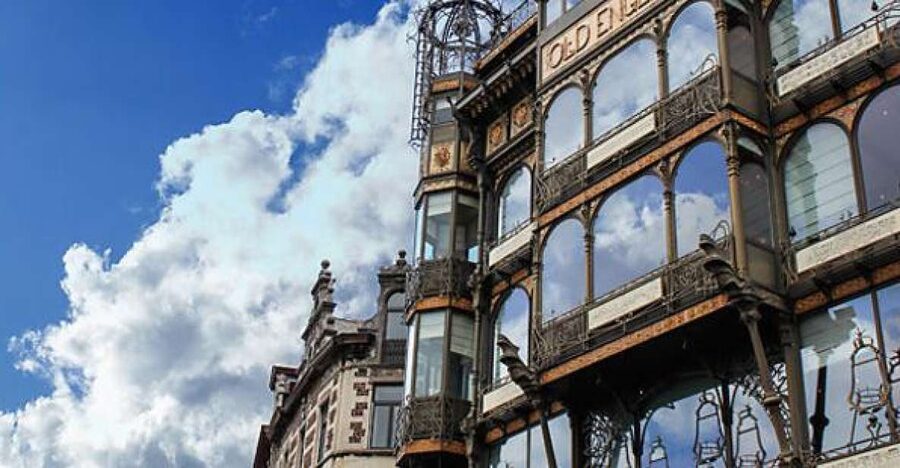
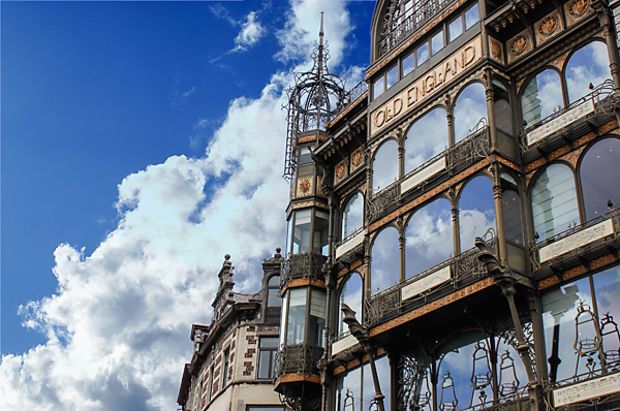
Old England House, now associated with the Musical Instrument Museum, gives you an early chance to see how Brussels architects used metalwork and glass in a bold public façade. It is a helpful introduction because Art Nouveau is often easiest to understand when you compare materials side by side.
The building also shows that the style was not limited to private homes. Brussels used Art Nouveau in commercial and civic settings, where the design had to attract attention from the street. Your guide explains the visual details, while photographs and commentary help you understand how the interiors relate to the outside.
You should expect to view the building externally. This is a recurring feature of the tour, not a surprise limited to one stop.
Hotel Tassel, Victor Horta’s breakthrough address
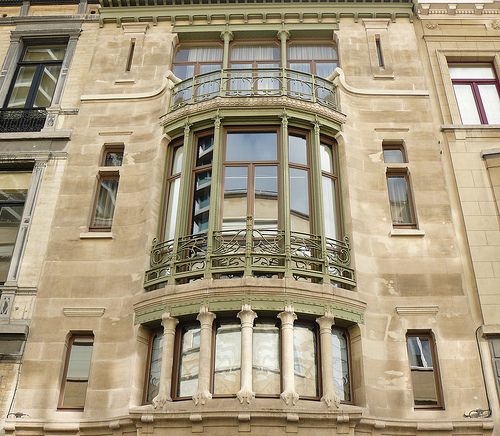
Hotel Tassel is one of the most important stops. Victor Horta designed it in 1893 and 1894, and the house is central to any introduction to Brussels Art Nouveau. The tour gives you time to examine the façade and hear why Horta’s work mattered.
Horta did not treat the front of a house as a separate shell. His approach connected the structure, decoration, staircase, light, and circulation. You may find that the guide’s explanation changes how you read the entrance and windows, even without seeing the rooms inside.
This is where printed interior photographs become especially useful. Maria, one of the guides praised for her preparation, has used images of interiors to show details that are not visible from the pavement. That extra material helps turn an exterior walk into a lesson about the whole building.
More things to do in Brussels:
- Brussels: Atomium Entry Ticket with Design Museum Ticket
★ 4.4 · 9,254 reviews - From Brussels: Guided Day Trip to Bruges and Ghent
★ 4.6 · 8,353 reviews - From Brussels: Bruges & Ghent Day Tour – 2 Fairytale Cities
★ 4.7 · 8,242 reviews - Choco-Story Brussels: Chocolate Museum Entrance with Tasting
★ 4.3 · 4,883 reviews
Van Rysselberghe House and Hotel Otlet
The Van Rysselberghe House was built by Octave Van Rysselberghe in 1912. Its later date helps you see that Art Nouveau did not appear all at once or remain fixed. Architects continued adapting the language of the style as materials, tastes, and clients changed.
Next comes Hotel Otlet, designed by Octave Van Rysselberghe and Henry van de Velde between 1894 and 1898. Two names on one project give the guide a chance to explain how architects worked together and how individual ideas could overlap.
These stops are valuable because the route is not limited to Horta. Horta is the star, but Brussels Art Nouveau makes more sense when you compare several architects. Van Rysselberghe and van de Velde bring different solutions to the same broad design movement.
Hotel Goblet d’Alviella and the work of Paul Hankar
Hotel Goblet d’Alviella, built by Octave Van Rysselberghe in 1882, takes you into the earlier stages of the city’s experimentation. The date is useful because it places the building before some of the best-known Horta projects.
The tour then turns to Paul Hankar, including Hotel Ciamberlani from 1897 and the house of painter René Janssens from 1898. Hankar’s work adds another voice to the route and shows how Art Nouveau could be both personal and practical.
A key strength here is the guide’s habit of explaining the people behind the façades. You hear about architects, artists, and clients rather than treating every building as an anonymous pretty house. That human context makes the walk easier to remember.
The Beukman House and Paul Hankar’s private home
The Beukman House, built by Albert Roosenboom in 1900, adds another architect to the sequence. By this point, you should be spotting recurring traits while also noticing how much freedom each designer had.
The route also includes the private home of Paul Hankar. A personal residence can reveal more about an architect’s ideas than a large public commission, since the designer had greater control over the layout and decoration. From the street, you can consider how the building presents its owner and his design principles.
The itinerary also identifies architect Armand Van Waesberghe as part of the route. The supplied details do not specify a separate building or construction date for this stop, so your guide’s explanation is likely the best way to understand his place in the story.
What you actually see, and what you do not
The central limitation is simple: this is mainly an exterior walking tour. You do not enter the private houses listed along the route, and museum admission at the end is extra.
That may disappoint you if you came hoping to walk through Horta’s interiors. Several buildings are far more impressive inside than they appear from the pavement. Still, the guides make a real effort to bridge that gap with printed images, photographs, and explanations of interior details.
One guide has even handed out photo postcards, while another brought interior images that helped the group understand rooms hidden behind closed doors. Those touches matter. They do not replace entry, but they give you a clearer idea of how the floors, staircases, colors, and decorations fit together.
If the Horta Museum is a priority, book its admission before the tour. The walk ends in front of it, but a tour ticket does not include entry, and you may not be able to get inside at the last minute.
The walking pace, tram ride, and group experience
Three hours is enough time to cover a useful part of Brussels without turning the day into an architecture marathon. You will walk through the city and take a tram, with an uphill section near the beginning of the route. Wear shoes that can handle pavement and slopes.
The tour is listed as wheelchair accessible. That is helpful, but you should still consider the uphill walking and the practical conditions of a city route. If you need specific assistance, confirm the current route details before booking.
Language can affect the pace. Tours may be offered in Spanish, English, or French, and bilingual groups can take longer when every explanation is repeated. One group found the guide tireless and clear even while speaking in two languages, but the extra translation made the outing longer than expected.
The guide quality is one of the strongest reasons to book. Maria is repeatedly described as prepared, enthusiastic, and willing to answer questions. Danielle has also been praised for her energy and command of the subject. Names and staffing can change, but the experience clearly depends on a guide who can make architectural details understandable.
Is $35 a fair price?
At $35, the tour is reasonably priced for three hours with a local guide, a planned route, and a specialist subject. You are paying for the connections between buildings, not just transportation from one address to another.
The value is highest if you would otherwise wander through the Bailli district without knowing what you are seeing. Several of the houses are not part of a standard first-time Brussels walk, and the route takes you into areas you might miss while staying around the Grand-Place.
The price is less attractive if you want a large number of interiors, extensive museum time, or a complete survey of every Art Nouveau building in Brussels. The tour covers only part of the city’s remaining examples. You may want to buy or consult an Art Nouveau guide afterward and continue on your own.
Remember to budget separately for the tram and Victor Horta Museum admission. Those costs are not part of the $35 fee.
Who will enjoy this tour most
I would choose this outing if you enjoy architecture, design, city history, or photography. It also suits anyone who wants a more focused activity after seeing Brussels’ main central sights.
You do not need to be an architecture specialist. The guide explains the basic visual language in plain terms, then builds toward more detailed points about materials, structure, and the people who commissioned the houses.
The tour may not suit you if you dislike walking, slopes, public transport, or looking at buildings from outside. It is also not the best choice for someone who wants a relaxed museum visit, since the museum itself comes at the end and requires a separate ticket.
Families with older children may find the mix of city walking and unusual buildings appealing, but the supplied information does not give a recommended age range. For a small child who needs constant entertainment, three hours of façades and architectural explanation could feel long.
Practical tips for a better morning
- Wear comfortable shoes. The uphill start is real, and the route continues on foot after the tram.
- Arrive early at the Grand-Place so you can find the white umbrella without rushing.
- Bring a phone or camera for façades and details, but do not expect to photograph private interiors.
- Reserve the Victor Horta Museum separately before the tour if you want to visit it afterward.
- Ask questions during the walk. Guides such as Maria are especially good at connecting architecture with politics, technology, and daily life.
- If you are in a bilingual group, allow extra time because explanations may be repeated in two languages.
- Check transport arrangements in advance because the tram fare is not included.
Should you book the Brussels Art Nouveau tour?
Book it if you want a clear introduction to Brussels Art Nouveau and prefer an informed walk through real neighborhoods over a quick list of famous addresses. The strongest features are the passionate guides, the Bailli district route, the range of architects, and the interior photographs that add meaning to buildings you can only see from the street.
Skip it if interior access is essential or if you want to cover the entire city’s Art Nouveau collection in one morning. For most curious visitors, though, $35 is a fair exchange for three hours of context and a route you might not create on your own. Plan the Horta Museum separately, wear good shoes, and you will get much more from the final stop.
FAQ
Where does the tour meet?
The meeting point is the Grand-Place in Brussels. The guide carries a white umbrella.
What time does the tour start?
The stated start time is 10:00. You should check availability for the exact date you want.
How long does the tour last?
The tour lasts three hours.
Which languages are available?
The live guide is available in Spanish, English, and French.
Does the tour include Victor Horta Museum admission?
No. Museum admission is not included. The tour ends in front of the museum.
Does the tour include tram or train transportation?
No transportation fare is included. The route specifically uses a tram to reach the Bailli district, and you should plan to pay for local transport separately.
Can I enter the Art Nouveau houses?
The listed buildings are viewed from outside. Guides may use photographs or printed images to explain the interiors.
Is the tour wheelchair accessible?
Yes, the activity is listed as wheelchair accessible. The route also includes walking and an uphill section, so confirm the practical route details if you need specific assistance.
Just added in Brussels
- Transfer from BRU Airport to Brussels city (any hotel or address)★ 5.0 · 1 review
- Standard vehicle from Brussels airport to city of Antwerp★ 5.0 · 4 reviews
- Standard Minivan from Brussels airport to city of Antwerp★ 5.0 · 1 review
- Private transfer from BRU Airport – Brussels GO BACK MB V-CLASS 7 PAX★ 5.0 · 2 reviews
- Private transfer from Brussels Airport to Brussels city Business car★ 5.0 · 1 review
- Transfer Brussels Airport -> Antwerp MB V-CLASS 7 PAX★ 5.0 · 1 review
- Private transfer from BRU Airport to Bruges with Mercedes V class 7 pax★ 5.0 · 1 review
- Private transfer from BRU Airport to Bruges with luxury limousine 3 pax★ 5.0 · 1 review
Art Nouveau Tours, compared.
2-Hour Walking Tour in Brussels: Fall and Rise of Art Nouveau
Read our review →
Private tour : Art Nouveau Heritage focus on Victor Horta Brussels and Antwerp Half day
Read our review →Browse the lists this tour appears in