
Reviewed · WALKING TOURS
Antwerp: Private 3-Hour Historical Sightseeing Walking Tour
Antwerp reveals itself one square at a time. I like the private format, which gives your guide room to adjust the pace and answer questions about buildings that catch your eye. I also like that the route ends with a guided look at Antwerp Central Station, not just the usual old-town sights.
The main drawback is walking comfort. Narrow lanes, uneven historic streets, and a three-hour route make this a poor fit for wheelchair users or anyone with limited mobility. You will also need to pay any entrance fees yourself.
In This Review
- Key points at a glance
- Starting at Brabo Fountain in Grote Markt
- City Hall and the guild houses of Antwerp
- Our Lady Cathedral and Flemish masters
- Vlaeykensgang, Antwerp’s crooked medieval lanes
- Groenplaats, the Meir, and Rubens
- Finishing at Antwerp Central Station
- What the private format is worth
- Pace, access, and planning your day
- Who will enjoy this Antwerp walk?
- Should you book this tour?
- FAQ
- How long is the Antwerp historical sightseeing tour?
- Where does the tour meet?
- Is this a private tour?
- What languages are available?
- What is included in the price?
- Are entrance fees included?
- Are food and drinks included?
- Is the tour suitable for wheelchair users?
- What should I bring?
Key points at a glance
- A private tour for up to 20 people: The flat $341 price can be good value for a family or larger group, but costly for only one or two people.
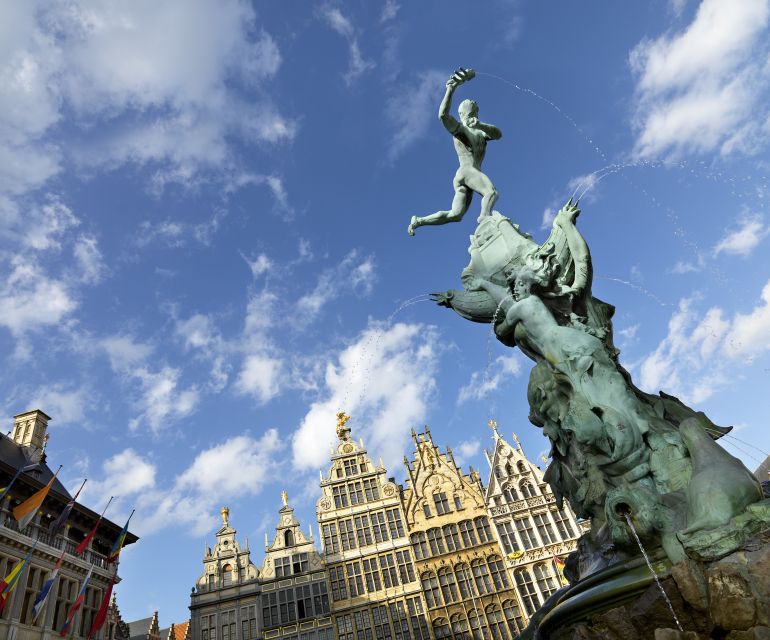
- Grote Markt sets the scene: Brabo Fountain, City Hall, and ornate guild houses give you Antwerp’s clearest introduction to its past.
- The route covers several sides of the city: You move from medieval lanes to Flemish art, shopping streets, Baroque history, and grand railway architecture.
- Guides can shape the experience: Luc reportedly discussed the plan at the start and worked in personal requests, while Rosemarie earned praise for a relaxed, friendly style.
- Central Station is part of the tour: The final stop adds a major 19th-century building that many short city walks leave out.
- Choose sturdy, comfortable shoes: The tour is on foot, with no transport included and no special access provision for mobility impairments.
Starting at Brabo Fountain in Grote Markt
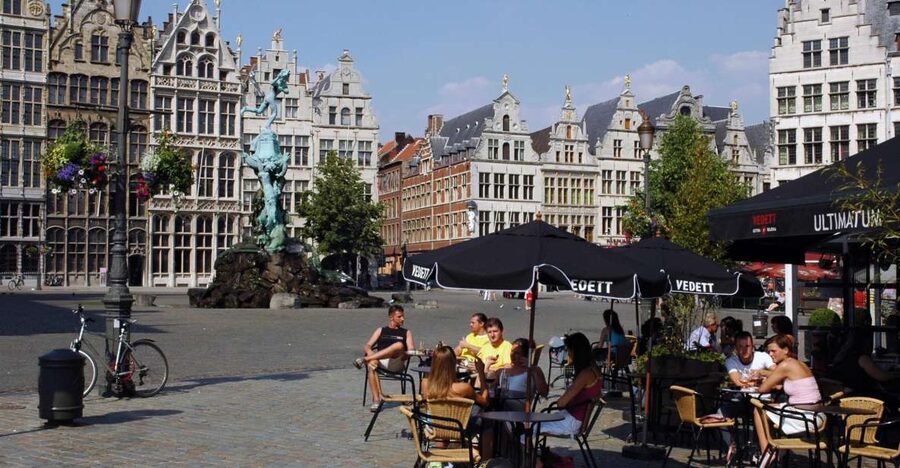
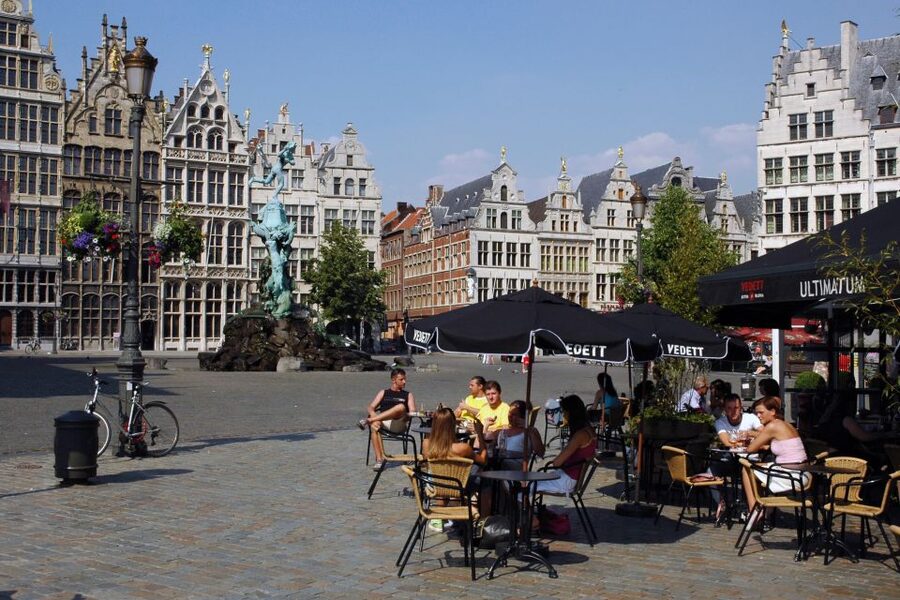
The tour begins at the Brabo Fountain in Grote Markt, Antwerp’s main market square in the old quarter. The meeting point is easy to identify, but pay attention when booking because the general description also says a guide may meet you in your hotel lobby. The specific meeting information gives Brabo Fountain as the meeting point, so confirm the arrangement before the day of your walk.
Grote Markt is an excellent place to begin because Antwerp’s story is written across the square. The fountain, inaugurated in 1887, gives your guide a chance to explain one of the city’s best-known legends and symbols. It is also a useful first pause before the walking begins in earnest.
Look around before the guide gathers the group. The square is framed by historic buildings, and the contrast between the open plaza and the tight lanes beyond it helps you understand how Antwerp developed. This is not simply a photo stop. It gives you a visual map of the old center.
Because the tour is private, you can ask for more background here if Antwerp’s founding stories, symbols, or civic traditions interest you. If you prefer to move quickly toward architecture, your guide can keep the introduction short. That flexibility is one of the strongest reasons to consider a private walk instead of a fixed group outing.
More History Tours in Antwerp
- Historical Walking Tour: Legends of Antwerp
★ 5.0 · 1,837 reviews - Antwerp: Historical Walking Tour in the Old City
★ 4.8 · 373 reviews - Private tour: Highlights & History of Antwerp
★ 5.0 · 299 reviews
City Hall and the guild houses of Antwerp
From the fountain, the tour turns to the Renaissance City Hall and the guild houses around the square. These buildings are among the most rewarding sights on the route, especially if you enjoy architecture but do not want to spend hours in a museum.
The guild houses reflect the importance of trade and craft associations in Antwerp’s past. Their decorative fronts were designed to show status, wealth, and professional pride. You will hear about the details that are easy to miss when you walk through the square alone, including how the buildings helped shape the look of Antwerp’s old center.
The City Hall anchors the whole group. Its Renaissance design gives the square much of its formal character, while the surrounding facades add variety and theatrical detail. Your guide’s explanation matters here because the buildings can otherwise blur into one grand sweep of ornament.
This portion is especially useful for first-time visitors. You get a basic sense of how commerce, government, and public display worked together in the city. The tour does not promise entrance to every building, and entrance fees are not included, so expect the focus to be on exterior views and guided interpretation unless your guide advises otherwise.
Our Lady Cathedral and Flemish masters
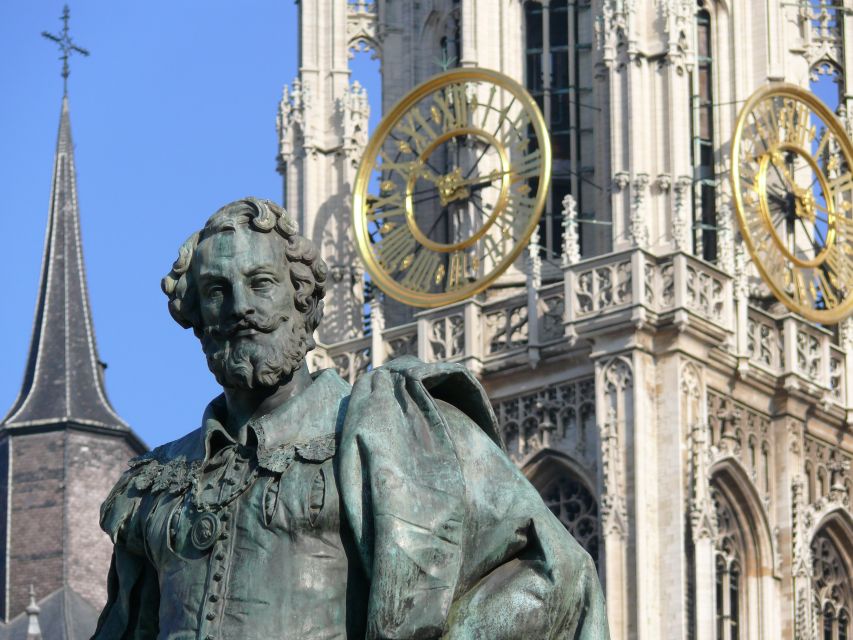
The next major stop is the Cathedral of Our Lady, one of Antwerp’s most important landmarks. The cathedral houses art by famous Flemish masters, making it a key stop for anyone interested in painting as well as architecture.
The supplied details do not specify an included admission ticket, and entrance fees are excluded from the tour price. You should therefore be prepared to pay separately if the cathedral requires admission for the part of the visit you want to make. Ask your guide at the start how the timing and entry will work.
The value here comes from seeing art in the setting for which it was intended. A painting inside a major church carries a different weight than a picture viewed in a modern gallery. The cathedral also adds a large interior space after the close architectural detail of Grote Markt.
If you want time to study the art, say so early. A three-hour walk covers many locations, so the pace may favor a clear overview rather than a long art-history lecture at each work. A private guide gives you a better chance of focusing on the Flemish painters or religious art that matters most to you.
Vlaeykensgang, Antwerp’s crooked medieval lanes
The route then narrows into Vlaeykensgang, a medieval section known for its tight streets and crooked alleyways. This is one of the tour’s most atmospheric changes of pace.
After the broad space of Grote Markt and the scale of the cathedral, Vlaeykensgang feels intimate and enclosed. The lane layout gives you a sense of old Antwerp that a grand monument cannot provide. It is the sort of place where a guide can add useful context about how people moved through the city before modern streets reshaped daily life.
Wear shoes with good support. The walk is not described as suitable for people with mobility impairments, and the combination of narrow passages, historic paving, and several hours on foot may be uncomfortable if you need a smooth route.
This stop also rewards a slower pace. The crooked lanes are easy to rush through, especially when the tour has a full schedule. A private group can pause for photos or ask questions without worrying about holding up a large public group.
More Walking Tours in Antwerp
- Antwerp: City Highlights Walking Tour
★ 4.7 · 816 reviews - Historical Walking Tour in Antwerp Old City
★ 5.0 · 277 reviews - Evening Walking Tour: The Dark Side of Antwerp
★ 5.0 · 193 reviews - Antwerp: Private Walking Tour with a Local
★ 4.2 · 183 reviews
Groenplaats, the Meir, and Rubens
From Vlaeykensgang, the walk continues through Groenplaats and toward the Meir, Antwerp’s best-known shopping street. These stops show a different side of the city. Instead of focusing only on medieval buildings, the route connects the old quarter with a major modern commercial corridor.
Groenplaats offers another open urban space and a natural transition between the historic center and the Meir. The Meir itself is popular for shopping, so this section may appeal to anyone who wants to combine sightseeing with time in the city’s retail heart.
You pass the Rubens House, the former home and studio of Baroque painter Pieter Paul Rubens. The itinerary says you pass by the house, not that you enter it. That distinction matters if Rubens is your main reason for booking. You will get the setting and the guide’s explanation, but you should not assume that admission or an interior tour is included.
Still, the stop works well in the larger story. Rubens connects Antwerp’s commercial success, artistic life, and international reputation. You are not seeing isolated attractions. You are following a route that links public power, trade, art, and city life.
Finishing at Antwerp Central Station
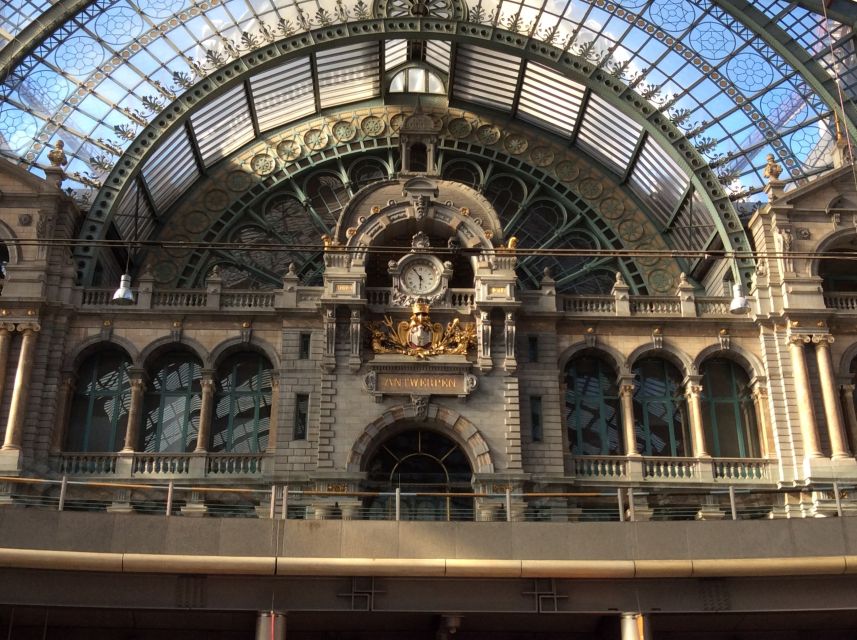
The tour ends with a guided visit to Antwerp Central Station, built at the end of the 19th century. This is a smart final stop because it changes the architectural mood once again.
The station is not medieval and does not belong to the Renaissance streets around Grote Markt. Its grand design reflects a later period, when rail travel had become a major part of urban life. Including it gives you a fuller sense of Antwerp’s growth instead of ending with only the oldest monuments.
For many people, Central Station is also a practical sight. You may pass through it during your visit, and understanding its design makes an ordinary arrival or departure more interesting. The guided visit turns a transport hub into part of the city story.
Ending here may also help you plan the rest of your day. The tour does not include food, drinks, or onward transport, but finishing at a major station gives you a clear landmark from which to continue independently. The exact amount of time spent inside the station is not specified, so ask your guide if this building is a priority.
What the private format is worth
The price is $341 for a private group of up to 20 people. That figure looks high for a solo visitor or a couple, but the calculation changes quickly for a family, reunion, or group of friends. Split among 10 people, it is about $34 per person. With the full 20-person capacity, it is about $17 per person.
You are paying for a private guide rather than entrance tickets, meals, or transport. That makes the tour most attractive when you value personal attention and a flexible route. It is less attractive if you mainly want a cheap orientation walk or plan to spend most of your time inside museums.
The guide quality appears to be a major part of the experience. Luc was praised for discussing the program at the start, accepting suggestions, and respecting individual wishes. Rosemarie was described as friendly, relaxed, humorous, and well informed. Those details suggest a good fit for people who prefer conversation and adjustment rather than a memorized speech.
The tour is offered in Dutch, English, French, and German. If language matters to your group, select carefully and confirm availability before booking. One German-language participant enjoyed the historical content and the chance to look at individual buildings, while one Dutch-language participant found the guide difficult to hear at times because of city noise. That is a useful warning: on crowded streets and busy squares, stand close to the guide and ask for repetition when needed.
Pace, access, and planning your day
Three hours is enough to cover the main sights listed, but it is not long enough for a detailed interior visit at every location. Think of this as a city-center orientation with strong historical content, not a museum marathon.
The tour is entirely walking-based. Comfortable shoes and comfortable clothes are essential, not just polite suggestions. The route includes older parts of the city and narrow lanes, and the activity is not recommended for wheelchair users or people with mobility impairments.
You should also allow extra time before or after the tour if you want to visit the cathedral or Rubens House properly. Entrance fees are not included, and the walking schedule may provide only an introduction to some sites. The guide can help you decide where to return later, especially if you tell them your interests at the beginning.
The activity offers free cancellation up to 24 hours before the start, with a full refund, and you can reserve now while paying later. Those terms are useful if your Antwerp schedule may change, but the most important planning question is still physical comfort.
Who will enjoy this Antwerp walk?
I would recommend this tour to first-time visitors who want a clear introduction to central Antwerp in one morning or afternoon. It also suits families and private groups who want to ask questions without being tied to strangers or a fixed public itinerary.
Art lovers will appreciate the cathedral and the Rubens connection, while architecture fans will get the most from the City Hall, guild houses, and Central Station. The route also has enough variety for people who do not want three straight hours of church interiors and formal monuments.
It may be less suitable for visitors who want a slow, single-subject tour. If your main goal is an extended look at Flemish paintings, a dedicated art tour would give you more time. If you have difficulty walking, the access warning should guide your decision.
The strongest praise has focused on the guides’ manner and ability to tailor the experience. That matters because Antwerp rewards questions. Ask about a facade, a painting, a guild house, or the change from medieval lanes to railway grandeur, and the private setting gives you room to follow the thread.
Should you book this tour?
Book it if you want a friendly private introduction to Antwerp that joins the old center, Flemish art, Rubens, shopping streets, and Central Station in one route. It offers particularly good value for a group of several people, and the guide can adjust the emphasis to suit your interests.
Skip it if you need step-free access, dislike several hours on foot, or want admission to multiple interiors included in the price. For everyone else, this is a well-planned first look at Antwerp, with enough architectural variety and human guidance to make the city easier to understand on your own afterward.
FAQ
How long is the Antwerp historical sightseeing tour?
The tour lasts three hours.
Where does the tour meet?
The specific meeting point is the Brabo Fountain in Grote Markt. The general description also refers to meeting a guide in a hotel lobby, so confirm the exact arrangement when booking.
Is this a private tour?
Yes. It is offered as a private group experience for up to 20 people.
What languages are available?
Live guides are available in Dutch, English, French, and German.
What is included in the price?
A private guide is included.
Are entrance fees included?
No. Entrance fees are not included in the tour price.
Are food and drinks included?
No. Food and drinks are not included.
Is the tour suitable for wheelchair users?
No. The activity is not suitable for wheelchair users or people with mobility impairments.
What should I bring?
Bring comfortable shoes and comfortable clothes. The experience lasts three hours and takes place on foot.
Just added in Antwerp
- Discover Antwerp while playing! Escape game – The Walter case★ 4.5 · 2 reviews
- Antwerp: City Walk with Audio Guide in 7 Languages on your Phone★ 3.0 · 15 reviews
- Surprise Walk of Antwerp with a Local★ 5.0 · 1 review
- Explore the Instaworthy Spots of Antwerp with a Local★ 5.0 · 1 review
- Discover Antwerp while playing! Escape game – The alchemist★ 4.5 · 4 reviews
- Landed On Time 60 min. Max 1 Person★ 4.0 · 5 reviews
- Antwerp Private Custom Walking Tour With A Guide (Private Tour)★ 4.5 · 12 reviews
- Discover Antwerp with this Outside Escape city game tour!★ 5.0 · 4 reviews
Walking Tours, compared.

Small Group Boat Cruise and Guided Walking Tour
Read our review →
Walking Tour, Canal Boat Trip w/Beer Tasting Option
Read our review →

Historical Walking Tour with Chocolate & Waffle Tasting
Read our review →
Brussels Walking and Tasting Tour (Beers,Chocolates&Fries/Waffle)
Read our review →
Browse the lists this tour appears in