
Reviewed · CANAL CRUISES
Ghent: Guided Walking Tour and Canal Boat Trip
Ghent rewards a closer look. This 150-minute tour combines a guided walk through the city center with a canal cruise, so you get both street-level detail and broad views from the water. I like the mix of major sights and less polished corners, especially the Patershol quarter, old markets, and Graslei. I also like the clear focus on Ghent’s three towers: Saint Bavo’s Cathedral, the Belfry, and Saint Nicholas’ Church.
The main drawback is pace. With eight walking stops and only about 15 minutes assigned to each, you get a useful overview rather than a slow visit inside every monument. Rain can also make the walking portion less comfortable, though the boat provides a welcome change of setting. At $32 per person, this is a strong value if you want orientation and local context in one compact outing.
In This Review
- Key points to know before booking
- Why this walking-and-boat combination works
- Starting beneath the Belfry of Ghent
- Saint Bavo’s Cathedral and the Mystic Lamb
- Town Hall and Saint Nicholas’ Church
- Graslei and the old trading waterfront
- The Old Fish Market and Meat Market
- Patershol, the old weavers’ quarter
- The Castle of the Counts and its legends
- Thirty minutes on the Leie and Lieve
- Guides, radios, and the human side of the tour
- Is $32 a fair price?
- Who should book this Ghent tour?
- Should you book it?
- FAQ
- How long does the Ghent walking and canal tour last?
- Where does the tour meet?
- Where does the tour finish?
- What language is the tour in?
- Is the canal boat trip included in the price?
- Are food and drinks included?
- What should I bring?
- Can I cancel the tour for a refund?
Key points to know before booking

- The three towers anchor the walk: Saint Bavo’s Cathedral, the Belfry of Ghent, and Saint Nicholas’ Church form the city’s famous skyline.
- The boat ride adds a different view: A 30-minute cruise follows the Leie River and Lieve canal, with audio commentary and illustrated translations.
- The guide makes the difference: Guides including Ariel, Peter, Juliana, Eros, and others have been praised for humor, clear English, and lively storytelling.
- The route covers medieval and commercial Ghent: You see the guild quays, old food markets, Patershol, and the Castle of the Counts.
- The walk is easy to follow but full of information: Comfortable shoes matter, and a small radio system may help you hear the guide.
- You can split the experience: The boat portion offers a natural break, and one booking can work well around lunch plans.
Why this walking-and-boat combination works
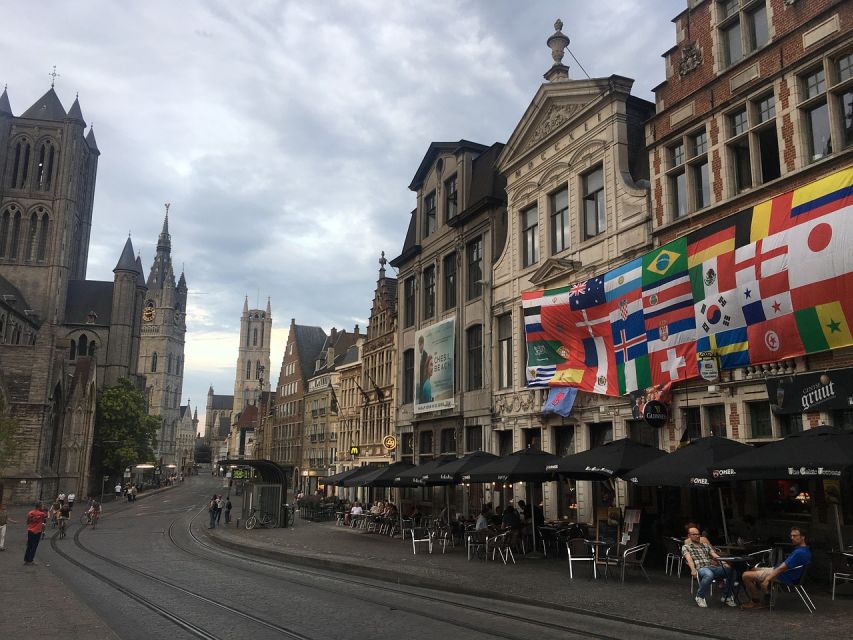
Ghent is the kind of city that can look simple at first: a handsome church, a tall bell tower, a canal, and rows of old buildings. The details become more useful when someone explains how the city worked, who controlled its trade, and why its waterways mattered.
This tour gives you that basic framework without taking an entire day. The first part is a guided walk through central Ghent. The second part shifts to the water, where you can rest your feet and see the facades from a lower, wider viewpoint.
I find that combination more useful than a walking tour alone. Streets tell you how a city feels, while a boat can show you how its buildings fit together. Here, the change from narrow lanes to open canal views helps you get your bearings quickly.
The group meets outside the Belfry of Ghent at Sint-Baafsplein 12. Look for the guide holding a large black umbrella. That detail matters in a busy square, particularly if several groups are gathering nearby.
The activity is offered in English with a live guide. Some visitors have praised the small radio system, which made it easier to follow the commentary while walking. The tour’s rating is 3.8 from 128 reviews, so you should expect a generally positive experience with some variation depending on the guide, weather, and group timing.
More Boat Trips in Ghent
- Ghent: 50-Minute Medieval Center Guided Boat Trip
★ 4.5 · 5,637 reviews - Ghent: 40 Minute Medieval Center Guided Boat Tour
★ 4.4 · 884 reviews - Ghent: 40-Minute Historical Boat Tour of City Center
★ 4.3 · 430 reviews
Starting beneath the Belfry of Ghent
The Belfry is a natural meeting point and a fitting place to begin. It is one of the tallest towers in the city and historically served as a lookout point. You will spend about 15 minutes here, enough time for an introduction to the tower and its place in Ghent’s skyline.
The Belfry is one of the three towers you will keep seeing as the walk continues. Along with Saint Bavo’s Cathedral and Saint Nicholas’ Church, it creates the famous vertical line across the center of the city.
Do not expect this tour segment to function as a full Belfry visit. The stated stop is a guided explanation, not a dedicated tower climb. If reaching the lookout is important to you, ask the guide how to arrange a separate visit during your free time.
The square also makes a practical starting point because several major sights are close together. You are not spending the first part of the tour on a long transfer. Instead, the guide can begin with the city’s most recognizable symbols.
Saint Bavo’s Cathedral and the Mystic Lamb
The next stop is Saint Bavo’s Cathedral, where the tour spends about 15 minutes. The cathedral matters for its architecture, but the key attraction is the Adoration of the Mystic Lamb by Hubert and Jan van Eyck.
The guide’s explanation of the painting’s symbols is one of the stronger reasons to take a tour like this. A famous artwork can be hard to read without context. The figures, objects, and religious references may look decorative at first, while a clear explanation gives you a way to understand what you are seeing.
The timing is brief, so I would treat this as an introduction rather than a full art-focused visit. If the Mystic Lamb is high on your list, allow separate time to return and see it at your own pace. The guided explanation should make that later visit more rewarding.
This part also shows the tour’s general method. You are not only being led from one pretty building to the next. You are being given reasons for the building’s importance, along with a few tools for looking more closely.
Town Hall and Saint Nicholas’ Church
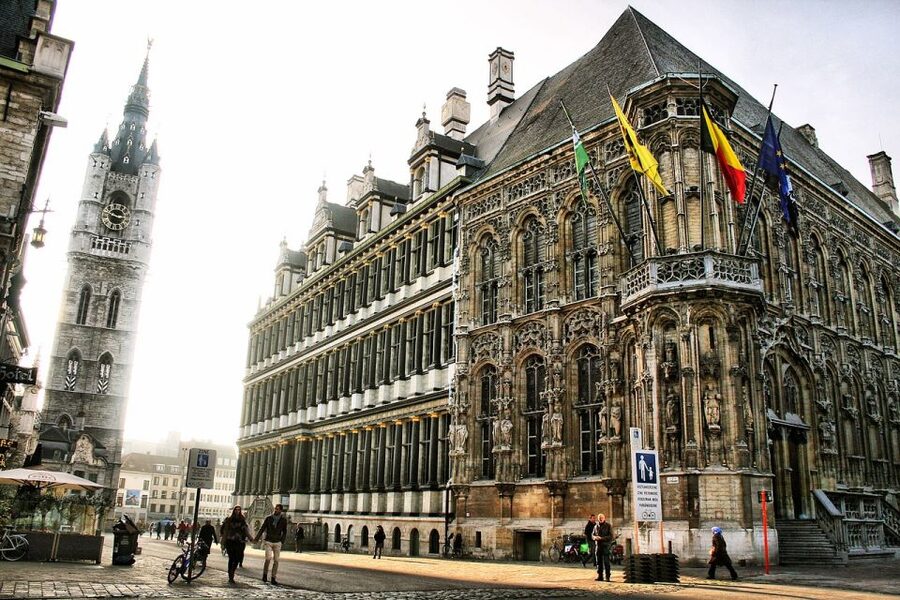
The Town Hall receives another 15-minute stop. Its importance comes from both its architecture and its role in the civic life of Ghent. The guide places it within the central story of the city, alongside the Belfry and cathedral.
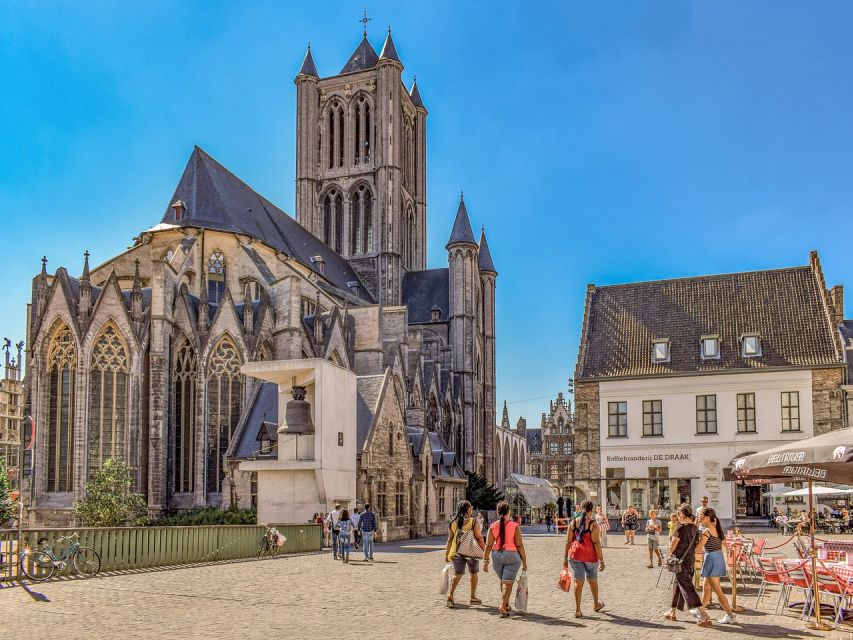
Then you continue to Saint Nicholas’ Church, another of the three towers. The church adds a different architectural note to the skyline and helps you understand how concentrated Ghent’s historic center is.
I like this section because the route connects civic, religious, and commercial power in a short distance. Ghent was not shaped by one institution alone. Its churches, officials, merchants, and craft guilds all left marks on the same compact center.
The short stop format keeps the tour moving, but it also means you should listen for the main points rather than expect a detailed architectural lecture. If you prefer slow photography or quiet interior visits, you may want extra time after the tour.
More Walking Tours in Ghent
- Historical Walking Tour: Legends of Gent
★ 5.0 · 1,761 reviews - Ghent: Belgian Chocolate Walking Tour with Tastings
★ 4.9 · 259 reviews - Gastronomic Walking Tour of Gent – Tasters included
★ 5.0 · 199 reviews - Ghent: Private 2-Hour Walking Tour
★ 4.7 · 134 reviews
Graslei and the old trading waterfront
At Graslei, the route turns toward the water and Ghent’s trading past. This was a key commercial area, and the buildings along the quays give you one of the city’s most attractive views.
The tour also covers the Herb and Grain Quay. In the 16th century, these quays were tied to the movement and sale of goods. The guide explains the old guild trades, which adds human detail to the handsome facades.
This is where the walk becomes more than a list of landmarks. You begin to see why the waterways were valuable and why the quay buildings mattered. The canals were part of daily work, not just a scenic backdrop for modern photographs.
You will likely want your camera ready here, but do not let photos crowd out the explanation. The guide’s account of trade and guild life gives the waterfront a practical meaning that you can miss when walking through alone.
The Old Fish Market and Meat Market
The Old Fish Market and Meat Market represent the food-shopping system of earlier Ghent. Calling them the supermarket of their time is a useful way to understand their role. These were not minor stalls at the edge of town. They helped organize food supply and supported the city’s growth.
The route uses these markets to explain how trade shaped urban life. That is useful context because you can look at an old market building and otherwise see only a picturesque facade.
The stop is also a reminder that medieval and early modern cities were practical places. People needed food, storage, transport, rules, and reliable places to buy goods. The guide’s job here is to connect those basic needs to Ghent’s development.
Since the tour covers several sites in succession, the information can come quickly. One visitor described the amount of material as a lot to digest. I agree with that caution. You will get more from the walk if you focus on the broad story and make notes about places you want to revisit.
Patershol, the old weavers’ quarter
The route then enters Patershol, also called the weavers’ quarter. This area provides a change from the broad quays and major monuments. Its connection with textile work helps explain the trades that once supported Ghent’s economy.
The quarter is valuable because it gives the tour a more local scale. Instead of looking only at civic buildings, you see a district linked to working people and craft production.
I would pay attention to the guide’s stories here. Patershol is the sort of place where small details about occupation, streets, and daily routines can make the past easier to picture. The walk does not promise a long stop in every lane, but the quarter adds texture to the overall route.
This is also a good point to notice the tour’s physical demands. The walk is not described as difficult, and one visitor found the length easy to manage, but you should still wear comfortable shoes. Cobblestones, weather, and standing can matter more than the distance alone.
The Castle of the Counts and its legends
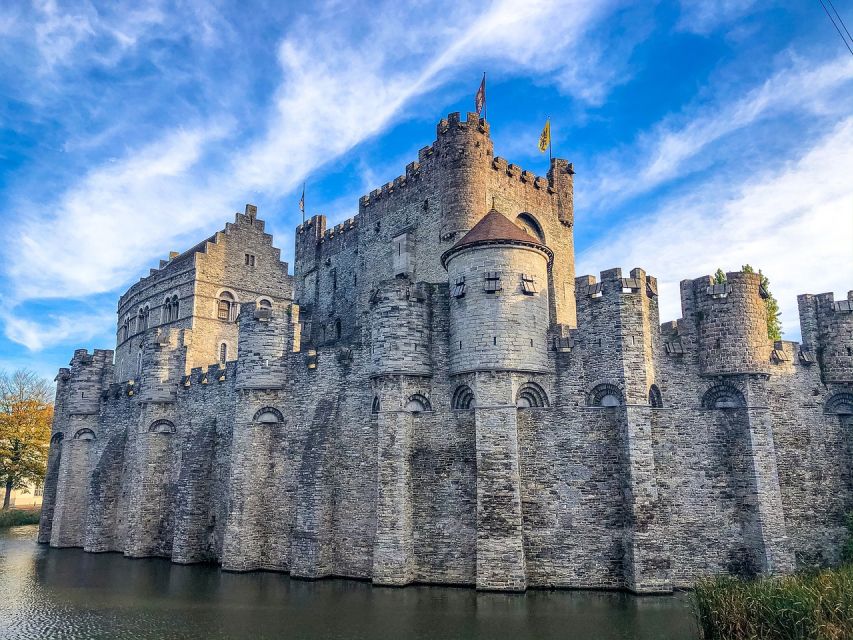
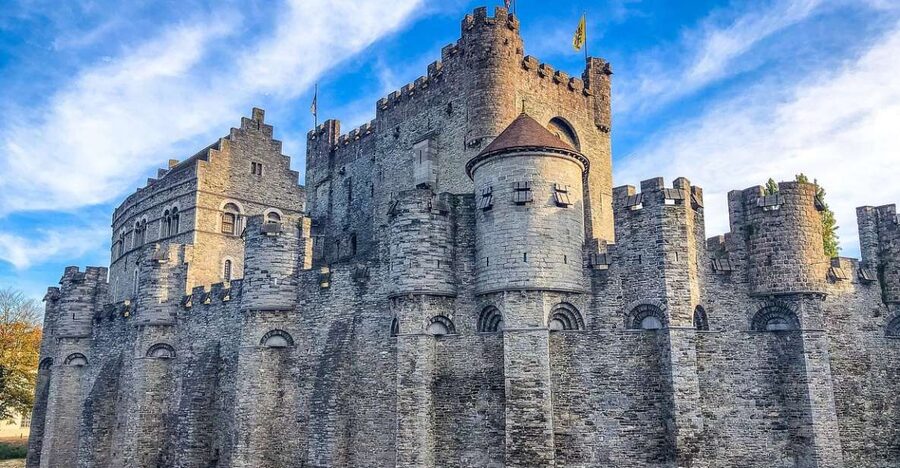
The Castle of the Counts of Flanders, known as Gravensteen, gives the tour a strong medieval finish. Its story includes legends and curious details, and the guide uses those tales to make the fortress easier to understand.
The castle adds a defensive and political side to the walk. After hearing about churches, merchants, guilds, and markets, you reach a building connected with power and control.
Again, the tour offers an introduction rather than a full castle visit. The scheduled time is about 15 minutes, so do not assume you will explore every room or wall. If you want to go inside, plan separate time and check the opening details for your date.
Even from outside, Gravensteen is an effective stop because it changes the mood of the route. The story shifts from trade and worship to rulers, fortifications, and legend. That variety helps the 150-minute experience feel full without becoming a single long lecture.
Thirty minutes on the Leie and Lieve
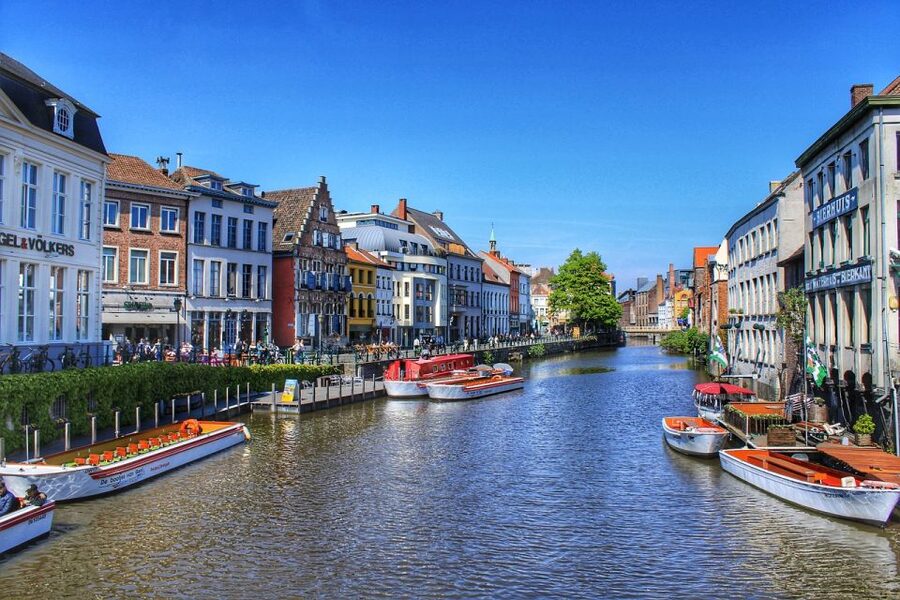
The boat trip is the second half of the experience and lasts about 30 minutes. You travel along the Leie River and the Lieve canal, seeing both banks from the water.
I especially like the timing of this section. After a string of walking stops, sitting down gives you a practical rest. One visitor used the gap to have lunch before walking to the launch area, which suggests that the boat portion can fit flexibly around the day’s plans.
The canal view also changes your understanding of Ghent. From the street, you notice individual buildings and corners. From the boat, you see how the water links the city’s old commercial and residential areas.
An audio guide with illustrated translations provides commentary during the cruise. That makes the boat portion less dependent on the walking guide and helps keep the information moving while you look around.
The boat tour is multilingual in practice. One guide was praised for presenting the commentary in four languages, though the activity information specifies English for the live walking tour. If English is your main language, confirm the exact boat commentary arrangements when you meet.
Weather matters here too. Rain affected one outing for about an hour, and a canal cruise is less pleasant when the weather turns poor. Bring suitable clothing, and remember that the tour runs outdoors for most of its duration.
The cruise finishes at Gent Watertoerist rather than at the original meeting point. Keep that in mind when planning your next stop. You will need to make your own way onward from the boat landing.
Guides, radios, and the human side of the tour
The guide is the biggest variable in an experience like this. The most praised guides have included Ariel, Peter, Juliana, Eros, and others who brought humor, warmth, and clear explanations to the route.
Peter was praised for making history feel alive and adding plenty of laughs. Ariel was described as witty, with very good English and a well-run presentation. Juliana received especially warm praise for her kindness, personal manner, and love for Ghent. Eros was appreciated for both his command of the subject and the way he presented it.
That range of names tells you something useful. The company appears to use several guides, so the tone may vary. The core route remains the same, but the experience can feel more formal, more comic, or more personal depending on who leads your group.
The radio system is another small advantage. In a city center with traffic, other groups, and people moving around, being able to hear clearly can save you from missing half the story.
One minor concern is historical precision. A visitor found the guide engaging but was sometimes unsure about the total accuracy of the information. I would treat colorful stories as an enjoyable part of the tour, while checking especially important details later if you need academic certainty.
Is $32 a fair price?
At $32, the tour is priced well for a 150-minute experience that includes both a professional walking guide and a canal boat trip. You are not paying only for transport or a quick set of photo stops. The value comes from combining orientation, interpretation, and a scheduled boat ride.
It is particularly good value if you have limited time in Ghent. You see the central towers, cathedral, Town Hall, church, quays, markets, Patershol, and Gravensteen in one organized route.
The price is less compelling if you prefer to move slowly, enter every attraction, or spend long periods taking photographs. The tour gives you a useful snapshot, not a full day of independent exploration.
Food and drinks are not included. That is easy to manage, and the boat section can provide a natural break for lunch if you plan the timing carefully.
You can cancel free of charge up to 24 hours before the start time. Late arrival, cancellation inside that window, or a no-show brings no refund. You can also reserve now and pay later, which helps if your Ghent plans are still shifting.
Who should book this Ghent tour?
I would book this for a first visit, a short stay, or a day when you want a clear introduction before exploring alone. It suits you if you enjoy history in manageable portions and like moving between major sights without planning every turn yourself.
It is also a good choice for anyone who wants a boat ride but does not want to book a separate walking tour. The two parts work together, and the cruise offers a needed pause.
You may want another plan if you dislike group tours, need extensive time inside monuments, or want a specialist focus on art, architecture, or food. The tour covers many subjects, so it cannot give each one equal depth.
Bring comfortable shoes and prepare for outdoor weather. Meet outside the Belfry with enough time to find the guide and the large black umbrella. If you want to see the Mystic Lamb, climb the Belfry, or tour Gravensteen properly, use the walk as your orientation and return to those sights afterward.
Should you book it?
Book this tour if you want a well-priced first look at Ghent with both walking commentary and canal views. Its greatest strengths are the lively guides, the wide range of central sights, and the easy shift from walking to boat.
Skip it if your priority is detailed interior visits or a slow, specialist tour. For most first-time visitors, though, $32 buys a smart introduction to the city, and the boat ride gives the day a pleasant change of pace.
FAQ
How long does the Ghent walking and canal tour last?
The full experience lasts 150 minutes, including the guided walking tour and a 30-minute canal cruise.
Where does the tour meet?
The meeting point is outside the Belfry Tower at Sint-Baafsplein 12. The guide will be holding a large black umbrella.
Where does the tour finish?
The boat portion finishes at Gent Watertoerist.
What language is the tour in?
The live guided tour is in English. The boat includes an audio guide with illustrated translations.
Is the canal boat trip included in the price?
Yes. The price includes the walking tour, professional guide, and canal boat trip.
Are food and drinks included?
No. Food and drinks are not included.
What should I bring?
Bring comfortable shoes. The tour includes an extended walk through central Ghent and outdoor time along the canals.
Can I cancel the tour for a refund?
You can cancel up to 24 hours before the tour starts for a full refund. No refund is offered for late cancellation, arriving late, or not showing up.
Just added in Ghent
- Historic Highlights, by a local guide★ 5.0 · 9 reviews
- Walking Food Tour in Ghent★ 5.0 · 13 reviews
- Discover Ghent while playing! Escape game – The alchemist★ 4.0 · 4 reviews
- Discover Ghent while playing! Escape game – The Walter case★ 4.5 · 4 reviews
- e-Scavenger hunt Ostend: Explore the city at your own pace★ 4.5 · 10 reviews
- Discover Mons while playing! Escape game – The alchemist★ 4.0 · 5 reviews
- Kortrijk Self-Guided Sherlock Holmes Murder Mystery Game★ 5.0 · 2 reviews
- Taste of Ghent: Private Chocolate Walking Tour★ 5.0 · 1 review
Canal Cruises, compared.
Walking Tour, Canal Boat Trip w/Beer Tasting Option
Read our review →
Day trip to Bruges from Paris with canal cruise
Read our review →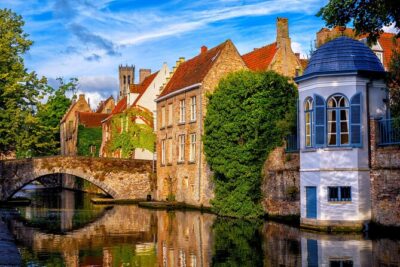
Bruges Tour with Canal Cruise from Zeebrugge Cruise Port
Read our review →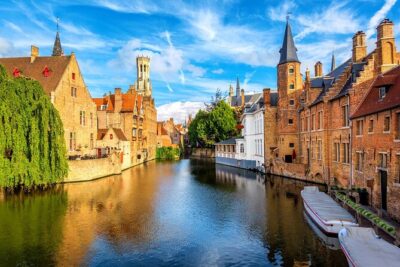
Best Bruges Shore Excursion including Deluxe Canal Cruise
Read our review →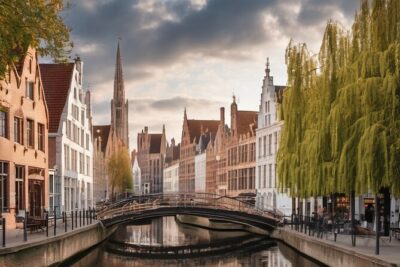
Stress-Free Bruges for Cruise Passengers with opt. Canal Cruise
Read our review →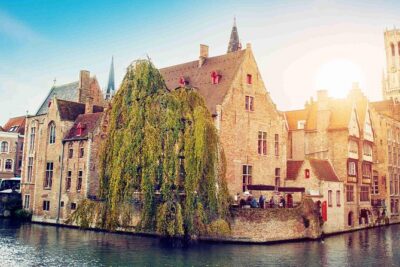
Bruges Uncovered: Historic Walking Tour & Canal Boat Experience
Read our review →
Bruges Tour from Your Cruise Ship with Canal Cruse & Leisure Time
Read our review →
Small-Group Bruges Tour with opt Canal Cruise from Zeebrugge
Read our review →Browse the lists this tour appears in