
Reviewed · HISTORICAL TOURS
Historic Highlights, by a local guide
Ghent reveals itself one story at a time. This two-hour walking tour is appealing because local guide Jurgen connects the city’s buildings, waterways, politics, and daily life instead of simply pointing out monuments. I especially like the local perspective and the way the walk joins famous sights with quieter streets. The main consideration is that several stops are viewed from outside, and admission to places such as St. Bavo’s Cathedral and Gravensteen costs extra.
At $40.33 per person, the experience offers a solid introduction for a first visit, especially if your group stays small. Jurgen is a professor of history, and his enthusiasm comes through in the way he explains the city. The fixed two-hour length is easy to fit into a day, though you may finish wanting more time for the interiors and side stories.
In This Review
- Key details that shape the walk
- Why this Ghent walk works so well
- Starting beside the old moat at Hagelandkaai
- Following the waterways toward Ghent’s beginning
- St. Bavo’s Cathedral and the Van Eyck masterpiece
- The Kouter and Ghent’s elegant 18th-century side
- Hotel d’Hane Steenhuyse, an 18th-century city palace
- Gravensteen and the medieval power of the Counts
- Patershol, one of Ghent’s oldest quarters
- Finishing at Vrijdagmarkt with politics and food nearby
- What Jurgen adds to the experience
- Price, timing, and practical value
- Who should book this Ghent walking tour?
- FAQ
- Where does the tour start?
- Where does the tour end?
- How long does the tour last?
- What is the price?
- Is admission to the sights included?
- How many people can join?
- Can I cancel for a full refund?
- Should you book Historic Highlights?
Key details that shape the walk
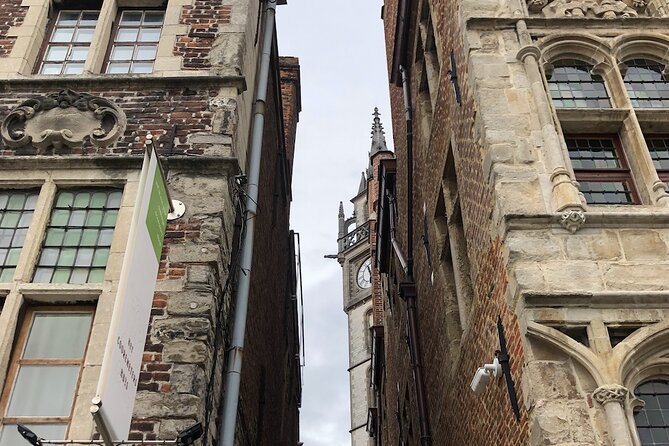
- A local starting point at Hagelandkaai: The walk begins beside the Napoleon De Pauw lock, where a moat once helped protect the Spanish Castle.
- Ghent’s origins at the meeting of two rivers: Bisdomkaai leads toward the confluence of the Leie and Schelde, a useful place to understand why the city began here.
- Famous sights with context: St. Bavo’s Cathedral, the Kouter, Hotel d’Hane Steenhuyse, Gravensteen, Patershol, and Vrijdagmarkt all appear in one compact route.
- A guide who teaches rather than recites: Jurgen’s background as a history professor gives the walk structure, while his local roots add personal detail.
- A finish near food and drink: The tour ends at Vrijdagmarkt, close to restaurants and bars, with a food tip connected to Enzo at pizzeria Neapolis.
- Flexible cancellation: You can cancel for a full refund up to 24 hours before the 3 p.m. start time.
Why this Ghent walk works so well
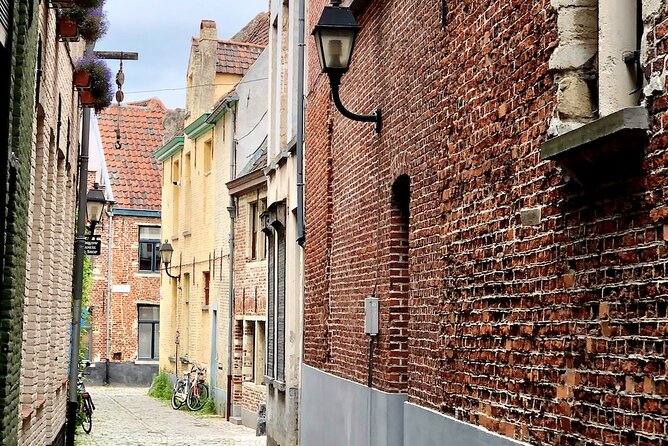
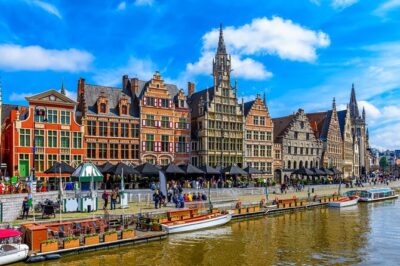
Ghent can feel confusing at first. Its medieval center, waterways, grand churches, former industrial areas, and elegant 18th-century streets do not always tell their stories in a clear order. A good guide gives you a mental map, and that is the main value of this experience.
Jurgen appears to approach the city as both a teacher and a proud local. That combination matters. You get dates and names, but also an explanation of how the city changed and why particular corners still matter. The walk covers Ghent from its early origins through later political and social movements, including the industrial revolution and the socialist movement.
I like that the route does not stay only on the postcard circuit. You see major landmarks, but the guide also points out less obvious streets and buildings. This gives you a better sense of Ghent as a lived-in city rather than a collection of attractive facades.
The pace should suit most people who can manage a two-hour city walk. The official maximum is 20 people, but one booking described a group of only three. A smaller group makes it easier to ask questions and follow Jurgen’s explanations, though you should not assume every departure will be private.
More History Tours in Ghent
- Historical Walking Tour: Legends of Gent
★ 5.0 · 1,761 reviews - Ghent: 40-Minute Historical Boat Tour of City Center
★ 4.3 · 430 reviews - Private Historical Tour: The Best of Ghent
★ 5.0 · 115 reviews
Starting beside the old moat at Hagelandkaai
The meeting point is Hagelandkaai 53, 9000 Gent, with a 3 p.m. start. The tour begins at the guide’s house on the Napoleon De Pauw lock. In the 16th century, this area formed part of the moat around the Spanish Castle.
That is a clever opening. Instead of beginning with a famous church or castle, Jurgen starts with the ground beneath you and the defensive system that once shaped the city. You begin thinking about Ghent as a fortified place, not merely a handsome old town.
The first stop lasts about five minutes, so do not expect a long lecture here. Its purpose is to set the scene and show how much of Ghent’s past remains embedded in ordinary urban spaces. Arrive ready to walk, since the location is near public transportation but the experience itself proceeds on foot.
Following the waterways toward Ghent’s beginning
From Hagelandkaai, the route passes the old St. Bavo’s Abbey and continues toward the meeting point of the Leie and Schelde rivers. This section takes about 10 minutes and is one of the best parts for understanding Ghent’s foundation.
Water made the city possible. The rivers supported trade, movement, industry, and settlement, while their meeting point gave Ghent a natural center. Jurgen’s approach helps you connect the water in front of you with the city’s later growth.
This is also a good moment to pay attention to orientation. The canals and rivers can make Ghent seem like a maze when you first arrive. By the end of this section, you should have a clearer idea of how the old center relates to its waterways.
St. Bavo’s Cathedral and the Van Eyck masterpiece
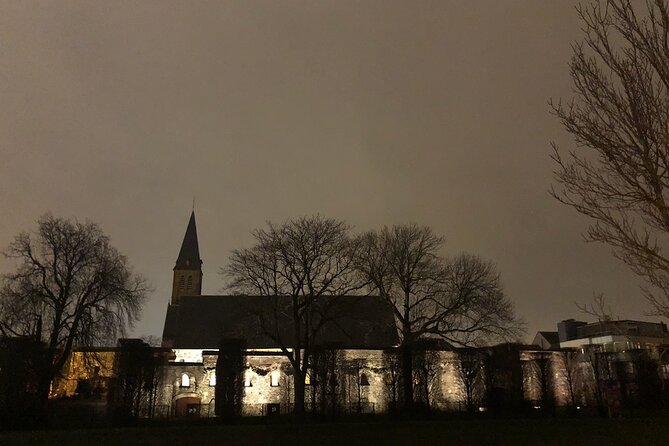
St. Bavo’s Cathedral is one of the key stops, with about 10 minutes devoted to it. The cathedral houses the Lam Gods, the famous altarpiece by Jan and Hubert van Eyck. Admission is not included, so the stop is mainly an exterior explanation unless you arrange a separate visit.
That distinction is important. This walking tour introduces the cathedral and explains why it matters, but two hours cannot include every interior. If the Lam Gods is a priority for you, plan time to return or enter separately. The tour information also points to a virtual tour inside the cathedral, which may be worth adding to your schedule.
I like the way this stop fits into the larger route. The cathedral is not treated as an isolated masterpiece. It becomes part of the story of Ghent’s faith, wealth, artistic life, and civic identity. You get the background first, then can decide how much extra time you want with the artwork.
A completely different kind of day:
- Ghent: 50-Minute Medieval Center Guided Boat Trip
★ 4.5 · 5,637 reviews - Ghent: 40 Minute Medieval Center Guided Boat Tour
★ 4.4 · 884 reviews - Evening Tour of the Dark Side of Gent
★ 5.0 · 646 reviews - Ghent Bike Tour Off-the-beaten-track
★ 5.0 · 505 reviews
The Kouter and Ghent’s elegant 18th-century side
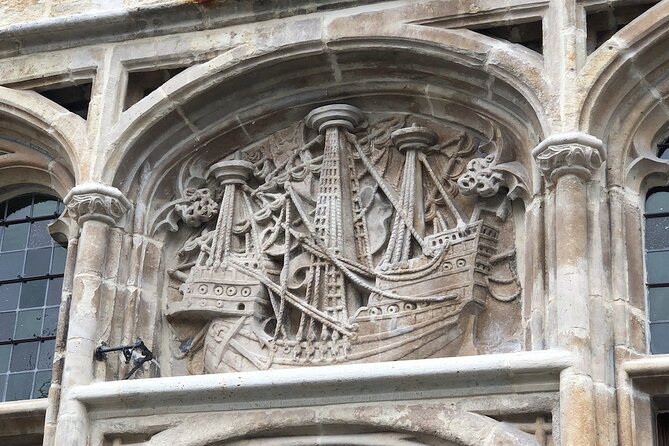
The walk continues to the Kouter and its surroundings, with roughly 10 minutes here. This area gives you a look at Ghent’s 18th- and 19th-century atmosphere, a useful contrast with the medieval material earlier in the tour.
The value of this stop is the change in mood. Ghent is not only towers, stone walls, and old guild buildings. The Kouter helps show how the city’s style and social life developed later. Jurgen’s wider historical frame lets you see the city as a place that kept changing.
The tour does not provide enough time to linger at every building, so think of the Kouter as a guided introduction. If you like the area, mark it for a slower return after the walk.
Hotel d’Hane Steenhuyse, an 18th-century city palace
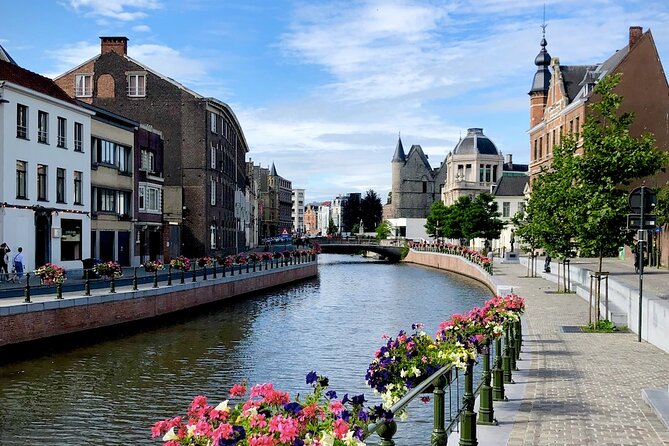
Hotel d’Hane Steenhuyse is another 10-minute stop. This 18th-century city palace is known for its decorated ceilings, ornaments, and garden. The garden is described as a secret corner, but admission is not included.
This stop adds a more refined layer to the tour. After hearing about rivers, abbeys, cathedrals, and fortifications, you see how wealthy residents lived and displayed their status. The ceilings and interior decoration are part of the appeal, so the exterior explanation may leave you wanting a separate visit.
That is one of the tour’s small limitations. Several of the most interesting buildings require additional admission if you want to see the rooms inside. Still, the guide’s explanation can help you decide which interiors deserve your limited sightseeing time.
Gravensteen and the medieval power of the Counts

After a few unlisted sights, the route reaches Gravensteen, the Castle of the Counts. The castle is one of Ghent’s most recognizable landmarks, and admission is not included.
Even a short stop here carries a lot of weight. Gravensteen gives the medieval part of the tour a strong visual focus, with a clear reminder that Ghent was shaped by rulers, defenses, and political power. The guide’s role is especially useful at a site like this because the stonework alone does not explain how the castle fit into the city.
You should budget extra time if you want to enter. The advertised tour duration is about two hours, and the castle is treated as one stop along a longer route rather than a full castle visit. I would not book this walk expecting a detailed interior tour of Gravensteen. I would book it to understand how the castle fits into Ghent’s larger story.
Patershol, one of Ghent’s oldest quarters
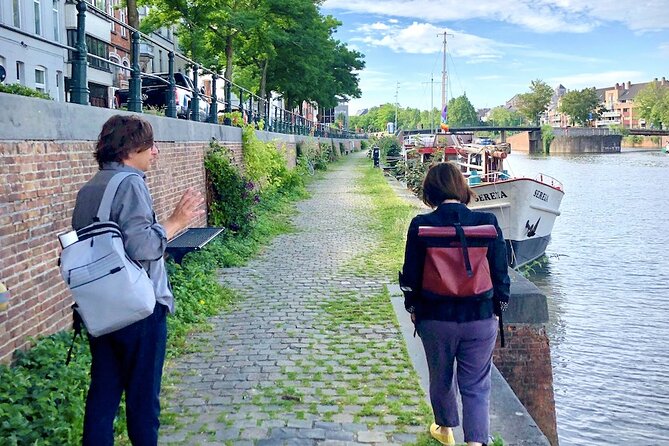
The walk then moves into Patershol, one of the oldest parts of Ghent. This section lasts about 15 minutes and gives the tour a more intimate feel.
Patershol is a good place for Jurgen’s local knowledge to come through. The route is not limited to major monuments, and this older quarter helps you see how the historic center works at street level. You get smaller lanes, everyday buildings, and a sense of how people moved through the city beyond its grand civic landmarks.
The stop is also practical. A street here has several small restaurants, and the tour includes a food tip involving Enzo at pizzeria Neapolis. If you show one of the guide’s business cards, you are offered 10 percent off your food. That is a useful detail for anyone looking for a meal after the walk, though you should confirm the offer is still available when booking.
Finishing at Vrijdagmarkt with politics and food nearby
The tour ends at Vrijdagmarkt, with about 15 minutes devoted to the square and the socialist movement. This is a strong ending because it moves the story beyond medieval Ghent and into the city’s political and social past.
Vrijdagmarkt also makes a practical finish. Restaurants and bars are nearby, so you can continue the conversation over a drink or meal. The end point is Oudburg 17, 9000 Gent, rather than the original meeting point, so plan your onward route accordingly.
I like the balance of this final stop. The tour begins with fortifications and waterways, passes through religious and aristocratic landmarks, and ends with public life and political change. That arc gives you more than a list of old buildings. It shows how Ghent developed as a place where power, commerce, belief, and social movements met.
What Jurgen adds to the experience
The strongest part of this tour is the guide. Jurgen is described as a professor of history who was born and raised in Ghent. That background gives him both subject knowledge and a personal connection to the city.
His teaching style appears to be flexible. He answers questions, adjusts to the group, and uses humor when the weather or the pace becomes difficult. One account describes him keeping spirits up during pouring rain, which suggests that he does not rely on perfect conditions to make the walk work.
You should expect more than a standard script. Jurgen explains the story behind buildings and adds local suggestions, including Sunday markets and places to eat. That can be especially useful if you have just moved to Ghent or are staying several days and want help getting beyond the main sights.
The personal tone is also a good fit for a private or small-group outing. One group of three appreciated being able to spend two hours with him, and another described the time as passing quickly. The published maximum of 20 means the experience is not guaranteed to be private, but the small-group format may allow more conversation than a large city tour.
Price, timing, and practical value
At $40.33 per person, this is not the cheapest way to see Ghent’s center. Its value depends on how much you want from a guide. If you only need directions to the main sights, you can walk the route yourself. If you want the reasons behind those sights, the connections between them, and local suggestions for the rest of your stay, the fee is easier to justify.
The two-hour length is well judged for a first introduction. You cover a lot without giving up an entire afternoon, and the 3 p.m. departure leaves your morning open. On the other hand, the schedule is tight. Ten or 15 minutes at a major stop is enough for context, not for a full museum visit.
Admission fees are separate at St. Bavo’s Cathedral, Hotel d’Hane Steenhuyse, and Gravensteen. Keep that in mind when comparing the total cost of your day. The tour gives you a useful framework, but it is not an all-inclusive attraction pass.
You can cancel without penalty up to 24 hours before the start time. If the minimum number of participants is not reached and the provider cancels, you are offered another date or experience, or a full refund.
Who should book this Ghent walking tour?
I would recommend it most strongly for first-time visitors who want a clear introduction before exploring alone. The route covers the city’s main historic subjects, while the guide’s local advice helps you choose what to see next.
It also suits people who enjoy history but do not want a dry lecture. Jurgen’s humor, personal connection, and willingness to answer questions make the walk feel conversational. People settling into Ghent for a longer stay may find the practical food and market advice just as useful as the formal sightseeing.
You should think twice if you want long interior visits, a castle tour, or a route built around photography stops. Several important buildings are explained from outside, and the two-hour schedule keeps moving.
The tour is near public transportation, service animals are allowed, and most people can participate. Because it is a walking experience with multiple stops, wear practical shoes and check the forecast, even though Jurgen has shown he can handle wet weather with good humor.
FAQ
Where does the tour start?
The tour starts at Hagelandkaai 53, 9000 Gent, Belgium, at 3 p.m.
Where does the tour end?
The walk ends at Oudburg 17, 9000 Gent, Belgium, near Vrijdagmarkt.
How long does the tour last?
The experience lasts approximately two hours.
What is the price?
The listed price is $40.33 per person.
Is admission to the sights included?
No. Admission is not included for St. Bavo’s Cathedral, Hotel d’Hane Steenhuyse, or Gravensteen. The other listed stops are free to visit from the walking route.
How many people can join?
The tour has a maximum of 20 participants. The actual group may be smaller, but a private group is not guaranteed by the stated maximum.
Can I cancel for a full refund?
Yes. You can cancel at least 24 hours before the local start time for a full refund. Cancellations or changes made less than 24 hours before the start are not refunded or accepted.
Should you book Historic Highlights?
Book this tour if you want Ghent explained by someone who cares about the city, not simply a fast circuit of monuments. Jurgen’s history background, local roots, humor, and practical advice are the main reasons to choose it.
The best plan is to use the walk as your orientation. Let Jurgen show you how the rivers, cathedral, palace, castle, old quarter, and political square fit together. Then return to St. Bavo’s Cathedral, Hotel d’Hane Steenhuyse, or Gravensteen if you want more time inside.
At $40.33, it is a worthwhile choice for first-time visitors and history-minded walkers who value conversation and context. It is less suitable if you want every entrance fee included or prefer to explore at your own slow pace. For a compact, personal introduction to Ghent, this is a strong pick.
Just added in Ghent
- Discover Ghent while playing! Escape game – The alchemist★ 4.0 · 4 reviews
- Walking Food Tour in Ghent★ 5.0 · 13 reviews
- Discover Ghent while playing! Escape game – The Walter case★ 4.5 · 4 reviews
- e-Scavenger hunt Ostend: Explore the city at your own pace★ 4.5 · 10 reviews
- Discover Mons while playing! Escape game – The alchemist★ 4.0 · 5 reviews
- Kortrijk Self-Guided Sherlock Holmes Murder Mystery Game★ 5.0 · 2 reviews
- Taste of Ghent: Private Chocolate Walking Tour★ 5.0 · 1 review
- Hen Party/Stag Do – Ghent’s Coolest Interactive Dance Party★ 5.0 · 1 review
Historical Tours, compared.


Historical Walking Tour with Chocolate & Waffle Tasting
Read our review →
THE Storytelling Tour of Bruges | First Day Must | History & Tips
Read our review →
Historical Tour with Chocolate & Waffle Tasting
Read our review →
Historical Walking Tour: The Story of Bruges – by Legends
Read our review →
Browse the lists this tour appears in