
Reviewed · WALKING TOURS
Liege Private Walking Tour
Liège rewards curious walkers. This private tour makes the city’s long story easier to follow, from its pre-Roman roots and medieval churches to the Liège Wars, Counter-Reformation, and shifts between Habsburg and French rule. I like the private format, which keeps the guide focused on your group, and I like the chance to adjust the tour on the spot. The main limitation is time: 90 minutes goes quickly in a city with this much to explain.
I also like the clear meeting point at the Liège tourism office and the focus on real city streets rather than a bus ride or a string of distant viewpoints. Guides such as Joseph Gerkens, Hilbert, and Karl have earned strong praise for their humor, care, and ability to make the past approachable. One practical concern is language confirmation, since an English guide was assigned to a German-speaking group shortly before its tour.
In This Review
- Key points to know before booking
- Meeting Liège beside the Meuse
- Liège before the medieval streets
- The Liège Wars and a city that resisted
- St. Bartholomew and Liège’s Romanesque character
- Counter-Reformation and the Thirty Years’ War
- From Habsburg rule to French rule
- Walking through the Carré
- What the private format really offers
- The guide can make or break the 90 minutes
- Who should book this Liège walk?
- Practical advice for getting more from the tour
- Should you book the Liège Private Walking Tour?
- FAQ
- Where does the Liège Private Walking Tour meet?
- How long does the tour last?
- How much does the private tour cost?
- Is the tour private?
- Which languages are available?
- Are entrance fees included?
- Can the tour be customized?
- What historical periods does the tour cover?
- Is St. Bartholomew’s Church part of the experience?
- What is the cancellation policy?
Key points to know before booking
- A short route with a long story: The tour covers Liège from pre-Roman times through Habsburg and French rule in only 90 minutes.
- Private access to a local guide: Your group is kept together, with no strangers added to the booking.
- A strong architecture stop: The 12th-century Romanesque Church of St. Bartholomew gives the tour a clear medieval focus.
- History beyond kings and dates: The route brings in the Liège Wars, the Counter-Reformation, and the Thirty Years’ War.
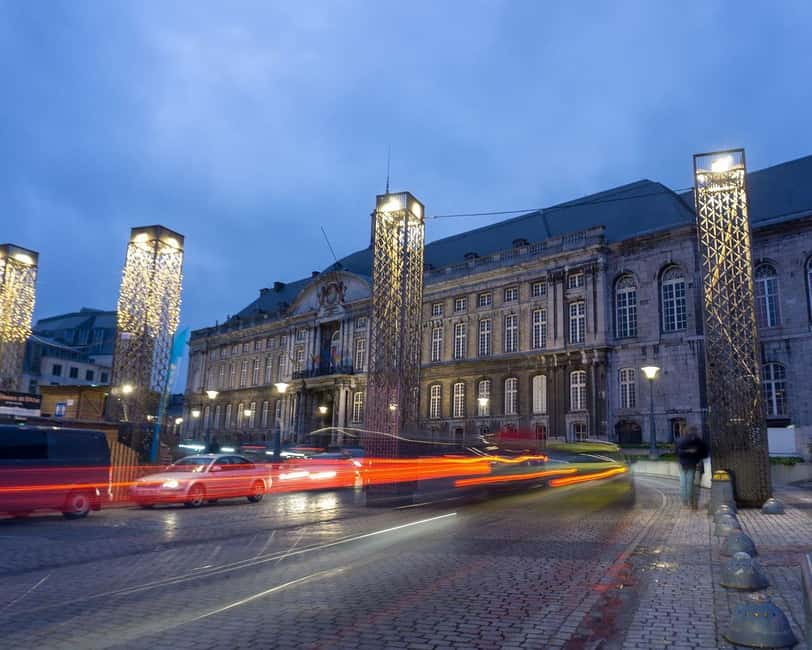
- A lively finish to the old town: The pedestrian streets of the Carré offer shops, food, nightlife, and a look at present-day Liège.
- Best value for a larger party: At $309 for up to 15 people, the cost works out far better for a family or group than for one or two people.
Meeting Liège beside the Meuse
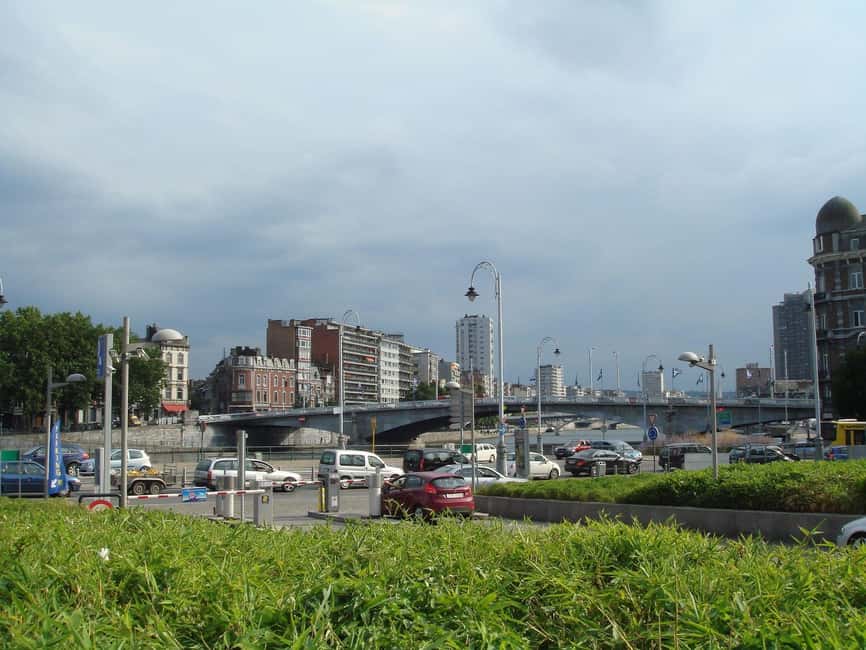
The tour begins at Visitez Liège, the city tourism office at Quai de la Goffe 13, 4000 Liège. This is a practical place to start because you are already in the central part of the city and close to the Meuse River.
I like a meeting point that is easy to identify, especially before a walking tour. You can use the tourism office as your fixed reference point, then let the guide lead you into the older streets. Since the tour lasts only 90 minutes, arriving ready to walk matters. There is no time to waste searching for the starting place.
The Meuse is more than a scenic backdrop here. Liège grew in part because of its position along this river and because routes through the region made the city useful, wealthy, and fiercely contested. Your guide uses that setting to explain why Liège became such a prize.
The tour is private, so the pace can suit your group better than a large public walk. That does not mean you should expect a slow, detailed examination of every building. It means you can ask questions, request a change of emphasis, and keep the guide from rushing past a subject that interests you.
More Walking Tours in Liege:
- Liege Walking Tours
★ 4.5 · 50 reviews - Bruges: Small Group Boat Cruise and Guided Walking Tour
★ 4.8 · 4,102 reviews - Bruges: Walking Tour, Canal Boat Trip w/Beer Tasting Option
★ 4.4 · 2,759 reviews
Liège before the medieval streets
The story begins before the churches and stone lanes that most visitors notice first. The tour introduces Liège’s pre-Roman roots, giving you a useful sense of how old the city’s story really is.
That opening matters because Liège can seem, at first glance, like a medieval and early-modern city. Its architecture draws your eye toward churches, old streets, and civic buildings. But the city’s importance began earlier, tied to its position beside the Meuse and to the routes running through Wallonia.
I appreciate this kind of opening because it prevents the tour from becoming a simple parade of façades. You learn why people cared about this place before the familiar monuments were built. The guide can connect the physical setting to the city’s later political trouble, though the amount of detail will depend on your questions and the group’s interests.
A 90-minute tour cannot offer an academic account of pre-Roman Liège. Think of this section as a foundation. It helps you read the city with more context during the rest of your stay.
The Liège Wars and a city that resisted
The Liège Wars form one of the tour’s main historical themes. These conflicts help explain why the city is not simply presented as a quiet river town with attractive old buildings.
Liège’s strategic position made it a prize, but its political life also brought revolts and challenges. The tour looks at the pressure placed on the city and the ways local power, outside rulers, and wider European politics collided here.
For you, the benefit is a more honest picture of Liège. Its past was not tidy. Streets and monuments reflect periods of pressure, rebuilding, and changing authority. A good guide can turn that broad idea into a clear story, showing how the city’s location affected its fate.
This is also where a private tour can earn its price. If you ask why the wars mattered to ordinary life, how the city responded, or what changed after a conflict, you have room to pursue the answer. On a fixed large-group route, those questions may be harder to fit in.
The guide’s personality matters a great deal during this part. Joseph Gerkens has been praised for presenting Liège in an interesting and warm way. Hilbert has also made a strong impression, with direct praise for his energy and approach. Guide assignments can change, but those names indicate the level of personal connection this experience can provide.
St. Bartholomew and Liège’s Romanesque character
The 12th-century Romanesque Church of St. Bartholomew is the clearest architectural highlight named for the tour. It gives you a chance to see a major medieval building while hearing how church life shaped Liège.
Romanesque architecture often rewards a slower look. Heavy forms, rounded arches, and a strong sense of mass make these buildings feel different from the lighter Gothic churches you may see elsewhere in Belgium. The tour places St. Bartholomew within Liège’s medieval setting rather than treating it as an isolated photo stop.
The church is especially useful for travelers who want architecture explained in plain terms. You can ask the guide to point out what makes the building Romanesque and how its age fits into the city’s development.
Keep in mind that entrance fees are not included. The supplied information does not promise admission inside the church, so you should not assume that the visit includes an interior tour. The guide can still discuss the church from outside, and any entry would require an additional fee if available.
This is one reason to see the activity as a walking overview rather than a full monument tour. It helps you identify places worth a longer visit later.
More Liege trips:
- The Battle of the Bulge Experience – A day tour from Brussels
★ 5.0 · 29 reviews - e-Scavenger hunt Liège: Explore the city at your own pace
★ 4.0 · 16 reviews - Castle Guided Tour (English)
★ 4.0 · 16 reviews - Discover Durbuy by playing! Escape game – The alchemist
★ 3.5 · 14 reviews
Counter-Reformation and the Thirty Years’ War
The route moves beyond medieval Liège to the Counter-Reformation and the Thirty Years’ War. Those subjects place the city inside the larger religious and political struggles that shaped Europe.
The Counter-Reformation was not just a matter of church doctrine. It affected art, public life, education, and the way rulers presented authority. In Liège, that period adds another layer to the churches and religious buildings you see while walking.
The Thirty Years’ War also reminds you that events far beyond the city could affect its security and political choices. A guide can help connect Liège to the wider pressures of the period without leaving you buried under names and dates.
I like these themes because they give the tour more substance than a basic old-town stroll. You are not only hearing that a building is old. You are learning why religious and political change mattered to the people who built, used, or controlled it.
Still, the short duration requires sensible expectations. The tour can introduce these periods and explain their importance, but it cannot cover every battle, ruler, or church reform in detail. If you enjoy military history or early-modern Europe, you will likely want to continue reading or visit additional sites on your own.
From Habsburg rule to French rule
One of the most useful parts of the tour is its explanation of Liège’s changing political control. The city’s shift from Habsburg influence to French rule is not a minor footnote. It shows how Liège moved through a Europe where borders and loyalties could change.
This section can help you understand why the city has such a layered identity. Liège is part of Wallonia, but its past was shaped by neighboring powers and competing systems of rule. The result is a place where language, politics, religion, and architecture cannot be neatly separated.
Your guide will likely make this easier to follow by using the streets around you as reference points. You are not sitting in a classroom. You are hearing about political change while standing in the city that experienced it.
This is also a good moment to ask questions. The private format means your group can request a simpler explanation if the chronology gets tangled. European history can produce a thick knot of rulers and alliances, and a patient guide makes a real difference.
Walking through the Carré
The Carré provides a change of mood. Its pedestrian streets are lined with shops and offer a close look at the everyday side of Liège.
After hearing about wars, religious conflict, and changing rulers, you get a sense of how the city functions now. The Carré is linked with nightlife, food, and local atmosphere, so it can help you decide where to return after the tour.
I like this part because it keeps the experience from becoming trapped in the past. A useful city walk should show you how the old town feels today, not only explain what happened centuries ago.
The Carré also gives you a practical orientation point. You can use the tour to spot streets for a later meal, an evening walk, or a return visit. The information provided does not name specific restaurants or shops, so you should treat this as a neighborhood introduction rather than a food tour.
What the private format really offers
The price is $309 per group of up to 15 people. For a full group, that is about $20.60 per person. For ten people, it is about $30.90 each. For only two people, the cost becomes $154.50 per person, so the value changes sharply with group size.
That math makes this experience best for families, friends, or organized groups who want their own guide. A private tour also saves you from adapting to strangers’ interests and gives you a better chance to ask for extra attention to architecture, warfare, religion, or political history.
The guide can make possible adjustments on the spot. That is useful, but it should not be read as a promise of a completely new route. The tour still has only 90 minutes, and the listed themes require a reasonable amount of structure.
There are no entrance fees included. That keeps the advertised cost clear, but you should budget separately if your group wants to enter a church or another paid site during the walk.
The tour is offered in English or German. This is an important booking detail. A German-speaking group was informed only one day before its tour that an English guide would lead it. The guide adapted well, and the group translated for members who did not speak English, but that arrangement would not suit everyone.
If language is essential for your group, confirm it as early as possible and check the final guide information before the tour. The strongest feedback came from guides who were friendly, funny, and flexible, but language needs still deserve careful attention.
The guide can make or break the 90 minutes
The most praised part of this experience is the human element. Joseph Gerkens has been singled out for his impressive command of the subject and his warm way of presenting Liège. Hilbert has received enthusiastic praise, while Karl was appreciated for taking plenty of time with the group.
Those details matter because a 90-minute history walk can easily become dry. The right guide turns dates into stories and buildings into clues. Humor helps, too, especially when the subject includes wars, revolts, and complicated changes of power.
You should also expect some variation. A named guide cannot be guaranteed from the information provided, and the tour is offered through Travmonde OÜ. The language issue described above is a reminder to keep your expectations practical.
The private setup gives the guide room to respond to your group. If you are traveling with children, older relatives, or people with different levels of interest, say so early. A guide who knows what you want can use the short time more effectively.
Who should book this Liège walk?
I would recommend this tour to you if you want a compact introduction before exploring Liège on your own. It suits first-time visitors who want historical context, architecture lovers who want St. Bartholomew explained, and groups that prefer a private guide to a fixed public tour.
It is also a good fit for people who enjoy European political history. The combination of the Liège Wars, the Counter-Reformation, the Thirty Years’ War, and the move from Habsburg to French rule gives the walk a serious historical backbone.
Families and friend groups get the best financial value when several people share the $309 fee. The private format also helps if your group wants to ask questions or adjust the emphasis.
I would hesitate if you want a long monument visit, detailed museum time, or a full architectural survey. Ninety minutes is enough to get your bearings and understand the main story, but not enough to cover every corner of the old town.
Practical advice for getting more from the tour
Arrive at the Liège tourism office with comfortable walking shoes and a clear idea of what interests you most. Since the guide may customize the experience on the spot, tell them if you prefer churches, warfare, religious change, political history, or present-day Liège.
Keep your group together and use the private setting well. Questions about the Meuse, the city’s strategic position, St. Bartholomew, or the switch from Habsburg to French rule should fit naturally into the walk.
If you are booking for German speakers, confirm that a German guide is available rather than assuming the request will be fulfilled. English is also offered, and the guide may be able to adapt, but late language changes can create trouble for part of your group.
The tour allows free cancellation up to 24 hours before the start for a full refund. You can also reserve and pay later, which helps if your wider Belgian trip is still taking shape.
Should you book the Liège Private Walking Tour?
Book it if you are traveling with a group and want Liège’s complicated past explained by a dedicated guide in a short time. The best reasons are the private format, the strong guide feedback, the Romanesque church focus, and the unusual range of history covered.
For one or two people, the $309 price is harder to justify unless private guiding is a priority. If your group is small, compare the cost with a public walking tour or consider using this as a special introduction to the city.
My main advice is to confirm your language needs and arrive with two or three topics you want covered. Do that, and this tour can turn a quick walk through Liège into a clear, useful introduction to a city shaped by the river, religion, revolt, and powerful neighbors.
FAQ
Where does the Liège Private Walking Tour meet?
The meeting point is Visitez Liège, Liège tourisme, at Quai de la Goffe 13, 4000 Liège, Belgium.
How long does the tour last?
The walking tour lasts 90 minutes.
How much does the private tour cost?
The price is $309 for a private group of up to 15 people.
Is the tour private?
Yes. The tour is for a private group, and the local guide is with your group only.
Which languages are available?
The tour is offered in English and German.
Are entrance fees included?
No. Entrance fees are not included in the tour price.
Can the tour be customized?
The guide may make possible adjustments on the spot, depending on your group and the available time.
What historical periods does the tour cover?
The tour covers Liège’s pre-Roman roots, the Liège Wars, the Counter-Reformation, the Thirty Years’ War, and the transition from Habsburg to French rule.
Is St. Bartholomew’s Church part of the experience?
The tour highlights the 12th-century Romanesque Church of St. Bartholomew. Any entrance fee is separate, and admission inside is not guaranteed by the tour details.
What is the cancellation policy?
You can cancel up to 24 hours in advance for a full refund. You can also reserve now and pay later.
Just added in Liege
- Dinant Discovery Path to Adventure★ 5.0 · 1 review
- Discover Liège while playing! Escape game – The Walter case★ 4.5 · 5 reviews
- Discover Namur while playing! Escape game – The Walter case★ 4.5 · 2 reviews
- Namur: Escape Game in the city – The Alchemist★ 4.0 · 5 reviews
- Discover Durbuy by playing! Escape game – The alchemist★ 3.5 · 14 reviews
- Liege Scavenger Hunt and Highlights Self Guided Audio Tour★ 4.0 · 9 reviews
- Discover Dinant while playing! Escape game – The alchemist★ 4.5 · 12 reviews
- e-Scavenger hunt Namur: Explore the city at your own pace★ 3.5 · 5 reviews
Walking Tours, compared.

Small Group Boat Cruise and Guided Walking Tour
Read our review →
Walking Tour, Canal Boat Trip w/Beer Tasting Option
Read our review →

Historical Walking Tour with Chocolate & Waffle Tasting
Read our review →
Brussels Walking and Tasting Tour (Beers,Chocolates&Fries/Waffle)
Read our review →
Browse the lists this tour appears in