
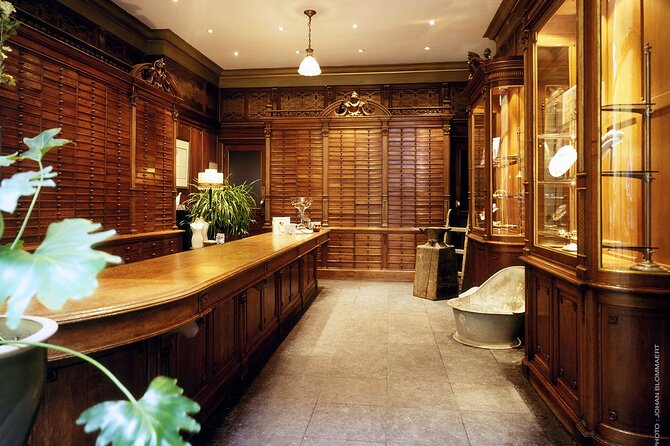
Reviewed · HISTORICAL TOURS
Private Antwerp’s Diamonds and Jewellery Old City Center Historic Tour
Diamonds here come with centuries of stories. This private walk links Antwerp’s early gem trade to its present-day designers, taking you through old streets, church treasures, historic guild sites, and working ateliers. I like the mix of local history and real craft, especially the chance to meet jewellers such as Pascale Masselis. I also like the private format, which lets your guide adjust the pace and explain what interests you most.
The main caution is simple: this is not a tour of Antwerp’s modern diamond district near Central Station, and it does not include diamond cutters. Its focus is the old city center and the earlier roots of the trade. If you expect polished diamond showrooms or a demonstration of industrial cutting, you may find the experience different from what you imagined.
In This Review
- Key things to know before you book
- Starting at DIVA with Antwerp’s jewellery story
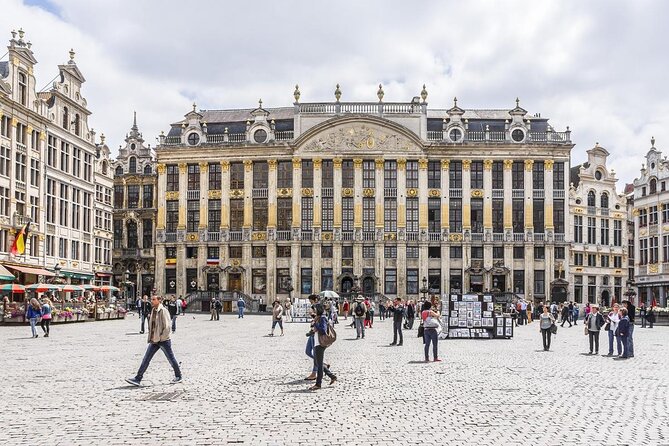
- Grote Markt and the first trade fairs
- Wisselstraat and the darker side of money
- Saint Paul’s Church and 3,000 diamonds
- Zwartzustersstraat and a lost shopping street
- Zirkstraat and Antwerp’s first diamond cutter
- Inside Pascale Masselis’s working atelier
- Lange Koepoortstraat and the silversmiths’ guild
- Wijngaardstraat’s cluster of independent designers
- Rembrandt Jodan’s gallery and atelier
- What the private format adds
- What the tour does best, and where it may disappoint
- Who should book this Antwerp walk?
- Final verdict: book it for history and craft
- FAQ
- Where does the tour start?
- Where does the tour end?
- Is admission to DIVA included?
- Is this a private tour?
- Does the tour visit diamond cutters?
- What happens if the weather is poor?
Key things to know before you book
- Private for your group: One guide leads only your party, with space for up to 15 people.
- Two hours on foot: The route covers historic streets in central Antwerp, with several short stops and atelier visits.
- Craft comes first: You visit independent jewellers, designer studios, and gallery spaces rather than a chain-store shopping district.
- Pascale Masselis is a highlight: Her atelier offers a close look at handmade 18-carat gold jewellery and custom work.
- DIVA is the natural follow-up: The tour begins outside Antwerp’s diamond, jewellery, and silversmithing museum, but museum admission is not included.
- Book with clear expectations: The route explains Antwerp’s old jewellery trade. It is not a modern diamond-bourse tour.
Starting at DIVA with Antwerp’s jewellery story
The meeting point is outside DIVA at Suikerrui 17/19. This museum covers Antwerp’s diamond, jewellery, and silversmithing traditions, making it a sensible place to begin. Your guide sets the scene before the walk, explaining how Antwerp became linked with precious stones, metals, merchants, and skilled makers.
The museum itself is not part of the tour ticket. You can visit it separately after the walk, and that is a useful plan if you want objects and displays to reinforce the stories you hear outdoors. Check opening arrangements before you go, since one guest arrived on a day when DIVA was closed. The walk still worked well, but the museum would have added another layer.
The opening talk matters because the route is not simply a string of jewellery shops. It explains how trade, money exchange, religious institutions, guild rules, and specialist skills shaped this part of Antwerp. You get the historical framework before seeing the modern makers.
More History Tours in Antwerp
- Historical Walking Tour: Legends of Antwerp
★ 5.0 · 1,837 reviews - Antwerp: Historical Walking Tour in the Old City
★ 4.8 · 373 reviews - Private tour: Highlights & History of Antwerp
★ 5.0 · 299 reviews
Grote Markt and the first trade fairs
From DIVA, the walk continues toward Grote Markt, Antwerp’s grand central square. Here, your guide connects the city’s diamond story with its annual fairs, when foreign merchants came to trade and buy gems and jewellery.
This stop is brief, around 10 minutes, but it gives you an important point of reference. Antwerp’s reputation did not begin with modern storefronts. It grew through commerce, visiting merchants, and a city center where business and civic life met.
If you are interested in economic history, pay attention here. The tour makes clear that jewellery was never only about decoration. It depended on trust, money, legal arrangements, and a steady flow of buyers and sellers.
Wisselstraat and the darker side of money
Wisselstraat means exchange, and the name points to the street’s former financial role. Foreign buyers used this area to exchange money while doing business in Antwerp.
The guide also explains that not everything connected with trade was shiny or secure. The stop includes the origin of the word bankrupt, giving the financial story a darker and more human edge. It is a good reminder that valuable goods bring risk as well as opportunity.
This is one of the tour’s strengths. You are not asked to admire diamonds in isolation. You see the systems behind them, including the money problems and commercial dangers that came with international trade.
Saint Paul’s Church and 3,000 diamonds
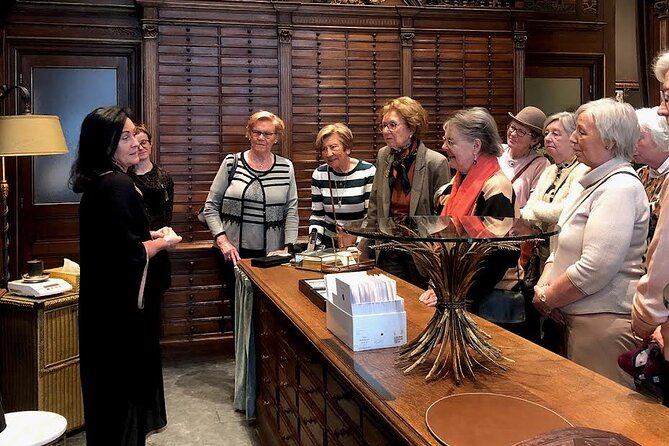
Saint Paul’s Church adds a surprising religious chapter. The church has connections with silversmithing and jewellery, and its treasury contains more than 3,000 diamonds.
The stop lasts about 15 minutes and admission is listed as free. The church gives you a change of mood from the commercial streets. Instead of merchants and workshops, you see how precious materials also entered religious art and church objects.
Keep your expectations practical. The tour does not promise a full guided church visit or a long examination of every treasure. Your guide uses the church to explain its connection to the craft, then keeps the route moving.
A completely different kind of day:
- Antwerp: City Highlights Walking Tour
★ 4.7 · 816 reviews - Antwerp: City Highlights Guided Bike Tour
★ 4.7 · 529 reviews - Guided Bike Tour: 2 Hours Highlights of Antwerp
★ 5.0 · 347 reviews - Historical Walking Tour in Antwerp Old City
★ 5.0 · 277 reviews
Zwartzustersstraat and a lost shopping street
Zwartzustersstraat is easy to overlook today, which is part of its appeal. It once served as a busy shopping street, with jewellery shops on the ground floors and diamond-cutting workshops above them.
That arrangement helps you picture the old working city. Retail and production were close together. A customer could see finished pieces below while artisans worked overhead.
The street also helps clarify the tour’s historical focus. The old city center once played a larger role in diamond work than it does now. Modern diamond activity shifted toward the Central Station area in 1905, and much cutting is now done elsewhere because it costs less. Your guide can explain how competition from Russia and other countries changed the business.
That context is especially useful if you arrive expecting to see active cutting workshops on every corner. The tour explains why that is no longer the case.
Zirkstraat and Antwerp’s first diamond cutter
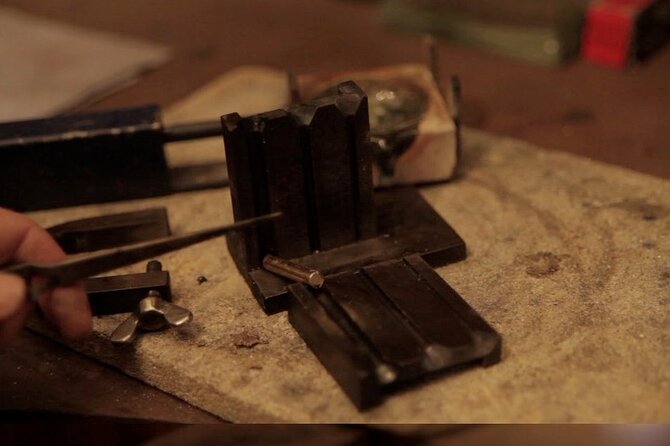
Zirkstraat takes the story further back. The first diamond cutter lived here in the 15th century, and the guide explains the development of diamond cutting and the techniques that made the trade possible.
The stop is short, around 10 minutes, but it gives the route a clear historical anchor. You are not just hearing that Antwerp has an old connection with diamonds. You are shown a specific street linked to one of the earliest practitioners.
For families, this can be an easy section to follow because the subject is concrete. Children and teenagers can understand the idea of a craftsman working in a particular street centuries ago, especially when the guide connects it to the diamonds and jewellery seen later.
Inside Pascale Masselis’s working atelier
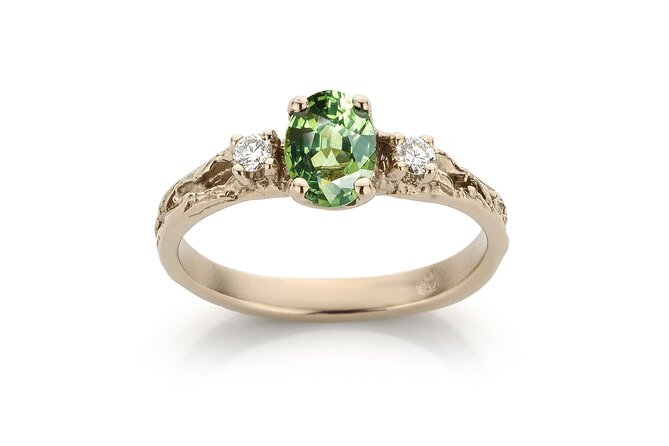
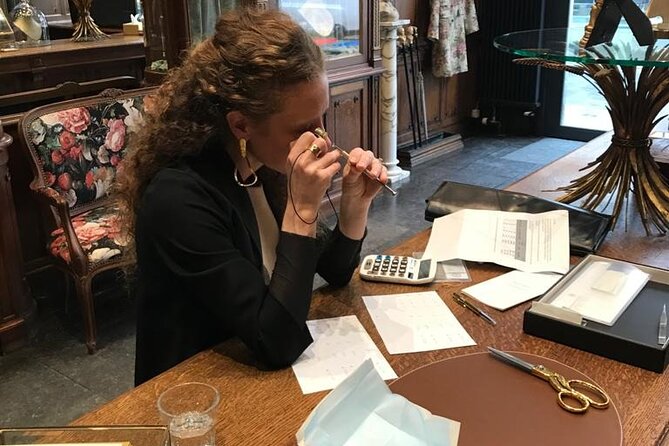
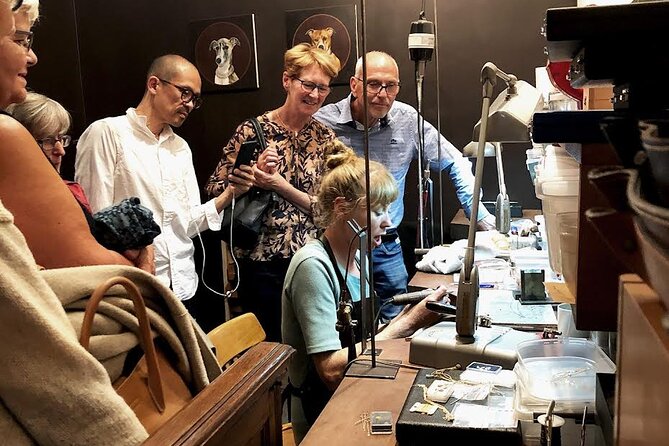
The visit to Pascale Masselis is one of the most personal parts of the experience. Masselis graduated from the Royal Academy of Antwerp in 1983 and works with 18-carat gold. Each piece is unique and made by hand in her own atelier.
You may be invited inside to see how the work is done and to speak with the people connected to the studio. The atmosphere is different from a standard retail stop. You are learning about a maker’s process, taste, and working life rather than simply looking at products behind glass.
Masselis also makes pieces to order and can remake old, dated jewellery into something more modern. That detail gives you a useful sense of how a small atelier serves real clients. The work is not limited to new purchases. It can also preserve the material and memories of jewellery you already own.
I would allow time to look closely and ask questions here. The visit is scheduled for about 15 minutes, so it is not a long workshop class. Still, it offers the kind of direct contact that many city tours lack.
Lange Koepoortstraat and the silversmiths’ guild

At Lange Koepoortstraat, the guide explains the former nation house of Antwerp’s silver and goldsmiths. The stop focuses on why such a building was needed and how the trade was organized.
Guild structures helped regulate skilled work, protect professional interests, and set standards. This makes the street more than a pretty old-city passage. It shows how makers formed a recognized community and how craft became part of the city’s civic and commercial order.
The explanation is particularly helpful after seeing a contemporary atelier. You can compare today’s independent jewellers with the older systems that governed who could work, sell, and train in the trade.
Wijngaardstraat’s cluster of independent designers
Wijngaardstraat is the most concentrated creative section of the route. This picturesque street has five jewellers, each with a different approach and set of techniques.
Gerda De Vrij studied in Pforzheim with Klaus Ullrich, an early figure in modern jewellery. She later established her own Antwerp atelier with Emile Henry, and their two daughters joined the business. That family continuity gives you a glimpse of how a small design name can pass from one generation to the next.
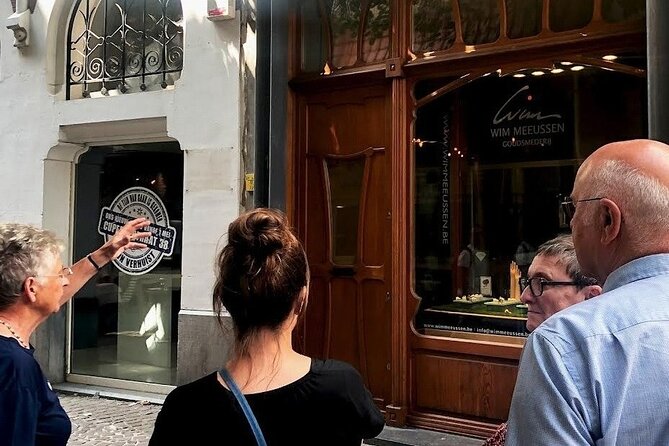
Wim Meeussen is known for jewellery and wedding rings with a distinct look. His nearby silver shop offers a more affordable entry point, so the route is not limited to high-priced gold pieces. You can see how one designer makes a recognizable style available at different budgets.
Hanne Schoofs keeps testing new techniques, which means her collection changes over time. That experimental approach contrasts with the long family story at De Vrij and the more retro-romantic, feminine character associated with Eva Crauwels.
Crauwels has worked independently as a goldsmith for more than 15 years. Her pieces have a nostalgic, romantic feel, offering yet another design direction within a very small area.
The schedule allows about 20 minutes here. That is enough for a focused introduction, but not enough to study every collection in depth. If one designer catches your eye, note the name and return later at your own pace.
Rembrandt Jodan’s gallery and atelier
The final stop is the multidisciplinary space of artist and goldsmith Rembrandt Jodan, at Wijngaardstraat 18. It combines an art gallery, workshop, and jewellery shop.
This is a fitting ending because it brings the tour’s main themes together. Jewellery here is both a crafted object and a form of artistic expression. You finish not with a lecture about Antwerp’s past, but in a living creative space.
The ending location is useful, too. You remain in the old city center, close to other sights and shops. The route does not leave you at a remote industrial site or a modern shopping complex.
What the private format adds
The tour costs $234.93 per group of up to 15 people. The value depends heavily on your group size. For a full group, the per-person price can be quite reasonable for two hours with a private guide. For one or two people, it is a much bigger expense than joining a shared walking tour.
The private setup does offer real benefits. Guides such as Margaret, Vivien, Catherine, Maria, and others have been praised for making the walk personal, adjusting the pace, and responding to individual interests. One guide tailored the time to the subjects her group cared about most, while another kept teenagers engaged.
That flexibility is useful in a jewellery district because interests vary. You may care about medieval trade, modern design, wedding rings, church treasures, or the economics of diamond cutting. A private guide can spend more time on your priorities than a large group tour usually can.
The tour is offered in English, uses a mobile ticket, and lasts about two hours. It is near public transportation, service animals are allowed, and most people can take part. Wear comfortable shoes, since the experience is a walking route through several central streets.
What the tour does best, and where it may disappoint
The strongest feature is the combination of history and access. You get stories about fairs, money exchange, guilds, early cutting, and church silverwork, then see independent designers at work.
The second strength is the human contact. Meeting jewellers in their own spaces makes the subject feel less abstract. Pascale Masselis’s gold work, the De Vrij family business, and the separate styles of Meeussen, Schoofs, and Crauwels give the tour a useful range.
The main weakness is the possible gap between the title and your expectations. The experience is about Antwerp’s jewellery past and its old center. It does not promise access to diamond dealers, and there are no diamond cutters on the route. If you want the modern diamond district near Central Station, this is not the right choice.
DIVA is also outside the paid tour. Since the route begins there, you may want to schedule the museum before or after, but opening days matter. If it is closed, the walking tour can continue without it.
The tour has an overall rating of 4.5 from 25 ratings, with strong praise for the guides, the pace, the historical detail, and the atelier visits. One lower rating came from a mismatch between expected jeweller and diamond-dealer visits and the actual historic route. That criticism points to the most important booking tip: read the experience as an old-city craft and history walk, not as a showroom tour.
Who should book this Antwerp walk?
I would choose this experience if you enjoy small workshops, local history, design, and conversations with makers. It suits couples, families, and small private groups that want something beyond Antwerp’s major squares and cathedral.
It also works well for jewellery shoppers who want context before buying. You can see different design styles and learn how custom work, recycled jewellery, goldsmithing, and family ateliers fit into Antwerp’s creative life.
Families can do well here, especially with older children and teenagers. The route has enough variety to prevent two hours of nonstop dates and trade facts. The story of the first cutter, the church treasury, and the workshops gives younger visitors something tangible to remember.
I would skip it if your main goal is to watch diamonds being cut, visit professional diamond dealers, or tour the modern diamond district. I would also think twice if your group dislikes walking or has only a short time in Antwerp and wants the city’s biggest landmarks instead.
You can cancel for a full refund up to 24 hours before the start time. The experience requires good weather, so a poor-weather cancellation may lead to another date or a full refund.
Final verdict: book it for history and craft
Book this tour if you want Antwerp’s diamond story told through streets, guilds, churches, and working designers. The private format, direct atelier access, and adaptable guides give it more character than a standard sightseeing walk.
Just set your expectations correctly. You will not tour the modern diamond trade or watch diamond cutters at work. You will walk through the old city, meet creative jewellers, and see how Antwerp’s craft traditions continue in small, personal studios. For the right audience, that is a fair price for a memorable two-hour introduction.
FAQ
Where does the tour start?
The tour starts in front of DIVA, Antwerp’s museum for diamonds, jewellery, and silversmithing, at Suikerrui 17/19, 2000 Antwerp.
Where does the tour end?
It ends at Rembrandt Jodan’s multidisciplinary gallery, atelier, and jewellery shop at Wijngaardstraat 18, 2000 Antwerp.
Is admission to DIVA included?
No. The tour begins outside DIVA, and admission to the museum is not included.
Is this a private tour?
Yes. Only your group participates, with up to 15 people permitted in the group.
Does the tour visit diamond cutters?
No. The route explains Antwerp’s diamond-cutting history, but it does not include visits to diamond cutters. Its focus is the historic old city center, not the modern diamond district near Central Station.
What happens if the weather is poor?
The experience requires good weather. If it is canceled because of poor weather, you can be offered another date or a full refund. You can also cancel up to 24 hours before the start time for a full refund.
Just added in Antwerp
- Discover Antwerp while playing! Escape game – The Walter case★ 4.5 · 2 reviews
- Antwerp: City Walk with Audio Guide in 7 Languages on your Phone★ 3.0 · 15 reviews
- Surprise Walk of Antwerp with a Local★ 5.0 · 1 review
- Explore the Instaworthy Spots of Antwerp with a Local★ 5.0 · 1 review
- Discover Antwerp while playing! Escape game – The alchemist★ 4.5 · 4 reviews
- Landed On Time 60 min. Max 1 Person★ 4.0 · 5 reviews
- Antwerp Private Custom Walking Tour With A Guide (Private Tour)★ 4.5 · 12 reviews
- Discover Antwerp with this Outside Escape city game tour!★ 5.0 · 4 reviews
Historical Tours, compared.

Historical Walking Tour with Chocolate & Waffle Tasting
Read our review →
THE Storytelling Tour of Bruges | First Day Must | History & Tips
Read our review →
Historical Tour with Chocolate & Waffle Tasting
Read our review →
Historical Walking Tour: The Story of Bruges – by Legends
Read our review →
Browse the lists this tour appears in