Reviewed · BRUSSELS TOURS
Architecture Tour of Brussels
Brussels reveals itself one facade at a time. This two-hour evening walk links the city’s grandest squares, theaters, churches, galleries, and viewpoints with an architect guide who explains how Brussels grew from a market town into a capital of Gothic, Baroque, Neoclassical, and modern design. I especially like the close look at Grand Place facades and the final panorama from Mont des Arts. The main consideration is pace: ten stops in about two hours means several places receive a short explanation rather than a full visit inside.
I also like the small maximum group of 18 and the chance to ask questions along the way. Guides including Gamaal and Jimmy have been praised for clear explanations, humor, flexibility, and useful restaurant suggestions. The route is entirely on foot, so you should be ready for steady walking and a few uphill sections.
In This Review
- Key things to know before you book
- Why this Brussels walk works well for first-time visitors
- Grand Place: Brussels starts with a market
- The Royal Galleries and the dream of a covered mall
- La Monnaie and Place De Brouckère: theater, revolt, and water
- The Bourse and Manneken Pis: money, myth, and a small statue
- Jacques Brel, Sablon, and the city’s Belgian character
- BOZAR and Mont des Arts: art behind walls, views above the city
- Guide quality and group size
- Price, timing, walking, and practical value
- Who should book this evening architecture tour?
- Should you book it?
- FAQ
- How long is the Architecture Tour of Brussels?
- What time does the tour start?
- Where does the tour meet?
- Where does the tour end?
- Is transportation included?
- What language is the tour offered in?
- How many people can join the group?
- Can I cancel for a full refund?
Key things to know before you book
- A compact architectural route: Ten central Brussels stops fit into roughly two hours, making this a practical first look at the old city.
- Grand Place is treated as a lesson, not just a photo stop: You explore its change from a market ringed by wooden houses to today’s Gothic and Baroque ensemble.
- The evening start changes the mood: The tour begins at 8:00 p.m., when the historic center can feel especially atmospheric.
- Mont des Arts supplies the best closing view: You finish with the City Hall tower, old city walls, and Royal Palace in one broad picture.
- The guide shapes the experience: Gamaal has adapted tours to group interests, while Jimmy has handled difficult wind and kept the walk enjoyable.
- No transport or entry fees are included: The route is a walking tour, and the listed stops have no admission charge.
Why this Brussels walk works well for first-time visitors
This is a city orientation with an architectural focus. You do not spend two hours inside one museum or wait in line for a single major attraction. Instead, you move through the center and learn how buildings, streets, religion, commerce, defense, theater, and public life fit together.
The route also gives you a useful visual sequence. Grand Place introduces the city’s showpiece architecture. The Royal Galleries explain nineteenth-century commercial ambition. La Monnaie and Place De Brouckère bring in theater, urban change, and the old river route. The Bourse shows the financial side of Brussels, while Manneken Pis adds a dose of local humor. Sablon, BOZAR, and Mont des Arts then broaden the picture with church design, chocolate, art, and royal views.
I would not treat this as a specialist architecture seminar. The stops are brief, and the guide must keep the group moving. But that is also the attraction. You get a readable introduction to the city without committing half a day.
The start point is the Godiva shop at Grand Place 21/22. The meeting point is easy to identify, and the tour ends back there according to the supplied details. The route is near public transportation, though transport itself is not included.
More things to do in Brussels:
- Brussels: Atomium Entry Ticket with Design Museum Ticket
★ 4.4 · 9,254 reviews - From Brussels: Guided Day Trip to Bruges and Ghent
★ 4.6 · 8,353 reviews - From Brussels: Bruges & Ghent Day Tour – 2 Fairytale Cities
★ 4.7 · 8,242 reviews
Grand Place: Brussels starts with a market
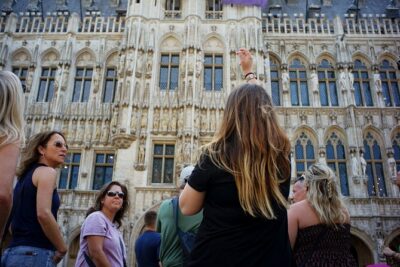
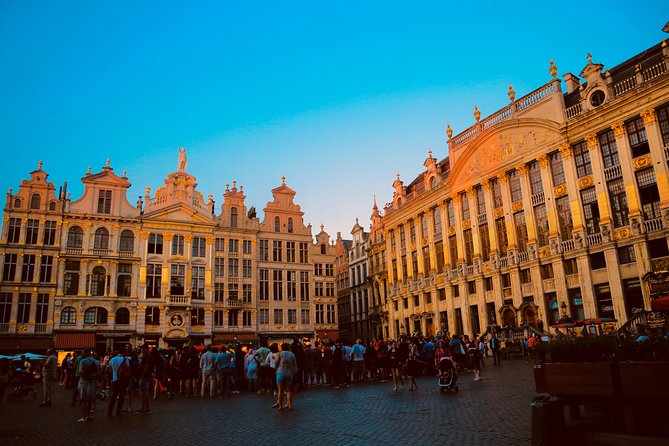
The opening 20 minutes focus on Grand Place, the city’s most famous square and a UNESCO World Heritage site. This is the right place to begin because the square tells a condensed story of Brussels itself.
The guide explains how the area began as a market surrounded by wooden houses. Fires, political change, and rebuilding gradually produced the Gothic and Baroque facades you see today. That shift matters: Grand Place is not one building from one period, but a carefully assembled civic setting with different guild and municipal identities facing one another.
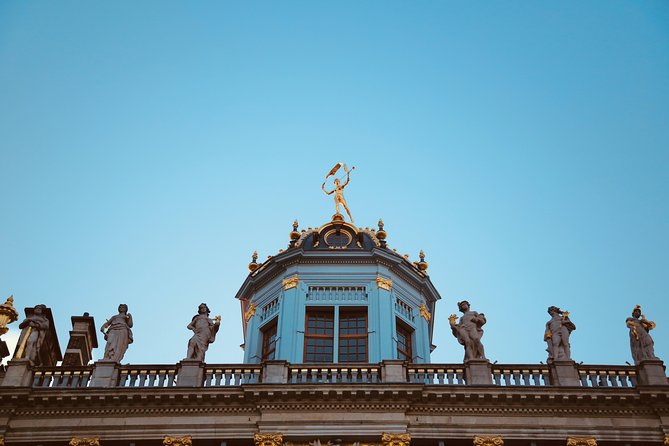
Look up rather than only across the square. The upper levels, rooflines, statues, and ornamental details are where the architectural lesson becomes useful. You will also hear about famous people connected with the buildings, adding a human layer to what could otherwise feel like a collection of impressive facades.
Twenty minutes is enough for an overview and photographs. It is not enough for a detailed examination of every building, so listen for the guide’s main comparisons. If this is your first time in Brussels, Grand Place alone gives you a visual reference point for the rest of the walk.
The Royal Galleries and the dream of a covered mall
The next 20 minutes take you to Les Galeries Royales Saint-Hubert, described as the first shopping mall in the world. Its construction belongs to the same broad period as the creation of Belgium, and the galleries reflect a new kind of urban confidence.
The important point is not only that the passage is elegant. It represents a planned commercial interior where shoppers could walk under glass, protected from rain, while shops and cafes gained a prestigious setting. The guide tells the story of the architect who pursued the project through persistence and a network of contacts.
This stop also connects architecture with literary life. The route passes cafes associated with famous authors who spent time there and composed works that became part of world literature. You will likely appreciate this part most if you enjoy places where design and daily life overlap. The galleries are not merely something to photograph. They show how Brussels created a fashionable public space for shopping, conversation, and writing.
The short stop means you should not expect a long shopping break. Think of it as a guided look at the structure, its purpose, and the people connected with it.
La Monnaie and Place De Brouckère: theater, revolt, and water
La Monnaie receives about ten minutes. This royal theater has a long place in Brussels life, and the guide connects it with the surrounding shopping street and the revolution that unfolded in the area.
That combination makes the stop more useful than a simple theater photograph. You learn how a performance building can become part of political history, and how nearby commercial streets change as a city grows. The explanation is brief, but it gives you a reason to notice the theater’s position rather than passing it without a thought.
At Place De Brouckère, the focus shifts to the former De Brouckère palace and the old river route through the city. Brussels can seem like a city built entirely of streets and stone, so the story of water adds an important correction. The river route once played a role in defense and helped shape the town’s development.
This is one of the tour’s better urban-planning moments. You begin to see that Brussels was not laid out randomly. Water, trade, defense, public buildings, and later shopping streets all altered the city over time.
A completely different kind of day:
- Choco-Story Brussels: Chocolate Museum Entrance with Tasting
★ 4.3 · 4,883 reviews - Bruges and Ghent – Belgium’s Fairytale Cities – from Brussels
★ 4.0 · 4,809 reviews - Brussels: Hop-On Hop-Off Bus Tour
★ 4.0 · 4,016 reviews - Brussels: Entry Ticket to Mini-Europe
★ 4.5 · 2,870 reviews
The Bourse and Manneken Pis: money, myth, and a small statue
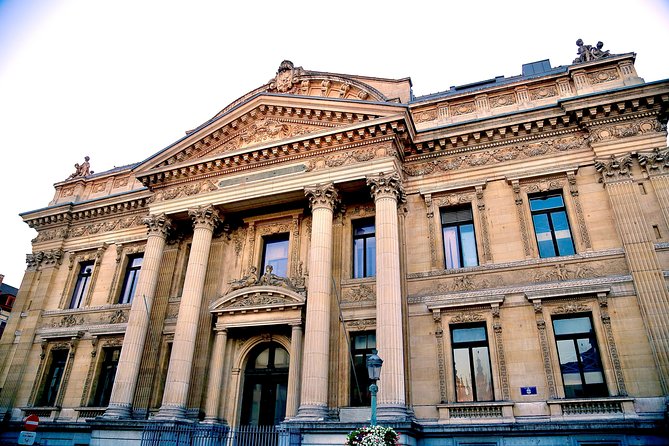
La Bourse de Bruxelles gets another ten-minute explanation. The guide traces the Bourse’s development from Bruges to Grand Place and eventually to its present square in Brussels. That movement reflects the changing centers of trade and finance in the region.
The building itself now forms part of Brussels’ art life, giving the stop a current purpose as well as a historical one. You may find this especially helpful if you want to understand why the city has such a strong relationship with commerce, public architecture, and cultural events.
Then comes Manneken Pis, one of the city’s most famous and most easily misunderstood sights. The stop lasts about 15 minutes and covers the statue’s four well-known stories, along with its wardrobe of more than 1,200 uniforms.
The guide calls it the greatest disappointment in Brussels, which is fair warning about scale. The statue is small. The surrounding legend is much larger. That contrast is part of the fun, and the guide’s humor can make this stop work better than a solemn explanation would.
The route climbs the hill to the wardrobe museum. The supplied details do not list an admission fee, but the tour itself lists no entry charges, so confirm if you want to visit the museum beyond the guided walk. The climb is short but worth noting if you prefer a completely level route.
Jacques Brel, Sablon, and the city’s Belgian character
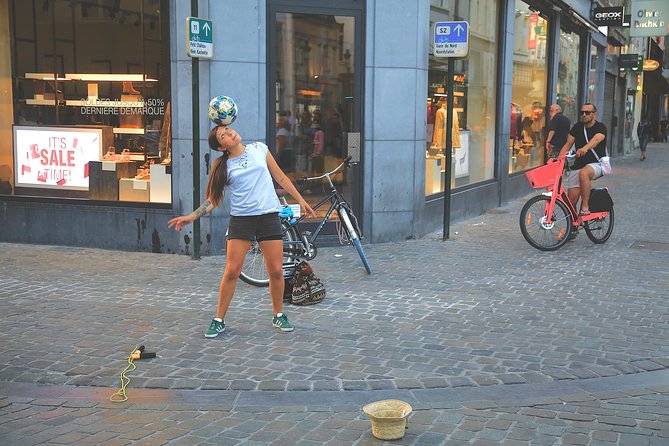
A five-minute stop at the Jacques Brel statue asks a simple question: why is the sculpture there? The answer links the city to one of Belgium’s best-known singer-songwriters. It is a small stop, but it gives the walk a cultural note beyond buildings and royal institutions.
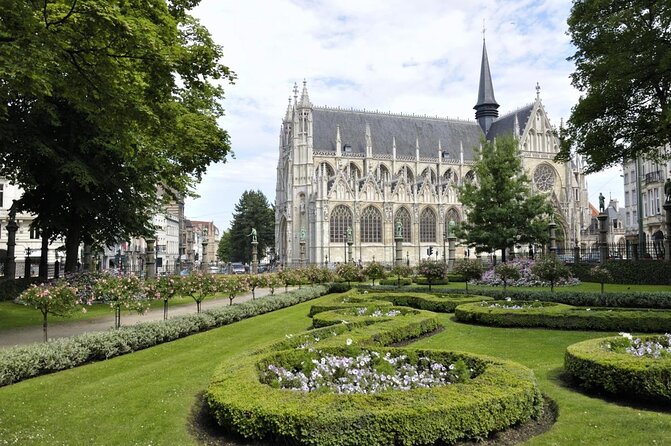
At Notre Dame des Victoires au Sablon, you get around 15 minutes to explore the church and the connection between chocolate and the Sablon district. This is one of the places where the route moves from civic architecture to religious design and Belgian food culture.
The church is an important visual change after the commercial passages and public squares. Pay attention to the vertical lines, stonework, and interior impression as the guide explains what makes it distinctive. You will not have a long private visit, but you should come away with a clearer idea of why Brussels churches deserve more than a quick photograph.
Chocolate is not a side note here. The Sablon is associated with Brussels’ confectionery identity, so the guide’s attention to both church and chocolate gives you a more rounded sense of the district. If you want to buy chocolate afterward, this is a useful area to remember, though the tour price does not include purchases.
BOZAR and Mont des Arts: art behind walls, views above the city
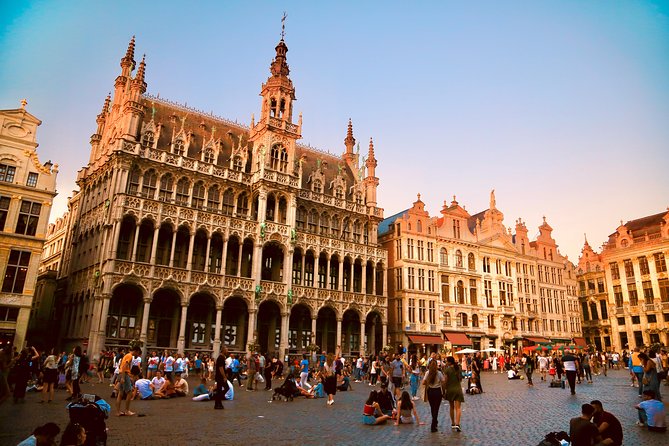
BOZAR, the Centre for Fine Arts, receives about five minutes. The guide’s question is simple: what waits behind those large walls? The short stop works as a prompt to notice the building’s public scale and cultural purpose.
You should not expect a gallery visit or a program of exhibitions during this tour. The value is architectural and contextual. BOZAR helps show that Brussels is not only a medieval and nineteenth-century city. Its arts institutions also shape how people use the center today.
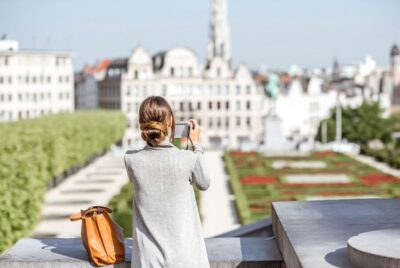
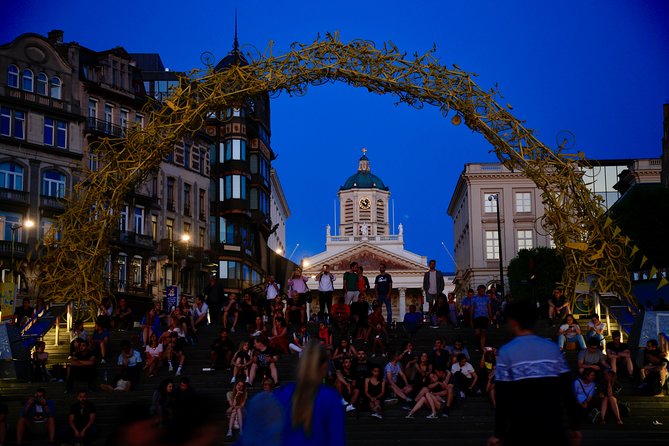
The final 20 minutes at Mont des Arts are the visual payoff. From here, you can look across the old city toward the City Hall tower, with the Royal Palace at the other end of the view. The panorama also brings the old walls and the city’s layered development into one frame.
This is the place to take your best photographs. The guide points out the main elements, so you are not left guessing what you are seeing. The viewpoint also helps you connect the earlier stops: church towers, civic buildings, streets, and palace architecture become part of a single city picture.
Because the tour begins at 8:00 p.m., the light and atmosphere may change with the season. The exact conditions are not guaranteed, but an evening visit gives this final stop a different feel from a midday city walk.
Guide quality and group size
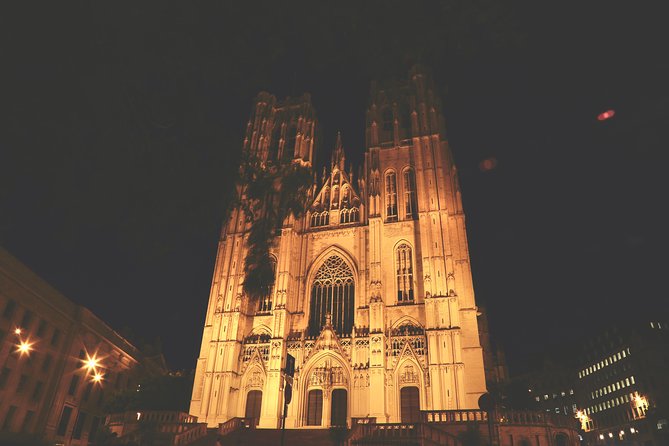
The guide is the heart of this experience. Gamaal has been praised for explaining architecture and history in an engaging way, asking what the group wants to learn, and adjusting the walk to those interests. That flexibility is valuable because one person may care about church design while another wants politics, food, or famous residents.
Jimmy has also received strong praise for detailed explanations, funny stories, recommendations, and handling extreme wind without allowing the conditions to spoil the walk. The supplied comments also describe an evening tour with a pleasant old-town mood and helpful restaurant tips.
The group maximum is 18 people. That is small enough for a more personal feel than a large coach-style outing, though the actual number can vary. Some departures may feel almost private, while others may use the full group limit.
There is one detail worth checking before booking. Most of the advertised route is clearly in Brussels, but some written tour comments refer to Bruges and even mention the Palace of Justice, which is not listed among the ten Brussels stops. This may reflect comments attached to more than one city walk. I would confirm the exact route and departure details with the provider, Bruges City Tours, before paying, especially if Brussels architecture is your main reason for booking.
Price, timing, walking, and practical value
At $30.10 per person, the tour is reasonably priced for a two-hour guided introduction, especially because the route covers ten major locations and includes a professional local guide. You are paying for interpretation, not entry tickets. The stops are free, and no transport is included.
The value is strongest on your first day in Brussels. A good guide can help you understand the center quickly, point out details you would miss alone, and give you ideas for where to return later. It can also help you place the city’s major styles in order, from older market origins to later commercial, royal, theatrical, and cultural buildings.
The value is weaker if you want lengthy interior visits, a slow photography walk, or a specialist-only architecture lecture. The short timings require the guide to keep moving. You will see many sites, but you will not spend 20 minutes inside each one.
Wear comfortable shoes. The route is on foot, includes a climb toward the Manneken Pis wardrobe museum, and finishes at Mont des Arts. The meeting point is central and near public transportation, but you should allow time to reach Grand Place before the 8:00 p.m. start.
Confirmation is sent within 48 hours, subject to availability. You can cancel for a full refund up to 24 hours before the start time. If the minimum group size is not met and the operator cancels, you are offered another date or experience, or a full refund.
Who should book this evening architecture tour?
I would recommend it to first-time visitors who want a clear introduction to central Brussels, couples or friends who enjoy buildings and city stories, and anyone who prefers a small walking group to a large sightseeing vehicle.
It also suits people who like their cultural touring with a little humor. Manneken Pis, Jacques Brel, cafes, chocolate, and restaurant tips keep the walk from becoming a dry lecture about dates and styles.
You may want something else if mobility limits make steady walking or hills difficult, or if your priority is entering major attractions rather than viewing them from outside. Families can participate because most people can join, but young children may find ten architecture-focused stops demanding late in the evening.
Should you book it?
Book this tour if you want a broad, well-organized look at Brussels architecture for a fair price, with a local guide who can explain the city in plain language and adjust the emphasis to your interests. The strongest parts are Grand Place, the Royal Galleries, the urban story around water and defense, and the Mont des Arts view.
Before booking, verify that your departure is the Brussels route, since some supplied comments refer to Bruges. Once that detail is clear, this is a useful two-hour orientation that can make the rest of your Brussels stay more rewarding.
FAQ
How long is the Architecture Tour of Brussels?
The tour lasts approximately two hours.
What time does the tour start?
The scheduled start time is 8:00 p.m.
Where does the tour meet?
The meeting point is the Godiva shop at Grand Place 21/22, 1000 Bruxelles, Belgium.
Where does the tour end?
The activity ends back at the meeting point.
Is transportation included?
No. Transport is not included. The tour is a walking route, and the meeting point is near public transportation.
What language is the tour offered in?
The tour is offered in English.
How many people can join the group?
The activity has a maximum of 18 participants.
Can I cancel for a full refund?
Yes. You can cancel at least 24 hours before the local start time for a full refund. Cancellations or changes made less than 24 hours before the start are not refunded or accepted.
Just added in Brussels
- Transfer from BRU Airport to Brussels city (any hotel or address)★ 5.0 · 1 review
- Standard vehicle from Brussels airport to city of Antwerp★ 5.0 · 4 reviews
- Standard Minivan from Brussels airport to city of Antwerp★ 5.0 · 1 review
- Private transfer from BRU Airport – Brussels GO BACK MB V-CLASS 7 PAX★ 5.0 · 2 reviews
- Private transfer from Brussels Airport to Brussels city Business car★ 5.0 · 1 review
- Transfer Brussels Airport -> Antwerp MB V-CLASS 7 PAX★ 5.0 · 1 review
- Private transfer from BRU Airport to Bruges with Mercedes V class 7 pax★ 5.0 · 1 review
- Private transfer from BRU Airport to Bruges with luxury limousine 3 pax★ 5.0 · 1 review
Brussels Tours, compared.
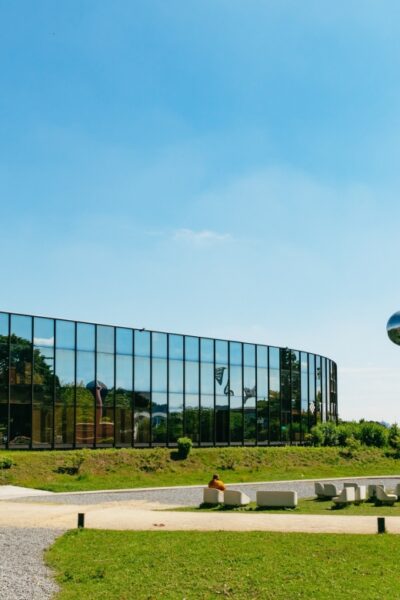
Atomium Entry Ticket with Design Museum Ticket
Read our review →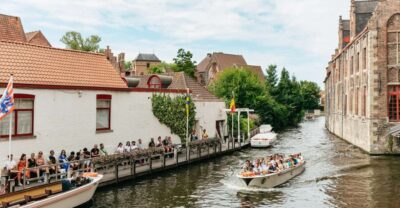
From Brussels: Guided Day Trip to Bruges and Ghent
Read our review →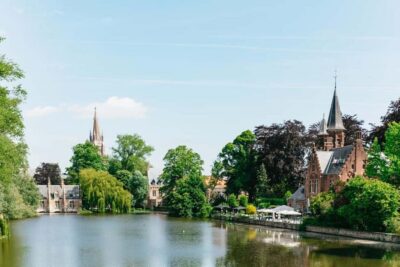
From Brussels: Bruges & Ghent Day Tour – 2 Fairytale Cities
Read our review →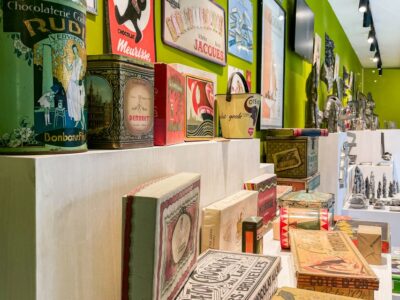
Choco-Story Brussels: Chocolate Museum Entrance with Tasting
Read our review →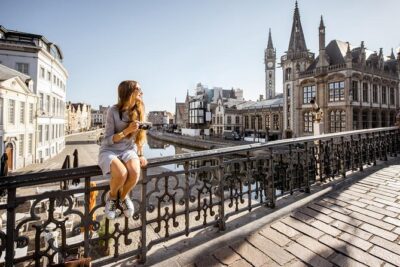
Bruges and Ghent – Belgium’s Fairytale Cities – from Brussels
Read our review →