
Reviewed · GHENT TOURS
Belgian Hidden Architectural Gem
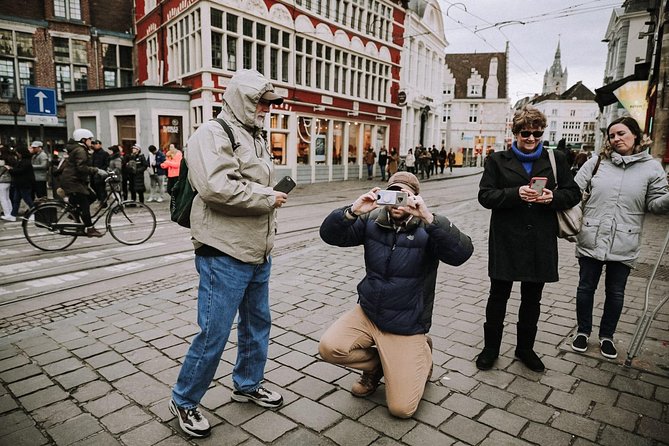
Look up, and Ghent starts to make sense. This two-hour walk gives you a clear introduction to the city’s architecture, from the handsome buildings around Vrijdagmarkt to medieval Gravensteen castle. I like that a guide handles the route while you focus on the streets, façades, and stories. I also like the small-group limit of 12, which should make it easier to hear the guide and ask questions.
The main consideration is its compact format. The route gives about 20 minutes to each named stop, so it is better for orientation and context than for a long castle visit or a detailed architectural study. You should also note that the advertised price covers the guide, but not coffee or tea, and the activity requires good weather.
In This Review
- Key points about this Ghent walking tour
- Starting beside Ghent’s City Pavilion at 3 p.m.
- Why a guide helps in architectural Ghent
- Vrijdagmarkt: 20 minutes in a historic square
- Crossing the city toward Gravensteen
- Gravensteen: medieval power in 20 minutes
- A guide who keeps history lively
- What $17.80 gets you
- Who will get the most from this walk?
- Practical ways to plan your afternoon
- Should you book the Ghent architecture walk?
- FAQ
- Where does the Ghent tour begin?
- What time does the tour start?
- How long does the experience last?
- Where does the tour end?
- Is a guide included?
- What is the maximum group size?
- Is the ticket available on a mobile phone?
Key points about this Ghent walking tour
- Vrijdagmarkt sets the historical scene: Begin in one of Ghent’s major squares, surrounded by architecture and tied closely to the city’s past.
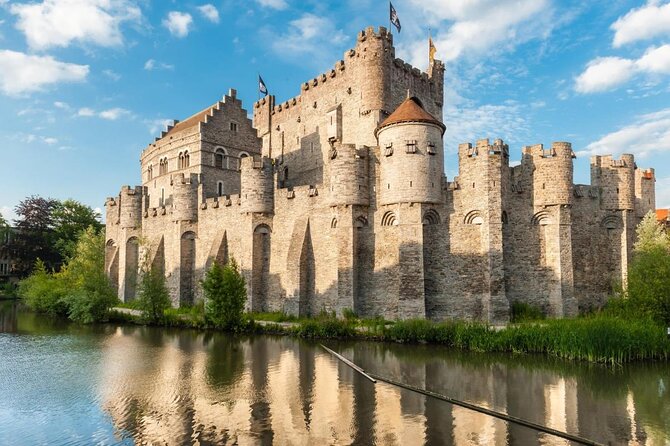
- Gravensteen brings medieval Ghent to life: See the Counts of Flanders castle and hear why a pillar sits in front of it.
- The guide adds the meaning: The walk connects buildings to the fall of the Holy Roman Empire, Flemish power, art, and city development.
- A small group keeps the walk personal: The maximum is 12 people, a useful limit for a guide-led city walk.
- Jamal receives especially warm praise: His approach is described as humorous, lively, and strong on architecture, art, and history.
- The price is modest for a first look: At $17.80 per person, the tour offers a low-cost way to get your bearings before exploring more of Ghent on your own.
Starting beside Ghent’s City Pavilion at 3 p.m.
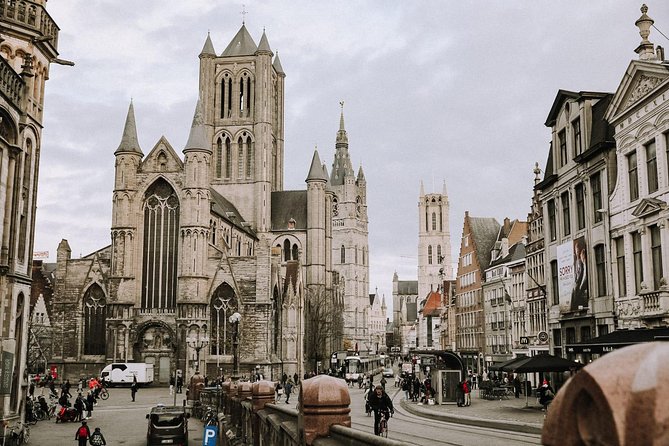
The tour begins at Stadshal, or City Pavilion, on Poeljemarkt in central Ghent. This is a practical starting point because it places you in the middle of the city rather than at a distant transport stop. You can arrive by public transportation, and the meeting point is near transit connections.
The start time is 3 p.m., giving you the morning and early afternoon for other plans. That timing can work well if you want to visit a museum, eat lunch, or arrive in Ghent from another Belgian city before the walk begins.
The ticket is mobile, so you do not need to print anything. Confirmation is provided when you book. I would still save the ticket where you can reach it quickly, especially if your phone connection is not reliable in the city center.
The activity ends back at the same meeting point. That makes it easier to continue your evening in central Ghent, with no need to arrange a return transfer or find your way back from a different neighborhood.
More things to do in Ghent:
- Ghent: 50-Minute Medieval Center Guided Boat Trip
★ 4.5 · 5,637 reviews - Historical Walking Tour: Legends of Gent
★ 5.0 · 1,761 reviews - Ghent: 40 Minute Medieval Center Guided Boat Tour
★ 4.4 · 884 reviews
Why a guide helps in architectural Ghent
Ghent is easy to admire and harder to understand. Its streets combine medieval buildings, later civic architecture, religious structures, and signs of a modern city. Without context, you may notice attractive façades without understanding why they look different from one another or how they fit into the city’s past.
This walk aims to connect those pieces. You hear about the development of Ghent, the fall of the Holy Roman Empire, and the influence of Flemish counts. Those subjects give the buildings a political setting instead of leaving them as pretty backdrops for photographs.
I especially like the focus on questions you might not think to ask alone. Why is there a pillar in front of Gravensteen? Which building has the city’s most beautiful Baroque façade? A good guide turns those details into reasons to pause and look more closely.
The tour also touches on why Ghent has earned the nickname Belgium’s Silicon Valley. The supplied information does not spell out the full explanation, so you should expect the guide to provide that local context rather than a long technical presentation. It is a useful reminder that Ghent is not only a medieval city preserved for sightseeing.
Vrijdagmarkt: 20 minutes in a historic square
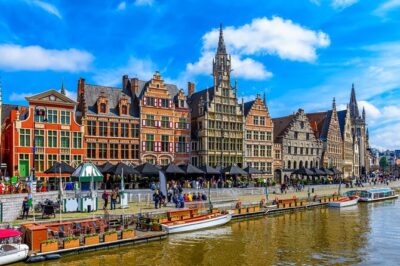
The first main stop is Vrijdagmarkt, described as the large and famous Markt of Ghent. You spend about 20 minutes here, with no separate admission charge.
The square is a strong opening because it gives you a concentrated view of Ghent’s architecture and public life. Its buildings help introduce the city’s changing fortunes, while the open space gives the guide room to explain how the area has functioned over time.
I would treat this stop as a visual briefing. You are not simply being shown one monument. You are learning how to read a group of buildings, how architectural details can point to different periods, and how a public square can reveal the power and ambitions of a city.
Twenty minutes is enough for a guided overview, but not enough for every façade to receive equal attention. If architecture is your main interest, use the guide’s comments as a starting point and plan to return later with more time. The walk is most useful when it helps you identify what deserves a second look.
The square also gives the guide a natural place to discuss Ghent’s broader story. You may hear how political power, trade, religion, and urban growth shaped the city. Those themes matter because they prepare you for the castle stop, where the authority of the Counts of Flanders becomes more direct and visible.
Crossing the city toward Gravensteen

Between the square and the castle, the group crosses a street on foot. The route is not presented as a series of long transfers, and the guide takes care of navigation so you can pay attention to the surroundings.
That simple arrangement has real value. Ghent’s center can feel confusing when several historic streets meet at once, and it is easy to walk past an important building while checking a map. With a guide leading, you can watch the architecture instead of constantly confirming directions.
The walk between stops is also part of the experience. The information provided does not name every street or building along the way, so you should not expect a full neighborhood-by-neighborhood tour. Still, the route links the civic setting of Vrijdagmarkt with the castle and gives the history a sense of place.
A guide can also point out details that do not appear in a standard route through Ghent. The promise here is not only a list of landmarks, but stories about the city that you might miss when walking alone. That is where the walk can earn its modest price.
A completely different kind of day:
- Evening Tour of the Dark Side of Gent
★ 5.0 · 646 reviews - Ghent Bike Tour Off-the-beaten-track
★ 5.0 · 505 reviews - Ghent: 40-Minute Historical Boat Tour of City Center
★ 4.3 · 430 reviews - Ghent: Guided Urban Bike Tour
★ 4.9 · 297 reviews
Gravensteen: medieval power in 20 minutes
Gravensteen is the strongest visual stop. This castle belonged to the Counts of Flanders and is among Ghent’s oldest buildings. It reflects the authority of the Flemish counts and gives you a direct look at the city’s medieval power.
The stop lasts about 20 minutes and is listed without a separate admission ticket. Based on the information provided, you should plan on a guided look at the castle and its setting rather than assume that a full interior visit is included. If entering the castle is essential to your plans, confirm that point before booking.
The guide explains why a pillar sits in front of the castle, a small feature that could easily escape notice. This is the kind of detail I value on a walking tour. You leave with a question answered, not just another photograph of a famous building.
The castle stop also includes a discussion of the city’s most beautiful Baroque façade. That contrast is useful. Gravensteen represents medieval military and political power, while Baroque architecture reflects a later taste for display, ornament, and formal grandeur.
You should not expect the castle portion to cover every chamber, defensive feature, or period of construction in detail. Twenty minutes moves quickly, particularly when the group stops for explanation and photographs. The benefit is a focused introduction that can help you decide if you want to return for a longer visit.
A guide who keeps history lively
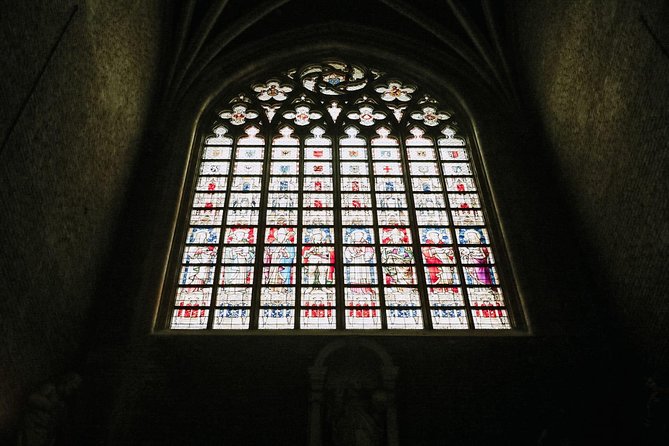
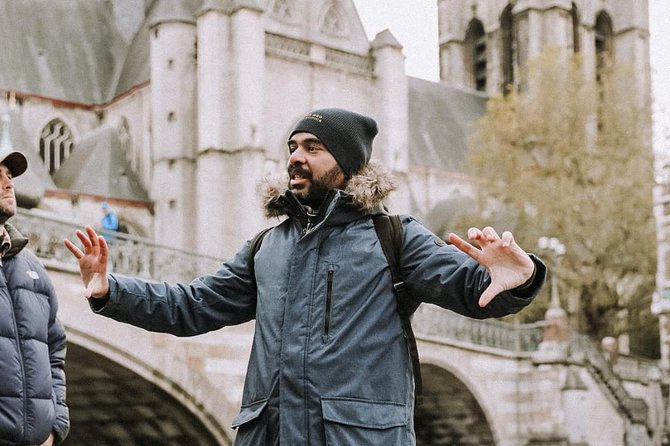
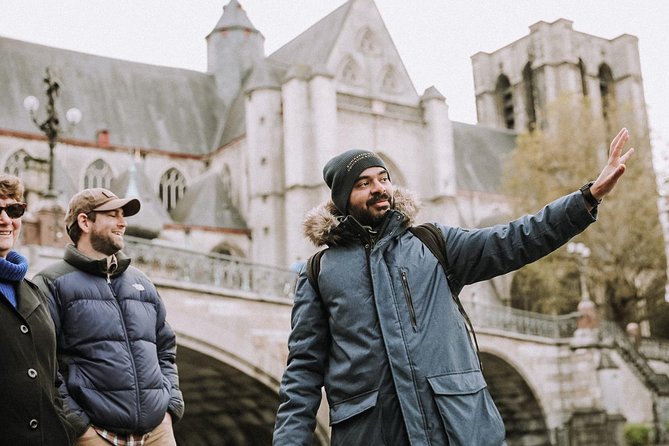
The guide can make or break a short walking tour. With only two hours, the presentation needs to be clear and well paced. The strongest feedback here focuses on Jamal, who is praised for his enthusiasm, humor, and command of architecture, art, and city history.
That description matters because dry facts alone do not make a good city walk. Jamal is described as making the experience entertaining and informative, with a style that keeps the group involved. For you, that suggests a tour suited to people who want history explained in a relaxed way rather than delivered as a formal lecture.
I also appreciate that the praise is specific. It is not limited to a general claim that the guide was good. The positive account points to broad subject knowledge, humor, and the ability to bring people along through the material. Those qualities are particularly useful in Ghent, where the architecture can span several centuries within a short walk.
The tour is offered by Bruges City Tours, even though this experience takes place in Ghent. That is worth noting when you confirm your booking, since the company name could otherwise cause a moment of confusion.
What $17.80 gets you
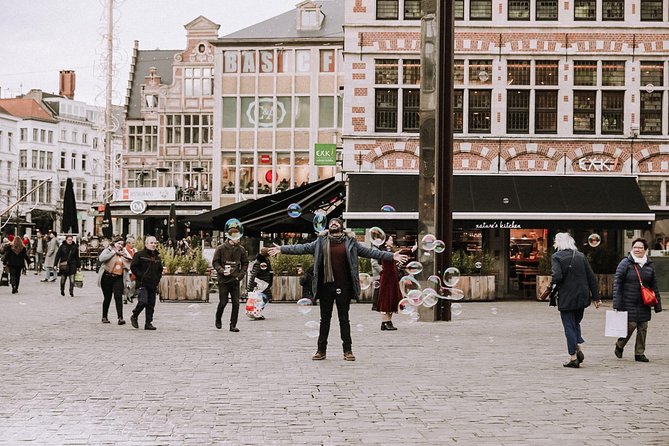
At $17.80 per person, this is priced as an accessible introduction rather than a full-day specialist tour. I see the best value in the guide’s interpretation, route planning, and historical connections.
You are paying to avoid spending your first hours in Ghent piecing together the city by yourself. The guide places Vrijdagmarkt and Gravensteen into a wider story, explains unusual details, and helps you notice architecture that could otherwise blur together.
The value is strongest if you are new to Ghent or have limited time. A short guided walk can help you decide which areas deserve more attention later. It can also give you enough background to make independent sightseeing more rewarding.
The value is weaker if you already know Ghent well, want extensive castle access, or prefer to explore at your own pace. The route is short, the named stops receive about 20 minutes each, and the experience ends where it begins. You will need to bring your own drink if you want coffee or tea, since those are not included.
The average booking lead time is 16 days. That does not mean you must book exactly that far ahead, but it suggests that planning early is sensible if your dates are fixed. The group limit of 12 adds to the appeal, especially compared with a large city tour where it can be difficult to hear or ask questions.
Who will get the most from this walk?
I would recommend this experience to first-time visitors who want a useful introduction without committing to a long tour. It suits you if architecture interests you, but you want someone to explain what you are seeing in plain terms.
It is also a good fit if you like history with a human voice. The references to the Holy Roman Empire, Flemish counts, Baroque design, and Ghent’s modern reputation create several routes into the city’s story. You do not need a specialist background to follow the walk.
The small-group cap should help families, couples, and solo visitors who prefer a more personal setting. Most people can participate, and service animals are allowed. The activity is near public transportation, which helps if you are staying outside the historic center.
I would be more cautious if you need a weather-proof plan. The tour requires good weather, and poor conditions can lead to a new date or a full refund. The standard cancellation policy is strict: the experience is non-refundable and cannot be changed for any reason, so book only when your schedule is firm.
Practical ways to plan your afternoon
Arrive at Stadshal a little before 3 p.m. so you have time to find City Pavilion and open your mobile ticket. The meeting point is central, but a few extra minutes can prevent a rushed start.
Wear shoes suitable for a two-hour city walk. The route includes movement between the square and castle, and the experience is designed to be taken on foot. The available information does not provide a detailed accessibility assessment, but most people can participate.
Think of the tour as an orientation, not a complete day in Ghent. Afterward, you can use what you learned to revisit a façade at Vrijdagmarkt, spend more time around Gravensteen, or continue exploring other historic areas independently.
Because the tour finishes at the starting point, you can make evening plans without arranging transport back across town. That is a small but useful advantage when you are working with a compact city schedule.
Should you book the Ghent architecture walk?
Book it if you want a short, affordable introduction to Ghent that puts architecture and history together. The combination of Vrijdagmarkt, Gravensteen, local stories, and a guide praised for humor and enthusiasm gives the walk a clear purpose.
I would choose it early in a Ghent stay, especially if you are visiting for the first time. The $17.80 price is reasonable for two hours of orientation, and the maximum group size of 12 should keep the experience manageable.
Skip it if your priority is a long interior visit at Gravensteen, a private tour, or a flexible route with no fixed schedule. Also avoid booking until your plans are stable, since cancellations and changes are not refundable.
For most first-time visitors, this is a practical way to see Ghent with more understanding than a solo stroll usually provides.
FAQ
Where does the Ghent tour begin?
The tour begins at Stadshal, also called City Pavilion, on Poeljemarkt in Ghent, Belgium.
What time does the tour start?
The tour starts at 3 p.m.
How long does the experience last?
The walking tour lasts approximately two hours.
Where does the tour end?
The activity ends back at the meeting point at Stadshal.
Is a guide included?
Yes. A guide is included in the experience.
What is the maximum group size?
The activity has a maximum of 12 travelers.
Is the ticket available on a mobile phone?
Yes. The experience provides a mobile ticket, and confirmation is received at the time of booking.
Just added in Ghent
- Historic Highlights, by a local guide★ 5.0 · 9 reviews
- Discover Ghent while playing! Escape game – The alchemist★ 4.0 · 4 reviews
- Walking Food Tour in Ghent★ 5.0 · 13 reviews
- Discover Ghent while playing! Escape game – The Walter case★ 4.5 · 4 reviews
- e-Scavenger hunt Ostend: Explore the city at your own pace★ 4.5 · 10 reviews
- Discover Mons while playing! Escape game – The alchemist★ 4.0 · 5 reviews
- Kortrijk Self-Guided Sherlock Holmes Murder Mystery Game★ 5.0 · 2 reviews
- Taste of Ghent: Private Chocolate Walking Tour★ 5.0 · 1 review
Ghent Tours, compared.


Browse the lists this tour appears in