Reviewed · GUIDED
Brussels: Fall and Rise of Art-Nouveau Guided Tour
Art Nouveau rewards slow looking. This 150-minute walk through Saint-Gilles and Ixelles brings Brussels architecture into focus, especially its decorative facades, sgraffito work, and links to Victor Horta. I like the clear focus on building techniques, and I like that the route reaches the historical remains of Horta’s Maison du Peuple rather than stopping at postcard views.
The main consideration is language. The live guide speaks Spanish, so this tour suits you best if you are comfortable following a detailed architectural explanation in Spanish. You should also be ready for about three kilometers on foot and changeable Brussels weather.
In This Review
- Key points to know before you go
- Why Brussels is the right city for an Art Nouveau walk
- Meeting at Horta Metro station
- Saint-Gilles and Ixelles, where the facades do the talking
- Sgraffito explained in plain terms
- Victor Horta’s Maison du Peuple and the idea of loss
- A guide who makes the details easier to see
- How the 150-minute format affects the experience
- Weather, clothing, and useful planning tips
- Is $17 a fair price?
- Who should book this Art Nouveau walk?
- Should you book the Brussels Art Nouveau tour?
- FAQ
- Where does the Brussels Art Nouveau tour meet?
- How long does the tour last?
- How far do you walk?
- What language is the guided tour in?
- Is the tour wheelchair accessible?
- What architectural areas does the tour visit?
- Does the tour cover Victor Horta?
- What should I bring?
- Can I cancel the booking?
Key points to know before you go
- A three-kilometer route through Saint-Gilles and Ixelles: You explore two Brussels communes with some of the city’s strongest Art Nouveau architecture.
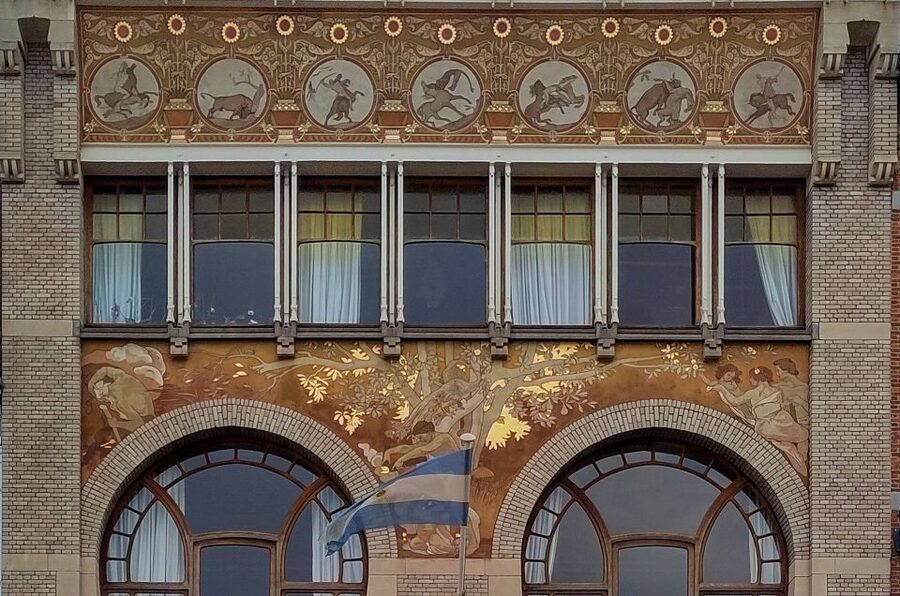
- Sgraffito gets proper attention: You learn how this layered wall-decoration method differs from fresco painting.
- Victor Horta’s Maison du Peuple adds historical weight: The tour shows what remains of an important building linked to Brussels’ most famous Art Nouveau architect.
- The guide-led format keeps the buildings readable: Decorative facades can blur together without context, so the explanations matter here.
- Spanish is the tour language: The live guide and extra audiovisual material are aimed at Spanish-speaking participants.
- The price is modest for a 150-minute walk: At $17 per person, the tour offers a useful introduction without taking up a full day.
Why Brussels is the right city for an Art Nouveau walk
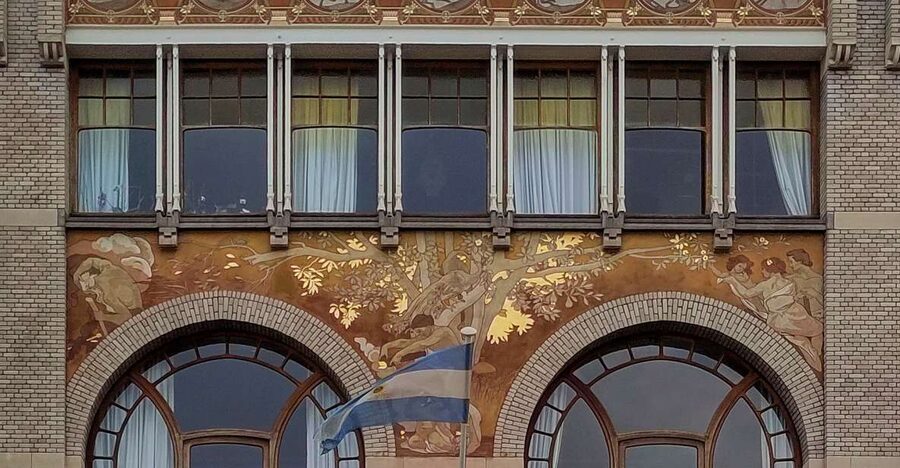
Brussels is not a city where Art Nouveau appears in just one grand museum. Its best examples are spread through residential streets, especially in the communes of Saint-Gilles and Ixelles. That makes walking the right way to see it.
The Brussels Capital Region has 19 communes, each with its own local character. Saint-Gilles and Ixelles contain a particularly strong concentration of late nineteenth-century houses, created when architects were testing new ideas about shape, light, decoration, and materials.
That setting gives this experience an advantage over a simple list of famous buildings. You are not only looking at one monument. You are comparing facades across ordinary streets and seeing how Art Nouveau altered the appearance of a whole neighborhood.
I find that useful because Art Nouveau can seem like a style of curls, flowers, and elaborate ironwork at first glance. A good guide helps you notice the decisions underneath the decoration. Why is one surface painted while another is carved? How does a doorway pull your eye inward? Why do balconies, windows, and wall panels work together as one composition?
The route focuses on those questions. It is less about ticking off every important address and more about learning how to read what is in front of you.
More things to do in Brussels:
- Brussels: Atomium Entry Ticket with Design Museum Ticket
★ 4.4 · 9,254 reviews - From Brussels: Guided Day Trip to Bruges and Ghent
★ 4.6 · 8,353 reviews - From Brussels: Bruges & Ghent Day Tour – 2 Fairytale Cities
★ 4.7 · 8,242 reviews
Meeting at Horta Metro station
The tour begins beside Horta Metro station on Chaussée de Waterloo, near number 187. Metro lines 3 and 4 serve the station, which makes the meeting point fairly practical if you are staying elsewhere in Brussels.
Look for the guide wearing a Curiositas Mundus badge. That small detail matters at a busy city meeting point, where several groups may gather near a station entrance.
From the start, you are in the right part of town for the subject. The route moves through the outer areas of Brussels rather than the historic center. That means you should not expect a grand central-square tour with a quick architectural sidebar. The focus is residential streets and the houses that helped make Brussels a major Art Nouveau center.
You can also join the Curiositas Mundus Telegram channel for extra material during the walk. This is optional, but it may be useful if you want added visual or audiovisual information while you are seeing the buildings in person.
Saint-Gilles and Ixelles, where the facades do the talking
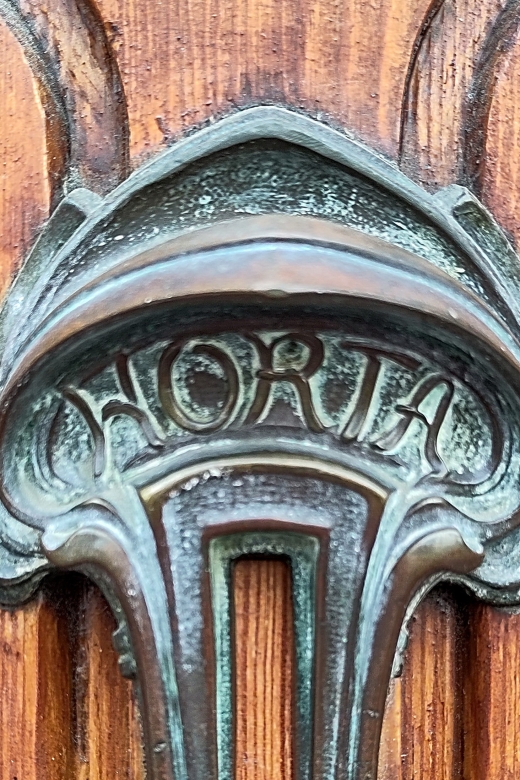
The most rewarding part of this walk is the chance to see Art Nouveau in its original urban setting. Saint-Gilles and Ixelles are not simply outdoor galleries. They are living parts of Brussels, with streets where architectural detail appears beside everyday city life.
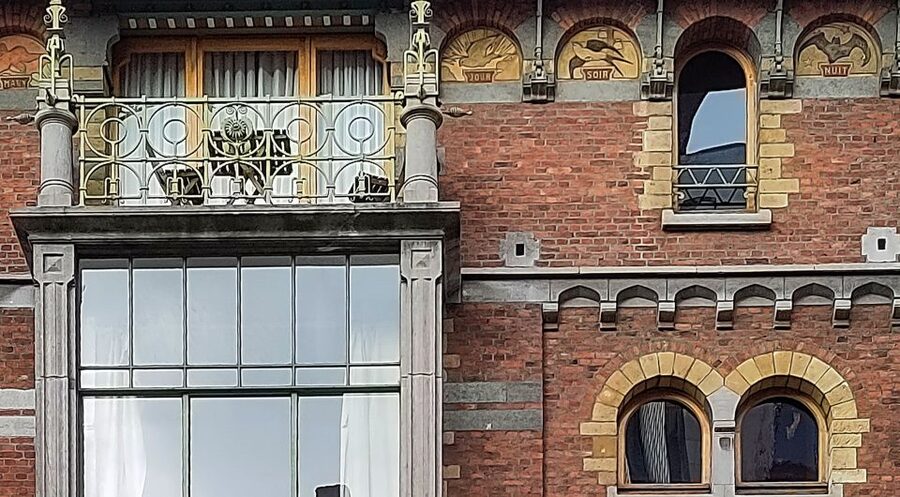
The guide draws your attention to the buildings that are easy to miss when you walk alone. A doorway may have an unusual curve. A wall may contain a decorative panel with several colors and textures. A balcony may repeat a plant-like shape found around the windows.
You will likely spend time examining facades from the street rather than entering private houses. That is both a strength and a limit. The outside gives you a clear view of the relationship between structure and decoration, but you should not book this expecting access to a long series of interiors.
The route is approximately three kilometers. That is manageable for most people who are comfortable with a city walk, but it is long enough to require sensible shoes. The 150-minute duration also means the pace should allow time for explanations and stops rather than a rushed march from one address to the next.
I especially like the way this format turns decoration into a kind of visual vocabulary. Once you understand a few techniques, you can keep spotting them after the tour ends. That makes the walk useful beyond its scheduled two and a half hours.
Sgraffito explained in plain terms
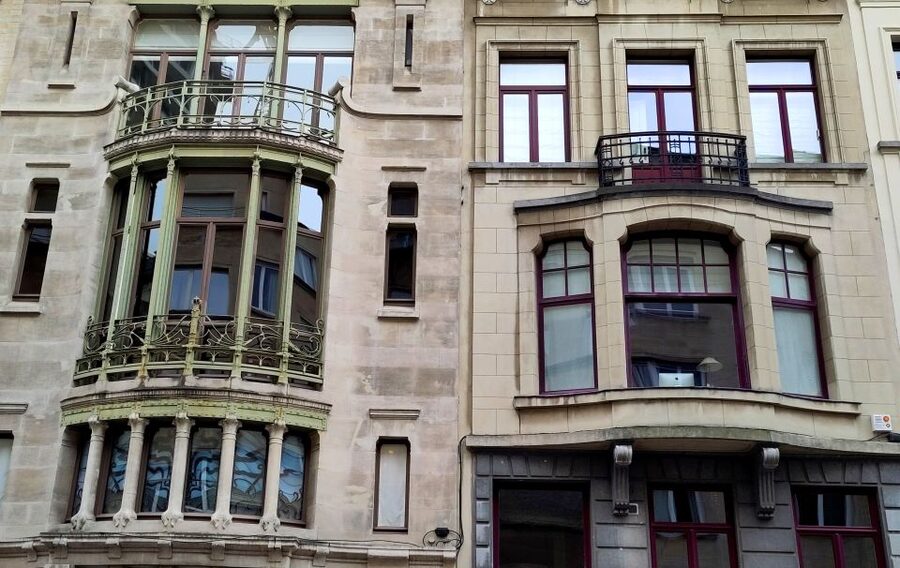
Sgraffito is one of the tour’s most useful subjects because it gives you a practical way to understand Art Nouveau walls. The technique involves applying layers of material and cutting through the upper layer to reveal a different color beneath. The result can look like a drawn or etched design built into the facade.
That is different from a fresco. A fresco is painted onto fresh plaster, so the pigment becomes part of the plaster as it dries. Sgraffito relies on layered surfaces and deliberate scratching or incision.
The distinction is easy to miss when you are simply looking at a decorative panel from across the street. Once you know what to look for, you can pay attention to the depth and texture of the work rather than treating every painted design as the same.
This is where a live guide adds real value. A description in a guidebook can explain the technique, but a guide can point directly to the surface and connect the definition to a building in front of you. The extra audiovisual information may also help reinforce what you see during the walk.
The tour promises discussion of the most used techniques in Art Nouveau, not just sgraffito. The supplied details do not list every technique or guarantee a specific number of examples, so you should treat the walk as an introduction rather than a specialist course. Still, the emphasis on construction and surface work gives it more substance than a basic facade-spotting stroll.
A few more options to weigh up in Brussels
- From Brussels: Full-Day Antwerp and Ghent Guided Tour
★ 4.6 · 1,019 reviews - Brussels 3-Hour Guided Art Nouveau Tour
★ 4.0 · 282 reviews - Brussels Highlights & Hidden Gems Private Tour with a Local Guide
★ 5.0 · 251 reviews - Brussels: Chocolate Workshop and Guided Walking Tour
★ 4.7 · 225 reviews
Victor Horta’s Maison du Peuple and the idea of loss
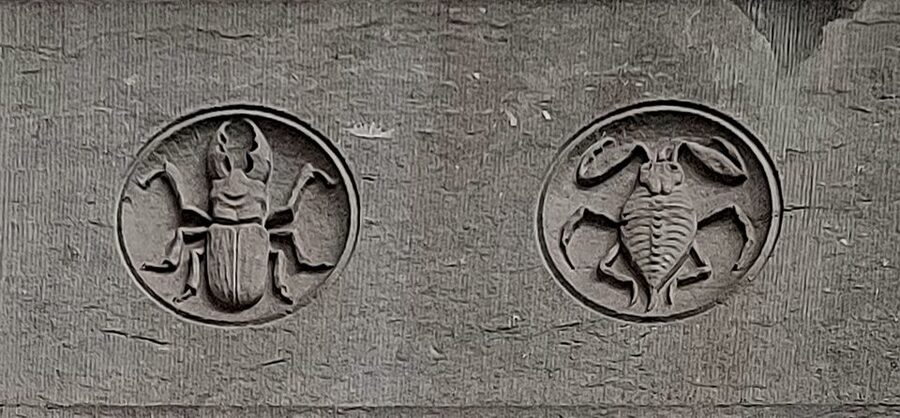
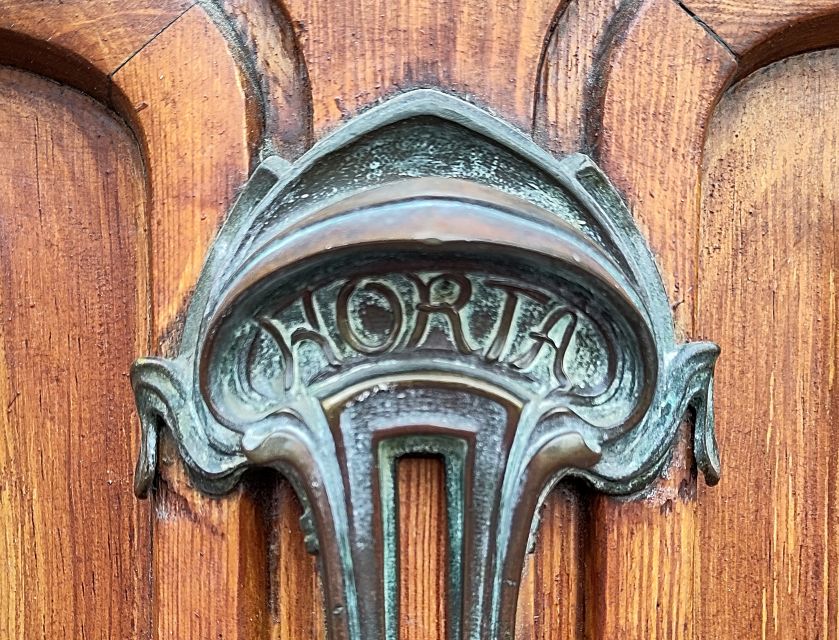
Victor Horta is central to Brussels Art Nouveau, and the tour includes the historical remains of his Maison du Peuple. This stop gives the walk a valuable second theme: not only how Art Nouveau was created, but also how much of it has disappeared.
Horta’s Maison du Peuple was an important building, yet what you see today consists of remains rather than a fully preserved structure. That change can make the stop more affecting than a perfect monument. You are asked to imagine the building’s original presence while confronting the choices that left only fragments behind.
The information provided does not specify exactly which remains are included or how long the stop lasts. Still, its place in the route is clear. It connects architectural style with social and civic history, showing that these buildings were not merely pretty shells.
For me, this is one of the strongest reasons to choose the tour. Art Nouveau is often presented as a decorative fashion, but the Maison du Peuple helps place it in a wider story of public life, architecture, and changing cities.
A guide who makes the details easier to see
The guide is a major part of the experience. The strongest praise centers on clear explanations, dedication, a pleasant manner, and a willingness to answer questions.
Samuel is specifically praised for explaining Art Nouveau in a clear way while using the facades as examples. That combination is important. Technical terms only help when you can connect them to something visible, and his approach appears to do exactly that.
You should feel comfortable asking questions during the walk. The feedback describes a guide who did not hesitate to respond, which is useful if you are unsure about the difference between a technique, a material, and a decorative motif.
The language remains the key practical point. The live tour is in Spanish. If Spanish is your first language, or you can follow architectural discussion comfortably in Spanish, this could be a particularly good-value option. If you mainly speak English, French, or another language, the experience may be less useful unless you can keep up with Spanish explanations.
The tour has received a perfect five-star rating from five published evaluations, with praise focused on the guide’s dedication, friendly treatment, clear teaching, and expertise in Art Nouveau. That is a small sample, so I would not treat it as a guarantee. It does point to the guide as the experience’s strongest feature.
How the 150-minute format affects the experience
Two and a half hours is a sensible length for this subject. A shorter walk might give you a few names and attractive facades, but not enough time to explain sgraffito, discuss the style’s techniques, and visit the Maison du Peuple remains.
At the same time, 150 minutes is not a full-day architecture program. You will receive a focused introduction to the outer Brussels neighborhoods rather than an exhaustive survey of every major Art Nouveau building in the region.
That makes the tour a good choice early in your Brussels stay. You can learn what to notice, then continue looking at architecture on your own. It also leaves the rest of your day free for museums, food, or the city center.
The three-kilometer distance is worth considering before booking. The activity is listed as wheelchair accessible, but the route remains an outdoor urban walk. If mobility, weather, or long periods of standing are concerns, check the exact conditions before you reserve.
Weather, clothing, and useful planning tips
Brussels weather can change quickly, and the instructions specifically advise bringing an umbrella, raincoat, or poncho. Take that seriously. Rain can make an architecture walk less comfortable, especially when you are stopping outdoors to study wall surfaces and upper floors.
Wear shoes suited to a three-kilometer city route. You do not need hiking equipment, but thin soles and poor grip will make cobblestones or wet pavement less pleasant if the route includes them.
Arrive at Horta Metro station with enough time to find Chaussée de Waterloo and the meeting point near number 187. The guide should be identifiable by the Curiositas Mundus badge.
Because the tour takes place around residential streets, keep your attention on the guide and the buildings rather than expecting frequent indoor breaks. A small bottle of water is sensible for any 150-minute walk, although it is not listed as a required item.
Is $17 a fair price?
At $17 per person, this is a strong price for a 150-minute guided walk, especially if you value explanation over simple sightseeing. You are paying for a live Spanish-speaking guide, a planned route, architectural interpretation, and additional audiovisual information.
The value is strongest for first-time Art Nouveau visitors. You do not need prior knowledge, and the tour can give you a working vocabulary for the rest of your time in Brussels.
The price is less compelling if you already know Saint-Gilles and Ixelles well, or if you want extensive interior access. The experience is built around an outdoor route and visible remains, not a museum collection or a series of private house visits.
Free cancellation up to 24 hours before the start and the reserve-now, pay-later option also reduce the risk of fitting it into a changeable schedule. Those policies are practical advantages, though the architectural content remains the main reason to book.
Who should book this Art Nouveau walk?
I would recommend it to you if you enjoy architecture but do not want a dense academic lecture. The clear focus on techniques, facades, and the story of Horta’s Maison du Peuple gives the walk enough depth without requiring specialist training.
It also suits anyone who wants to see Brussels beyond the central sights. Saint-Gilles and Ixelles offer a different sense of the city, with decorative houses lining streets that are part of ordinary local life.
Spanish-speaking visitors are the best match because the live commentary is in Spanish. Couples, solo visitors, and small groups who like asking questions should also find the format appealing, based on the emphasis on friendly explanations and direct answers.
You may want to skip it if you dislike walking in rain, need frequent indoor seating, or want a tour conducted in English. You should also choose another activity if your main goal is entering famous Art Nouveau interiors, since the information provided centers on exteriors and historical remains.
Should you book the Brussels Art Nouveau tour?
Book this tour if you want a focused, affordable introduction to Brussels Art Nouveau, especially in Spanish. The strongest reasons are the three-kilometer route through Saint-Gilles and Ixelles, the practical explanation of sgraffito, the visit to the remains of Horta’s Maison du Peuple, and a guide praised for clear, patient teaching.
Go in with the right expectations. You will walk outdoors, study buildings from the street, and spend 150 minutes with one architectural theme. Bring rain gear, allow for the full distance, and confirm that Spanish suits you.
At $17, it offers good value for curious first-time visitors. It will not replace a full architectural study tour, but it can teach you how to look at Brussels with sharper eyes.
FAQ
Where does the Brussels Art Nouveau tour meet?
The meeting point is next to Horta Metro station on lines 3 and 4, on Chaussée de Waterloo near number 187. The guide wears a Curiositas Mundus badge.
How long does the tour last?
The tour lasts 150 minutes, or two and a half hours.
How far do you walk?
The route covers approximately three kilometers through the outskirts of Brussels.
What language is the guided tour in?
The live guide conducts the tour in Spanish.
Is the tour wheelchair accessible?
Yes, the activity is listed as wheelchair accessible. Since it includes about three kilometers of outdoor walking, you may want to confirm the route conditions before booking.
What architectural areas does the tour visit?
The route explores parts of Saint-Gilles and Ixelles, two Brussels communes with many notable Art Nouveau houses and facades.
Does the tour cover Victor Horta?
Yes. The walk includes the historical remains of Victor Horta’s Maison du Peuple.
What should I bring?
Bring an umbrella, raincoat, or poncho in case of rain. Comfortable shoes are also a sensible choice for the three-kilometer route.
Can I cancel the booking?
You can cancel up to 24 hours in advance for a full refund. The reserve-now, pay-later option lets you hold a place without paying immediately.
Just added in Brussels
- Transfer from BRU Airport to Brussels city (any hotel or address)★ 5.0 · 1 review
- Standard vehicle from Brussels airport to city of Antwerp★ 5.0 · 4 reviews
- Standard Minivan from Brussels airport to city of Antwerp★ 5.0 · 1 review
- Private transfer from BRU Airport – Brussels GO BACK MB V-CLASS 7 PAX★ 5.0 · 2 reviews
- Private transfer from Brussels Airport to Brussels city Business car★ 5.0 · 1 review
- Transfer Brussels Airport -> Antwerp MB V-CLASS 7 PAX★ 5.0 · 1 review
- Private transfer from BRU Airport to Bruges with Mercedes V class 7 pax★ 5.0 · 1 review
- Private transfer from BRU Airport to Bruges with luxury limousine 3 pax★ 5.0 · 1 review
Guided, compared.
From Brussels: Guided Day Trip to Bruges and Ghent
Read our review →

Small Group Boat Cruise and Guided Walking Tour
Read our review →
Choco-Story Chocolate Museum Guided Tour w/Tastings
Read our review →
From Brussels: Full-Day Antwerp and Ghent Guided Tour
Read our review →