Reviewed · BRUSSELS TOURS
Comic Book Tour in Brussels
Comic art has its own street map. This Spanish-language walking tour connects Brussels murals with the schools, artists, and ideas that shaped Belgian comics, turning an ordinary city walk into a lesson in visual storytelling. I especially like the visit to Tintin’s former Brussels home and the final Smurfs Passage, where the art is part of the city rather than locked behind glass. The main consideration is language: if you do not understand Spanish, much of the tour’s value will be lost.
I also like the $7 price, which makes this an easy add-on for comic fans and curious first-time visitors alike. The pace is spread over about two and a half hours, with a maximum of 25 people, so you get more explanation than you would from simply following a mural map. Be ready for a walking tour with several brief stops, not a museum visit or a shopping excursion.
In This Review
- Key points at a glance
- Why Brussels is the right city for a comic tour
- Starting on Boulevard Anspach
- Reading Brussels’ murals on the first stretch
- Tintin’s house on Rue Terre-Neuve
- Manneken Pis, comic murals, and lesser-known characters
- Tintin takes center stage
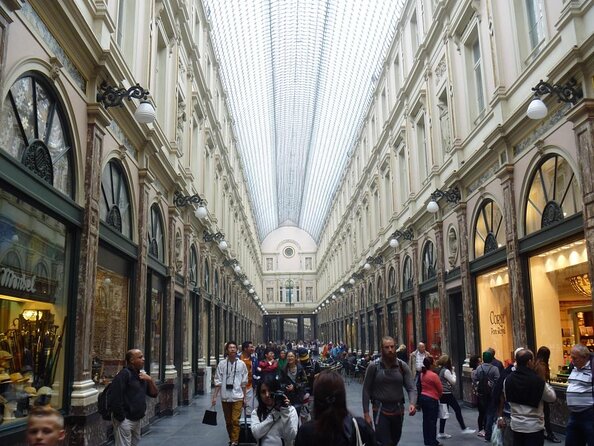
- Tintin in the Galeries Royales Saint-Hubert
- Meeting The Smurfs near Brussels Central Station
- Finishing under the Smurfs Passage
- What the $7 price really includes
- Group size, language, and practical fit
- Who should book this comic walk
- Should you book the Comic Book Tour in Brussels?
- FAQ
- What language is the Comic Book Tour in Brussels?
- How long does the tour last?
- How much does the tour cost?
- Where does the tour begin?
- Where does the tour end?
- What time does the tour start?
- How large can the group be?
Key points at a glance
- Tintin’s Brussels address: See the house that inspired Hergé’s home for the famous reporter before his move to Moulinsart Castle.
- The first comic mural: Learn about one of Brussels’ earliest comic murals and how it fits into the Franco-Belgian tradition.
- Clear line explained: The guide introduces the clean, precise drawing style linked with Hergé and other major artists.
- Smurfs finish: End beneath the Smurfs mural near Brussels Central Station, close to comic and figurine museums.
- Spanish guide with an energetic style: The guide brings stories and enthusiasm, and a very small group allows plenty of questions.
- Simple value: At $7, the tour’s real product is interpretation, not paid admission to attractions.
Why Brussels is the right city for a comic tour
Brussels treats comics as part of everyday public life. You do not need a museum ticket to encounter the art. It appears on building walls, in passages, on shopfronts, and in the names and stories attached to familiar streets.
That makes this tour useful even if you know little about Belgian comics. Instead of assuming you can identify every character, it begins with the origins of the comic and explains why Belgian creators matter beyond Belgium. You get a working guide to the main schools and authors, not just a collection of photo stops.
The tour also introduces the idea of the clear line, a style strongly associated with Hergé. Its neat outlines, carefully arranged scenes, and readable characters helped shape the look of European comics. The point is not simply to admire clean drawings. You learn to notice how different artists organize a page and why one series feels unlike another.
For comic enthusiasts, the reward is the range of references. Victor Sackville, Ric Hochet, Kinky & Cosy, Thorgal, XIII, The Young Albert, Olivier Rameau, Yoko Tsuno, Tintin, and The Smurfs all appear along the route. For beginners, the guide gives these names some order instead of throwing them at you without context.
More things to do in Brussels:
- Brussels: Atomium Entry Ticket with Design Museum Ticket
★ 4.4 · 9,254 reviews - From Brussels: Guided Day Trip to Bruges and Ghent
★ 4.6 · 8,353 reviews - From Brussels: Bruges & Ghent Day Tour – 2 Fairytale Cities
★ 4.7 · 8,242 reviews
Starting on Boulevard Anspach
The tour begins at 3 p.m. at Boulevard Anspach 102, at the entrance to the Brüsel gallery and shop. This is more than a convenient meeting place. The name offers the first doorway into Brussels’ comic culture, and the guide explains why Brüsel matters within Belgian comics and how the medium began.
The opening stop lasts about 10 minutes. That may sound brief, but it gives the outing a clear purpose before the murals begin. You are not simply being led from one painted wall to another. You start by learning why comics became so important in Belgium and how the city helped support that tradition.
The Brüsel shop is also useful for orientation. You will understand early on that this tour is connected to the wider comic scene, including galleries, specialist shops, museums, and original artwork. You do not need to purchase anything, and the stop does not include a paid admission ticket.
Reading Brussels’ murals on the first stretch
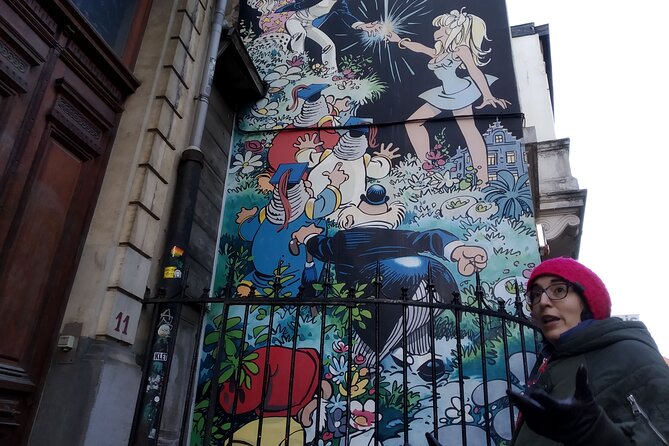
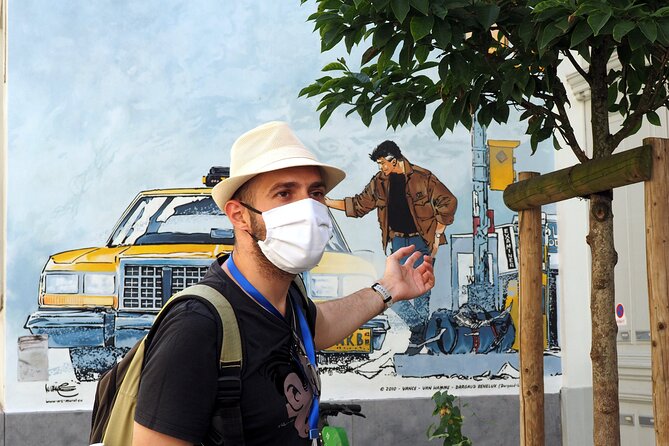
The next part takes about 30 minutes and focuses on Broussaille and several comic murals. This is the most analytical section of the walk, so it is likely to matter most if you want more than character recognition.
You learn which artists belong to different Franco-Belgian schools and how their work relates to one another. The guide gives special attention to the clear line, using examples such as Victor Sackville and Ric Hochet. Kinky & Cosy and Thorgal add variety, showing that Belgian comics are not limited to one drawing style or one kind of story.
The mural setting changes the way you look at the work. A comic panel on a wall is larger than a printed page, and you can compare the artwork with the surrounding buildings and streets. The city becomes part of the lesson. At the same time, the murals are outdoor art, so your experience depends on the weather, street conditions, and how easily the group can gather around each wall.
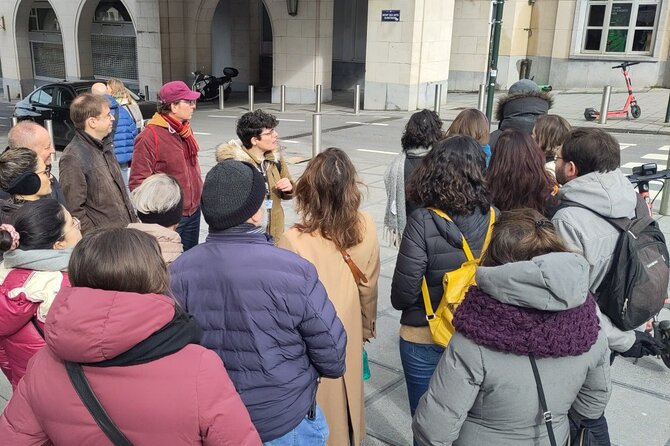
This is also where the guide’s storytelling matters most. The Spanish-speaking guide has been described as a lively woman who explains the comic world with warmth and plenty of stories. On a very small outing of three people, she was able to respond closely to questions, which suggests that the tour works especially well when the group is not full.
Tintin’s house on Rue Terre-Neuve
After more murals, including one dedicated to Yoko Tsuno, the route reaches Rue Terre-Neuve. Here you see the house that inspired Hergé when he created Tintin’s Brussels home.
This is a modest but memorable stop because it links fiction with a real address. Tintin’s world often feels global, with journeys to distant countries and invented locations. Seeing the Brussels house brings the character back to a recognizably local setting.
The route also passes near the market connected with the famous Unicorn adventure. The guide uses this area to connect the real city with the plot and places associated with Tintin. This is a good example of the tour’s approach: rather than discussing the character only as a printed figure, it shows how Brussels appears behind the stories.
The stop lasts about 10 minutes. Do not expect to enter the house or visit a Tintin attraction inside. Its value is the connection between Hergé’s imagination and the street itself.
A completely different kind of day:
- Choco-Story Brussels: Chocolate Museum Entrance with Tasting
★ 4.3 · 4,883 reviews - Bruges and Ghent – Belgium’s Fairytale Cities – from Brussels
★ 4.0 · 4,809 reviews - Brussels: Hop-On Hop-Off Bus Tour
★ 4.0 · 4,016 reviews - Brussels: Entry Ticket to Mini-Europe
★ 4.5 · 2,870 reviews
Manneken Pis, comic murals, and lesser-known characters
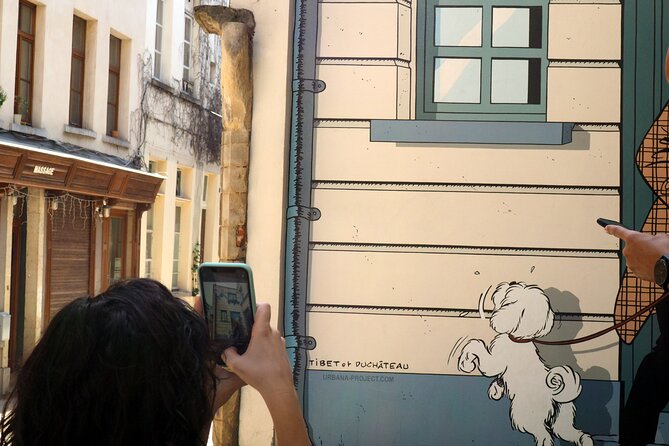
The next section continues through more designs before reaching the large graphic version of Manneken Pis. The mural honors Brussels’ famous small statue and sits beside the statue’s wardrobe, creating a playful link between local tradition and comic art.
The guide also uses this point to discuss the little boy’s appearances in Franco-Belgian comics. That makes the stop more than another photo opportunity. You see how a familiar Brussels symbol can be redrawn and placed inside the comic world.
This part includes references to XIII, The Young Albert, and Olivier Rameau. These names may be less familiar than Tintin or The Smurfs, which is exactly why a guide helps. You can discover corners of the central city that do not appear on every standard Brussels sightseeing walk.
The allotted time is about 10 minutes. Since the route includes many brief stops, the tour favors breadth over long periods spent studying one mural. If you want to sketch, photograph every panel, or browse at length, you may need to return on your own.
Tintin takes center stage
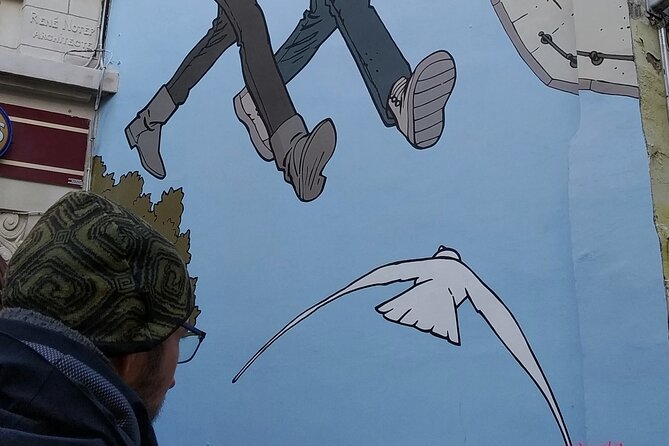
The Tintin mural receives its own short stop, about five minutes. The painting points toward The Tornasol Affair and sits close to the city center, giving the guide another chance to connect a real Brussels location with one of Tintin’s adventures.
Five minutes is enough for an explanation and a quick look, but not for a detailed examination of every figure. You will want to keep your camera ready and listen while the guide provides the story. The stop works best as part of the larger Tintin sequence rather than as a stand-alone attraction.
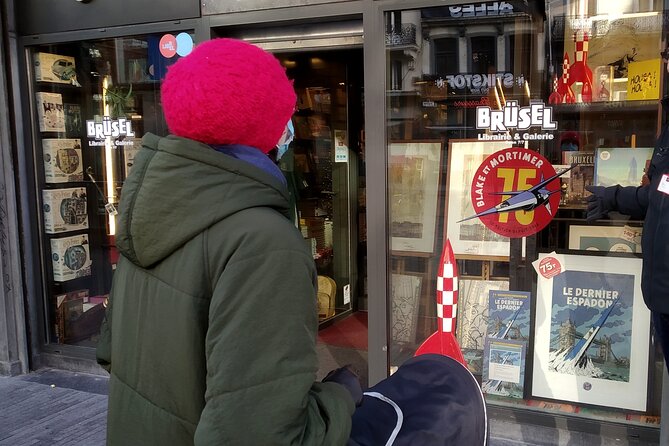
The route then pauses outside La Boutique Tintin. The shop entrance is decorated around The Blue Lotus, and you can see where to find Tintin-related goods. This is an exterior viewing stop, not a scheduled shopping break, so consider it a useful reference if you want souvenirs afterward.
The tour does not say that purchases are included, and none of the stops has an admission charge. That helps keep the $7 price low, but it also means you should think of the shops as optional follow-up stops rather than part of the paid experience.
Tintin in the Galeries Royales Saint-Hubert
At the Galeries Royales Saint-Hubert, the guide shifts from printed pages to the theatre. Hergé’s work did not remain limited to comic books, and Tintin’s characters also made appearances in theatrical settings connected with these elegant galleries.
This is one of the route’s more unusual details. Many Tintin fans know the albums and animated adaptations, but fewer expect a discussion of stage performances in central Brussels. The gallery itself gives the story an appropriate setting, with its grand architecture and long connection to city life.
The stop takes around five minutes. It is a short explanation within a larger walk, not a theatre visit. Still, it adds useful context and shows how widely Hergé’s characters traveled across different forms of entertainment.
Meeting The Smurfs near Brussels Central Station
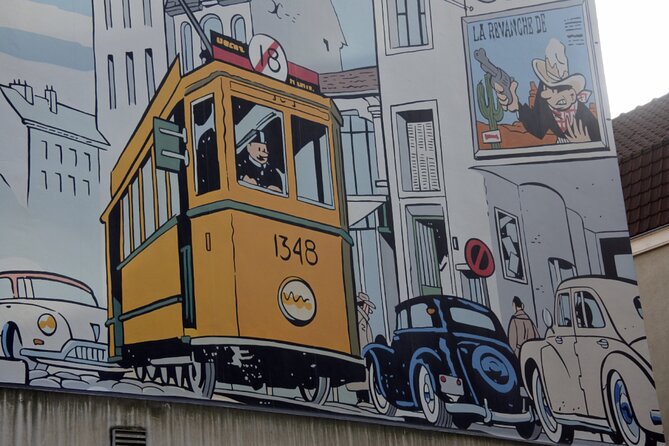
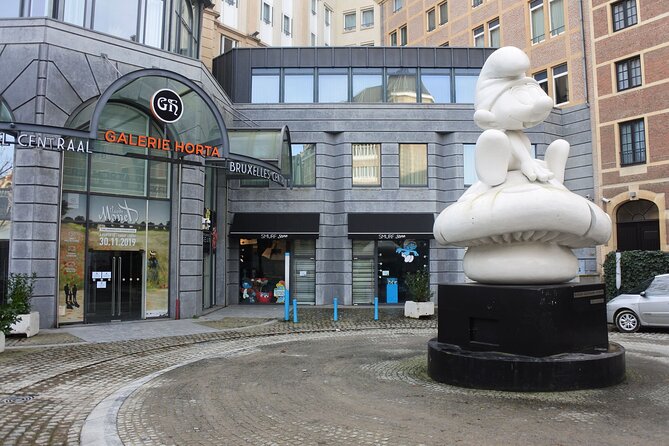
The route next reaches the Smurf statue. Before discussing the statue, the guide talks about the important Moof museum, then explains the character and its creator. A Smurfs shop is nearby, giving you another possible stop after the walk.
The statue is described as being easy to miss, which gives this section a small sense of discovery without requiring a long detour. The guide helps you see it as part of Brussels’ comic culture rather than as a random decoration.
The Smurfs are closely tied to Belgium’s international comic identity. You may know them from television or merchandise, but the tour places them within the national comic tradition and brings attention back to their creator and original setting.
This stop lasts about 10 minutes. It is a good point for questions, especially if you want to compare the Smurfs with the more realistic or adventure-focused series discussed earlier.
Finishing under the Smurfs Passage
The final stop is the Smurfs Passage on Infante Isabellastraat, near Brussels Central Station. The mural shows the blue characters in relation to Brussels life and customs, and the guide invites you to look for details within the scene.
This ending works well because it brings the tour back to public art. You finish under a mural, not in a shop or at a ticket office. The end point is also practical. It is close to Central Station, the museums of original figurines and comics, and other central attractions.
The passage gives you a chance to review the different approaches you have seen during the walk. Some murals celebrate famous characters, some link comics with real buildings, and others explain how Brussels presents its own cultural symbols. By the final stop, the painted walls should feel less like isolated decorations and more like pieces of one citywide comic trail.
What the $7 price really includes
At $7, this is an unusually inexpensive guided experience. You are not paying for entry to a museum, a private collection, or a special exhibit. You are paying for a Spanish-speaking guide who supplies context, connections, and stories while you walk through central Brussels.
That distinction matters. If you only want to photograph Tintin and The Smurfs, you can see public murals without booking. The tour earns its price by explaining why those characters matter, how the artists differ, and where the murals fit in the history of Belgian comics.
The price also makes it a sensible choice for a first visit. You can learn the basics without committing a large part of your sightseeing budget. The mobile ticket is convenient, and confirmation is sent at booking.
The tour lasts about two and a half hours, although the listed viewing times add up to less than that. The difference is walking between locations, gathering the group, and moving through central Brussels. Wear comfortable shoes and leave room in your schedule for a route that unfolds at street level.
Group size, language, and practical fit
The group can contain up to 25 people. That is still a manageable maximum for a walking tour, but a full group will not feel as personal as a three-person outing. If asking questions is important to you, try to stay close to the guide and listen carefully at each mural.
The guide is Spanish-speaking, and the tour is designed for both comic beginners and people who already know the medium. That range is a strength if the explanations are pitched well. Beginners get an introduction to Belgian comic schools, while fans can pick up less familiar names and connections.
The walk is near public transportation at both ends. It starts on Boulevard Anspach and finishes near Brussels Central Station, so the end point is convenient for continuing your day. Service animals are allowed, and most people can participate.
Because the route is outdoors and includes multiple standing stops, you should consider your own comfort with walking and waiting in city streets. The tour information does not give a detailed accessibility description, so contact the provider if you need specific assistance beyond the stated participation details.
Who should book this comic walk
I would recommend it most strongly to three kinds of people:
- Spanish-speaking visitors who want a cultural walk with explanation rather than a silent mural hunt.
- Tintin and Smurfs fans who want to connect fictional characters with real Brussels streets.
- Curious first-time visitors who want an affordable introduction to Belgian comics and a few places outside the standard sightseeing circuit.
It is less suitable if you want museum interiors, extensive shopping time, or a tour in another language. It may also feel too broad if your main goal is an in-depth study of Hergé alone, since Tintin shares the route with many other creators and series.
The strongest feature is the guide’s enthusiasm. An energetic guide can make the short mural stops feel connected and memorable. The weaker point is that the experience depends heavily on the guide’s Spanish explanations and on outdoor viewing conditions.
Should you book the Comic Book Tour in Brussels?
Book it if you understand Spanish and want the city’s comic culture explained rather than simply photographed. For $7, you get a lively two-and-a-half-hour walk through murals, Tintin sites, a Smurfs statue, comic shops, and the Smurfs Passage, with a convenient finish near Brussels Central Station.
Skip it if you cannot follow Spanish or if you prefer a museum-based experience. Otherwise, the low price and unusual route make this a smart supplement to a Brussels visit, especially before visiting the nearby comic and figurine museums on your own.
Free cancellation is available when you cancel at least 24 hours before the 3 p.m. start time. Changes or cancellations inside that period are not refunded.
FAQ
What language is the Comic Book Tour in Brussels?
The tour is guided in Spanish.
How long does the tour last?
The experience lasts approximately two hours and 30 minutes.
How much does the tour cost?
The listed price is $7.
Where does the tour begin?
It begins at Boulevard Anspach 102, 1000 Bruxelles, Belgium, at the entrance to the Brüsel gallery and shop.
Where does the tour end?
It ends at the Smurfs Passage on Infante Isabellastraat, near Brussels Central Station and the museums of original figurines and comics.
What time does the tour start?
The scheduled start time is 3 p.m.
How large can the group be?
The maximum group size is 25 people.
Just added in Brussels
- Transfer from BRU Airport to Brussels city (any hotel or address)★ 5.0 · 1 review
- Standard vehicle from Brussels airport to city of Antwerp★ 5.0 · 4 reviews
- Standard Minivan from Brussels airport to city of Antwerp★ 5.0 · 1 review
- Private transfer from BRU Airport – Brussels GO BACK MB V-CLASS 7 PAX★ 5.0 · 2 reviews
- Private transfer from Brussels Airport to Brussels city Business car★ 5.0 · 1 review
- Transfer Brussels Airport -> Antwerp MB V-CLASS 7 PAX★ 5.0 · 1 review
- Private transfer from BRU Airport to Bruges with Mercedes V class 7 pax★ 5.0 · 1 review
- Private transfer from BRU Airport to Bruges with luxury limousine 3 pax★ 5.0 · 1 review
Brussels Tours, compared.
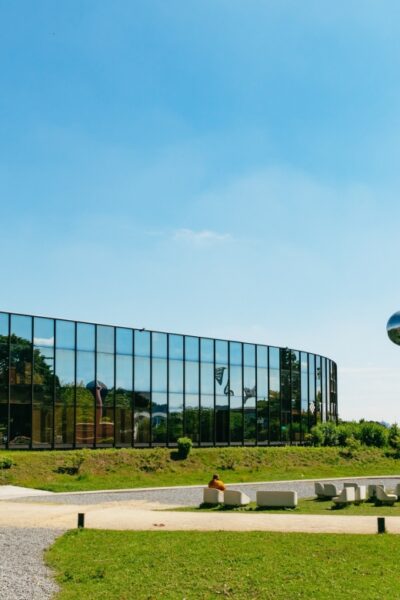
Atomium Entry Ticket with Design Museum Ticket
Read our review →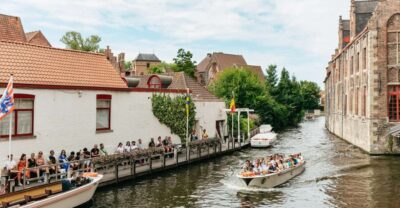
From Brussels: Guided Day Trip to Bruges and Ghent
Read our review →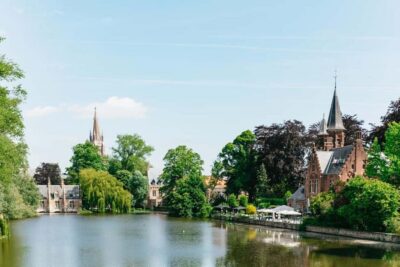
From Brussels: Bruges & Ghent Day Tour – 2 Fairytale Cities
Read our review →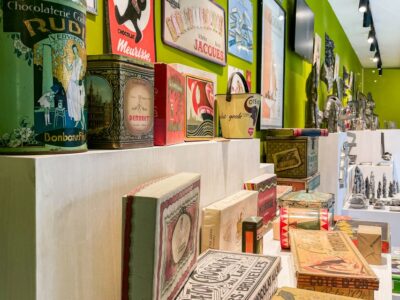
Choco-Story Brussels: Chocolate Museum Entrance with Tasting
Read our review →
Bruges and Ghent – Belgium’s Fairytale Cities – from Brussels
Read our review →