
Reviewed · BRUGES AND GHENT DAY TRIPS
Excursion to Bruges and Ghent by bus from Brussels
Picturesque Belgium starts here. This Spanish-language day trip links Bruges and Ghent by air-conditioned coach, giving you a useful first look at two medieval cities in one long day. I like the strong mix of guided history and independent time, and I like the guide’s practical help with food, chocolate, and meeting points. The main compromise is time: Bruges and Ghent both deserve more than a few hours.
The route covers Bruges canals, squares, churches, guild buildings, and chocolate, then moves to Ghent’s cathedral, towers, riverfront, and castle district. The price of $54.45 per person is fair for round-trip transport and two guided walks, but this is a brisk overview rather than a slow, leisurely visit.
In This Review
- Key points to know before you book
- Why this Bruges and Ghent combination works
- Bruges begins at Minnewater Lake
- Medieval streets, beer, and a famous bridge
- Bruges squares and the chocolate stop
- Your free time in Bruges
- Ghent opens with towers and a famous painting
- Ghent’s guild houses and riverfront
- St. Veerleplein and Ghent free time
- Price, comfort, and the pace of the day
- Who will get the most from this tour
- Should you book the Bruges and Ghent day trip?
- FAQ
- Where does the tour begin?
- Does the tour include hotel pickup?
- Is transportation included?
- What language is the tour conducted in?
- How much free time do I get in Bruges and Ghent?
- Are meals and drinks included?
- Do I need headphones?
Key points to know before you book
- Two medieval cities in one day: Bruges and Ghent offer different looks at Belgium’s past, but the schedule keeps you moving.
- Spanish-speaking guidance: Guides such as Guiomara, Eduardo, Unai, Irene, Carlos, Lucía, Ana, and Paula have been praised for clear explanations and friendly help.
- About 1.5 hours of free time in each city: Enough for a meal, photos, or a quick independent walk, but not enough for every museum.
- The best Bruges views come on foot: Minnewater Lake, St. Bonifacius Bridge, the Rosary Quay, and Market Square are all included.
- Ghent’s central sights are packed together: Saint Bavo’s Cathedral, the Belfry, St. Michael’s Bridge, and Graslei are covered in one compact route.
- Bring wired headphones if you have them: Belgian rules sometimes require radio guides, and spare headphones cost €1.
Why this Bruges and Ghent combination works
Bruges and Ghent are close enough to pair, yet different enough to make the contrast worthwhile. Bruges feels polished and storybook-like, with canals, narrow lanes, stepped medieval houses, and carefully preserved squares. Ghent feels larger and more urban, with imposing churches, a riverfront lined with historic buildings, and a stronger sense of a working city.
I like this pairing because you do not spend the whole day looking at variations of the same thing. In Bruges, the pleasure comes from intimate lanes, bridges, and canal views. In Ghent, the scale grows. Towers, churches, old guild houses, and the Castle of the Counts of Flanders give the city more weight.
The tour begins at Carrefour de l’Europe in Brussels at 8:30 a.m. You need to reach the meeting point yourself because hotel pickup and return are not included. The trip lasts about 10 hours and 30 minutes, so plan for a full day out, not a casual morning excursion.
The group can reach up to 45 people. That size keeps the price down, but it also means you should stay close to the guide, listen carefully for return instructions, and keep track of the bus location. Several guides have received high praise for being attentive and organized. Guiomara was described as active and helpful, Eduardo as kind and practical, and Unai as especially clear with historical explanations.
More Bruges and Ghent day trips:
- From Brussels: Guided Day Trip to Bruges and Ghent
★ 4.6 · 8,353 reviews - Bruges and Ghent – Belgium’s Fairytale Cities – from Brussels
★ 4.0 · 4,809 reviews - Bruges and Ghent Day Trip from Brussels
★ 4.5 · 784 reviews
Bruges begins at Minnewater Lake
The bus drops you at Bargeplein, also called Katelijnparking. There is a short bathroom break before the walking tour begins, followed by a transfer into central Bruges. The first stop is Minnewater Lake, often called the Lake of Love.
This is a calm opening to the city. Your guide explains Bruges and the local love story connected with the lake, while you get an early photo of the water, trees, and old stone surroundings. The stop lasts only about five minutes, so treat it as an introduction, not a picnic.
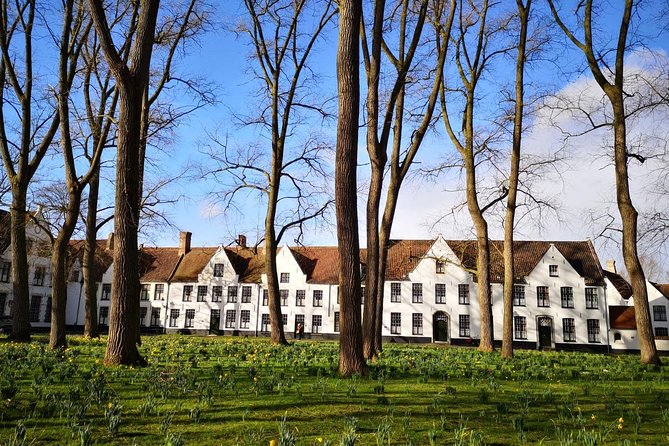
From here, the group continues to the Begijnhof, founded in 1245. This former religious community for women offers a quieter look at Bruges than the central squares. The guide explains the role of the beguines and the unusual history of this community.
The short visit is valuable because it adds social history to the usual church-and-canal tour. The drawback is simple: ten minutes passes quickly, and you will not have time for a long, silent wander.
Medieval streets, beer, and a famous bridge
The walk continues along Stoofstraat, where the guide points out features of original medieval houses. This is one of those small stops that can change how you look at the city. Instead of seeing only attractive façades, you begin to notice age, construction, and the way the streets have been preserved.
At Walplein, the subject turns to Bruges beer. The square provides a natural pause and a chance to connect the city’s architecture with its brewing traditions. Food and drink are not included, so save your tasting budget for free time later.
St. Bonifacius Bridge is one of the most photogenic points on the route. The guide explains its legend, then gives you time for pictures. The bridge is small, charming, and easy to appreciate, though a group of 45 can make a quiet photo moment feel more crowded.
The route then reaches Saint John’s Hospital. From outside, you hear how medical care worked in medieval Bruges. The former hospital helps you picture the city as a place where people lived, worked, suffered, and were cared for, rather than as a collection of pretty buildings.
At the Church of Our Lady, the guide explains the Michelangelo sculpture of the Virgin and Child inside. The tour focuses on the exterior, and the church visit is limited, so you should not expect a long art lecture or extended time with the sculpture. Still, it is a useful orientation to one of Bruges’ major artistic treasures.
The nearby Gruuthusemuseum introduces the powerful Gruuthuse family. Again, the guide provides context from outside rather than leading a museum visit. If museums are your main reason for visiting Bruges, you will need a separate return visit.
Bruges squares and the chocolate stop
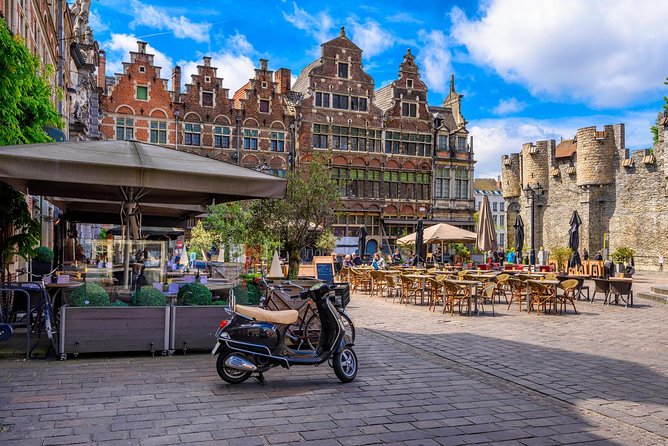
Burg Square brings several major buildings together in one place: the Gothic Town Hall, the former courthouse, and the Basilica of the Holy Blood. This is one of the most rewarding stops on the walk because you can compare different architectural styles within a compact square.
The Basilica of the Holy Blood is especially important to Bruges, but the tour does not include a dedicated interior visit. You get an explanation of the square and its buildings, then continue toward the Rosary Quay, or Rozenhoedkaai.
The Rosary Quay is probably the classic Bruges photograph. Canal water, old façades, and the curve of the quay create the image many people associate with the city. Your guide explains the area’s past and allows time for photos. Keep your camera ready, but do not let the famous view make you ignore the smaller details along the walk.
At Huidenvettersplein, the guide explains the work of medieval tanners. This square gives you a glimpse of old trade and craft life. It is a good counterpoint to Bruges’ grand churches and civic buildings.
The final guided stop is the Markt, Bruges’ main market square. The guide explains the buildings around the square and points out places to eat and shops selling traditional chocolate. This is also where you receive clear instructions about returning to the bus for Ghent.
A stop at Chocolalino adds a short artisan chocolate tasting. The guide explains how to distinguish handmade chocolate from industrial products, which is practical if you plan to buy gifts. The tasting lasts about eight minutes, so think of it as a sample and a shopping tip rather than a full food experience.
More things to do in Brussels:
- Brussels: Atomium Entry Ticket with Design Museum Ticket
★ 4.4 · 9,254 reviews - From Brussels: Bruges & Ghent Day Tour – 2 Fairytale Cities
★ 4.7 · 8,242 reviews - Choco-Story Brussels: Chocolate Museum Entrance with Tasting
★ 4.3 · 4,883 reviews - Brussels: Hop-On Hop-Off Bus Tour
★ 4.0 · 4,016 reviews
Your free time in Bruges
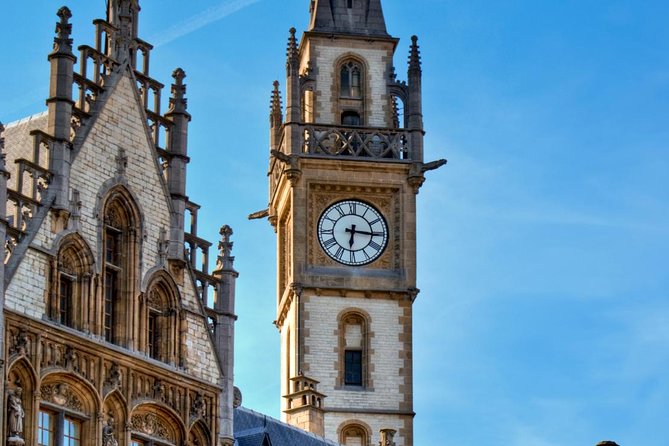
You get roughly 1.5 hours of free time in Bruges, though the exact amount can change with traffic and the pace of the group. The listed schedule also describes about an hour, so you should treat the free period as approximate.
Use it with a plan. You might grab a quick lunch, buy chocolate, revisit a canal view, or walk through part of the Markt without the group. You will not have enough time to tour every museum, take a canal cruise, and eat a relaxed meal.
If you want to make the most of this break, decide in advance what matters most. Choose food, shopping, or one extra sight. Trying to do all three will leave you watching the clock.
The bus returns to Bargeplein for the transfer to Ghent. Listen carefully to the meeting time. One lower-rated experience specifically criticized unclear return instructions, while other accounts praised guides for explaining the meeting arrangements. The safest approach is to repeat the time and place to yourself before leaving the group.
Ghent opens with towers and a famous painting
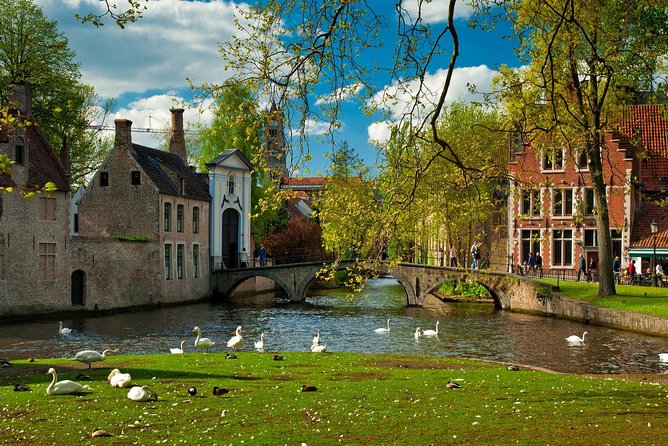
After the transfer, you walk from the Ghent drop-off area toward the center. The guided portion begins at Ghent Town Hall, where the guide explains the building’s different architectural styles.
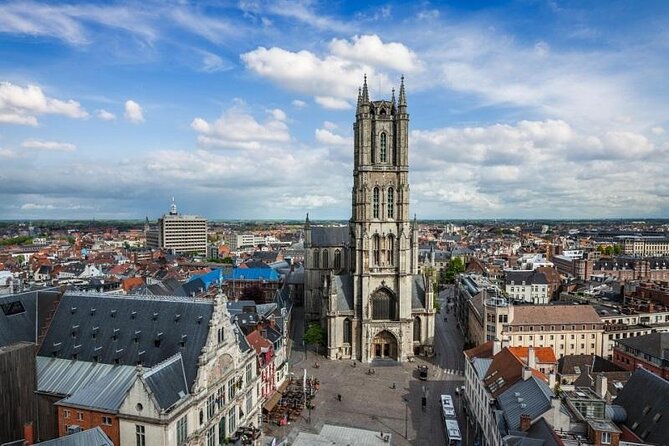
Ghent’s Belfry comes next. The tower is one of the city’s defining sights, and the guide covers its history and the dragon associated with it. The route does not include a climb, so you are seeing the tower as part of the city scene rather than visiting an observation deck.
Saint Bavo’s Cathedral receives the longest stop in Ghent, about 25 minutes. You see the exterior and interior, with attention to the Adoration of the Mystic Lamb by Hubert and Jan van Eyck. The painting is famous for its long, troubled history, including repeated thefts, and it gives the cathedral visit a strong artistic focus.
This is the most important interior visit on the tour. If you care about art, stay alert during the explanation and use the free period later for another look if time allows. Entry arrangements can vary, so the schedule should be understood as a guided visit rather than a guarantee of unlimited viewing time.
Ghent’s guild houses and riverfront
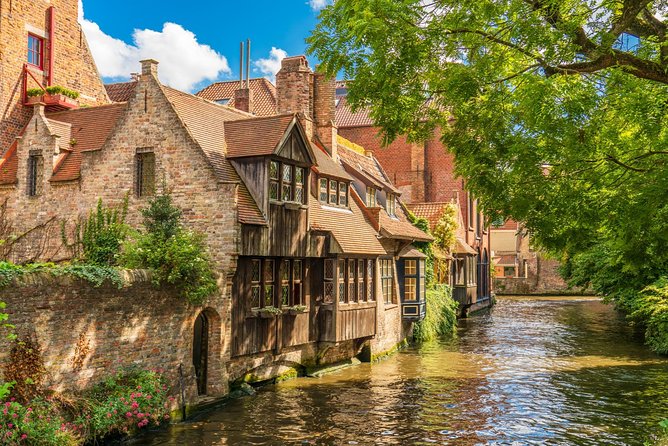
The walk continues to Saint Nicholas Church and the nearby Masons’ Guild Hall. The guide explains that guild houses belonged to professional associations and points out the unusual details of the original façade.
At Korenmarkt, you hear the story of the former post office building. This is a short stop, but it helps explain how Ghent’s central streets changed over time. The tour is good at placing ordinary commercial buildings alongside the major churches and towers.
St. Michael’s Bridge is another prime photo stop. From here, you can see several towers and learn about the tower of Saint Michael’s Church. The bridge gives you one of the best overall views of central Ghent, so this is a place where I would pause instead of rushing to take only one picture.
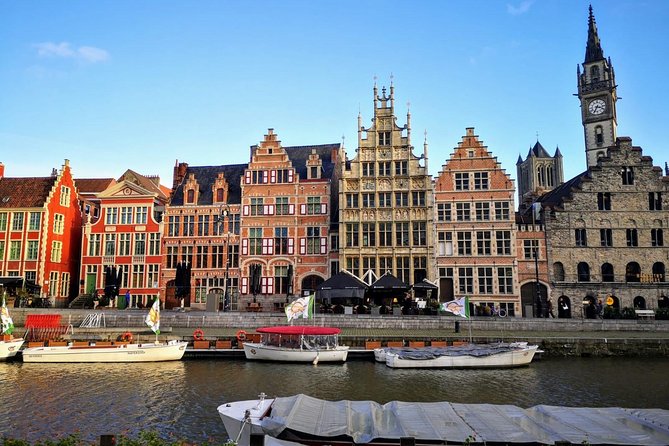
The route follows the Lys River along Graslei and Korenlei. Historic buildings line the water, including the former grain house and the building now used as the Marriott Hotel. This waterfront section is one of Ghent’s most appealing areas, with a pleasant mix of water, stone façades, and busy pedestrian paths.
The Meat House, or Groot Vleeshuis, dates from the 15th century and was once a covered market. The guide explains its original purpose, bringing the city’s food trade into the story.
At Kleine Vismarkt, you stop at a traditional street stall to learn about cuberdons, the well-known Ghent sweet. The stop is brief, only about three minutes, but you may want to buy some if you like trying local specialties.
St. Veerleplein and Ghent free time
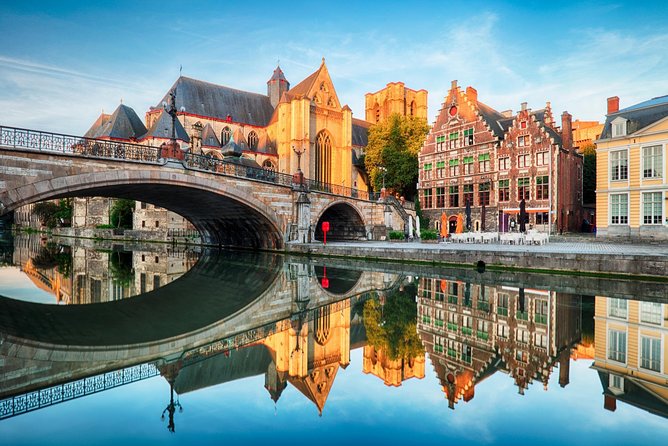
The guided walk ends at St. Veerleplein, near the Castle of the Counts of Flanders. The schedule highlights the square and nearby buildings, but it does not promise entry into the castle. If exploring the castle interior is important to you, ask the guide whether your free time allows it.
You receive suggestions for food and souvenirs, plus the return time and meeting point. This final briefing matters because the coach returns to Brussels after the free period, and the tour does not include hotel drop-off.
Ghent gives you about 1.5 hours of independent time, subject to traffic and group timing. I would use it to sit near the riverfront, visit a shop, take another look at Saint Bavo’s Cathedral, or walk toward the castle if the timing works.
One useful point from the feedback is that not everyone prefers Bruges. Some people enjoy Ghent more because it feels bigger, less polished, and more like a living city. The tour gives you enough time to form your own opinion, but not enough to fully explore either place.
Price, comfort, and the pace of the day
At $54.45, the tour offers solid value if you want transportation and orientation without arranging two separate city visits. The price includes the air-conditioned round-trip bus, a professional Spanish-speaking guide, guided walks in both cities, and practical recommendations.
Food, drinks, hotel pickup, museum admissions, and optional purchases are extra. You should also budget up to €1 for disposable headphones if you do not bring compatible wired ones. Wireless headphones are not suitable because the radio guide requires a 3.5 mm jack.
The coach received mixed feedback. Several high ratings describe it as clean and comfortable, while one lower rating called the bus uncomfortable. Another complaint described a very slow transfer caused by an inexperienced driver. That appears to be an exception rather than the normal experience, but road conditions and driver performance can affect a day built around two cities.
The schedule is physically active. You walk on cobblestones, cross bridges, and remain with the group for much of the day. Most people can participate, but comfortable shoes are essential. Children under two must use a proper safety seat on the bus, supplied by the family.
Who will get the most from this tour
I would choose this excursion if you are based in Brussels and want an efficient first visit to Bruges and Ghent. It works especially well for a short Belgium stay, families who prefer organized transport, and Spanish-speaking visitors who want history explained clearly.
It is also a good choice if you dislike planning train routes, city walks, and return connections. The guide handles the sequence, explains what you are seeing, and gives you food and shopping suggestions.
I would hesitate if you want long museum visits, slow café time, or complete independence. The day is tightly arranged, and a change in city order is possible. One unhappy account described Ghent being visited before Bruges and felt that Bruges received too little time. The provider says guides may adjust the route for the group, so you should accept some flexibility.
Free cancellation is available until 24 hours before the start time. If poor weather or an insufficient number of bookings cancels the activity, you are offered another date, another experience, or a full refund.
Should you book the Bruges and Ghent day trip?
Book it if you want two major Belgian cities, Spanish-language guiding, and round-trip transport for a reasonable price. The strongest parts are the friendly guides, the well-chosen walking routes, the Bruges canal views, Ghent’s riverfront, and the chance to compare two very different cities in one day.
Skip it if your ideal visit means lingering over lunch, touring several interiors, or photographing Bruges before the crowds arrive. For everyone else, this is a practical introduction. Just wear good shoes, bring wired headphones, save the meeting times, and decide before arrival how you want to spend each short free period.
FAQ
Where does the tour begin?
The tour begins at Carrefour de l’Europe, Carr de l’Europe, 1000 Brussels, Belgium, at 8:30 a.m.
Does the tour include hotel pickup?
No. Hotel pickup and return are not included. You must make your own way to the Brussels meeting point.
Is transportation included?
Yes. Round-trip transportation between Brussels, Bruges, and Ghent is provided by air-conditioned bus.
What language is the tour conducted in?
The professional guide provides the tour in Spanish.
How much free time do I get in Bruges and Ghent?
You receive approximately 1.5 hours of free time in each city, although the exact duration can change with traffic and the pace of the group.
Are meals and drinks included?
No. Food and drinks are not included. The guide can recommend places to eat in both cities.
Do I need headphones?
Belgian regulations sometimes require radio guides. You may bring wired headphones with a 3.5 mm jack, but wireless headphones are not suitable. If needed, disposable headphones are available for €1.
Just added in Brussels
- Transfer from BRU Airport to Brussels city (any hotel or address)★ 5.0 · 1 review
- Standard vehicle from Brussels airport to city of Antwerp★ 5.0 · 4 reviews
- Standard Minivan from Brussels airport to city of Antwerp★ 5.0 · 1 review
- Private transfer from BRU Airport – Brussels GO BACK MB V-CLASS 7 PAX★ 5.0 · 2 reviews
- Private transfer from Brussels Airport to Brussels city Business car★ 5.0 · 1 review
- Transfer Brussels Airport -> Antwerp MB V-CLASS 7 PAX★ 5.0 · 1 review
- Private transfer from BRU Airport to Bruges with Mercedes V class 7 pax★ 5.0 · 1 review
- Private transfer from BRU Airport to Bruges with luxury limousine 3 pax★ 5.0 · 1 review
Bruges and Ghent Day Trips, compared.
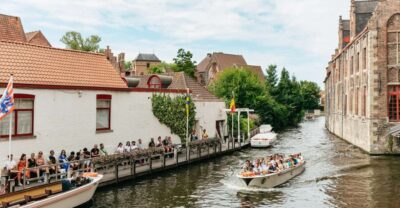
From Brussels: Guided Day Trip to Bruges and Ghent
Read our review →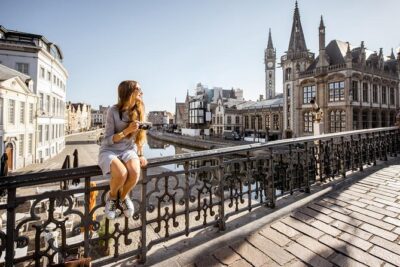
Bruges and Ghent – Belgium’s Fairytale Cities – from Brussels
Read our review →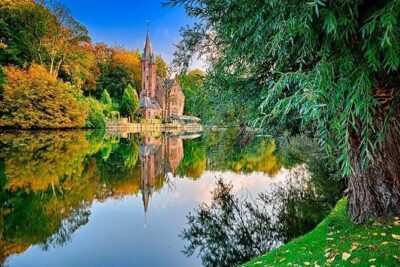
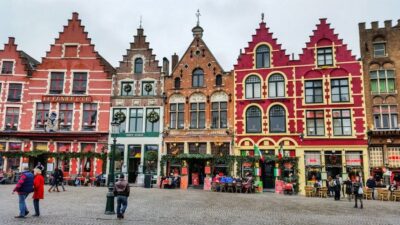
From Brussels: Bruges and Ghent Full-Day Trip by Train
Read our review →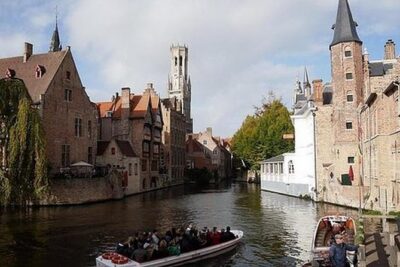
Private Tour: Ghent and Bruges From Brussels Full Day
Read our review →
Private tour : Treasures of Flanders Ghent and Bruges from Brussels Full day
Read our review →Private Tour: Ghent and Bruges From Brussels Full Day
Read our review →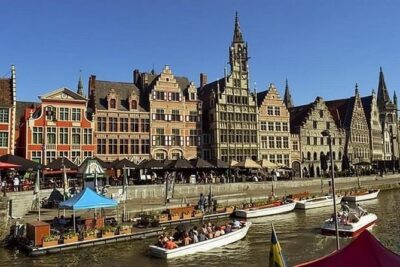
Best Of Bruges and Ghent Private Tour from Brussels
Read our review →Browse the lists this tour appears in