Reviewed · BRUSSELS TOURS
Visite guidée : Bruxelles, 1000 Ans de Luttes
Brussels reveals its best stories away from the postcard center. This two-hour walk focuses on the Marolles, a central district shaped by poverty, protest, migration, and fierce local pride. I like the human side of Brussels here, and I especially like the way the tour connects the vast Palais de Justice with the small streets and everyday life below it. The route also ends at the Place du Jeu de Balle, where you can continue the experience over a drink or meal.
The main consideration is that this is a history-and-social-storytelling walk, not a greatest-hits tour. You will not spend much time inside major attractions, and the €10 gratuity is not included in the unusually low $3.62 price. The route is also listed in English only, so check that this suits your group.
In This Review
- Key points to know before you book
- Why the Marolles makes a better classroom than a monument
- Starting at Notre-Dame de la Chapelle
- The Palais de Justice and a very Belgian problem
- The Ascenseur des Marolles for a quick city view
- Walking through the Marolles’ small streets
- Ending at Place du Jeu de Balle
- What the $3.62 price really means
- Who will enjoy this walk most
- Practical advice for a smoother morning
- Should you book Brussels, 1,000 Years of Struggles?
- FAQ
- Where does the tour start?
- Where does the tour end?
- How long does the tour last?
- What language is the tour offered in?
- How much does the tour cost?
- Is gratuity included?
- What places does the tour visit?
- Is admission included?
- How large can the group be?
- Can I cancel for a full refund?
Key points to know before you book
- The Marolles is the real focus: You explore one of Brussels’ oldest and most distinctive quarters, not just the famous central sights.
- The Palais de Justice gets a sharp local reading: Its decades-long renovation problems become a way to discuss public money, politics, and Belgian frustration.
- The route ends at a working flea market: Place du Jeu de Balle gives the walk an everyday, lived-in finish rather than a ceremonial one.
- The view from the Marolles elevator is free: A short stop at the Ascenseur des Marolles adds a useful look across Brussels.
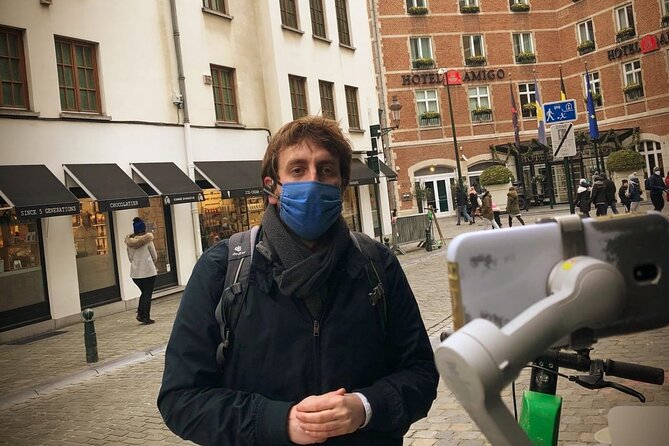
- Guides bring different strengths: François, Simon, and Thomas are praised for warmth, storytelling, answers to questions, and a local point of view.
- It is an easy-value walking tour: The group can include up to 25 people, public transportation is nearby, and cancellation is free up to 24 hours before the start.
Why the Marolles makes a better classroom than a monument
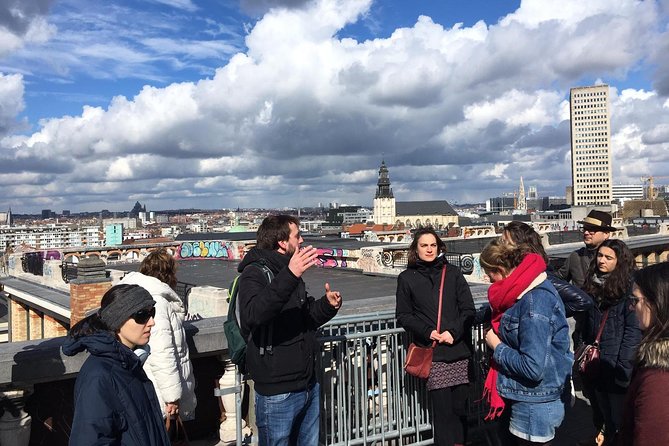
The Marolles sits in the middle of Brussels, yet it feels separate from the polished tourist center. Its narrow lanes, small streets, and blind alleys reflect a district where ordinary people lived close together and had to fight to keep their place in the city.
That social angle gives the walk its purpose. The title, Brussels, 1,000 Years of Struggles, is not just dramatic wording. The route looks at how disadvantaged residents lived, how the district changed, and how people defended its identity over time.
I like tours that explain a city through its residents rather than only through kings, architects, and grand buildings. Here, the Marolles becomes a way to understand Brussels as a city of visible and invisible borders. One highly praised element of the guiding is the explanation of how the quarter fits into Brussels as a whole, while still keeping its own identity.
This is also a good choice if you already know the Grand Place, the central boulevards, and the standard architectural sights. One local participant who had lived in Brussels for five years said the walk changed how the city was understood. That is a useful clue: the tour is not only for first-time visitors.
More things to do in Brussels:
- Brussels: Atomium Entry Ticket with Design Museum Ticket
★ 4.4 · 9,254 reviews - From Brussels: Guided Day Trip to Bruges and Ghent
★ 4.6 · 8,353 reviews - From Brussels: Bruges & Ghent Day Tour – 2 Fairytale Cities
★ 4.7 · 8,242 reviews
Starting at Notre-Dame de la Chapelle
The walk begins at Rue de la Chapelle 21, outside the Église Notre-Dame de la Chapelle. This church dates from the 12th century and gives the tour an immediate connection to the older Brussels settlement.
The stop lasts about 10 minutes, with no admission fee. You can expect the guide to point out the church’s less obvious stories and explain why it remains an emblematic place in the area. The building also hosts painting exhibitions and offers Mass in Polish every Sunday, details that show the church as part of a living community rather than a frozen medieval shell.
That Polish connection matters. It hints at the layers of migration and changing populations that shaped Brussels. The church is not treated as an isolated religious monument. Instead, it opens the larger question of who has lived in this part of the city and how communities have made a place their own.
The short time here is enough for an introduction, but not for a full church visit. If you want to study the architecture at length, arrive early or return later. The tour’s purpose is to use the church as a starting point for the neighborhood story.
The Palais de Justice and a very Belgian problem
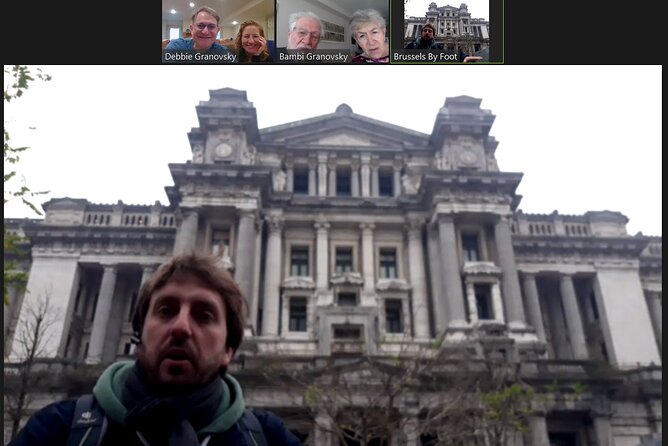
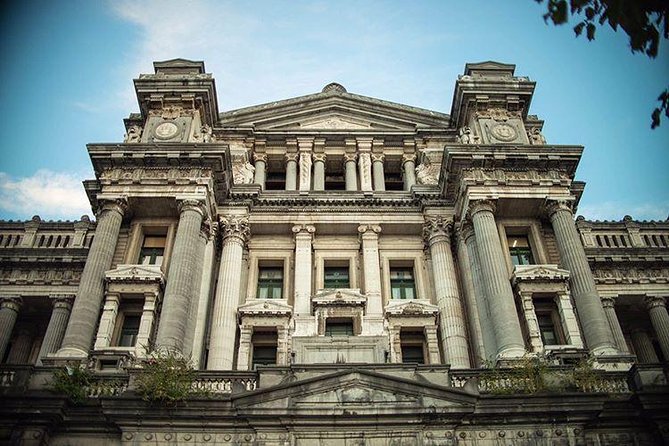
From the church, the route moves to the Palais de Justice, one of Brussels’ most imposing landmarks. The building itself is the grand visual moment of the walk, but the guide’s subject is less about formal architecture and more about what happened after the building began to age.
Renovation work started 40 years ago and, according to the tour description, has never been finished. The guide uses this long-running problem to discuss public spending and what is described as a typically Belgian scandal.
This stop lasts about 15 minutes and costs nothing to enter because the experience takes place outside. The point is not to tour the courthouse interior. It is to look at the building through a local political lens, asking what such a huge public project says about government, maintenance, and the use of public money.
I find this kind of stop more useful than a quick photo break. The Palais de Justice is easy to admire from a distance, but its renovation story gives you something to remember. It also helps explain why the building can inspire both pride and irritation.
The subject may not suit you if you want a calm architectural lecture. The tone is pointed, and the guide talks about scandal and waste. That directness is part of the appeal for many people, but it also means the stop is designed to provoke discussion rather than offer a neutral catalogue of dates.
The Ascenseur des Marolles for a quick city view
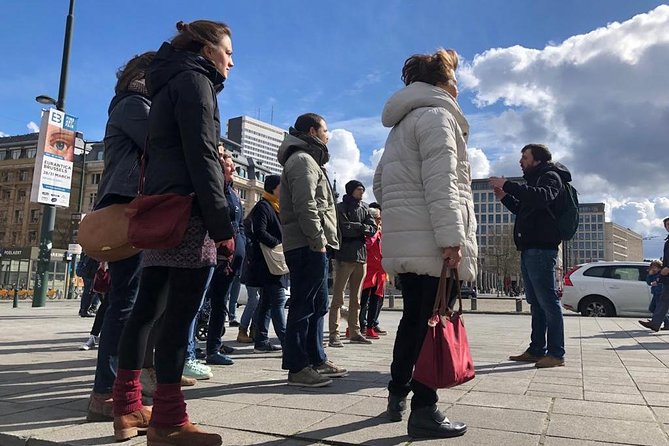
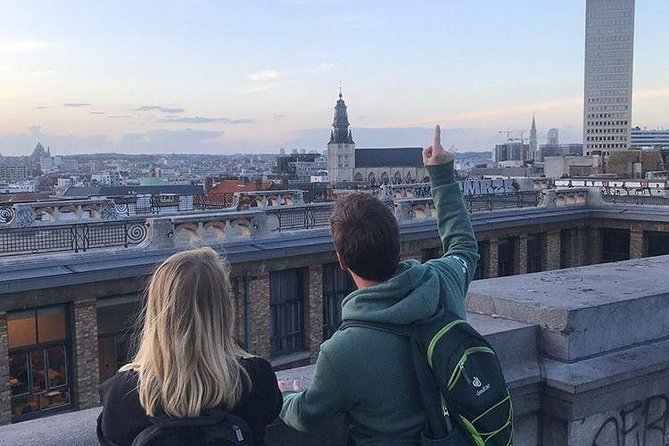
The route then reaches the Ascenseur des Marolles, a public elevator linking different levels of the city. The stop is brief, about five minutes, but it adds a welcome change of pace after the courthouse.
At the top, you get what the tour describes as the best view of Brussels from the elevator. The information provided does not specify how long you remain there or exactly which landmarks are visible, so think of this as a short viewpoint stop, not a long photography session.
The elevator also helps you understand the Marolles physically. Brussels is not just a collection of buildings and streets. Changes in level affect how neighborhoods connect, where people walk, and how one district looks toward another.
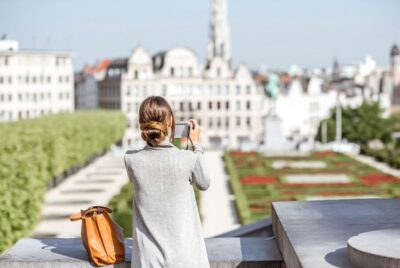
This is a place to pause, orient yourself, and see the city from a different angle. The view works best as part of the larger story. On its own, five minutes is not enough to make the elevator a major attraction, but within the walk it gives the route a useful visual reset.
A completely different kind of day:
- Choco-Story Brussels: Chocolate Museum Entrance with Tasting
★ 4.3 · 4,883 reviews - Bruges and Ghent – Belgium’s Fairytale Cities – from Brussels
★ 4.0 · 4,809 reviews - Brussels: Hop-On Hop-Off Bus Tour
★ 4.0 · 4,016 reviews - Brussels: Entry Ticket to Mini-Europe
★ 4.5 · 2,870 reviews
Walking through the Marolles’ small streets
The longest stop is the Marolles itself, with about 20 minutes devoted to the district. This is where the tour’s social history comes into focus.
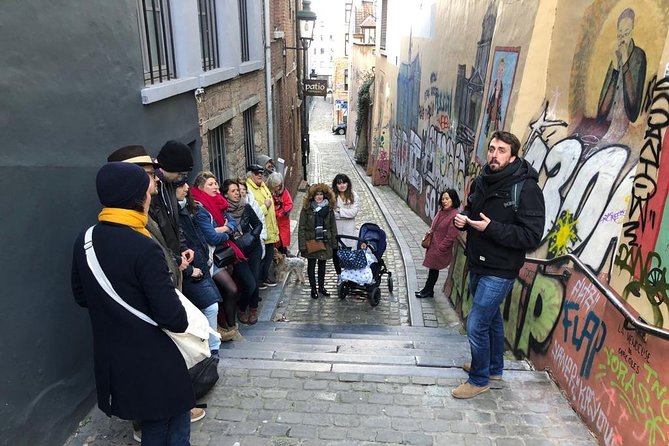
Expect a walk through a quiet, poor neighborhood in the center of Brussels, with tiny streets and blind alleys that have their own stories. The contrast is important. You are close to major institutions and grand public buildings, yet the local scale changes quickly.
The guide explains the quarter’s unexpected past and the struggles of the people who lived here. The strongest aspect of the walk is its attention to ordinary living conditions and to the independence of local residents. You are not simply told that the area was poor. You are shown how poverty, community, and resistance shaped the district’s character.
The best guides seem to make this material easy to follow without flattening it. Simon is praised for explaining the progress and living conditions of disadvantaged residents. Thomas is praised for discussing the district’s diversity and the visible and invisible borders within Brussels. François is described as a generous storyteller who took a group through unusual places in the Sablon and Marolles area.
Those details suggest that the experience depends heavily on the individual guide. That is normal for a walking tour, but it is worth knowing. The provider is Brussels By Foot, and the named guides have different styles, yet the repeated strengths are passion, patience, and a willingness to answer questions.
The 20-minute neighborhood segment is not long enough to cover every corner. Its value lies in the way it gives meaning to the streets you are walking through. If you want a broad survey of all Brussels districts, this tour is too focused. If you want to understand why one quarter feels different from the rest of the city, the concentration works well.
Ending at Place du Jeu de Balle
The walk finishes at Place du Jeu de Balle, in the middle of the square at number 64. This is the daily flea market of the Marolles and a fitting endpoint for a tour about local life and the fight to preserve the district.
The stop lasts about 10 minutes and is free. You learn how the market has been defended and conserved over time. That detail adds a practical dimension to the discussion of neighborhood identity. Preservation is not only about old buildings. It can also mean protecting markets, habits, gathering places, and the right of local people to keep using a central square.
The square is surrounded by bars and restaurants, so you can finish with a drink or a meal. No food or drink is included, but the setting gives you an easy way to continue the afternoon.
I like this ending because it avoids dropping you beside a transit stop with the story unfinished. You end in a place that still functions as part of neighborhood life. The market also gives you a chance to look around on your own, though the supplied details do not promise time for shopping or browsing beyond the 10-minute stop.
What the $3.62 price really means
At $3.62 per person, this is an exceptional price for roughly two hours with an English-speaking guide. The listed inclusions mention an entrance fee and registration fees, although every stated stop is free of charge. In practical terms, the value comes from the guide’s interpretation, not from paid admission.
You should also budget for the suggested €10 gratuity per person, which is not included. Once added, the cost remains modest for a small-group walking experience, but the headline price does not tell the whole story.
The stop times add up to about one hour: 10 minutes at the church, 15 at the Palais de Justice, five at the elevator, 20 in the Marolles, and 10 at the flea market. The full experience is listed as approximately two hours, so the remaining time is used for walking between places and for the guide’s connecting stories. That is important because this is not a series of rushed talks. The movement through the neighborhood is part of the lesson.
The group can include a maximum of 25 people. That is not an intimate private walk, but it is still limited enough to keep the group manageable. If you want long one-to-one conversations, a smaller tour would be better. If you want a reasonably priced introduction with room for questions, the group limit is sensible.
The experience is often booked around 25 days in advance. I would not treat that as a guarantee of sold-out dates, but it does suggest that checking ahead is wise, especially if your Brussels schedule is tight.
Who will enjoy this walk most
I would choose this tour for:
- First-time visitors who want more than the Grand Place and central monuments
- People who enjoy social history, local politics, and stories about ordinary residents
- Repeat visitors who already know the major sights
- Brussels residents who want to understand the Marolles better
- Families with adults or older children who can manage a walking tour
- Anyone who likes a guide with a clear point of view and time for questions
The tour may not be right for you if you want a museum-heavy experience, a long indoor visit, or a broad tour of the entire city. It also may not satisfy you if your main goal is medieval architecture, since the church is the only stop with a stated historic building focus and the route does not include paid monument access.
Most people can participate, and service animals are allowed. The route is near public transportation, which makes the start and finish practical. The tour is offered in English, and confirmation is provided when you book.
Practical advice for a smoother morning
Meet at Rue de la Chapelle 21, by Notre-Dame de la Chapelle. The tour ends at Place du Jeu de Balle 64, in the middle of the square, so you do not return to the starting point.
Wear comfortable shoes. The route includes several neighborhood streets and links different parts of the Marolles, and the experience is built around walking rather than standing at one monument.
Keep the afternoon open for the square at the end. Since bars and restaurants surround Place du Jeu de Balle, it is a natural place to stop after the tour. You can also use the ending point as a base for continuing through the Marolles on your own.
The tour offers free cancellation up to 24 hours before the start time. Changes or cancellations made inside that 24-hour window are not accepted for a refund. The experience also requires a minimum number of participants, so if the provider cancels for that reason, you are offered another date or experience, or a full refund.
Should you book Brussels, 1,000 Years of Struggles?
Book it if you want Brussels explained through its people, neighborhoods, and long-running civic arguments. The best parts are the Marolles stories, the sharp look at the Palais de Justice, the view from the elevator, and the lively finish at Place du Jeu de Balle.
I would especially recommend it to curious repeat visitors and to residents who think they already know Brussels. The praise for guides such as François, Simon, and Thomas centers on storytelling, patience, and the ability to connect local details with the city’s wider social past.
Skip it if you need a major indoor attraction, a full architectural tour, or a route covering many parts of Brussels. For everyone else, the low base price, focused subject, and strong guiding make this a smart way to spend two hours in a neighborhood that rewards attention.
FAQ
Where does the tour start?
The tour starts at Rue de la Chapelle 21, 1000 Bruxelles, Belgium, at Église Notre-Dame de la Chapelle.
Where does the tour end?
The tour ends at Place du Jeu de Balle 64, 1000 Bruxelles, Belgium, in the middle of the square.
How long does the tour last?
The experience lasts approximately two hours.
What language is the tour offered in?
The tour is offered in English.
How much does the tour cost?
The listed price is $3.62 per person.
Is gratuity included?
No. A €10 gratuity per person is listed as not included.
What places does the tour visit?
The route includes Église Notre-Dame de la Chapelle, the Palais de Justice, the Ascenseur des Marolles, the Marolles neighborhood, and Place du Jeu de Balle.
Is admission included?
An entrance fee and registration fees are listed as included. The individual stops described on the route have no admission charge.
How large can the group be?
The tour has a maximum group size of 25 people.
Can I cancel for a full refund?
Yes. You can cancel up to 24 hours before the experience start time for a full refund. Cancellations or changes made less than 24 hours before the start are not refunded or accepted.
Just added in Brussels
- Transfer from BRU Airport to Brussels city (any hotel or address)★ 5.0 · 1 review
- Standard vehicle from Brussels airport to city of Antwerp★ 5.0 · 4 reviews
- Standard Minivan from Brussels airport to city of Antwerp★ 5.0 · 1 review
- Private transfer from BRU Airport – Brussels GO BACK MB V-CLASS 7 PAX★ 5.0 · 2 reviews
- Private transfer from Brussels Airport to Brussels city Business car★ 5.0 · 1 review
- Transfer Brussels Airport -> Antwerp MB V-CLASS 7 PAX★ 5.0 · 1 review
- Private transfer from BRU Airport to Bruges with Mercedes V class 7 pax★ 5.0 · 1 review
- Private transfer from BRU Airport to Bruges with luxury limousine 3 pax★ 5.0 · 1 review
Brussels Tours, compared.
Atomium Entry Ticket with Design Museum Ticket
Read our review →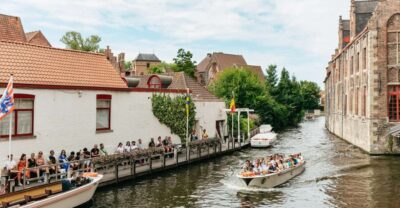
From Brussels: Guided Day Trip to Bruges and Ghent
Read our review →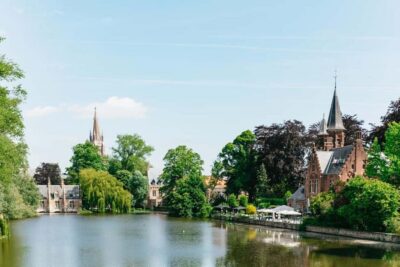
From Brussels: Bruges & Ghent Day Tour – 2 Fairytale Cities
Read our review →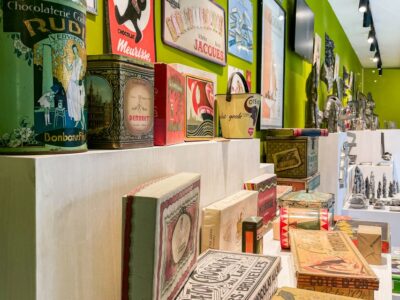
Choco-Story Brussels: Chocolate Museum Entrance with Tasting
Read our review →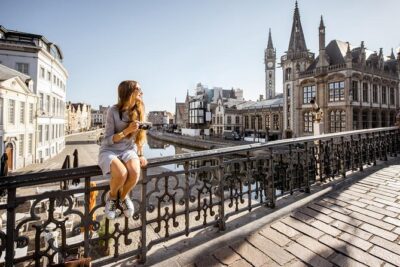
Bruges and Ghent – Belgium’s Fairytale Cities – from Brussels
Read our review →