
Reviewed · MUSEUMS
Brussels: Musical Instruments Museum Entry Ticket
Some museums let you hear the collection. Brussels’ Musical Instruments Museum makes that its main pleasure, with an included multimedia device that brings nearly 300 musical pieces to life as you walk through four floors. I especially like the global range, from African slit drums to Western keyboards, and the chance to see the world’s oldest preserved saxophone.
I also like the building itself. The Old England building’s Art Nouveau ironwork gives the visit a striking setting, while the museum’s neoclassical concert hall adds another musical layer. The main drawback is that not every instrument has an audio clip, so you may occasionally admire an object in silence.
- Hear the collection as you walk: An audio device with English, Dutch, and French content provides almost 300 musical clips.
- See instruments from many cultures: Displays range from African slit drums and traditional instruments to European keyboards and electronic instruments.
- Find a remarkable saxophone: The museum displays the oldest preserved saxophone in the world.
- Enjoy the Old England building: The Art Nouveau architecture is part of the experience, not just a container for the exhibits.
- Allow about two hours: That is enough time for a focused visit, though music lovers can spend longer with the displays.
- Add a concert if timing works: Concert admission costs extra, but performances take place in the museum’s neoclassical hall.
In This Review
- Four Floors of Music at Mont des Arts
- The Multimedia Device Makes the Objects Come Alive
- European Instruments Tell a Long Story
- Keyboards, Traditional Instruments, and Electronic Sound
- The Oldest Preserved Saxophone in the World
- A Concert Hall, With Admission Sold Separately
- How Long Should You Spend Inside?
- Is the $17 Ticket Good Value?
- Who Will Enjoy the Musical Instruments Museum?
- Practical Details Before You Go
- Should You Book It?
- FAQ
- Where is the Musical Instruments Museum located?
- How much does museum entry cost?
- How long is the ticket valid?
- Is an audio guide included?
- How many floors does the museum have?
- What kinds of instruments can I see?
- Can I see the oldest preserved saxophone in the world?
- Is a concert included with museum admission?
- Is the museum wheelchair accessible?
Four Floors of Music at Mont des Arts
The Musical Instruments Museum, usually called MIM, sits on Brussels’ famous Mont des Arts, or Hill of the Arts. Your ticket gives you entry for one day, so you can take your time rather than rushing through a short guided tour.
The museum occupies the Old England building, an Art Nouveau landmark with elaborate metalwork and decorative details. I would set aside a few minutes before reaching the exhibits to look up, around, and across the building’s interior. The architecture gives the visit a strong sense of place before the first instrument even plays.
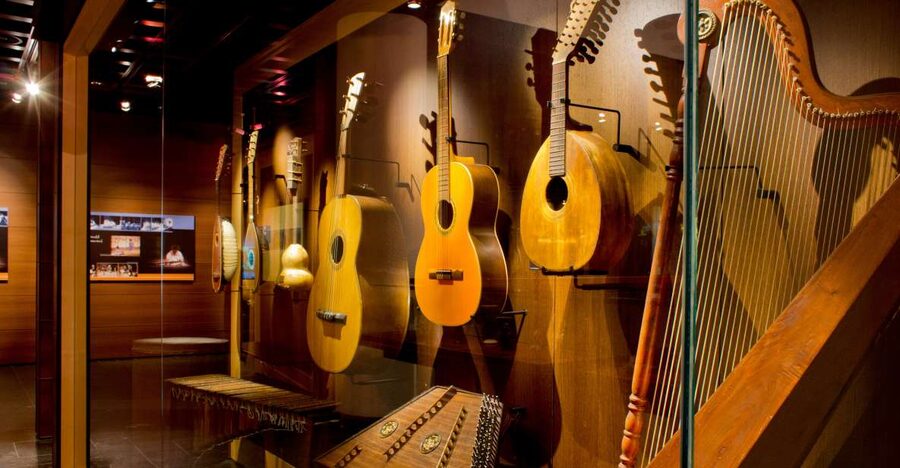
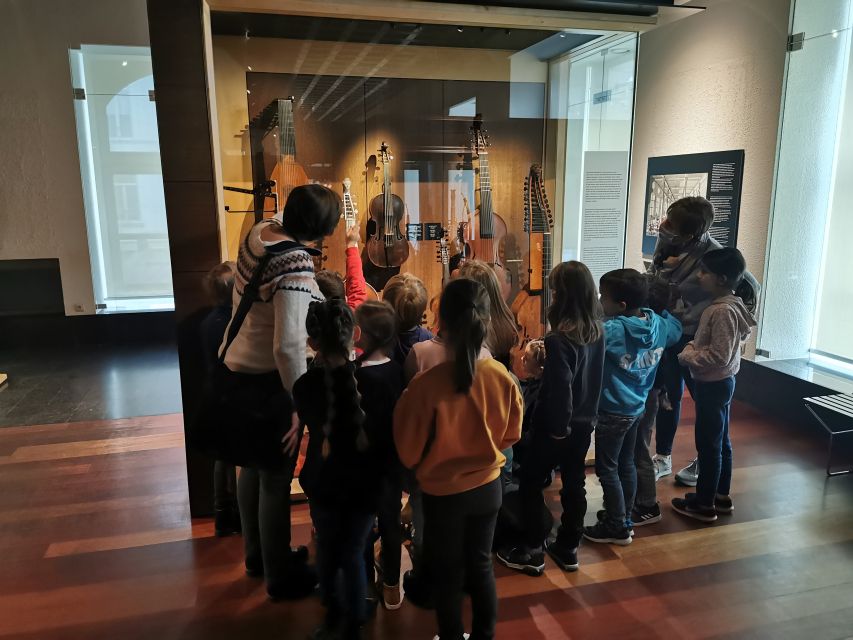
Once inside, you move through four floors of collections. The displays cover instruments from different periods and parts of the world, so the visit keeps changing character. One room may focus on European musical development, while another presents traditional instruments from far beyond Europe.
The building and the exhibits work well together. You are not simply walking through glass cases in a modern hall. The setting reminds you that Brussels has a long connection with art, design, collecting, and public culture.
The Multimedia Device Makes the Objects Come Alive
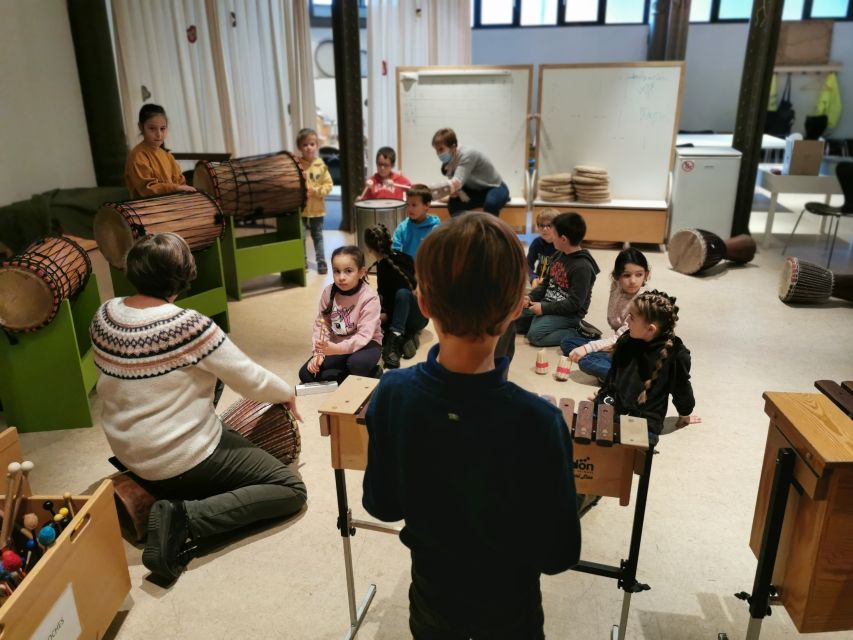
The museum’s strongest feature is the included multimedia device. It lets you hear almost 300 musical pieces as you examine the instruments connected with them. This turns the visit from a quiet display of unfamiliar objects into a much more active experience.
A musical instrument can be difficult to understand from its shape alone. A stringed object may look decorative. A drum may seem simple. A keyboard may resemble something you have seen before. Hearing the sound gives each one a clearer purpose and character.
I would use the device early in the visit, then return to clips that catch your attention. You may find yourself spending more time with an instrument after hearing its sound than you expected. One particularly useful feature is that the audio guide is available in English, Dutch, and French.
The sound element also helps if you are not a musician. You do not need technical training to notice the difference between a deep drumbeat, a bright keyboard passage, or the force of a brass instrument. The museum makes music easier to approach through listening rather than long blocks of text.
There is one limit. The audio does not cover every instrument. If you expect a sound sample for each display, you may be disappointed. Still, nearly 300 clips provide plenty to hear, and the device is a major reason the $17 admission feels worthwhile.
More Museum Tours in Belgium:
- Brussels: Atomium Entry Ticket with Design Museum Ticket
★ 4.4 · 9,254 reviews - Choco-Story Brussels: Chocolate Museum Entrance with Tasting
★ 4.3 · 4,883 reviews - Bruges: Choco-Story Chocolate Museum Guided Tour w/Tastings
★ 4.2 · 1,379 reviews
European Instruments Tell a Long Story
One floor presents the history of musical instruments in Europe. The value here is not just in seeing old objects. You can watch ideas in design and construction change over time, then hear examples of what those changes produced.
This section suits visitors who like to connect objects with music. It also gives the wider collection a useful base. After seeing how European instruments developed, the traditional instruments from other parts of the world become easier to compare without forcing them into the same musical tradition.
You might notice how materials, shape, and size affect an instrument’s role. You can also use the audio device to test your impressions. The experience works best when you move at your own pace, listening to selected clips instead of trying to hear every one.
For a general museum visit, this section provides structure. For someone with a particular interest in music, it may become the starting point for a longer look at construction and sound.
Keyboards, Traditional Instruments, and Electronic Sound
The keyboard collection is another useful stop. Keyboards are familiar to many people, but the displays show that the family is broader than a modern piano or electronic keyboard. The collection gives you a chance to look closely at the instruments and then hear examples through the audio system.
The traditional instruments room widens the scope of the museum. African slit drums are among the notable objects, and you will find instruments from around the world. This is one of the better sections for understanding how communities create music with the materials and forms available to them.
I like that the museum does not limit itself to famous Western instruments. A collection of global instruments gives the visit more variety and prevents it from becoming a narrow history of European concert music.
The electronic instruments exhibit brings the story into the modern era. It provides a useful contrast with older, fully acoustic objects. You move from instruments shaped by wood, strings, skins, and metal toward instruments built around electronic systems.
The four floors are varied enough to keep the visit moving, but you should not expect every section to have the same level of audio coverage. The museum’s greatest strength is the combination of visual objects and selected recordings, not a sound sample for every case.
The Oldest Preserved Saxophone in the World
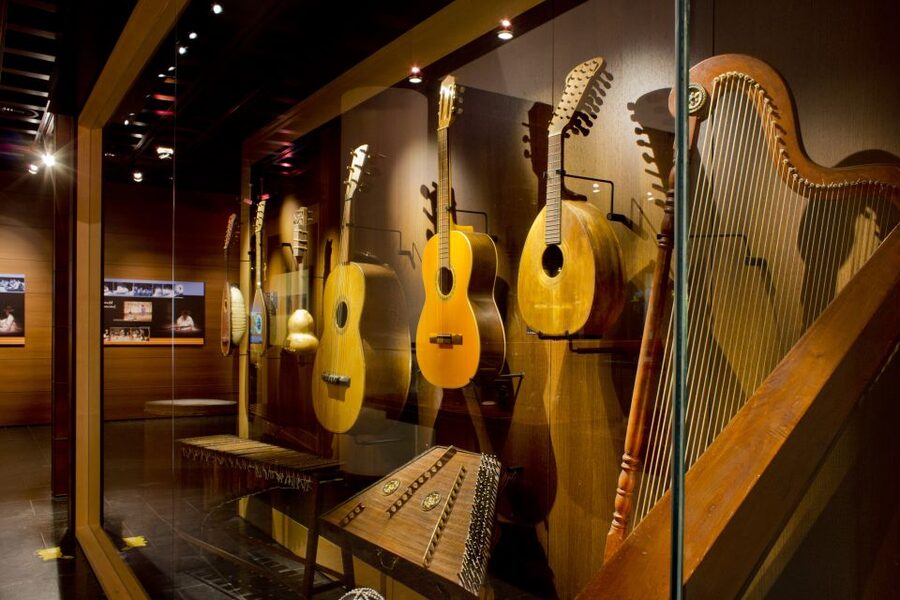
The saxophone display gives the museum one of its clearest individual highlights. It includes the oldest preserved saxophone in the world, a detail that gives you a specific object to seek out rather than a general collection to wander through.
This is the kind of exhibit that works for both musicians and casual visitors. If you already know the saxophone, you can appreciate its place in the instrument’s development. If you do not, the age and preservation of the object provide an easy point of entry.
I would not treat this as the only reason to visit. The museum contains far more than one famous instrument. But it is a memorable anchor within the collection and helps show how a modern instrument has its own history.
Take time to use the audio guide around the instrument displays. Hearing an instrument after examining its form gives you a stronger sense of why the museum has collected it.
A few more options to weigh up in Belgium
- Brussels: Entry Ticket to Mini-Europe
★ 4.5 · 2,870 reviews - Bruges: Frietmuseum Entry Ticket
★ 4.2 · 652 reviews - Bruges: Historium Bruges Story and VR Ticket
★ 4.5 · 595 reviews - Brussels: Train World Museum Entrance Ticket
★ 4.7 · 524 reviews
A Concert Hall, With Admission Sold Separately
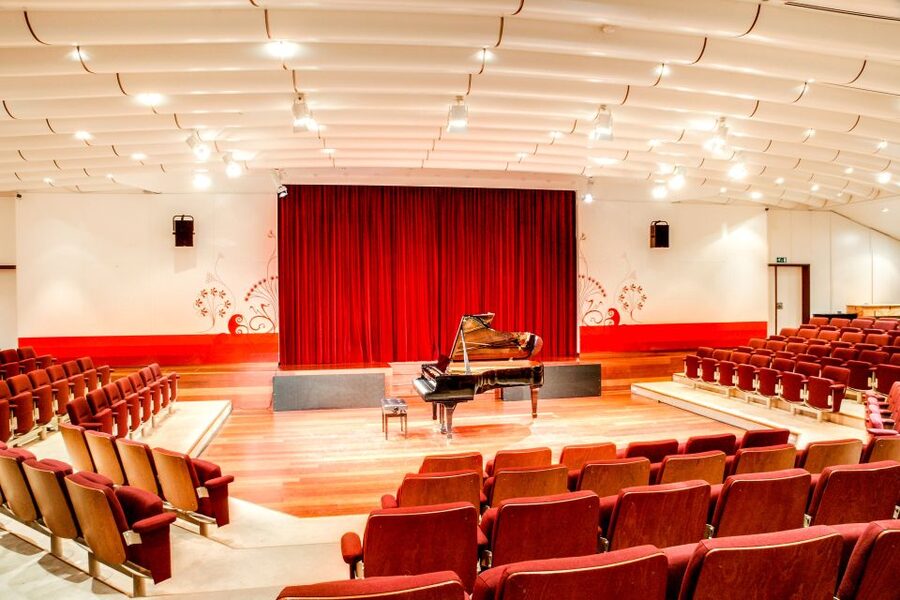
The museum has a neoclassical concert hall where live concerts take place. If a performance fits your schedule, it can add a live dimension to a visit centered on recorded clips and display cases.
Concert admission is not included with the museum entry ticket. You will need to treat it as a separate purchase, so check the concert details and cost before planning to stay for a performance.
The hall itself is worth noticing even if you do not attend a concert. Its neoclassical design offers a contrast to the Art Nouveau exterior and interior details of the Old England building. The museum therefore gives you several kinds of visual setting as well as several kinds of music.
I would book the basic museum ticket if you want flexibility. Then consider a concert only if the program appeals to you and you have enough time in Brussels. Do not assume that museum admission includes the performance.
How Long Should You Spend Inside?
A focused visit takes about two hours. That estimate works well if you listen to a selection of clips, move through all four floors, and pause at the main collections without trying to examine every object.
Music enthusiasts should allow more time. The multimedia device encourages you to stop often, and each floor has a different focus. If you listen to many of the nearly 300 clips, the museum can fill a larger part of your day.
The ticket is valid for one day, which gives you useful flexibility. You can make the museum a main activity or fit it into a day around Mont des Arts. The ticket does not promise a timed personal tour, and the activity information advises you to check availability for starting times.
Because the museum covers four floors, wear comfortable shoes and avoid bringing oversize luggage. Flash photography is not allowed. The restaurant is currently closed for renovation, so plan to eat elsewhere rather than counting on a meal inside.
The museum is wheelchair accessible. That makes the four-floor layout more practical for a wider range of visitors, though you should still allow enough time to move comfortably through the displays.
Is the $17 Ticket Good Value?
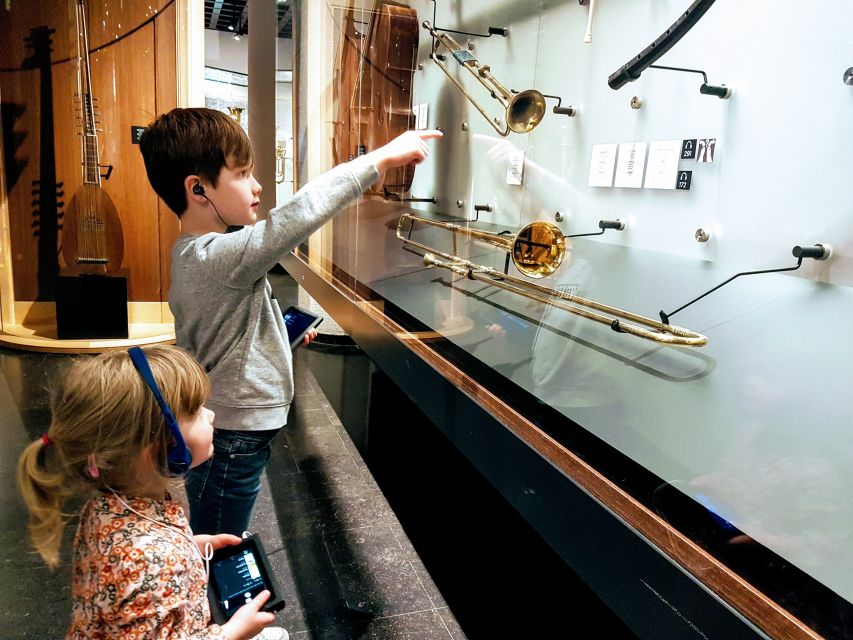
At $17 per person, this is a fair museum price if you plan to use the audio device. The ticket gives you access to four floors, a wide international collection, and nearly 300 sound clips. The Art Nouveau building adds value because you are also visiting a notable piece of Brussels architecture.
The value is strongest for people who actively listen. If you only glance at the cases, the visit may feel shorter and less distinctive. The objects are interesting, but the sound clips explain why they matter.
The ticket also includes skip-the-ticket-line access, which can make arrival simpler. A practical tip: scan the QR code at the entrance instead of going first to the ticket office. One visitor had trouble when staff assumed the ticket was a Brussels Card, so having the code ready can help avoid an unnecessary detour.
Free cancellation is available up to 24 hours before the visit, and you can reserve now and pay later. Those terms are useful if your Brussels schedule is still changing, but the main value remains the museum itself, not the booking flexibility.
The museum has an overall rating of 4.6 from 65 reviews, with the audio experience receiving especially strong praise. That matches the central truth of the visit: the device is not a minor extra. It is what makes the instruments feel active.
Who Will Enjoy the Musical Instruments Museum?
I would recommend MIM to anyone curious about how music is made. You do not need to play an instrument or know music theory. The sound clips give you an easy way to connect with the displays.
It is particularly well suited to:
- Music lovers: You can spend time comparing instruments, sounds, and traditions.
- Museum fans: The building and collections provide plenty to see even beyond the audio.
- Visitors with two free hours: The museum fits neatly into a Brussels sightseeing plan.
- People interested in global culture: The traditional instruments collection reaches well beyond Europe.
- Architecture enthusiasts: The Old England building offers a strong Art Nouveau setting.
- Visitors who prefer self-guided pacing: You choose which clips to hear and how long to stay.
It may be less satisfying if you want a live performance included in the ticket or if you prefer every object to have an audio explanation. Concerts are separate, and the sound coverage is broad but not complete.
Practical Details Before You Go
The ticket costs $17 per person and is valid for one day. Check availability for the starting times offered on your chosen date.
The included audio guide is available in English, Dutch, and French. The activity is wheelchair accessible, but oversize luggage is not allowed. Flash photography is also prohibited.
The restaurant is closed for renovation, so plan a meal before or after your visit. If you want to attend a concert in the neoclassical hall, remember that the concert ticket is separate from museum admission.
The QR code tip is worth keeping in mind. Scan it at the entrance, and do not assume you must visit a ticket office first. That small step may save you from being sent to the wrong place.
Should You Book It?
Book this ticket if you want a museum that lets you hear as well as see its collection. The combination of nearly 300 sound clips, four floors of instruments, the oldest preserved saxophone, and the Art Nouveau Old England building gives you a solid two-hour cultural stop in Brussels.
I would skip it only if your schedule is too tight for a museum visit or if you want a concert included in the admission price. For most people with an interest in music, design, or world cultures, $17 is a reasonable price, especially when you make full use of the multimedia device.
FAQ
Where is the Musical Instruments Museum located?
It is located on Mont des Arts, or Hill of the Arts, in Brussels, Belgium.
How much does museum entry cost?
The entry ticket costs $17 per person.
How long is the ticket valid?
The ticket is valid for one day. Check availability for the starting times on your chosen date.
Is an audio guide included?
Yes. The multimedia device includes audio content in English, Dutch, and French, with almost 300 musical clips.
How many floors does the museum have?
The museum has four floors of instrument collections and exhibits.
What kinds of instruments can I see?
You can see European instruments, keyboards, traditional instruments from around the world, African slit drums, electronic instruments, and many other historical and modern examples.
Can I see the oldest preserved saxophone in the world?
Yes. The museum displays the oldest preserved saxophone in the world.
Is a concert included with museum admission?
No. Concert admission is not included. Live concerts take place in the museum’s neoclassical concert hall and require a separate ticket.
Is the museum wheelchair accessible?
Yes. The museum is wheelchair accessible. Oversize luggage is not allowed, and flash photography is prohibited.
Just added in Belgium
- Transfer from BRU Airport to Brussels city (any hotel or address)★ 5.0 · 1 review
- Visit of Bruges in 1 day private tour from Paris★ 5.0 · 3 reviews
- Standard vehicle from Brussels airport to city of Antwerp★ 5.0 · 4 reviews
- Standard Minivan from Brussels airport to city of Antwerp★ 5.0 · 1 review
- Private transfer from BRU Airport – Brussels GO BACK MB V-CLASS 7 PAX★ 5.0 · 2 reviews
- Private transfer from Brussels Airport to Brussels city Business car★ 5.0 · 1 review
- Transfer Brussels Airport -> Antwerp MB V-CLASS 7 PAX★ 5.0 · 1 review
- Private transfer from BRU Airport to Bruges with Mercedes V class 7 pax★ 5.0 · 1 review
Museums, compared.
Atomium Entry Ticket with Design Museum Ticket
Read our review →
Choco-Story Brussels: Chocolate Museum Entrance with Tasting
Read our review →
Choco-Story Chocolate Museum Guided Tour w/Tastings
Read our review →
2.5-Hour Chocolate Museum Visit with Workshop
Read our review →
The World of Banksy Museum Permanent Exhibition
Read our review →


Chocolate Making Workshop and Chocolate Museum Entry
Read our review →Browse the lists this tour appears in