
Reviewed · BELGIAN CHOCOLATE TASTINGS
Choco-Story: The Chocolate Museum in Brussels
Chocolate tells a surprisingly good story. Choco-Story Brussels takes you from cocoa’s origins to Belgian pralines through self-guided displays, an audio tour, tastings, and a live demonstration. I especially like the freedom to move at your own pace and the chance to watch a chocolatier work before sampling the results.
The museum also offers clear historical context and plenty of interactive material for families. My main reservation is its size: some people finish in 45 minutes, and parts of the exhibition feel dated or crowded when several groups arrive together.
In This Review
- Key things to know before you go
- What Choco-Story Brussels actually offers
- The self-guided route from cocoa to praline
- The chocolate tasting: small but satisfying
- Watching the master chocolate-maker
- How long should you allow?
- Is the audio guide worth using?
- A good stop for families
- How it compares with other Brussels activities
- Price, booking, and practical details
- What I like most, and what could improve
- Who should book Choco-Story Brussels?
- FAQ
- Where is Choco-Story Brussels located?
- How long does the visit take?
- Is chocolate tasting included?
- Is a guide included?
- Do children need an adult with them?
- What time is the last entrance?
- Can I cancel for a refund?
Key things to know before you go
- The praline demonstration is the main event: A master chocolate-maker prepares pralines or truffles in front of you, usually in a short session.
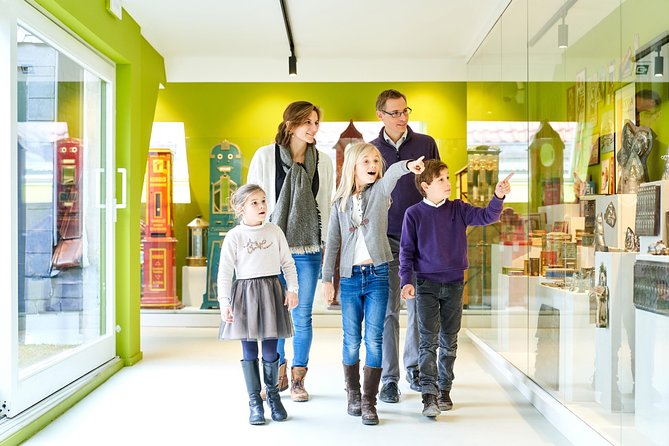
- You explore independently: An audio guide explains the exhibits, while interactive stations and displays let you set your own pace.
- Chocolate samples are included: The number varies by visit, but you can expect tastings during the museum experience and another sample after the demonstration.
- The museum is near Grand Place: It is easy to combine with other central Brussels sights and is close to public transportation.
- Plan around the demonstration time: The live session may not begin when you enter, and missing it can mean a wait for the next one.
- It suits families and chocolate fans: Most people can participate, and children are welcome when accompanied by an adult.
What Choco-Story Brussels actually offers
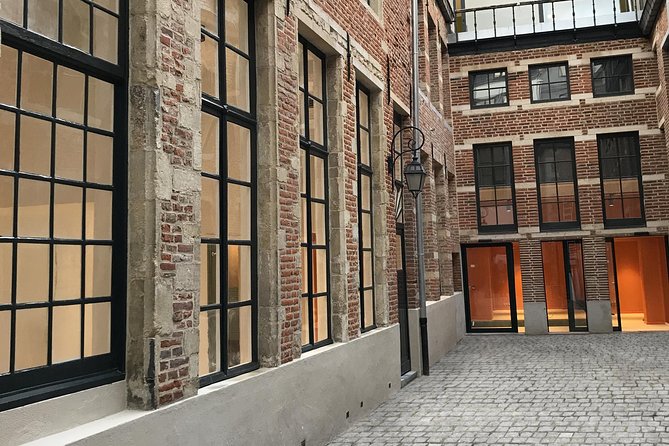
Choco-Story Brussels is a compact museum devoted to cocoa, chocolate-making, and Belgium’s place in that story. The Van Belle and Van Lierde families created it in 2014 to promote quality Belgian chocolate while offering an educational experience that would also be fun.
That balance is important. This is not a grand museum with rooms of priceless art. It is a small, approachable attraction where you learn a little, taste a little, and watch a practical chocolate demonstration. You can spend about an hour here, or closer to 90 minutes if you listen to the full audio material and take your time with the displays.
The museum works best as a break from sightseeing around central Brussels. It is close to Grand Place, so you can pair it with a walk through the historic center, a meal, or another nearby activity. At about $19.17 per person, the admission is reasonable for Brussels, especially because tastings are included.
Still, value depends on your interests. If you love food history, Belgian chocolate, or interactive family attractions, the price is easy to justify. If you want a large, polished museum with elaborate demonstrations, you may find the experience short.
More Belgian Chocolate Tastings in Brussels
- Choco-Story Brussels: Chocolate Museum Entrance with Tasting
★ 4.3 · 4,883 reviews - Hungry Mary’s Famous Beer and Chocolate Tour in Brussels
★ 5.0 · 2,258 reviews - Brussels: Belgian Chocolate Making Workshop with Tastings
★ 4.7 · 1,629 reviews
The self-guided route from cocoa to praline
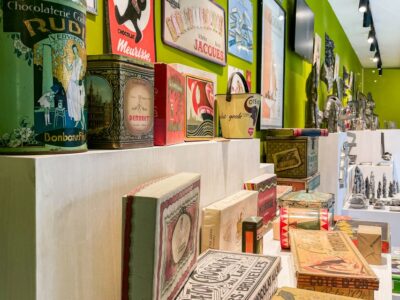
Your visit begins with the story of cocoa and its transformation into chocolate. The exhibition explains where cocoa comes from, how it reached Europe, and how chocolate developed from a valuable drink into the familiar sweets sold today.
This historical section gives the museum its purpose. You are not simply shown a box of pralines and told that Belgium makes good chocolate. You learn how chocolate was once linked with status and refined social habits, and how its wider availability changed the way people value it.
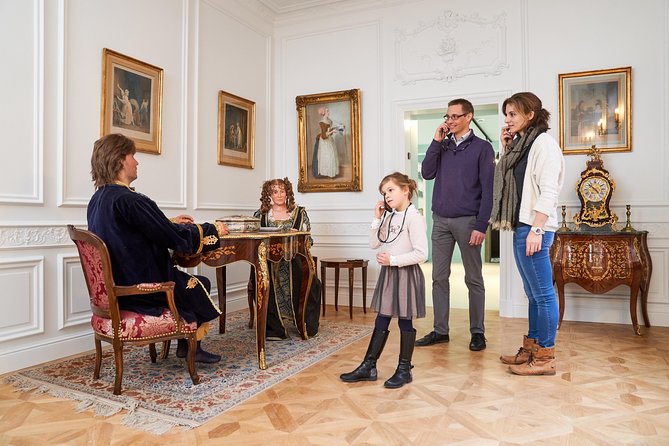
The audio guide adds a good deal of detail. It is available through a translation device, making the museum accessible to people who do not speak the local language. You can listen to explanations connected to objects and historical displays rather than relying only on short wall labels.
I like this format because you can choose your level of attention. You might listen carefully to every section, or skip ahead when the technical details become too dense. Some people find the audio commentary long-winded, so the freedom to move on is useful.
The museum also includes interactive games and activity stations. These help break up the reading and give children something to do besides follow adults from one display to the next. Several people have found that some games or scanner stations do not work properly, so you should treat the interactive material as an extra rather than the heart of the visit.
The chocolate tasting: small but satisfying
Tasting is built into the experience, and it makes the museum feel more like a food attraction than a standard exhibition. Samples can be taken during the visit, with dark and milk chocolate options among the tastes described.
The exact amount appears to vary. One account describes two chocolate barrel samples, followed by a third taste after the demonstration. Another describes five types of chocolate for comparing different preparations. I would plan on several samples, but not expect a full tasting menu.
That distinction matters. The tasting is enjoyable, but it is not designed to replace lunch or provide a large serving of Belgian sweets. It gives you a direct way to compare chocolate and understand how cocoa, milk, and preparation affect flavor.
The tasting room itself is described as simple. That is perfectly fine for a museum priced below many full food tours, but you should not expect a lavish chocolate-pairing session. The strongest part is the connection between what you have just learned and what you get to taste.
If you have a strong preference for dark or milk chocolate, you may appreciate having a choice. If you are hoping to sample a wide range of finished pralines, the selection may feel limited.
Watching the master chocolate-maker
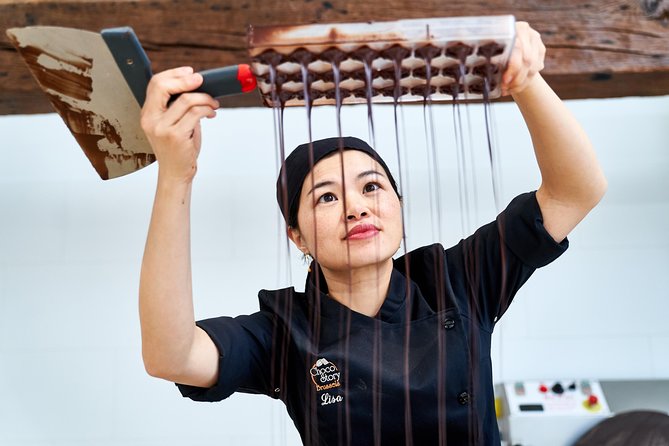
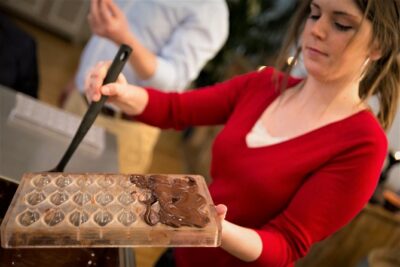
The live demonstration is the highlight for many people. A master chocolate-maker prepares pralines in front of you, showing how fillings and chocolate come together in a finished sweet.
The demonstration is practical rather than theatrical. It has been described as lasting about 10 minutes, though another account found the presentation closer to 20 minutes. The chocolatier uses prepared molds and fillings, so you are watching the final production steps rather than an entire chocolate-making process from cocoa bean onward.
That short format has two advantages. It keeps the museum visit moving, and it gives you a clear, visual explanation of how a praline is assembled. You also receive a sample after the demonstration, which makes the presentation feel worthwhile.
The demonstration schedule needs attention. The first session may not begin at the museum’s opening time, and the available information does not provide a fixed start schedule. If you arrive early, ask at check-in when the next praline session begins. Otherwise, you could see only the final minutes and face a wait of roughly 45 minutes for the next one.
This is the one timing issue that can affect your whole visit. The museum itself can be completed fairly quickly, but waiting for the demonstration may stretch the outing. If the demonstration matters to you, plan your arrival around it rather than treating it as an accidental extra.
More Museum Tours in Brussels
- Brussels: Atomium Entry Ticket with Design Museum Ticket
★ 4.4 · 9,254 reviews - Brussels: 2.5-Hour Chocolate Museum Visit with Workshop
★ 4.6 · 1,263 reviews - Brussels: The World of Banksy Museum Permanent Exhibition
★ 4.7 · 636 reviews - Brussels: Train World Museum Entrance Ticket
★ 4.7 · 524 reviews
How long should you allow?
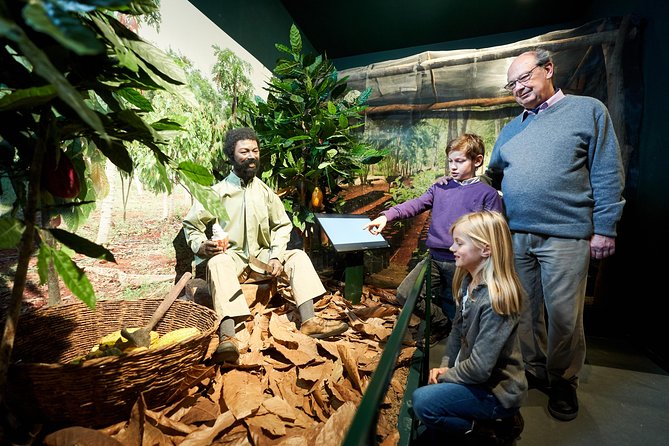
The advertised duration is about 90 minutes, but your actual visit may be shorter or longer. A brisk walk through the displays can take around 45 minutes. Listening to the audio guide, trying the interactive stations, tasting chocolate, and watching the demonstration can bring the visit closer to an hour or more.
I would allow at least one hour. Give yourself 90 minutes if you want to listen to most of the audio material and avoid rushing the demonstration.
The museum does not force you through in a set group. You can wander independently or join a guide, although a guide is not included with the admission. That makes the experience flexible, but it also means your visit may feel less like a formal tour and more like a museum with a tasting stop.
The maximum group size is listed as 15 people. Even so, the exhibition rooms can feel cramped when too many people gather around the same displays or scanner stations. Later in the day may be quieter, based on the experience of people who visited then, but you should still expect a compact attraction rather than wide-open galleries.
Is the audio guide worth using?
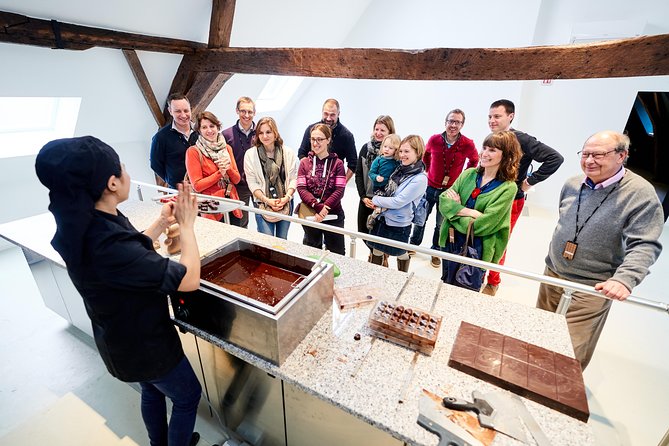
Yes, if you want the museum’s historical side. The audio guide explains the artifacts and the development of chocolate in more detail than the display labels alone. It also lets you request information in your preferred language.
For a quick visit, you can use it selectively. Listen to the sections that interest you, then keep moving. If you enjoy food history, the guide gives the museum more substance and helps explain why chocolate was once treated as a luxury and social marker.
The equipment is not perfect. One account found that the device worked with fact placards but failed at some activity centers. Another found the audio information too long. You should see the guide as a useful companion, not a flawless digital system.
The best approach is simple: use the audio for the historical displays, but do not wait around if a scanner or game fails. There is enough elsewhere to keep the visit worthwhile.
A good stop for families
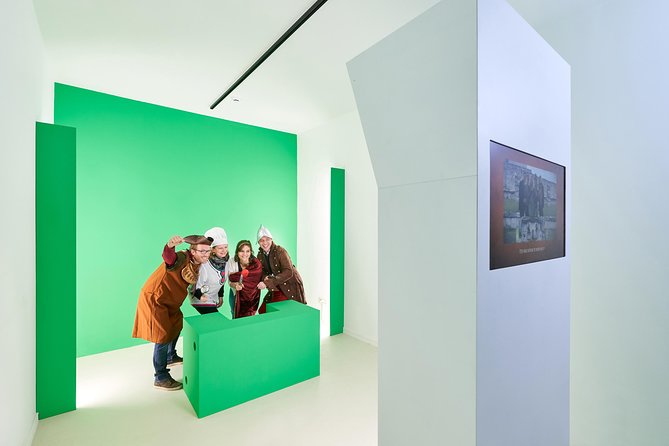
Choco-Story works well for families because it combines short explanations, objects, tastings, and hands-on material. Children may not want a long lecture about cocoa trade or European chocolate traditions, but the samples and demonstration give them a clear reward for paying attention.
The museum is described as child-friendly, and most people can participate. Children must be accompanied by an adult. A baby stroller can be used, although the rooms may feel tight.
For younger children, I would keep the visit active. Let them look for the next tasting, try the working games, and watch the chocolatier. Older children may enjoy the audio guide and the explanation of how chocolate changes from cocoa to finished confectionery.
Do not promise the family a full chocolate workshop. You watch the chocolatier work, but you do not make chocolate yourself. That is the biggest difference between this museum and a hands-on cooking class.
How it compares with other Brussels activities
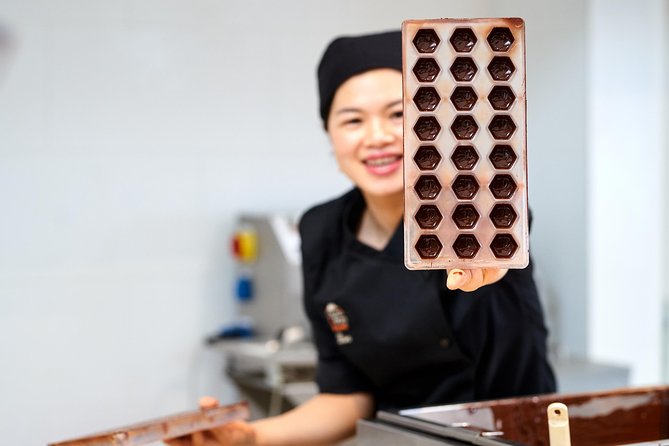
The museum is a good choice when you want an indoor activity near the city center. Its central location makes it easy to fit between other sights, and the 90-minute format does not consume an entire day.
It is especially useful on a rainy afternoon, during a break from walking, or when you want something that appeals to different ages. A history-minded adult can listen to the audio guide while a child focuses on the interactive stations and tasting.
The museum is less compelling if your schedule is already full of major Brussels landmarks. Some people find the exhibition outdated, and one quick visitor felt there was not enough to see. If you have only a few hours in the city, Grand Place and the surrounding streets may deserve priority.
For chocolate enthusiasts, though, the demonstration adds something a chocolate shop cannot. You are not only buying Belgian chocolate. You are seeing one way pralines are made and learning why the product became so important to Belgium.
Price, booking, and practical details
Admission costs about $19.17 per person and includes chocolate tasting. Food and drinks beyond the tasting are not included, and a guide is not included either. The audio guide is part of the self-guided setup, according to the experience details and descriptions of the visit.
The ticket is often booked about 13 days ahead, so reserving in advance is sensible if the museum fits a fixed Brussels schedule. Confirmation is provided at booking, and the attraction is near public transportation.
The last entrance is at 5:00 p.m. That is an important cutoff because you need enough time to see the exhibits and catch the demonstration. Arriving close to closing could leave you with a rushed visit or no chance to attend the chocolate-making session.
Free cancellation is available until 24 hours before the start time. Changes or cancellations inside that 24-hour window are not accepted for a refund.
There is also a virtual reality cocoa presentation available for an extra €5, according to one account. Since it costs more than admission add-ons normally do, I would ask whether it is operating and decide based on your interest in technology. The core museum already includes enough material for a satisfying short visit.
What I like most, and what could improve
The best feature is the combination of information and tasting. The museum gives you a reason to care about the chocolate in your hand, then lets you taste the result. The praline demonstration is short, but it turns an abstract production process into something you can see.
I also like the self-guided pace. You can spend more time on the social history of cocoa, move quickly through technical explanations, or pause for the audio material. That flexibility helps families and mixed groups with different attention spans.
The weak spots are mostly about presentation and timing. Some exhibits feel dated, several interactive stations may not function, and the rooms can become crowded. The amount of tasting is also modest for anyone expecting a full chocolate tour.
The demonstration can be uneven depending on the timing and presentation. It is worth seeing, but you should not picture an elaborate stage show or a long workshop. Ask about the start time as soon as you arrive.
Who should book Choco-Story Brussels?
Book it if you like chocolate, food traditions, compact museums, or family attractions near Grand Place. It is also a good choice if you want an activity that takes about an hour and leaves plenty of time for other Brussels sights.
You will get the most from it if you listen to at least part of the audio guide and plan around the praline demonstration. The museum becomes less satisfying if you rush through only for the samples, since the tasting selection is not especially large.
Skip it if your Brussels schedule is packed and you are not interested in chocolate history. The museum is not huge, and the displays will not occupy an entire afternoon. At roughly $19.17, though, it offers fair value for a short, central, educational experience with chocolate included.
My advice: book it for a relaxed stop, arrive early enough to confirm the demonstration time, and treat the museum as a pleasant introduction to Belgian chocolate rather than a full chocolate-making class.
FAQ
Where is Choco-Story Brussels located?
Choco-Story Brussels is located in central Brussels near Grand Place. It is also near public transportation and can be combined with other central attractions.
How long does the visit take?
The approximate duration is 1 hour and 30 minutes. A quick visit may take about 45 minutes, while using the audio guide, trying the interactive displays, and watching the demonstration can take longer.
Is chocolate tasting included?
Yes. Chocolate tasting is included with admission. The available amount can vary, with descriptions ranging from two chocolate tastes to as many as five types, plus a sample connected with the demonstration.
Is a guide included?
No. A guide is not included. You can explore independently with the provided audio guide, or visit accompanied by a guide if one is available separately.
Do children need an adult with them?
Yes. Children must be accompanied by an adult. The museum is described as suitable for families, and most people can participate.
What time is the last entrance?
The last entrance is at 5:00 p.m. You should arrive early enough to see the exhibits and check the time of the chocolate demonstration.
Can I cancel for a refund?
Yes. You can cancel up to 24 hours before the experience start time for a full refund. Cancellations or changes made less than 24 hours before the start time are not accepted for a refund.
Just added in Brussels
- Transfer from BRU Airport to Brussels city (any hotel or address)★ 5.0 · 1 review
- Standard vehicle from Brussels airport to city of Antwerp★ 5.0 · 4 reviews
- Standard Minivan from Brussels airport to city of Antwerp★ 5.0 · 1 review
- Private transfer from BRU Airport – Brussels GO BACK MB V-CLASS 7 PAX★ 5.0 · 2 reviews
- Private transfer from Brussels Airport to Brussels city Business car★ 5.0 · 1 review
- Transfer Brussels Airport -> Antwerp MB V-CLASS 7 PAX★ 5.0 · 1 review
- Private transfer from BRU Airport to Bruges with Mercedes V class 7 pax★ 5.0 · 1 review
- Private transfer from BRU Airport to Bruges with luxury limousine 3 pax★ 5.0 · 1 review
Belgian Chocolate Tastings, compared.
Choco-Story Brussels: Chocolate Museum Entrance with Tasting
Read our review →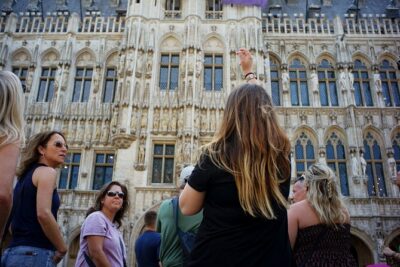
Hungry Mary’s Famous Beer and Chocolate Tour in Brussels
Read our review →
Belgian Chocolate Making Workshop with Tastings
Read our review →
Choco-Story Chocolate Museum Guided Tour w/Tastings
Read our review →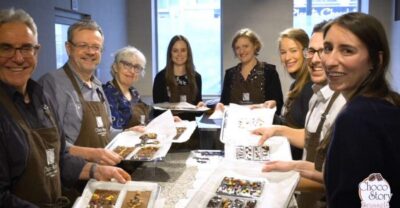
2.5-Hour Chocolate Museum Visit with Workshop
Read our review →
Historical Walking Tour with Chocolate & Waffle Tasting
Read our review →
Browse the lists this tour appears in