

Reviewed · ESCAPE GAMES AND SCAVENGER HUNTS
Discover Ostend while playing! Escape game – The Walter case
Ostend becomes your crime scene. I like the way this urban escape game turns ordinary streets into part of a police case, and I like that your group controls the route, suspects, and searches. The mix of seaside sights and puzzle solving gives you more reason to keep walking than a standard city tour.
The main drawback is that the game asks you to stay focused while moving through a real city, so it may feel less polished than a fixed-room escape game. You also need to keep the countdown in mind, and the published meeting point is in Ostend, even though the tour summary labels the location as Ghent.
In This Review
- Key points at a glance
- A crime story set in Ostend
- Starting at Natiënkaai 1
- The first five minutes: from walk to investigation
- Walking through Ostend as part of the case
- Choosing suspects, routes, and searches
- Why the seaside setting adds value
- Two and a half hours for a private group
- English play and practical access
- What families should know
- The overall value of the Walter Case
- Should you book it?
- FAQ
- Where does The Walter Case start?
- Where does the activity finish?
- How long does the escape game last?
- How much does the experience cost?
- Is the activity private?
- Is the game offered in English?
- Can I use public transportation to reach it?
- What is the cancellation policy?
Key points at a glance

- A bomb threat drives the story: You have two hours in the plot to find and defuse a bomb hidden somewhere in Ostend.
- Your choices shape the route: You decide which suspects to question, where to search, and which clues to follow.
- The city becomes the game board: The route passes buildings, monuments, the beach, restaurants, and everyday streets.
- Good for families with older children: A 14-year-old participant became actively involved and enjoyed crossing the city.
- Private and affordable for groups: One booking covers up to six people, making the price especially attractive with a full team.
- English is available: The game is offered in English and uses a mobile ticket.
A crime story set in Ostend

The Walter Case begins with what sounds like a routine blackmail investigation involving a billionaire chief executive. That simple case quickly turns serious when you learn that a bomb is hidden somewhere in town, set to explode in two hours.
You play the private detective. You are not simply following a guide from one landmark to the next. The clues are meant to push you into decisions, and those decisions affect the path you take through Ostend.
That setup gives the walk a clear purpose. You are not looking at a monument only because it appears on a sightseeing route. You are considering it as part of an investigation. A street corner, building, or public space may become useful because it helps answer a question in the case.
I like this approach because it gives younger participants a reason to pay attention. Adults can enjoy the story and the city, while children and teenagers get a practical task: find the next lead before time runs out.
The tone is more family mystery than frightening thriller. The bomb creates urgency, but the information provided does not suggest a horror-style experience or a physically demanding challenge. If your group enjoys detective stories, city walks, and puzzles, the premise should be easy to grasp.
More Escape Games and Scavenger Hunts in Ghent
- e-Scavenger hunt Ghent: Explore the city at your own pace
★ 4.5 · 41 reviews - e-Scavenger hunt Kortrijk: Explore the city at your own pace
★ 4.5 · 15 reviews - e-Scavenger hunt Ostend: Explore the city at your own pace
★ 4.5 · 10 reviews
Starting at Natiënkaai 1
Your meeting point is Natiënkaai 1, 8400 Oostende, and the activity ends back at the same place. That fixed start and finish make the outing easier to plan, especially if you are fitting it between meals, transport, or time on the coast.
The booking details identify Ostend as the practical location. One summary line labels the location as Ghent, but the stated meeting point, story, and city references all point to Ostend. I would use the Ostend address when planning your day and check the confirmation carefully before setting out.
The area is near public transportation, which helps if you arrive without a car. The activity is also offered every day during the stated operating period, from November 15, 2021, through December 10, 2026. The listed hours run from 12:00 AM to 11:30 PM, so you have broad scheduling flexibility, although your selected start time still matters because the story uses a countdown.
Bring a charged phone. The experience includes a mobile ticket, and the nature of an urban escape game means your phone is likely to be important for accessing the activity and following the case.
The first five minutes: from walk to investigation
At the start, the experience may feel like an ordinary walk through Ostend. That is not a bad thing. It lets you get your bearings before the puzzle takes over.
After roughly five minutes, the game element begins. This change is useful for families because you are not thrown straight into a complicated mystery while still trying to find the starting point. You first settle into the surroundings, then begin to look at them with a detective’s eye.
The exact order of clues depends on your choices. There is no fixed sequence described for every group, so I would not expect a standard march from Stop 1 to Stop 2. Instead, you receive leads and make decisions about which route to follow, which suspects to question, and which locations to search.
That freedom is one of the strongest features of the experience. It makes each group responsible for the investigation. If you choose a different path from another team, your two outings may not feel identical.
The tradeoff is that choice can bring uncertainty. A guided tour tells you where to go next. Here, you need to read carefully, discuss options, and agree on a plan. That is fun for a cooperative group, but it can frustrate people who prefer a clear route and quick answers.
Walking through Ostend as part of the case
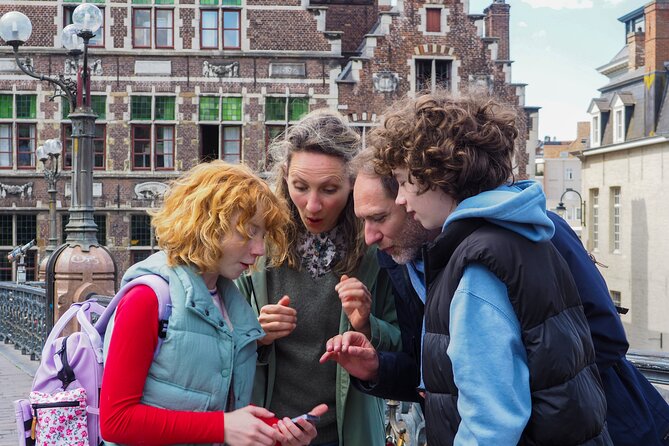
The game takes place in the streets of Ostend rather than inside a dedicated escape room. You therefore get two experiences at once: a city walk and a fictional police investigation.
The route includes city buildings and historical monuments, along with the beach, restaurants, and the general atmosphere of Ostend. The experience does not provide a fixed list of stops, so I would think of these sights as part of the setting rather than a guaranteed sightseeing itinerary.
This distinction matters. If your main goal is a full architectural tour with long explanations at every landmark, this game may not replace a traditional guided walk. If you want a reason to explore while still learning something about the buildings you pass, it offers a more active format.
The historical information is a welcome touch. One family outing was described as beginning like a normal walk, then becoming a game, with explanations of the buildings along the way. That combination helps prevent the puzzle from feeling disconnected from the city.
You may find yourself noticing details you would otherwise pass by. The beach and monuments become more than scenery. Restaurants and public places help create a sense of a lived-in city, not a sealed game room built only for tourists.
Still, remember that Ostend remains a working city around you. People may be going about their day, and streets may not feel controlled or quiet. You need to stay aware of your surroundings instead of staring at the phone every second.
A completely different kind of day:
- Ghent: 50-Minute Medieval Center Guided Boat Trip
★ 4.5 · 5,637 reviews - Historical Walking Tour: Legends of Gent
★ 5.0 · 1,761 reviews - Ghent: 40 Minute Medieval Center Guided Boat Tour
★ 4.4 · 884 reviews - Evening Tour of the Dark Side of Gent
★ 5.0 · 646 reviews
Choosing suspects, routes, and searches

The Walter Case is built around decisions. You choose which lead to pursue, which suspect to question, and which place to investigate. That makes conversation within your group more important than speed alone.
For a group of six, I would give everyone a role. One person can read the case material, another can keep track of clues, someone else can watch the map or route, and another can challenge assumptions. These roles are simple, but they help prevent one person from doing all the work.
With younger participants, let them make some decisions. The strongest family feature is not merely that children can walk through Ostend. It is that they can take part in the investigation. A 14-year-old was especially engaged by crossing the city and following the case.
The experience may work best with teenagers and adults who can read instructions, remember details, and discuss choices. Younger children could still enjoy the story, but the supplied information does not specify a minimum age or the difficulty of the clues.
The two-hour bomb countdown adds pressure. It gives your decisions weight, even though the real activity lasts about two and a half hours. I would treat the countdown as part of the fiction, while allowing time for the complete route and any pauses involved in solving the case.
Do not rush so hard that you miss the city. The point is to solve the mystery while exploring Ostend, not to sprint from clue to clue. A balanced group will keep moving but pause long enough to read the surroundings and discuss the next step.
Why the seaside setting adds value
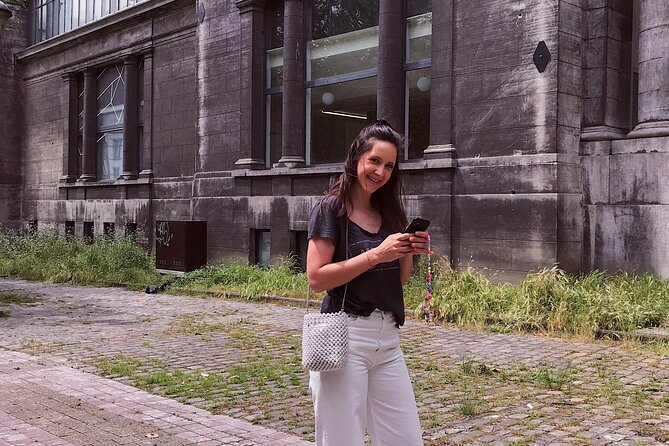
A fixed escape room can be clever, but its walls never change. The Walter Case uses Ostend itself as the setting, which gives the investigation more variety.
The beach brings a strong sense of place. Historic monuments give the route visual landmarks. Restaurants and public streets remind you that the mystery is unfolding in a real Belgian coastal city, not on a stage.
I like this because it suits people who find conventional sightseeing too passive. You still see parts of the city, but you have a reason to ask questions and make connections.
The city setting also makes the activity a useful choice on a mixed-interest day. One person may want to sightsee, another may want puzzles, and a teenager may want a mission rather than a lecture. This outing tries to satisfy all three.
The limitation is that you should not book it expecting every major Ostend attraction to receive equal attention. The case decides where your attention goes. Some places may be important to the investigation, while others may simply form part of the route.
Two and a half hours for a private group

The advertised duration is approximately two hours and 30 minutes. That is long enough to feel like a main activity rather than a quick add-on, but short enough to fit into a day in Ostend.
The activity is private, so only your group participates. This is a meaningful advantage for families and friends. You can set your own pace within the game, discuss clues openly, and avoid being paired with strangers who have a different energy level.
A group of up to six is the best value. The listed price is $24.07 per group, not per person. At the maximum group size, that works out to about $4.01 per person. Even with four people, it is roughly $6.02 per person.
That price compares well with many paid activities because it combines an organized story, a city route, and a private format. The value is strongest when all six places are filled.
For one or two people, the price remains reasonable, but the game may be less lively. More participants mean more ideas and more people to share the investigation. Too many different opinions can slow you down, but six is still a manageable team size.
English play and practical access
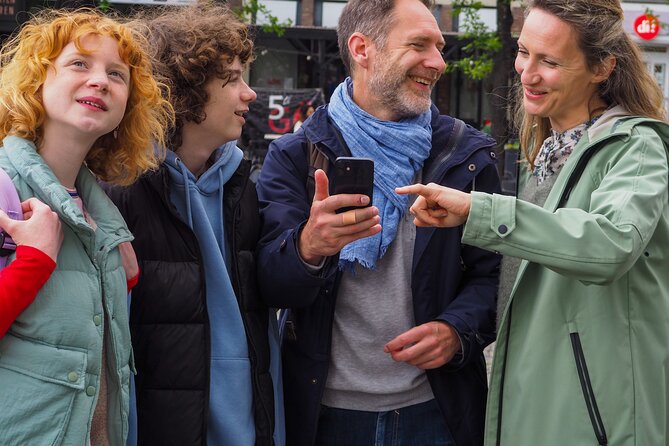
The experience is offered in English, which makes it a useful option for English-speaking visitors in Ostend. The information does not list other language options, so English is the choice you can count on from the supplied details.
A mobile ticket is provided. Keep the booking information accessible on your phone, and make sure the person responsible for the booking can open it at the meeting point.
Service animals are allowed, and most people can participate. The activity is near public transportation, which is helpful for reaching Natiënkaai without relying on a private vehicle.
The route takes place in city streets, and the supplied details do not promise a specific accessibility standard for every section. If your group has mobility needs, check the route and current conditions before booking. The broad statement that most participants can take part should not be read as a guarantee for every individual requirement.
You can cancel for a full refund if you do so at least 24 hours before the start time. Cancellations made less than 24 hours ahead are not refunded, and changes inside that window are not accepted. The cut-off follows local Ostend time.
What families should know
This is a particularly sensible choice for a family with older children or teenagers. The story gives them something concrete to do, and the city crossing turns a sightseeing walk into a shared mission.
The family appeal is not just theoretical. A 14-year-old reportedly enjoyed moving through Ostend and became involved in the case. That detail tells me the activity has enough action and decision-making to hold a teenager’s attention, at least for a group that enjoys this kind of challenge.
I would explain the basic idea before you start: you are private detectives, the bomb has a two-hour fictional countdown, and every clue matters. Then let the younger members lead some of the searches instead of handing them the phone only when an answer is obvious.
For a family with very small children, the two-and-a-half-hour duration may be a lot. The information does not give a minimum age, a stroller policy, or the puzzle level, so you should judge based on your child’s ability to walk, read, and stay involved.
The activity also suits friends, couples, and small groups who want a shared challenge. It is less suitable if everyone wants a relaxed beach stroll with no fixed task.
The overall value of the Walter Case
The Walter Case earns its value from the combination of three things: a clear detective plot, access to Ostend’s streets, and private group play.
The city walk gives you context. The mystery gives you focus. The private format gives you room to solve the case in your own style. Remove any one of those elements and the experience would be less distinctive.
The 4.2 rating from 16 reviews and a 100 percent recommendation rate suggest a positive response, while the sample feedback points most strongly toward family enjoyment, city discovery, and involvement from teenagers. I would put the greatest weight on those qualities when deciding if it suits you.
It is not a replacement for a detailed history tour. It is also not a traditional escape room with a locked door and a carefully built interior set. Its appeal comes from turning Ostend into an open-air puzzle.
That means your enjoyment will depend on your group. If you like discussing clues, accepting a little uncertainty, and walking through a real city, the format offers good value. If you want a polished theatrical show or a fully guided route, you may find the structure too loose.
Should you book it?
I would book The Walter Case if you have a group of two to six people, enjoy detective puzzles, and want to see Ostend while doing something more active than sightseeing. It is especially appealing for families with children around the teenage years, since the story gives them a real role.
The price is easy to justify with a full group, and the private format means you do not need to match your pace or style to strangers. Choose a start time that leaves room for the full two-and-a-half-hour outing, arrive at Natiënkaai 1, and keep your phone ready.
Skip it if your priority is a traditional guided tour, a quiet beach walk, or a fixed-room escape challenge. For everyone else, this is a playful way to explore Ostend, with enough city context to make the walk worthwhile and enough mystery to keep the group moving.
FAQ
Where does The Walter Case start?
It starts at Natiënkaai 1, 8400 Oostende, Belgium.
Where does the activity finish?
The activity ends back at the meeting point.
How long does the escape game last?
The expected duration is approximately two hours and 30 minutes.
How much does the experience cost?
The listed price is $24.07 per group for up to six people.
Is the activity private?
Yes. Only your group participates in the activity.
Is the game offered in English?
Yes. English is one of the listed languages, and it is the language offered for this experience.
Can I use public transportation to reach it?
Yes. The meeting point is near public transportation.
What is the cancellation policy?
You can cancel at least 24 hours before the start time for a full refund. Cancellations or changes made less than 24 hours before the experience are not accepted for a refund.
Just added in Ghent
- Historic Highlights, by a local guide★ 5.0 · 9 reviews
- Discover Ghent while playing! Escape game – The alchemist★ 4.0 · 4 reviews
- Walking Food Tour in Ghent★ 5.0 · 13 reviews
- Discover Ghent while playing! Escape game – The Walter case★ 4.5 · 4 reviews
- e-Scavenger hunt Ostend: Explore the city at your own pace★ 4.5 · 10 reviews
- Discover Mons while playing! Escape game – The alchemist★ 4.0 · 5 reviews
- Kortrijk Self-Guided Sherlock Holmes Murder Mystery Game★ 5.0 · 2 reviews
- Taste of Ghent: Private Chocolate Walking Tour★ 5.0 · 1 review
Escape Games and Scavenger Hunts, compared.


e-Scavenger hunt Antwerp: Explore the city at your own pace
Read our review →
e-Scavenger hunt Bruges: Explore the city at your own pace
Read our review →
Bruges Scavenger Hunt and Highlights Self Guided Audio Tour
Read our review →
e-Scavenger hunt Ghent: Explore the city at your own pace
Read our review →
Beer Tasting and Scavenger Hunt in Brussels – About 3 Hours
Read our review →
e-Scavenger hunt Mechelen: Explore the city at your own pace
Read our review →
Romantic Bruges: Love Between the Canals Exploration Game
Read our review →Browse the lists this tour appears in