
Reviewed · ESCAPE GAMES AND SCAVENGER HUNTS
e-Scavenger hunt Kortrijk: Explore the city at your own pace
Kortrijk rewards curious walkers. This self-guided city game mixes sightseeing with questions, navigation, and small discoveries, so you learn about the city while moving through it. I especially like the freedom to pause whenever you want and the chance to see both famous landmarks and less obvious corners.
The private group format is another strong point. Up to six people can play together for $37.33, making the price quite reasonable for a family or group of friends. The main consideration is that you must bring your own smartphone and mobile data, and the GPS function has not always worked smoothly.
The route takes about two to four hours, depending on your walking speed, breaks, and how seriously you treat the game. It begins and ends at Stationsplein 6, near Kortrijk station, and you can start any time during the listed 24-hour operating period.
In This Review
- Key points to know before you book
- Starting at Stationsplein and getting your bearings
- The Beguinage and the small-scale side of Kortrijk
- Towers, gates, and Kortrijk’s medieval defenses
- The Battle of the Golden Spurs in places and museums
- Churches that show different chapters of the city
- Texture museum and the story of linen
- A theatre, a hospital, and the city’s social history
- Rose gardens, parks, and the modern city
- Cost, timing, and who gets the best value
- Should you book the Kortrijk e-scavenger hunt?
- FAQ
- Where does the Kortrijk e-scavenger hunt start and finish?
- How long does the city trail take?
- How much does the experience cost?
- Is a smartphone included?
- Is the activity guided?
- Is the activity available in English?
Key points to know before you book

- Medieval Kortrijk in game form: Discover the Beguinage, belfry, city gates, churches, towers, and remnants of the old defensive town.
- A good-value private activity: The $37.33 price covers a team of up to six people, not each individual participant.
- Flexible timing: You choose when to begin, when to stop, and where to take a break.
- A mix of major sights and quieter stops: The route includes popular landmarks, museums, shopping areas, gardens, and lesser-known charitable institutions.
- Bring your own technology: The app is included, but your smartphone and data are not.
- Allow for route problems: Construction work or a weak GPS signal may make some questions harder to solve.
Starting at Stationsplein and getting your bearings

The city trail begins at Stationsplein 6, a practical location if you arrive in Kortrijk by train. From here, you use the online app on your phone and follow the route at your own pace. The activity is private, so only your own group takes part.
I like this setup for families and friends who do not want to follow a guide holding a flag. You are not tied to a departure time, and you do not need to keep up with anyone else. If one person wants to stop for a coffee or inspect a building, the group can simply pause.
The app combines directions with questions about the sights. That makes you look more closely than you might on an ordinary walk. You may find yourself counting statues, studying a façade, or checking a church detail that would otherwise pass unnoticed.
The technology is not completely foolproof. One participant had trouble with the Qula GPS function and had to use Google to locate the stops. That can cost points, especially when the game expects a location-based response. Before setting off, make sure your phone is charged, mobile data is available, and everyone understands how the navigation works.
More Escape Games and Scavenger Hunts in Ghent
- e-Scavenger hunt Ghent: Explore the city at your own pace
★ 4.5 · 41 reviews - Discover Ostend while playing! Escape game – The Walter case
★ 4.0 · 16 reviews - e-Scavenger hunt Ostend: Explore the city at your own pace
★ 4.5 · 10 reviews
The Beguinage and the small-scale side of Kortrijk
The Kortrijk Beguinage is one of the route’s most atmospheric areas. Its roots reach back to the 13th century, and it has been a UNESCO World Heritage Site since 1998. The small houses gather around a quiet courtyard, with the Mattheuskapel adding another point of interest.
This is a good place to slow down. The Beguinage is not about one giant monument. Its appeal comes from the simple cottages, enclosed spaces, and the sense of a small community within the city. The current 41 cottages date mainly from the 17th century, but the site has had a difficult past.
It was destroyed several times, including during the Battle of the Golden Spurs in 1302, after the Battle of Westrozebeke in 1382, and again by the French in 1684. Those events give the stop more weight than a quick photo opportunity.
The game also brings you to Baggaertshof, founded in 1638 by Joossine Baggaert. She established 13 cottages for women in need. Like the Beguinage, this site shows how care, housing, religion, and daily life were once tied closely together in the city.
I find these stops especially useful if you want more than a march between grand churches. They show a quieter, more human side of Kortrijk. Some questions may require you to look carefully at details, so do not rush through the courtyards.
Towers, gates, and Kortrijk’s medieval defenses
Kortrijk’s defensive remains form one of the strongest parts of the trail. The two towers are built from limestone and sandstone, and the southern Speytorre dates to 1385. Its original purpose was to control traffic on the Lys.
The Artillery Tower, also called the Armorie Tower, is older. It was built in 1301 and 1302 with the castle by the French King Philip the Fair during the conflict with the Count of Flanders. These structures help you picture Kortrijk as a contested medieval town, not simply a modern shopping center.
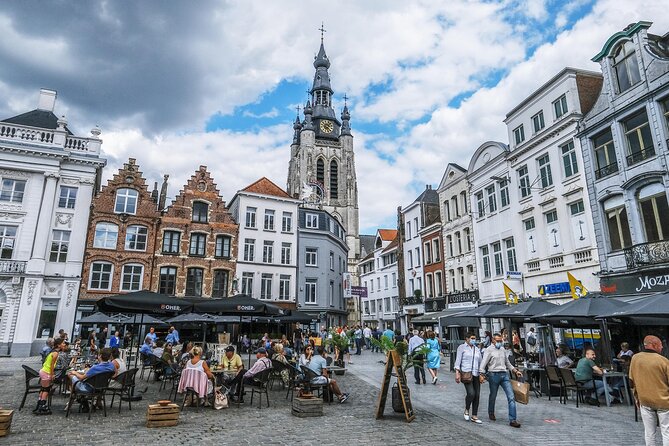
The belfry rises in the center of the Grote Markt. It was part of the former cloth hall, first mentioned in 1248. The tower connects Kortrijk to the textile trade that shaped the city and the Lys Valley.
You will also encounter the Groeningepoort and Groeningemonument. Both were created to commemorate the 600th anniversary of the Battle of the Golden Spurs. The triumphal arch is a later memorial, but it points back to one of the defining stories of Flemish identity.
The game format works well here because it gives you a reason to inspect public monuments. You may already know that a tower is old, but a question about its purpose or construction makes the information stick.
The Battle of the Golden Spurs in places and museums
Kortrijk 1302 is a multimedia museum in the Beguinage Park, located in the former Groeninge Abbey. It focuses on the way the Battle of the Golden Spurs has been remembered and turned into a powerful national story.
That wording matters. The museum is not only about the battle itself. It also looks at the making of the battle’s legend. If you have time and the museum is open during your visit, this is the stop that adds the most context to the monuments and gates elsewhere on the route.
The city game cannot replace a full museum visit, and its questions offer only a short introduction. Still, the connection between the museum, Groeningepoort, and Groeningemonument gives the walk a clear thread.
You will also pass a building whose architectural style bridges Gothic and Renaissance forms. Fourteen statues on its façade represent the counts of Flanders. This is exactly the sort of detail that works well in a scavenger hunt, since you are encouraged to count and observe rather than simply walk past.
One caution: a question involving the statues has caused confusion. The wording about counting the Flemish counts was not perfectly clear, and a statue of Mary at the corner appeared to affect the answer. Treat such questions as part of the game’s rough edges. If your group is competing for points, read each prompt carefully and inspect the whole façade.
A completely different kind of day:
- Ghent: 50-Minute Medieval Center Guided Boat Trip
★ 4.5 · 5,637 reviews - Historical Walking Tour: Legends of Gent
★ 5.0 · 1,761 reviews - Ghent: 40 Minute Medieval Center Guided Boat Tour
★ 4.4 · 884 reviews - Evening Tour of the Dark Side of Gent
★ 5.0 · 646 reviews
Churches that show different chapters of the city
The Church of Our Lady began in 1199 on the initiative of Count Baldwin IX. It stood within Kortrijk’s grave domain, a reminder that religious buildings were closely tied to power, burial, and the ruling family.
St. Martin’s Church has an even longer religious story. The site already had a place of worship around 650 AD. You can expect the church to be one of the route’s most important landmarks, and the tour specifically highlights views of St. Martin’s Church.
The Passionists’ church, built in 1874, offers a different mood. It is described as an archetypal church of popular devotion. Together, these religious stops show that Kortrijk’s sacred buildings do not all belong to one era or serve one purpose.
I like the variety. You move from early medieval foundations to a 19th-century church connected with popular worship. The drawback is that the app can only provide a limited amount of explanation at each stop. If church architecture is your main interest, you may want to spend extra time looking independently rather than treating each location as a quick answer station.
Texture museum and the story of linen
Texture presents Kortrijk’s textile identity through the story of flax cultivation, processing, and linen production. It also ties that work to the Lys Valley around Kortrijk.
This stop gives useful economic context to the belfry and former cloth hall. Textile production was not an abstract background activity. It shaped work, trade, wealth, and the city’s place in the region.
The route’s inclusion of Texture is valuable because it broadens the experience beyond battles and churches. You see how ordinary materials and local industry helped build Kortrijk’s character.
The supplied details do not state that museum admission is included, so you should treat the game stop and an interior museum visit as separate matters. The city trail provides the sightseeing framework, but it does not promise admission to attractions.
A theatre, a hospital, and the city’s social history
The Kortrijk Theatre is one of the largest performing arts centers in southwest Flanders. Its 1920 building follows the théâtre à l’italienne design, a style associated with a traditional auditorium and formal stage arrangement.
This is a pleasant change from the medieval material. It shows that Kortrijk continued to invest in public culture long after its walls and cloth halls had lost their original roles.
The hospital stop brings you to an inner courtyard considered one of the best-preserved 17th-century sites in the city. The word hospital comes from the Latin hospitalis, referring first to hospitality rather than illness.
That small language lesson points to an important social idea. Historic hospitals were places of shelter and welcome as well as medical care. The courtyard is likely to reward a slower look, especially if you enjoy architecture that feels domestic rather than monumental.
These locations also explain why the trail is more than a standard list of top sights. The questions lead you through institutions that reveal how people worshipped, worked, were cared for, and entertained themselves.
Rose gardens, parks, and the modern city
The International Rose Garden dates from 1959 and occupies the grounds of Castle ’t Hooghe along Doorniksesteenweg. It offers a change of pace from the dense center and historic stonework.
The route also includes a park named after Queen Astrid’s visit to Kortrijk on April 5, 1935. These green stops give you room to breathe and show a civic side of the city shaped by gardens, royal visits, and public memory.
The itinerary also lists K in Kortrijk, a central shopping center with more than 80 shops and restaurants across 34,000 square meters. Ring Shopping, on the outskirts, adds another 90 shops in an indoor setting.
These shopping stops may appeal if you want food, toilets, a break, or browsing time during the activity. They may feel less interesting if your main goal is medieval architecture. Their presence also suggests that the route covers more than the historic core, so keep the two to four hour estimate flexible.
Construction work has sometimes blocked views or made answers difficult to find. Check the surroundings carefully before deciding that an answer is missing. If a site is fenced off, use common sense and do not enter restricted areas simply to complete a question.
Cost, timing, and who gets the best value
At $37.33 per group of up to six, this is a strong price for a private activity. A full group pays about $6.22 per person, before any personal spending on food, transport, or museum admission. Even a smaller group of two still gets a private city activity for less than the cost of many guided tours.
The value comes from flexibility rather than live commentary. You are paying for the app, the route, the questions, and the structure that turns a walk into a shared challenge. You are not paying for a guide’s personal stories or real-time answers.
The two to four hour duration is useful for planning. You can fit it into a half-day in Kortrijk, though the longer end of the estimate makes more sense if you stop for breaks, examine the landmarks, or visit places along the way.
The activity is offered in English and is available every day during the stated operating period, from February 16, 2020 through March 16, 2027. The listed hours run from midnight to 11:59 p.m., so you have broad freedom to choose a start time.
It suits families particularly well because most questions are child-friendly. It also works for adults who enjoy friendly competition, including groups that want to split into two teams. People who prefer a quiet, guide-led history walk may find the game mechanics distracting.
The activity is listed as suitable for most people, allows service animals, and is user-friendly for people with hearing impairments. Since it involves city walking and smartphone use, you should still consider your group’s comfort with both.
Should you book the Kortrijk e-scavenger hunt?
Book it if you want an affordable, private way to see Kortrijk without following a fixed group. The best parts are the freedom to stop, the mix of famous and less obvious places, and the way questions make you notice details such as statues, façades, towers, and courtyards.
I would especially recommend it for families, friends, repeat visitors, and anyone who likes a little competition. Even someone familiar with Kortrijk may discover new corners, as the route reaches beyond the standard highlights.
Skip it if you want deep interpretation at every stop, guaranteed GPS performance, or a polished guided tour with a human expert. Bring a charged phone, mobile data, and patience for occasional navigation problems. You can cancel for a full refund up to 24 hours before the start time, but changes or cancellations inside that window are not refunded.
For the price, this is a sensible way to turn a casual city walk into an active afternoon. Just remember that the app is the guide, and your group will need to do some of the work.
FAQ
Where does the Kortrijk e-scavenger hunt start and finish?
It starts at Stationsplein 6, 8500 Kortrijk, Belgium, and ends back at the meeting point.
How long does the city trail take?
The activity takes approximately two to four hours, depending on your pace, breaks, and how much time you spend at each stop.
How much does the experience cost?
The price is $37.33 per group of up to six people.
Is a smartphone included?
The online app is included, but you must provide your own smartphone and mobile data.
Is the activity guided?
No. It is a self-guided city trail played through an app, allowing you to choose your own start time and pace.
Is the activity available in English?
Yes. The experience is offered in English.
Just added in Ghent
- Historic Highlights, by a local guide★ 5.0 · 9 reviews
- Walking Food Tour in Ghent★ 5.0 · 13 reviews
- Discover Ghent while playing! Escape game – The alchemist★ 4.0 · 4 reviews
- Discover Ghent while playing! Escape game – The Walter case★ 4.5 · 4 reviews
- e-Scavenger hunt Ostend: Explore the city at your own pace★ 4.5 · 10 reviews
- Discover Mons while playing! Escape game – The alchemist★ 4.0 · 5 reviews
- Kortrijk Self-Guided Sherlock Holmes Murder Mystery Game★ 5.0 · 2 reviews
- Taste of Ghent: Private Chocolate Walking Tour★ 5.0 · 1 review
Escape Games and Scavenger Hunts, compared.


e-Scavenger hunt Antwerp: Explore the city at your own pace
Read our review →
e-Scavenger hunt Bruges: Explore the city at your own pace
Read our review →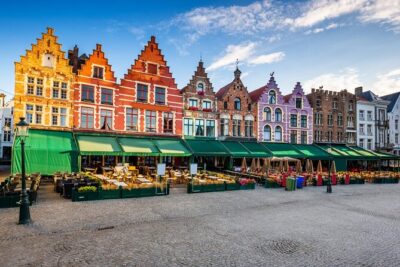
Bruges Scavenger Hunt and Highlights Self Guided Audio Tour
Read our review →
e-Scavenger hunt Ghent: Explore the city at your own pace
Read our review →
Beer Tasting and Scavenger Hunt in Brussels – About 3 Hours
Read our review →
e-Scavenger hunt Mechelen: Explore the city at your own pace
Read our review →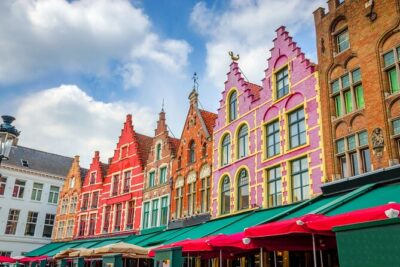
Romantic Bruges: Love Between the Canals Exploration Game
Read our review →Browse the lists this tour appears in