
Reviewed · BRUGES AND GHENT DAY TRIPS
Ghent and Bruges Full Day Tour from Brussels
Two Belgian cities, one packed day. This tour gives you a practical way to see Ghent’s medieval center and Bruges’ canals from Brussels without arranging trains, transfers, and local sightseeing on your own. I especially like the wide range of landmarks, from St. Bavo’s Cathedral and Ghent’s fortress to Bruges’ Beguinage and Minnewater.
I also like the amount of historical context built into the day. Guides such as Bruno and Stefan have been praised for clear, detailed explanations, while drivers Farooq and Daniel helped make the long day run smoothly. The main drawback is the group format: one account described a group of 55, despite the stated maximum of 40, and the headset-style commentary may feel less personal than a small walking tour.
In This Review
- Key points at a glance
- Why this day trip works
- Meeting in Brussels at 9:00 a.m.
- Ghent: Medieval power beside a modern student city
- What the guided style feels like in Ghent
- Lunch and the move to Bruges
- Bruges: Canals, beguines, and medieval trade
- Canal boat option and free time
- Walking, group size, and the pace of the day
- Is $111.75 a fair price?
- Who should book this Ghent and Bruges tour?
- Final verdict: A strong first look, with a busy schedule
- FAQ
- Where does the tour start?
- Where does the tour end?
- How long does the tour last?
- Which cities are included?
- Is the tour offered in English?
- Can I cancel for a refund?
Key points at a glance
- Two major Belgian cities in one day: See Ghent and Bruges without changing hotels or arranging separate transport.
- About 10 hours from Brussels: The day begins at 9:00 a.m. and returns to the same meeting point.
- Strong history and architecture focus: Expect stories about Roman and medieval Belgium, the Viking Age, the Counts of Flanders, and Bruges’ decline.
- Plenty of walking: You will cover old streets, squares, church interiors, canals, and historic neighborhoods on foot.
- Some independent time: The guide leads the main route, but you may have time to explore alone, eat, shop, or take a canal boat.
- Good value at $111.75: The price is most useful if you want convenience and a broad introduction rather than a slow, highly personal tour.
Why this day trip works
Ghent and Bruges are close enough to visit together, but different enough to reward the comparison. Ghent feels like a living university city with grand civic buildings, a medieval port, and an imposing castle. Bruges is more polished and picture-friendly, with canals, religious foundations, and a compact old center.
I like the way this outing gives you both sides of Belgian history in a single day. You see the power of the Counts of Flanders in Ghent, then move to Bruges, a city whose trade wealth faded at the end of the Middle Ages and left behind an unusually well-preserved center.
The format is efficient rather than relaxed. You are not getting a full day in either city, so this is best for a first look. If you have several days in Belgium, you may prefer separate visits, but if Brussels is your base and your time is short, this plan covers a lot of ground.
The tour is offered in English. One account described commentary in both English and French, which meant waiting for the second language, so it is worth confirming the language arrangement when you book if you want uninterrupted English commentary.
More Bruges and Ghent day trips:
- From Brussels: Guided Day Trip to Bruges and Ghent
★ 4.6 · 8,353 reviews - Bruges and Ghent – Belgium’s Fairytale Cities – from Brussels
★ 4.0 · 4,809 reviews - Bruges and Ghent Day Trip from Brussels
★ 4.5 · 784 reviews
Meeting in Brussels at 9:00 a.m.
The meeting point is Bd de Berlaimont 18, 1000 Bruxelles. The activity ends back at this same meeting point, which makes the return simple if you are staying in central Brussels.
A 9:00 a.m. start is sensible for a day covering two cities. You get a useful morning in Ghent, time for lunch and sightseeing in Bruges, and a return to Brussels without beginning before dawn. Still, treat this as a full day, not a casual outing. With roughly 10 hours on the clock and substantial walking, comfortable shoes matter more than stylish ones.
The coach transfer is one of the tour’s practical strengths. A review described each journey between stops as about 45 minutes, which is manageable after several hours on foot. You can rest during the ride instead of figuring out train stations, local connections, and walking directions.
The transport received good marks for cleanliness and reliability. Daniel was praised as an excellent driver, while Farooq was described as patient during the morning pickup process. Those details matter on a tightly planned day, since a delayed start can cut into sightseeing time in both cities.
Ghent: Medieval power beside a modern student city
The first half of the day focuses on Ghent, with about five hours assigned to the stop. That is enough time for a guided introduction and some independent wandering, though you will not see every corner of the city.
Your route includes St. Bavo’s Cathedral, one of Ghent’s most important landmarks. The cathedral anchors the historic center and helps explain the city’s religious and artistic importance. The tour description also points to the famous Ghent Altarpiece, although no admission or guaranteed interior visit is specified, so you should not assume that every interior is included.
From there, the city’s civic architecture comes into view. Ghent’s City Hall and Belfry show how much authority the medieval city controlled for itself. The Belfry is especially useful for understanding the role of prosperous towns in Flanders. It was not just decoration. A city tower represented independence, civic power, and the ability to protect important records and privileges.
St. Nicholas’ Church adds another layer to the walk. Its position near the old commercial center makes it part of the story of merchants, trade, and urban life. You will see why Ghent feels larger and more muscular than Bruges, with broad civic spaces and buildings designed to announce power.
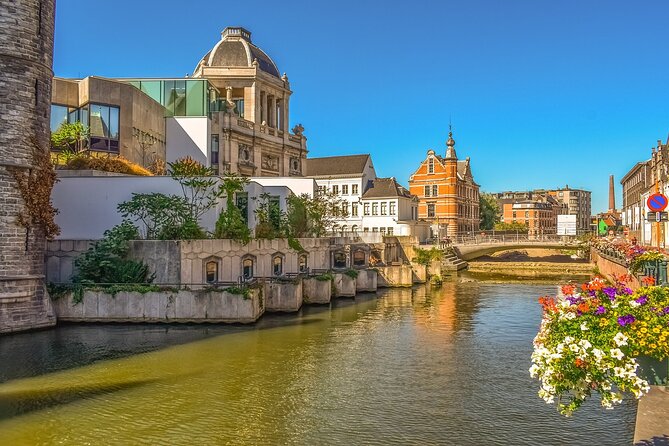
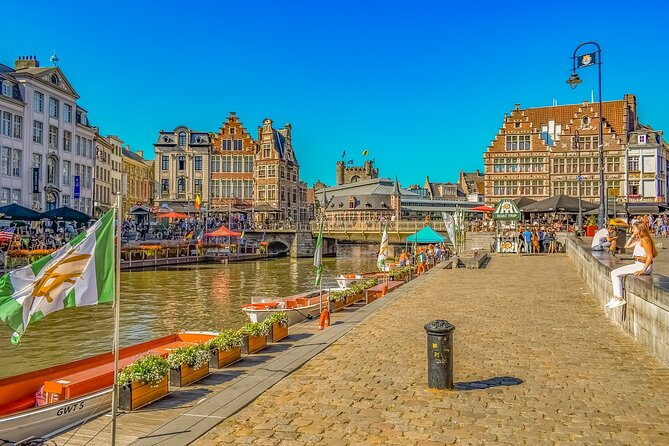
The medieval harbor is another highlight. This is where the city’s old trade life meets its present-day social life, with students, residents, and visitors gathering around the historic waterfront. I like this part because it keeps Ghent from feeling like a museum display. The old buildings still form part of an active city.
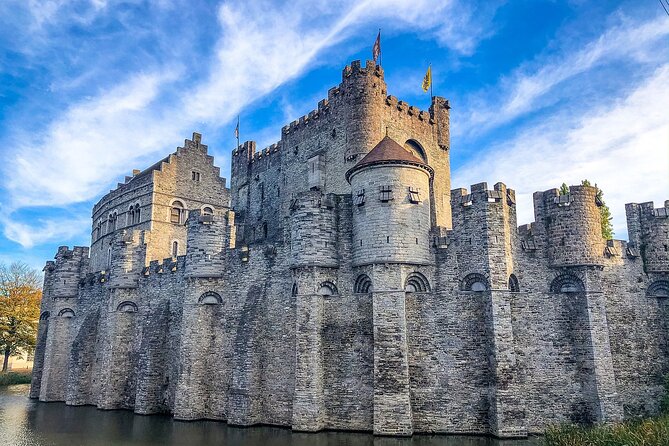
The most dramatic stop is the fortress of the Counts of Flanders, a large medieval stronghold that once served as the residence of the counts. Its thick walls and defensive shape give the city’s political story a physical form. Instead of hearing only about medieval rulers, you can see the kind of building that protected them and projected their authority.
Ghent is likely to appeal most if you enjoy architecture, politics, and city history. It has a more lived-in feel than Bruges, and the student presence adds energy. The tradeoff is that the sights are spread across a larger center, so the walking can feel brisk, especially if the guide is keeping the group together.
What the guided style feels like in Ghent
The strongest part of the tour for many people is the amount of information. Bruno was praised for giving a thorough presentation about Brussels, Ghent, Bruges, and Belgium, while Stefan was credited with knowing the details of the buildings and local history.
That depth is useful if you want context rather than a list of names. You may hear about the Counts of Flanders, the city’s medieval wealth, its churches, and the way Ghent developed around its harbor. The tour is designed to connect the sights, not simply point at them.
The style is not intimate for everyone. One account described a guide speaking through a microphone while the group followed with headsets. That system can make it easier to hear in a busy street, but it can also feel like a moving lecture. You may have fewer chances to ask questions or chat with the guide than you would on a small walking tour.
If you like a clear flow and plenty of facts, this approach should work well. If you prefer spontaneous conversation, frequent stops, and a guide who adjusts the route to your interests, the large-group structure may disappoint.
More things to do in Brussels:
- Brussels: Atomium Entry Ticket with Design Museum Ticket
★ 4.4 · 9,254 reviews - From Brussels: Bruges & Ghent Day Tour – 2 Fairytale Cities
★ 4.7 · 8,242 reviews - Choco-Story Brussels: Chocolate Museum Entrance with Tasting
★ 4.3 · 4,883 reviews - Brussels: Hop-On Hop-Off Bus Tour
★ 4.0 · 4,016 reviews
Lunch and the move to Bruges
The schedule includes lunch in Bruges before the afternoon sightseeing begins. The meal itself is not described as included, so plan to pay separately unless your booking details say otherwise.
Lunch is an important part of the day because Bruges comes after a full morning in Ghent. You will want enough time to eat without rushing, but you should also protect time for the city’s main sights. Since the tour includes independent exploration, you may have some choice in how you use the break.
This is also a good point to decide what matters most to you in Bruges. You could focus on the guided route, save time for photographs, look for a local beer, or use the free period for a canal trip. You probably will not be able to do everything slowly, so choose one or two priorities.
Bruges: Canals, beguines, and medieval trade
The Bruges portion also allows about five hours. It begins with a photo stop near Minnewater, often called the Lake of Love. The setting gives you a quick visual introduction to Bruges, with water, old buildings, and a more romantic mood than the grand civic spaces of Ghent.
The next stop is the Beguinage, a quiet historic complex connected with the beguine movement. These women lived in religious communities without taking the same vows as nuns. The site offers a calmer view of medieval life and gives the afternoon some variety after the busy city center.
Your guide is expected to explain Bruges from the Viking Age through its medieval trading period and eventual decline. That timeline helps explain the city’s appearance. Bruges became wealthy through trade, but as waterways changed and commercial routes shifted, its importance faded. The preserved center you see today is partly the result of that loss of power.
The route aims to cover the city’s headline sights. These include the Basilica of the Holy Blood, the Bell Tower, the Church of Our Lady, and St. John’s Hospital. Each represents a different part of Bruges: religious devotion, civic pride, art, charity, and medieval urban life.
The Basilica of the Holy Blood is a compact but important church in the historic center. The Bell Tower is one of Bruges’ best-known symbols, while the Church of Our Lady adds another major religious landmark to the walk. St. John’s Hospital helps show how care for the sick and poor was organized in the medieval city.
Bruges is easier to photograph than Ghent, but do not mistake its beauty for simplicity. The city’s canals, churches, merchant buildings, and old institutions all connect to its former commercial role. The guide’s historical explanation is valuable here because the streets alone can make Bruges seem like a pretty stage set.
Canal boat option and free time
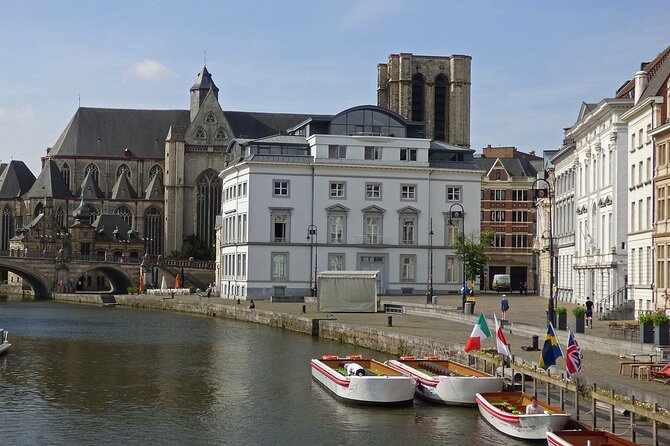
You may have the chance to take a boat along Bruges’ narrow canals. This is an optional opportunity, not a guaranteed included admission, so ask the guide about timing and cost on the day.
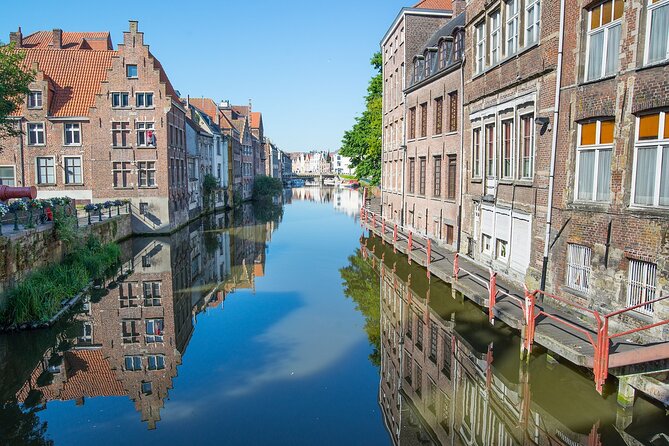
A canal trip can be a pleasant change after hours of walking. From the water, you see the city from a lower angle, with bridges and façades compressed into one view. It is also an efficient way to rest while still sightseeing.
The catch is time. Bruges offers many appealing distractions, and a boat ride may compete with independent exploration, shopping, or a longer look at one of the churches. I would choose the boat if this is your only visit to Bruges and the schedule allows it. If you are more interested in local food, beer, or a museum, use the same free period for that instead.
One person asked to explore independently during the Bruges stop and was allowed to do so. That flexibility is a real benefit, particularly if you have already heard enough commentary and want to set your own pace. Stay alert to the meeting time, since the bus cannot wait indefinitely for late arrivals.
Walking, group size, and the pace of the day
You should expect a lot of walking. The route includes large churches, public squares, a fortress, a harbor, canals, the Beguinage, and several historic streets. Most travelers can participate, but the supplied information does not promise a fully accessible route or detail the amount of standing and uneven pavement.
The stated group limit is 40 people. One experience described a group of 55, so group size may not always feel as personal as the published limit suggests. A larger group can slow street crossings and make it harder to hear, especially when using a microphone and headsets.
There is a clear choice here. You gain efficient transport, a fixed route, and a guide who organizes the day. You give up some freedom and personal attention. I would choose this arrangement if you want the major sights explained and do not want to manage the logistics yourself.
Is $111.75 a fair price?
At $111.75 per person, the value depends on what you want from the day. You are paying for round-trip transportation from Brussels, a guide-led visit to two major cities, and the convenience of a single organized schedule.
That price makes sense if you are staying in Brussels and have only one open day for Flanders. Separate train tickets, local transport, and two self-guided visits may cost less, but they also require planning and leave you responsible for keeping the day on track.
The tour is less compelling if you already know Ghent and Bruges or want long, unstructured time in either city. Admission to the listed stops is described as free, but lunch, optional canal boating, and personal purchases are not clearly included. Budget for those separately.
The high marks for transport, history, and the beauty of both cities support the price. The weaker points are the possible large group, bilingual pacing, and lecture-like delivery. In plain terms, you are buying coverage and convenience, not a private guide.
Who should book this Ghent and Bruges tour?
I would recommend it for a first visit to Belgium, especially if Brussels is your base and your schedule is tight. It suits you if you want to see the major landmarks, hear the political and religious background, and return to Brussels without changing trains.
It is also a good match for people who enjoy architecture and history. Ghent gives you churches, civic buildings, a harbor, and a fortress. Bruges gives you canals, medieval religious sites, and a compact old center that is easy to recognize in photographs.
You may want another option if your ideal day includes long café stops, detailed museum visits, or constant interaction with a guide. The pace is full, and the amount of information can feel heavy if you prefer to wander without commentary.
The tour is booked, on average, 42 days ahead, which suggests that planning early is sensible during popular travel periods. The experience is non-refundable and cannot be changed for any reason, so check your Brussels arrival plans carefully before paying. If poor weather cancels the outing, you are offered another date or a full refund. The same applies if the minimum number of participants is not reached.
Final verdict: A strong first look, with a busy schedule
I would book this tour if I had one day for Ghent and Bruges and wanted a reliable overview rather than a slow, personal visit. The best features are the broad route, the strong historical commentary from guides such as Bruno and Stefan, and the easy coach transport between cities.
I would approach it with realistic expectations. You will walk a lot, spend much of the day with a group, and may hear commentary in more than one language. But for $111.75, the chance to compare Ghent’s working medieval grandeur with Bruges’ canal-lined old center is a solid use of one Brussels day.
FAQ
Where does the tour start?
The tour starts at Bd de Berlaimont 18, 1000 Bruxelles, Belgium, at 9:00 a.m.
Where does the tour end?
The activity ends back at the original meeting point in Brussels.
How long does the tour last?
The full experience lasts approximately 10 hours.
Which cities are included?
The tour visits Ghent and Bruges, both from Brussels.
Is the tour offered in English?
English is listed as an available language. One account described commentary in English and French, so confirm the language arrangement if that matters to you.
Can I cancel for a refund?
No. The experience is non-refundable and cannot be changed for any reason. If the operator cancels because of poor weather or because the minimum number of participants is not reached, you will be offered another date or a full refund.
Just added in Brussels
- Transfer from BRU Airport to Brussels city (any hotel or address)★ 5.0 · 1 review
- Standard vehicle from Brussels airport to city of Antwerp★ 5.0 · 4 reviews
- Standard Minivan from Brussels airport to city of Antwerp★ 5.0 · 1 review
- Private transfer from BRU Airport – Brussels GO BACK MB V-CLASS 7 PAX★ 5.0 · 2 reviews
- Private transfer from Brussels Airport to Brussels city Business car★ 5.0 · 1 review
- Transfer Brussels Airport -> Antwerp MB V-CLASS 7 PAX★ 5.0 · 1 review
- Private transfer from BRU Airport to Bruges with Mercedes V class 7 pax★ 5.0 · 1 review
- Private transfer from BRU Airport to Bruges with luxury limousine 3 pax★ 5.0 · 1 review
Bruges and Ghent Day Trips, compared.
From Brussels: Guided Day Trip to Bruges and Ghent
Read our review →
Bruges and Ghent – Belgium’s Fairytale Cities – from Brussels
Read our review →
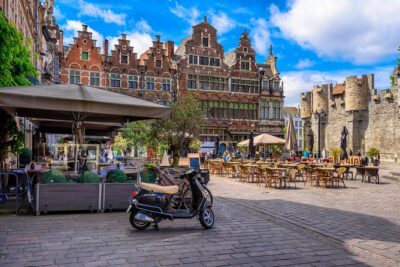
Excursion to Bruges and Ghent by bus from Brussels
Read our review →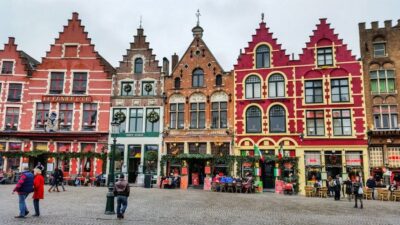
From Brussels: Bruges and Ghent Full-Day Trip by Train
Read our review →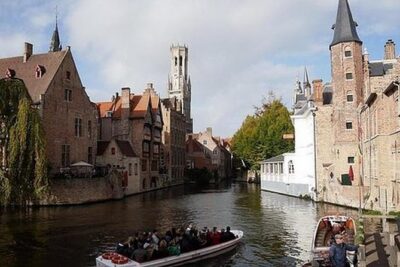
Private Tour: Ghent and Bruges From Brussels Full Day
Read our review →
Private tour : Treasures of Flanders Ghent and Bruges from Brussels Full day
Read our review →Private Tour: Ghent and Bruges From Brussels Full Day
Read our review →Browse the lists this tour appears in