
Reviewed · WALKING TOURS
Private Guided Historical Walking Tour in Bruges Belgium
Bruges rewards a slower look. This private walking tour links the city’s grand squares, medieval buildings, quiet courtyards, and canals while a local guide explains how Bruges became a major trading center. I like the private format, which lets your group ask questions and adjust the pace, and I like the guides’ personal connection to the city, especially local-born guides such as Raphael and Koen. The route also covers many major sights in one compact outing.
The main consideration is price: at $118.82 per person, this is a serious investment for a 2.5-hour walk, especially for a larger group. You are paying for personal attention and a guide-led route rather than admission to paid attractions, since every listed stop is visited without an included entrance ticket.
In This Review
- Key points to know before booking
- Why a private walk can make Bruges easier to understand
- The Markt and Belfort: Bruges begins in public view
- Gruuthusemuseum and Sint-Janshospitaal: Wealth beside care
- The Beguinage and Minnewater: Quiet Bruges away from the squares
- De Halve Maan and the almshouse: Beer and ordinary lives
- Onze-Lieve-Vrouwekerk and the romantic canal route
- Burg Square brings the story back to city power
- What the guides add to the experience
- Price, group size, and practical value
- Who will get the most from this Bruges walk?
- Should you book the private historical walking tour?
- FAQ
- How long does the private Bruges walking tour last?
- Where does the tour start and end?
- Is the tour private?
- Is the tour offered in English?
- Are admission tickets included?
- How far in advance can I cancel for a full refund?
Key points to know before booking
- Private, question-friendly guiding: Only your group takes part, so the guide can respond to your interests instead of delivering a fixed speech.
- A strong first-day introduction: The route covers the Markt, Belfort, Beguinage, Minnewater, Burg Square, and other central sights.
- Local guides add personal color: Koen, Raphael, Dimitri, and Vigor Clius are praised for storytelling, local knowledge, and enthusiasm for Bruges.
- No paid admissions are included: The tour focuses on exterior views, historical explanation, and selected interior spaces such as the almshouse.
- Moderate walking is required: The experience lasts about two and a half hours and moves through much of central Bruges.
- Pickup may simplify the start: You can meet at the Markt or arrange pickup at a downtown hotel.
Why a private walk can make Bruges easier to understand
Bruges is compact, but its story is not. You can admire the canals and stepped gables in an hour, yet miss why the city mattered so much in medieval Europe. This tour gives those pretty views a useful framework.
The opening focus is Bruges as a trading hub. That matters because the city was not built simply as a picturesque retreat. Its wealth grew from commerce, merchants, civic power, religious institutions, and the movement of goods and money. A good guide can connect the buildings around you to that larger story.
The private setup is especially useful for families, couples, and small groups with different interests. The available feedback describes guides who answer questions rather than cling to a prepared speech. Koen is praised for adapting to younger children, while Dimitri, who also works as an elementary school teacher, is described as a gifted storyteller.
That flexibility has real value. If you care about medieval trade, the guide can spend more time on it. If your group wants local recommendations, guides such as Koen have offered suggestions for planning the rest of a Bruges visit. If you prefer stories about daily life, the stops at the hospital, Beguinage, and almshouses give the tour a more human scale.
The drawback is that a private guide cannot change the basic walking demands. You should be comfortable on your feet for the full outing. The route is central and manageable for someone with moderate fitness, but this is not a ride-based sightseeing experience.
More History Tours in Bruges
- Historical Walking Tour: Legends of Bruges
★ 5.0 · 2,541 reviews - THE Storytelling Tour of Bruges | First Day Must | History & Tips
★ 5.0 · 925 reviews - Historical Walking Tour: The Story of Bruges – by Legends
★ 4.7 · 483 reviews
The Markt and Belfort: Bruges begins in public view
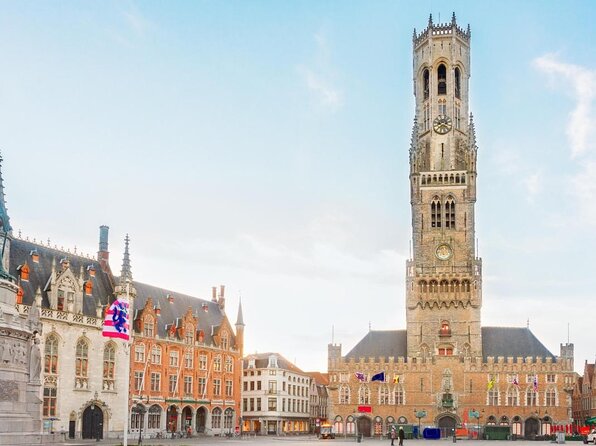
The tour starts at the Markt, the city’s central market square. Plan on about 20 minutes here, where the guide introduces Bruges and explains its role in medieval trade.
This is a smart starting point. The Markt gives you a broad view of Bruges as a civic and commercial center, not just a collection of attractive old buildings. Your guide can help you read the square as a place shaped by business, public life, and city government.
From there, you walk to the Belfort, the medieval belfry. The visit lasts about 10 minutes and focuses on the market halls and the tower’s role in the city.
The Belfort is one of Bruges’ most recognizable landmarks, but this tour does not list a climb or paid admission. You should expect an exterior and historical explanation rather than a tower ascent. That distinction matters if climbing the Belfry is one of your main goals. You may want to arrange a separate visit for that.
Still, hearing how the tower fit into medieval city life gives the building more meaning. It was not merely a photogenic bell tower. It represented civic authority and the importance of the market around it.
Gruuthusemuseum and Sint-Janshospitaal: Wealth beside care
The next stop is the Gruuthusemuseum, where the guide discusses one of Bruges’ most important medieval families. The planned stop lasts about 10 minutes and includes a short break with access to a toilet.
The Gruuthuse name offers a way to talk about social power and wealth in Bruges. A family-centered stop balances the earlier focus on markets and trade. You get a sense of how prosperous households shaped the city and how private fortunes were tied to public life.
The museum itself is not listed as an included admission, so treat this as a guided look at the site and its story. If you want to tour the museum’s collections, that would require separate planning.
At Sint-Janshospitaal, the group pauses for another 10 minutes. Here the subject shifts to sick care in a hospital dating from the 12th century.
This is one of the route’s more useful changes of pace. Bruges can easily become a parade of wealthy merchants and beautiful facades. The hospital brings attention to illness, care, charity, and the people who needed help. It also shows how religious and civic institutions supported daily life in the medieval city.
The short timing means you will receive an introduction rather than a full museum visit. That is fine if you want a broad city tour. It may feel brief if you are especially interested in medieval medicine or the hospital’s art and collections.
The Beguinage and Minnewater: Quiet Bruges away from the squares
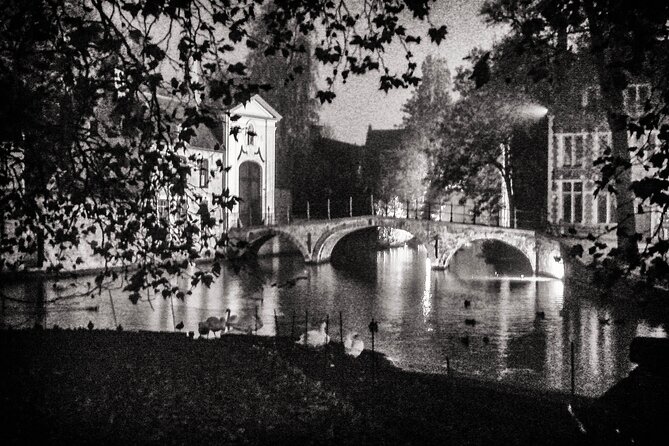
The Princely Beguinage Ten Wijngaarde is scheduled for about 15 minutes. This peaceful site is associated with a community of women who lived together for more than 800 years.
The Beguinage adds a different kind of history. Instead of merchants, civic leaders, or hospital care, you learn about a long-lived women’s community and the way its residents organized their lives. The setting also offers a welcome pause from the more crowded central squares.
A guide can make the Beguinage more than a quick photo stop by explaining the community’s purpose and place in Bruges. The allotted time is not long, so you should expect an overview rather than a slow, detailed visit to every corner.
The route then reaches Minnewater Lake for around 10 minutes. Here, the point is the view and the atmosphere.
This is a classic Bruges pause: water, old structures, and a calmer setting. I like that the tour does not treat the city as one continuous sequence of grand monuments. The lake gives you a chance to look around and enjoy Bruges without a lecture every second.
Because the stop is short, weather can affect how much you enjoy it. In poor conditions, the view may be less inviting, though one guide has been praised for making the most of a difficult-weather day. Wear sensible shoes and bring protection from rain if the forecast calls for it.
More Walking Tours in Bruges
- Bruges: Small Group Boat Cruise and Guided Walking Tour
★ 4.8 · 4,102 reviews - Bruges: Walking Tour, Canal Boat Trip w/Beer Tasting Option
★ 4.4 · 2,759 reviews - Guided boat trip and walk
★ 4.5 · 703 reviews - Bruges: Guided Walking Tour
★ 4.5 · 682 reviews
De Halve Maan and the almshouse: Beer and ordinary lives
At De Halve Maan Brewery, the guide spends about 10 minutes explaining one of Bruges’ two city breweries and the underground beer pipeline.
This is a particularly memorable detail because it connects a familiar Belgian pleasure, beer, with modern city engineering and local business. The tour does not include a brewery tasting or a production visit, so do not book it expecting a full brewery tour. Instead, you get the story behind the site and the pipeline.
That short explanation can be useful when you later pass breweries or order a local beer. It gives you a little context without taking over the walking route.
The almshouses are one of the more unusual stops. The group enters a 15th-century almshouse and sees what lies behind the facades. The stop lasts about 10 minutes.
This is where the tour moves beyond the best-known postcard views. Bruges is famous for its grand architecture, but the almshouse offers a look at housing and charity for people who lived with fewer resources. Seeing an actual interior makes the city feel less like a preserved stage set.
The stop is brief, so the guide’s explanation does much of the work. I would pay close attention here, since the small doorway and plain rooms may be easy to overlook without someone pointing out why they matter.
Onze-Lieve-Vrouwekerk and the romantic canal route
At Onze-Lieve-Vrouwekerk, the guide spends around 10 minutes telling the story of the Church of Our Lady.
The church is among Bruges’ major landmarks, and the stop adds a religious dimension to the tour. You can expect a historical introduction and a look at the building rather than a long interior visit or a dedicated art tour. As with the other stops, no admission fee is included.
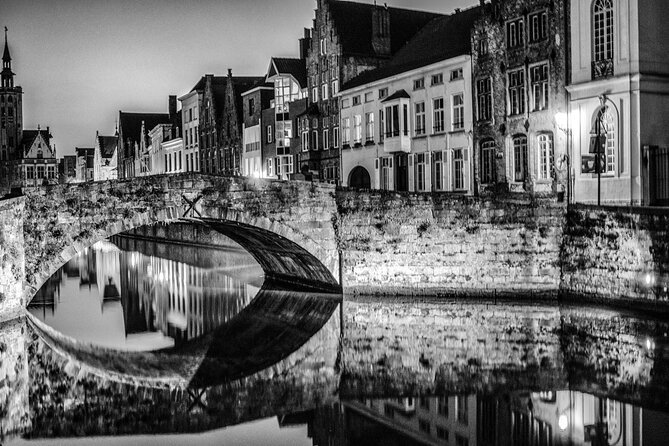
The route continues toward the Rosary Quay after crossing the Boniface Bridge. This section takes about 10 minutes and is designed for atmosphere as much as explanation.
Boniface Bridge and the quay are among the city’s most photogenic spots. The water, narrow lanes, and old facades create the Bruges many people picture before arriving. Yet the route is more satisfying because you have already heard about trade, care, faith, brewing, and housing. The romantic view now has some social and historical context behind it.
The name Rosary Quay suggests a charming waterfront, but keep your expectations practical. Ten minutes is enough for a look, a few photographs, and a short explanation. It is not enough for an unhurried canal-side stroll.
Burg Square brings the story back to city power
The tour ends at Burg Square, about 200 meters from the starting point. The scheduled time here is around 10 minutes.
Burg is described as one of the city’s oldest and most beautiful squares. It makes sense as the final stop because it brings the tour back to public authority and the civic heart of Bruges. After seeing the market, religious sites, a hospital, a brewery, and private or charitable housing, you finish in a space that helps tie the city’s institutions together.
Ending close to the Markt is convenient. You are not left at an unrelated edge of town, and the short distance between the ending point and the start makes it easy to continue sightseeing, find lunch, or return to your hotel.
The tour is not designed to provide long visits inside every major building. Its strength is the connected walk: you see a lot of Bruges while receiving enough explanation to understand how the pieces relate.
What the guides add to the experience
The strongest part of this experience is the human guide. Several guide names appear in the feedback, including Koen, Raphael, Dimitri, and Vigor Clius.
Koen receives especially strong praise for his historical background, map-making, patience, and willingness to answer questions. He is also praised for taking extra time and tailoring the walk to the group. That combination is useful if you want more than dates and architectural labels.
Raphael is described as born and raised in Bruges. His local connection appears to shape the experience through personal anecdotes and pride in his hometown. If you value a sense of place, a guide who has lived in Bruges all his life can add details that a strictly scripted tour might miss.
Dimitri’s teaching background is another practical strength, particularly for families. A guide who is used to explaining ideas to children may be better at keeping younger members involved.
Vigor Clius is also praised for making medieval Bruges come alive and pointing out details that are easy to miss. That is important in a city where small carvings, doorways, bridges, and changes in street layout can matter as much as the big monuments.
The guide assigned to you may vary, so you should not assume you will receive one particular person. Still, the repeated praise centers on the same qualities: local pride, historical depth, patience, and storytelling.
Price, group size, and practical value
The price is $118.82 per person. Since the tour is private, the value depends heavily on the size of your group.
For one or two people, the cost is high compared with a standard group walk. For a family or group of friends, the per-person expense may feel more reasonable because you are buying a private guide for the whole party. Group discounts are offered, though the exact terms are not provided.
The tour lasts approximately two hours and 30 minutes. That is enough time to cover the central highlights without using an entire day. If you have only one day in Bruges, this can help you get oriented quickly. One particularly useful tip is to take it early in your stay if possible, since the guide may offer local suggestions that help you plan the rest of your visit.
No admission fees are listed for the stops. This keeps the walk simple, but it also means you should budget separately if you want to enter paid attractions such as museum interiors or climb the Belfort.
Pickup is offered from a downtown hotel, or you can meet at the Markt. The activity is available in English, takes place Monday through Sunday between 10:00 a.m. and 3:30 p.m., and ends back near the starting point.
You receive booking confirmation at the time of reservation. Free cancellation is available up to 24 hours before the start time. Changes or cancellations made less than 24 hours ahead are not accepted for a refund.
Who will get the most from this Bruges walk?
I would recommend this experience to you if you want a private introduction rather than a self-guided look at Bruges. It suits first-time visitors, families, couples, and small groups who enjoy asking questions.
It is also a good fit if you have limited time. The route covers a wide set of central landmarks and gives you a working sense of the city in one morning or afternoon.
History fans should find plenty to enjoy, especially in the discussions of medieval trade, the Gruuthuse family, hospital care, the Beguinage, and the almshouse. You will not receive a full academic treatment of each subject, but the range is impressive for a short walk.
You may want something else if your main goal is entering museums, climbing the Belfort, tasting beer, or spending long periods at individual monuments. This tour moves at a broad sightseeing pace. Its purpose is to connect Bruges, not to replace every separate attraction.
Should you book the private historical walking tour?
Book it if personal guiding matters to you and your group wants to understand Bruges, not just photograph it. The combination of major squares, quiet religious and charitable sites, canal views, and local storytelling gives the city more shape.
The price makes the most sense for a group that can share the private experience. I would also choose it near the start of your Bruges visit, when the guide’s recommendations can still help with the rest of your plans.
Skip it if you prefer a low-cost group walk or want extended time inside museums. But if you value a local guide who can answer questions, adjust the focus, and point out details beyond the postcard views, this is a strong way to spend two and a half hours in Bruges.
FAQ
How long does the private Bruges walking tour last?
The tour lasts approximately 2 hours and 30 minutes.
Where does the tour start and end?
You can meet at the Markt in Bruges, or arrange pickup at a downtown hotel. The activity ends back at the meeting point area, close to the Markt.
Is the tour private?
Yes. Only your group participates in the activity.
Is the tour offered in English?
Yes. The tour is offered in English.
Are admission tickets included?
The listed stops have no admission ticket included. The experience focuses on walking, exterior views, historical explanations, and selected access such as entering a 15th-century almshouse.
How far in advance can I cancel for a full refund?
You can cancel at least 24 hours before the experience start time for a full refund. Cancellations or changes made less than 24 hours before the start time are not accepted for a refund.
Just added in Bruges
- Unknown Bruges: A Self-Guided Audio Tour to the Heart of the Medieval Metropole★ 5.0 · 1 review
- Tour of Historical Bruges knowing The Jerusalem Chapel★ 5.0 · 2 reviews
- Ticket Expo Body Worlds in Bruges, Belgium★ 4.5 · 11 reviews
- 2-Hour Private Walking Tour of Bruges★ 5.0 · 13 reviews
- 6 Hour Bruges Shore Excursion from Zeebrugge Cruise Port★ 4.5 · 23 reviews
- The Waffles ‘n Coffee Breakfast in Bruges Centre★ 4.5 · 9 reviews
- Explore the Instaworthy Spots of Bruges with a Local★ 5.0 · 3 reviews
- Surprise Walk of Bruges with a Local★ 5.0 · 1 review
Walking Tours, compared.

Small Group Boat Cruise and Guided Walking Tour
Read our review →
Walking Tour, Canal Boat Trip w/Beer Tasting Option
Read our review →
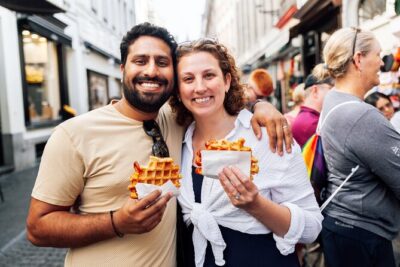
Historical Walking Tour with Chocolate & Waffle Tasting
Read our review →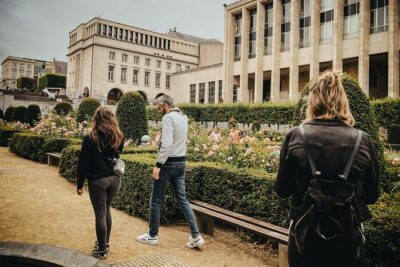
Brussels Walking and Tasting Tour (Beers,Chocolates&Fries/Waffle)
Read our review →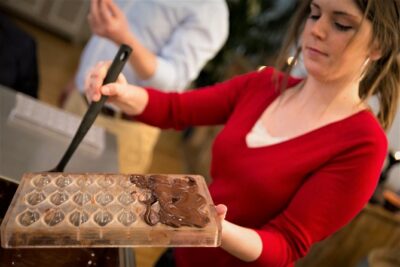
Browse the lists this tour appears in