
Reviewed · TICKETS
Bruges: Musea Sculpta | Monumental Sculptures Entry ticket
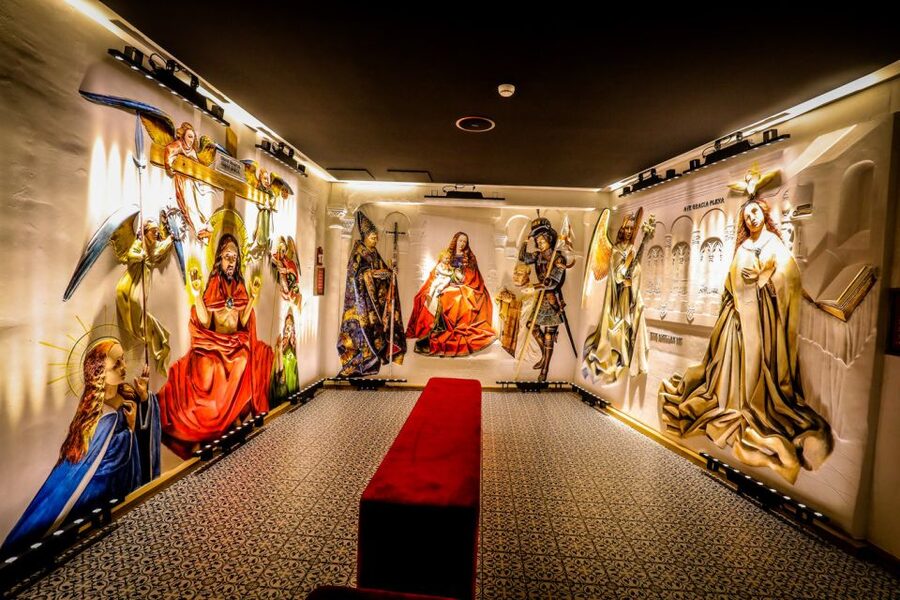
Art gets a new shape here. Musea Sculpta turns details from famous works by Bosch, Memling, and the van Eyck brothers into large wall sculptures, giving you a fresh way to read paintings you may already know. I especially like the 265-metre gallery and the excellent audio guide, which points out small details, symbols, and beliefs from the period. The quiet courtyard garden is another welcome touch, with sofas and a pleasant view.
The main thing to consider is the subject matter. Much of the exhibition focuses on Jesus, Christianity, and religious ideas from the Flemish primitives. If you expect a broad survey of Belgian art or lots of written panels, this may feel narrower than expected. The audio guide carries much of the explanation, so bring patience for listening rather than reading.
In This Review
- Key points to know before you go
- Entering De Pelikaan in central Bruges
- Why plaster changes the paintings
- The Garden of Earthly Delights in relief
- Hans Memling and The Last Judgement
- The van Eyck brothers and the Mystic Lamb
- A 265-metre route with room to pause
- What the audio guide adds
- The courtyard garden and the best pause
- Who will enjoy Musea Sculpta most
- Practical details that affect your visit
- Should you book Musea Sculpta?
- FAQ
- Where is Musea Sculpta located?
- How can I identify the entrance?
- What artworks are shown in relief?
- How long is the sculpture gallery?
- What material is used for the sculptures?
- Is an audio guide included?
- Which languages are available for the audio guide?
- Is Musea Sculpta wheelchair accessible?
- Are pets allowed inside?
- What time should I arrive?
Key points to know before you go
- Three famous works become relief sculptures: See scenes from The Garden of Earthly Delights, The Last Judgement, and The Adoration of the Mystic Lamb in raised plaster.
- The gallery stretches 265 metres: The long route gives you time to inspect details without rushing from one framed painting to another.
- Twenty-two tons of gypsum shape the exhibition: International sculptors from several countries made the 700 square metres of monumental work.
- The audio guide is central to the visit: It is available in English, Dutch, French, Spanish, and German, and helps explain symbols and period beliefs.
- The courtyard is part of the experience: You can pause on sofas, relax with a drink, and enjoy one of the site’s nicest views.
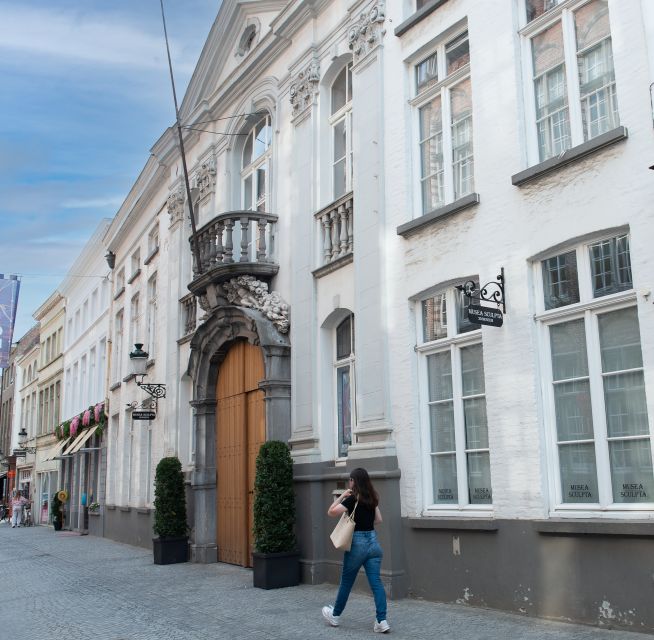
- The setting is historic and easy to spot: Look for the large white building, brown gate, and pelican statue on the roof.
Entering De Pelikaan in central Bruges
Musea Sculpta occupies the historic townhouse called De Pelikaan. You enter through an impressive gatehouse dating from 1703, then find the sculptures inside the building.
The outside clue is simple: look for a large white building with a brown gate and a pelican statue on the roof. That detail matters in Bruges, where ornate façades and narrow streets can make a small museum entrance easy to miss.
The building gives the visit a sense of place before you even reach the exhibition. This is not a modern white-box gallery designed only for art display. The old townhouse and gatehouse frame the experience, connecting the sculptures to Bruges itself.
A Dutch or English host or greeter is available. The attraction is also wheelchair accessible, which makes the indoor route more practical for many visitors. Pets are not allowed, so plan accordingly.
More things to do in Bruges:
- Bruges: Small Group Boat Cruise and Guided Walking Tour
★ 4.8 · 4,102 reviews - Bruges: Walking Tour, Canal Boat Trip w/Beer Tasting Option
★ 4.4 · 2,759 reviews - Historical Walking Tour: Legends of Bruges
★ 5.0 · 2,541 reviews
Why plaster changes the paintings
The central idea is direct but unusual: familiar paintings are recreated in relief, using gypsum rather than paint on canvas or wood.
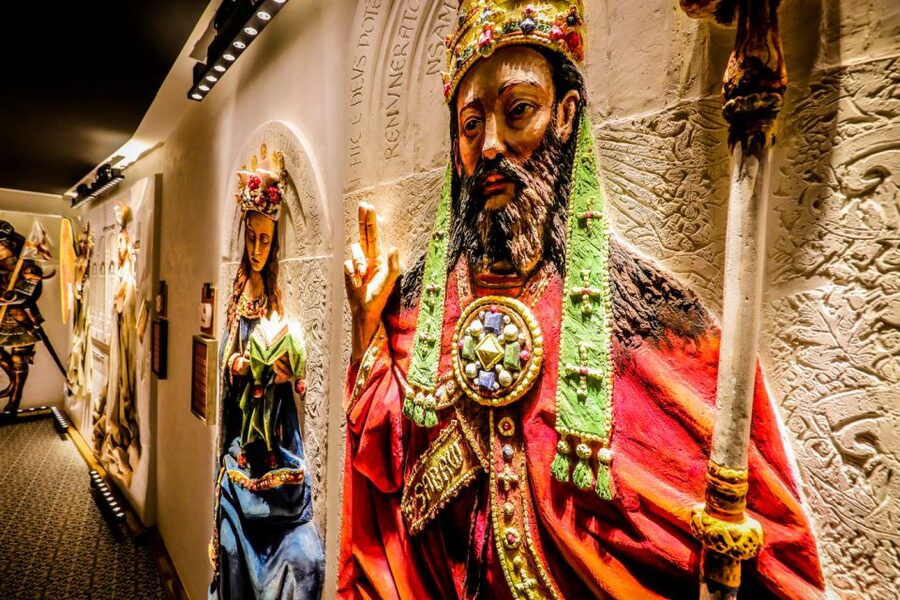
A flat image asks you to study color, line, and detail. A relief sculpture adds shadows, depth, and touchable-looking forms, although you should not touch the artwork. Figures and objects project from the wall, making small details appear much larger than they do in the original works.
That change in scale is the point. A tiny creature, face, or symbolic object that can disappear in a crowded painting gets its own physical presence. You may notice a unicorn, for example, or spot other details that would be easy to pass over in a normal museum.
The exhibition uses around 22 tons of gypsum across roughly 700 square metres of monumental sculpture. Artists from America, Belgium, Germany, Italy, Ukraine, Poland, Russia, and Spain worked on the pieces. The international group of sculptors gives the project a wider creative voice, even though the subject matter comes from the Flemish tradition.
I find this approach especially useful if you have already seen reproductions of these paintings and want to look at them again from another angle. It is not a replacement for seeing the original works. Instead, it acts as a large-scale visual aid, making composition and tiny details easier to grasp.
The Garden of Earthly Delights in relief
One of the major sections presents The Garden of Earthly Delights by Jheronimus Bosch.
Bosch’s work is famous for its strange figures, crowded scenes, odd creatures, and moral puzzles. In a standard reproduction, there can be too much happening at once. The relief format gives you a reason to slow down and examine individual parts.
The sculpture does not make Bosch simple. It makes his visual world more legible. Raised forms catch the light differently, and the enlarged details help you see how the picture is packed with human figures, animals, and symbolic action.
The audio guide is particularly useful here. It helps explain the beliefs of the period and offers background for details that might otherwise look merely bizarre. That context matters because Bosch’s images are not just a collection of weird pictures. They reflect religious concerns and ideas about human behavior.
You should not expect a full academic lecture. The audio guide is designed for a museum visit, with information you can follow at your own pace. I like that format because you can stop looking, listen, and then return to the wall sculpture with a clearer idea of what to seek.
Hans Memling and The Last Judgement
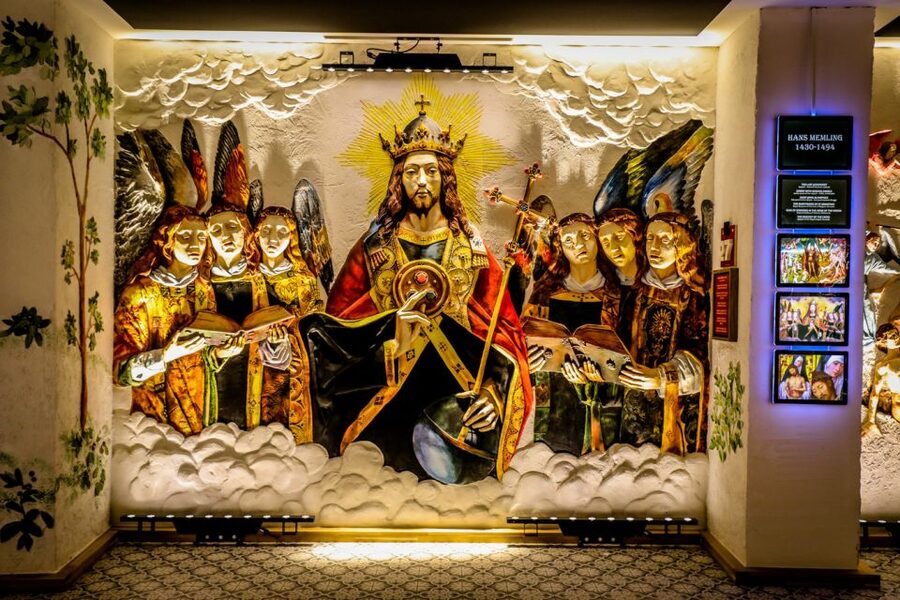
The route also brings you to The Last Judgement by Hans Memling.
This subject is firmly Christian, and the religious focus is impossible to miss. The work deals with judgement, salvation, punishment, and the fate of souls. If medieval and Renaissance religious art interests you, the sculpture offers a strong way to see how those themes were arranged.
The relief makes the scene feel more physical than a flat reproduction. Figures occupy different depths, and the enlarged forms encourage you to inspect the relationship between the parts of the composition.
If your taste runs mainly to secular scenes, portraits, or modern art, this section may feel heavy. That is not a flaw in the museum’s purpose, but it is an important expectation to set before you arrive. Musea Sculpta is built around Flemish masterpieces whose subjects are often deeply religious.
Written explanations appear to be limited compared with the amount of information delivered through the audio guide. You will get the most from this room if you use the guide rather than simply walking past the sculptures.
A few more options to weigh up in Bruges
- Bruges: Frietmuseum Entry Ticket
★ 4.2 · 652 reviews - Bruges: Historium Bruges Story and VR Ticket
★ 4.5 · 595 reviews - Historium Story + VR Ticket
★ 4.5 · 369 reviews - Bruges: Historium Bruges Medieval Experience Ticket
★ 4.3 · 220 reviews
The van Eyck brothers and the Mystic Lamb
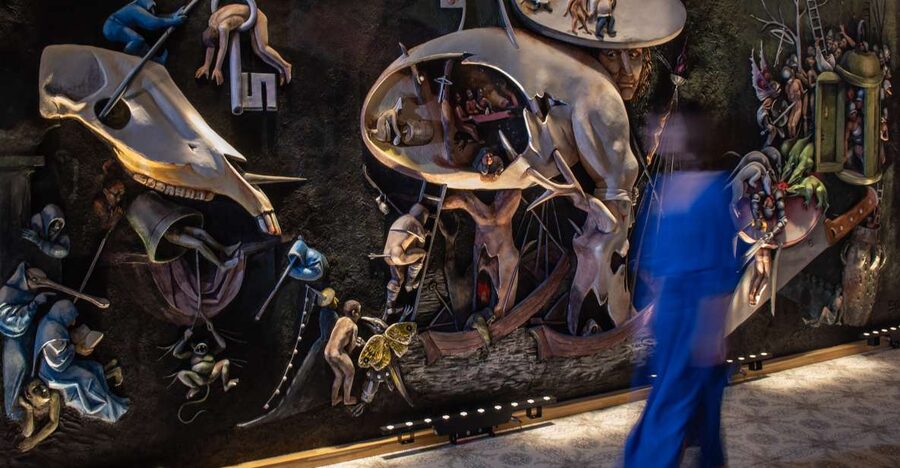
The third major work is The Adoration of the Mystic Lamb by the van Eyck brothers, also known as the Ghent Altarpiece.
This is another work filled with small details and religious meaning. In its original form, the altarpiece rewards close study, but the scale and complexity can make certain figures and symbols difficult to pick out. The monumental plaster version gives those details more room.
For me, this is where the museum’s concept makes the clearest sense. A relief sculpture can emphasize the arrangement of figures and allow you to inspect areas that might otherwise blend into the whole. You are encouraged to look closely instead of treating the painting as one grand image.
The audio guide adds background about the beliefs of the period. That is useful because religious symbols can be easy to misunderstand when viewed through modern eyes. Even a small object may carry a meaning that is not obvious at first glance.
The museum does not present these paintings as isolated works with no context. The audio experience links them to the world that produced them, though visitors looking for a large collection of original Flemish paintings should choose a traditional fine-art museum instead.
A 265-metre route with room to pause
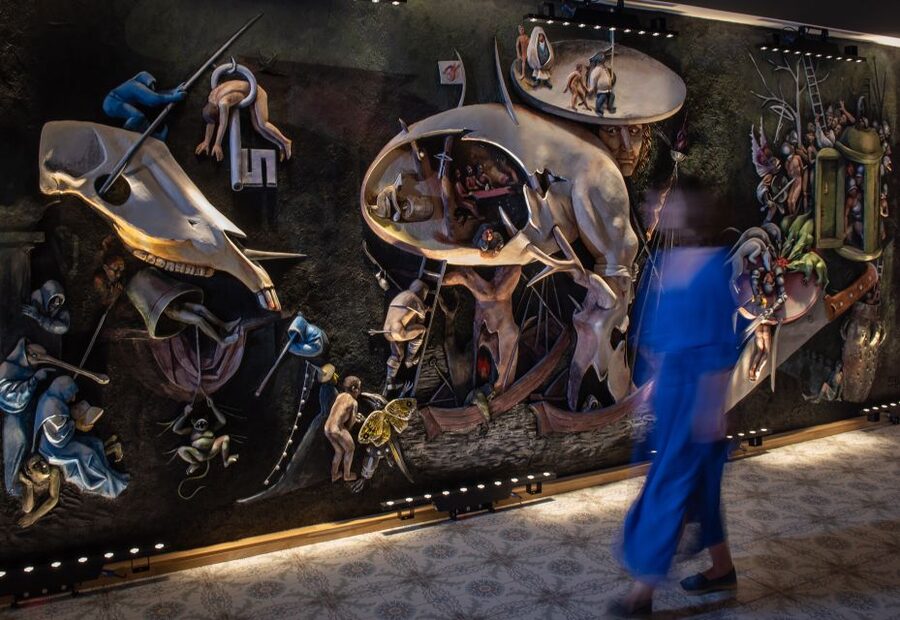
The exhibition runs through a gallery measuring 265 metres. That is long enough to give the visit a clear rhythm, but it is not a full-day attraction in the sense of a huge national museum with many separate collections.
The published admission is about $11 per person, and the ticket is valid for one day. At that price, I see the museum as a reasonably priced addition to a day in Bruges, especially if you enjoy art, unusual installations, or activities that do not depend on good weather.
The value comes from the combination of the monumental scale, the audio guide, and the unusual subject. You are not paying only to look at plaster on a wall. You are paying for a guided interpretation of three major works, presented in a form that changes how you see them.
Your pace will shape the visit. You can move steadily through the gallery, or spend more time with the sections that interest you. Sofas are available in every room, so you do not have to remain on your feet throughout the route.
Please arrive before 5pm. The activity is listed as valid for one day, with starting times based on availability, so check the schedule when choosing your ticket.
What the audio guide adds
The audio guide is not a minor extra here. It is the main way the museum explains what you are seeing.
It is offered in English, Dutch, French, Spanish, and German. You can listen at your own pace, which is helpful if one section interests you more than another. The guide points out small details and gives background on the ideas and beliefs of the period.
That makes the visit more satisfying than a silent walk through enlarged sculptures. Without explanation, some of the symbols may look decorative or strange. With the guide, you have a better chance of understanding why certain people, animals, and objects appear in the scenes.
I would choose the audio guide even if you normally prefer to read museum labels. The sculptures are large, but the meaning behind them is not always obvious. The available information seems weighted toward listening rather than extensive wall text, so visitors who want lots of written panels should adjust their expectations.
The audio format also lets you control the visit. You can pause between rooms, sit down, or replay a point without being tied to a group schedule. There is no indication of a fixed guided tour, and the experience is designed for independent visiting.
The courtyard garden and the best pause
The courtyard garden gives Musea Sculpta a useful break in the middle of the art.
After moving through religious scenes and dense visual detail, a seat outdoors can help you reset. The garden has sofas, and you can relax with a drink. Its view is described as one of the nicest at the site, so do not rush past it.
This is especially useful if you are visiting Bruges on foot. A short stop in a quiet courtyard can make the museum feel less like another item to check off and more like a pleasant pause in your day.
The garden is not presented as a separate attraction with a long list of features. Its value is simple: space to sit, a view, and a chance to talk or reflect after the audio guide. If you are visiting with someone who does not want to examine every sculpture, the garden also gives that person a comfortable place to take a break.
Wi-Fi is included as well, though the art and setting are the main reasons to visit.
Who will enjoy Musea Sculpta most
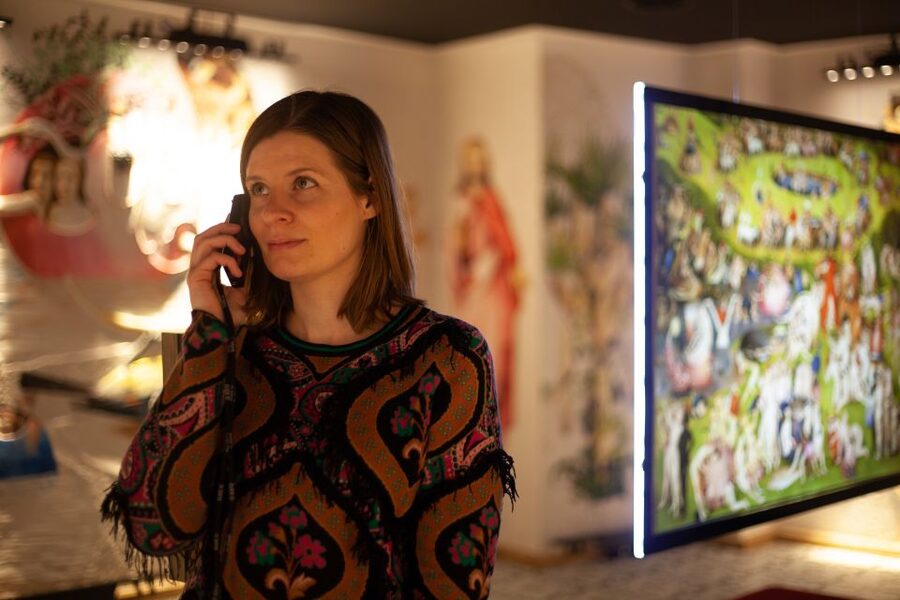
I would recommend this experience to you if you enjoy:
- Flemish art and medieval or Renaissance religious subjects
- Unusual ways of presenting familiar paintings
- Audio-guided museums where you set your own pace
- Close inspection of symbols, animals, and small visual details
- Short cultural visits with a quiet place to sit afterward
- Wheelchair-accessible indoor attractions in Bruges
It is also a good choice if you have already seen images of Bosch, Memling, or the van Eyck brothers but found them too crowded to study easily. The enlarged plaster scenes can help you understand the structure of the original paintings.
I would be more cautious if you want original paintings, a broad collection, or a museum with long written explanations in every room. One visitor expected something different and found the strong Christian focus surprising. That is a fair warning. The subject is not incidental. It shapes nearly the entire visit.
Families may find the odd creatures and enlarged figures entertaining, but the religious themes may not hold every child’s attention. The audio guide helps, though younger children may prefer a faster visit.
Practical details that affect your visit
Musea Sculpta is in Flanders, Belgium, within Bruges and inside De Pelikaan. Look for the white building, brown gate, and pelican on the roof.
The entrance includes the museum visit, audio guide, courtyard garden, sofas, and Wi-Fi. Audio languages are English, Dutch, French, Spanish, and German. The host or greeter can communicate in Dutch or English.
The attraction is wheelchair accessible. Pets are not allowed, so you will need to leave them elsewhere.
You can cancel up to 24 hours before the visit for a full refund, and a reserve-now, pay-later option is available. These policies are useful if your Bruges schedule is still changing.
The ticket costs about $11 per person and is valid for one day. For a modest fee, you receive a distinctive art experience rather than a conventional gallery visit. I would allow enough time to listen to the guide and use the courtyard, but I would not treat this as an all-day museum with dozens of separate collections.
Should you book Musea Sculpta?
Book it if you want to see famous Flemish paintings in a form you will not find elsewhere. The relief sculptures, strong audio guide, and courtyard garden make this more than a quick look at enlarged artwork.
Before booking, make sure you are comfortable with a mainly Christian subject. The museum’s focus is narrow, and visitors expecting broad Belgian art coverage or extensive reading material may be disappointed.
At around $11, I think Musea Sculpta offers good value for an art-minded stop in Bruges. It is unusual, accessible, easy to fit into a walking day, and rewarding when you take time to listen. If Bosch, Memling, or the van Eyck brothers interest you, this is a clever way to notice details that a flat reproduction often hides.
FAQ
Where is Musea Sculpta located?
Musea Sculpta is located in Bruges, Flanders, Belgium, inside the historic townhouse De Pelikaan.
How can I identify the entrance?
Look for a large white building with a brown gate and a statue of a pelican on the roof. The entrance is through the gatehouse from 1703.
What artworks are shown in relief?
The exhibition presents The Garden of Earthly Delights by Jheronimus Bosch, The Last Judgement by Hans Memling, and The Adoration of the Mystic Lamb by the van Eyck brothers in relief sculpture.
How long is the sculpture gallery?
The gallery is 265 metres long.
What material is used for the sculptures?
The monumental sculptures are made from gypsum, with about 22 tons used for the project.
Is an audio guide included?
Yes. An audio guide is included with the entrance ticket.
Which languages are available for the audio guide?
The audio guide is available in English, Dutch, French, Spanish, and German.
Is Musea Sculpta wheelchair accessible?
Yes, Musea Sculpta is wheelchair accessible.
Are pets allowed inside?
No. Pets are not allowed.
What time should I arrive?
You should arrive before 5pm. Starting times depend on availability, so check the schedule when booking.
Just added in Bruges
- Unknown Bruges: A Self-Guided Audio Tour to the Heart of the Medieval Metropole★ 5.0 · 1 review
- Tour of Historical Bruges knowing The Jerusalem Chapel★ 5.0 · 2 reviews
- Ticket Expo Body Worlds in Bruges, Belgium★ 4.5 · 11 reviews
- 2-Hour Private Walking Tour of Bruges★ 5.0 · 13 reviews
- 6 Hour Bruges Shore Excursion from Zeebrugge Cruise Port★ 4.5 · 23 reviews
- The Waffles ‘n Coffee Breakfast in Bruges Centre★ 4.5 · 9 reviews
- Explore the Instaworthy Spots of Bruges with a Local★ 5.0 · 3 reviews
- Surprise Walk of Bruges with a Local★ 5.0 · 1 review
Tickets, compared.
Atomium Entry Ticket with Design Museum Ticket
Read our review →


Browse the lists this tour appears in