
Reviewed · GUIDED
Guided tour of Bruges
Bruges rewards a slow first look. This Spanish-language walking tour links the city’s prettiest canals, squares, churches, and medieval lanes with clear stories about what you are seeing. I especially like the small group limit of 24 people and the finish at a certified artisan chocolate shop. The main consideration is that the meeting point and guide connection need care, since one booking report described difficulty finding the local guide.
I also like the price: $22.51 for roughly two to two and a half hours is fair for a guided introduction to central Bruges. You will not enter most of the landmarks, and food beyond the chocolate tasting is not included, so this works best as a city orientation rather than a full museum tour.
In This Review
- Key points at a glance
- Why this Bruges walk makes sense for a first visit
- Minnewater and the Begijnhof: a quiet opening
- Walplein and Stoofstraat: beer and medieval houses
- Gruuthuse and Saint John’s Hospital: wealth and care
- The Church of Our Lady and Michelangelo’s sculpture
- Tanners’ Square and the old guild district
- St. Bonifacius Bridge and the best canal views
- Burg Square: Bruges’ political center
- Chocolalino: a small but useful tasting stop
- What $22.51 buys you
- Timing, equipment, and practical planning
- Who should book this Spanish-language tour?
- Should you book it?
- FAQ
- Is the Bruges tour conducted in Spanish?
- How long does the tour last?
- Where does the tour begin?
- Where does the tour finish?
- Is the chocolate tasting included?
- Are meals and drinks included?
- Does the tour include entrance tickets?
- Are headphones required?
- Can I cancel for a full refund?
Key points at a glance
- Spanish-language city walk: A local professional guide explains Bruges in Spanish, with stories tied to the streets and buildings around you.
- A strong first route through Bruges: The walk connects Minnewater, the Begijnhof, Walplein, Stoofstraat, the canals, Burg Square, and other central sights.
- Small group of up to 24: Larger groups must use headphones, and you may use your own or buy a pair from the guide for €1.
- Chocolate with practical advice: The tour ends at Chocolalino, a certified artisan shop, with a tasting and tips for telling handmade chocolate from industrial chocolate.
- Useful local recommendations: The guide can suggest places to eat, drink, and shop for traditional Belgian chocolate.
- Flexible timing: The advertised duration is about two hours, but the operator says the walk can last about two and a half hours depending on the group and guide.
Why this Bruges walk makes sense for a first visit
Bruges is easy to admire and surprisingly easy to misunderstand. Its canals, stepped roofs, quiet courtyards, and grand squares can feel like a stage set unless someone explains how the city worked. This tour gives you that basic framework in Spanish, then places the sights in a sensible walking order.
You begin at Bargeplein, beside Katelijnparking on Bargeweg, and finish at Markt 20 in the heart of the city. That route matters. You start near Minnewater and the Begijnhof, then move through the old center before ending close to restaurants, bars, and shops.
The tour is mainly an outdoor sightseeing walk. Admission is free at each listed stop, but the plan is to explain the landmarks from outside rather than take you through every interior. If you want to visit the Church of Our Lady, Gruuthusemuseum, or another museum on your own, the guide’s explanations can help you decide where to spend extra time later.
The group cap of 24 is a sensible middle ground. It is not an intimate private walk, but it should be easier to hear than a large coach group. For groups larger than 24, radios and headphones are required. The tour offers headphones for €1, although bringing your own compatible pair may be useful.
More things to do in Bruges:
- Bruges: Small Group Boat Cruise and Guided Walking Tour
★ 4.8 · 4,102 reviews - Bruges: Walking Tour, Canal Boat Trip w/Beer Tasting Option
★ 4.4 · 2,759 reviews - Historical Walking Tour: Legends of Bruges
★ 5.0 · 2,541 reviews
Minnewater and the Begijnhof: a quiet opening
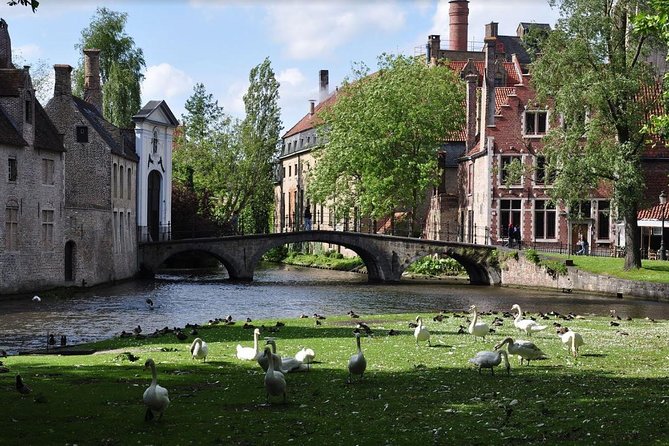
The first stop is Minnewater, often called the Lake of Love. The guide explains that the Dutch word minne can refer to both love and common or community use. In this setting, the more useful meaning is connected to shared waters, since this area once served the old port of Bruges and played a role in daily city life.
That small language lesson is a good example of what the walk does well. You get more than a photo stop. You learn how a place name can preserve an older connection between water, trade, and the city’s residents.
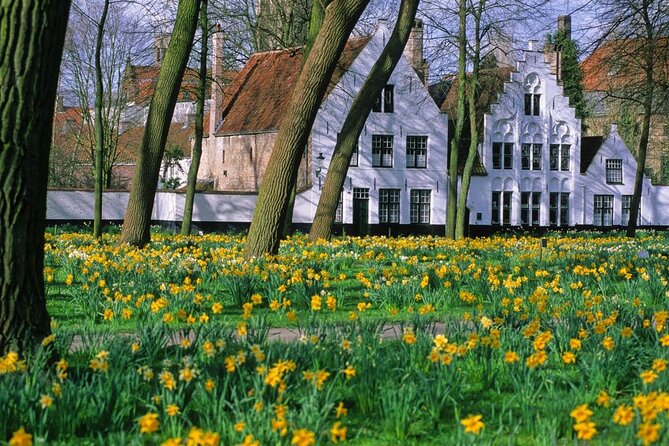
From Minnewater, the route continues to the Princely Beguinage Ten Wijngaarde. The white-painted buildings and enclosed setting offer a sharp change from the open water and busy city streets. The guide presents the beguinage as a medieval religious and social complex, and its UNESCO World Heritage status helps explain why it receives so much attention.
You have about ten minutes here, followed by time for photos from the small bridge. Keep your camera ready, but do not expect a long visit inside the complex. This portion is best for atmosphere and orientation, not a detailed architectural study.
Walplein and Stoofstraat: beer and medieval houses
At Walplein, the guide turns to Bruges beer. The square is a useful place to connect the city’s public life with its brewing tradition. You will hear the background while standing outdoors, so this is not a brewery tour or tasting session.
That distinction helps set expectations. If beer is a major reason you are visiting Belgium, you will need to arrange a separate brewery visit or tasting. Still, the explanation gives you a better sense of why beer belongs in the story of Bruges, rather than treating it as a generic souvenir.
The next stop, Stoofstraat, focuses on the city’s original medieval houses. The guide shows you how to identify older buildings, which is especially useful in a city where centuries of construction sit close together.
You will spend only about five minutes here, so the lesson is an introduction rather than a full architectural survey. Pay attention to the rooflines, façades, and proportions around you. After the tour, you can use that quick visual guide while exploring nearby streets on your own.
Gruuthuse and Saint John’s Hospital: wealth and care
At the Gruuthusemuseum, the guide discusses the Gruuthuse family, one of the most powerful families connected with Bruges. The stop takes place outside the museum, giving you a short introduction to the people who shaped the city’s social and political life.
This is one of the moments when the tour adds useful context to an impressive building. Without background, Gruuthuse can seem like another handsome medieval façade. With the family story, you begin to read it as a sign of wealth, influence, and status.
Next comes Saint John’s Hospital, where the guide explains how medical care worked in medieval Bruges. You spend about eight minutes outside the Old St. John’s Hospital.
That stop is valuable because it broadens the tour beyond palaces and pretty canals. Bruges was not only a trading center for wealthy families. It also needed hospitals, charitable care, and systems to help sick people. The guide’s explanation is brief, but it gives you a reason to look at the hospital as a working institution rather than just an old building.
A few more options to weigh up in Bruges
- Bruges: Choco-Story Chocolate Museum Guided Tour w/Tastings
★ 4.2 · 1,379 reviews - Bruges: Guided Rickshaw Tour
★ 4.9 · 1,199 reviews - Guided boat trip and walk
★ 4.5 · 703 reviews - Bruges: Guided Walking Tour
★ 4.5 · 682 reviews
The Church of Our Lady and Michelangelo’s sculpture
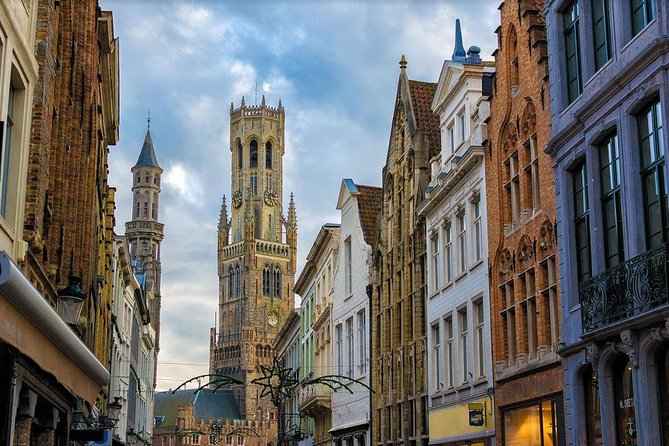
The Church of Our Lady appears near the hospital. The guide explains exterior details and discusses the white marble Virgin and Child by Michelangelo, which is inside the church.
You should note the limitation here: the tour does not include an interior visit or admission to see the sculpture at close range. The guide provides background from outside, which is helpful for a first look, but you may want to return independently if viewing the artwork is important to you.
This stop also illustrates the tour’s general approach. You get a broad introduction to many key sights rather than a long examination of one monument. That is a good trade for a first afternoon in Bruges, but less satisfying if you prefer extended museum or church visits.
Tanners’ Square and the old guild district
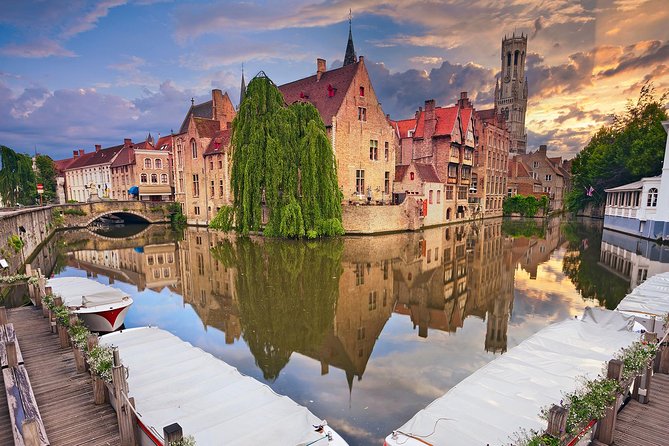
Huidenvettersplein, or Tanners’ Square, brings the route into the world of medieval trade guilds. The square forms part of Bruges’ old commercial center, and the guide explains how craft groups fit into city life.
The stop lasts about ten minutes. That gives you enough time to hear the main idea and look at the buildings around the square, though not enough for a specialized history of leatherworking or guild organization.
I like this section because it helps you notice the economic side of Bruges. The city’s beauty was supported by trades, markets, skilled workers, and organized commercial groups. If you keep that in mind, the old center feels less like a collection of attractive streets and more like a place built for work as well as display.
St. Bonifacius Bridge and the best canal views
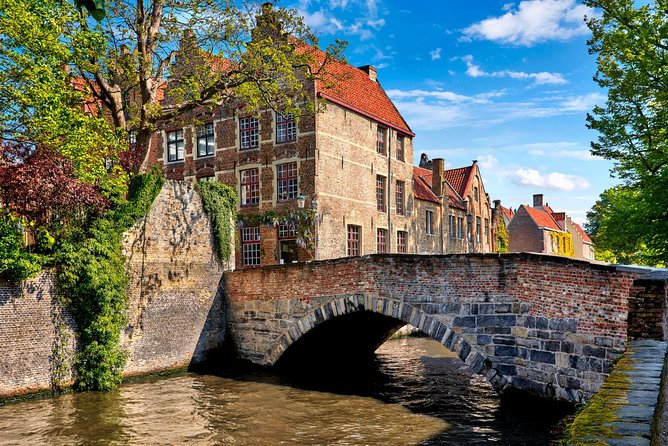
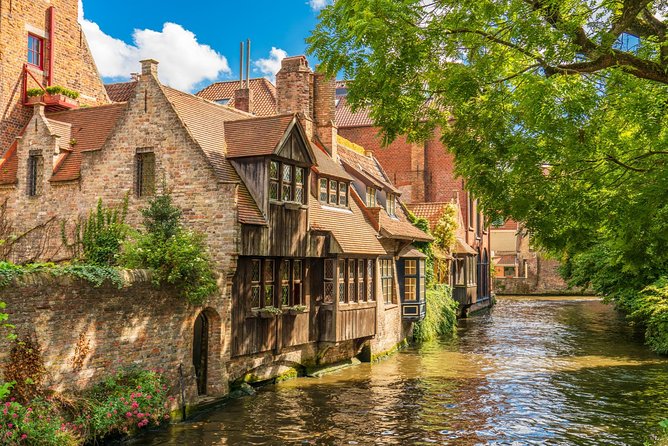
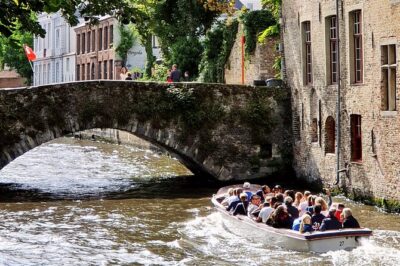
St. Bonifacius Bridge is one of the most photogenic stops on the route. The guide tells the legend associated with the bridge and leaves time for pictures.
This is a short stop, about five minutes, so do not expect a long folklore talk. The value is the combination of a memorable view and a story you can carry with you as you continue walking.
The route then reaches Quai du Rosaire, also known as Rozenhoedkaai. This is the classic canal viewpoint, with water, historic façades, and old bridges gathered into one compact scene. It is the sort of place that explains Bruges’ appeal in a single glance.
The tour suggests returning in the late afternoon or after dinner for the best memory of the city. That is practical advice. The walk may pass through during the daytime, but a second visit at a quieter hour can give the canal a different mood.
You are also near the departure area for boat trips through Bruges’ canals. A boat ride is not included, and the guide does not provide one, but the stop helps you decide if you want to add it later.
Burg Square: Bruges’ political center
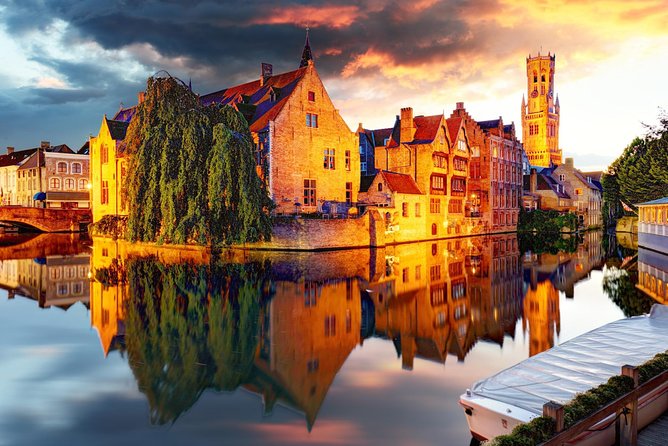
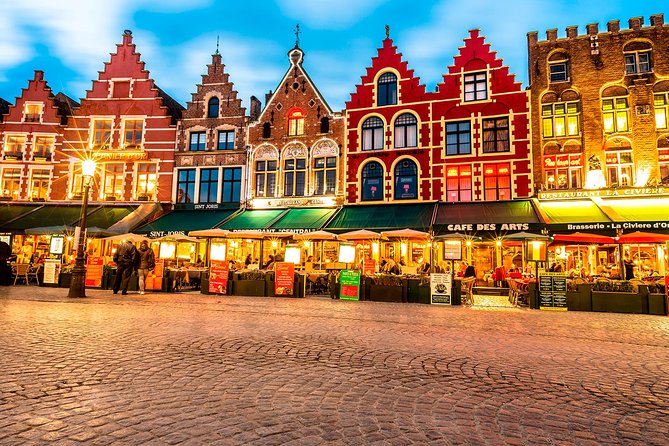
Burg Square is the final major sightseeing stop before the chocolate visit. The guide explains the buildings around the square and shows how it became Bruges’ political center.
The square gathers architecture from different periods and styles, reflecting more than a thousand years of city history. You have about fifteen minutes here, the longest scheduled stop on the walk, which makes sense. Burg is not just a place to take one photo. It is a good spot to compare façades and understand how civic power was displayed.
This is also where the tour becomes especially useful for planning the rest of your day. You finish nearby at Markt Square, so you are already in the right part of Bruges for lunch, dinner, drinks, shopping, or further sightseeing.
Chocolalino: a small but useful tasting stop
The final stop is Chocolalino, described as one of the few certified artisan chocolate shops in the area. You taste artisan Belgian chocolates, and the guide explains Bruges’ chocolate tradition.
The most useful part may be the advice on distinguishing handmade chocolate from industrial products. That is exactly the sort of practical detail that can save you from buying an attractive box based only on packaging. You can also ask the guide for suggestions on where to buy traditional chocolate after the tour.
Food and drink beyond this tasting are not included. The stop is short, about eight minutes, so treat it as an introduction rather than a full chocolate workshop or food tour.
If you have dietary concerns, the supplied details do not specify ingredients or alternatives. Ask the guide or shop directly before tasting if that matters to you.
What $22.51 buys you
At $22.51 per person, this is a reasonably priced introduction to central Bruges. The fee covers a Spanish-speaking professional guide, the walking tour, city recommendations, and the artisan chocolate tasting.
The value is strongest if you want structure. You could walk through Bruges without a guide, but you would miss the explanations about Minnewater, the beguinage, medieval houses, guilds, the Gruuthuse family, and the hospital system. The tour also reduces the work of planning a first route through the historic center.
The value is weaker if you want paid interior visits. No entrance tickets are included, and most stops are viewed from outside. You are paying for interpretation and route planning, not a museum pass.
The price also compares well with the group size. A maximum of 24 people keeps the cost modest while avoiding the scale of a very large city tour. The 91 percent recommendation rate and 4.6 rating from 54 ratings suggest a generally strong experience, though one serious complaint concerned an unclear meeting with the local guide. I would save the meeting-point details, arrive early, and contact the operator promptly if you cannot identify the guide.
Timing, equipment, and practical planning
The tour is advertised at about two hours, but the operator says it often lasts about two and a half hours and may vary according to the guide’s judgment and the group. Do not schedule a train departure or restaurant reservation immediately afterward.
Start at Bargeplein, at Katelijnparking on Bargeweg. The finish is Markt 20, in central Bruges. Since the end point is close to restaurants and bars, it is easy to continue your day from there without arranging another transfer.
A mobile ticket is provided, and confirmation arrives when you book. The tour is near public transportation, and most people can participate, but the information does not provide a detailed accessibility assessment.
The service may use radios with headphones because of Bruges tourism rules. Groups over 24 must use them. You can use your own headphones or buy a pair from the guide for €1.
Free cancellation is available up to 24 hours before the local start time. Inside that window, refunds and changes are not accepted. The tour also needs suitable weather and a minimum number of participants. If bad weather or low numbers cancel it, you are offered another date or experience, or a full refund.
Who should book this Spanish-language tour?
I would choose this walk if you want a clear introduction to Bruges in Spanish, especially on your first day. It suits visitors who like history in manageable portions, outdoor sightseeing, photo stops, and practical advice about food, beer, and chocolate.
It also fits a short stay. In roughly two to two and a half hours, you cover many of the city’s most recognizable locations and finish in the center. You can then return to the places that interested you most.
I would look elsewhere if you want extensive time inside churches and museums, a dedicated beer tasting, a full food tour, or private guiding. The route is broad and efficient, not slow and highly specialized.
Should you book it?
Book this tour if you want an affordable Spanish-language orientation with a strong central route, a small chocolate tasting, and advice you can use for the rest of your visit. The mix of Minnewater, Begijnhof, medieval streets, guild history, canal views, Burg Square, and chocolate gives you a sound first picture of Bruges.
Before booking, allow extra time beyond the two-hour estimate and double-check the Bargeplein meeting point. If you value indoor admissions or a more personal pace, choose a private or museum-focused tour instead. For a first look at Bruges at $22.51, this is a sensible choice.
FAQ
Is the Bruges tour conducted in Spanish?
Yes. The experience includes a Spanish-speaking local professional guide who explains the city’s history and landmarks.
How long does the tour last?
The advertised duration is about two hours. The operator also says it may last about two and a half hours, depending on the guide and the group.
Where does the tour begin?
It begins at Bargeplein, Katelijnparking, Bargeweg, 8000 Brugge, Belgium.
Where does the tour finish?
It ends at Markt 20, 8000 Brugge, Belgium, in the center of Bruges near restaurants, bars, and shops.
Is the chocolate tasting included?
Yes. The tour finishes at Chocolalino, a certified artisan chocolate shop, where you taste artisan Belgian chocolates.
Are meals and drinks included?
No. Food and drink are not included, although the guide can recommend places to eat and drink.
Does the tour include entrance tickets?
No. The listed sightseeing stops have free admission, and the tour explains most landmarks from outside. Paid entrance tickets are not included.
Are headphones required?
Groups of more than 24 people must use headphones. The tour has a maximum of 24 participants, and guides may also use radios with headphones because of Bruges tourism rules. You can buy headphones from the guide for €1 if needed.
Can I cancel for a full refund?
Yes, if you cancel at least 24 hours before the experience’s local start time. Cancellations or changes made within 24 hours are not refunded or accepted.
Just added in Bruges
- Unknown Bruges: A Self-Guided Audio Tour to the Heart of the Medieval Metropole★ 5.0 · 1 review
- Tour of Historical Bruges knowing The Jerusalem Chapel★ 5.0 · 2 reviews
- Ticket Expo Body Worlds in Bruges, Belgium★ 4.5 · 11 reviews
- 2-Hour Private Walking Tour of Bruges★ 5.0 · 13 reviews
- 6 Hour Bruges Shore Excursion from Zeebrugge Cruise Port★ 4.5 · 23 reviews
- The Waffles ‘n Coffee Breakfast in Bruges Centre★ 4.5 · 9 reviews
- Explore the Instaworthy Spots of Bruges with a Local★ 5.0 · 3 reviews
- Discover Bruges with a self-guided Outside Escape city game tour!★ 5.0 · 4 reviews
Guided, compared.
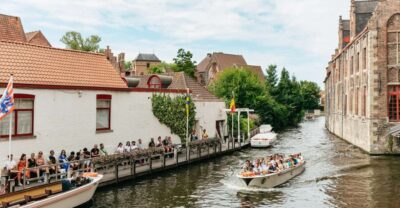
From Brussels: Guided Day Trip to Bruges and Ghent
Read our review →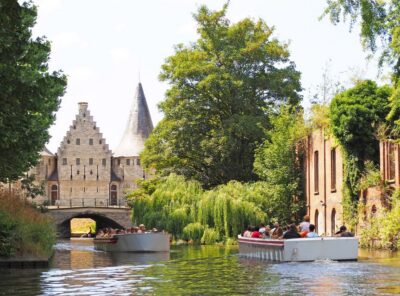

Small Group Boat Cruise and Guided Walking Tour
Read our review →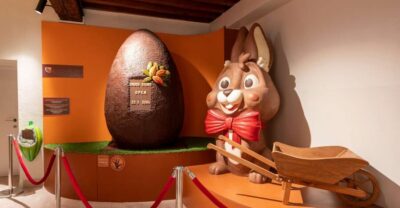
Choco-Story Chocolate Museum Guided Tour w/Tastings
Read our review →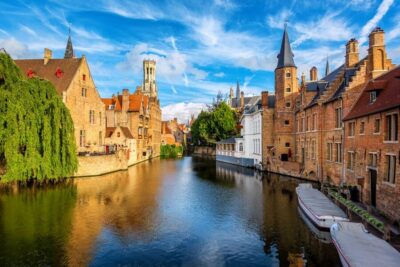
From Brussels: Full-Day Antwerp and Ghent Guided Tour
Read our review →
Browse the lists this tour appears in