
Reviewed · GHENT TOURS
Private Tour to Belgian Architecture Gem: Ghent
Ghent rewards a slower look. This private walk brings the city’s architecture into focus, from the medieval Gravensteen to the Gothic Belfry and the Baroque details tucked around St. Veerleplein. I especially like the private format, which lets you ask questions and shape the pace, and the included admission to the Ghent Altarpiece, one of the city’s essential sights. The main drawback is the tour’s uncertain length, listed at roughly 1 hour 30 minutes to 2 hours 40 minutes, while the full route includes fourteen stops and can feel hurried if every point receives equal attention.
I also like that this is not only a parade of pretty buildings. Your licensed guide explains how Gothic and Baroque styles differ, why Ghent’s Town Hall looks like two buildings joined together, and how the city’s old port shaped the Graslei and Korenlei. You should know that coffee, tea, and any waffle or beer stop are extra, and the experience depends on good weather.
In This Review
- Key points to know before you book
- Why a private walk suits Ghent so well
- Starting at the City Pavilion and Vrijdagmarkt
- Gravensteen and the medieval world around St. Veerleplein
- Markets, old trades, and a possible beer break
- Graslei and Korenlei: a quick lesson in Gothic and Baroque
- St. Michael’s Bridge and Korenmarkt
- The Belfry: choose the 350-step challenge
- Ghent Town Hall and the mark of Charles V
- Sint-Baafsplein and the Ghent Altarpiece
- Geeraard de Duivelsteen and the return to the start
- Is $331.03 a fair price?
- Who should book this Ghent tour?
- Should you book the private Ghent architecture walk?
- FAQ
- Where does the Ghent architecture tour begin?
- Where does the tour end?
- How long does the tour last?
- Is admission to the Ghent Altarpiece included?
- Is the Belfry climb required?
- Are coffee, tea, waffles, or beer included?
- Is this a private group activity?
Key points to know before you book
- The Ghent Altarpiece is included: Admission to see Jan van Eyck’s famous 1432 work is part of the experience.
- You get a private guide: Only your group participates, with room for questions and personal interests.
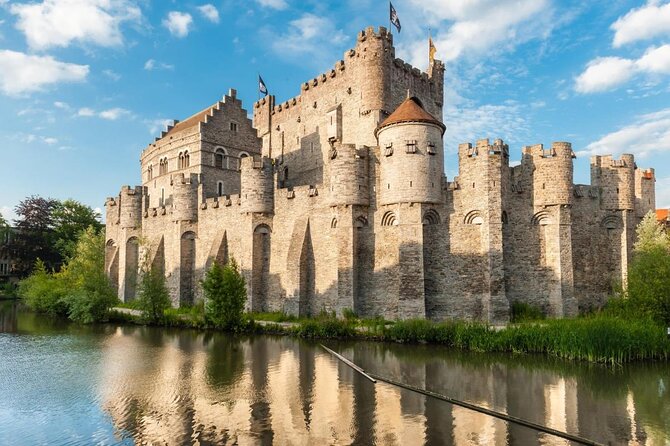
- Fourteen central stops create a full city sampler: The route links squares, quays, churches, a castle, markets, and major civic buildings.
- Architecture is the main subject: You compare Gothic and Baroque forms instead of simply collecting building names.
- The Belfry climb is optional: You can choose to tackle 350 steps to the top of the 91-meter tower.
- The price can work well for a group: At $331.03 for up to ten people, the per-person cost drops sharply when several people join.
Why a private walk suits Ghent so well
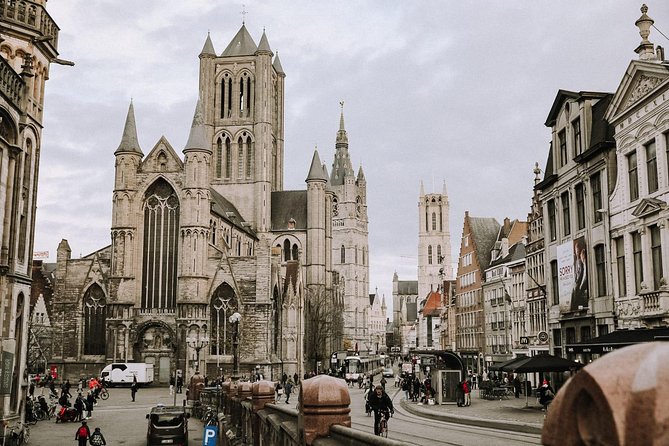
Ghent is compact in its historic center, but its buildings do not explain themselves at a glance. A pointed arch, a decorative facade, a guildhall, and a church tower can represent different periods and different kinds of power. A guide gives you the key before you start looking.
The private setup is the strongest reason to consider this tour. Up to ten people can participate, and no outside group joins you. If you care more about church art than shopping streets, you can ask for more time around Sint-Baafsplein. If you are fascinated by military buildings, you can press for more detail at Gravensteen.
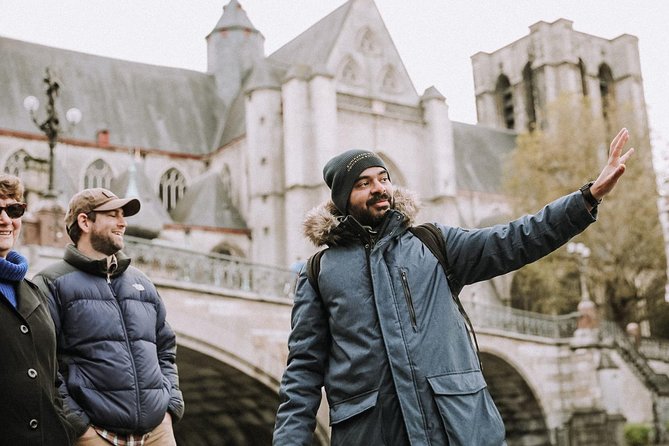
The guide named in the tour information is Gamaal. A five-star review praises his explanations of paintings, sculptures, and cathedrals, with particular emphasis on the depth of his insight into Ghent. That matters here because the tour depends on interpretation, not just movement from one landmark to another.
The timing needs a little caution. The stated duration ranges from 90 minutes to 2 hours 40 minutes, while the listed stop times add up to much longer than that. Some stops may be brief orientation points, and the route may be adapted to your interests. Still, I would confirm the expected duration when booking, especially if you have a train to catch or another timed admission.
More things to do in Ghent:
- Ghent: 50-Minute Medieval Center Guided Boat Trip
★ 4.5 · 5,637 reviews - Historical Walking Tour: Legends of Gent
★ 5.0 · 1,761 reviews - Ghent: 40 Minute Medieval Center Guided Boat Tour
★ 4.4 · 884 reviews
Starting at the City Pavilion and Vrijdagmarkt
The walk begins at the Stadshal, or City Pavilion, at Poeljemarkt. This is a useful central starting point, placing you close to several of Ghent’s major civic and religious sights.
The first substantial stop is Vrijdagmarkt, one of Ghent’s famous market squares. You get about twenty minutes here to look at the surrounding architecture and learn how the square fits into the city’s story. It is a good place to begin because the open space lets you see buildings as a group rather than as isolated facades.
From there, the route crosses Langemunt, a shopping street, on the way toward the castle. This part is less about a single landmark and more about seeing how modern city life runs through the old center. You can ask questions as you walk, but do not expect a long architectural lecture at every street corner.
Gravensteen and the medieval world around St. Veerleplein
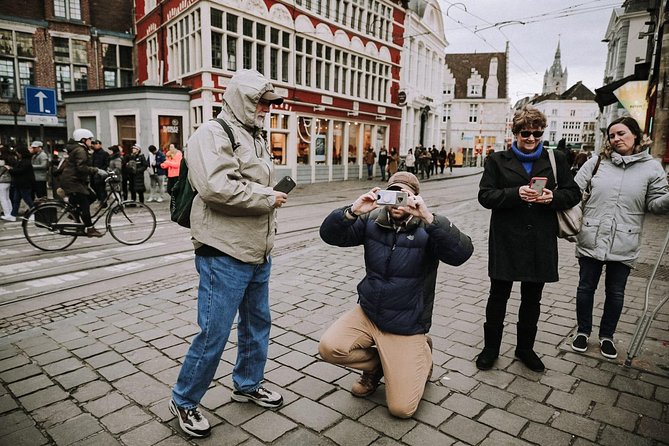
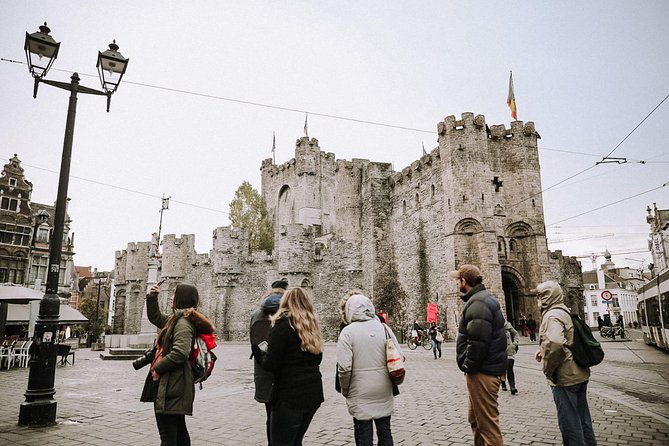
Gravensteen, the Counts of Flanders castle, is one of the oldest buildings on the route. Its presence gives the walk a harder edge. Ghent was not only a city of merchants and churches. It was also a place where rulers displayed force.
The tour allows around twenty minutes at the castle. Based on the route description, the focus is likely on the exterior and its place in Ghent rather than a full interior castle visit. A pillar in front of the castle becomes part of the guide’s explanation, and you will also consider which nearby building carries the city’s most beautiful Baroque facade.
That question leads naturally to St. Veerleplein. The square contains an important Baroque facade and connects with the public entertainments of medieval Ghent. You have about fifteen minutes here, enough for a focused explanation and a close look at how decoration changed between periods.
This pairing works well. Gravensteen represents medieval authority in stone, while St. Veerleplein shifts your attention to civic display and later architectural taste. If your interest is mainly in interiors, you may find these stops brief. If you like reading a city through its streets and facades, they provide useful context.
Markets, old trades, and a possible beer break
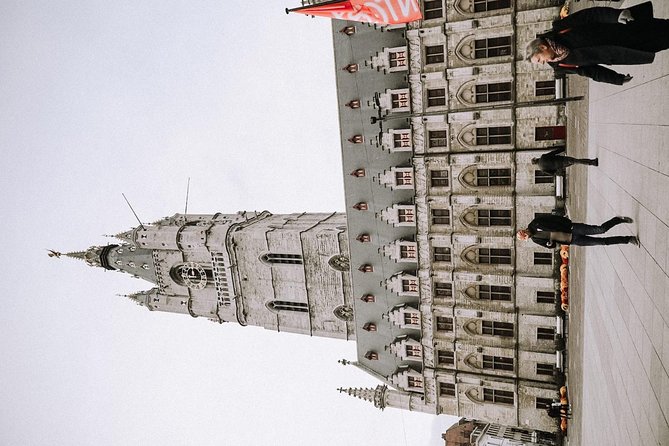
Next comes Het Groot Vleeshuis, the former large meat market. The route presents it as a place connected with Spanish influence, dating to the period when Flanders was under the monarchy of Castile and Spain. The building also gives you a chance to think about food as part of urban history, not merely as something sold to visitors.
You then pass ’t Galgenhuis, described as both a vegetable market and the oldest bar in town. The stop is short, around ten minutes. Heritage beers from Ghent may be available there, but drinks are not included in the tour price.
This is one of the route’s more enjoyable changes of pace. After castles, churches, and civic buildings, markets show how ordinary commerce shaped the center. I would treat the beer reference as an option, not a promise of a scheduled tasting. If you want to stop for a drink, ask your guide how it fits within the available time.
The route then reaches Kortemunt for a possible coffee break. You can also try a premium homemade waffle, but coffee, tea, and food cost extra. Thirty minutes is assigned to this part of the walk, so it may be the clearest opportunity to pause rather than simply keep moving.
A few more options to weigh up in Ghent
- Ghent: Private 2-Hour Walking Tour
★ 4.7 · 134 reviews - Private Historical Tour: The Best of Ghent
★ 5.0 · 115 reviews - Private Tour: The Dark Side of Gent
★ 5.0 · 73 reviews - Private Highlights Walking Tour in Ghent
★ 5.0 · 71 reviews
Graslei and Korenlei: a quick lesson in Gothic and Baroque
The Graslei and Korenlei quays are among Ghent’s most memorable urban spaces. Here, the old port has been absorbed into the city, and the waterfront is lined with buildings from different periods and styles.
The tour turns the quays into a short architecture exercise. You and your guide compare Gothic and Baroque features, using the buildings around you rather than relying only on textbook definitions. Gothic forms tend to draw the eye upward with pointed shapes and vertical emphasis, while Baroque design is more theatrical and decorative. The exact details you discuss will depend on the guide and the questions your group asks.
This is a strong section for people who want to learn how to look. Once you can spot the difference between the two styles, other parts of Ghent become easier to read. The twenty-minute stop is enough for an introduction, though it may not satisfy anyone who wants a full study of every waterfront building.
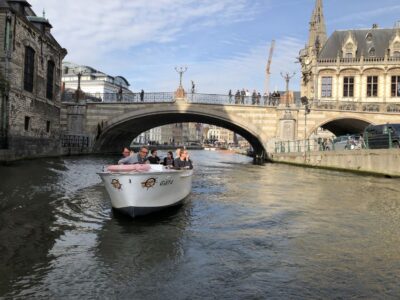
St. Michael’s Bridge and Korenmarkt
St. Michael’s Bridge gives the walk another useful pause. The focus here is the widespread presence of the archangel St. Michael across Belgian cities. It is a small historical detail, but these local connections help place Ghent within a broader regional setting.
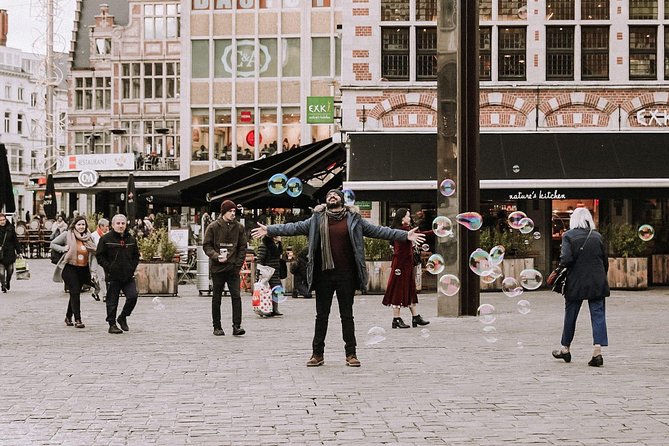
The bridge also links naturally to Korenmarkt, the city’s main square. You have around fifteen minutes at the square before entering a large palace at its northern end. The description does not identify the palace by name or provide a detailed interior program, so I would ask your guide what you will see inside and how long that visit will last.
Korenmarkt is a good contrast to Vrijdagmarkt. One is a large historic market space, the other a central gathering point with a strong civic presence. Together, they show how Ghent’s squares have served different roles over time.
The Belfry: choose the 350-step challenge
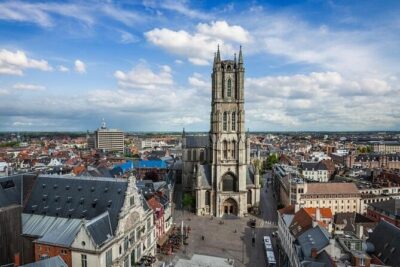
The Belfry of Ghent rises 91 meters and once protected the city’s treasures. It is one of the clearest symbols of municipal power on the route. The tour discusses the tower’s architectural place in Ghent and the Roeland clock, an important part of its story.
Climbing to the top is optional and involves 350 steps. That choice is welcome because not everyone wants a stair workout during a walking tour. If you want the view and are comfortable with the climb, ask your guide how the ascent affects the schedule. If you prefer to stay at street level, you can still learn about the tower and its role in the city.
The Belfry also helps pull together the tour’s central theme. Ghent’s architecture is not one neat style. Medieval, Gothic, Baroque, and later additions overlap. The tower becomes a useful reference point as you compare the buildings around it.
Ghent Town Hall and the mark of Charles V
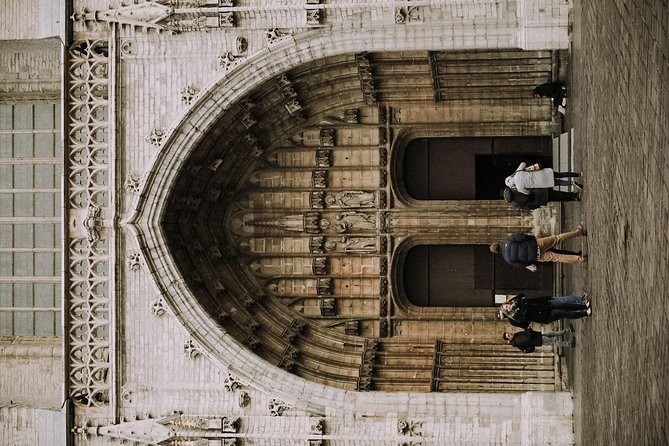
Ghent Town Hall is one of the route’s best examples of architectural contrast. Two distinct styles from two different periods meet in the same building, creating an uneven appearance that can seem puzzling until you know the political background.
The guide explains the influence of Charles V and why his sculpture is whiter than the surrounding material. This is exactly the sort of detail that gives a facade a story. Instead of seeing only a grand civic building, you begin to notice how rulers and city authorities used architecture to show status.
The stop lasts about twenty minutes. It is long enough to discuss the two styles and examine the facade, though the amount of interior access is not fully specified. If the Town Hall is a high priority for you, make that clear at the start of the tour.
Sint-Baafsplein and the Ghent Altarpiece
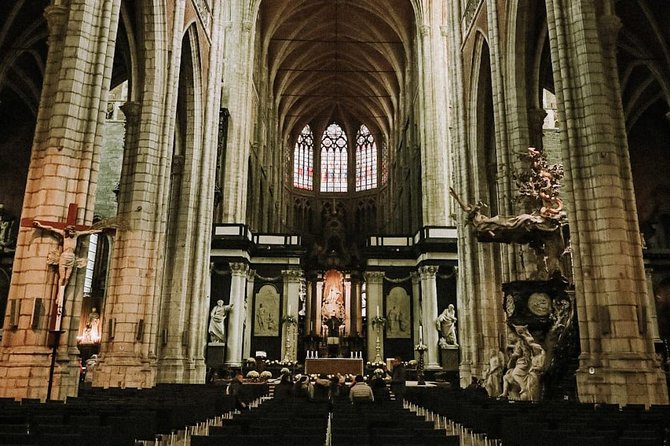
Sint-Baafsplein leads to St. Bavo’s Cathedral, where the tour spends about thirty minutes. The church took two centuries to build, making it an ideal place to discuss how changing periods leave visible marks on one structure.
The most important part comes inside: the Ghent Altarpiece, also called The Adoration of the Mystic Lamb, created by Jan van Eyck and completed in 1432. Admission to see the altarpiece is included, which gives this tour extra value. You do not have to arrange a separate ticket for this central part of the experience.
The guide’s job here is especially important. The tour promises attention to the altar and the altarpiece, along with architectural facts about the cathedral. You can ask about the painting, the church, or both. The five-star assessment of Gamaal specifically praises explanations of paintings, sculptures, and cathedrals, so art-minded visitors may find this section particularly rewarding.
Thirty minutes is useful but limited. If you want a slow, detailed look at every panel, you may need more time beyond the tour. Still, including the altarpiece makes the walk more than a street-only introduction to Ghent.
Geeraard de Duivelsteen and the return to the start
The final stop is Geeraard de Duivelsteen, or the Castle of Gerald the Devil. The name sounds like a piece of folklore, but the key point is that Gerard the Devil never visited the castle. The building served several functions over time and is now a famous art gallery.
The stop lasts around ten minutes. It works as a final reminder that buildings change purpose. A castle can become a civic or cultural space, just as old markets and ports continue to shape the modern center.
The activity ends back at the meeting point. Since the route remains in the historic center, the return is convenient for continuing your own sightseeing, though the exact timing can vary with questions, breaks, and the optional Belfry climb.
Is $331.03 a fair price?
The price is $331.03 for a private group of up to ten people. For one or two people, that is a substantial amount for a walking tour. For a family or group of six to ten, the arithmetic looks much better, especially because the guide’s attention is reserved for your party.
At ten people, the cost works out to about $33 per person. At five people, it is about $66 each. The included Ghent Altarpiece admission adds value, and the private format can save you from paying for several separate activities if your main goal is a guided introduction to central Ghent.
The price makes the most sense when you care about architecture, art, and questions tailored to your group. It is less convincing if you only want a quick orientation or plan to explore every site independently. Remember to budget separately for coffee, tea, waffles, beer, and any other personal purchases.
Who should book this Ghent tour?
I would recommend it to families, couples, and small groups who want a guide focused on their interests. It is also a good fit if you find architecture confusing and want someone to point out the difference between Gothic and Baroque details in real buildings.
Art lovers should pay close attention to the included Altarpiece admission and the cathedral stop. History-minded visitors will appreciate the connection between the Counts of Flanders, Charles V, Spanish influence, and the changing use of old buildings.
You should be comfortable walking through the historic center and managing a potentially changing schedule. Most people can participate, service animals are allowed, and the meeting point is near public transportation. The tour requires good weather, and the cancellation terms are strict: it is non-refundable and cannot be changed after booking, although a weather cancellation offers a different date or a full refund.
Should you book the private Ghent architecture walk?
Book it if you want Ghent explained through its buildings rather than simply photographed. The strongest features are the private guide, the broad route through the historic center, the architecture comparisons at Graslei and Korenlei, and the included visit to the Ghent Altarpiece.
I would first confirm the expected duration and clarify which buildings you will enter. If your group can share the $331.03 cost, the tour offers solid value. If you are alone, on a tight budget, or mainly interested in a single museum, a shorter public walk may suit you better.
For a group that wants personal attention and a clear introduction to Ghent’s churches, squares, quays, towers, and castles, this is a thoughtful choice. The standout praise for guide Gamaal also gives you a practical tip: request him if he is available.
FAQ
Where does the Ghent architecture tour begin?
The tour begins at Stadshal, or City Pavilion, at Poeljemarkt, 9000 Gent, Belgium.
Where does the tour end?
The activity ends back at the meeting point.
How long does the tour last?
The approximate duration is listed as 1 hour 30 minutes to 2 hours 40 minutes. The route includes fourteen stops, so confirm the expected timing when booking.
Is admission to the Ghent Altarpiece included?
Yes. Expenses to visit the famous altar of Jan van Eyck are included.
Is the Belfry climb required?
No. Climbing the Belfry is optional and involves 350 steps.
Are coffee, tea, waffles, or beer included?
No. Coffee and tea are not included, and the possible waffle or beer stops require separate payment.
Is this a private group activity?
Yes. Only your group participates, with a maximum group size of ten people.
Just added in Ghent
- Historic Highlights, by a local guide★ 5.0 · 9 reviews
- Discover Ghent while playing! Escape game – The alchemist★ 4.0 · 4 reviews
- Walking Food Tour in Ghent★ 5.0 · 13 reviews
- Discover Ghent while playing! Escape game – The Walter case★ 4.5 · 4 reviews
- e-Scavenger hunt Ostend: Explore the city at your own pace★ 4.5 · 10 reviews
- Discover Mons while playing! Escape game – The alchemist★ 4.0 · 5 reviews
- Kortrijk Self-Guided Sherlock Holmes Murder Mystery Game★ 5.0 · 2 reviews
- Taste of Ghent: Private Chocolate Walking Tour★ 5.0 · 1 review
Ghent Tours, compared.

Browse the lists this tour appears in