
Reviewed · DARK HISTORY WALKS
Private Tour: The Dark Side of Gent
Ghost stories give Ghent extra character. This private evening walk links the city’s grand sights with tales of executions, religious conflict, medieval defenses, and Charles V. I like the quiet nighttime setting and the freedom to ask questions at your own pace. I also like that the walk finishes in Patershol, a useful spot for dinner or a drink. The main drawback is clear: at $105.59 per person, this is a serious price for a 1-hour-45-minute walking tour, especially if your group is small.
The tour works best as an early introduction to Ghent, not as a substitute for entering its major buildings. Several stops are outside only, and the dark theme sometimes means grim legends rather than sustained horror. Still, guides such as Kenny, Debra, Sébastien, Isabelle, Jerke, Hamraz, and others have been praised for warmth, humor, local pride, and strong storytelling.
In This Review
- Key points to know before booking
- Why Ghent makes a good night tour
- St. Michael’s Bridge and Ghent’s three towers
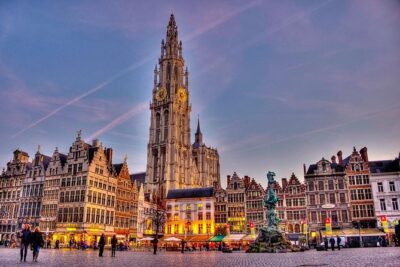
- St. Bavo’s Cathedral and the Devil’s Tower story
- Graslei, Korenlei, and medieval commercial power
- Appelbrugparkje and a grim rescue legend
- Gravensteen and the city’s medieval fortress
- Prinsenhof and the vanished royal court
- Rabot Sluice and the last defense tower
- Keizer Karel and the Bridge of Imperial Delights
- Augustijnenklooster and the scars of religious conflict
- Patershol and Ghent’s industrial turnaround
- What the private format adds
- Is $105.59 per person a fair price?
- Who will enjoy this walk most?
- Booking advice and cancellation terms
- Should you book The Dark Side of Gent?
- FAQ
- How long does The Dark Side of Gent last?
- Where does the tour begin?
- Where does the tour end?
- Is this a private tour?
- Is the tour offered in English?
- Does the price include entry to the attractions?
- Can I cancel for a full refund?
Key points to know before booking
- Ten central stops in 1 hour 45 minutes: The route covers bridges, churches, canals, a castle, old defenses, and historic neighborhoods.
- Ghent after dark: Evening light gives the city’s medieval center a calmer mood and makes the legends feel more natural.
- A genuinely private walk: Only your group takes part, so you can ask questions and move at a comfortable pace.
- The dark theme is broad: Expect executions, religious wars, royal intrigue, and social change, not nonstop ghost stories.
- Ends in Patershol: You finish near many bars and restaurants in one of Ghent’s most atmospheric quarters.
- Strong guide reputation: Kenny, Debra, Sébastien, Isabelle, Jerke, and Hamraz are singled out for energy, humor, and command of local history.
Why Ghent makes a good night tour
Ghent is especially rewarding after sunset. Its medieval center is compact, and many of the most important sights sit within a pleasant walking route. You can look across the water from St. Michael’s Bridge, follow the old harbor, pass beneath the shadow of Gravensteen, and finish in Patershol without constantly fighting through daytime crowds.
The evening timing also suits this subject. Ghent’s past is not only a parade of handsome facades and wealthy merchants. Its story includes executions, dynastic power struggles, military threats, religious upheaval, harsh justice, and the difficult effects of industrialization. The tour uses those less polished chapters to give the city more depth.
I would not book this expecting a theatrical haunted-house performance. The supplied description promises legends and grim episodes, but one disappointed customer found the tour too mild and felt that the word dark referred mostly to the hour of day. That is a fair warning. The experience is best understood as a history walk with macabre stories, rather than a scare tour.
More dark history walks in Ghent:
- Evening Tour of the Dark Side of Gent
★ 5.0 · 646 reviews - Ghent: The Dark Side of Ghent Private Walking Tour
★ 4.9 · 19 reviews - Kortrijk Self-Guided Sherlock Holmes Murder Mystery Game
★ 5.0 · 2 reviews
St. Michael’s Bridge and Ghent’s three towers
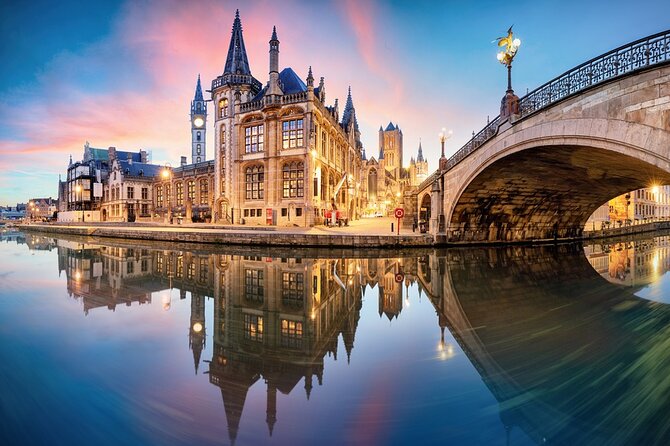
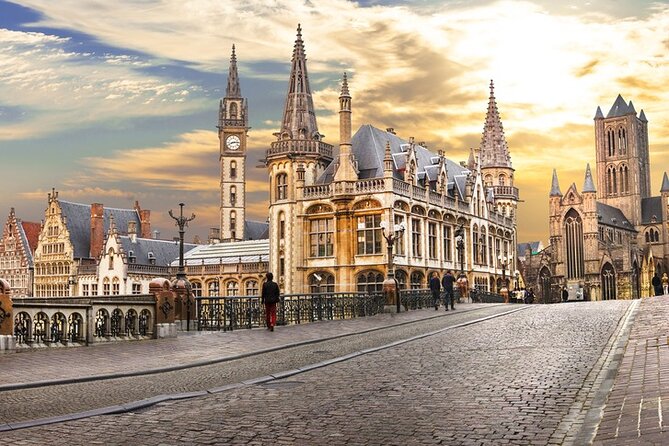
The meeting point is outside Hostel Uppelink at St. Michielsplein 21. The first stop, St. Michael’s Bridge, gives you one of the classic views of Ghent’s skyline. From here, your guide introduces the city’s three famous towers and explains how Ghent grew into a major medieval trading center.
This is a smart place to begin. You get the broad picture before the tour moves into individual legends. Ghent’s wealth did not appear by accident. Its position and commercial activity helped make it a major economic force in medieval Europe, and the bridges and waterways you see from this point are tied to that growth.
You should also expect a quick opening rather than a long lecture. The listed stop lasts about 15 minutes, and the whole walk keeps moving. If you want architectural detail about every building, this may feel brisk. If you want a clear explanation of why Ghent mattered, it is a useful start.
St. Bavo’s Cathedral and the Devil’s Tower story
The walk continues to St. Bavo’s Cathedral, where the guide explains why this beautiful church is also called the Devil’s Tower. The story adds a darker edge to a building that might otherwise be treated only as an architectural landmark.
You do not enter the cathedral on this tour. That matters if you want to see the interior or spend time with its art and decoration. The stop is scheduled for about 10 minutes, so the emphasis is on the tale and the building’s place in Ghent’s story, not a full cathedral visit.
I like this kind of stop because it connects a familiar sight with a local tradition. You see the facade in the evening, hear the unpleasant reason behind its nickname, and then move on before the pace slows.
Graslei, Korenlei, and medieval commercial power
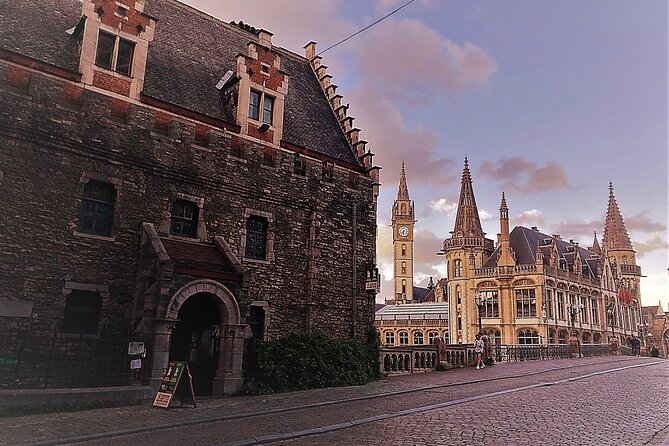
At Graslei and Korenlei, the tour reaches the old harbor. These waterfront streets are among Ghent’s most attractive places, but the guide focuses on more than pretty reflections and historic facades. You learn how trade made the city powerful and how lucrative commercial activity shaped its medieval life.
The stop lasts around 10 minutes. That is enough for an explanation and a look at the waterfront, but not enough for a detailed architectural survey. The private format helps here. If your guide has time and your group is curious, you can ask about the trading activity and the buildings around the harbor.
This section is important because it gives the dark stories a setting. Executions, royal decisions, religious conflict, and social change all happened in a city made wealthy by commerce. Ghent’s darker past makes more sense once you understand what was at stake.
More things to do in Ghent:
- Ghent: 50-Minute Medieval Center Guided Boat Trip
★ 4.5 · 5,637 reviews - Historical Walking Tour: Legends of Gent
★ 5.0 · 1,761 reviews - Ghent: 40 Minute Medieval Center Guided Boat Tour
★ 4.4 · 884 reviews - Ghent Bike Tour Off-the-beaten-track
★ 5.0 · 505 reviews
Appelbrugparkje and a grim rescue legend
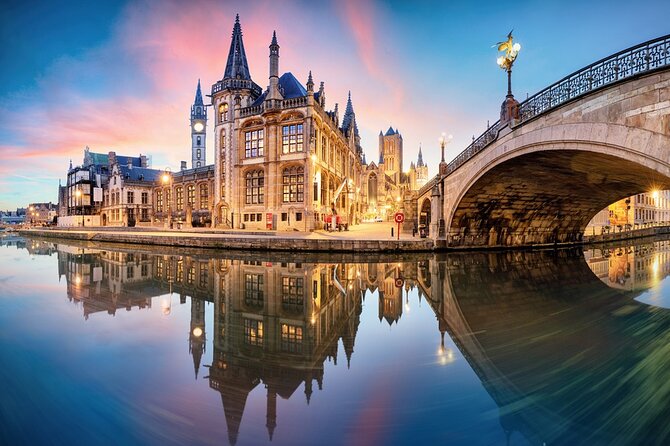
At Appelbrugparkje, you look over the giant Butchers’ Hall from a bridge. The guide tells the story of a father and son sentenced to execution, followed by the miraculous event that saved them.
This is one of the tour’s most traditional legend stops. You are not simply hearing dates and names. The tale gives you a sense of how justice, punishment, belief, and public spectacle could overlap in earlier centuries.
Because the stop is outside, you can focus on the story and the view. The tour does not include a ticket to the Butchers’ Hall, and the schedule allows about 10 minutes here. If you enjoy folklore more than formal history, this may be one of your favorite sections.
Gravensteen and the city’s medieval fortress
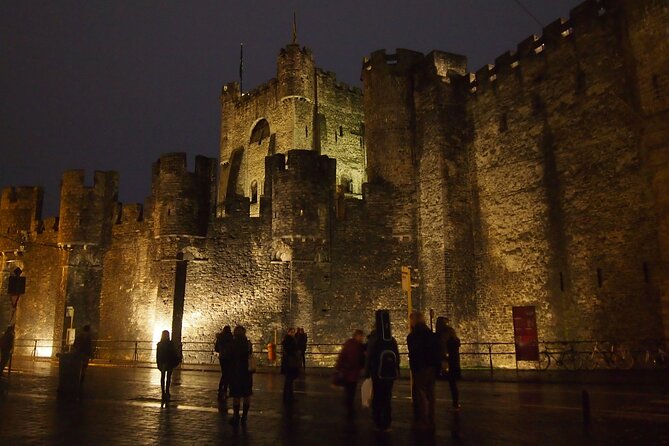
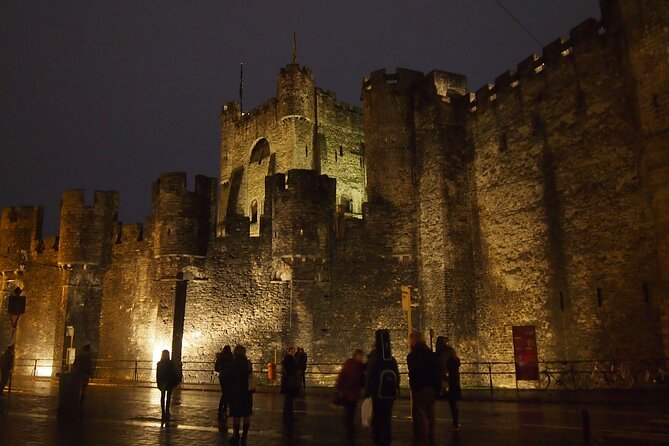
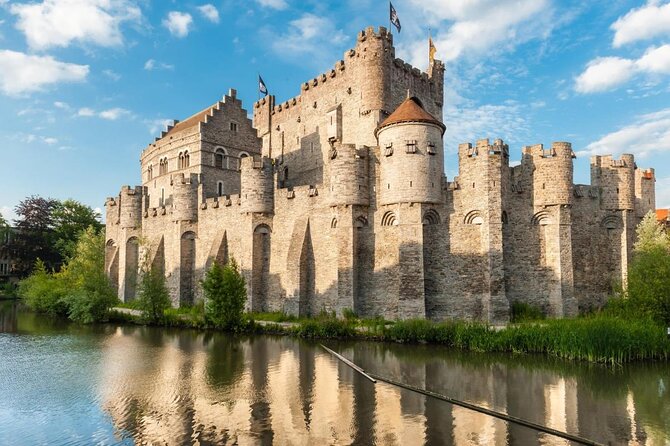
Gravensteen is the route’s most powerful visual stop. The fortress is linked to Count Baldwin, who built it in the ninth century to protect inhabitants from Viking raids. The settlement around this defensive stronghold helped shape the later growth of Ghent.
Even from outside, Gravensteen has the atmosphere this tour promises. Its walls and towers make military history easy to picture, and the guide’s account places the castle within the wider development of the city.
The tour does not include entry, so plan a separate visit if you want to see the interior. That is both a limitation and a practical advantage. You keep the walking route moving, but you will need another ticket and another block of time for the castle itself.
Prinsenhof and the vanished royal court
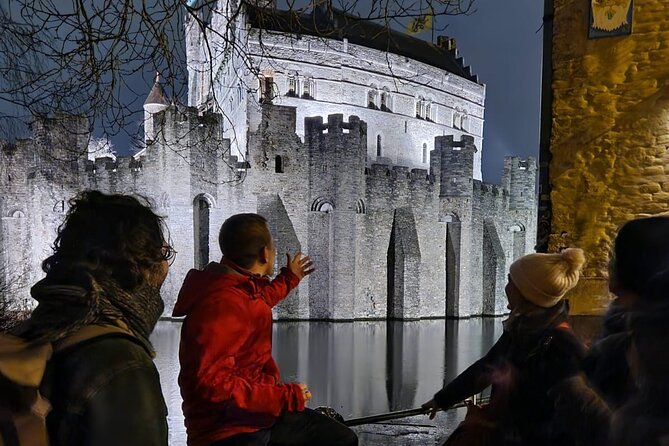
At Prinsenhof, your guide asks you to imagine the enormous palace that once occupied this area. Much of the original palace is gone, so this stop depends heavily on the guide’s ability to make an absent building feel present.
The former Prince’s Court adds a useful layer to the tour. Ghent was not merely a merchant city or a military town. It also had royal and aristocratic power at its center. The contrast between the grand palace of the past and the more modest surroundings today shows how much the city has changed.
You do not enter here, and the stop lasts roughly 10 minutes. I would treat it as a storytelling stop rather than a major photo opportunity. It rewards imagination more than sightseeing alone.
Rabot Sluice and the last defense tower
Rabot Sluice marks the only remaining tower from Ghent’s medieval defense wall, which once stretched for 14 kilometers. That single surviving section helps you understand the scale of the city’s defenses.
This is a good example of why the route is more than a standard central-city walk. The guide takes you beyond the best-known postcard views and points out a remnant that could be easy to miss on your own.
The stop is brief, around 10 minutes, but the fact itself is memorable. A city that grew wealthy through trade also had to protect its roads, waterways, and people. The walls tell that practical story.
Keizer Karel and the Bridge of Imperial Delights
The next stop centers on Keizer Karel, or Charles V, and the Bridge of Imperial Delights. Four sculptures on the bridge show legendary scenes from his life, and the guide explains some of them.
This section brings personal power into the walk. Charles V is not presented as an abstract name from a textbook. The sculptures give you physical clues about how Ghent remembered his life and legend.
The stop remains outside and lasts about 10 minutes. You will not get every detail about the emperor, but you should come away with a better sense of how public art can preserve political stories. It is also a welcome change of pace after the fortress and defense-wall sections.
Augustijnenklooster and the scars of religious conflict
At Augustijnenklooster, the focus shifts to the Religious Wars and the effect of Calvinist rule on Ghent. This is one of the more serious sections because it deals with conflict that changed the city’s religious and political life.
The stop is outside only. The tour does not include entry to the former monastery, and the scheduled time is about 10 minutes. Still, the subject helps keep the walk from becoming a collection of entertaining legends. Ghent’s past included real ideological battles, not just colorful stories.
If you prefer tours that explain cause and effect, pay close attention here. The guide connects religious rule with the city’s development and shows how changes in power can leave a lasting mark on streets and buildings.
Patershol and Ghent’s industrial turnaround
The walk ends in Patershol, whose name means Monk’s Hole. This medieval quarter is atmospheric by day and especially appealing in the evening, when you can continue into one of the nearby bars or restaurants.
The final story concerns the Industrial Revolution and its social impact. You hear how industrial change affected Ghent and how the city’s economy later revived. That gives the tour a useful closing arc: medieval trade creates wealth, political and religious conflict reshape the city, industrialization brings disruption, and economic renewal follows.
Ending here is practical. You do not finish at an isolated attraction or need to retrace the route to find food. Patershol is in the city center, so you can turn the tour into a full evening in Ghent.
What the private format adds
The private setup is the strongest reason to consider this experience. Only your group participates, so you are not tied to the interests or pace of a large crowd. You can ask about a strange local custom, pause over a building, or request more detail about a story that catches your attention.
That flexibility appears in the guide feedback. Kenny is praised for being funny, engaging, and able to keep children interested. Debra is described as charming, enthusiastic, and proud of Ghent. Sébastien is singled out for an easygoing manner and broad command of the city. Isabelle is praised for clear English and strong knowledge of architecture and local history. Jerke is noted for wit and open conversation, while Hamraz is praised for making the tour a good first look at the city.
Of course, a private tour is only as good as the person leading it. The strong guide response is encouraging, but you cannot assume you will receive a particular guide unless that is confirmed. The experience provider is Gent Free Walking Tour, and the tour is offered in English.
Is $105.59 per person a fair price?
At $105.59 per person, the price is high for a walk lasting about 105 minutes. A pair would pay roughly $211.18 at that rate, before considering any other expenses. One unhappy customer described paying $175 for two people and felt the experience did not justify the cost, which shows how important the private format and guide quality are to the value.
The price makes more sense for a small group that wants personal attention. If four people split the cost of a private experience, each person may place more value on the ability to ask questions and avoid a crowded group. Group discounts are also listed, so check the final price for your party rather than assuming the per-person figure tells the whole story.
I would not choose this tour mainly to save money. I would choose it for convenience, a private guide, an evening route, and a clear introduction to Ghent’s darker stories. If your budget is tight, a standard group walk or self-guided route may offer better value. If you have limited time and want a personal first evening in the city, the higher price can be reasonable.
Who will enjoy this walk most?
This tour suits you if you like history with a dose of folklore. It is also a good choice for couples, families, and small groups who want to talk with the guide rather than listen quietly in a crowd. The feedback specifically suggests that Kenny kept two children engaged, so the stories can work for families when the guide matches the group well.
It is useful on your first night in Ghent because it helps you recognize the center and gives you ideas for where to eat afterward. One customer drove from Brussels for the evening and found the city and the tour worthwhile, though you should allow enough time for your own transport plans.
You may want something else if you expect graphic horror, paranormal investigation, or entry into the major landmarks. The route is primarily an outdoor history walk, and several locations are viewed from the street.
The tour is near public transportation, service animals are allowed, and most people can take part. Wear shoes suitable for a city walk and bring a layer for the evening, though specific clothing guidance is not provided.
Booking advice and cancellation terms
Confirmation is provided at booking. The meeting point is Hostel Uppelink, Sint-Michielsplein 21, and the walk ends in Patershol.
You can cancel up to 24 hours before the start time for a full refund. Cancellations or changes made less than 24 hours before the tour are not refunded or accepted, and the cut-off follows local time.
Should you book The Dark Side of Gent?
Book it if you want a private evening introduction to Ghent with legends, medieval trade, military history, religious conflict, and a convenient finish near restaurants. The strongest part is the guide-led storytelling, especially when you get someone with the energy praised for Kenny, Debra, Sébastien, Isabelle, Jerke, or Hamraz.
Skip it if you want extensive interior visits, a long castle tour, or a genuinely frightening night out. At $105.59 per person, the cost demands a good guide and an interest in conversation. For the right small group, the quieter streets, personal pace, and unusual stories make it a memorable way to get your bearings in Ghent.
FAQ
How long does The Dark Side of Gent last?
The tour lasts approximately 1 hour and 45 minutes.
Where does the tour begin?
It begins at Hostel Uppelink, Sint-Michielsplein 21, 9000 Gent, Belgium.
Where does the tour end?
The tour ends in Patershol, in central Ghent, close to many bars and restaurants.
Is this a private tour?
Yes. Only your group participates in the activity.
Is the tour offered in English?
Yes. English is the listed tour language.
Does the price include entry to the attractions?
No. Entry is not included at St. Bavo’s Cathedral, Prinsenhof, Gravensteen, or Augustijnenklooster. Several other stops are outdoor locations with no admission charge.
Can I cancel for a full refund?
Yes. You can cancel at least 24 hours before the start time for a full refund. Cancellations and changes made less than 24 hours before the start time are not accepted or refunded.
Just added in Ghent
- Historic Highlights, by a local guide★ 5.0 · 9 reviews
- Discover Ghent while playing! Escape game – The alchemist★ 4.0 · 4 reviews
- Walking Food Tour in Ghent★ 5.0 · 13 reviews
- Discover Ghent while playing! Escape game – The Walter case★ 4.5 · 4 reviews
- e-Scavenger hunt Ostend: Explore the city at your own pace★ 4.5 · 10 reviews
- Discover Mons while playing! Escape game – The alchemist★ 4.0 · 5 reviews
- Kortrijk Self-Guided Sherlock Holmes Murder Mystery Game★ 5.0 · 2 reviews
- Taste of Ghent: Private Chocolate Walking Tour★ 5.0 · 1 review
Dark History Walks, compared.


Bruges at Night: Murder, Mystery & Dark Stories Small Group Walk
Read our review →
Browse the lists this tour appears in