
Reviewed · DARK HISTORY WALKS
Guided tour: Brussels Crime Scenes
Brussels keeps its darkest stories close. This two-hour walk links old streets with criminal cases from the 19th and 20th centuries, showing how police, customs, and ordinary life changed over time. I like the historical context woven into each case, and I like that the route stays in central Brussels rather than sending you far across the city.
The main caution is tone. Some stories are bloody, violent, and disturbing, so this is not a light sightseeing stroll. I also enjoy the guide’s professional, engaging delivery, but one small improvement would be more theatrical touches, such as costumes or audience participation.
You pay about $23.26 per person for roughly two hours, with no admission fees at the stops. That is fair value if you enjoy guided walks and true crime, especially since the tour connects individual cases to the wider story of Brussels society.
In This Review
- Key points about the Brussels crime walk
- What this Brussels crime tour really offers
- Starting at Rue de l’Etuve and crossing the Grand Place
- Rue de l’Amigo and a hotel with a darker past
- A crime of passion at the former Hotel À la Ville de Courtrai
- Le Coin du Diable and Brussels folklore
- Place Saint-Géry and a case that gripped Brussels
- Place du Jardin aux Fleurs and an unusual motive
- The guide’s style and the value of the storytelling
- Price, group size, and practical planning
- Who should book the Brussels crime scenes tour?
- Should you book this two-hour Brussels crime walk?
- FAQ
- How long does the Brussels Crime Scenes tour last?
- How much does the tour cost?
- Where does the tour begin?
- Where does the tour end?
- What is included in the price?
- Can I cancel for a full refund?
Key points about the Brussels crime walk

- Five central crime-related stops cover hotels, squares, a legendary site, and a notorious corner.
- The Grand Place provides the opening setting, helping place the stories in central Brussels.
- Rue de l’Amigo gets two separate stories, including a crime of passion tied to a former hotel.
- Place Saint-Géry marks the final stop, where the tour ends in the center of the square.
- The guide adds social history, not just grisly details, explaining customs, police work, and public reaction.
- The group is limited to 25 people, which should make it easier to hear the narration in narrow streets and public squares.
What this Brussels crime tour really offers
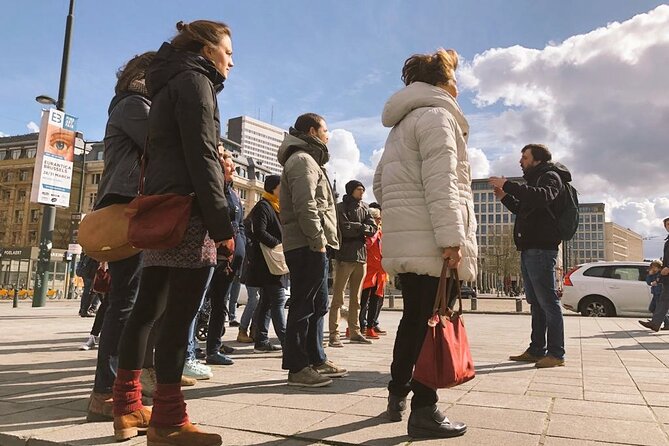
This is not a standard walk past Brussels monuments. It uses crime as a doorway into the city’s past. You hear about people who committed crimes, people who suffered from them, the police who investigated them, and the society that reacted to them.
That broader approach is the tour’s greatest strength. A crime story by itself can become a quick shock followed by another quick shock. Here, the aim is to show what each case reveals about the period. You learn about customs, public fascination, law enforcement, and the darker side of daily life.
The route covers cases from the 19th and 20th centuries, along with a legend from the 17th century. That gives the walk a useful spread across time. Brussels becomes more than a pretty old center. Its streets become places where social rules, personal passions, superstition, and violence played out in public view.
The tone is described as frightening and sometimes bloody, but also respectful and faithful to the facts. That balance matters. You are not being asked to treat real suffering as a joke or a stage trick. The subject is grim, but the presentation aims to keep the people involved at the center of the story.
A guide who simply lists dates and names would make this walk flat. The guide here is praised for adding context and holding attention. That makes the difference between hearing several old cases and understanding why those cases mattered to Brussels.
More dark history walks in Brussels:
- Evening Tour: The Dark Side of Brussels
★ 4.5 · 435 reviews - Private Tour: The Dark Side of Brussels
★ 5.0 · 20 reviews - Brussels: 2-Hour Dark Side of Brussels Private Tour
★ 4.8 · 11 reviews
Starting at Rue de l’Etuve and crossing the Grand Place
The tour begins at Rue de l’Etuve 1, a central meeting point in Brussels. From there, the route crosses the Grand Place before reaching the first detailed stops.
That opening walk is useful even though the Grand Place is not presented as one of the numbered crime stops. You get your bearings in the historic center, and the famous square gives the stories a clear setting. Brussels can feel confusing when you first arrive, with small streets opening suddenly into large public spaces. Starting near the Grand Place keeps the route easy to find.
You should allow a little extra time to reach Rue de l’Etuve 1. The meeting point is in the center, but central Brussels streets can be busy with pedestrians, shops, and passing groups. Check the exact address before setting out, and keep your phone ready for the mobile ticket.
The walk is outdoors, so normal city-walking shoes make sense. The tour lasts about two hours, and the stops take place in public streets and squares rather than behind ticketed doors. That keeps the cost low, but it also means you should expect to stand while listening.
Rue de l’Amigo and a hotel with a darker past
The first stop is on Rue de l’Amigo. The story concerns a hotel that once welcomed important and prestigious visitors, but did not always offer such pleasant memories.
That contrast gives the opening story some bite. A refined hotel suggests luxury, status, and respectable society. The crime connected with the place reminds you that elegant surroundings do not protect a city from violence. It is a good way to begin a walk built around the gap between public appearance and private behavior.
The stop lasts about ten minutes. That is long enough for a focused account without making the opening feel overloaded. Since the visit is based on storytelling rather than entry into the hotel itself, your attention stays on the guide’s account and the setting around you.
I would pay close attention to how the guide explains the people and customs of the period, not only the crime itself. The value of this stop is likely to come from that context. You are not simply looking at a building and hearing that something terrible happened there. You are being asked to picture the social world that surrounded the case.
A crime of passion at the former Hotel À la Ville de Courtrai
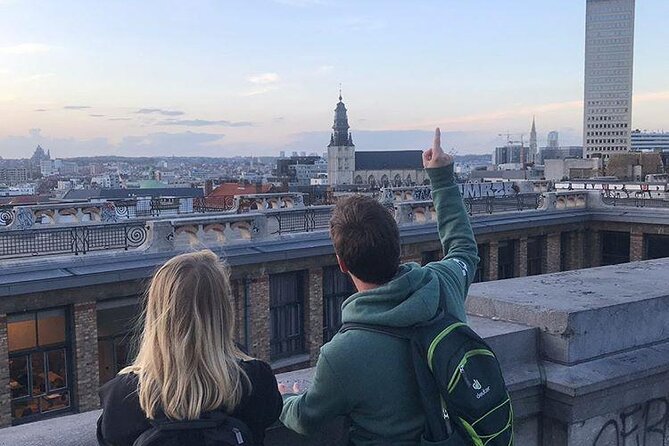
The second stop is also on Rue de l’Amigo, at the corner where the former Hotel À la Ville de Courtrai once stood. This story concerns a famous crime of passion.
Having two stories on the same street is practical. It saves walking time and lets the guide build a small cluster of history around one location. Instead of racing from one distant address to another, you spend more time hearing how different events could unfold in the same part of Brussels.
The stop lasts about fifteen minutes, making it one of the longer sections of the walk. A crime of passion can easily become sensationalized, but the stated approach is respectful and factual. That should appeal to you if you want the human drama without a comic or theatrical treatment.
The guide’s ability to hold attention is especially important here. This kind of story depends on sequence, motive, and consequence. If the details arrive in a confusing order, the point is lost. The available feedback praises the guide’s professionalism and ability to keep people focused, which is encouraging for a story that needs careful telling.
One note for sensitive visitors: the tour’s overall subject includes violence and disturbing cases. The descriptions do not suggest a softened version of events. You can expect direct discussion of crime rather than a vague, family-friendly account.
More things to do in Brussels:
- Brussels: Atomium Entry Ticket with Design Museum Ticket
★ 4.4 · 9,254 reviews - From Brussels: Guided Day Trip to Bruges and Ghent
★ 4.6 · 8,353 reviews - From Brussels: Bruges & Ghent Day Tour – 2 Fairytale Cities
★ 4.7 · 8,242 reviews - Choco-Story Brussels: Chocolate Museum Entrance with Tasting
★ 4.3 · 4,883 reviews
Le Coin du Diable and Brussels folklore
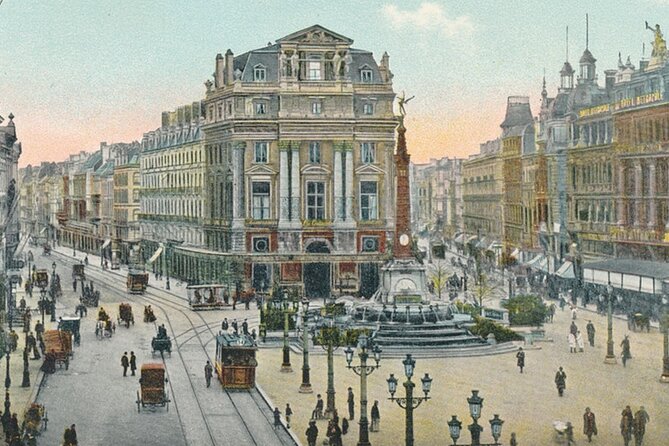
The third stop is Le Coin du Diable, or the Devil’s Corner. Its story comes from the 17th century and is presented as a famous local legend.
This stop changes the mood. The earlier sites concern criminal cases tied to hotels and people. Le Coin du Diable brings in folklore and the way older societies understood danger, evil, and unexplained events. It helps show that the history of crime is also the history of fear.
The fifteen-minute stop gives the guide time to explain the legend rather than simply naming it. You may find this section less factual than the documented cases, but that is part of its purpose. A city’s stories include both recorded events and tales that survive because they capture a place’s imagination.
I like this change of pace. A two-hour walk made up only of grim case files could become heavy. The legend provides a different kind of darkness and gives you a glimpse of how Brussels remembered frightening places before modern policing and forensic methods shaped public ideas about crime.
If you prefer strictly documented criminal cases, this may be the least essential stop for you. If you enjoy folklore and the way old cities attach meaning to particular corners, it adds useful texture to the route.
Place Saint-Géry and a case that gripped Brussels
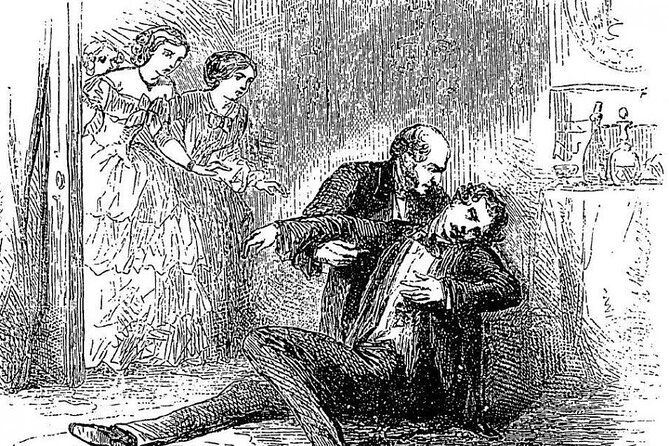
The fourth stop is Place Saint-Géry, where a particularly atrocious crime left three people dead and fascinated Brussels in the middle of the 19th century.
This is the emotional center of the walk. The number of victims gives the case immediate weight, but the larger point is the public reaction. The story shows how a major crime could capture the attention of an entire city before modern mass media, online reporting, or television.
You spend about fifteen minutes here. A public square is a fitting place to discuss a case that affected the wider community. The guide can connect the event to public curiosity, fear, and the social customs of the time. You may begin to see how crime was discussed and remembered in a city where news moved through personal networks, newspapers, and public gathering places.
The tour ends at Place Saint-Géry, at Pl. Saint-Géry 1, in the center of the square. That makes the final stop convenient for continuing your evening in central Brussels. It also means you do not need to return to the Grand Place after the walk.
Do not expect a museum-style presentation here. There is no entry fee and no indoor exhibit included. The setting itself is part of the experience, while the guide supplies the narrative.
Place du Jardin aux Fleurs and an unusual motive
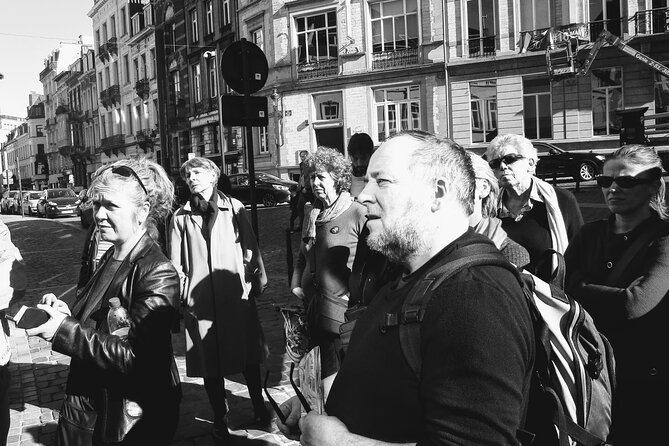
The fifth stop is Place du Jardin aux Fleurs. The case here involves a villainous crime carried out for an unusual kind of loot.
That unusual motive gives the final story a different flavor. You have already heard about passion, legend, and mass public fascination. This case brings in greed and criminal calculation, but with an odd detail that apparently made the crime memorable.
The stop lasts about fifteen minutes. Since the description does not reveal the exact loot, I would avoid searching for the answer before you go. Part of the fun is hearing how the guide builds the story and explains why the object or reward was so unusual.
Ending with this case works well. It leaves you with a story that is strange as well as grim, rather than finishing only on the most violent event. The final location also places you in a useful part of central Brussels, close to other sights, cafés, and evening plans.
The guide’s style and the value of the storytelling
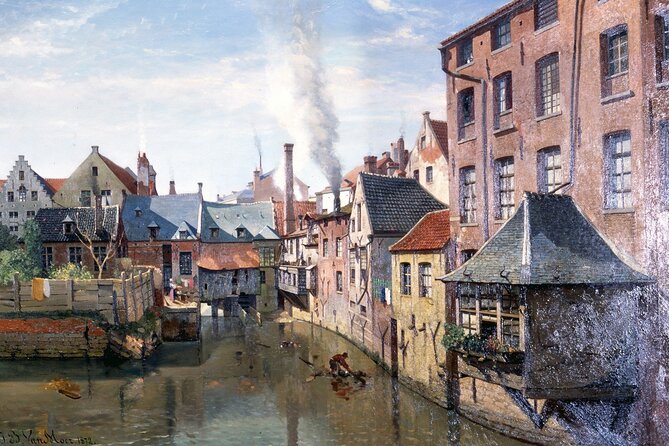
The strongest praise for this experience focuses on the guide. The guide is described as sympathetic, professional, and able to add historical background while telling the crime stories. That combination is exactly what this walk needs.
I would judge the tour less by the number of cases than by how clearly the guide links them to their time. The best moments should explain what the police could do, how people behaved, and why a particular crime fascinated the public. The cases are the hooks, but the social context gives them lasting value.
The presentation does not appear to rely heavily on costumes, role-play, or audience participation. One piece of feedback suggested adding those elements to make the walk more playful. I see that as a fair point, but also a matter of taste. More theater could make the experience lively, yet it might also weaken the respectful tone promised by the tour.
If you want a dramatic performance, you may find the format restrained. If you prefer a serious guide who sticks to the facts and explains the period, that restraint should work in your favor.
Price, group size, and practical planning
At about $23.26 per person, the price is reasonable for a two-hour guided walk in central Brussels. You are paying for the guide’s preparation, storytelling, and local focus rather than for admissions. All fees and taxes are included, and there are no extra site tickets to buy along the way.
The value is strongest if you already plan to explore the historic center. The route gives familiar streets and squares a different meaning, so you can combine the tour with regular sightseeing before or after it. If you have no interest in crime stories, the price will feel less worthwhile, since the entire walk is built around that subject.
The group can include up to 25 people. That is not a private tour, but it is still a manageable size for a walking experience. You should position yourself where you can hear clearly, especially at open squares where city noise may compete with the guide.
The mobile ticket is convenient. Confirmation arrives at booking, and the tour is near public transportation. Service animals are allowed, and most people can take part. Since the walk lasts about two hours and includes standing outdoors, consider your own comfort with that format.
The experience is usually booked about 12 days ahead. I would not treat that as a strict rule, but it is a sensible reason to reserve before your Brussels trip rather than waiting until the last minute.
You can cancel for a full refund if you do so at least 24 hours before the start time. Changes or cancellations inside that window are not accepted for a refund, so check your plans before the cutoff.
Who should book the Brussels crime scenes tour?
I would recommend this walk to you if you enjoy:
- True crime presented with historical context
- Old city streets with unsettling stories attached to them
- Social history, police history, and changing public customs
- Folklore alongside documented criminal cases
- A compact walking tour in central Brussels
- Serious storytelling rather than a comedy performance
Families should decide based on the age and sensitivity of everyone in the group. The material can be violent and frightening, and the presentation does not appear designed as a children’s attraction.
This is also a good choice for a repeat visitor who has already seen the Grand Place, Saint-Géry, and the surrounding streets. The route does not replace Brussels’ major art museums or landmark visits. Instead, it adds another layer to places you may otherwise see only as attractive backdrops.
The experience has a very high overall rating of 4.9 from 128 ratings, with 100 percent recommendation shown in the available information. Those figures support the idea that the guide and storytelling are the main reasons to book. Still, the subject itself is narrow, and the lack of theatrical interaction may matter to you.
Should you book this two-hour Brussels crime walk?
Book it if you want Brussels explained through its darker cases, not just its grand buildings. The guide’s historical background, professional manner, and ability to keep attention make this more useful than a simple list of gruesome incidents.
Skip it if you dislike stories of murder, violence, or human cruelty, or if you want costumes and audience participation. For everyone else, $23.26 is a fair price for two hours of focused storytelling across central Brussels, with the added benefit of ending at Place Saint-Géry so you can continue exploring on your own.
FAQ
How long does the Brussels Crime Scenes tour last?
The tour lasts approximately two hours.
How much does the tour cost?
The listed price is $23.26 per person.
Where does the tour begin?
The meeting point is Rue de l’Etuve 1, 1000 Bruxelles, Belgium.
Where does the tour end?
The tour ends at Pl. Saint-Géry 1, 1000 Bruxelles, in the center of Place Saint-Géry.
What is included in the price?
All fees and taxes are included. Coffee and tea are not included.
Can I cancel for a full refund?
Yes. You can cancel at least 24 hours before the scheduled start time for a full refund. Cancellations or changes made less than 24 hours before the start time are not accepted for a refund.
Just added in Brussels
- Transfer from BRU Airport to Brussels city (any hotel or address)★ 5.0 · 1 review
- Standard vehicle from Brussels airport to city of Antwerp★ 5.0 · 4 reviews
- Standard Minivan from Brussels airport to city of Antwerp★ 5.0 · 1 review
- Private transfer from BRU Airport – Brussels GO BACK MB V-CLASS 7 PAX★ 5.0 · 2 reviews
- Private transfer from Brussels Airport to Brussels city Business car★ 5.0 · 1 review
- Transfer Brussels Airport -> Antwerp MB V-CLASS 7 PAX★ 5.0 · 1 review
- Private transfer from BRU Airport to Bruges with Mercedes V class 7 pax★ 5.0 · 1 review
- Private transfer from BRU Airport to Bruges with luxury limousine 3 pax★ 5.0 · 1 review
Dark History Walks, compared.


Bruges at Night: Murder, Mystery & Dark Stories Small Group Walk
Read our review →
Browse the lists this tour appears in