
Reviewed · DARK HISTORY WALKS
Bruges at Night: Murder, Mystery & Dark Stories Small Group Walk
Bruges changes after sunset. This two-hour evening walk pairs the city’s glowing canals and medieval squares with funny legends, unsettling tales, and local history. I like the small group limit of 15, which gives the guide room to answer questions, and I like that the route moves beyond the usual Markt and Belfry photo stops into old pubs, quiet waterways, and former trading streets.
The guides are a major part of the appeal. Sophie, Pascal, Alistair, Andy, Arthur, and Nick have each been praised for lively storytelling, humor, and practical recommendations. The main caution is that the title promises murder and mystery, while the actual walk is often more folklore and city history than true crime. Rain can also take the shine off an outdoor tour, and in summer it may still be daylight when you set out.
In This Review
- Five things to know before you book
- Why Bruges works so well after dark
- Meeting the group beneath the Belfry
- Markt and the beer stops
- Burg Square and the city’s foundations
- Romantic bars, fries, and the old money district
- Groot Vlaenderen and Pottenmakersstraat
- Augustine Bridge and Bruges’ Spanish quarter
- The ghost house and the eel story
- Vlissinghe, the oldest pub, and the reason for the route
- Canals and Jan van Eyckplein after sunset
- How the guides shape the experience
- Price, group size, and practical value
- Who should book this Bruges night walk
- Should you book Bruges at Night?
- FAQ
- How long does the Bruges at Night walk last?
- Where does the tour begin?
- Where does the walk end?
- Is the tour offered in English?
- What is the maximum group size?
- Is entry to the Belfry included?
- Are drinks, food, or museum entries included?
- Is this a true murder mystery tour?
- What happens if the weather is poor?
Five things to know before you book
- The route ends at Jan van Eyckplein, among old harbor buildings and canal reflections, only a short distance from the starting area.
- The stories are the main attraction, with ghost tales, devilish eel legends, historic oddities, and humorous local details.
- You visit places many standard city walks skip, including Pottenmakersstraat, Gouden-Handrei, Augustine Bridge, and the old Spanish quarter.
- The group is capped at 15 people, a useful size for hearing the guide and asking questions without joining a large procession.
- You stay outside for nearly the whole experience, so wear comfortable shoes and prepare for Bruges weather.
- The $42.33 price pays for the guide and storytelling, not entry into the Belfry, Beer Museum, Town Hall, or Frietmuseum.
Why Bruges works so well after dark
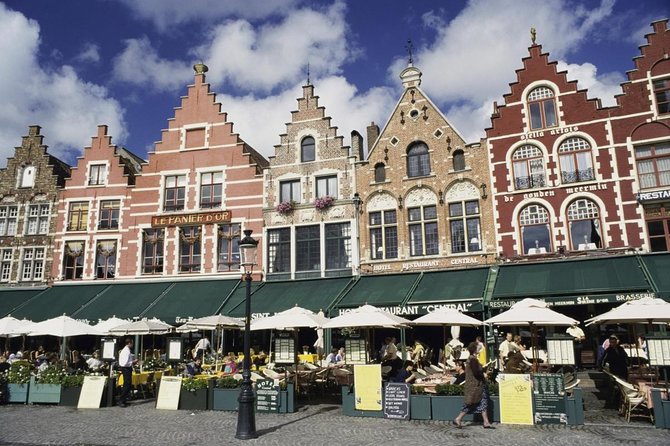
Bruges is already easy to admire by day. The Markt, Burg Square, canals, stepped gables, and Belfry are all heavily photographed. At night, though, the crowds thin and the city becomes quieter. Reflections in the water matter more, narrow streets feel more atmospheric, and familiar buildings take on a different mood.
I would not book this walk only to see the famous sights. You can find those on your own. The value comes from having someone connect the buildings and lanes with stories about traders, tavern life, religion, crime, superstition, and the people who shaped Bruges.
The route is also useful early in a stay. Guides often point out places to eat, drink, or visit later, including the Beer Museum, Staminee De Garre, and the oldest pub featured near the end of the walk. Several guides have also offered daytime suggestions, which helps you make better use of a short visit.
The evening timing is not fixed in emotional terms. During summer, the start may be called a night tour even though the sun is still up and building lights may not yet be on. That does not ruin the walk, but you should set expectations correctly. In winter or later evening conditions, the dark-story mood will be stronger.
More Walking Tours in Bruges
- Bruges: Small Group Boat Cruise and Guided Walking Tour
★ 4.8 · 4,102 reviews - Bruges: Walking Tour, Canal Boat Trip w/Beer Tasting Option
★ 4.4 · 2,759 reviews - Historical Walking Tour: Legends of Bruges
★ 5.0 · 2,541 reviews
Meeting the group beneath the Belfry
The walk begins on the Markt, directly in front of the Belfry of Bruges. This civil tower is a fitting meeting point because it signals how important Bruges once was as a medieval commercial center.
You do not go inside the Belfry, and admission is not included. The stop is brief, mainly an introduction to the city and the tower’s role. If climbing the Belfry is on your list, plan that separately during the day.
From here, the guide introduces the historic center and explains how the evening route will work. The welcome is short, which is good. You are not stuck listening to a long speech in the busiest square before the walk even begins.
Markt and the beer stops
The Markt is the first proper setting for the city story. This is where you get your bearings, hear an introduction to Bruges, and begin looking beyond the postcard view.
A quick stop outside the Bruges Beer Experience follows. The guide explains why the museum and its bar are worth considering, but entry is not part of the tour. That distinction matters if you are counting on a tasting or museum visit. You receive information, not a beer experience.
The next stop is Staminee De Garre, a small bar known for Belgian beer. Again, the tour does not include a drink. The point is to show you where to return later. I like this style of recommendation because it turns the walk into a useful evening orientation rather than a string of disconnected photo stops.
You also hear about a place offering Flemish beef stew and more than 400 beers. The exact stop is presented as part of the food and drink advice rather than a scheduled meal. Bring your appetite, but do not expect dinner to be served during the walk.
Burg Square and the city’s foundations
Burg Square offers a more serious historical pause. The square is described as the birthplace of Bruges around 1,200 years ago, and the guide uses it to explain how the city developed.
The nearby Town Hall is one of the Low Countries’ oldest. You stop outside, and entrance is not included. The exterior alone is worth seeing, but the short visit means this is an introduction rather than a full architectural tour.
This part of the walk helps anchor the ghost stories in real urban history. Bruges was not built as a stage set for evening photographs. It was a working city of rulers, merchants, religious institutions, craftspeople, and busy drinking houses. That human context gives the later legends more weight.
More dark history walks in Bruges:
- Evening Tour: The Dark Side of Bruges
★ 5.0 · 956 reviews - Private Tour: The Dark Side of Bruges
★ 5.0 · 70 reviews - Bruges: 1.5-Hour Dark Side of Bruges Private Tour
★ 4.5 · 55 reviews - Night Tour: The Dark Side of Bruges – by Legends
★ 4.8 · 18 reviews
Romantic bars, fries, and the old money district
Bar Rose Red is a brief stop at one of Bruges’ romantic bars. The guide points out why it is worth knowing, especially if you want somewhere atmospheric after the walk.
Next comes the Frietmuseum Brugge. You do not enter, but you learn where to find the museum devoted to Belgian fries. It is a light moment in the route and a useful reminder that Bruges’ food culture is not limited to chocolate and beer.
The walk then reaches Huis Ter Beurze, a key stop for the city’s commercial past. Here the guide explains why Bruges is sometimes called the cradle of capitalism. The topic gives the tour some welcome range. This is not only a procession of spooky anecdotes. You also get a sense of how trade, finance, and merchant networks shaped the city.
A pool pub and Belgian beer bar are also pointed out along the way. These quick recommendations are easy to miss on a standard sightseeing walk, especially if you are staying only one or two nights.
Groot Vlaenderen and Pottenmakersstraat
Groot Vlaenderen is a short stop for cocktails in a building with an unusual past. The guide does not need much time here. The charm is in the combination of an active bar and the older story attached to its building.
Pottenmakersstraat receives more attention. The description refers to the first, the last, and the oldest all meeting at one corner, a compact puzzle that suits the tour’s style. This is the kind of detail you are unlikely to notice from a guidebook map alone.
The route works best when you enjoy small facts that attach themselves to a street corner. If you prefer long, formal explanations of art and architecture, some of these stops may feel too brief. If you like a guide who keeps moving and changes subjects often, the pace should suit you.
Augustine Bridge and Bruges’ Spanish quarter
At Augustine Bridge, or Augustijnenbrug, the guide explains that this area was once the heart of Bruges’ Spanish district. The bridge gives you another change of mood, moving from nightlife advice toward older neighborhood history.
The stop is not about crossing a major attraction off a checklist. It is about seeing how the city’s districts once had their own character and connections. The route spends time in corners that can feel ordinary in daylight but more evocative when the streets are quieter.
This is also where guide style matters most. Pascal has been praised for theatrical delivery and humor, while Sophie has used an iPad to show old maps, earlier views of buildings, and supporting material for local legends. Small touches like these can help you picture a Bruges that no longer exists.
The ghost house and the eel story
Huis Den Noodt Gods is also called the ghost house of Bruges. This is one of the clearest matches for the tour’s dark-stories theme. You stop outside, and admission is not included.
Do not expect a haunted-house attraction or a staged scare show. The appeal is the guide’s telling of the local story and the way the building fits into the surrounding streets. Some guides perform the tales with theatrical gestures, which can make the moment memorable without turning the tour into a theme-park production.
At Gouden-Handrei, you hear the old belief that eels in the canals were snakes placed there by Satan. Sophie has even shown supporting material connected with the golden-eel legend and acted out part of one story on the actual steps. These details show the playful side of the experience. The tour treats folklore as something to enjoy, not as proven fact.
Vlissinghe, the oldest pub, and the reason for the route
Vlissinghe is described as the culmination of the tour. The guide explains why this place matters and where to find it, with the oldest pub theme forming one of the walk’s strongest practical moments.
You should pay attention here if you want a drink after the tour. The walk is not a pub crawl, and drinks are not included, but you leave with a clearer idea of where to return. That is a better arrangement for many people because you can decide later whether you want a quiet beer, food, or another part of town.
The old pub setting also brings together several threads from the walk: work, drink, trade, superstition, and daily life. Bruges’ dark stories feel more believable as human stories when they are tied to real meeting places rather than presented as isolated ghost tales.
Canals and Jan van Eyckplein after sunset
The final section reaches Spiegelrei, a photographer-friendly canal area lined with former warehouses belonging to wealthy traders. Their reflections in the water make this one of the best places to have your camera ready.
The walk finishes at Jan van Eyckplein, an old harbor area. This is a handsome ending, especially at night, when the canals and old façades can look almost still. The square is only a few minutes from the starting area, so you are not left in an inconvenient outer district.
The ending also gives you a useful choice. You can continue into the center for a drink or meal, return toward the Markt, or use the guide’s suggestions to plan the following day. Since the tour does not finish at a major transportation hub, check your onward plans before you start if you need to catch a train immediately afterward. Nick, one of the guides, has helped people confirm their train platform at the end, but that kind of assistance should be seen as a thoughtful extra, not a guaranteed service.
How the guides shape the experience
The strongest part of this walk is the guide’s delivery. A dry list of dates would not work well here. You need someone who can shift from medieval politics to a ghost tale, then to beer, fries, or a strange street name without losing the thread.
Pascal is often praised for energy, humor, historical detail, and theatrical storytelling. Sophie brings local enthusiasm and creative aids, including old maps, images, small props, and playful reenactments. Alistair has been valued for a broad range of tales and a relaxed manner.
Andy has been especially effective with mixed-age groups and solo participants. Arthur is described as gentle in pace and willing to answer questions, which matters during warm weather or for anyone who does not want to hurry. Nick has tailored the walk to small groups and offered useful help for plans after the tour.
Guide assignments can vary, so book this for the format and route rather than for one named person. The individual guide will influence how spooky, comic, historical, or interactive the evening feels.
Price, group size, and practical value
At $42.33 per person, this is not the cheapest way to see Bruges. You can walk through the Markt, Burg Square, canals, and Jan van Eyckplein without paying an admission fee.
The price makes more sense if you value interpretation. For roughly two hours to two hours and 15 minutes, you get a dedicated English-speaking guide, a small group capped at 15, a route through lesser-seen streets, and recommendations for later food, drinks, and daytime sightseeing.
There is no included meal, beer, museum entry, or tower climb. You should budget separately for anything you decide to visit after the guide points it out. I consider the tour good value for a first visit, a short stay, or a solo trip where you want company without joining a huge group.
The walk requires comfortable shoes. Bruges is best explored on foot, and the route covers a fair amount of ground. It also takes place outdoors, so bring waterproof clothing when rain is possible. Several experiences have continued in wet conditions, but rain can reduce the views and make it harder to enjoy the stories.
Most people can participate, and service animals are allowed. The route is near public transportation, and confirmation arrives when you book. You can cancel for a full refund up to 24 hours before the start time. Poor weather or an insufficient number of bookings can lead to a rescheduled date or full refund.
Who should book this Bruges night walk
I would recommend it to you if you enjoy:
- Folklore, ghost stories, and unusual local details
- Historic pubs, beer culture, and food recommendations
- Walking through quiet canals and side streets
- Small groups with room for questions
- A guide who tells stories with humor and a bit of theater
- Seeing Bruges at a calmer hour than the daytime peak
I would hesitate if you want a serious murder investigation, extensive interior sightseeing, or a tour focused mainly on art and architecture. The murder and mystery title sets a dramatic expectation, but the actual experience mixes dark legends with general city history, bar suggestions, trade stories, and amusing facts.
Should you book Bruges at Night?
Book it if you want Bruges explained through stories rather than simply photographed. The best parts are the guide’s personality, the move into quieter neighborhoods, the canal views at Spiegelrei and Jan van Eyckplein, and the practical tips for pubs and daytime stops.
Skip it if you have limited mobility, dislike walking in uncertain weather, or want entry to the Belfry, Town Hall, Beer Museum, or Frietmuseum included. For everyone else, the combination of a 15-person maximum, strong guides, and a route beyond the main squares makes this a smart evening introduction to Bruges.
FAQ
How long does the Bruges at Night walk last?
The experience lasts approximately two hours to two hours and 15 minutes.
Where does the tour begin?
It begins at the Market Square, or Markt, in front of the Belfry of Bruges in Bruges, Belgium.
Where does the walk end?
The tour ends at Jan van Eyckplein, an old harbor area a few minutes from the starting point.
Is the tour offered in English?
Yes. An English-speaking guide is included.
What is the maximum group size?
The group is limited to a maximum of 15 people.
Is entry to the Belfry included?
No. The Belfry is viewed from outside, and admission is not included.
Are drinks, food, or museum entries included?
No. The tour includes the English-speaking guide only. Stops include recommendations for places such as beer bars, restaurants, the Beer Museum, and the Frietmuseum, but purchases and admission fees are separate.
Is this a true murder mystery tour?
It includes mysterious, spooky, and dark stories, but the content also covers Bruges history, folklore, trade, pubs, food, and local recommendations. It is not presented as a staged murder investigation.
What happens if the weather is poor?
The experience requires good weather. If it is canceled because of poor weather, you will be offered another date or a full refund. You can also cancel for a full refund if you do so at least 24 hours before the start time.
Just added in Bruges
- Unknown Bruges: A Self-Guided Audio Tour to the Heart of the Medieval Metropole★ 5.0 · 1 review
- 2-Hour Private Walking Tour of Bruges★ 5.0 · 13 reviews
- Tour of Historical Bruges knowing The Jerusalem Chapel★ 5.0 · 2 reviews
- Ticket Expo Body Worlds in Bruges, Belgium★ 4.5 · 11 reviews
- 6 Hour Bruges Shore Excursion from Zeebrugge Cruise Port★ 4.5 · 23 reviews
- The Waffles ‘n Coffee Breakfast in Bruges Centre★ 4.5 · 9 reviews
- Explore the Instaworthy Spots of Bruges with a Local★ 5.0 · 3 reviews
- Surprise Walk of Bruges with a Local★ 5.0 · 1 review
Dark History Walks, compared.

Browse the lists this tour appears in