

Reviewed · DARK HISTORY WALKS
Evening Tour: The Dark Side of Brussels
Brussels has a darker story to tell. This evening walk pairs famous squares with tales of torture, punishment, murder, and political power, giving you more than the usual chocolate-and-beer introduction to Belgium’s capital. I like the strong city route, which links the Sablon, Marolles, and courthouse areas, and I like the guides’ storytelling, especially the praise for Sebastian, Rahim, Den, David, Ann Marie, and others. The main catch is the name: this is not always a gruesome night tour, but often a broader evening history walk with a few unsettling turns.
The price is remarkably low at $3.62 per group of up to six, though the guide’s income depends on tips. I would arrive early and carry euros for that reason. Also, expect a fair amount of walking, some hills, and occasional difficulty hearing a quiet guide in a larger group.
In This Review
- The essential facts before you book
- What The Dark Side Of Brussels really delivers
- Meeting at Grand Place after sunset
- Place du Grand Sablon and the city’s polished side
- Place Saint-Jean and old Brussels atmosphere
- Tour Anneessens and a more complicated Brussels
- Rue de Rollebeek and a quieter side street
- Notre Dame du Sablon and gothic atmosphere
- Palais de Justice and Brussels from the hill
- Petit Sablon and the symbols around the garden
- Place du Jeu de Balle and the Marolles
- Kapellekerk and the walk’s final note
- Guide style matters more than the low price
- The cost, timing, and practical tradeoffs
- Who will enjoy this evening walk
- Should you book The Dark Side Of Brussels?
- FAQ
- Where does the tour start?
- Where does the tour end?
- How long does the tour last?
- What language is the tour offered in?
- How much does the tour cost?
- Is the tour focused only on frightening stories?
- How large can the group be?
- Is the tour suitable for most people?
- Are service animals allowed?
- Can I cancel for a full refund?
The essential facts before you book
- Dark stories mixed with standard landmarks: Expect Brussels history, politics, architecture, punishment, and lesser-known facts, not nonstop crime tales.
- A two-hour route through three historic districts: The walk connects the Grand Place area, Sablon, the Palais de Justice, and the Marolles.
- A very low booking price: The $3.62 charge covers a group of up to six, but tipping is an important part of the guide’s pay.
- Guide quality can shape the evening: Strong guides such as Rahim, Sebastian, David, Den, Ann Marie, and Ian received especially warm praise for humor and storytelling.
- The tour ends away from the starting point: You finish at Kapellekerk near Rue des Ursulines, not back at Grand Place.
- Come prepared to walk: The route is manageable for someone in reasonable shape, but it can feel more strenuous than the short stop times suggest.
What The Dark Side Of Brussels really delivers
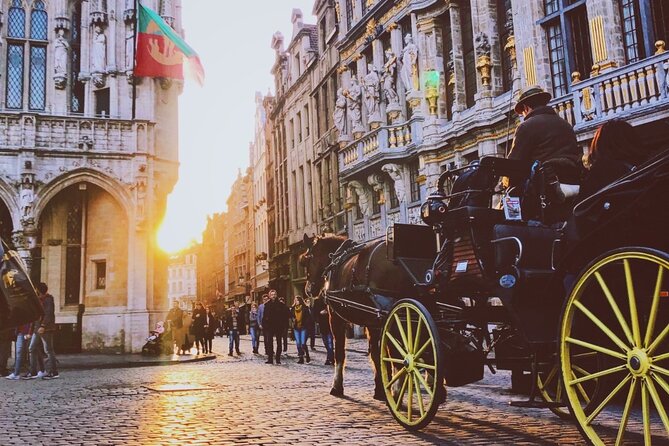
The title suggests a tour of Brussels’ criminal underworld after sunset. In practice, the experience is broader and more flexible. You will hear about the city’s less flattering past, including torture, murder, suicide, punishment, political structures, and old legends, but you will also get plenty of ordinary architectural and civic history.
That mix is the key to enjoying it. If you want a tightly scripted tour focused only on scandals and sinister legends, this may feel too mild. If you want to see Brussels at dusk while learning why its churches, squares, courts, and working-class districts matter, the format makes more sense.
The strongest guides turn familiar places into fresh material. Rahim was praised for teaching the basic story of Brussels before moving into its more disturbing chapters. Sebastian was described as funny and well informed. David reportedly handled a fairly large group well, speaking clearly and making sure people could follow. Ann Marie was praised for her storytelling and for taking questions along the way.
The experience is offered in English and includes a professional guide. The advertised group limit is 35 people, so this is not necessarily an intimate private stroll. A smaller group should be easier for questions and photographs, while a full group may require you to stay close and listen carefully.
More dark history walks in Brussels:
- Guided tour: Brussels Crime Scenes
★ 5.0 · 128 reviews - Private Tour: The Dark Side of Brussels
★ 5.0 · 20 reviews - Brussels: 2-Hour Dark Side of Brussels Private Tour
★ 4.8 · 11 reviews
Meeting at Grand Place after sunset
The listed starting point is Grand Place, also called Grote Markt, in central Brussels. One guide specifically directed the meeting group to the area in front of City Hall. That detail matters because the square can be crowded, especially in the evening, and a vague meeting point can create needless stress.
I recommend reaching Grand Place at least 10 minutes early. One person missed the guide after searching for 25 minutes in a packed square, despite arriving before the scheduled start. The operator later said the guide had been in front of City Hall, but this episode shows why you should confirm the precise meeting spot and keep your phone available.
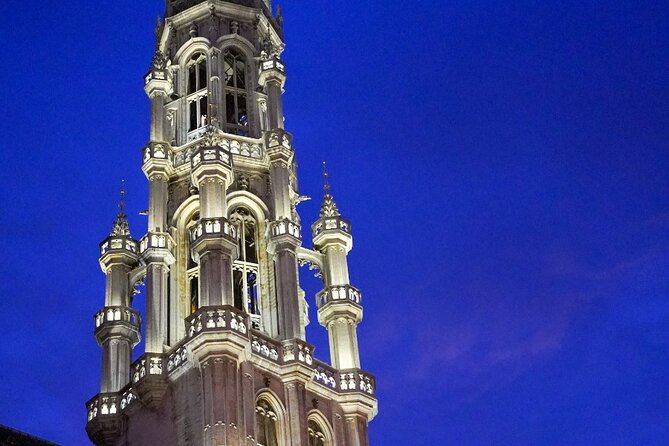
Grand Place is a fitting opening. Its ornate buildings provide an instant lesson in Brussels’ public image: grand, wealthy, ceremonial, and carefully presented. The tour then begins to look behind that polished front.
Place du Grand Sablon and the city’s polished side
The first listed stop is Place du Grand Sablon, with about 10 minutes allocated. The square is associated with market life, fresh produce, artisanal goods, cafes, and cultural activity. In the evening, you may find the atmosphere calmer than during the day, but the location still gives the guide a useful way to explain Brussels as a city of trade, food, craft, and social gathering.
This stop may feel more decorative than dark. That is part of the tour’s pattern. The guide often uses a handsome square or important building as a doorway into a less comfortable subject, rather than taking you straight to a crime scene or ghost story.
Place Saint-Jean and old Brussels atmosphere
Place Saint-Jean receives another 10-minute visit. It is a historic square with cafes, attractive buildings, and the St. John the Baptist Church as its main visual feature. You get a pause from the grand scale of Grand Place and a closer look at the smaller spaces where daily city life took place.
For me, this is the kind of stop that works best when the guide supplies context. On its own, the square is pleasant but not an obvious dark-side attraction. The value comes from hearing how Brussels’ religious buildings and public spaces fit into earlier civic life, social rules, and systems of punishment.
More things to do in Brussels:
- Brussels: Atomium Entry Ticket with Design Museum Ticket
★ 4.4 · 9,254 reviews - From Brussels: Guided Day Trip to Bruges and Ghent
★ 4.6 · 8,353 reviews - From Brussels: Bruges & Ghent Day Tour – 2 Fairytale Cities
★ 4.7 · 8,242 reviews - Choco-Story Brussels: Chocolate Museum Entrance with Tasting
★ 4.3 · 4,883 reviews
Tour Anneessens and a more complicated Brussels
The Anneessens district offers a shift in tone. The area is known for a mixed community, lively markets, historic landmarks, and a blend of architectural styles. It presents Brussels as a working city rather than a postcard collection of grand facades.
This section helps explain why the tour is better understood as lesser-known Brussels history. Some experiences include stories about social conditions and political structures here, while others may spend more time on general local history. One complaint described the route as dependent on the guide and group size, so you should allow for some variation rather than expecting every stop to receive exactly the same treatment.
Rue de Rollebeek and a quieter side street
Rue de Rollebeek brings the group through a picturesque historic street lined with cobblestones, cafes, and small shops. It offers a pleasant walking break and a chance to see how old Brussels blends with present-day city life.
Again, do not expect every location to carry a sinister story. The street’s appeal is visual and atmospheric. At dusk, the cobbles and older facades can give the walk a different character from a daytime sightseeing tour, which is one reason several people enjoyed seeing familiar Brussels after dark.
The tradeoff is that a visitor looking only for major sights may find this stop modest. The tour’s reward comes from the connections between places, not from checking off nine spectacular monuments.
Notre Dame du Sablon and gothic atmosphere
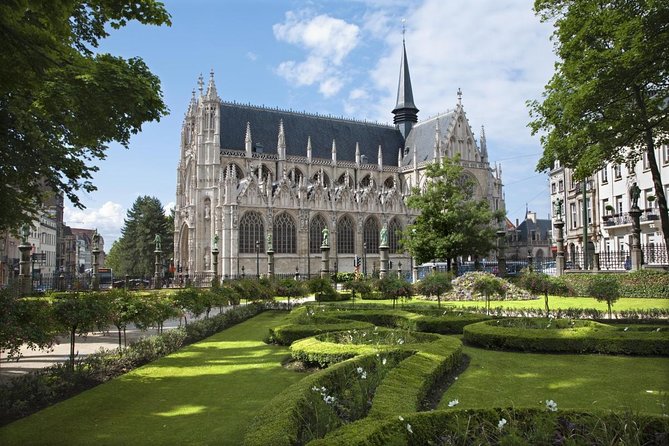
Notre Dame du Sablon is one of the route’s strongest visual stops. This gothic church is known for detailed architecture and stained-glass windows, and its position in the Sablon district gives the guide a natural setting for stories about religion, belief, death, and public memory.
You will have roughly 10 minutes here, so do not expect a full interior visit or a long architectural lecture. The time is better suited to a focused explanation and a look at the exterior details. If you enjoy churches, this part may be more rewarding than the stops that are included mainly for their streetscape.
The church also helps balance the darker material. The tour does not stay grim for two hours. It moves between beauty, civic history, local legends, and troubling events, which keeps the evening from becoming one long list of atrocities.
Palais de Justice and Brussels from the hill
The Palais de Justice is the route’s most imposing landmark. This huge courthouse is known for its neoclassical design, legal importance, and position above the city. The elevated setting provides broad views across Brussels, giving you a useful pause from street-level walking.
This is where the title’s promise has the best chance of being fulfilled. A courthouse naturally leads to stories about law, punishment, crime, political authority, and the people who controlled public justice. Several strong experiences reportedly included material about punishment and the political environment, not simply decorative facts about buildings.
The hill also explains the physical effort. The tour is not entirely flat, and the route can feel more demanding than the 10-minute stop descriptions suggest. You do not need exceptional fitness, but comfortable shoes are sensible. If you are carrying luggage or dealing with limited mobility, ask before booking because the published information only says that most people can participate.
Petit Sablon and the symbols around the garden
Square du Petit Sablon is a carefully arranged garden square surrounded by 48 small bronze statues representing medieval guilds. It is one of the more attractive places on the walk, with manicured planting, formal design, and plenty of crafted detail to examine.
The statues give the guide an opportunity to explain Brussels’ guild culture and the role of trades in medieval urban life. This is another example of the tour’s wider approach. The stop may not be dark in itself, but it can reveal the social divisions, occupations, and power structures behind a beautiful public space.
If the group is large, keep close to the guide. A garden square is easy to wander through, and the combination of evening light and other pedestrians can make it difficult to hear every point from the back.
Place du Jeu de Balle and the Marolles
The route then heads toward Place du Jeu de Balle in the Marolles. The square is famous for its daily flea market, where you might find old photographs, second-hand clothing, vintage furniture, and assorted objects with a past life.
This is one of the most authentic-feeling parts of the route because it connects history with an active neighborhood setting. Even if the market is winding down or closed during your visit, the square remains a useful entry into the Marolles, a district with a distinct local identity and a less formal feel than Sablon.
The stop is also a reminder that dark side does not always mean horror. Old objects, working-class streets, and stories about people living outside Brussels’ polished center can be just as revealing as tales of crime. Some people found the route’s lesser-known facts more interesting than the expected top sights. Others felt that several stops lacked enough drama. Your reaction will depend on what you want from the title.
Kapellekerk and the walk’s final note
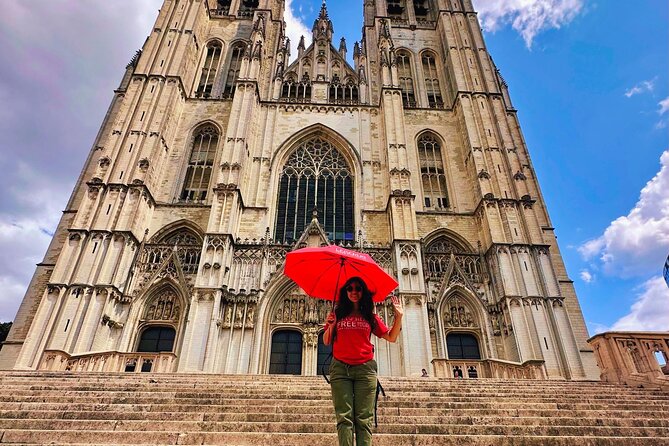
The tour finishes at Église Notre-Dame de la Chapelle, known in English as Kapellekerk, in the Marolles. The church refers back to a chapel founded here in 1134 and offers a gothic ending to the route.
The final stop is short, about five minutes. It is not a grand finale with a theatrical reveal. Instead, it gives the walk a final link to medieval Brussels and leaves you in a popular neighborhood rather than returning you to Grand Place.
That ending is practical if you plan to continue exploring the Marolles. It is less convenient if you assumed the tour would loop back to the original meeting place. The stated end point is near Brussels-Chapelle station on Rue des Ursulines, so check your onward plans before starting.
Guide style matters more than the low price
The strongest praise is aimed at the people leading the walks. Rahim received especially warm comments for enthusiasm, humor, and a desire to teach. Sebastian was praised for making the material informative and entertaining. David was noted for clear delivery, which matters when a group grows large.
Den was described as attentive and a skilled storyteller, while Ann Marie was praised for telling legends well and welcoming questions. Ian also received strong praise for making Brussels’ history interesting. Other guides were described as pleasant, relaxed, and able to communicate in several languages, although this tour itself is offered in English.
There is some unevenness. One guide reportedly spoke too quietly for parts of the group. Another experience felt rehearsed. A few people found the route or content less interesting than expected. That does not necessarily mean the tour is poor, but it does mean the guide has a major effect on the evening.
The tour appears to operate in a tip-based format despite the very small booking charge. I would view $3.62 as an access or reservation fee, not the full value of the guide’s work. Several people specifically encouraged a fair tip, and one person noted that some participants gave nothing even after a long, high-effort walk. Bring euros and decide what the experience was worth to you.
The cost, timing, and practical tradeoffs
At $3.62 per group of up to six, the financial risk is low. That makes this a sensible choice for a first evening in Brussels, especially if you want orientation without paying for a traditional high-priced private tour.
The low price should not lead you to expect a fixed private itinerary. The maximum group size is 35, the route may vary, and the content can change with the guide and number of participants. The published duration is about two hours, though one guide reportedly continued well beyond that. Another account described the walk as closer to an hour and a half.
The experience is booked an average of 14 days in advance, which suggests you should reserve ahead if your dates are fixed. You receive confirmation at booking, and free cancellation is available until 24 hours before the start time. If the minimum number is not met, the operator may offer another date or experience, or provide a full refund.
Service animals are allowed, and the tour is near public transportation. Most people can participate, but the walking distance, hills, group size, and evening conditions still matter. I would not schedule a tight train departure immediately afterward.
Who will enjoy this evening walk
I would choose this tour if you like city walks that mix architecture with odd facts, political background, and uncomfortable episodes. It suits first-time visitors who want to see several central districts in one outing, as well as repeat visitors who have already done a standard Grand Place tour.
It is also a good fit for solo visitors. One solo participant found the group easy to join, and a guided evening route can help you get oriented without arranging a private guide.
I would hesitate if you want a tightly timed route with guaranteed stops and a strong focus on notorious crimes. The title can create expectations the walk does not always meet. It is closer to an evening history tour with dark chapters than a dedicated true-crime experience.
Should you book The Dark Side Of Brussels?
Book it if you want a cheap, guided introduction to Brussels after dark, and you are happy to hear ordinary history alongside grim stories. The route covers a lot of ground, ends in the Marolles, and gives strong guides room to make the city feel personal and surprising.
Skip it if you need a precise itinerary, a guaranteed guide style, or nonstop dark material. Arrive early at City Hall on Grand Place, wear good shoes, stay near the guide, and budget a tip. With those expectations, this is a worthwhile way to spend an evening and see a side of Brussels that a standard sightseeing loop often misses.
FAQ
Where does the tour start?
It starts at Grand Place, also called Grote Markt, in Brussels. The guide has been identified as meeting in front of City Hall.
Where does the tour end?
The tour ends at Église Notre-Dame de la Chapelle, also called Kapellekerk, near Rue des Ursulines and Brussels-Chapelle station.
How long does the tour last?
The advertised duration is approximately two hours. Some walks may last longer, while one account described an experience of about one and a half hours.
What language is the tour offered in?
The tour is offered in English.
How much does the tour cost?
The listed price is $3.62 per group of up to six people. The very low charge functions like a booking cost, and guides depend on tips.
Is the tour focused only on frightening stories?
No. The walk includes stories about torture, murder, suicide, punishment, and other troubling subjects, but it also covers architecture, politics, local legends, churches, and general Brussels history.
How large can the group be?
The maximum group size is 35 people.
Is the tour suitable for most people?
The published information says most people can participate. The walk includes several stops and some uphill walking, so reasonable walking ability and comfortable shoes are useful.
Are service animals allowed?
Yes. Service animals are allowed.
Can I cancel for a full refund?
Yes, if you cancel at least 24 hours before the scheduled start time. Cancellations made less than 24 hours in advance are not refunded, and the operator may cancel if the minimum number of participants is not met.
Just added in Brussels
- Transfer from BRU Airport to Brussels city (any hotel or address)★ 5.0 · 1 review
- Standard vehicle from Brussels airport to city of Antwerp★ 5.0 · 4 reviews
- Standard Minivan from Brussels airport to city of Antwerp★ 5.0 · 1 review
- Private transfer from BRU Airport – Brussels GO BACK MB V-CLASS 7 PAX★ 5.0 · 2 reviews
- Private transfer from Brussels Airport to Brussels city Business car★ 5.0 · 1 review
- Transfer Brussels Airport -> Antwerp MB V-CLASS 7 PAX★ 5.0 · 1 review
- Private transfer from BRU Airport to Bruges with Mercedes V class 7 pax★ 5.0 · 1 review
- Private transfer from BRU Airport to Bruges with luxury limousine 3 pax★ 5.0 · 1 review
Dark History Walks, compared.
Bruges at Night: Murder, Mystery & Dark Stories Small Group Walk
Read our review →
Browse the lists this tour appears in