
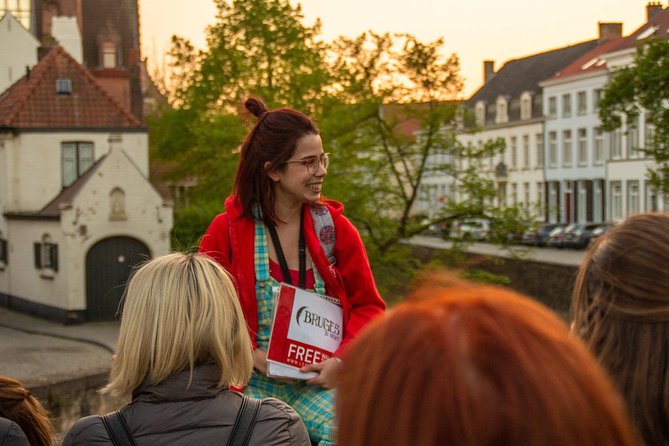
Reviewed · DARK HISTORY WALKS
Evening Tour: The Dark Side of Bruges
Bruges gets more intriguing after sunset. This 90-minute walk takes you beyond the postcard center into old squares, canals, medieval trade routes, ghost stories, and corners many day visitors miss. I especially like the small-group format, capped at six people, and the way the route ends at the Bauhaus bar with a buy-one-drink, get-one-free beer offer. The low price, listed at $3.62 per person, also makes this an easy add-on to a Bruges visit.
The main caution is that the tour can run longer than advertised, and guide quality matters. Guides such as Martin, Louis, Patrick, Bram, Hilde, and Jonathan have been praised for humor, clear storytelling, and local pride, but some people have found guides hard to hear or understand. The beer arrangement has also not always been delivered clearly, so treat it as a useful bonus rather than the main reason to book.
In This Review
- Key points to know before you go
- Why Bruges works especially well after dark
- Beginning at the Markt: a quick map of Bruges
- Jan van Eyckplein and the lost harbor
- Choco-Story square and Bruges as a business center
- Langerei and the Golden Hand Canal
- Vlissinghe, Belgium’s old drinking tradition
- Adornes Domain and the church modeled on Jerusalem’s Holy Sepulchre
- Windmills, a medieval gate, and the city edge
- Ending at Bauhaus with the beer offer
- Price, group size, and what the value really is
- Which guide style will suit you best?
- Practical advice for a smoother evening
- Who should book The Dark Side of Bruges?
- Should you book this evening walk?
- FAQ
- How long does The Dark Side of Bruges tour last?
- Where does the tour begin?
- Where does the tour end?
- Is a beer included?
- Is the tour offered in English?
- Can I cancel for a full refund?
Key points to know before you go
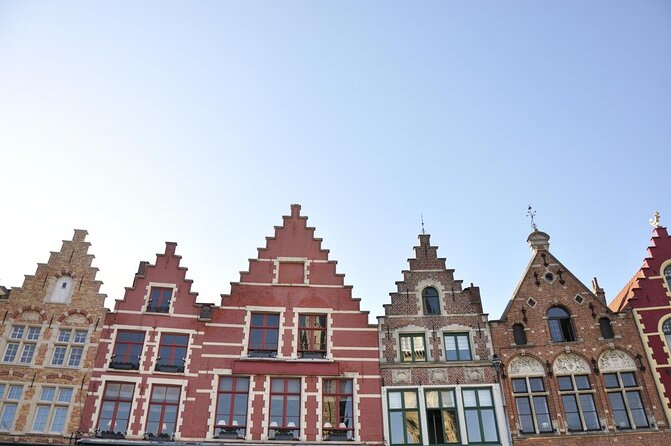
- The route leaves the postcard center: You visit Jan van Eyckplein, Langerei, Adornes Domain, and the windmills near Sint-Janshuismolen.
- The mood is part history, part folklore: Expect old legends, superstition, trade stories, and darker tales, not a pure ghost walk.
- The group size can be excellent: The advertised maximum is six, though some departures have been larger.
- The tour ends far from the Markt: The Bauhaus bar is at Langestraat 121, about a 12-minute walk from the starting point.
- Allow extra time: Several departures have lasted close to two hours or more, so do not schedule dinner too tightly.
- The beer offer needs clarification: The advertised deal is buy one drink, get one free beer, and it has not always happened as expected.
Why Bruges works especially well after dark
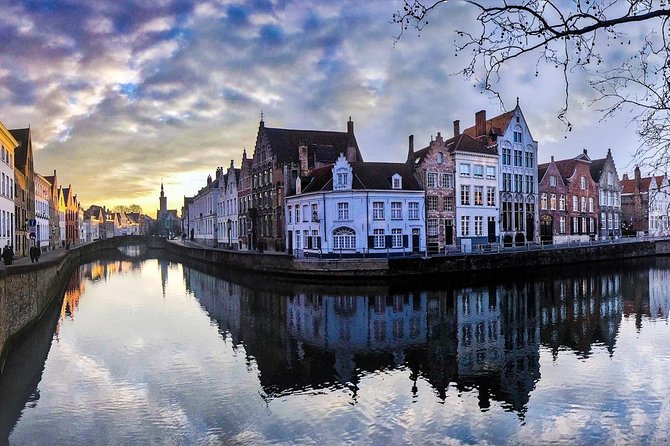
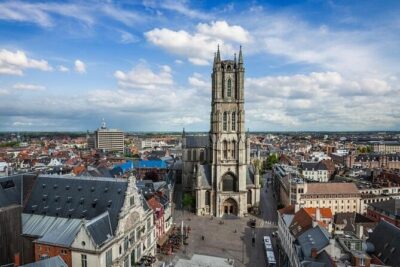
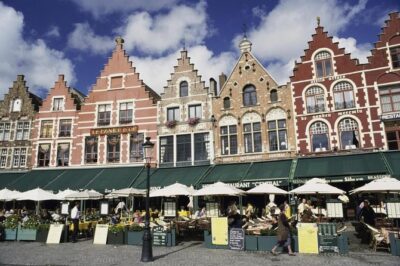
In daylight, Bruges can feel carefully arranged for visitors. The Markt, canals, stepped gables, and horse carriages tend to draw every eye. After dark, the city becomes quieter and the stories have more room to breathe. A narrow lane or old canal wall can feel less like scenery and more like part of a tale.
This walk is not only about spooky entertainment. The best guides use the darker stories to explain how Bruges worked: how merchants traded, how religious belief shaped daily life, how superstition filled gaps in people’s understanding, and how old buildings carried memories long after their original use had faded.
The title may lead you to expect a dedicated ghost tour. That is not always what you get. The guide may focus more on Bruges’s trade, political past, and unusual local customs, with folklore woven in. If you want nonstop scares, this could feel too historical. If you enjoy history with a sly twist, the mix works well.
The starting point is Pieter de Coninck en Jan BreydelMarkt, close to the main Markt. You should arrive with the meeting point saved on your phone. One poor experience came from a seasonal meeting-point change that was not communicated well, so check the final instructions before leaving your hotel, especially around Christmas.
More dark history walks in Bruges:
- Bruges at Night: Murder, Mystery & Dark Stories Small Group Walk
★ 5.0 · 137 reviews - Private Tour: The Dark Side of Bruges
★ 5.0 · 70 reviews - Bruges: 1.5-Hour Dark Side of Bruges Private Tour
★ 4.5 · 55 reviews
Beginning at the Markt: a quick map of Bruges
The walk opens on Bruges’s main square with a roughly 10-minute introduction. This is useful because it gives you a basic map before the route moves into less familiar streets.
You will hear how the city developed and why its position mattered. The square is a sensible place to begin, but there is one practical drawback: you may spend the opening minutes standing still. Bring a warm layer in cold weather, and wear shoes that can handle a long walk on uneven streets.
The introduction also helps you understand the difference between this experience and a standard daytime city tour. You are not simply ticking off the Belfry and the main churches. Instead, you are being pointed toward overlooked details and older stories that can be easy to miss when you explore alone.
Several people have found this opening valuable as a first activity in Bruges because it gives them a sense of direction. I agree with that timing. Take this tour early in your stay if you want the rest of your visit to feel more organized. You will recognize the canals and squares later, and you may notice details you would otherwise walk past.
Jan van Eyckplein and the lost harbor
The next stop is Jan van Eyckplein, a handsome square linked to Bruges’s medieval harbor. The guide explains how this area functioned when Bruges was a major trading city, before changes in waterways and commerce altered its fortunes.
This is one of the strongest history sections of the walk. It gives context to the city’s wealth without requiring a museum visit or a long lecture. The square also helps you picture Bruges as a working port rather than only a pretty collection of old façades.
The stop lasts around 10 minutes. That is long enough for a clear explanation, but not so long that the walk becomes a classroom exercise. A good guide may use small architectural details to show how trade shaped the buildings around you.
The exact balance depends on the person leading the walk. Patrick, Louis, Martin, Bram, Hilde, and Jonathan have all been singled out for making the material lively, interactive, or funny. At least one departure, though, concentrated heavily on international trade and offered less unusual folklore than expected. Keep your expectations flexible: the tour’s darker side can mean old commerce, tragedy, and superstition, not only spirits.
Choco-Story square and Bruges as a business center
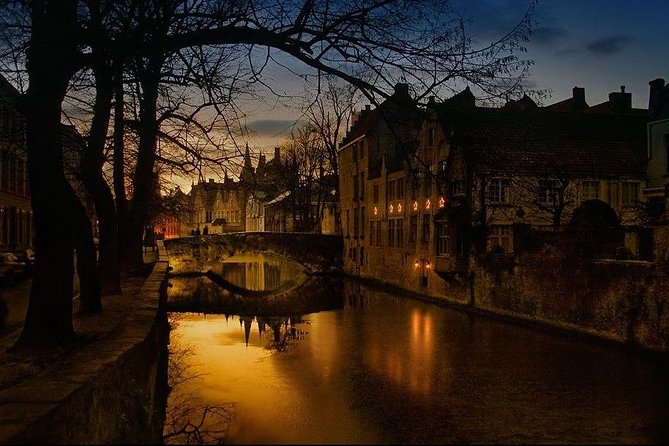
Near Choco-Story, the route pauses at a square once associated with Italian trading houses. Here you hear about one of the world’s early stock exchange markets, dating to the 13th century.
This stop gives the tour a useful financial angle. Bruges was not simply a place where merchants unloaded goods. It developed systems for trading and exchanging money, and those systems helped shape the city’s influence.
The stop is listed at about 10 minutes, with no separate admission required. You do not enter the chocolate museum as part of the tour. The building and square serve as reference points for the story.
I like this part because it adds substance to the legends. Folklore is easier to appreciate when you understand the city’s real pressures: money, foreign merchants, changing trade routes, and crowded commercial quarters. If you have already taken a detailed daytime history tour, this section may repeat some basics. Even then, the evening setting and route can give familiar facts a different feel.
More things to do in Bruges:
- Bruges: Small Group Boat Cruise and Guided Walking Tour
★ 4.8 · 4,102 reviews - Bruges: Walking Tour, Canal Boat Trip w/Beer Tasting Option
★ 4.4 · 2,759 reviews - Historical Walking Tour: Legends of Bruges
★ 5.0 · 2,541 reviews - Bruges: Choco-Story Chocolate Museum Guided Tour w/Tastings
★ 4.2 · 1,379 reviews
Langerei and the Golden Hand Canal
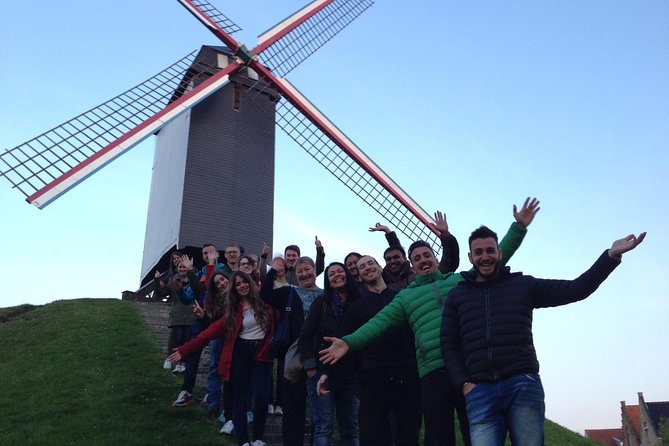
At Langerei, the guide tells the story behind the picturesque Golden Hand Canal. The tale involves the devil, tragedy, and a strong dose of superstition.
This is likely to be one of the more atmospheric parts of the evening. Canals are naturally suited to stories about greed, loss, and strange old beliefs. The darkness helps, but the value comes from the connection between the physical setting and the tale.
Do not expect every story to be historically verified. The tour presents legends as part of Bruges’s cultural memory. A skilled guide makes the distinction clear while still telling the story with energy.
This is also where guide delivery matters most. The group needs to hear the narrative and see the relevant spot at the same time. Some guides use humor, questions, or short quizzes to keep everyone involved. Others have been too quiet or have spoken with an accent that made details difficult to follow. Stay near the guide if you can, especially in a larger-than-expected group.
Vlissinghe, Belgium’s old drinking tradition
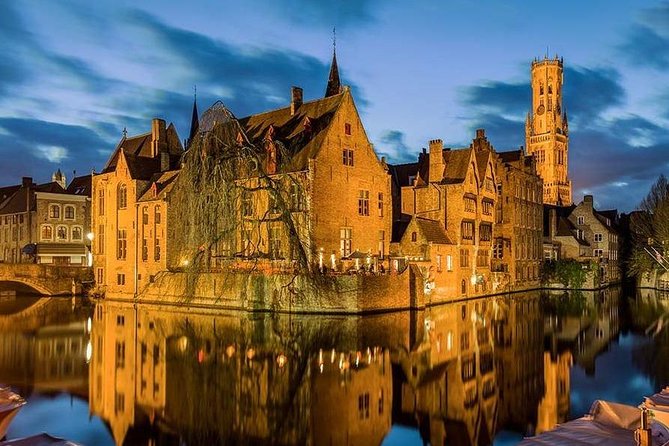
The route pauses outside Vlissinghe, described as the oldest bar in Bruges and Belgium. People have been drinking beer there since 1515.
The stop is brief, around five minutes, but it adds a nice local touch. You are not just hearing about grand churches and wealthy merchants. You are also getting a glimpse of the city’s long social life, where a bar could remain part of the neighborhood for centuries.
The tour does not list a drink inside Vlissinghe as part of the stop. You look at the historic bar and hear its story. If you want to visit it later, you will need to make your own plans.
This point also prepares you for the ending at the Bauhaus. Bruges has a long beer culture, but the final drink should not be confused with a full tasting experience. You get a social stop, not a guided lesson on Belgian brewing.
Adornes Domain and the church modeled on Jerusalem’s Holy Sepulchre
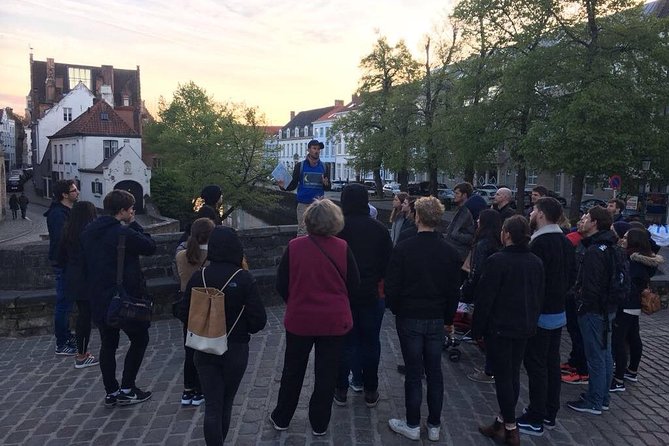
At Adornes Domain, the guide explains the legend of the remarkable church built as a copy of the Church of the Holy Sepulchre in Jerusalem.
This is one of the route’s most unusual subjects. It ties Bruges to medieval pilgrimage and religious imagination, while showing how powerful places far away could influence local architecture. The story also fits the tour’s tone: solemn, mysterious, and a little strange.
The stop takes about 10 minutes. The experience is an exterior walking tour, so do not assume that you will enter the church or receive admission to the domain. You are there to hear the story and see the setting.
For me, this is the kind of stop that justifies choosing a route away from the Markt. You could spend a full day in Bruges and still miss the connection. The guide’s storytelling makes the location more memorable than a quick glance at a map would.
Windmills, a medieval gate, and the city edge
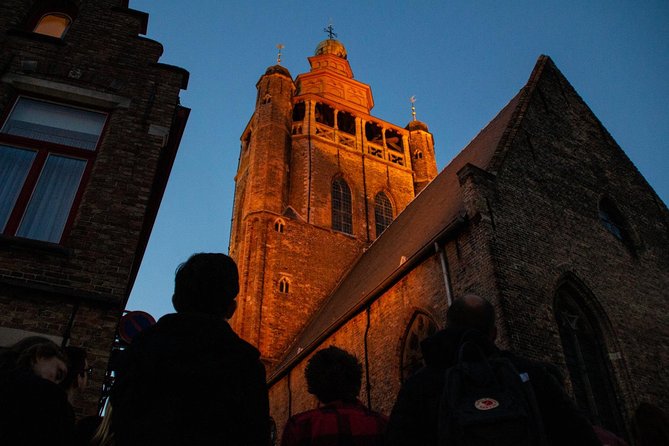
The walk continues toward Sint-Janshuismolen, where you can photograph the windmills on the outskirts of the old city. The route also includes a view of one of the remaining medieval city gates.
This is the most physically demanding section for some people. The walk has already covered several neighborhoods, and the route near the windmill includes steps. One person had difficulty with the climb, and there was no handrail in that area. If you have trouble with stairs or need a slower pace, ask the guide early about the route.
The reward is a change of scene. The center of Bruges is filled with façades and canals, while this section opens the view toward the old defensive edge. The windmills give you a different image of the city, and the medieval gate helps explain how Bruges once controlled movement in and out.
Bring a coat in cool weather. The evening wind can be noticeable, particularly in exposed areas. This is also a good point to keep your phone ready for photos, though you should not let the camera distract you from staying with the group.
Ending at Bauhaus with the beer offer
The tour finishes at the Bauhaus bar on Langestraat, about a 12-minute walk from the starting point. The final stop is scheduled for around 20 minutes, giving you time to settle in and continue the evening.
The advertised deal is a complementary beer arrangement: buy one drink and get one free beer. Read that wording carefully. It is not necessarily a completely free drink for every person, and one departure ended without the promised beer. Ask the guide or bar staff to explain the offer before ordering.
The ending can be a pleasant way to meet the people from your group, especially if you booked the walk to socialize. It also puts you in a useful part of Bruges for dinner and drinks. One practical note: the tour does not return to the Markt, so plan your route afterward.
Dinner timing deserves attention. Some people found that Bruges restaurants finish service early, while others suggested grabbing an omelet at a tourist café near the square later in the evening. I would eat before the tour if you need a proper meal, or confirm restaurant hours before setting out.
Price, group size, and what the value really is
At $3.62 per person, this is a remarkably inexpensive way to spend an evening in Bruges. The price covers the guide, the walking route, and the advertised beer promotion. It does not include museum entry, food, transportation, or a guaranteed full drink without a purchase.
The value is strongest when you treat the tour as an introduction to Bruges’s overlooked corners. You get a route you might not create for yourself, local stories, and a chance to ask questions. The price is low enough that a less polished departure is unlikely to ruin an entire trip, though it can still waste an evening if the tour runs far over time.
The advertised maximum is six people, which would make for an excellent intimate walk. Actual group sizes have varied, with one English-language departure reaching 17 people. That is still manageable, but it changes the experience. In a bigger group, move close to the guide and speak up if you cannot hear.
The overall rating is 4.8 from 956 ratings, with 94 percent recommending it. Those numbers fit the pattern I see in the detailed feedback: most of the praise goes to the guides’ humor, local pride, storytelling, and ability to reveal parts of Bruges beyond the main square.
Which guide style will suit you best?
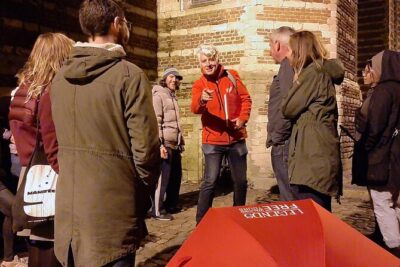
The guide makes or breaks this experience. Martin is praised for mixing history with funny anecdotes. Louis is described as a strong ambassador for Bruges who notices small details. Patrick is praised for keeping the tour informative and entertaining, while Bram is credited with bringing local color to the past.
Hilde’s multilingual explanations were especially impressive to one group. Jonathan used history, legends, and humor for an enjoyable introduction. These examples suggest a tour with a personal, guide-led feel rather than a fixed audio script.
That also explains the uneven feedback. A guide who speaks quietly, moves too fast, or relies on a book of pictures without showing everyone can make the same route frustrating. The walk is best for someone comfortable with a little uncertainty and willing to engage with the guide.
A short interactive quiz has helped keep some groups focused. You may also get restaurant advice, including recommendations for mussels and Belgian fries. These small touches can be as useful as the formal history.
Practical advice for a smoother evening
Wear comfortable shoes. The route covers a good portion of Bruges, and several people described it as a lot of walking. The advertised length is 1 hour and 30 minutes, but some departures lasted two hours or ran at least 30 minutes over.
Arrive early at Pieter de Coninck en Jan BreydelMarkt and confirm the exact meeting point. The tour is offered in English and uses a mobile ticket. It is near public transportation, and service animals are allowed.
Plan for the weather. The experience requires good weather, and the guide may cancel if conditions are poor. You can then choose another date or receive a full refund. For your own comfort, bring a warm layer and be prepared for wind near the canals and mills.
Free cancellation is available up to 24 hours before the start time. Changes or cancellations made inside that period are not accepted for a refund. The tour also requires a minimum number of participants, so a cancellation for that reason results in another date, another experience, or a full refund.
Who should book The Dark Side of Bruges?
I would choose this walk if you want more than the standard Bruges highlights. It suits first-time visitors who want to get oriented, history lovers who enjoy stories with a touch of superstition, and anyone looking for an evening activity after the day’s boat trip.
It also works well as a partner to a canal cruise. The boat shows Bruges from the water, while this route explains old squares, trading areas, religious sites, and the city edge. There is relatively little reason to expect the two experiences to feel repetitive.
I would hesitate if you need a strict finish time, dislike long walks, or want a polished ghost tour with a guaranteed beer. People with hearing difficulties should stay close to the guide and confirm that the group size is manageable. If dinner matters, eat beforehand or book late enough to allow for an overrun.
Should you book this evening walk?
Yes, if you want a cheap, lively introduction to Bruges that reaches beyond the Markt. The strongest reason to book is the route: Jan van Eyckplein, Golden Hand Canal, Vlissinghe, Adornes Domain, the windmills, and a medieval gate give you a broader picture of the city.
Book with sensible expectations. This is part history walk, part local folklore, and part social beer stop. The guide may be excellent, as Martin, Louis, Patrick, Bram, Hilde, and Jonathan have shown, but the experience can suffer if the guide is hard to hear or if the group is larger than planned. Keep your evening open, check the meeting instructions, and see the beer offer as a bonus. At this price, it is a strong value for curious visitors who want Bruges after the tour buses have gone.
FAQ
How long does The Dark Side of Bruges tour last?
The advertised duration is approximately 1 hour and 30 minutes. Some departures have run longer, including close to two hours or at least 30 minutes beyond the planned finish.
Where does the tour begin?
It begins at Pieter de Coninck en Jan BreydelMarkt, 8000 Brugge, Belgium.
Where does the tour end?
The tour ends at the Bauhaus bar at Langestraat 121, 8000 Brugge, Belgium. This is about a 12-minute walk from the starting point.
Is a beer included?
The ending includes an advertised offer to buy one drink and receive one free beer. It is wise to confirm the arrangement before ordering, since it has not always been provided as expected.
Is the tour offered in English?
Yes. The experience is offered in English and uses a mobile ticket.
Can I cancel for a full refund?
Yes, if you cancel at least 24 hours before the experience start time. Cancellations or changes made less than 24 hours in advance are not refundable, while poor-weather or minimum-participant cancellations offer another date or a full refund.
Just added in Bruges
- Unknown Bruges: A Self-Guided Audio Tour to the Heart of the Medieval Metropole★ 5.0 · 1 review
- Tour of Historical Bruges knowing The Jerusalem Chapel★ 5.0 · 2 reviews
- Ticket Expo Body Worlds in Bruges, Belgium★ 4.5 · 11 reviews
- 2-Hour Private Walking Tour of Bruges★ 5.0 · 13 reviews
- 6 Hour Bruges Shore Excursion from Zeebrugge Cruise Port★ 4.5 · 23 reviews
- The Waffles ‘n Coffee Breakfast in Bruges Centre★ 4.5 · 9 reviews
- Explore the Instaworthy Spots of Bruges with a Local★ 5.0 · 3 reviews
- Surprise Walk of Bruges with a Local★ 5.0 · 1 review
Dark History Walks, compared.

Bruges at Night: Murder, Mystery & Dark Stories Small Group Walk
Read our review →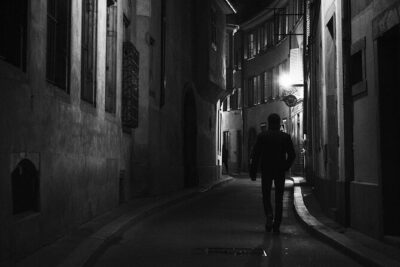
Browse the lists this tour appears in