
Reviewed · BELGIAN CHOCOLATE TASTINGS
Discover authentic Ghent with historian & taste the best chocolate
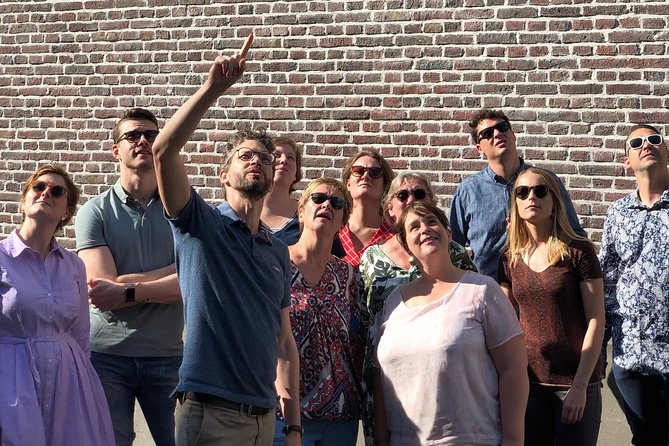
Ghent reveals its secrets one square at a time. This two-hour walking tour pairs a clear introduction to the city with stories about power, trade, religion, architecture, and the famous Van Eyck brothers. I especially like the small-group limit of 15 people, which should make it easier to hear guide Wim and ask questions. I also like that the route covers major sights without turning into a dull march from monument to monument.
The chocolate stop adds a pleasant local taste, but it is a short part of the experience, not the main event. If you want a dedicated chocolate tasting with several samples, this tour may leave you wanting more. The real value is the guided explanation of Ghent, delivered in English by a historian who has lived in the city for many years.
In This Review
- Five things to know before you book
- Why this short walk works well in Ghent
- Starting at Sint-Baafsplein
- St. Bavo’s Cathedral and the Van Eyck brothers
- Vikings, villains, and the Castle of Gerald the Devil
- Hoogpoort and Ghent Town Hall
- Stadshal and Korenmarkt
- The Great Butchers’ Hall and a practical medieval solution
- Gravensteen and St. Veerleplein
- Graslei and Korenlei, the walk’s grand finish
- What the chocolate portion is really like
- Price, pace, and group size
- The guide makes the difference
- Who should book this Ghent walk?
- Should you book it?
- FAQ
- Where does the tour start?
- Where does the tour end?
- How long does the tour last?
- What language is the tour offered in?
- How much does the tour cost?
- How many people can join the tour?
- Are attraction admission tickets included?
- Is chocolate the main focus?
- Is the tour suitable for most people?
- Can I cancel for a full refund?
Five things to know before you book
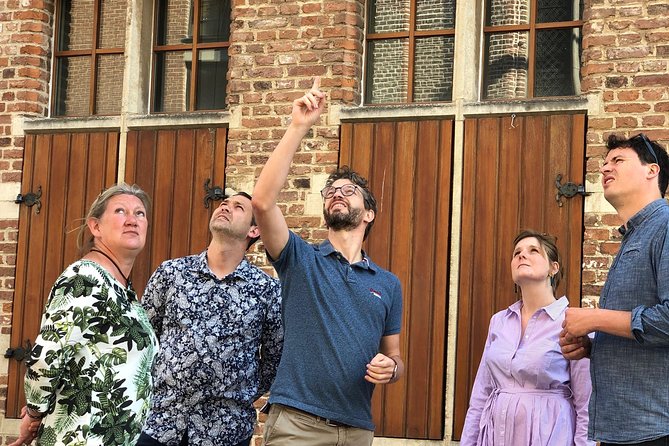
- Wim brings personal knowledge of Ghent: His warm, informed style is one of the strongest reasons to choose this walk.
- The route links 12 central sights: You begin at Sint-Baafsplein and finish near Saint Michael’s Bridge.
- Chocolate is a brief refreshment: Expect a taste during the walk, not a two-hour food tour.
- The group is capped at 15 people: That is a useful balance between company and personal attention.
- The tour explains how Ghent developed: Economic, political, cultural, and religious themes all appear along the route.
- You pay for interpretation, not entry tickets: The listed price is $42.05 per person, while the outdoor stops are free to visit.
Why this short walk works well in Ghent
Ghent can feel confusing at first. Its old center contains churches, canals, guild houses, a castle, civic buildings, and grand squares packed close together. Without context, you may admire the façades but miss the arguments, rivalries, and practical needs that shaped them.
This tour gives you a framework. At Sint-Baafsplein, Wim begins with the basic story of the city, then connects four forces that shaped Ghent: money, government, faith, and culture. That approach is more useful than a string of isolated dates. You learn to read the city as you walk through it.
The pace also suits a first visit. The stops are short, usually five or ten minutes, with a longer opening explanation of about 20 minutes. You keep moving, but the route does not try to cram every corner of Ghent into one afternoon.
The 4.8 rating from 30 published ratings and a 97 percent recommendation rate point to a strong overall experience. The praise focuses on Wim’s enthusiasm, clear explanations, and love for the city. One especially useful point is that the tour works best for people who want to understand Ghent, rather than spend most of the time eating chocolate.
More Belgian Chocolate Tastings in Ghent
- Ghent: Belgian Chocolate Walking Tour with Tastings
★ 4.9 · 259 reviews - Ghent: Famous Belgian Chocolate Walking Tour with Tastings
★ 5.0 · 131 reviews - A Taste of Ghent: Beer & Chocolate with storytelling by a local
★ 5.0 · 77 reviews
Starting at Sint-Baafsplein
Meet Wim in front of the white statue in the middle of Sint-Baafsplein. This exact meeting detail matters, since the square contains several large buildings and open spaces. I would arrive a few minutes early and check that you are standing by the statue, not simply somewhere near the cathedral.
The opening 20 minutes provide the tour’s foundation. You look at Sint-Baafsplein through four lenses: economic, political, cultural, and religious life. That makes the square more than a starting point. It becomes a compact introduction to how Ghent functioned.
This is also where Wim’s teaching style matters most. He is described as a historian and teacher who explains the city with enthusiasm and natural ease. If you appreciate a guide who gives context instead of rushing through names and dates, this opening should be one of the most useful parts.
St. Bavo’s Cathedral and the Van Eyck brothers
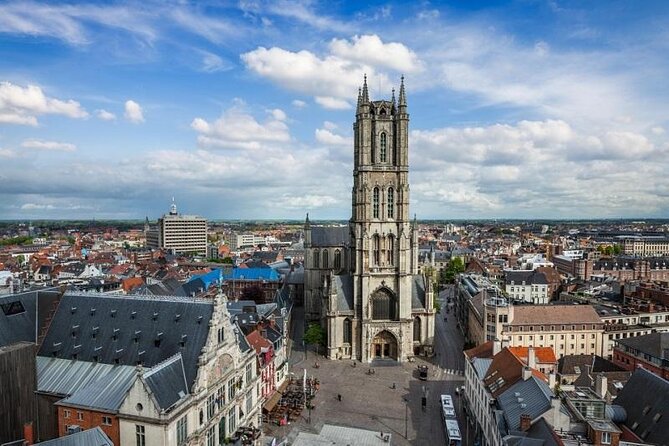
The walk continues around St. Bavo’s Cathedral, where you spend about ten minutes learning how the building developed and hearing about its important art. The tour does not list admission inside the cathedral, so treat this portion as an exterior discussion unless Wim advises otherwise.
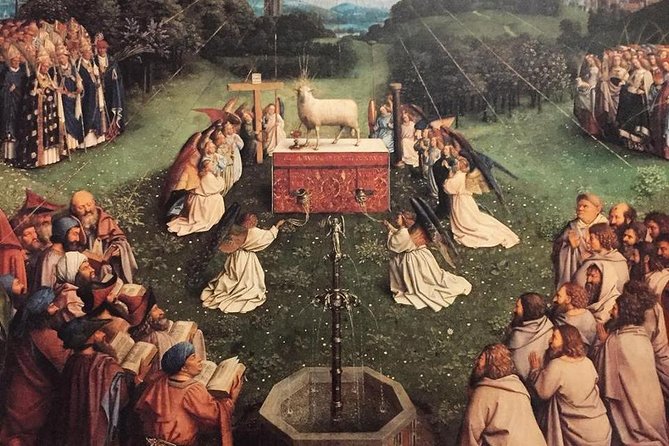
The cathedral’s appeal here is architectural and artistic. You get a sense of how a major religious building changed over time, then connect it with Ghent’s place in European art. The next stop, Maaseikplein, brings in the Van Eyck brothers and invites you to look closely at their image.
That short five-minute stop may sound modest, but it gives the guide a chance to add visual detail to the larger story. Instead of only hearing about famous artists, you examine how they are represented in the city. Bring your attention to the artwork and listen for the small clues Wim points out.
Vikings, villains, and the Castle of Gerald the Devil
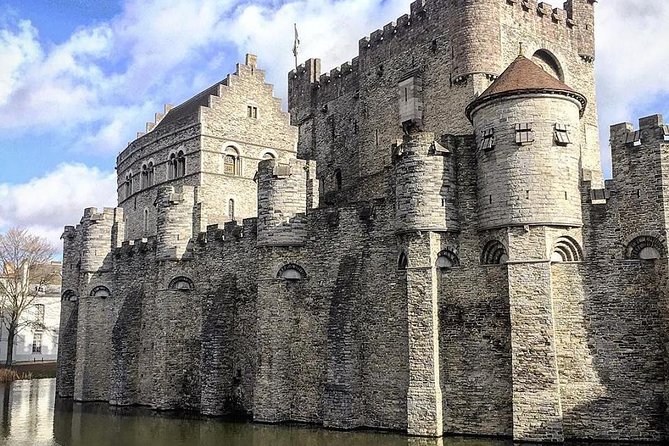
At Geeraard de Duivelsteen, also called the Castle of Gerald the Devil, the story shifts from art and religion to the Scheldt and the people who threatened or troubled Ghent. Vikings enter the tale, along with Geeraard De Duivel, the figure associated with the castle’s striking name.
You spend about five minutes here. That is enough for a focused explanation, but not enough for a full castle visit. The value comes from seeing how legends and defensive buildings fit into the city’s broader story.
This is one reason a guided walk helps. A building with a dramatic name naturally attracts attention, but a guide can connect it to Ghent’s waterways, conflicts, and local memory. You are not just photographing a dark stone façade. You are learning why it became part of the city’s identity.
A completely different kind of day:
- Ghent: 50-Minute Medieval Center Guided Boat Trip
★ 4.5 · 5,637 reviews - Historical Walking Tour: Legends of Gent
★ 5.0 · 1,761 reviews - Ghent: 40 Minute Medieval Center Guided Boat Tour
★ 4.4 · 884 reviews - Evening Tour of the Dark Side of Gent
★ 5.0 · 646 reviews
Hoogpoort and Ghent Town Hall
In Hoogpoort, the focus turns to buildings dating from the 13th century. The stop lasts about five minutes, so expect a quick lesson in old urban architecture rather than a long architectural survey.
The route then reaches Ghent Town Hall, where the guide explains why construction continued across several centuries. The story includes Emperor Charles V, the most famous Gentenaar, and the revolt of Ghent’s citizens against him.
That conflict also explains the city’s nickname, noose bearers. It is an unusually memorable piece of local history, and it gives the town hall stop some humor and political bite. Ghent’s past was not simply a parade of wealthy merchants and fine buildings. Its citizens could resist powerful rulers, sometimes with consequences that later became part of local pride.
The town hall stop lasts about ten minutes, making it one of the more substantial stops on the route. You should get a clearer sense of how civic power operated and why this building took so long to reach its present form.
Stadshal and Korenmarkt
Stadshal offers a change of pace. It is described as the most contested building in Ghent, and the guide asks about its nickname. This is a useful reminder that Ghent is not frozen in its medieval past. Modern buildings can cause just as much argument as old ones.
At Korenmarkt, you look at houses with roughly 800 years of history. Some contain mysterious inscriptions, which gives the stop a scavenger-hunt quality without turning the walk into a formal game.
These brief pauses are good for noticing details you might otherwise miss. You may find yourself looking upward at façades, rooflines, and carved signs instead of only following the main street. Since each stop lasts around five minutes, stay close enough to hear the explanation before wandering off for photographs.
The Great Butchers’ Hall and a practical medieval solution
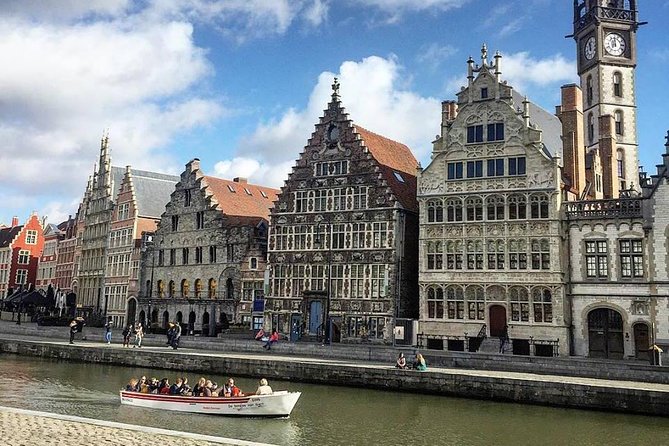
Het Groot Vleeshuis, or the Great Butchers’ Hall, brings everyday life into the tour. The question is simple: how did people maintain meat quality before refrigerators?
The answer was to bring butchers together in one building. That practical solution reveals how medieval authorities and merchants managed food, trade, and public standards. It is the sort of detail that makes old buildings easier to understand because it connects architecture to ordinary work.
This stop also keeps the walk from becoming too focused on rulers and churches. Ghent’s story includes food production, commerce, and the systems people created to keep a large city running.
Gravensteen and St. Veerleplein
Gravensteen is one of Ghent’s most recognizable sights. The route presents the castle as a statement by the count of Flanders, who wanted to show strength to the people of Ghent. The description of it as a small castle is a playful way to introduce a building designed to make an impression.
The tour does not include entry to Gravensteen, so you should not expect a castle interior visit or admission ticket. You will see the exterior and hear why it was built. If you want to explore the rooms inside, plan that separately.
At St. Veerleplein, the guide turns your attention to Neptune, seahorses, and strange dolphins. This five-minute stop is a visual hunt through the square’s decorative details. It also keeps the route lively after the heavier political story at the castle.
Graslei and Korenlei, the walk’s grand finish
The final stop is Graslei and Korenlei, often the visual high point of central Ghent. The harbor was a working place for skippers for centuries, and it also offered entertainment after work.
This closing view brings together many themes from the walk: trade, water, architecture, and public life. The façades along the harbor are beautiful, but their importance goes beyond appearance. They belonged to a place where goods moved, workers gathered, and the city connected with the wider region.
The tour ends at Saint Michael’s Bridge, on Sint-Michielshelling. That is a convenient finish for continuing your own walk through the center, taking photographs, or returning to a nearby square. Ending at the bridge also gives the route a strong final view rather than stopping beside an ordinary street.
What the chocolate portion is really like
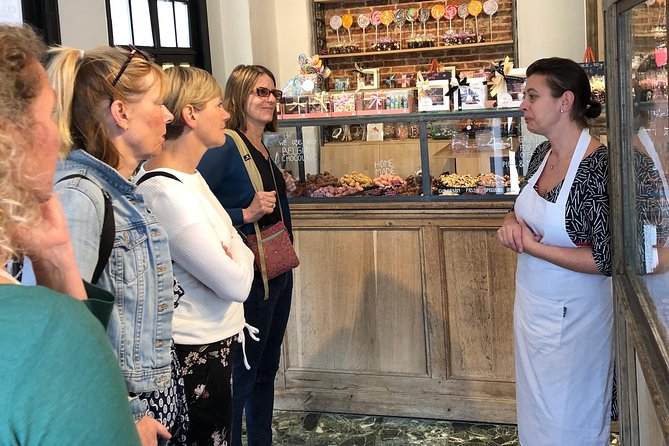
The title gives chocolate a prominent role, but the experience is mainly a history walk with a chocolate pause. One participant wished there had been more chocolate, and another suggested spending longer with the chocolatier. That is useful guidance.
I would book this if you want a taste of Belgian chocolate alongside a city tour. I would not book it if your main goal is a long tasting session, a lesson in chocolate-making, or a series of generous samples.
The chocolate works best as a palate cleanser between historical explanations. It adds local flavor without changing the tour into a food-focused activity. Keep your expectations in the right place and you are less likely to feel shortchanged.
Price, pace, and group size
At $42.05 per person, the price is reasonable if you value a strong guide and want a quick orientation to Ghent. The tour lasts about two hours and covers 12 sights, all in the central area. You are paying for Wim’s interpretation, organization, and storytelling rather than entry to paid attractions.
The maximum group size is 15 people. That is small enough for a more personal walk, though the experience can still feel social rather than private. If you need a fully private tour or want to set your own pace, this is not designed for that.
Most people can participate, service animals are allowed, and the starting point is near public transportation. The activity is offered in English and uses a mobile ticket. Since the meeting point is specific, confirm your booking details and arrive at the white statue in Sint-Baafsplein.
The tour is commonly booked about 24 days ahead. That does not guarantee that every date will sell out, but it is a sensible reason to reserve early if your Ghent schedule is fixed.
The guide makes the difference
Wim receives the strongest praise for this experience. He is described as friendly, professional, passionate, and deeply familiar with the city. His background as a historian and teacher gives the walk more structure than a casual sightseeing stroll.
The best comments focus on his ability to explain why buildings matter. He does not simply point out a church, castle, or guild house. He links each place to trade, conflict, religion, art, and daily life.
There is one serious practical caution. A single low rating describes confusion over the meeting point and a missed tour, while the provider states that the participants did not arrive and that messages were sent. Because the accounts conflict, protect yourself by checking the exact start location, keeping your phone available, and arriving early. This is especially important if you are traveling from Brussels and have limited time in Ghent.
Who should book this Ghent walk?
I would recommend it to you if:
- You are visiting Ghent for the first time.
- You want a clear explanation of the city’s past in two hours.
- You enjoy architecture, art, local legends, and political stories.
- You prefer a small group to a large city tour.
- You want a little chocolate, but not a full food tasting.
- You like guides who teach rather than simply recite facts.
You may want something else if you have already studied Ghent in detail, need extensive time inside the cathedral or Gravensteen, or want a tour centered on chocolate. The short stops provide breadth, not long visits at individual attractions.
The route also suits a first morning or early afternoon in Ghent. You can use the walk to get oriented, then return to the places that caught your interest. Because the end is near Saint Michael’s Bridge, it is easy to continue exploring the center afterward.
Should you book it?
Book this tour if you want to understand why Ghent looks the way it does. The strongest reasons are Wim’s personal connection to the city, the focused route through major central sights, and the way the stories connect art, trade, religion, politics, and local character.
Think of the chocolate as a pleasant extra. The main course is Ghent itself: its rebellious citizens, working harbor, old guild buildings, dramatic castle, and striking public squares. At $42.05 for two hours, it offers good value for a well-told introduction, provided you want history first and chocolate second.
FAQ
Where does the tour start?
It starts at Sint-Baafsplein in Ghent, Belgium. The meeting point is in front of the white statue in the middle of the square.
Where does the tour end?
The walk ends at Saint Michael’s Bridge, on Sint-Michielshelling in Ghent.
How long does the tour last?
The experience lasts approximately two hours.
What language is the tour offered in?
The tour is offered in English.
How much does the tour cost?
The listed price is $42.05 per person.
How many people can join the tour?
The group has a maximum of 15 travelers.
Are attraction admission tickets included?
The listed stops have free admission for the tour. The experience includes exterior visits and explanations, and it does not state that entry to St. Bavo’s Cathedral or Gravensteen is included.
Is chocolate the main focus?
No. The tour is mainly a historical walking tour with a short chocolate tasting or refreshment during the route.
Is the tour suitable for most people?
Yes. Most people can participate, and service animals are allowed. The tour is also near public transportation.
Can I cancel for a full refund?
Yes, if you cancel at least 24 hours before the local start time. Cancellations made less than 24 hours before the start are not refunded, and changes within that period are not accepted.
Just added in Ghent
- Historic Highlights, by a local guide★ 5.0 · 9 reviews
- Discover Ghent while playing! Escape game – The alchemist★ 4.0 · 4 reviews
- Walking Food Tour in Ghent★ 5.0 · 13 reviews
- Discover Ghent while playing! Escape game – The Walter case★ 4.5 · 4 reviews
- e-Scavenger hunt Ostend: Explore the city at your own pace★ 4.5 · 10 reviews
- Discover Mons while playing! Escape game – The alchemist★ 4.0 · 5 reviews
- Kortrijk Self-Guided Sherlock Holmes Murder Mystery Game★ 5.0 · 2 reviews
- Taste of Ghent: Private Chocolate Walking Tour★ 5.0 · 1 review
Belgian Chocolate Tastings, compared.

Choco-Story Brussels: Chocolate Museum Entrance with Tasting
Read our review →
Hungry Mary’s Famous Beer and Chocolate Tour in Brussels
Read our review →
Belgian Chocolate Making Workshop with Tastings
Read our review →
Choco-Story Chocolate Museum Guided Tour w/Tastings
Read our review →
2.5-Hour Chocolate Museum Visit with Workshop
Read our review →
Historical Walking Tour with Chocolate & Waffle Tasting
Read our review →

Browse the lists this tour appears in