
Reviewed · WWI BATTLEFIELD TOURS
Flanders Fields Remembrance Tour from Brussels
War feels close in Flanders. This full-day trip from Brussels connects quiet cemeteries, battle sites, museums, and Ypres in one carefully packed day. I especially like the Grieving Parents sculpture at Vladslo and the evening Last Post Ceremony at Menin Gate, two very different but equally powerful ways to remember the dead. The main drawback is the length: expect roughly 13 hours, with plenty of time on the coach.
I also like the way an expert guide gives the sites a human story rather than leaving you to read names on stone. Guides such as Diederik, Dietrich, and Stefan have earned high praise for clear explanations and strong command of the subject. Still, the schedule can feel hurried, and some departures may include a detour to collect or return people in Bruges, adding extra road time.
In This Review
- Key things to know before booking
- Why this Brussels day trip matters
- Vladslo and the sorrow of Käthe Kollwitz
- Diksmuide and the Brooding Soldier
- The Flanders Fields Museum in Ypres
- Passchendaele, where a battlefield became a town
- Tyne Cot and the scale of loss
- Essex Farm and John McCrae’s poem
- Hill 60 and the underground war
- Free time in Ypres before the Last Post
- The Menin Gate Last Post Ceremony
- The coach, guide, and pace of the day
- Is $113.72 good value?
- Who should book this Flanders Fields tour?
- Should you book it?
- FAQ
- Where does the tour start?
- What time does the tour begin?
- Where does the tour finish?
- Is hotel pickup included?
- Is lunch included?
- What transportation is provided?
- Which language is offered?
- How long is the tour?
- Is the tour suitable for people with limited mobility?
- Can I cancel for a refund?
Key things to know before booking
- Vladslo’s Grieving Parents: Käthe Kollwitz’s famous sculpture gives the German cemetery an intimate, personal focus.
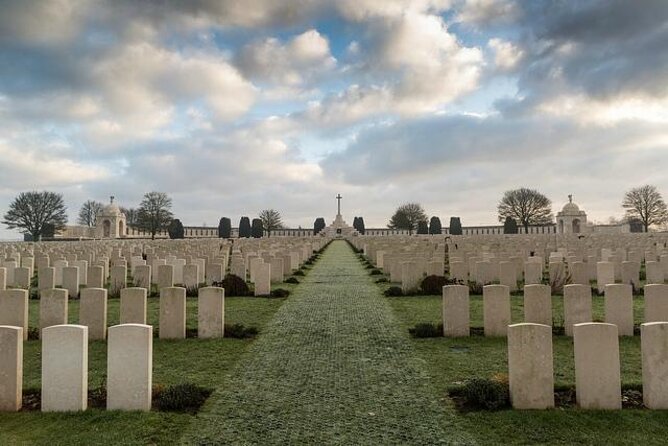
- Tyne Cot Cemetery: You see the world’s largest Commonwealth cemetery, with around 35,000 graves and memorial names.
- The Flanders Fields Museum: This is the main indoor stop for understanding the war, though the available time may feel short.
- Several Canadian connections: Diksmuide, the Brooding Soldier, and the first German gas attack add particular weight for Canadian visitors.
- Ypres after dark: You have free time for dinner before attending the solemn Last Post Ceremony at Menin Gate.
- A long but useful day: The $113.72 price covers transport and a professional guide, but not lunch or hotel pickup.
Why this Brussels day trip matters
Flanders Fields is not one single battlefield with a neat entrance and a single viewpoint. The former Western Front is spread across towns, farms, cemeteries, memorials, and ordinary roads. That makes independent sightseeing possible, but it also makes a first visit hard to organize in one day.
This tour solves that problem by linking the major places around Vladslo, Diksmuide, Passchendaele, and Ypres. You travel by air-conditioned coach, hear the wider story from your guide, and avoid trying to piece together distant sites by local transport.
The historical focus is mainly the First World War in Belgium, especially the Ypres Salient and the Commonwealth forces that fought there. You will also see German and Canadian memorials, which helps prevent the day from becoming a single-country story.
The tour has a 9:15 am start in central Brussels at Bd de Berlaimont 18. It finishes at Brussels Central Station, around Carré de l’Europe. There is no hotel pickup, so you need to reach the meeting point yourself and allow time to find the coach.
More battlefield tours:
- Remembrance Tour: The Battle of the Bulge in the Ardennes
★ 5.0 · 51 reviews - From Brussels: The Battle of the Bulge Remembrance Tour
★ 4.8 · 37 reviews - Historic Battle of the Bulge Sites Tour from Brussels
★ 5.0 · 31 reviews
Vladslo and the sorrow of Käthe Kollwitz
The first stop is the German Military Cemetery at Vladslo. It is a peaceful, restrained place, and that quiet is part of its force. The cemetery contains Käthe Kollwitz’s sculpture Grieving Parents, created after the death of her son, Peter, in the war.
The figures do not celebrate victory. They sit in grief, looking toward the graves. This makes the stop different from a grand military monument. You are not asked to admire an army. You are asked to think about what the loss of one young soldier did to a family.
The visit is free, and there is no separate admission process to slow the group. You should wear sturdy shoes, since the tour involves walking outdoors at several locations. A raincoat or umbrella is sensible because the program continues in wet weather unless conditions become extreme.
For many people, Vladslo is the emotional beginning of the day. The later memorials are larger, but this one feels personal and still.
Diksmuide and the Brooding Soldier
The coach continues to Diksmuide, where you see part of the former Western Front and the monument known as the Brooding Soldier. The memorial honors about 2,000 Canadian soldiers who died during the first German gas attack.
This stop adds an important Canadian chapter to the story. The guide explains the setting and the military events, giving you a clearer sense of how the front moved through Belgian towns and farmland.
The monument is an outdoor visit, so the amount of time can depend on the day’s traffic and schedule. You will not get a long, leisurely stop at every site. The tour tries to show many important places in one day, which is useful for a first visit but less satisfying if you want detailed exploration of every memorial.
If Canadian family service is part of your interest, this is one of the stops where you may want to ask your guide about the forces and battles involved.
The Flanders Fields Museum in Ypres
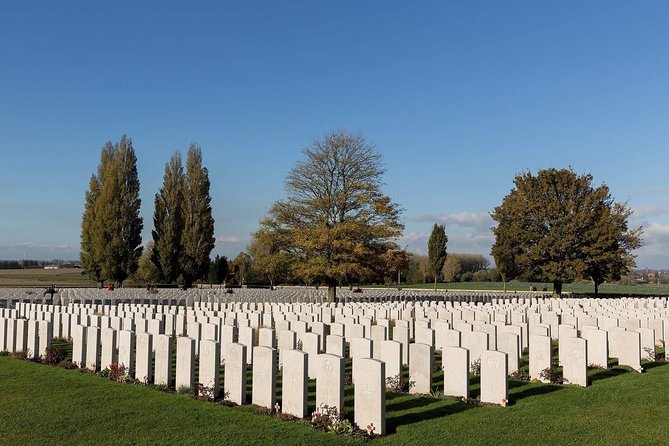
After a short lunch break, the group visits the In Flanders Fields Museum in Ypres. This is the main museum visit and one of the most useful parts of the trip for anyone who wants more than a series of cemetery stops.
The museum helps explain how the First World War began and how the fighting developed in Flanders. Exhibits cover the violence of the conflict and the damp, difficult conditions faced by soldiers. That context matters. At a cemetery, you see the result. In the museum, you gain more of the story behind the names.
The museum is also where the guide’s skill matters most. Guides Diederik, Dietrich, and Stefan have been praised for making events clear and for bringing the soldiers’ experiences into the discussion without turning the subject into a lecture.
One caution: the schedule is full, and some people may find the museum visit too brief. If museums are your main reason for coming, you may want to return to Ypres independently on another day. On this tour, the museum is part of a broad route rather than a stand-alone visit.
Lunch is not included in the price. The itinerary allows a short break, and you should bring cash as advised by the operator. Some past visitors found the available lunch satisfactory, while one found it below expectations, so I would treat this as a practical pause rather than a major food stop.
More things to do in Brussels:
- Brussels: Atomium Entry Ticket with Design Museum Ticket
★ 4.4 · 9,254 reviews - From Brussels: Guided Day Trip to Bruges and Ghent
★ 4.6 · 8,353 reviews - From Brussels: Bruges & Ghent Day Tour – 2 Fairytale Cities
★ 4.7 · 8,242 reviews - Choco-Story Brussels: Chocolate Museum Entrance with Tasting
★ 4.3 · 4,883 reviews
Passchendaele, where a battlefield became a town
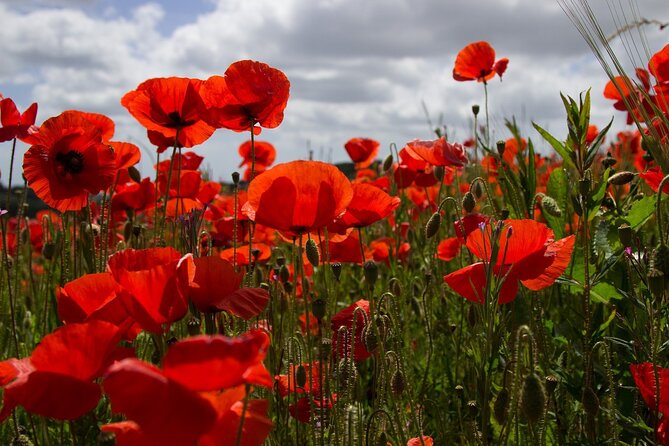
The next stop is Passchendaele, also called Passendale. The modern town is quiet and ordinary, which makes the history beneath it hard to picture. Your guide explains how a place associated with terrible fighting changed over time and became the settled town you see today.
You have about 30 minutes here. That is enough for an introduction and some reflection, but not enough for a detailed study of every aspect of the battle.
Passchendaele is valuable because it shows how war sites can disappear into daily life. There may be no dramatic ruins waiting for you. Instead, you need the guide’s explanation to connect the present-day town with the events of the war.
This is one reason the tour works best with a guide who can place each stop in sequence. Diederik and Dietrich received particularly strong praise for explaining the battles around Ypres and Passchendaele in a way that kept the day coherent.
Tyne Cot and the scale of loss
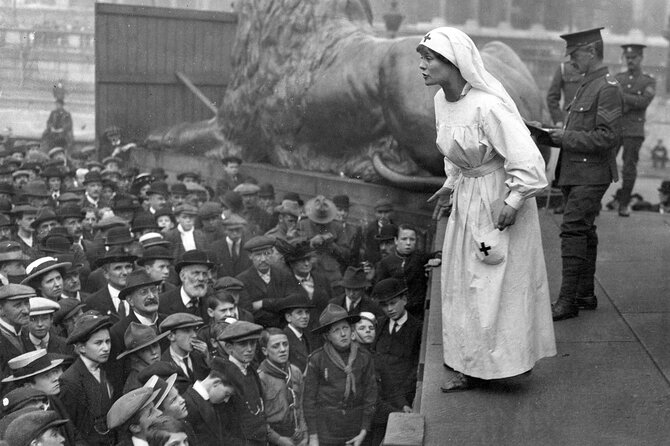
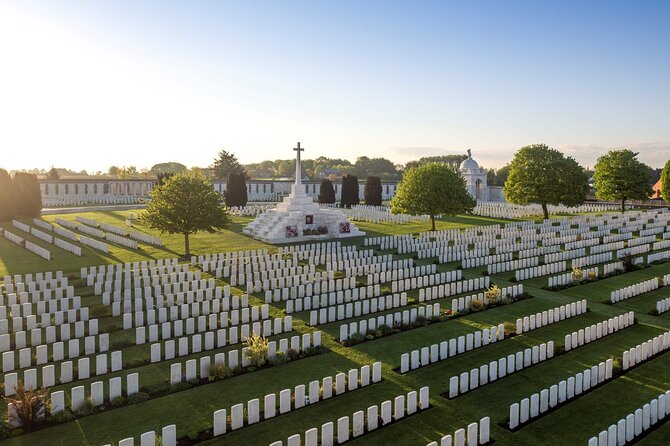
Tyne Cot Commonwealth War Graves Cemetery is one of the day’s largest and most striking stops. British, Australian, and Canadian soldiers are buried here, and the memorial records the names of men who have no known grave.
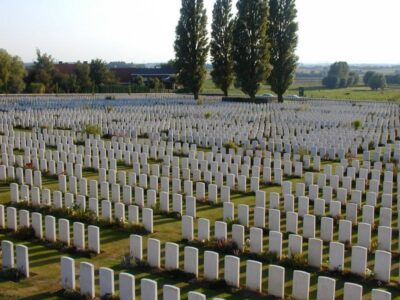
The scale can be difficult to take in. The cemetery contains around 35,000 graves and memorial names, making it a place where numbers become physical rather than abstract. You see row after row of carefully maintained graves, alongside the broad memorial to those missing.
The quiet dignity of Tyne Cot is central to the experience. There is no need for an elaborate presentation. Your guide provides the military context, then you have space to look, read, and think.
I would not rush this stop, but the full itinerary means you must watch the time. If you have a relative connected to the Commonwealth forces, bring the name and any details you have. The tour data does not promise individual grave research, but having that information can make the visit more meaningful.
Tyne Cot also helps you understand the price of the tour. Reaching several distant cemeteries by coach in one day would be difficult on your own. The admission to the sites is free, but the transport and guiding save substantial planning time.
Essex Farm and John McCrae’s poem
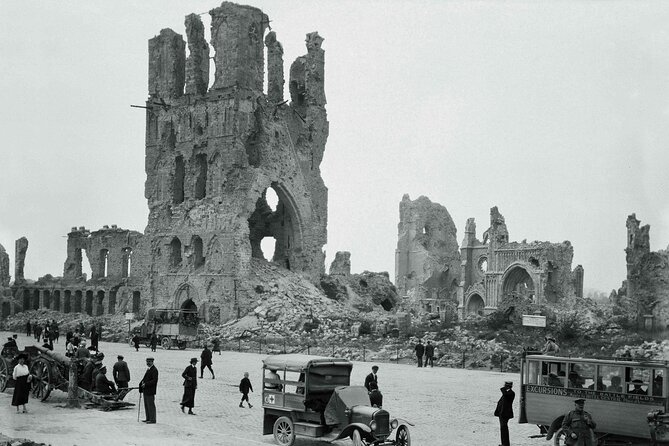
At Essex Farm Cemetery, you see the former dressing station where Dr. John McCrae wrote In Flanders Fields. The stop lasts about 15 minutes, so it is short, but its connection to the poem gives it a special place in the program.
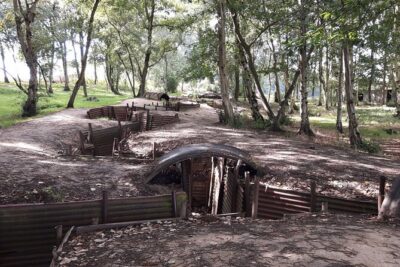
You also see the bunkers linked to the field hospital. These structures help you picture the work done close to the front, where wounded soldiers were treated under dangerous conditions.
The poem is familiar to many people, but standing near the place associated with its creation changes the way you hear it. The stop links literature, medical work, and battlefield experience in a small space.
Because the visit is brief, listen closely to the guide’s explanation. This is not the place for a long independent walk. It is a focused stop that prepares you for the larger memorial experience later in the evening.
Hill 60 and the underground war
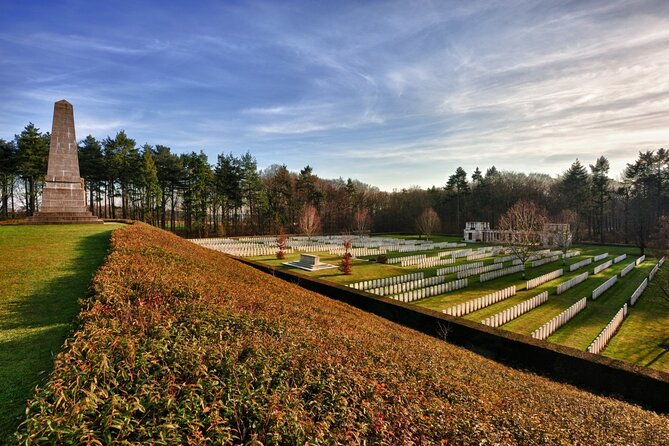
The route also includes Hill 60, a strategic position associated with tunnels and underground fighting. The visit gives you another view of the war, one that differs from the open cemeteries and formal memorials.
The fighting was not only a matter of troops crossing exposed ground. Tunnels, mines, bunkers, and defensive positions shaped the struggle beneath the surface. Hill 60 helps make that less familiar side of the conflict easier to understand.
Exact timing at this stop can vary within the long day. You should expect outdoor walking and uneven ground. The tour is not recommended for people who have difficulty walking, and the operator advises a moderate level of physical fitness.
Free time in Ypres before the Last Post
The group reaches Ypres later in the day, with time to explore independently and buy dinner. This pause is welcome after a full schedule of stops and coach travel.
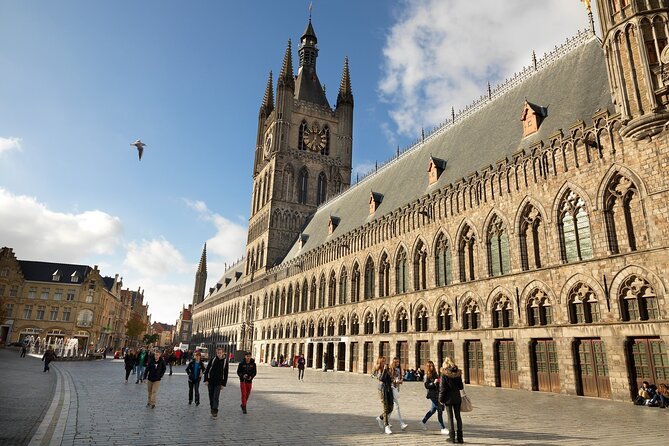
Ypres is a picturesque town, but it is important not to let the pleasant setting erase the reason you are there. The town was heavily involved in the war, and the evening ceremony gives the historic center a solemn purpose.
You choose your own meal, and the amount of free time can depend on the day’s traffic and the pre-arranged meeting time. Stay aware of your guide’s instructions. The ceremony is the fixed point of the evening, and the coach must leave afterward for Brussels.
The tour is not designed as a food outing. Lunch is at your own expense, and dinner in Ypres is also not included. Bring cash, as the operator advises, and do not assume that every small purchase will be handled by card.
The Menin Gate Last Post Ceremony
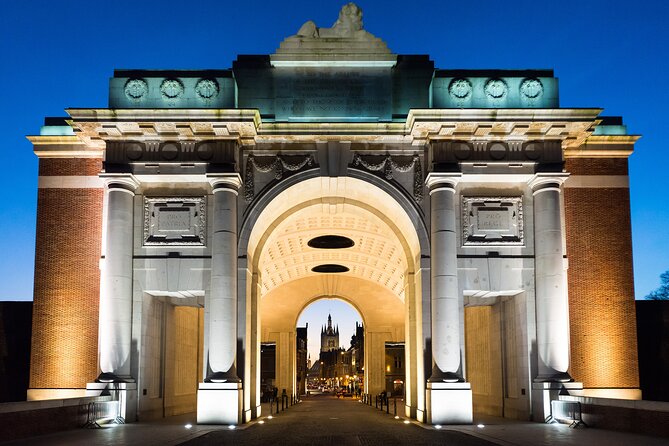
The Last Post Ceremony at Menin Gate is the emotional high point for many people. It is held daily at 8 pm as a tribute to Commonwealth soldiers and officers who went missing after battle.
The service is simple and respectful. It lasts about 30 minutes according to the schedule, though the central musical portion may feel much shorter. On one occasion, a choir added to the atmosphere, but that should not be expected every day.
You should arrive prepared to stand or remain in a fixed viewing area, depending on the arrangements that evening. The ceremony is free, but the value lies in being present at a living act of remembrance rather than simply looking at a monument.
Some people may question spending a long day waiting for a ceremony that itself is brief. I think the wait is worthwhile if remembrance is your main reason for visiting Flanders Fields. The ceremony gives the day a clear ending and gathers the earlier stops into one final moment.
Afterward, you board the coach for the return to Brussels. The late finish is the practical cost of attending an 8 pm service. If you dislike late evenings, repeated boarding, or long road journeys, this is the main point to consider before booking.
The coach, guide, and pace of the day
The air-conditioned coach is a real advantage. The route covers a lot of ground, and the ride gives you time to rest between outdoor stops. The vehicle can also carry luggage, according to the operator.
The group can include up to 100 people, so this is not an intimate private tour. That size may affect how quickly everyone gets off the coach and gathers again. It also explains why guides set clear meeting times and keep the schedule moving.
The strongest part of the service is the guiding. Diederik, also spelled Dietrich in some feedback, is praised for detailed explanations, historical skill, and a good balance of solemnity and light humor. Stefan is also praised for clear teaching, inclusive instructions, and strong historical command.
That praise matters because Flanders Fields requires interpretation. Without a guide, you can see graves and memorials but miss how the locations connect. A good guide explains the sequence of battles, the role of different forces, and the conditions faced by soldiers.
The weak point is organization around transport. Detours to Bruges to collect or drop off two people have added considerable time on some departures. This is not guaranteed on every outing, but you should ask about the route when booking if keeping the day as short as possible matters to you.
Is $113.72 good value?
At $113.72 per person, the tour is reasonably priced for a 13-hour guided day. Your fee covers the air-conditioned vehicle and professional multilingual guide, while the main memorial sites do not charge admission.
The value is strongest if you have only one day for the Ypres area. You get Vladslo, Diksmuide, the museum, Passchendaele, Tyne Cot, Essex Farm, Hill 60, Ypres, and the Last Post Ceremony without arranging separate transport.
The price is less attractive if you want long visits at a small number of sites. The route is broad, and some stops may feel short. You also pay separately for lunch and dinner, and there is no hotel pickup or drop-off.
Free cancellation is available when you cancel at least 24 hours before the start time. Date changes depend on availability. The tour may also be canceled if the minimum number of people is not reached, with another date or a full refund offered.
Who should book this Flanders Fields tour?
I would recommend it to first-time visitors, history readers, family researchers, Canadians with a connection to the First World War, and anyone who wants the Last Post Ceremony without arranging a late return from Ypres.
It is also a good choice if you prefer explanation over self-guided research. The best guides turn a long list of places into a story you can follow.
I would hesitate if you need an easy, slow-paced day, have trouble walking, or want to spend several hours inside the museum. Families with older children can manage it, but a 10-year-old may find the repeated stops and late finish tiring.
Should you book it?
Book this tour if you want a serious, moving introduction to Flanders Fields and accept a very full day. The strongest reasons are the range of sites, the quality of guides such as Diederik and Stefan, and the chance to attend the Last Post Ceremony at Menin Gate.
Skip it if you want a shorter outing or prefer to explore one place at your own speed. For most first visits from Brussels, though, the combination of German, Canadian, and Commonwealth memorials gives you a thoughtful view of the war and a practical way to reach places that are scattered across the region.
FAQ
Where does the tour start?
It starts at Bd de Berlaimont 18, 1000 Bruxelles, Belgium.
What time does the tour begin?
The scheduled start time is 9:15 am.
Where does the tour finish?
The tour ends at Brussels Central Station, Carré de l’Europe, 1000 Bruxelles.
Is hotel pickup included?
No. You must make your own way to the stated central Brussels meeting point.
Is lunch included?
No. Lunch is not included, and dinner in Ypres is also at your own expense.
What transportation is provided?
You travel in an air-conditioned coach. The vehicle can also accommodate luggage.
Which language is offered?
The tour is offered in English. The operator also states that tours can be provided in French or Spanish.
How long is the tour?
The scheduled duration is approximately 13 hours. The late finish is linked to the 8 pm Last Post Ceremony in Ypres.
Is the tour suitable for people with limited mobility?
The operator does not recommend it for people with disabilities or those who have difficulty walking. A moderate level of physical fitness is advised.
Can I cancel for a refund?
Yes. You can receive a full refund if you cancel at least 24 hours before the experience begins. Changes or cancellations made less than 24 hours before the start are not accepted for a refund.
Just added in Brussels
- Transfer from BRU Airport to Brussels city (any hotel or address)★ 5.0 · 1 review
- Standard vehicle from Brussels airport to city of Antwerp★ 5.0 · 4 reviews
- Standard Minivan from Brussels airport to city of Antwerp★ 5.0 · 1 review
- Private transfer from BRU Airport – Brussels GO BACK MB V-CLASS 7 PAX★ 5.0 · 2 reviews
- Private transfer from Brussels Airport to Brussels city Business car★ 5.0 · 1 review
- Transfer Brussels Airport -> Antwerp MB V-CLASS 7 PAX★ 5.0 · 1 review
- Private transfer from BRU Airport to Bruges with Mercedes V class 7 pax★ 5.0 · 1 review
- Private transfer from BRU Airport to Bruges with luxury limousine 3 pax★ 5.0 · 1 review
WWI Battlefield Tours, compared.
From Bruges: Great War Flanders Fields Minibus Tour w/ Lunch
Read our review →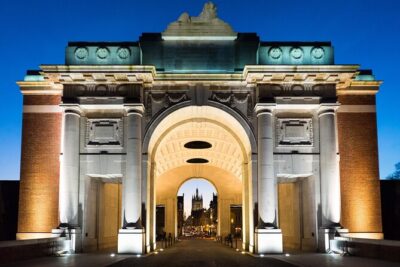
In Flanders Fields and Passchendaele Half Day Morning Tour
Read our review →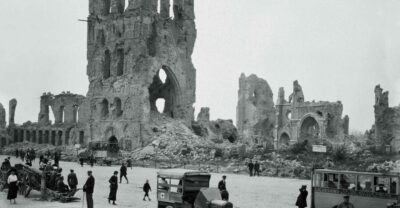
From Bruges: Flanders Fields Remembrance Full-Day Trip
Read our review →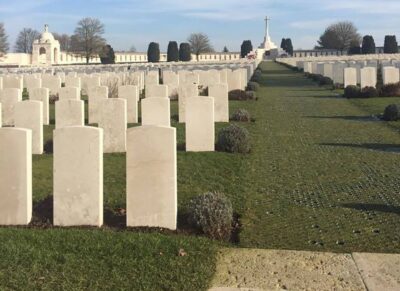
From Brussels: Flanders Fields Remembrance Full-Day Trip
Read our review →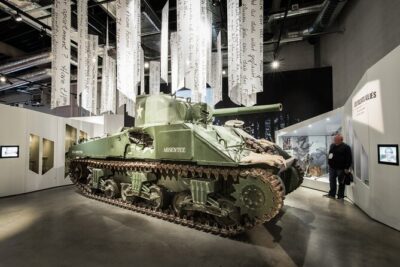
Remembrance Tour: The Battle of the Bulge in the Ardennes
Read our review →
From Brussels: The Battle of the Bulge Remembrance Tour
Read our review →
Historic Battle of the Bulge Sites Tour from Brussels
Read our review →Browse the lists this tour appears in