
Reviewed · WWI BATTLEFIELD TOURS
From Brussels: Flanders Fields Remembrance Full-Day Trip
The First World War still speaks here. This full-day trip from Brussels follows the fighting around Ypres, Passchendaele, and Hill 60, combining cemeteries, trenches, a museum, and the evening Last Post Ceremony. I like the strong mix of battlefield sites and personal stories, and I like that the professional guide begins explaining the war before you even reach Flanders. The main drawback is the length: this can become a 12 to 13-hour day, with some departures also passing through Bruges to collect passengers.
The tour suits you best if you want the broad picture without arranging several trains, taxis, and museum visits yourself. I also appreciate the comfortable coach and the chance to see Tyne Cot Cemetery, Essex Farm, the Brooding Soldier, and Menin Gate in one carefully packed day. Just know that the museum visit may feel rushed, with some departures allowing only 35 minutes to an hour inside In Flanders Fields Museum.
In This Review
- Key points before you book
- Why this Flanders Fields day matters
- Leaving Brussels and setting the wartime scene
- German Cemetery and the first view of the front
- The Brooding Soldier and Hill 60
- Passchendaele and the cost of a name
- Tyne Cot Cemetery and the scale of loss
- Essex Farm and the poem from the field hospital
- Lunch and Ypres between battlefield stops
- In Flanders Fields Museum: excellent, but allow more time
- Menin Gate and the 8 p.m. Last Post
- Is $107 good value?
- Who should book this tour?
- Should you book the Flanders Fields trip?
- FAQ
- Where does the tour start?
- Where does the tour finish?
- How long does the tour last?
- Is hotel pickup included?
- What language is the tour conducted in?
- Is entrance to In Flanders Fields Museum included?
- Is lunch included?
- Does the tour visit Tyne Cot Cemetery?
- Does the tour include the Last Post Ceremony?
- Is the tour suitable for wheelchair users?
Key points before you book
- A full 13-hour day from Brussels: Expect a long outing, with substantial coach time between Belgium’s capital and the Ypres area.
- The Last Post Ceremony is the emotional finish: You attend the 8 p.m. tribute at Menin Gate, a daily remembrance for Commonwealth soldiers and officers still missing after battle.
- Passchendaele and Tyne Cot provide the central battlefield focus: You see one of the war’s most notorious battle areas and the world’s largest Commonwealth cemetery.
- Essex Farm connects the battlefield to poetry: This former field hospital is where Canadian surgeon John McCrae wrote In Flanders Fields.
- Museum time can be short: The In Flanders Fields Museum is excellent, but a scheduled visit of 35 to 60 minutes will not allow you to see every exhibit.
- The route is not suited to limited mobility: You should expect walking around cemeteries, memorials, trenches, and uneven outdoor sites.
Why this Flanders Fields day matters
Flanders Fields is not one single battlefield with one dramatic viewpoint. It is a wide area of villages, cemeteries, memorials, reconstructed trenches, and museum displays. The power comes from seeing how close these places are to one another, then hearing how four years of trench warfare turned ordinary farmland into a killing zone.
This tour gives you that wider setting in one day. You do not simply stop at one cemetery, take a photograph, and move on. The guide connects the events that led to the First World War with the fighting that followed, then links military operations to individual stories.
That context matters. A visit to Tyne Cot feels different after you have heard about Passchendaele. Essex Farm means more after you have seen the trenches and hospitals that surrounded the front. Menin Gate becomes the final act rather than an isolated monument.
The experience has an average rating of 4.4 from 65 ratings, and the most consistent praise goes to the guides. Dietrich, Diedrich, Stefan, Steffen, and similar guide names appear in the feedback, with several people calling out their command of the subject, clear explanations, personal stories, and calm manner. The quality of the guide matters greatly here, since much of the day is spent on the coach between outdoor stops.
More battlefield tours:
- From IEPER Private 4-hour Tour of the Ypres Battlefield
★ 5.0 · 154 reviews - In Flanders Fields and Passchendaele Half Day Morning Tour
★ 5.0 · 117 reviews - From Ypres, The Christmas Truce to Passchendaele Ypres Based WW1 private tour
★ 5.0 · 29 reviews
Leaving Brussels and setting the wartime scene
The meeting point is on Boulevard de Berlaimont 18, outside the National Bank of Belgium. Look for the tour staff and the Keolis coach. There is no hotel pickup or drop-off, so you need to reach the meeting point yourself.
The first transfer can take about two hours. That may sound like dead time, but this is where the guide begins laying out the causes of the war and its disastrous progress. Maps and spoken explanations help you understand the front before you arrive at the memorials.
Some departures have included a stop in Bruges to collect additional passengers. This was not expected by everyone booking the trip, and it can add roughly two hours of coach travel across the full day, including the return. If you are choosing this outing mainly for extra time in Ypres or the museum, confirm the current routing before paying.
The coach is described as comfortable, which makes a real difference. Still, a 13-hour outing is demanding. You will want comfortable shoes, water, and enough patience for a day that alternates between quiet remembrance and long stretches on the road.
German Cemetery and the first view of the front
The first cemetery stop is German rather than Commonwealth. That is a useful choice. It reminds you that the dead on this front came from several countries and that the war’s human cost was not confined to one army.
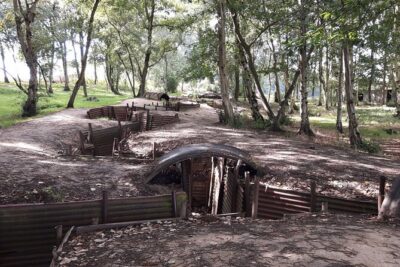
The German cemetery provides a quieter contrast to the larger Commonwealth sites later in the day. Your guide explains the setting and the wider conflict before the tour moves on to a section of First World War trenches.
Do not expect a vast untouched trench system. The outdoor military remains in this region vary, and some sections have been preserved or reconstructed. The value is in standing where soldiers lived and fought, then comparing that cramped defensive world with the open fields now around it.
This part of the tour also makes clear why practical shoes matter. You may be walking over uneven ground and between outdoor memorials. The activity is not recommended for people with limited mobility and is not suitable for wheelchair users.
The Brooding Soldier and Hill 60
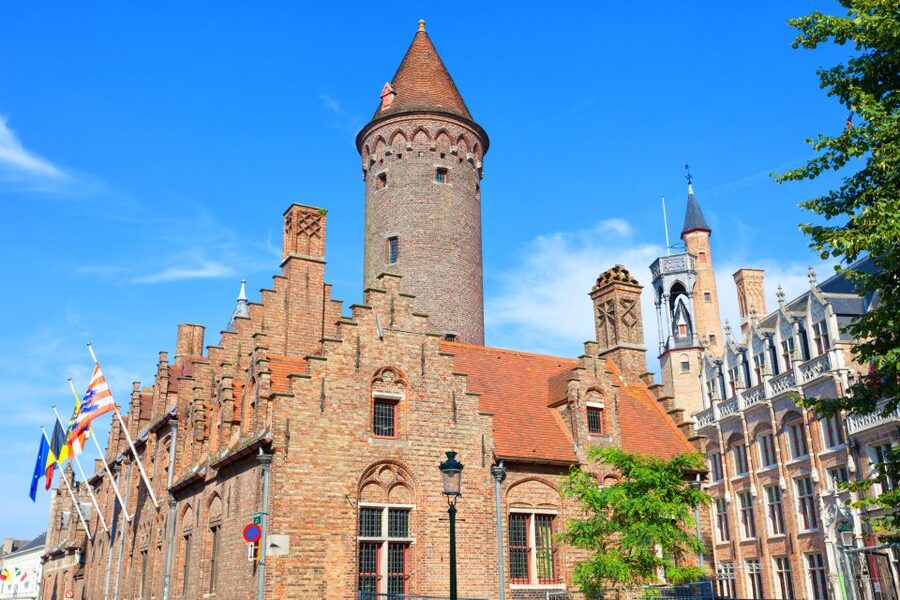
At the Brooding Soldier, the group pauses to remember about 2,000 Canadian soldiers who died during the first German gas attack. The statue is deliberately restrained. It is a place for a quiet pause rather than a long list of military facts.
This stop is especially valuable if you want the Canadian story included in the day. The Canadian contribution appears again at Essex Farm and in the cemetery records, so the tour does not present the front as an abstract British campaign.
Nearby Hill 60 adds another layer. Royal Engineers dug tunnels beneath the position before it changed hands and came under German control. This is a good example of how the war was fought below ground as well as across the trenches.
The guide’s explanation is important here because Hill 60 can be difficult to understand from a quick glance. You see a site connected to tunneling, artillery, and shifting control, but the significance comes from the story attached to it.
More Ypres trips:
- Ypres: An exploration of the deadly salient battlefields
★ 5.0 · 76 reviews - e-Scavenger hunt Hasselt: Explore the city at your own pace
★ 4.0 · 31 reviews - In Flanders Fields and Passchendaele Grand Tour
★ 5.0 · 25 reviews - From Ypres: WWI Battlefields Private Tour
★ 5.0 · 25 reviews
Passchendaele and the cost of a name
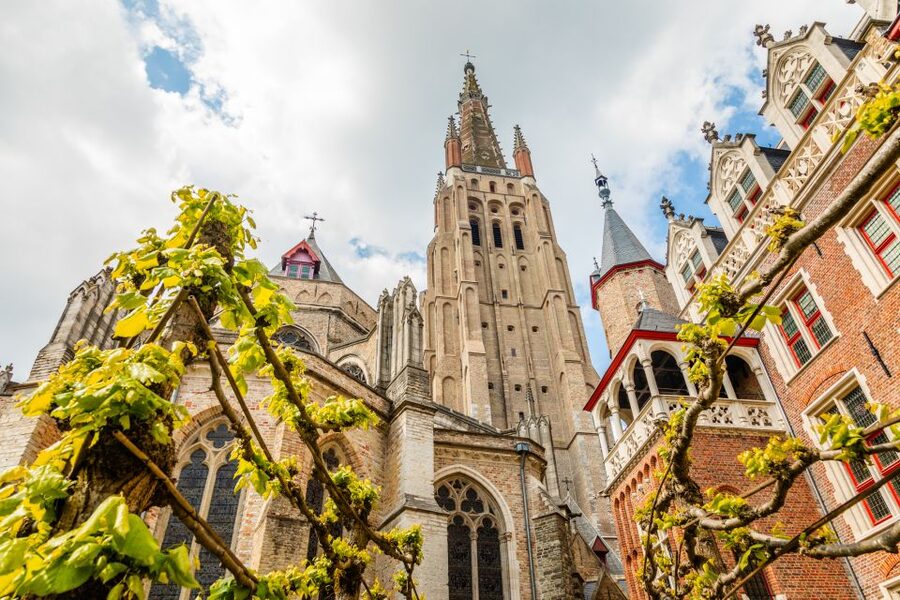
Passendale, also called Passchendaele, is one of the best-known battlefield stops on the route. The name has become shorthand for mud, exhaustion, artillery, and enormous loss, but the place itself is more understated than that reputation suggests.
Your guide helps turn the village and surrounding fields into a readable battlefield. You learn how the fighting unfolded and why the campaign became so costly. The visit works best if you listen closely rather than expecting a large display or a dramatic ruin.
One strength of the tour is that Passchendaele is not treated as an isolated attraction. It sits between the cemetery visits, trench stop, museum, and Ypres, giving you several ways to understand the same campaign. One person described the day as an excellent overview of one of the foremost battles of the First World War, even though not every advertised place was covered on that departure.
That detail is worth keeping in mind. The timetable is ambitious. Traffic, passenger pickups, opening times, and the evening ceremony can affect how long you spend at individual sites.
Tyne Cot Cemetery and the scale of loss
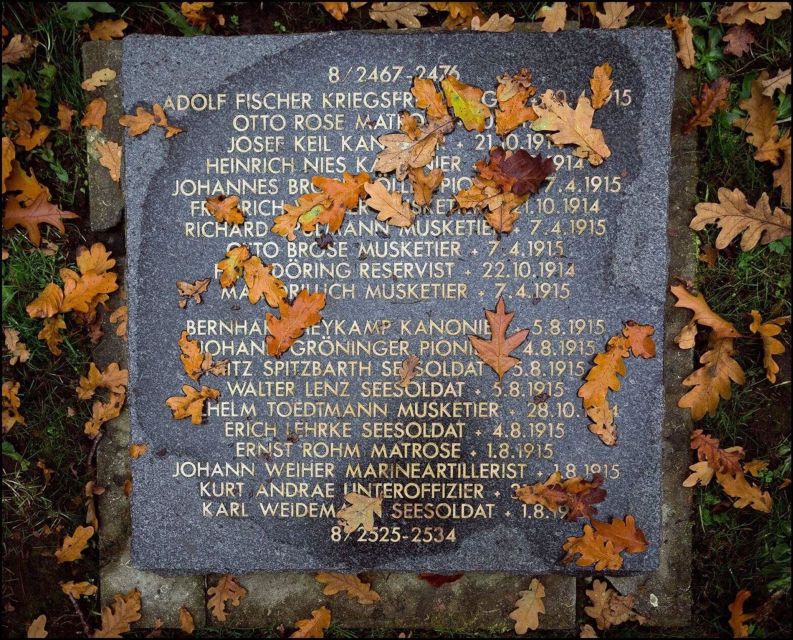
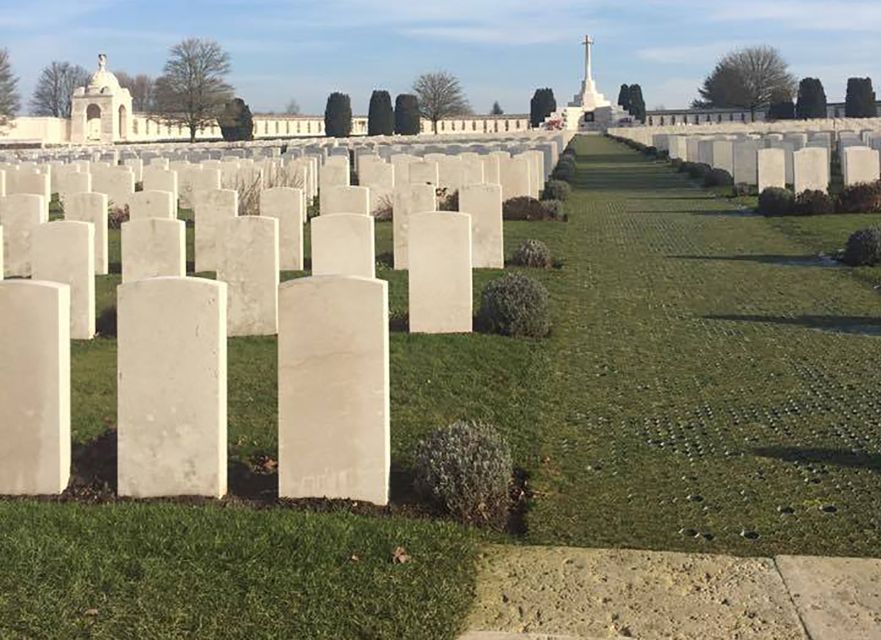
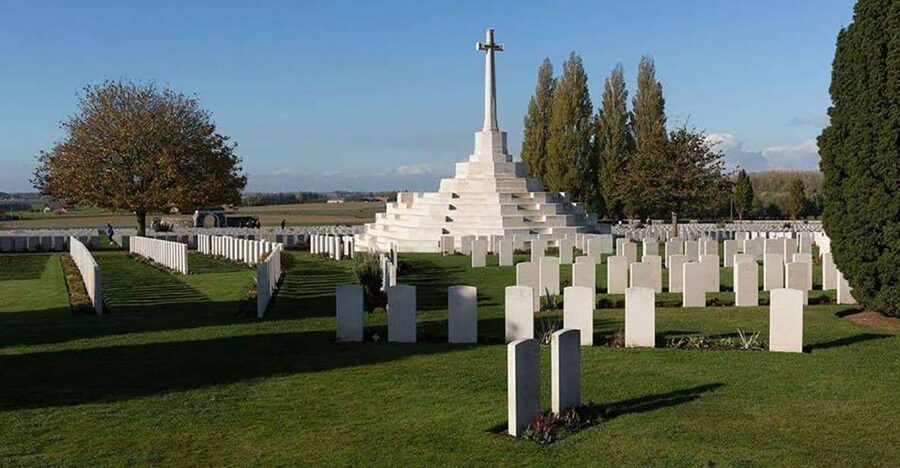
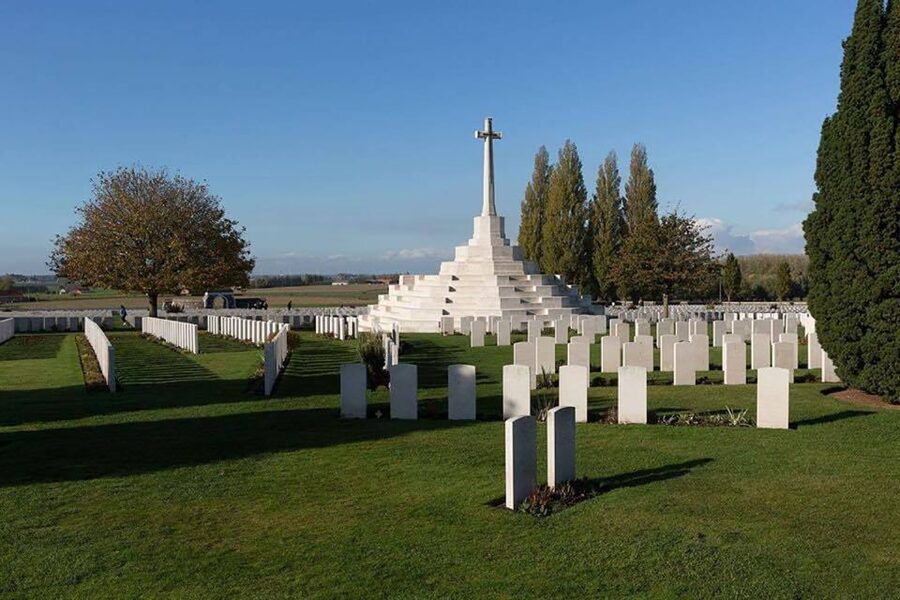
Tyne Cot Cemetery is the largest Commonwealth cemetery in the world. Its size changes the tone of the day. At smaller cemeteries, the personal nature of the graves can be immediate. At Tyne Cot, the sheer number of names and headstones is harder to take in.
British, Irish, Australian, and Canadian soldiers are buried here. The cemetery also commemorates many Commonwealth soldiers whose graves are unknown. Your guide provides the setting, but you should give yourself a little quiet time to look around without trying to turn every minute into a lecture.
This is one of the tour’s strongest stops for understanding scale. The First World War is often taught through generals, dates, and offensives. A cemetery such as Tyne Cot puts the cost in front of you, row after row.
The outdoor visit also adds to the day’s physical demands. You will be on your feet at several cemeteries and memorials, so this is not a good choice if you need a mostly seated experience.
Essex Farm and the poem from the field hospital
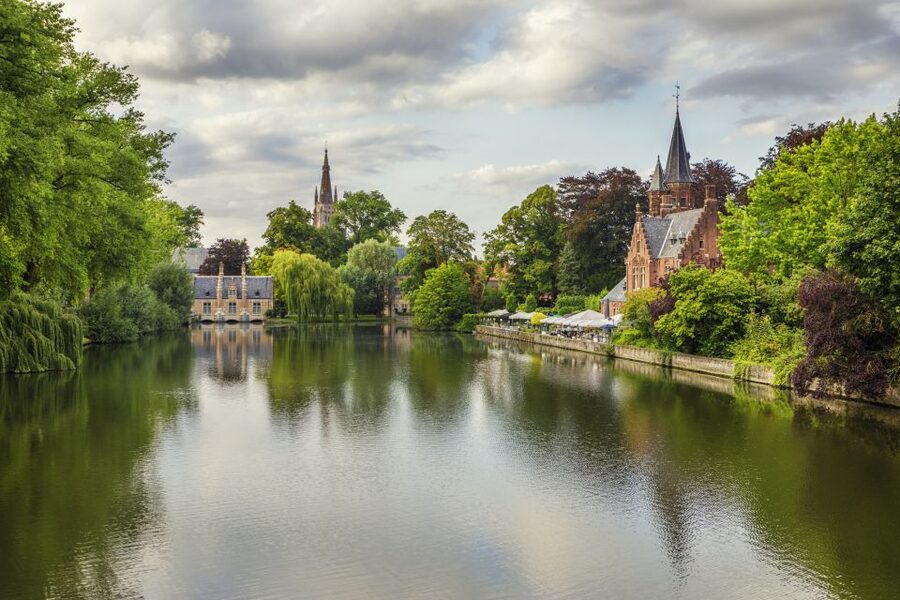
Essex Farm Cemetery brings the war down to a single medical site and a single writer. It was a field hospital, and Canadian surgeon Dr. John McCrae wrote In Flanders Fields there.
You may already know the poem from remembrance services, but seeing the place associated with it gives the words a sharper setting. This was not a distant literary exercise. McCrae wrote from a medical post during an active war, surrounded by wounded men and fresh graves.
The stop is relatively focused, which makes it a welcome change after the larger cemetery at Tyne Cot. Listen for the guide’s explanation of the field hospital and the poem’s connection to the area. It is one of the most accessible moments of the day for anyone who knows little about the First World War.
Lunch and Ypres between battlefield stops
The group reaches Ypres for lunch and time in the city. The town is the natural base for exploring the surrounding sites, and its central buildings provide a change from cemeteries and fields.
Lunch is not included in the price, so budget for your own meal. One departure included a drink with lunch, but you should not assume that every outing follows the same arrangement. Time can be tight. At least one person had to eat quickly because the schedule left little room before the next visit.
That is one of the tour’s recurring trade-offs. You see a great deal, but you do not always have the freedom to linger. If sitting down for a slow meal matters to you, the day may feel hurried. If your priority is fitting as many major sites as possible into one visit, the compact schedule is useful.
There is also free time in the itinerary, followed by a quick snack before the evening ceremony. This gives you a chance to reset, but it is not a full independent visit to Ypres.
In Flanders Fields Museum: excellent, but allow more time
The In Flanders Fields Museum is inside Ypres and is included in the tour price. It is the main indoor stop and gives you a chance to follow the war through displays and personal accounts rather than only through outdoor memorials.
The museum is particularly helpful after the battlefield stops. You have already seen the ground, so the exhibits can fill in the military and human detail. The guide introduces the stories behind four years of trench warfare, then you have time to explore on your own.
The problem is time. Some departures allow about an hour, while others provide only 35 minutes. That is enough for a quick look, but not enough to read everything carefully. One person suggested giving the museum two hours and reducing free time elsewhere.
I agree with that preference if you have a strong interest in the First World War. If the museum is your main reason for visiting Ypres, this tour may frustrate you. If you want an outdoor battlefield day with a museum added for context, the shorter visit is more acceptable.
Menin Gate and the 8 p.m. Last Post
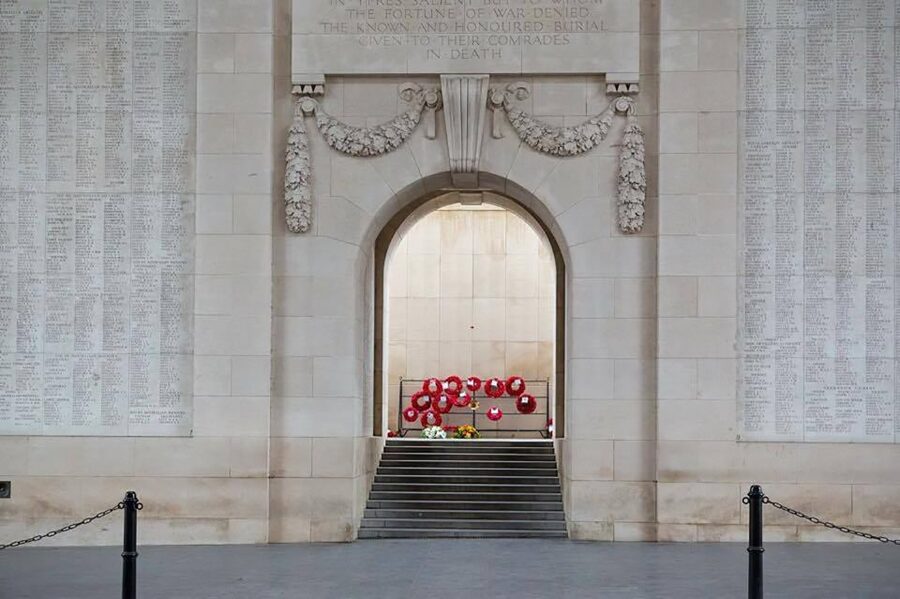
The final major stop is Menin Gate in Ypres for the 8 p.m. Last Post Ceremony. This daily tribute honors Commonwealth soldiers and officers missing after battle.
The ceremony is simple, formal, and moving without needing theatrical presentation. After a day of cemeteries and battlefield explanations, the repeated act of remembrance gives the experience a clear ending. You are no longer only studying the past. You are watching a tradition that continues to honor the dead.
Plan for a large crowd around the gate. The ceremony is a major reason people choose this tour, and its fixed start time shapes the entire schedule. You cannot simply leave early to catch a train or extend lunch without risking the final event.
After the ceremony, the coach returns toward Brussels, with the tour ending back at the meeting point near Central Station. The return journey can be late, especially if the route includes a Bruges passenger pickup or drop-off. Do not schedule an important evening connection immediately afterward.
Is $107 good value?
At $107 per person, the price is fair if you want transportation, a guide, and the major Flanders Fields sites in one day. Round-trip coach travel from Brussels is the practical heart of the package. Organizing Passchendaele, Tyne Cot, Essex Farm, Hill 60, Ypres, and Menin Gate independently would require more planning and local transport.
The included In Flanders Fields Museum adds useful value. You still pay separately for lunch, snacks, and drinks unless a particular departure includes something extra. Hotel transportation is not included.
I would not call this a relaxed tour. You are paying for reach and structure rather than long stays at each place. A private trip or a two-day visit would give you more time, but it would also cost more and require more planning.
Who should book this tour?
I would recommend it to:
- You if the First World War is a main reason for visiting Belgium.
- You if you want an English-speaking guide to explain the military and political background.
- You if you want the Last Post Ceremony without arranging a late return from Ypres yourself.
- You if you prefer a coach tour over trains, local buses, and several separate bookings.
- You if you are comfortable with a long day and outdoor walking.
I would think twice if you want a slow museum visit, a leisurely lunch, or detailed unit-by-unit battlefield research. Some feedback praised the guides’ personal stories and strong command of the subject, but one experienced enthusiast found parts of the commentary basic and repeated. The depth can depend on the guide and the questions you ask.
Should you book the Flanders Fields trip?
Book it if you want a well-organized first look at the Ypres Salient and the major remembrance sites. The guides are the tour’s greatest strength, and the combination of Tyne Cot, Passchendaele, Essex Farm, and Menin Gate gives you a serious, memorable day.
Before booking, check the current route for any Bruges pickup and confirm how much time is planned at In Flanders Fields Museum. Bring comfortable shoes, expect a long return, and treat the day as a pilgrimage through battlefields and cemeteries, not a casual sightseeing trip. For that purpose, $107 is solid value.
FAQ
Where does the tour start?
The tour starts at Boulevard de Berlaimont 18, outside the National Bank of Belgium. Look for the tour staff and the Keolis coach.
Where does the tour finish?
The tour ends back at the meeting point, near Central Station in Brussels.
How long does the tour last?
The stated duration is 13 hours. Some departure feedback describes the day as lasting at least 12 hours, depending on the route and timing.
Is hotel pickup included?
No. Hotel pickup and drop-off are not included. You must reach the meeting point yourself.
What language is the tour conducted in?
The live tour guide speaks English.
Is entrance to In Flanders Fields Museum included?
Yes. Entrance to In Flanders Fields Museum is included in the tour price.
Is lunch included?
Lunch is not listed as an included part of the tour. You should budget for lunch, snacks, and drinks.
Does the tour visit Tyne Cot Cemetery?
Yes. The itinerary includes Tyne Cot Cemetery, described as the largest Commonwealth cemetery in the world.
Does the tour include the Last Post Ceremony?
Yes. The tour attends the 8 p.m. Last Post Ceremony at Menin Gate.
Is the tour suitable for wheelchair users?
No. The activity is not suitable for wheelchair users or people with limited mobility. Comfortable shoes are recommended.
Just added in Ypres
- From Ypres, The Christmas Truce to Passchendaele Ypres Based WW1 private tour★ 5.0 · 29 reviews
- In Flanders Fields and Passchendaele Grand Tour★ 5.0 · 25 reviews
- From LIlle or Bruges, Christmas Truce to Passchendaele Ypres 1 day WW1 private★ 5.0 · 5 reviews
- e-Scavenger hunt Ypres: Explore the city at your own pace★ 4.5 · 6 reviews
- Discover Tournai while playing! Escape game – The alchemist★ 4.0 · 3 reviews
- Full Day Canadian WW1 Vimy and Somme Battlefield Tour from Ypres★ 5.0 · 6 reviews
- Private 4hr Australian Fromelles Battlefield WW1 Tour★ 5.0 · 2 reviews
- Full Day Private Tour to WWI Passchendaele Base in Ypres★ 5.0 · 1 review
WWI Battlefield Tours, compared.
From Bruges: Great War Flanders Fields Minibus Tour w/ Lunch
Read our review →
Flanders Fields Remembrance Tour from Brussels
Read our review →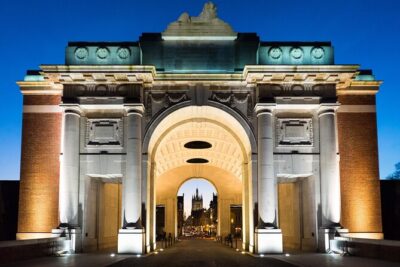
In Flanders Fields and Passchendaele Half Day Morning Tour
Read our review →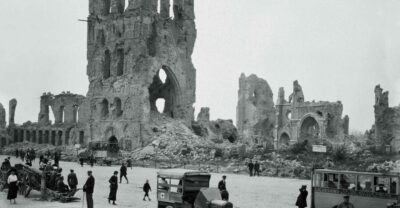
From Bruges: Flanders Fields Remembrance Full-Day Trip
Read our review →
Remembrance Tour: The Battle of the Bulge in the Ardennes
Read our review →
From Brussels: The Battle of the Bulge Remembrance Tour
Read our review →
Historic Battle of the Bulge Sites Tour from Brussels
Read our review →Browse the lists this tour appears in