
Reviewed · WWI BATTLEFIELD TOURS
From IEPER Private 4-hour Tour of the Ypres Battlefield
The ground still tells the story. This private Ypres tour links major First World War sites with clear explanations, maps, photographs, and room for questions. I especially like the personal pickup service and the chance to shape the visit around a family soldier. The main drawback is simple: four hours can only cover a small part of the Ypres battlefields.
You pay $399.25 for a group of up to four, not per person, which makes the cost easier to justify for a family or small party. Guides such as Soren and Sabine have also helped guests connect military records to exact places, though you should send ancestor details well before the tour if that matters to you.
In This Review
- Key points to know before booking
- Why this four-hour Ypres tour works
- Hill 60 and the war beneath the ground
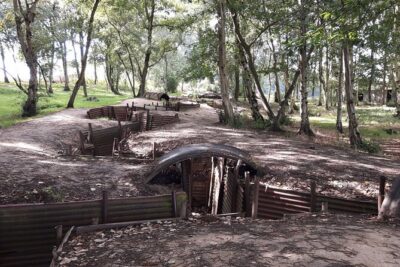
- Sanctuary Wood’s trenches and small museum
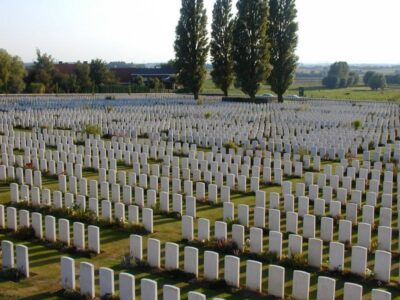
- Tyne Cot Cemetery and the scale of remembrance
- Saint Julien Memorial and the first gas attack
- Essex Farm Cemetery and In Flanders Fields
- A private tour that can follow your family story
- Pickup from Ypres station or your accommodation
- Is $399.25 good value for four people?
- Who should book this Ypres battlefield experience?
- Practical booking advice for a smoother visit
- Should you book this private Ypres tour?
- FAQ
- How long is the private Ypres battlefield tour?
- How much does the tour cost?
- Is pickup available at Ypres train station?
- Can I be picked up at my Ypres hotel or bed-and-breakfast?
- Which sites are included?
- Can I cancel for a full refund?
Key points to know before booking
- Hill 60 explains the underground war: Hear how massive mines were blown beneath the position on June 7, 1917.
- Sanctuary Wood offers original trenches: The museum is small and old-fashioned, but its trenches make the past feel immediate.
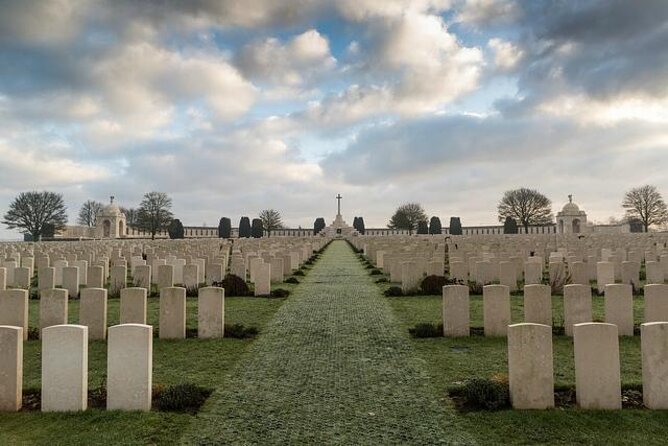
- Tyne Cot brings the scale of loss into focus: Around 12,000 Commonwealth servicemen are buried there, with only about 3,000 identified by name.
- The route covers five important sites: You visit Hill 60, Sanctuary Wood, Tyne Cot, Saint Julien Memorial, and Essex Farm Cemetery.
- A private vehicle keeps the pace flexible: Pickup is available at Ypres train station, hotels, and bed-and-breakfasts.
- Family history can shape the day: Guides may research a relative’s service and adjust the route around Australian, Canadian, New Zealand, British, or other connections.
Why this four-hour Ypres tour works

Ypres, also written as Ieper, is one of the best places in Belgium to understand the First World War. The town and surrounding fields were part of the Ypres Salient, a bulging section of the Western Front where Allied and German forces fought repeatedly from 1914 to 1918.
A map can make the area look tidy. On the ground, the story is harder to grasp. A road, a cemetery, a low rise, or a patch of woodland may appear ordinary until someone explains why armies fought for it and how many lives were lost there.
That is the real value of this tour. You are not simply driven past monuments. Soren and Sabine use maps and historic photographs to show how the front moved, why certain positions mattered, and how battles in one location affected the next.
The private format helps. You can stop to ask why a particular unit was there, how artillery worked, or what happened to a family member. You are not trying to squeeze your questions into a large group. The guides have also been praised for using humor carefully, without treating the subject lightly.
The tour is offered in the morning or afternoon and lasts about four hours. That is a useful half-day length if you are visiting Ypres by train, staying overnight, or combining the battlefield with time in the town.
More battlefield tours:
- In Flanders Fields and Passchendaele Half Day Morning Tour
★ 5.0 · 117 reviews - From Brussels: Flanders Fields Remembrance Full-Day Trip
★ 4.4 · 65 reviews - From Ypres, The Christmas Truce to Passchendaele Ypres Based WW1 private tour
★ 5.0 · 29 reviews
Hill 60 and the war beneath the ground
The first stop is Hill 60, with about 40 minutes set aside for the visit. Admission is free.
The name sounds modest, but this position mattered because even a small rise could offer an advantage on the flat ground around Ypres. Hill 60 became famous for the mines detonated beneath it on June 7, 1917. The explosions were part of the opening of the Battle of Messines, a major operation intended to break the German position.
Your guide’s explanation is important here. Without context, Hill 60 can be difficult to read. The power of the site comes from understanding that the battle was fought not only across the surface but also below it, through tunnels and counter-tunnels.
I like this as an opening stop because it gives you a practical sense of how the war was fought. You begin with terrain, engineering, and military planning before moving into the human cost shown at the cemeteries.
Do not expect a long walk or a fully staged attraction. This is an outdoor battlefield site, and its meaning depends heavily on the guide’s narration. Wear shoes suited to uneven ground and changing weather.
Sanctuary Wood’s trenches and small museum
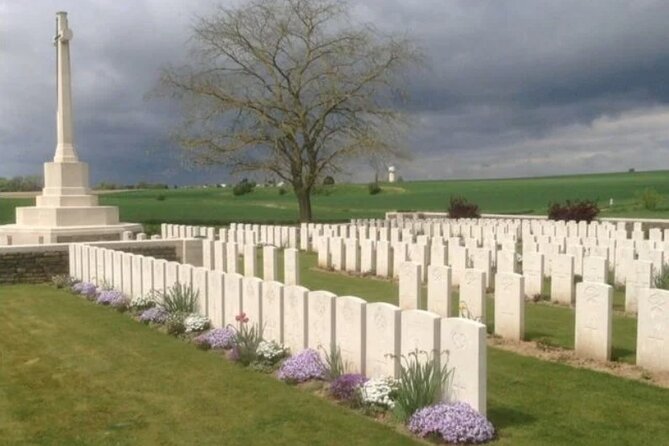
Sanctuary Wood Museum receives roughly 45 minutes, with admission included.
This is one of the most memorable stops because original First World War trenches remain here. The setting also includes a small, quaint museum. A particularly striking part of the visit is walking through a tunnel among the trenches, an experience that helps you picture how confined and exposed soldiers were.
The museum is not polished like a large national institution. That is part of its character. You may find a more personal, old-fashioned presentation, with objects and displays that feel close to the ground where they were found or used.
I would give this stop your full attention. The trenches are not just a photo opportunity. They show the physical conditions of the front: narrow passages, defensive positions, and the cramped spaces from which men lived and fought.
The guide adds the missing scale. Soren, in particular, has been praised for pairing photographs with maps and for explaining how the area changed during the war. That support matters, especially if you arrive with little prior knowledge.
Tyne Cot Cemetery and the scale of remembrance
Tyne Cot Cemetery is scheduled for about 45 minutes, and there is no admission charge.
This is the largest Commonwealth War Graves Commission cemetery in the world. About 12,000 soldiers are buried here, while only around 3,000 have names. That contrast is hard to process. It tells you how many bodies could not be identified after the battles and how much loss remains without a personal record.
The cemetery is carefully maintained, but the experience is not comfortable in the usual sightseeing sense. You will likely want quiet time to read names and take in the size of the grounds. The guide’s role is to provide context without filling every moment with speech.
Two Australian Victoria Cross recipients and one Canadian Victoria Cross recipient are buried here. Those details can make the cemetery more personal, especially for visitors with family or national connections to the Commonwealth forces.
The 45-minute stop is enough for a meaningful visit, but not for reading every inscription. If you have a specific relative listed at Tyne Cot, tell the guide before departure. The private format may allow extra attention to that person, though the tour still has five scheduled sites to cover.
More Ypres trips:
- Ypres: An exploration of the deadly salient battlefields
★ 5.0 · 76 reviews - e-Scavenger hunt Hasselt: Explore the city at your own pace
★ 4.0 · 31 reviews - In Flanders Fields and Passchendaele Grand Tour
★ 5.0 · 25 reviews - From Ypres: WWI Battlefields Private Tour
★ 5.0 · 25 reviews
Saint Julien Memorial and the first gas attack
The Saint Julien Memorial is a shorter stop of about 15 minutes, with free admission.
This is where the tour explains the first German gas attack of the First World War, launched on April 22, 1915, against French troops. Chlorine gas formed a cloud that moved across the front. Canadian troops then held the line in the face of the attack.
Fifteen minutes may sound brief, but the memorial works as a focused pause between the larger cemetery visits. The essential story is about battlefield confusion, new weapons, and the pressure placed on soldiers who had little protection against gas.
The guide’s visual aids are useful here. A map can show the direction of the gas cloud and explain why the position mattered. Without that, the memorial risks becoming another monument seen from a vehicle window.
This stop may be especially meaningful for Canadian visitors. Guides have adjusted explanations to highlight Canadian involvement, and the same personal approach can help visitors from Australia, New Zealand, Britain, or other countries understand their own connection to the area.
Essex Farm Cemetery and In Flanders Fields
Essex Farm Cemetery receives about 30 minutes and is free to enter.
The cemetery marks the site of a wartime hospital. It is also linked to Lieutenant Colonel John McCrae, who composed the poem In Flanders Fields here. The poem helped make the red poppy an enduring symbol of remembrance.
This is one of the tour’s most familiar stories, but the location gives it weight. The poppy is often encountered on lapels and memorials far from Belgium. At Essex Farm, you are shown the hospital setting connected with McCrae and the poem’s origins.
The stop is not only about literature. It brings together medical care, death, remembrance, and the way a few lines of poetry shaped public memory after the war.
Thirty minutes gives you time to visit the cemetery and listen without feeling rushed. Several families have valued the slower pace at the stops. That matters on a subject where hurrying from one site to another can make the day feel like a checklist.
A private tour that can follow your family story
The strongest feature of this experience is the guide’s willingness to make the battlefield personal.
If you have a grandfather, great-grandfather, or other relative who served in the Ypres area, send the service record before the tour. Soren has researched ancestors for visitors, sometimes identifying the battles in which they served and connecting their movements to places on the route.
Sabine has also helped with family research, including locating military documents and explaining where a relative had been. One family received information about a second Military Medal document. These personal touches are not something you should assume will happen automatically, but they show what is possible when you provide useful details in advance.
You do not need a family connection to benefit. A guide can explain the broader story of the British, Canadian, Australian, New Zealand, French, and German forces involved. Still, an ancestor’s name, regiment, service number, or date of death gives the visit a sharper focus.
The tour can also be adapted to your group. The guides have adjusted the pace for children and for someone with walking restrictions after surgery. One family with children aged 6 to 10 found the guide patient and able to add facts in a way the children could follow.
That flexibility is one reason I would choose a private tour over trying to cover the area alone on a first visit.
Pickup from Ypres station or your accommodation
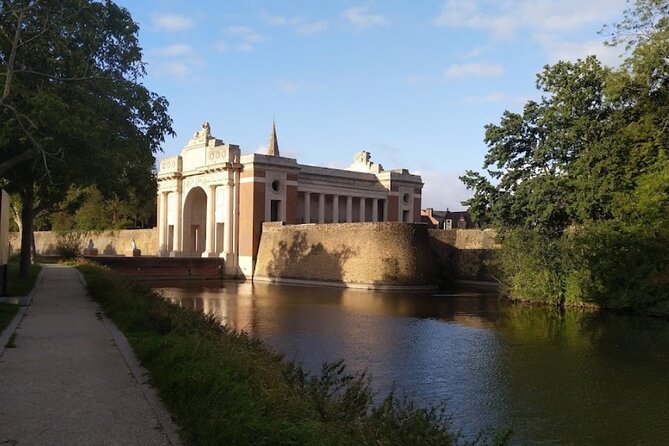
Pickup is offered at Ypres train station and at local hotels and bed-and-breakfasts. If you arrive by train, you can message the guide with your arrival time. If your accommodation is not listed, you can provide its name and arrange pickup there.
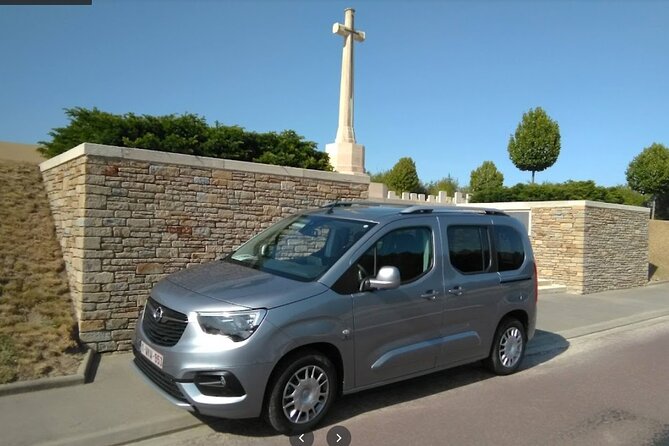
The vehicle used has been described as a comfortable hybrid SUV. For a group of four, this is more convenient than arranging several taxis or attempting to drive between scattered battlefield sites.
A private vehicle also helps if your plans change slightly. The guide has accommodated changes to pickup and drop-off points, carried luggage during a tour, and dropped people near a lunch spot afterward. Those extras are not guaranteed features, but they show why direct communication matters.
The tour is only offered in English. Confirmation is sent within 48 hours of booking, subject to availability. Service animals are allowed, and the activity is near public transportation.
The route includes outdoor sites and walking at cemeteries and trenches. Most people can take part, but you should mention mobility limits before the day begins. A four-hour tour is manageable for many people, yet the ground is not identical at every stop.
Is $399.25 good value for four people?
At $399.25 per group, the price works out to about $100 per person for four people. For two people, it is closer to $200 each. That difference makes the tour much better value for a family or small group than for a solo visitor.
You are paying for a private guide, transport, local battlefield knowledge, and the ability to ask questions throughout the visit. Admission is included at Sanctuary Wood, while the other listed sites are free. The real expense is the guide’s time and the efficiency of seeing five important places in four hours.
I would not choose this tour solely to save money. If you are comfortable researching the battlefields, renting a car, and navigating on your own, a self-guided visit may cost less. But you will need to build the historical connections yourself, and it is easy to miss why an ordinary-looking spot mattered.
For four people, I think the price is fair, particularly if you have an ancestor to trace. For two people, the value depends on how much you want interpretation rather than simple transportation.
Who should book this Ypres battlefield experience?
I would recommend it most strongly to:
- Families tracing a relative who served in the First World War
- First-time visitors to the Ypres battlefields
- Canadians, Australians, New Zealanders, and Britons seeking national or family connections
- People who prefer a private pace and plenty of questions
- Families with older children who can handle a serious subject
- Visitors arriving by train who do not want to arrange battlefield transport
This may not suit someone looking for a light sightseeing outing. The subject is grim, and the cemeteries can be emotionally heavy. One person compared the feeling to visiting Auschwitz, which gives you a useful warning about the level of reflection involved.
The guides bring warmth and occasional humor, but the day remains centered on mass death, military failure, and remembrance. You should allow yourself some quiet time afterward rather than packing the rest of the day too tightly.
Practical booking advice for a smoother visit
Send the guide your family information before arrival. A full name, regiment, service number, dates, and any known battle details can help turn a general tour into a more focused one.
Choose the morning or afternoon slot that fits your train or hotel plans. Pickup and drop-off are available, but you should message the provider with the exact location and timing.
Plan for outdoor conditions and sensible footwear. The tour is not presented as a strenuous hike, yet you will visit trenches, memorials, and cemetery grounds rather than remain inside a vehicle.
The tour is recommended by all listed participants and carries a five-star rating from 154 reviews. That strong record is supported by repeated praise for clear explanations, ancestor research, punctual pickup, patient pacing, and flexibility. Still, the experience depends on having a guide who can make the places meaningful, so confirm the details of your pickup and family-history request in advance.
Should you book this private Ypres tour?
Book it if you want the Ypres battlefields explained as a connected story rather than a series of monuments. The combination of Hill 60, Sanctuary Wood, Tyne Cot, Saint Julien, and Essex Farm gives you military history, original trenches, cemetery remembrance, gas warfare, and the story behind In Flanders Fields in one compact visit.
I especially recommend it for a group of four, for anyone following an ancestor, or for visitors without a car. Solo visitors and couples should weigh the fixed group price against their interest in personal guiding.
Four hours will not cover everything around Ypres. That is the one limitation you should accept from the start. But for a carefully chosen half-day, this tour offers strong value, thoughtful guidance, and a direct connection to some of Belgium’s most important First World War sites.
FAQ
How long is the private Ypres battlefield tour?
The tour lasts approximately four hours.
How much does the tour cost?
The price is $399.25 per group, for up to four people.
Is pickup available at Ypres train station?
Yes. Pickup is available at Ypres train station. You should message the provider with your arrival time.
Can I be picked up at my Ypres hotel or bed-and-breakfast?
Yes. Pickup is offered at Ypres hotels and bed-and-breakfasts. If your accommodation is not listed, send the provider its name.
Which sites are included?
The tour visits Hill 60, Sanctuary Wood Museum, Tyne Cot Cemetery, Saint Julien Memorial, and Essex Farm Cemetery.
Can I cancel for a full refund?
Yes, if you cancel at least 24 hours before the experience start time. Cancellations made less than 24 hours in advance are not refunded, and changes within that period are not accepted.
Just added in Ypres
- From Ypres, The Christmas Truce to Passchendaele Ypres Based WW1 private tour★ 5.0 · 29 reviews
- In Flanders Fields and Passchendaele Grand Tour★ 5.0 · 25 reviews
- From LIlle or Bruges, Christmas Truce to Passchendaele Ypres 1 day WW1 private★ 5.0 · 5 reviews
- e-Scavenger hunt Ypres: Explore the city at your own pace★ 4.5 · 6 reviews
- Discover Tournai while playing! Escape game – The alchemist★ 4.0 · 3 reviews
- Full Day Canadian WW1 Vimy and Somme Battlefield Tour from Ypres★ 5.0 · 6 reviews
- Private 4hr Australian Fromelles Battlefield WW1 Tour★ 5.0 · 2 reviews
- Full Day Private Tour to WWI Passchendaele Base in Ypres★ 5.0 · 1 review
WWI Battlefield Tours, compared.
From Bruges: Great War Flanders Fields Minibus Tour w/ Lunch
Read our review →
Flanders Fields Remembrance Tour from Brussels
Read our review →
In Flanders Fields and Passchendaele Half Day Morning Tour
Read our review →
From Bruges: Flanders Fields Remembrance Full-Day Trip
Read our review →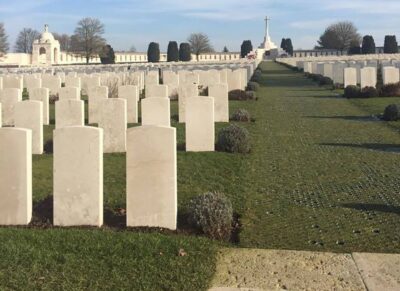
From Brussels: Flanders Fields Remembrance Full-Day Trip
Read our review →
Remembrance Tour: The Battle of the Bulge in the Ardennes
Read our review →
From Brussels: The Battle of the Bulge Remembrance Tour
Read our review →Browse the lists this tour appears in