
Reviewed · WWI BATTLEFIELD TOURS
From Ypres, The Christmas Truce to Passchendaele Ypres Based WW1 private tour
The ground still carries the stories. This private Ypres tour links the Christmas Truce, Messines Ridge, Hill 60, Passchendaele, and Tyne Cot with a guide who explains what happened on each patch of land. It is not simply a drive past memorials. You move through the Ypres Salient in the order of the Australian advance, with time for cemeteries, bunkers, trenches, mine craters, and personal stories.
I like the private format, since Søren can adjust the day to your family history and interests. I also like that pickup, bottled water, and entry to the trench museum are included. The main consideration is the price, $420.49 per person, and the minimum of two people, so this makes better financial sense for a couple or small group than for a solo visitor.
In This Review
- Key points to know before booking
- Why this Ypres tour works better with a local guide
- Messines Ridge and the Christmas Truce
- Hooge Crater Cemetery and the Menin Road
- The Black Watch and Australia’s command ground
- Polygon Wood, bunkers, and the Australian Fifth Division
- Hill 60 and the mine blown at 3:10 a.m.
- Broodseinde and Zonnebeke: following the Australian advance
- Tyne Cot Cemetery and the scale of loss
- The John McCrae site and In Flanders Fields
- Menin Gate and 55,000 missing names
- Sanctuary Wood Museum and original trenches
- The private format and personal family research
- Price, timing, and practical value
- Who should book this Ypres battlefield tour?
- Should you book it?
- FAQ
- Where does the tour start?
- How long does the tour last?
- Is this a private tour?
- How many people are required to book?
- Is pickup available from Lille, Arras, or Bruges?
- Is lunch included?
- What language is the tour offered in?
Key points to know before booking
- Two hours at Messines Ridge: This gives you time for mine craters, the Christmas Truce area, the Battle of Messines, and the crypt where Adolf Hitler was treated for wounds.
- A strong Australian focus: The route follows Australian actions at Hooge, Polygon Wood, Broodseinde, Zonnebeke, and Passchendaele.
- A guide-led experience: Søren has lived near Ypres for 15 years and is especially good at connecting military events with individual soldiers and family records.
- Important memorial stops: Tyne Cot, Menin Gate, the John McCrae site, and several cemeteries bring the scale of the war into sharper focus.
- A private, flexible day: Only your group takes part, and the tour can be shaped around your knowledge level, nationality, or relatives who served.
- Plan for lunch: Lunch is not included, although free bottled water is provided throughout the day.
Why this Ypres tour works better with a local guide
The Ypres battlefields can look deceptively ordinary. Roads cross fields, villages have been rebuilt, and many wartime structures have disappeared beneath later construction. Without help, you may see a quiet Belgian road and miss the fact that it followed a major military route or sat beside an artillery position.
That is where this tour earns its keep. Søren explains how the ground looked during the First World War, then ties the larger battles to individual soldiers. His approach is especially useful if you are tracing a great-grandfather, great-uncle, or another family member. He has researched relatives in advance for some groups and has even helped connect people with further books, films, podcasts, and records after the tour.
The guide speaks English only, so this is not the right choice if you need a tour in another language. For English-speaking visitors, though, the private setup allows you to ask questions without slowing down a larger group. You can also tell Søren if you already know the military background and want more personal stories, or if you need the basics explained clearly.
At about eight hours, this is a full day. That sounds long on paper, but the route contains enough different stops to keep the pace moving. Some visits are brief, while Messines, the museum, and the larger cemeteries receive more time.
More battlefield tours:
- From IEPER Private 4-hour Tour of the Ypres Battlefield
★ 5.0 · 154 reviews - In Flanders Fields and Passchendaele Half Day Morning Tour
★ 5.0 · 117 reviews - From Brussels: Flanders Fields Remembrance Full-Day Trip
★ 4.4 · 65 reviews
Messines Ridge and the Christmas Truce
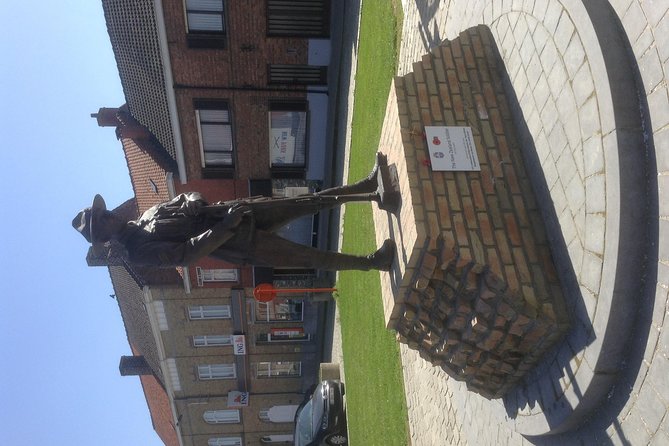
The tour begins with about two hours at Messines Ridge, one of the most important sections of the day. Here you hear about the Battle of Messines, see the mine craters, and visit the area associated with the Christmas Truce.
The mine craters make the underground nature of the fighting easier to understand. The Battle of Messines depended heavily on tunnels and explosives, and the scars left by the mines give the story a physical scale. This is one of the places where a guide matters most, since the meaning of a crater is easy to miss if you do not know when and why it was created.
You also hear about the crypt where Adolf Hitler was treated for his wounds. That detail is unusual and adds another thread to the history of the site, though the broader focus remains the First World War battle and the soldiers who fought there.
Allow the full two hours to sink in. Messines is not just a quick photo stop. It sets up the military story that continues across the rest of the day.
Hooge Crater Cemetery and the Menin Road
The next stop is Hooge Crater Cemetery, where you visit the grave of Pat Bugden VC. Bugden was only 20 years old when he received the Victoria Cross. That single grave gives a human face to the military decorations and casualty lists that can otherwise feel remote.
You also stand on the Menin Road, alongside the former Australian gun positions used during the assault on Passchendaele. This is a short visit of around 15 minutes, so expect a focused explanation rather than a long cemetery walk.
The stop works because it joins three things in one place: an individual Australian soldier, a famous wartime road, and the artillery preparations for a major assault. If you want extensive time to read cemetery inscriptions, tell Søren early in the day. The schedule is full, and the short stop means the guide will likely concentrate on the most relevant graves and positions.
The Black Watch and Australia’s command ground
At The Black Watch site, Søren explains how the area served as the Australian headquarters in September 1917. He also covers earlier fighting on the same ground in November 1914.
This stop helps you see that the Ypres Salient was not a single battle. The same fields could be used, attacked, abandoned, and fought over again as the front shifted. A headquarters site may not look dramatic, but it helps explain how planning and command operated behind the forward lines.
The visit is also a useful bridge between the earlier battles and the Australian advance toward Passchendaele. You are not just collecting famous names. You are following a sequence of operations across the area.
More Ypres trips:
- Ypres: An exploration of the deadly salient battlefields
★ 5.0 · 76 reviews - e-Scavenger hunt Hasselt: Explore the city at your own pace
★ 4.0 · 31 reviews - In Flanders Fields and Passchendaele Grand Tour
★ 5.0 · 25 reviews - From Ypres: WWI Battlefields Private Tour
★ 5.0 · 25 reviews
Polygon Wood, bunkers, and the Australian Fifth Division
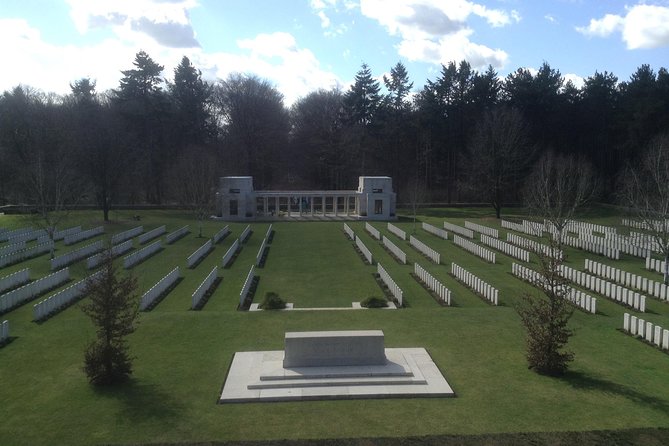
At Polygon Wood, you walk through the woods and see concrete bunkers that remained from the fighting. You also visit the cemetery and the monument to the Australian 5th Division.
This is one of the more physical parts of the tour. You are not confined to a vehicle or looking at a memorial from a car park. The walk helps you picture how difficult movement through the woods must have been, especially with bunkers, artillery, and ruined terrain shaping every advance.
The visit lasts about 30 minutes. Wear practical shoes, since the route includes walking through woodland and around wartime remains. The tour is described as suitable for most people, but anyone concerned about walking should ask about the exact conditions before booking.
Hill 60 and the mine blown at 3:10 a.m.
Hill 60 brings the underground war into sharp focus again. Here you hear about Captain Woodward and the 1st Australian Tunnelling Company, which placed a massive mine beneath the position. The mine exploded at 3:10 a.m. on June 7, 1917, and you see the crater created by that blast.
The story is powerful because it combines engineering, secrecy, and timing. A mine of that size required months of preparation and a large underground effort. Standing beside the crater gives you a better sense of the force involved than any paragraph in a book.
The visit lasts around 45 minutes. This is enough time for the main explanation and crater visit without making the schedule feel heavy. It is also one of the stops most likely to appeal to people who are interested in battlefield technology and tunnelling operations.
Broodseinde and Zonnebeke: following the Australian advance
At Broodseinde and Zonnebeke, much of the experience takes place from the vehicle as you follow the line of the Australian advance. These are driving sections rather than long walking visits.
Do not treat that as wasted time. The route connects the individual stops and helps you understand distance. Maps can make a battlefield look compact, but driving between positions shows how far troops, supplies, artillery, and command posts had to move.
Zonnebeke also places you close to the Passchendaele story. The tour title promises a route from the Christmas Truce to Passchendaele, and these sections help connect the earlier Messines operations to the later advance.
Tyne Cot Cemetery and the scale of loss
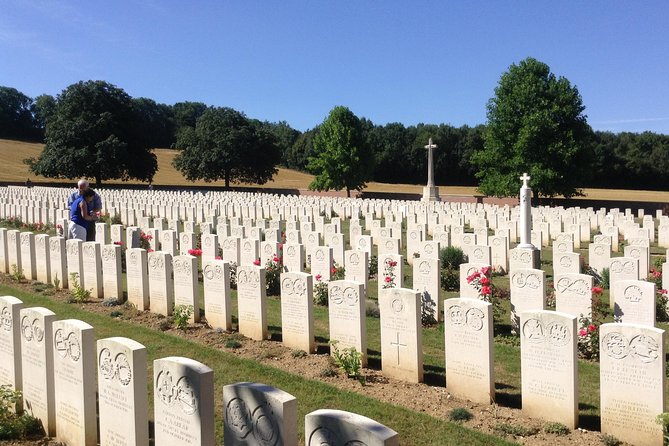
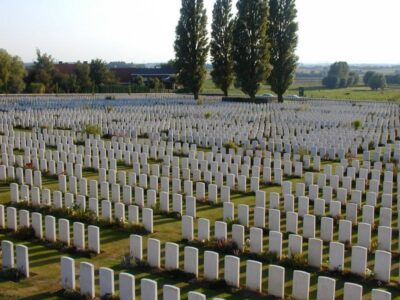
Tyne Cot Cemetery receives about 45 minutes. It is the largest Commonwealth War Graves Commission cemetery in the world, with around 12,000 soldiers buried there. Only about 3,000 of those graves have names, while many others are unidentified.
The numbers can be hard to absorb. The best way to approach Tyne Cot is slowly, reading a few inscriptions and letting the size of the cemetery speak for itself. Søren also points out the graves of two Australian Victoria Cross recipients, adding personal detail to a place defined by enormous loss.
Tyne Cot can be an emotional stop, especially if you are searching for a family member. If your relative is buried there, provide the details when booking or before the tour if possible. The day can then be shaped around that connection, subject to timing.
The John McCrae site and In Flanders Fields
The John McCrae site marks the hospital area where Lieutenant Colonel John McCrae composed In Flanders Fields. You spend about 30 minutes here.
The poem is familiar to many people, but visiting the hospital site gives it a setting. It reminds you that the poem came from a working medical environment during the fighting, not from a distant reflection long after the war.
This stop is brief and focused. It suits anyone interested in wartime literature, remembrance, or the way poetry shaped public memory. It also provides a quieter pause between the larger battlefield and cemetery visits.
Menin Gate and 55,000 missing names
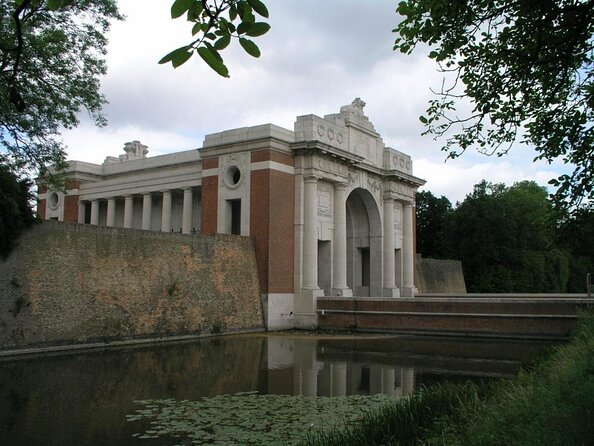
The Menin Gate Memorial is one of Ypres’s essential stops. In about 20 minutes, you hear how the memorial came about and learn about the 55,000 names of missing soldiers listed there.
The memorial is less about one battlefield position than about absence. These men have no known grave, so their names are gathered in one place. That makes the visit different from Tyne Cot, where rows of graves show the scale of those who were identified and buried.
The short time here is enough for an explanation and a look at the memorial, but it may feel brief if you want to inspect many names. If you have a specific relative listed at the Menin Gate, give Søren the name in advance so the visit can be more targeted.
Sanctuary Wood Museum and original trenches
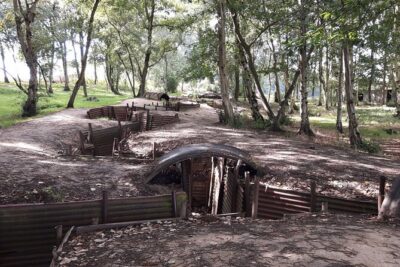
The final listed stop is Sanctuary Wood Museum, with around 40 minutes to see the original First World War trenches and the small museum. Entry to the trench museum is included.
After a day of cemeteries and open battlefield sites, this visit offers something different. The trenches are tangible. You can see the cramped defensive spaces and get a more direct impression of how soldiers lived and fought.
The museum is described as quaint rather than large, so do not expect a major national institution with hours of galleries. Its value is in the original trenches and the personal, close-up feel of the collection. It makes a fitting end to a route that has moved from broad battles to individual soldiers.
The private format and personal family research
The strongest reason to choose this tour is the private format. Your group is the only group taking part, and the experience can be adjusted to your interests.
That matters if you have family connections. Several past bookings have involved relatives who served in the Ypres area, and Søren has tailored the route around those stories. He has also helped people find the cemetery where an ancestor is buried and provided follow-up material after the day.
You should send names, units, dates, and cemetery details ahead of time if you have them. The supplied information does not promise that every family search will be possible, but the guide’s record of doing this kind of preparation makes it worth asking.
The guide’s personal connection adds another layer. Søren is from London, has lived near Ypres for 15 years, and has described his own great-uncle’s wartime death as an important reason the area feels like home. His interest comes through in the way he connects military movements with the lives behind them.
Price, timing, and practical value
The cost is $420.49 per person. That is a serious price, but it includes an eight-hour private tour, hotel pickup in Ieper, a professional guide, bottled water, and entry to the trench museum.
For two people, you are paying for a full day of transport, planning, and private guiding. I think the value is strongest if you care about military history or family research. A self-guided visit might cost less, but you would need to arrange transport, plan the route, learn the locations, and interpret sites that often have few visible clues.
The price is less attractive if you only want a quick look at the Menin Gate and Tyne Cot. You could visit those places independently. This tour is designed for people who want the connected story of the Ypres Salient and the smaller sites between the famous memorials.
Pickup is offered from Ieper-based hotels, and the start time is 9:00 a.m. A minimum of two people is required. If you want to begin in Lille, Arras, or Bruges, you need one of the provider’s separate listings rather than this Ieper-based tour.
Lunch is not included, so plan for a meal during the day. Bottled water is provided. Confirmation arrives within 48 hours, subject to availability, and free cancellation is available up to 24 hours before the start time. Service animals are allowed, and the tour is near public transportation.
Who should book this Ypres battlefield tour?
I would choose this tour if you want more than famous memorials. It suits a couple, family, or small group with a strong interest in the First World War, Australian military history, battlefield archaeology, or genealogy.
It is also a good choice if you prefer asking questions and setting the pace yourself. Søren can explain the basics, discuss detailed military movements, or focus on a particular country or family member.
I would think twice if you dislike long historical explanations, need a non-English guide, or want a relaxed sightseeing day with plenty of free time. Eight hours is a lot of history, and the subject is often somber. The route is full, with some brief stops and several cemetery visits.
Should you book it?
Book this tour if you want the Ypres battlefields explained as a connected story rather than a list of attractions. The combination of Messines, Hill 60, Polygon Wood, Tyne Cot, Menin Gate, John McCrae’s site, and Sanctuary Wood gives you both the large military picture and the personal cost.
I especially recommend it for anyone tracing an ancestor. Send the family details before the tour and ask Søren what can be added. If you are only visiting Ypres for a few hours, the price and eight-hour schedule may be too much. For a full day of careful guiding, private transport, and sites that are difficult to interpret alone, it offers a strong and unusually personal way to see the Salient.
FAQ
Where does the tour start?
The tour starts with pickup from Ieper-based locations at 9:00 a.m.
How long does the tour last?
The tour lasts approximately eight hours.
Is this a private tour?
Yes. Only your group participates, and the route can be customized to your interests.
How many people are required to book?
A minimum of two guests is required.
Is pickup available from Lille, Arras, or Bruges?
This specific tour offers Ieper-based pickup only. Separate listings are available for departures from Lille, Arras, or Bruges.
Is lunch included?
No. Lunch is not included, although bottled water is provided.
What language is the tour offered in?
The tour is offered in English.
Just added in Ypres
- In Flanders Fields and Passchendaele Grand Tour★ 5.0 · 25 reviews
- From LIlle or Bruges, Christmas Truce to Passchendaele Ypres 1 day WW1 private★ 5.0 · 5 reviews
- e-Scavenger hunt Ypres: Explore the city at your own pace★ 4.5 · 6 reviews
- Discover Tournai while playing! Escape game – The alchemist★ 4.0 · 3 reviews
- Full Day Canadian WW1 Vimy and Somme Battlefield Tour from Ypres★ 5.0 · 6 reviews
- Private 4hr Australian Fromelles Battlefield WW1 Tour★ 5.0 · 2 reviews
- Full Day Private Tour to WWI Passchendaele Base in Ypres★ 5.0 · 1 review
- From Ypres 4hr Christmas Truce and Monster Mines of Messines PRIVATE Tour★ 5.0 · 5 reviews
WWI Battlefield Tours, compared.
From Bruges: Great War Flanders Fields Minibus Tour w/ Lunch
Read our review →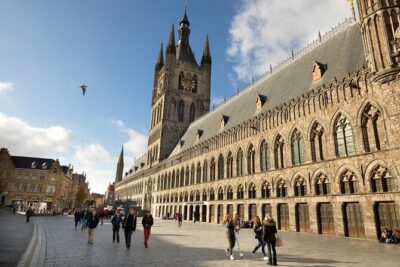
Flanders Fields Remembrance Tour from Brussels
Read our review →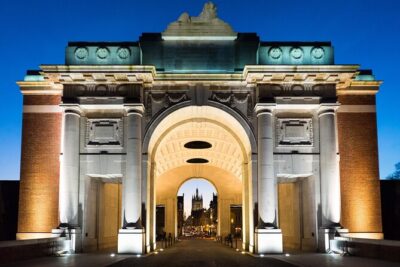
In Flanders Fields and Passchendaele Half Day Morning Tour
Read our review →
From Bruges: Flanders Fields Remembrance Full-Day Trip
Read our review →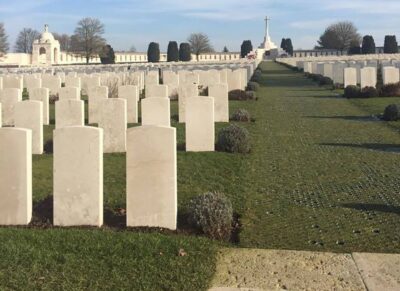
From Brussels: Flanders Fields Remembrance Full-Day Trip
Read our review →
Remembrance Tour: The Battle of the Bulge in the Ardennes
Read our review →
From Brussels: The Battle of the Bulge Remembrance Tour
Read our review →Browse the lists this tour appears in