
Reviewed · WWI BATTLEFIELD TOURS
In Flanders Fields and Passchendaele Grand Tour
The past feels close in Flanders Fields. This Ypres battlefield tour links cemeteries, trenches, bunkers, mine craters, and museums across the Ypres Salient, giving you a clear sense of how the fighting unfolded and how many nations were drawn into it. I especially like the eight-person limit, which keeps the day personal, and the chance to see preserved German and British positions, not just polished memorials. The main consideration is the $344 price, which is high for a day tour, so you should be ready to spend most of the day focused on World War I.
Guide Roger receives especially strong praise for his clear explanations, dry humor, and careful handling of difficult subjects. A light sandwich lunch, soft drink, bottled water, and transport between the sites are included, which makes the price easier to justify. Still, confirm the museum admission details before booking, since the tour information says Sanctuary Wood admission is included in one place but lists it separately elsewhere.
In This Review
- What makes this tour worth your day
- Why the Ypres Salient Matters
- Meeting in Ypres at 10:00 a.m.
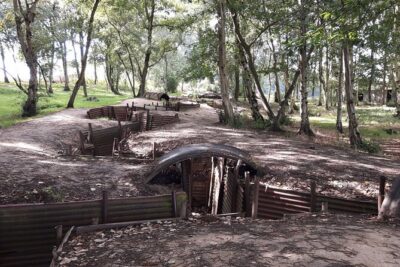
- Sanctuary Wood and the British Trench System
- Tyne Cot, the Largest Commonwealth War Cemetery
- Langemark and the German Story
- Essex Farm and John McCrae’s Poem
- The German Command Post
- The Caterpillar Mine Crater and Messines Ridge
- Hill 60 and the Cost of Repeated Attacks
- Bayernwald’s Preserved German Trenches
- Roger’s Guiding Style
- Is $344 Good Value?
- Who Should Book This Ypres Battlefield Tour?
- Should You Book the In Flanders Fields and Passchendaele Grand Tour?
- FAQ
- Where does the tour begin?
- What time does the tour start?
- Where does the tour end?
- How long does the tour last?
- How large is the group?
- Is lunch included?
- Are entrance fees included?
- Can service animals join the tour?
- What is the cancellation policy?
What makes this tour worth your day
- Eight-person maximum: A small group gives you more room to ask questions and follow the guide’s explanations.
- Sanctuary Wood’s preserved trenches: You see an extensive British trench system alongside a large collection of battlefield objects.
- Tyne Cot Cemetery: Visit the world’s largest British and Commonwealth war cemetery.
- German and Allied positions: The day includes Langemark Cemetery, Bayernwald trenches, a German command bunker, and British sites.
- Underground warfare: The Caterpillar mine crater brings the Battle of Messines Ridge to life in a startling way.
- Simple all-day logistics: Meet at Ypres train station at 10:00 a.m., eat lunch on the road, and return to the same point.
Why the Ypres Salient Matters
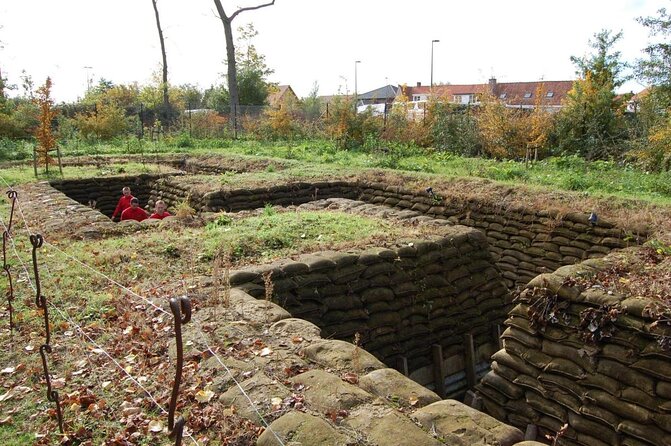
Ypres was one of the major Allied-held areas on the Western Front. The town and nearby villages were surrounded by battlefields, cemeteries, defensive lines, and artillery positions. The fighting here was not one single event. It came in repeated offensives, with the battles of Passchendaele, Messines Ridge, and Hill 60 leaving different marks on the ground.
That variety is the main reason to take a guided tour. On your own, you can visit individual cemeteries and museums, but it is harder to connect them. A guide can explain why a German cemetery looks different from a British one, how mine warfare changed the Battle of Messines, and why a small medical station became tied to one of the best-known poems of the war.
This is a serious subject, and the day does not soften it. You will visit mass graves, memorial walls, preserved trenches, and places associated with enormous loss. The best moments are likely to be quiet ones. At Essex Farm, for example, the connection between the dressing station bunkers and John McCrae’s In Flanders Fields gives the poem a physical setting.
More battlefield tours:
- From IEPER Private 4-hour Tour of the Ypres Battlefield
★ 5.0 · 154 reviews - In Flanders Fields and Passchendaele Half Day Morning Tour
★ 5.0 · 117 reviews - From Brussels: Flanders Fields Remembrance Full-Day Trip
★ 4.4 · 65 reviews
Meeting in Ypres at 10:00 a.m.
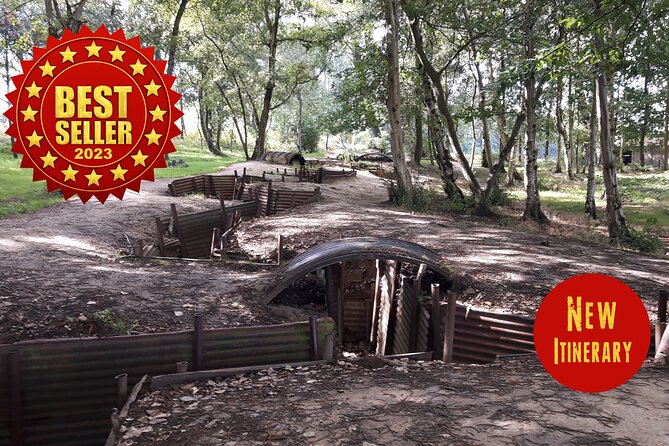
The tour begins at Station Ieper, at Colaertplein 35, 8900 Ieper. This is useful if you arrive by train, and the tour returns to the same meeting point after roughly seven to eight hours.
The start time gives you a reasonable morning to reach Ypres. If you are coming from Brussels or another Belgian city, allow extra time for rail connections. One person had trouble after a late train arrival, so punctuality matters, even though the guide was described as kind and helpful in dealing with the problem.
The day uses shared transport, with no more than eight people. That number matters here. Battlefield touring involves many short stops, and a large coach group can turn every visit into a head count. With a small party, you have a better chance to ask Roger about a particular regiment, cemetery inscription, or battlefield feature without holding up dozens of people.
Wear practical shoes. The tour includes trenches, bunkers, cemetery paths, and outdoor sites. The information provided does not specify the walking distance or ground conditions, so you should be prepared for uneven surfaces and changing weather.
Sanctuary Wood and the British Trench System
Sanctuary Wood Museum is an early highlight and one of the most unusual stops. The museum holds an extensive collection of artifacts, while the grounds preserve a British trench system. This gives you two kinds of evidence at once: personal objects connected with the soldiers and the physical defensive lines they occupied.
The preserved trenches are especially useful for understanding scale. Photographs often make trenches look like narrow ditches, but standing beside or within them helps you picture the cramped conditions and the constant need for cover. The museum’s collection adds detail to that picture.
The stop lasts about 40 minutes. That is enough time for a focused visit, though not enough for a slow reading of every display. If you are deeply interested in military equipment or battlefield archaeology, you may want more time here. The tour has a full route ahead, so the schedule favors breadth over long museum visits.
There is an important admission detail to check. The tour description presents Sanctuary Wood admission as included in the highlights, but the stop information says admission is not included. Ask the provider to confirm the current arrangement before you pay.
Tyne Cot, the Largest Commonwealth War Cemetery
After driving through the Passchendaele battlefields, the tour reaches Tyne Cot Cemetery. It is described as the largest British and Commonwealth war grave cemetery in the world, and its size gives the Passchendaele fighting a human scale that maps cannot provide.
You have about 20 minutes here. That is a short visit, so use it well. Take time to look across the cemetery, read some of the inscriptions, and notice the memorial structure and long lines of graves. The stop is free, but the emotional weight is considerable.
Tyne Cot works best as part of the wider route. By the time you arrive, you have already seen trenches and battlefield remains. The cemetery then turns those military positions into individual lives and names. The short timing may frustrate you if cemeteries are your main reason for coming, but it helps the tour reach all eight locations in one day.
More Ypres trips:
- Ypres: An exploration of the deadly salient battlefields
★ 5.0 · 76 reviews - e-Scavenger hunt Hasselt: Explore the city at your own pace
★ 4.0 · 31 reviews - From Ypres, The Christmas Truce to Passchendaele Ypres Based WW1 private tour
★ 5.0 · 29 reviews - From Ypres: WWI Battlefields Private Tour
★ 5.0 · 25 reviews
Langemark and the German Story

Langemark Cemetery offers a different view of the war. It is a German cemetery with a mass grave and later links to Nazi symbolism, making it more complicated than a simple memorial stop.
The tour allows around 40 minutes here, enough for the guide to explain the site’s history and for you to consider how memory was shaped in Germany after the war. That context matters. The cemeteries of the Ypres Salient are not interchangeable, and their design, inscriptions, and political associations reveal how different countries remembered the dead.
Langemark can be uncomfortable, particularly because of the Nazi connections. That is also why it belongs on a serious history tour. You are not being shown only the most familiar Allied memorials. You are asked to consider how remembrance can be used, changed, and politicized.
Essex Farm and John McCrae’s Poem
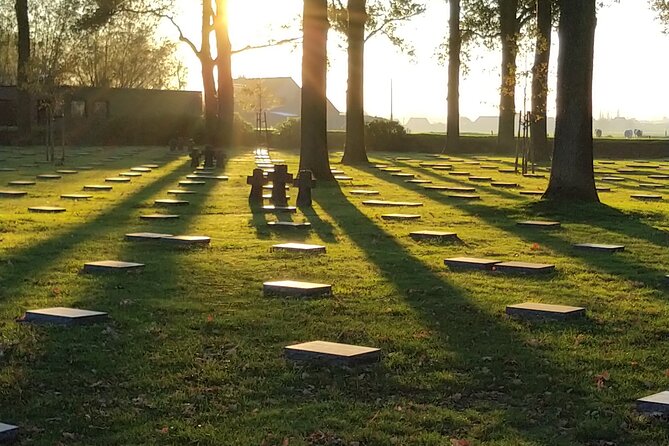
At Essex Farm Cemetery, you see preserved dressing station bunkers and the memorial connected with Lieutenant Colonel John McCrae. This is where the story of In Flanders Fields becomes more than a poem encountered in a book or at a memorial.
The stop lasts about 40 minutes. The bunkers help explain the medical side of the front, while the cemetery places McCrae’s writing in the setting that shaped it. The visit is not just about literary history. It also points to the wounded men who passed through these stations and the immense pressure placed on medical staff.
The subject can be moving, and the tour’s strongest moments seem to come when Roger connects famous names and poems to specific places. His approach is described as caring without losing his sense of humor. That balance matters during a long day of grim material.
The German Command Post
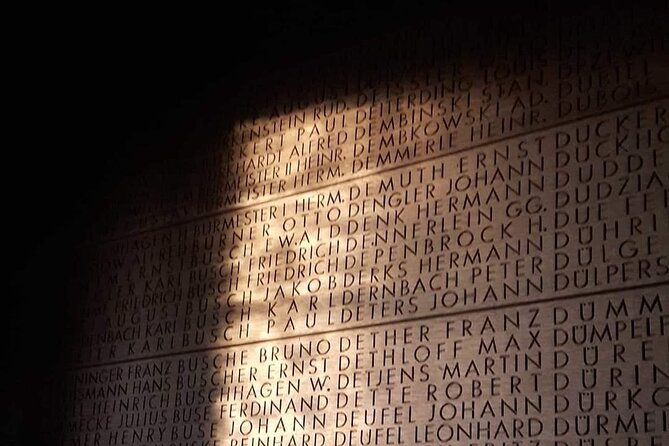
The German Command Post is a brief stop, lasting about 15 minutes. It is described as the largest preserved German command bunker in the Ypres Salient.
Because the visit is short, expect a concentrated explanation rather than a long exploration. The value is in seeing the scale and solidity of a command position. It also gives the day a useful balance. You are not visiting only British trenches and Commonwealth cemeteries. German defensive planning and construction are part of the story too.
A short stop can be a benefit after several emotionally heavy cemeteries. You see a major structure, hear its purpose, and continue before the day becomes too repetitive.
The Caterpillar Mine Crater and Messines Ridge
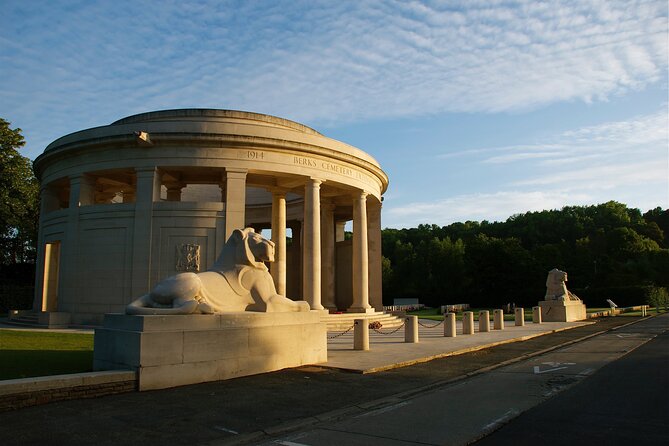
The Caterpillar mine crater is one of the tour’s strongest physical sights. It connects to the Battle of Messines Ridge and the underground war, when mines were placed below German positions before being detonated.
You have about 30 minutes here. The crater makes an otherwise hard-to-grasp part of the war visible. Underground warfare is difficult to picture from written accounts alone. A large blast crater gives you a direct sense of the force involved, even though it cannot show the noise, fear, or confusion of the attack itself.
Several people singled out the Caterpillar crater as a highlight, along with the trenches around Hill 60. That makes sense. These sites have a clear visual impact, and Roger’s explanations add the military context you would miss if you simply stopped for a photograph.
Hill 60 and the Cost of Repeated Attacks

Hill 60 is another preserved battlefield, with bunkers and mine craters connected to terrible fighting. The stop lasts about 30 minutes.
The name sounds modest, but the site’s importance came from its height and position. The tour explains the fighting here through the remains still visible on the ground. Bunkers and craters show that the battlefield was not a smooth open field. It was a layered defensive zone shaped by artillery, mines, shelter, and repeated assaults.
This is one of the places where a guide makes a major difference. Without background, you may see broken concrete and uneven ground. With Roger’s explanation, you can better understand why this patch mattered and why control of small rises could affect a much wider area.
Bayernwald’s Preserved German Trenches
Bayernwald is described as the only preserved German trench system in the Ypres Salient. The visit lasts about 45 minutes, giving you more time than at the German command post.
Seeing German trenches after the British system at Sanctuary Wood helps you compare defensive arrangements and understand that the opposing armies faced many of the same problems: bombardment, exposure, drainage, shelter, and supply. The preserved remains also keep the day from becoming a one-sided account.
Bayernwald is included in the admission, according to the tour details. Sanctuary Wood’s admission should be confirmed separately because the information is inconsistent there.
Roger’s Guiding Style
The guide can make or break a battlefield tour. Roger is praised for writing two books on the subject, answering questions readily, and putting the battles into a wider setting. His approach also seems to suit the material. You get expert explanation, but not a lecture that ignores the people standing in front of him.
His humor is mentioned alongside his care. That combination may sound unusual, but it is useful on a full day of cemeteries and battlefield deaths. A guide who never lightens the mood can make the experience exhausting. A guide who treats the subject casually would be worse. Roger appears to keep the line between the two.
You should still consider your own interests. This tour is built around military history, memorials, and battlefield remains. If you mainly want scenic sightseeing or a quick introduction to Ypres, the amount of detail may feel heavy. If you want context and are willing to spend a day with difficult subjects, the small group and guide’s expertise are major advantages.
Is $344 Good Value?
At $344, this is not a budget excursion. The price covers roughly seven to eight hours, shared transportation, a light sandwich lunch, a soft drink, bottled water, a small group capped at eight, and admission to Bayernwald. The Sanctuary Wood admission needs confirmation.
The value comes from the route. These sites are spread across the Ypres area, and visiting all of them independently would require careful planning, transport, opening hours, and a strong grasp of the geography. You are paying to connect the places in a sensible order and to have a specialist explain what you are seeing.
The lunch is practical rather than a major feature. It saves you from finding food during a tightly timed day, but it should not be a reason alone to book. The real value is the access to several preserved positions and the interpretive work between them.
I would consider the price fair for someone with a serious interest in World War I, particularly if a private tour is out of reach but a large coach tour feels impersonal. For a casual visitor, it may be too expensive for a single day.
Who Should Book This Ypres Battlefield Tour?
You should consider it if you want:
- A full day focused on World War I
- A guide who can explain battles, cemeteries, and memorial traditions
- Preserved trenches and bunkers rather than only formal monuments
- A small shared group with no more than eight people
- A route covering British, Commonwealth, German, and medical history
- A simple start and finish at Ypres train station
You may want a different plan if you prefer free time, modern city sightseeing, or a short museum visit. The schedule is full, and the subject is emotionally demanding. Families can participate, since most visitors are able to take part and service animals are allowed, but the content may be difficult for young children.
The tour is also a strong choice for someone visiting Ypres for only one day. It reaches sites that are difficult to combine without a vehicle, and it gives you a coherent explanation instead of isolated stops.
Should You Book the In Flanders Fields and Passchendaele Grand Tour?
Book it if World War I is a main reason for visiting Ypres. The preserved trenches at Sanctuary Wood and Bayernwald, Tyne Cot Cemetery, Essex Farm, Hill 60, and the Caterpillar crater create a serious and varied day. Roger’s reputation for clear, thoughtful guiding adds real value, especially when the subject becomes difficult.
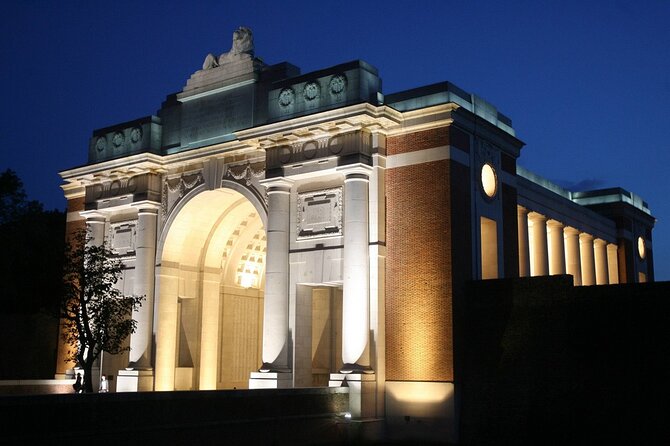
Before booking, confirm the Sanctuary Wood admission policy and decide if $344 fits your budget. If it does, this is a strong choice for a focused battlefield day, especially for anyone who wants more than a quick stop at the Menin Gate or a single cemetery.
FAQ
Where does the tour begin?
It begins at Station Ieper, Colaertplein 35, 8900 Ieper, Belgium.
What time does the tour start?
The tour starts at 10:00 a.m.
Where does the tour end?
The tour ends back at the meeting point in Ypres.
How long does the tour last?
The experience lasts approximately seven to eight hours.
How large is the group?
The shared tour has a maximum of eight participants.
Is lunch included?
Yes. A light sandwich lunch and a soft drink are included, along with bottled water.
Are entrance fees included?
Admission to Bayernwald is included. The tour information gives conflicting details about Sanctuary Wood, so confirm that admission before booking. The other listed cemetery and battlefield stops are shown as free.
Can service animals join the tour?
Yes. Service animals are allowed.
What is the cancellation policy?
You can cancel at least 24 hours before the start time for a full refund. Cancellations or changes made less than 24 hours before the start time are not refunded or accepted.
Just added in Ypres
- From Ypres, The Christmas Truce to Passchendaele Ypres Based WW1 private tour★ 5.0 · 29 reviews
- From LIlle or Bruges, Christmas Truce to Passchendaele Ypres 1 day WW1 private★ 5.0 · 5 reviews
- e-Scavenger hunt Ypres: Explore the city at your own pace★ 4.5 · 6 reviews
- Discover Tournai while playing! Escape game – The alchemist★ 4.0 · 3 reviews
- Full Day Canadian WW1 Vimy and Somme Battlefield Tour from Ypres★ 5.0 · 6 reviews
- Private 4hr Australian Fromelles Battlefield WW1 Tour★ 5.0 · 2 reviews
- Full Day Private Tour to WWI Passchendaele Base in Ypres★ 5.0 · 1 review
- From Ypres 4hr Christmas Truce and Monster Mines of Messines PRIVATE Tour★ 5.0 · 5 reviews
WWI Battlefield Tours, compared.
From Bruges: Great War Flanders Fields Minibus Tour w/ Lunch
Read our review →
Flanders Fields Remembrance Tour from Brussels
Read our review →
In Flanders Fields and Passchendaele Half Day Morning Tour
Read our review →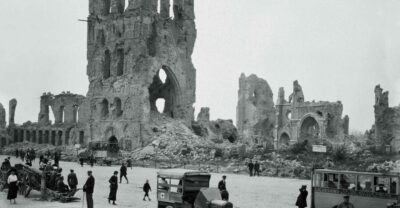
From Bruges: Flanders Fields Remembrance Full-Day Trip
Read our review →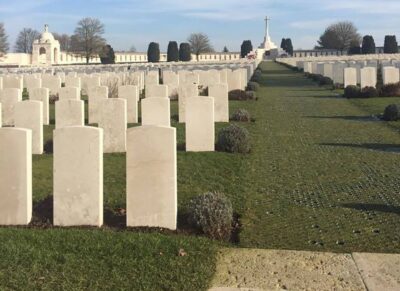
From Brussels: Flanders Fields Remembrance Full-Day Trip
Read our review →
Remembrance Tour: The Battle of the Bulge in the Ardennes
Read our review →
From Brussels: The Battle of the Bulge Remembrance Tour
Read our review →Browse the lists this tour appears in