
Reviewed · WWI BATTLEFIELD TOURS
From Bruges: Flanders Fields Remembrance Full-Day Trip
War still speaks softly here. This 10-hour Flanders Fields tour connects battlefields, cemeteries, museums, and Ypres into one serious but well-organized day. I especially like the expert storytelling from guides such as Diederik, Stefan, and Johannes, and the chance to attend the Last Post Ceremony at Menin Gate. The main drawback is the tight schedule, with some stops and the lunch break feeling rushed.
For $91, you get round-trip coach transport, an English-speaking guide, and entry to In Flanders Fields Museum. I like that the day goes beyond one famous cemetery: you see German and Commonwealth burial grounds, trenches, Hill 60, Essex Farm, Passchendaele, and the rebuilt city of Ypres. You should bring sturdy, comfortable shoes and expect a long day with plenty of walking.
In This Review
- Key things to know before you go
- Why this Flanders Fields tour is worth your day
- Meeting in Bruges and settling into the coach
- German Cemetery and the first view of war
- The Brooding Soldier and Canada’s sacrifice
- Ypres, lunch, and a city rebuilt after war
- In Flanders Fields Museum: the best indoor stop
- Passchendaele and Tyne Cot Cemetery
- Essex Farm and the story behind In Flanders Fields
- Menin Gate and the 8 p.m. Last Post Ceremony
- How demanding is this 10-hour day?
- What to bring and how to make the day easier
- Should you book this Flanders Fields day trip?
- FAQ
- How long does the Flanders Fields tour from Bruges last?
- Where does the tour meet in Bruges?
- Is lunch included in the tour price?
- Is entry to In Flanders Fields Museum included?
- What language is the tour conducted in?
- Is the tour suitable for wheelchair users?
- Does the tour include the Last Post Ceremony?
Key things to know before you go
- The day ends at 8 p.m. at Menin Gate: The Last Post Ceremony gives the tour a solemn, memorable finish.
- Tyne Cot is the largest Commonwealth cemetery in the world: British, Irish, Australian, and Canadian soldiers are buried here.
- Essex Farm connects battlefield history to poetry: Canadian surgeon John McCrae wrote In Flanders Fields at this field hospital.
- The guide provides the historical thread: You hear how the First World War began and how trench warfare developed before reaching the sites.
- Lunch is not included: Plan for a quick meal or snack in Ypres, with limited time to order and eat.
- This is not an easy-access excursion: It is not suitable for wheelchair users or people with limited mobility.
Why this Flanders Fields tour is worth your day
Flanders Fields can be difficult to visit without a car. The sites are spread across rural Belgium, and public transport will not easily connect the cemeteries, former battlefields, museum, and evening ceremony in one day.
That is the central value of this trip. You sit back on a coach while the guide explains the war on the way from Bruges. By the time you reach the first stop, you have a framework for understanding what you are seeing rather than simply walking through rows of white headstones.
I like the way the day combines large, well-known places with quieter stops. Tyne Cot and Menin Gate are powerful, but the German cemetery, the trenches, Hill 60, and Essex Farm help show the war from several angles. This is not only a tour of British and Commonwealth memory. It also places the German forces and the wider military campaign into the story.
The price of $91 is fair for a 10-hour excursion that includes transport, a live English-speaking guide, and museum admission. You still need to pay for lunch and dinner, but arranging all these distant stops independently would be awkward and potentially more expensive once transport is considered.
The trade-off is time. You cover a great deal in one day, but the schedule leaves little room for lingering. At Tyne Cot, you may want more time to read names and walk farther through the cemetery. At In Flanders Fields Museum, about an hour is enough for a focused visit, but not enough to see every display slowly.
More battlefield tours:
- From Bruges: Great War Flanders Fields Minibus Tour w/ Lunch
★ 4.9 · 1,257 reviews - Flanders Fields Remembrance Tour from Bruges
★ 4.5 · 207 reviews - Private Vimy and Belgium Canadian Battlefield Tour from Bruges
★ 4.5 · 8 reviews
Meeting in Bruges and settling into the coach
The meeting point is Bargeplein, also called Bargesquare. Look for the bus parking area and wait beneath the large red canopy beside the public bathroom.
The instructions matter because this is not a grand landmark with an obvious tour office. Some people have gone to the wrong meeting place, so arrive early and confirm that you are at the coach parking area rather than another spot in Bruges.
The first drive takes about an hour. Use it well. Your guide begins with the events that led to the First World War and explains how the conflict grew into a catastrophe. Guides such as Diederik have been praised for keeping the historical account clear, personal, and engaging, while also using maps to explain troop movements and battle developments.
Sound quality can vary on the coach. Sit near the front if hearing every word matters to you, particularly when the guide speaks during the drive. The coach has been described as comfortable and safely driven, with drivers such as Dave receiving special praise for smooth, punctual transport.
German Cemetery and the first view of war
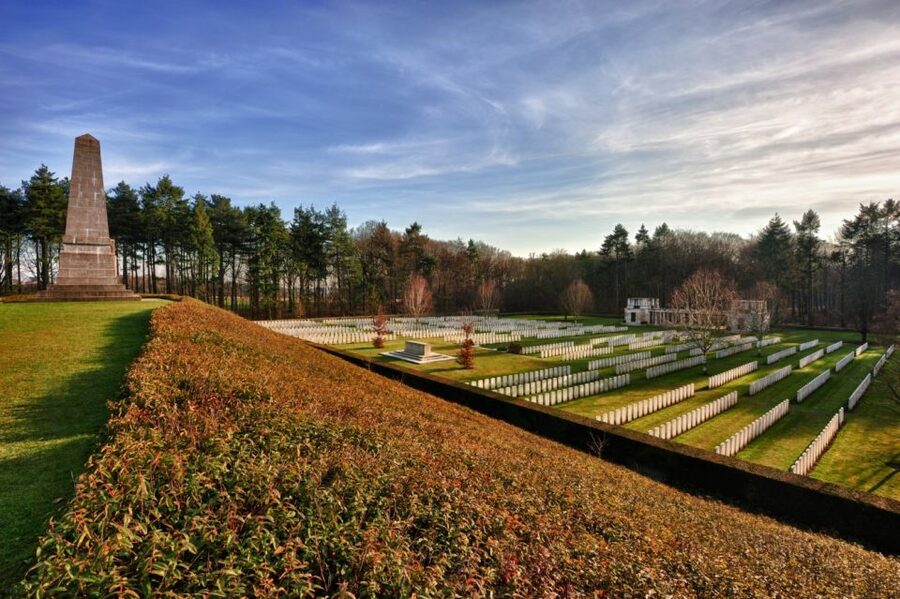
The first stop is a German cemetery. It is a quiet and moving change of tone from the grand Commonwealth memorials many people know from photographs.
The cemetery helps you remember that ordinary soldiers on every side were caught in a conflict shaped by political decisions far beyond their control. The setting is restrained, and that restraint can make the visit feel especially serious.
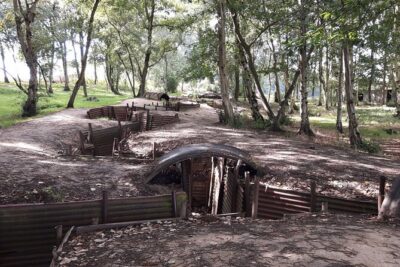
Afterward, the coach heads toward a section of First World War trenches. These surviving or preserved defensive lines give physical shape to the phrase trench warfare. A classroom explanation can make the war sound like a series of arrows on a map. Here, the narrow earthworks help you picture how soldiers lived, fought, and waited in exposed conditions.
The walking is not described as suitable for people with limited mobility. You should expect uneven ground and outdoor stops, so comfortable shoes are essential. The tour is not suitable for wheelchair users.
The Brooding Soldier and Canada’s sacrifice
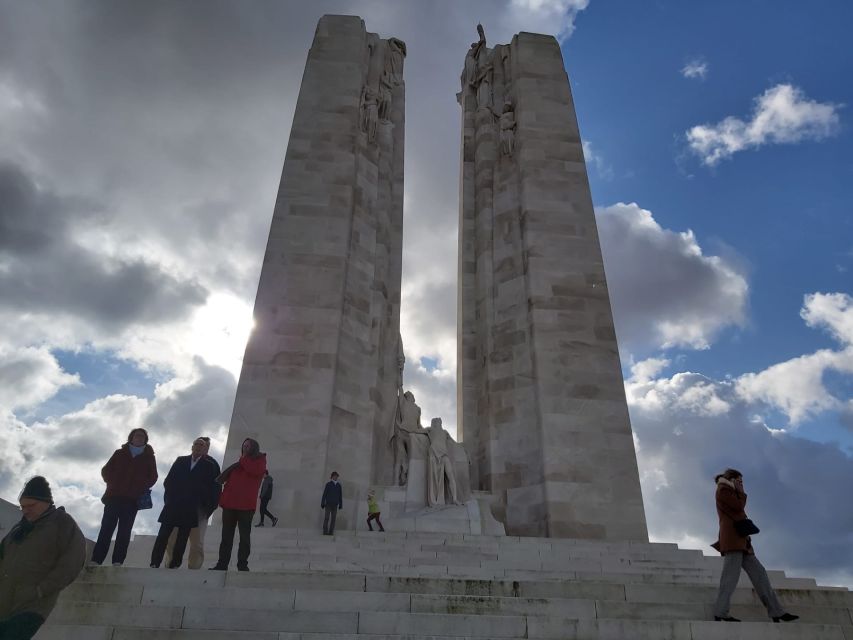
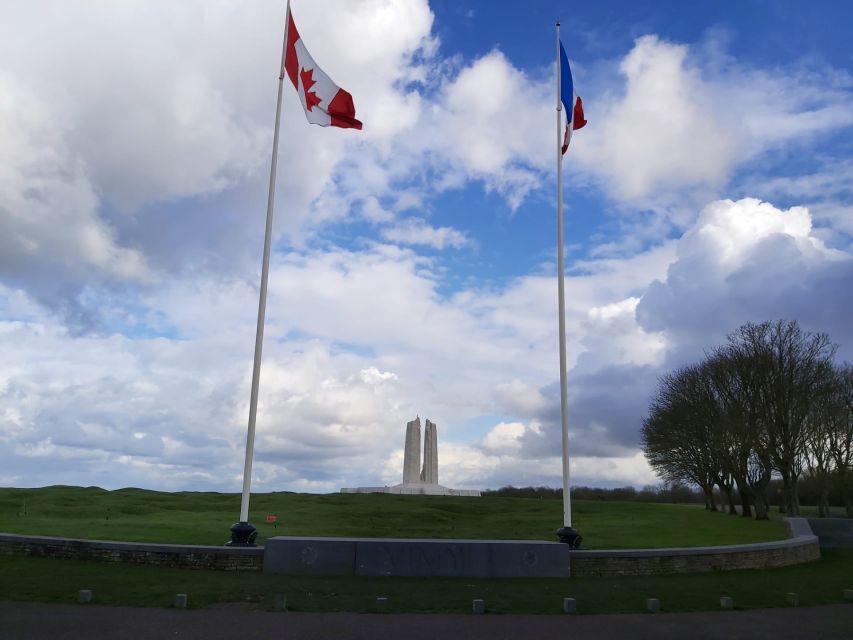
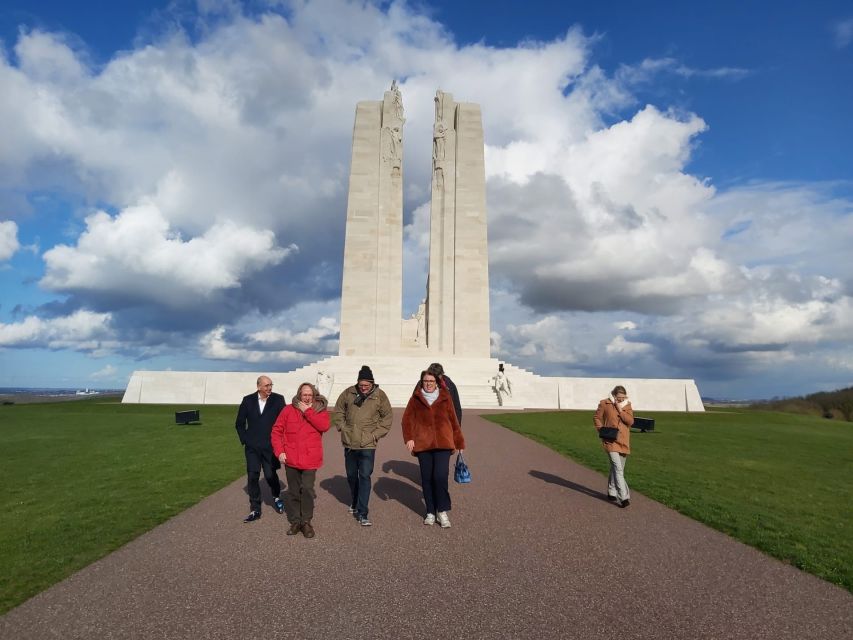
The Monument of the Brooding Soldier commemorates about 2,000 Canadian soldiers who died during the first German gas attack.
This is one of the most affecting stops because the monument links a large military event to a particular national sacrifice. Your guide explains the attack and its consequences, giving the memorial a clearer meaning than it would have if you arrived alone with only a name and date.
The statue’s mood is reflective rather than triumphant. That matters. Flanders Fields is not presented as a sequence of victories or heroic set pieces. The emphasis is on the cost of battle and the young lives consumed by it.
Close by is Hill 60, a position taken by German forces and later attacked through tunnels dug by tunnelling companies of the Royal Engineers. The site shows how soldiers fought not only above ground but also beneath it, using mines and countermines in a dangerous underground contest.
Hill 60 is a good example of why a guide adds value. The physical remains alone cannot easily explain who controlled the hill, why it mattered, or how the tunnelling campaign worked. The commentary supplies that connection.
More things to do in Bruges:
- Bruges: Small Group Boat Cruise and Guided Walking Tour
★ 4.8 · 4,102 reviews - Bruges: Walking Tour, Canal Boat Trip w/Beer Tasting Option
★ 4.4 · 2,759 reviews - Historical Walking Tour: Legends of Bruges
★ 5.0 · 2,541 reviews - Bruges: Choco-Story Chocolate Museum Guided Tour w/Tastings
★ 4.2 · 1,379 reviews
Ypres, lunch, and a city rebuilt after war
The coach then reaches Ypres, often written as Ieper in Dutch. You get a break for lunch in or near the city, but do not expect a leisurely restaurant meal.
The schedule allows about 45 minutes, and several people have found that busy restaurants make this feel short. An open sandwich, ploughman’s lunch, or quick snack may be the practical choice. One earlier version of the day included a ploughman’s lunch, but the current information says lunch is not included, so budget separately and avoid ordering anything that takes a long time.
This pause is useful, even if brief. You need food and a break before the museum and afternoon sites. It also gives you a moment to see Ypres as a living Belgian town rather than only as a war memorial.
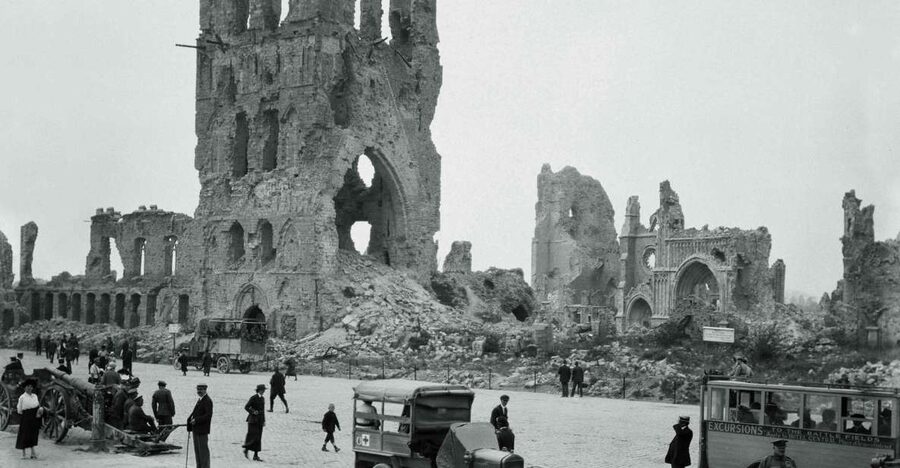
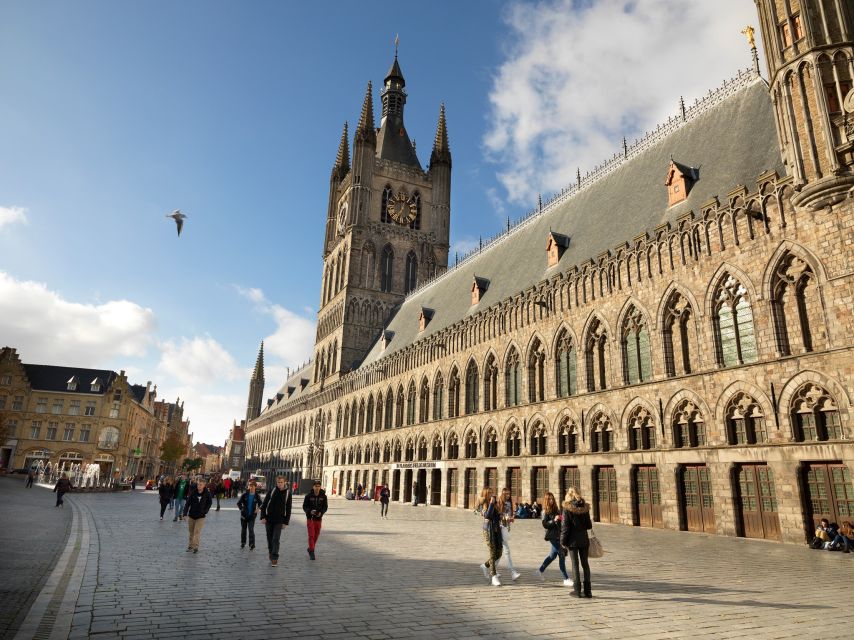
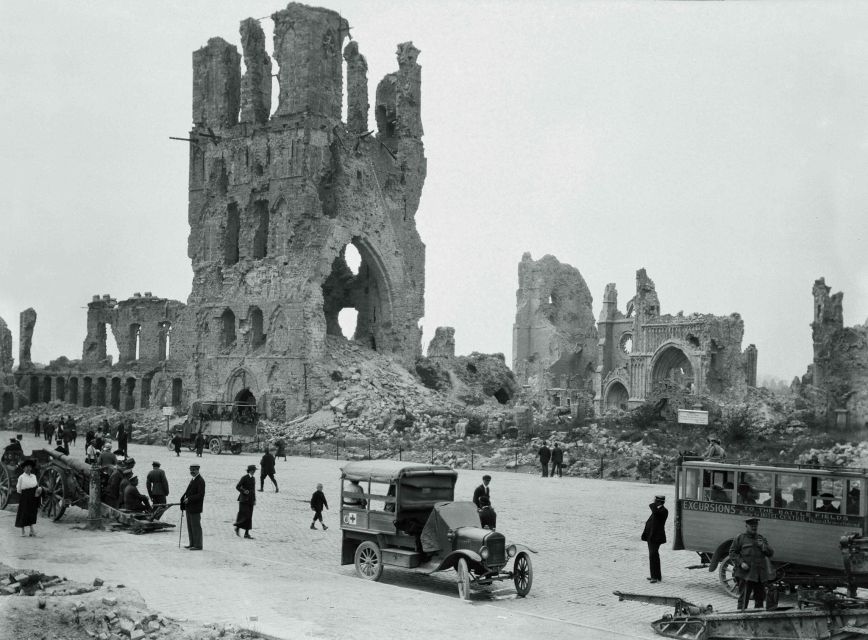
Ypres was heavily destroyed during the First World War and later rebuilt. Its beauty can seem almost surprising after the morning’s cemeteries and trenches. Your guide explains how the city’s wartime destruction fits into the wider story, helping you understand why the town is so closely linked with remembrance.
In Flanders Fields Museum: the best indoor stop
The In Flanders Fields Museum is included in the price, and it is one of the day’s strongest components.
The museum presents four years of trench warfare through personal stories and historical explanation. That combination is important. Dates and campaigns tell you what happened, but letters, names, and individual accounts show what the war meant to the people living through it.
You are given about 70 minutes for the guided museum visit and time to explore. For a first visit, that is enough to understand the main story and see the principal displays. If you like to read every panel or study objects in detail, you may wish for more time.
I would treat this as a focused visit rather than a complete museum day. Listen closely to the guide’s introduction, then use your remaining time for the parts that speak most directly to your interests. The museum is especially valuable after the outdoor stops because you now have physical places in mind when the displays describe battles, medical care, and life in the trenches.
The tour’s historical account is mainly military and commemorative. If you want a fuller picture, keep your own questions ready about civilians, nurses, medical workers, and the role of women. The emphasis on nurses and women is an area that could receive more attention, particularly for visitors who want to understand the war beyond battlefield movements.
Passchendaele and Tyne Cot Cemetery
The afternoon moves to Passchendaele, one of the most famous names connected with the First World War.
The battlefield visit places the museum’s stories back onto open ground. The site may look calm now, which makes the contrast with the mud, shellfire, and enormous loss of life all the more striking. Your guide explains the campaign and helps you see why this area became a symbol of the war’s terrible conditions.
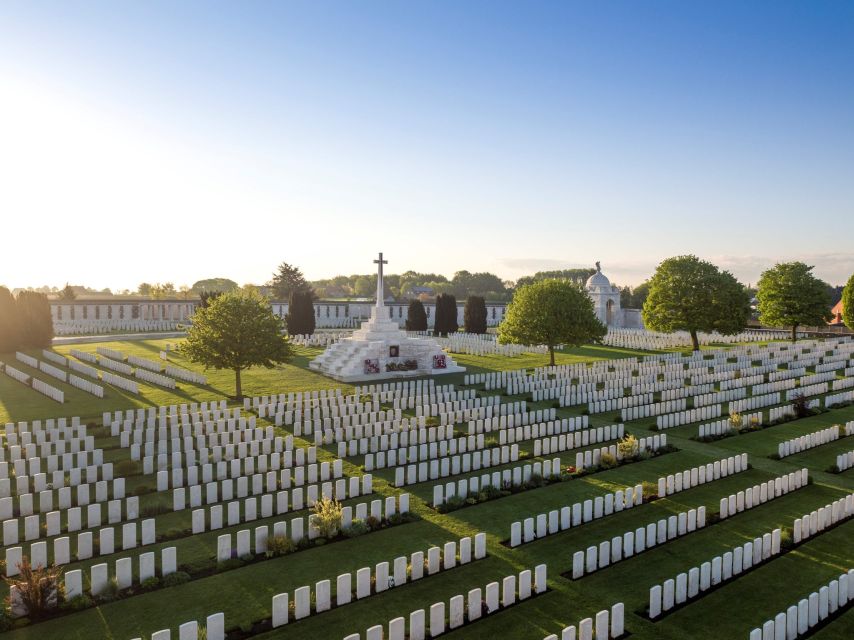
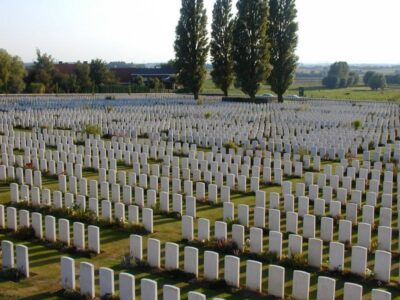
Tyne Cot Cemetery is the major stop here. It is the largest Commonwealth cemetery in the world, with British, Irish, Australian, and Canadian soldiers buried there. The rows of headstones are carefully maintained, but the scale is difficult to absorb in a quick glance.
Give yourself time to pause rather than trying to photograph everything. You may want to read inscriptions, find a national section connected to your family, or simply walk in silence. The schedule is the main limitation. The stop is long enough to make an impression, but some visitors wish they had more time at Tyne Cot.
That is a useful planning point. If Tyne Cot is your main reason for booking, accept that this is a broad overview rather than a slow, specialist visit. If you want to study the cemetery in depth, a separate return visit would be worthwhile, though this tour still gives you the transport and background needed to reach it.
Essex Farm and the story behind In Flanders Fields
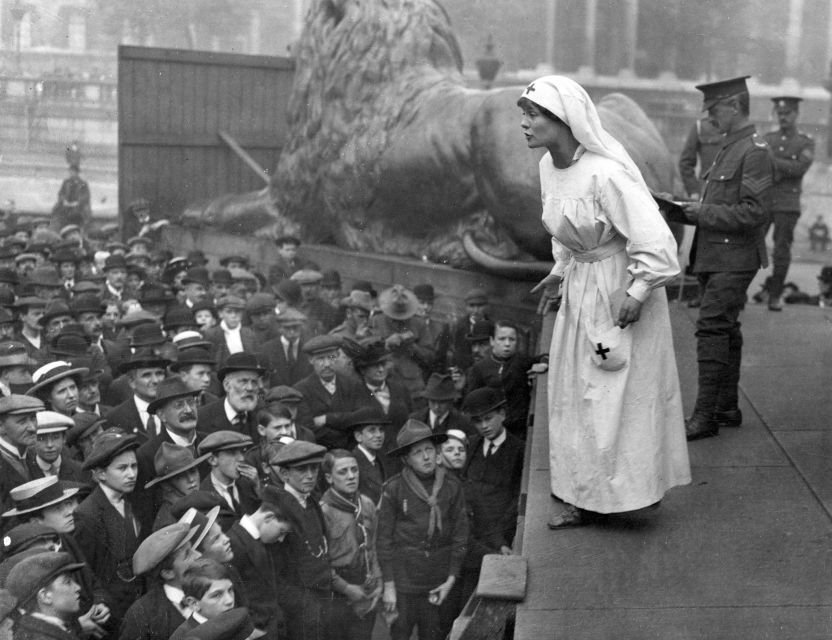
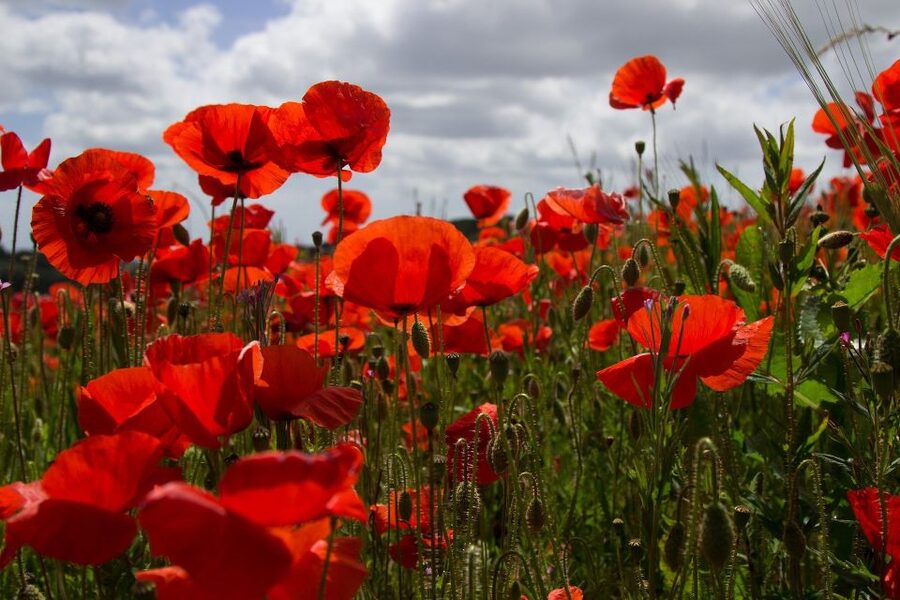
Essex Farm was a field hospital, and Canadian surgeon John McCrae wrote the famous poem In Flanders Fields there.
This stop adds a human and literary layer to the day. After hearing about attacks, trenches, and cemetery numbers, you encounter the setting connected with one of the war’s best-known poems. The link between the place and the words gives the poem a sharper emotional force.
Your guide can explain McCrae’s role as a Canadian medical officer and the conditions surrounding the poem. The stop is not simply about reciting familiar lines. It is about understanding how medical work, death, memory, and poetry became connected in the same small area.
Essex Farm also reminds you that the First World War was not only fought by infantry. Doctors, nurses, stretcher bearers, and hospital staff worked close to the front, facing their own dangers. As you listen, it is worth asking about the people who cared for the wounded, since the wider story includes many roles beyond those named on memorials.
Menin Gate and the 8 p.m. Last Post Ceremony
The day returns to Ypres for the Last Post Ceremony at Menin Gate at 8 p.m.
This daily tribute honors Commonwealth soldiers and officers who went missing after battle. The ceremony is brief, but its meaning reaches far beyond its length. After spending the day visiting burial grounds and battle sites, you arrive at a living act of remembrance rather than a display behind glass.
The ceremony is often the emotional high point of the tour. It gathers the day’s separate stories into one final moment of respect. You do not need to be a military historian to appreciate it. The setting, the names, and the daily repetition all make the ceremony powerful.
Menin Gate is undergoing restoration work until mid-2025 according to the tour information. Scaffolding or restricted views may affect the appearance of the monument during that period. The ceremony still forms part of the schedule, but check current conditions if the gate itself is a major reason for your booking.
One earlier experience found the ceremony less moving because the gate was covered in scaffolding and the participants were mainly cadets or civilians. That is a fair warning to keep expectations sensible. The ceremony is respectful, but its precise atmosphere can vary with restoration work, crowd size, and the people taking part.
Afterward, the coach returns to Bruges, with about an hour of driving. Since the day begins and ends at Bargeplein, you need to arrange your own way between your hotel and the meeting point.
How demanding is this 10-hour day?
This is a long excursion, not a relaxed countryside outing. You spend many hours on the coach, but you also get out repeatedly for cemeteries, trenches, monuments, museum exhibits, and the ceremony.
The tour information specifically says it is not recommended for people with limited mobility. Even if you can walk independently, think about how you manage uneven outdoor paths and a full day away from your hotel. Wear comfortable shoes, bring water, and dress for changeable weather.
The schedule moves briskly because it covers so much territory. That is good for a first introduction to Flanders Fields, but it can feel compressed if you want long periods of quiet reflection. The guide also needs to keep everyone on time, especially with an 8 p.m. ceremony as the final fixed event.
I would book this for an active history day, not for a casual add-on to a Bruges sightseeing plan. It suits people interested in the First World War, family military history, poetry, memorials, and the human cost of conflict. It can also work well for a teenager who wants a serious, place-based history lesson, as long as they are prepared for the length and solemn subject matter.
The tour is conducted in English. The guide quality is a major part of its success, and names such as Diederik, Stefan, and Johannes have been associated with clear explanations, dry humor, respectful presentation, and strong command of the subject. The exact guide will depend on the departure date, so treat those names as examples of the standard you may encounter rather than a guaranteed assignment.
What to bring and how to make the day easier
- Wear comfortable shoes suitable for outdoor walking.
- Arrive early at the red canopy at Bargeplein.
- Sit near the front of the coach if you are concerned about hearing commentary.
- Keep lunch simple because the break may be short.
- Carry a phone charger, especially on a 10-hour day.
- Bring a small snack for the late afternoon, since dinner is not included.
- Allow time for quiet reflection rather than rushing from photograph to photograph.
- If family members served in the war, bring their names and unit details if you have them. The cemeteries may give the day a personal focus.
The tour can be canceled if the minimum number of participants is not met. You can cancel up to 24 hours ahead for a full refund, and the reserve-now, pay-later option keeps the booking flexible.
Should you book this Flanders Fields day trip?
Book it if you want to see the major First World War sites around Ypres without hiring a car or building a complicated route. The combination of a strong guide, coach transport, museum entry, Tyne Cot, Essex Farm, Passchendaele, and the Last Post Ceremony gives you a lot for $91.
Skip it if you want a slow visit with long breaks, detailed museum study, or extended time at each cemetery. The day is packed, lunch is your responsibility, and the walking can be tiring.
For most people with a serious interest in wartime history, I think the balance works. The tour gives you context before each site, then lets the places themselves carry the emotional weight. That is the right way to visit Flanders Fields: learn the facts, notice the names, and leave enough quiet for the ground to speak.
FAQ
How long does the Flanders Fields tour from Bruges last?
The tour lasts 10 hours, including coach travel, battlefield and cemetery visits, the museum, lunch time, and the 8 p.m. Last Post Ceremony.
Where does the tour meet in Bruges?
It meets at Bargeplein, also called Bargesquare. Wait beneath the large red canopy beside the public bathroom in the bus parking area.
Is lunch included in the tour price?
No. Lunch and dinner are not included. The schedule provides about 45 minutes for lunch, so choose a meal or snack that can be served quickly.
Is entry to In Flanders Fields Museum included?
Yes. Museum admission is included in the tour price.
What language is the tour conducted in?
The live guided tour is conducted in English.
Is the tour suitable for wheelchair users?
No. The tour is not suitable for wheelchair users or people with mobility impairments.
Does the tour include the Last Post Ceremony?
Yes. The group attends the daily Last Post Ceremony at Menin Gate at 8 p.m. The gate was listed as undergoing restoration work until mid-2025, so current conditions may affect its appearance.
Just added in Bruges
- Unknown Bruges: A Self-Guided Audio Tour to the Heart of the Medieval Metropole★ 5.0 · 1 review
- Tour of Historical Bruges knowing The Jerusalem Chapel★ 5.0 · 2 reviews
- Ticket Expo Body Worlds in Bruges, Belgium★ 4.5 · 11 reviews
- 2-Hour Private Walking Tour of Bruges★ 5.0 · 13 reviews
- 6 Hour Bruges Shore Excursion from Zeebrugge Cruise Port★ 4.5 · 23 reviews
- The Waffles ‘n Coffee Breakfast in Bruges Centre★ 4.5 · 9 reviews
- Explore the Instaworthy Spots of Bruges with a Local★ 5.0 · 3 reviews
- Surprise Walk of Bruges with a Local★ 5.0 · 1 review
WWI Battlefield Tours, compared.
From Bruges: Great War Flanders Fields Minibus Tour w/ Lunch
Read our review →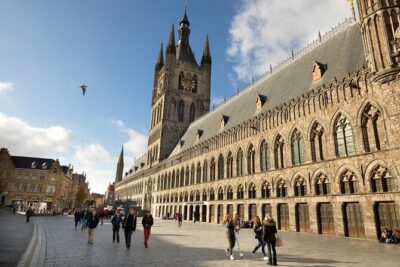
Flanders Fields Remembrance Tour from Brussels
Read our review →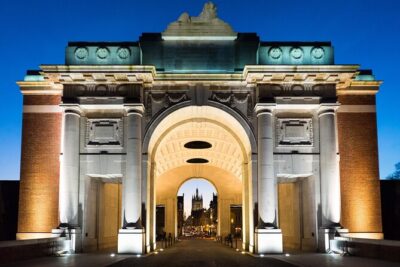
In Flanders Fields and Passchendaele Half Day Morning Tour
Read our review →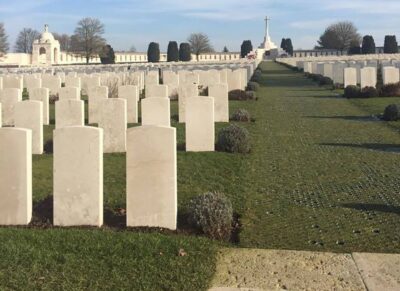
From Brussels: Flanders Fields Remembrance Full-Day Trip
Read our review →
Remembrance Tour: The Battle of the Bulge in the Ardennes
Read our review →
From Brussels: The Battle of the Bulge Remembrance Tour
Read our review →
Historic Battle of the Bulge Sites Tour from Brussels
Read our review →Browse the lists this tour appears in