
Reviewed · WWI BATTLEFIELD TOURS
From Bruges: Great War Flanders Fields Minibus Tour w/ Lunch
War history feels different when you walk it. This nine-hour trip from Bruges takes you across West Flanders to Ypres, Hill 60, preserved trenches, cemeteries, memorials, and the old battlefields of the Ypres Salient. I like the small-group feel, which makes it easier to ask questions, and I like the human stories that connect names on stone to real families. The main drawback is the long day, with plenty of time on the minibus and a serious subject that may feel heavy.
The tour costs $130 per person and includes transport, a guide, and lunch at De Dreve or another nearby stop. That is not bargain-basement pricing, but the route covers a wide area that would be awkward to manage by public transport. You should also know that this is not a museum-led visit with rows of display cases. Your guide supplies the explanation on the road and at each site, which makes the day personal and direct.
Guides such as Philippe, Phillip, Lucas Catteeuw, Peter, and Johan are repeatedly praised for clear explanations, local knowledge, and a respectful tone. The strongest guides do more than recite dates. They explain the experiences of Belgian civilians, Allied soldiers, German troops, and families still affected by the fighting.
In This Review
- Key points worth knowing
- Leaving Bruges for the Ypres Salient
- Ypres, or Wipers, and the story of destruction
- Menin Gate and the missing
- Hill 60, craters, and the physical battlefield
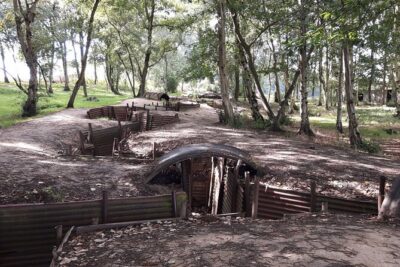
- Trenches, bunkers, and the remains of battle
- Passchendaele and Polygon Wood
- The Brothers in Arms memorial and smaller stories
- Lunch at De Dreve, with a museum bonus
- Poppies and the changing seasons
- Why the guide matters so much
- Staying for the Last Post Ceremony
- Is $130 good value?
- Who should book this tour?
- Final recommendation
- FAQ
- Where does the tour leave from?
- How long does the tour last?
- Is lunch included?
- What language is the tour conducted in?
- Can I visit an ancestor’s grave?
- Can I stay for the Last Post Ceremony?
- Is the tour suitable for people with mobility impairments?
Key points worth knowing
- Ypres was rebuilt from the ground up: The medieval-style town you see today replaced a city destroyed during the First World War.
- Hill 60 offers the clearest battlefield feel: Craters, bunkers, and uneven ground help you picture the force of the fighting.
- The Menin Gate lists 55,000 missing soldiers: Staying for the Last Post Ceremony is possible, but you must arrange it ahead of time.
- Ancestor visits can be arranged: Give the company plenty of notice if you want to locate a particular grave.
- Lunch includes a museum stop: De Dreve, or an alternative venue, adds a local setting to the middle of the day.
- The day is best for adults and older children: Children under eight are not accepted, and the tour is not suited to wheelchair users or people with mobility limits.
Leaving Bruges for the Ypres Salient
The day begins outside the Grand Hotel Normandy at Hoefijzerlaan 37. You should arrive by 8:55 in the morning, rather than wander up at the last second. The minibus may arrive shortly after that time, and an alternate pickup can sometimes be arranged if your hotel is more than a ten-minute walk away. Call at least 24 hours ahead. Phone contact is preferred because the office is not always staffed to answer email.
The air-conditioned minibus is an important part of the experience. West Flanders has many scattered sites, and a private car or taxi would make the day costly and require constant navigation. Here, you can watch the flat countryside pass by while the guide sets the scene.
The bus is described as comfortable, and the frequent stops keep the ride from becoming tiring. Still, you are committing most of a day to the outing. Return to Bruges is planned for about 6:15 PM, with a possible delay of 15 minutes. If you have a train, dinner booking, or evening performance, leave a safety margin.
You should wear shoes that can handle grass, mud, and uneven ground. Bring clothing for the weather. The tour does not permit smoking on board, though regular stops provide breaks.
More battlefield tours:
- Flanders Fields Remembrance Tour from Bruges
★ 4.5 · 207 reviews - From Bruges: Flanders Fields Remembrance Full-Day Trip
★ 4.8 · 65 reviews - Private Vimy and Belgium Canadian Battlefield Tour from Bruges
★ 4.5 · 8 reviews
Ypres, or Wipers, and the story of destruction
Ypres is the natural center of the day. British troops often called it Wipers, a rough pronunciation of the town’s name. During the First World War, Germany invaded Belgium as part of its plan to reach France from the north. Ypres became a key position in the fighting, and the surrounding area turned into a network of trenches, artillery positions, cemeteries, and ruined villages.
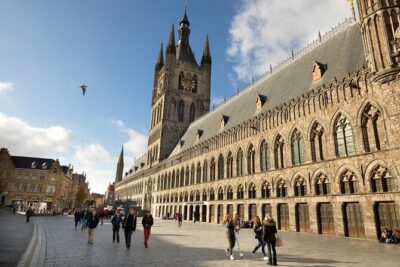
The town was almost completely destroyed in the early 1900s. After the war, it was rebuilt using a medieval blueprint. That choice gives modern Ypres its old-world appearance, but the neat facades can hide how total the destruction was. A good guide helps you see both versions of the town at once: the medieval center before the war and the shattered city left afterward.
This is one of the tour’s strengths. The day does not treat Ypres as a pretty Belgian stop with a wartime footnote. It places the town at the heart of the military and civilian story.
Menin Gate and the missing
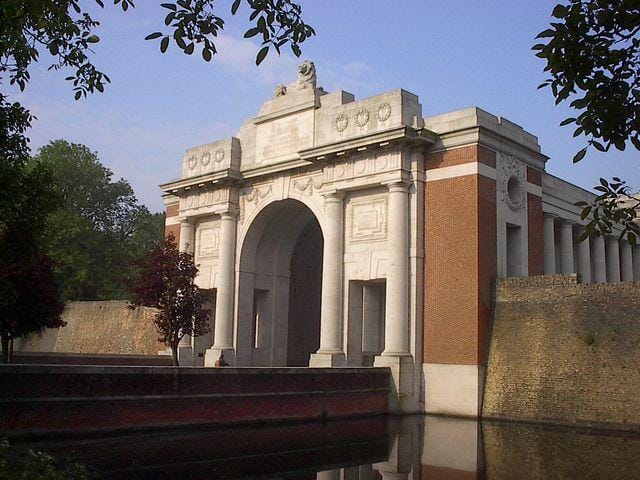
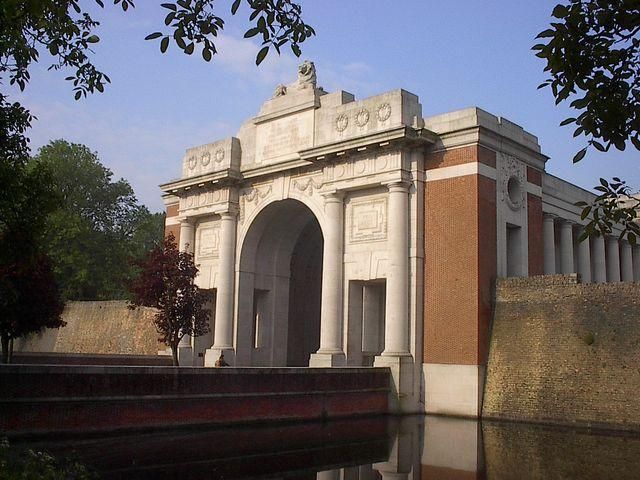
The Menin Gate Memorial is one of the most powerful stops. It marks the route where soldiers left Ypres for the front and commemorates missing soldiers whose bodies were never identified or recovered. The memorial carries the names of 55,000 men.
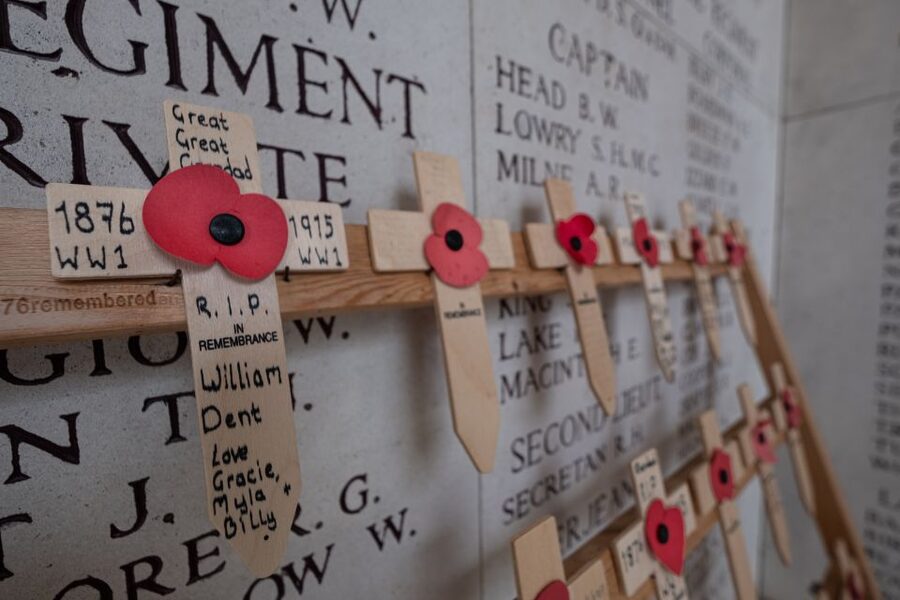
Give yourself time to absorb the scale. A name on a wall can feel abstract until a guide explains how families searched for news, how units moved through the Salient, or how a single regiment suffered. This is where an ancestor’s connection can become especially important. Several people have had guides help locate relatives’ names on the Menin Gate panels, including one family who received help finding the names of two great uncles.
You can also request a visit to an ancestor’s grave when the route reaches the Ypres Salient. This must be arranged well ahead of time. Do not assume the guide can add a cemetery visit on the morning itself, since the route needs to be adjusted.
Hill 60, craters, and the physical battlefield
Hill 60 is often the day’s highlight, and I can see why. Preserved craters, bunkers, and rough ground make this site more physical than a memorial or cemetery. You can climb around the remains and see how artillery changed the earth.
The word hill is slightly misleading in a region that is mostly flat, but the position mattered because even a modest rise offered a military advantage. The guide’s job here is to connect the ground under your feet with the struggle to control it. A crater is not just a hollow in the soil. It is evidence of the explosives, tunneling, and bombardment that shaped the battle.
This stop does require care. The ground can be uneven, and the tour is not suitable for people with mobility impairments or wheelchair users. Comfortable shoes are not a minor suggestion here. If you have trouble walking over rough surfaces, ask before booking.
More things to do in Bruges:
- Bruges: Small Group Boat Cruise and Guided Walking Tour
★ 4.8 · 4,102 reviews - Bruges: Walking Tour, Canal Boat Trip w/Beer Tasting Option
★ 4.4 · 2,759 reviews - Historical Walking Tour: Legends of Bruges
★ 5.0 · 2,541 reviews - Bruges: Choco-Story Chocolate Museum Guided Tour w/Tastings
★ 4.2 · 1,379 reviews
Trenches, bunkers, and the remains of battle
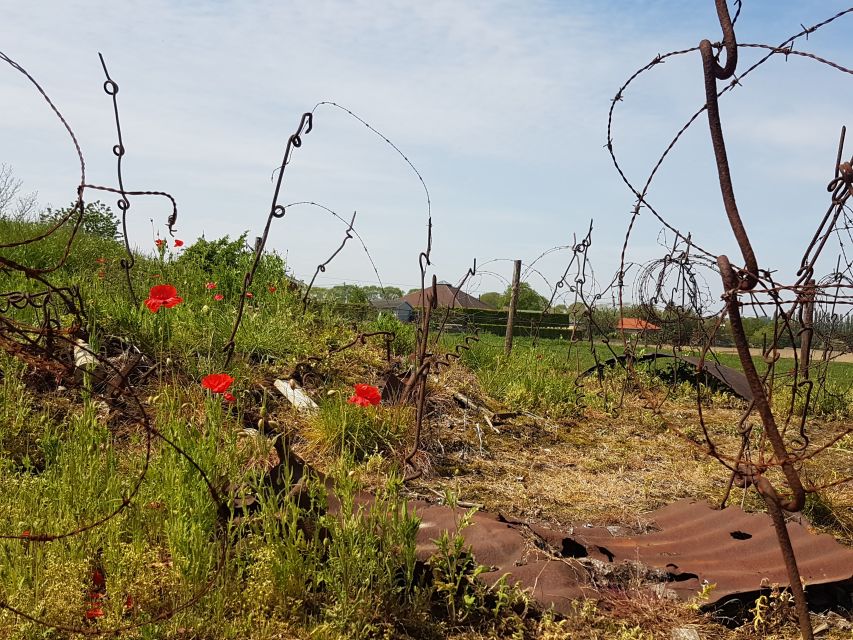
The route includes restored trenches and other surviving battlefield features. These stops help you understand that the war was not fought from one dramatic battlefield with a clear front line. It was a system of trenches, dugouts, observation posts, roads, farms, and artillery zones spread across the countryside.
You may stroll rather than hike for long distances, but this is still an outdoor history tour. The minibus gets you close to the main sites, and the frequent pauses keep the pace manageable. One older visitor completed the day with plenty of breaks and around 10,000 steps, though your total will depend on how much you walk at each stop.
That balance is useful. The day gives you access to several important locations without turning into a demanding march. At the same time, anyone expecting to remain seated most of the day should understand that cemetery paths and battlefield areas involve walking.
Passchendaele and Polygon Wood
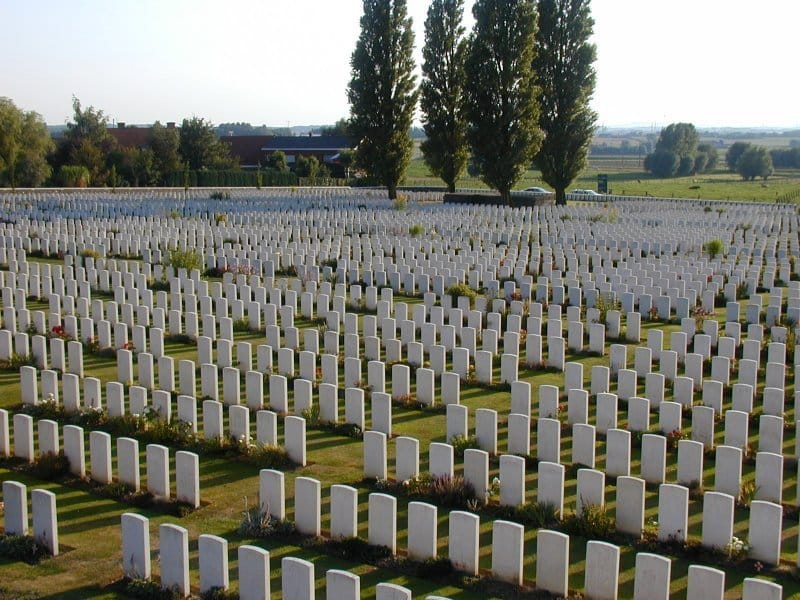
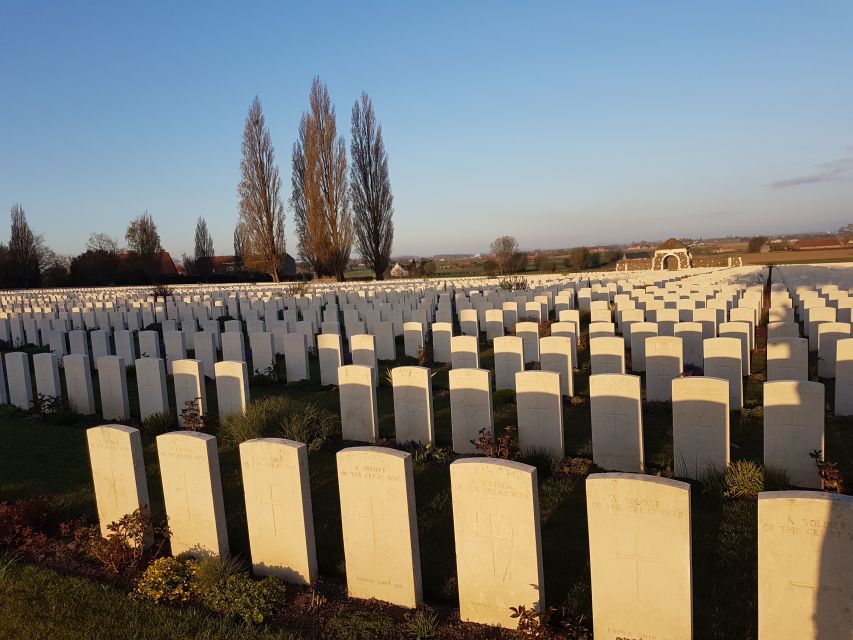
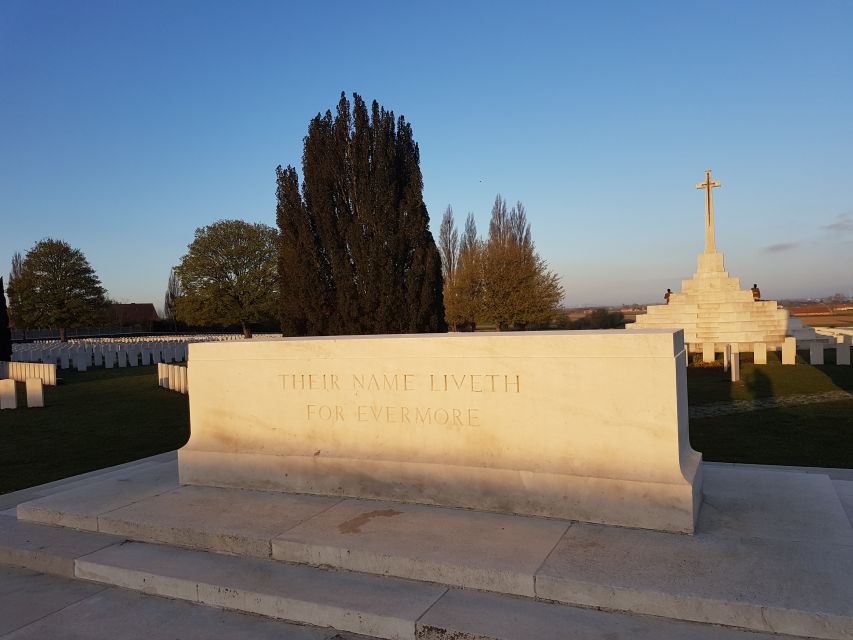
Passchendaele is tied to some of the most punishing fighting of the First World War. The tour takes you through war graves in the area, where the orderly rows of headstones contrast sharply with the conditions endured by the men who fought there.
Polygon Wood adds another setting in which the guide can explain how the front shifted and how units from different countries were involved. The visit is not simply a checklist of names. The best commentary links the cemetery, the wooded ground, and the wider campaign.
The cemeteries are quiet places, and the guide’s tone matters. Philippe and Lucas are praised for treating both Allied and German dead with respect. That even-handed approach does not blur responsibility or erase the conflict. It gives you a fuller view of the human cost, including the soldiers on opposing sides and the civilians living among the battlefields.
The Brothers in Arms memorial and smaller stories
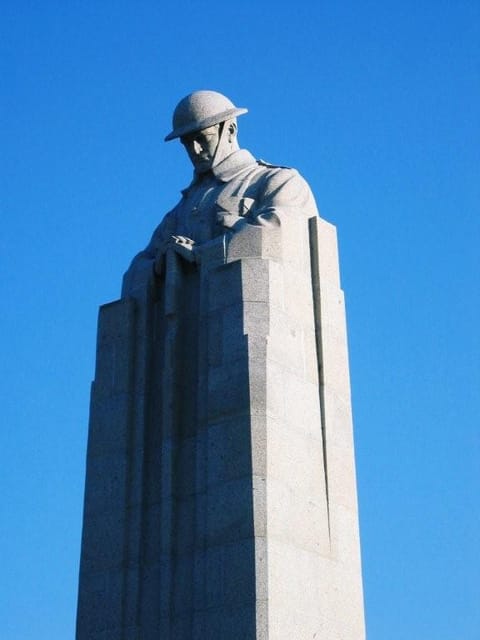
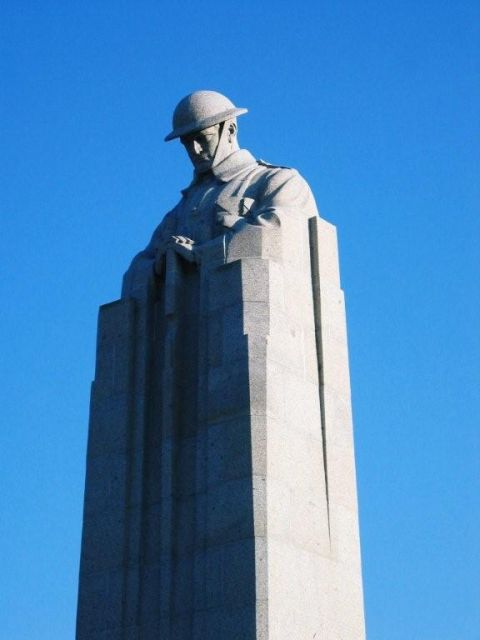
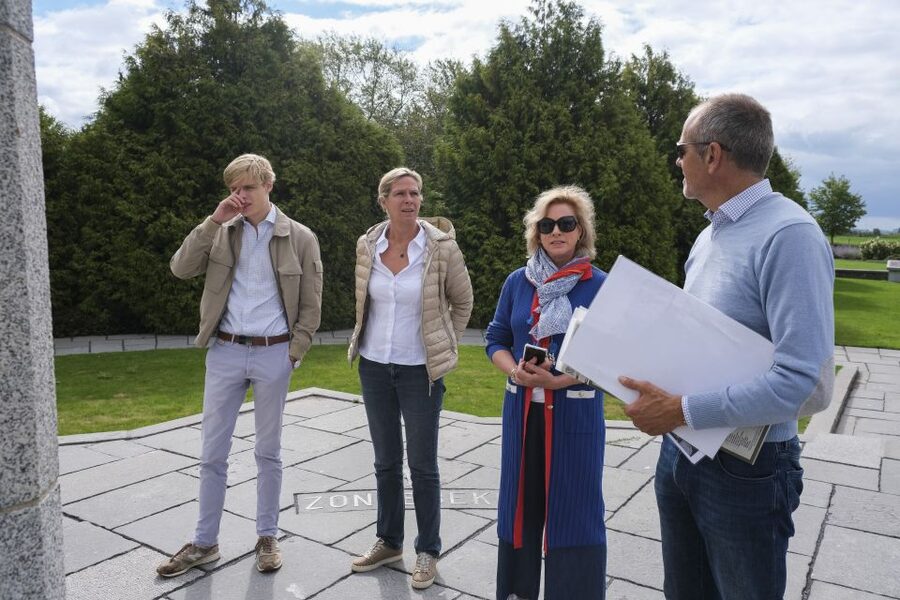
The itinerary includes major sites, but it also makes room for less familiar memorials. The Brothers in Arms memorial is a particular highlight for many people because its story reaches beyond a broad military summary and focuses on individual lives.
This is the kind of stop that can make the tour feel more personal than a standard battlefield circuit. You may already know the major dates and battles, but a story about two brothers, a local family, or a small unit can stay with you longer than a list of commanders.
That personal approach is central to the guiding style here. Philippe is often praised for remembering small details and for explaining how the war affected families and local communities long after the guns fell silent. Lucas Catteeuw is also noted for adapting the route to family connections, including one visit centered on a great-grandfather’s service in the area.
Lunch at De Dreve, with a museum bonus
Lunch is included at De Dreve or an alternative stop. The meal is simple rather than a grand culinary event, but that suits the day. You need a reliable pause, and the lunch break gives everyone time to sit, eat, and talk through what they have seen.
At De Dreve, the stop can include a small museum visit and a beer, though drinks are not included in the tour price. Bring some cash or a card for anything extra, and keep a little change for bathroom stops. One practical tip from the day: some toilets charge €0.50 and may not accept cards.
The museum is a pleasant addition because it gives you a short change of pace without pulling the group away from the subject. Still, do not book this tour mainly for the meal. You are paying for the route and the guide’s interpretation. Lunch is a useful inclusion, not the main event.
Poppies and the changing seasons
The road through Flanders includes the famous poppy fields when they are in season. Timing matters. You may see the countryside without a strong display of poppies outside the flowering period, so keep expectations realistic.
The rural views also show how closely modern farming sits beside wartime ground. The fields may look peaceful, but bunkers, cemeteries, and memorials appear among the roads and farmland. This contrast gives the day much of its emotional force.
The countryside is best seen from the minibus between stops. You get time to rest your feet and take in the scenery, but this is not a scenic drive with long photo breaks. The focus remains on the war sites.
Why the guide matters so much
The tour’s main value lies in the person leading it. You are not relying on plaques alone. The guide explains what happened, why the location mattered, and how the events affected different countries involved in the conflict.
Philippe is described as passionate and deeply informed after more than two decades working with the area. Phillip is praised for a calm, precise delivery and for connecting individual graves to the larger campaign. Lucas is noted for his local perspective, gentle humor, and ability to make difficult material understandable.
The strongest moments come when the guide pauses over one person rather than rushing through ten facts. Names, ages, dates of death, and family connections give the sites a human scale. The commentary also includes Belgian, British, Australian, New Zealand, Canadian, German, and other national perspectives, which is particularly useful if you are tracing a family member from a particular country.
The subject is serious, but the day is not cold or academic. Guides use warmth and occasional humor without making light of the war. That balance helps you stay engaged for nine hours.
Staying for the Last Post Ceremony
The optional Last Post Ceremony under the Menin Gate is worth serious consideration. The ceremony is short, but the setting and purpose make it powerful. You can remain in Ypres until 8 PM and then return to your Bruges hotel by taxi at about 9:15 PM.
This option must be requested well in advance because places are limited. It requires at least two people with the day-trip booking and costs €35 per person, paid on the day, preferably in cash.
The extra wait makes for a very long day, but it also lets you experience the memorial after seeing the battlefields and cemeteries. You arrive with context rather than treating the ceremony as a quick photo stop. If you can spare the evening, I would choose this add-on.
Is $130 good value?
At $130, the tour is not cheap. The value depends on how much you want to see and how much research you would otherwise need to do yourself.
A rental car might give you freedom, but you would need to navigate unfamiliar roads, plan cemetery locations, understand the military geography, and find parking. Public transport will not provide the same reach across Hill 60, Passchendaele, Polygon Wood, and the scattered memorials. The included lunch also removes one small planning task.
You are buying access to a full day of sites and a guide who supplies the connecting story. The price feels fair if you have a real interest in the First World War, a family connection, or limited time in Belgium. It may feel high if you only want a quick look at Ypres or prefer to explore independently.
The experience receives a 4.9 rating from 1,257 reviews, and 89 percent of ratings give the transport a perfect score. Those figures support the view that the minibus and guiding are the product’s strongest features, not just add-ons to a day out.
Who should book this tour?
I would recommend it to adults, older teenagers, family historians, and anyone who wants more than a quick museum visit. It works especially well for people with relatives who served in Flanders, since ancestor grave visits and memorial searches can sometimes be arranged.
The tour also suits you if you want a serious subject explained in plain language. You do not need to arrive as a military expert. Guides explain the setting and larger events as the day unfolds.
I would think twice if you dislike long guided days, outdoor walking, or emotionally difficult material. It is not suitable for children under eight, wheelchair users, or people with mobility impairments. The route has regular stops, but uneven battlefield ground remains part of the experience.
Final recommendation
Book this tour if you want to understand Flanders Fields as a connected story rather than a series of isolated monuments. The small-group setting, comfortable minibus, included lunch, and exceptional guides make the $130 price reasonable for a full day.
If you have an ancestor in the Ypres Salient, contact Quasimodo Tours Bruges early and provide every detail you have. If you can stay late, add the Last Post Ceremony. For a respectful, human-centered look at Ypres and the First World War, this is one of the strongest day trips you can make from Bruges.
FAQ
Where does the tour leave from?
The meeting point is outside the Grand Hotel Normandy at Hoefijzerlaan 37 in Bruges. You should be there at 8:55 AM.
How long does the tour last?
The main tour lasts about nine hours. You should expect to return to Bruges around 6:15 PM, with a possible variation of about 15 minutes.
Is lunch included?
Yes. Lunch at De Dreve or an alternative stop is included. Drinks are not included.
What language is the tour conducted in?
The tour is conducted in English with a live guide.
Can I visit an ancestor’s grave?
Yes, it may be possible to visit an ancestor’s grave in the Ypres Salient. You must request this well in advance.
Can I stay for the Last Post Ceremony?
Yes. You can remain in Ypres until 8 PM and return to your Bruges hotel by taxi at about 9:15 PM. This option must be requested ahead of time, has limited availability, requires a minimum of two people, and costs €35 per person.
Is the tour suitable for people with mobility impairments?
No. The tour is not suitable for people with mobility impairments or wheelchair users. Children under eight are also not accepted.
Just added in Bruges
- Unknown Bruges: A Self-Guided Audio Tour to the Heart of the Medieval Metropole★ 5.0 · 1 review
- Tour of Historical Bruges knowing The Jerusalem Chapel★ 5.0 · 2 reviews
- Ticket Expo Body Worlds in Bruges, Belgium★ 4.5 · 11 reviews
- 2-Hour Private Walking Tour of Bruges★ 5.0 · 13 reviews
- 6 Hour Bruges Shore Excursion from Zeebrugge Cruise Port★ 4.5 · 23 reviews
- The Waffles ‘n Coffee Breakfast in Bruges Centre★ 4.5 · 9 reviews
- Explore the Instaworthy Spots of Bruges with a Local★ 5.0 · 3 reviews
- Surprise Walk of Bruges with a Local★ 5.0 · 1 review
WWI Battlefield Tours, compared.
Flanders Fields Remembrance Tour from Brussels
Read our review →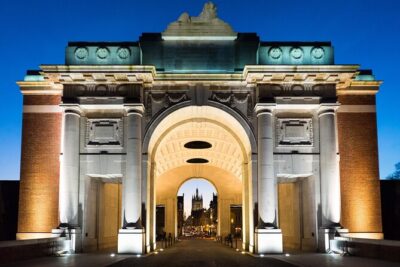
In Flanders Fields and Passchendaele Half Day Morning Tour
Read our review →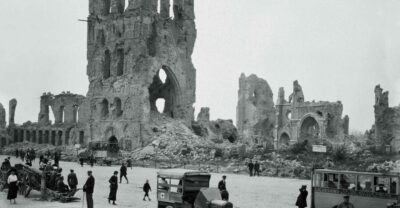
From Bruges: Flanders Fields Remembrance Full-Day Trip
Read our review →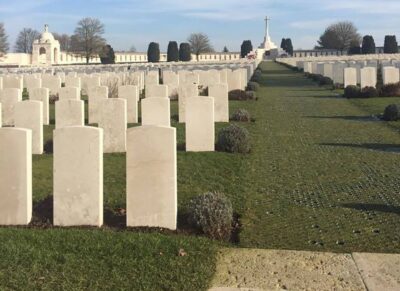
From Brussels: Flanders Fields Remembrance Full-Day Trip
Read our review →
Remembrance Tour: The Battle of the Bulge in the Ardennes
Read our review →
From Brussels: The Battle of the Bulge Remembrance Tour
Read our review →
Historic Battle of the Bulge Sites Tour from Brussels
Read our review →Browse the lists this tour appears in