
Reviewed · WWI BATTLEFIELD TOURS
From Ypres: WWI Battlefields Private Tour
History gets personal here. This four-hour private tour traces the Ypres Salient through original trenches, mine craters, cemeteries, and memorials tied to Australian, Canadian, New Zealand, South African, and British troops. I especially like the chance to tailor the route to your family story, and I like that the guide uses maps and local knowledge to make confusing battle movements easier to follow. The one drawback is time: four hours gives you a strong introduction, but the subject is large and some stops may feel brief.
Guide Søren Hawkes is a major part of the appeal. He has researched family records for guests, including service records and diaries, and has taken people to graves and memorials connected with their ancestors. Sabine also receives high praise for careful preparation and personal attention. This is not a fixed coach ride where everyone gets the same speech. It is a small, private outing with room for questions, reflection, and the occasional bit of dry humor.
In This Review
- Key points to know before booking
- Why a private Ypres tour works so well
- Caterpillar Mine Crater and Hill 60 B
- Sanctuary Wood: trenches you can actually enter
- Tyne Cot Cemetery and the human cost of Passchendaele
- The Brooding Soldier and the first gas attack
- John McCrae’s dressing station and In Flanders Fields
- Essex Farm Cemetery closes the circuit
- Choosing the Australian, Canadian, or Kiwi route
- The guides make the difference
- Comfort, timing, and what to bring
- Who should book this tour?
- Should you book the Ypres battlefield tour?
- FAQ
- Where does the tour begin and end?
- How long does the tour last?
- How much does the tour cost?
- Which languages are available?
- Is the tour private?
- Is the tour wheelchair accessible?
- Which battlefields and memorials are included?
- Can the tour focus on a family ancestor?
- Are food and drinks included?
Key points to know before booking

- Walk through original trenches at Sanctuary Wood, then see the Caterpillar Mine Crater, a huge scar left by the 1917 underground explosion.
- Visit Tyne Cot Cemetery, where nearly 12,000 war dead are buried or commemorated in the surrounding site.
- Follow the story of gas warfare at the Brooding Soldier, which marks the first German gas attack of 1915.
- Connect the battlefield to famous words at John McCrae’s dressing station, linked with In Flanders Fields.
- Ask for an ancestor-focused route, since the guide can research names, units, graves, and battle locations where possible.
- Choose an Australian, Canadian, or Kiwi focus, depending on the military story that matters most to you.
Why a private Ypres tour works so well
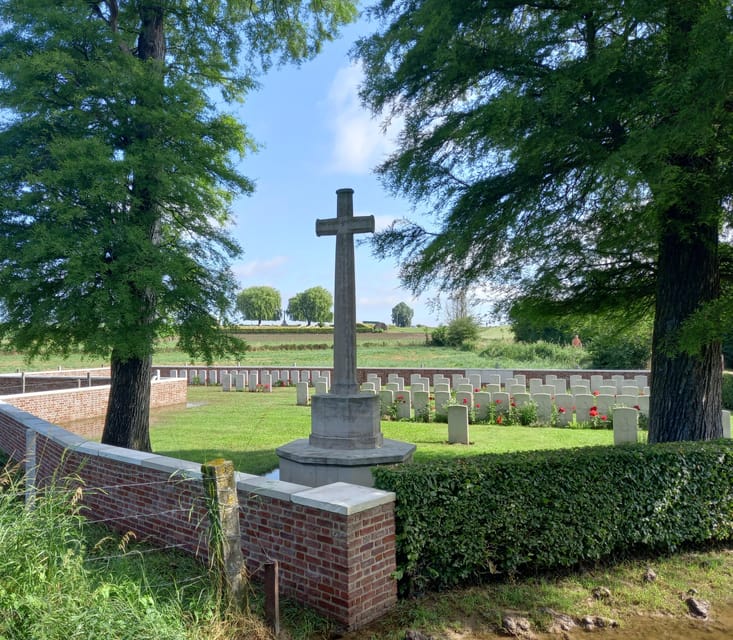
The Ypres battlefields spread across country roads and small villages. Important places are not arranged in one neat museum complex, and the roads can be winding. Having a private vehicle saves you from trying to link scattered sites by train, taxi, or rental car.
The advertised price is $530 per group of up to four. That is not a cheap individual ticket, but it can be fair value for a family or group that would otherwise need several separate rides. The price includes hotel pickup and drop-off in Ypres, a guide, mineral water, museum admission, and private transport.
You also gain control over the conversation. If your interest is Australian service in 1917, the tour can follow that thread. If your family connection is Canadian, New Zealand, British, or South African, the guide can adjust the route and explanation. That flexibility matters more here than it would on a standard city sightseeing tour.
The four-hour length is both useful and limiting. It is long enough to see the major stops without turning the day into a blur. It is not long enough to cover every battlefield, cemetery, and memorial around Ypres. If you want a full military study of Passchendaele, you will need more time or a longer follow-up visit.
More battlefield tours:
- From IEPER Private 4-hour Tour of the Ypres Battlefield
★ 5.0 · 154 reviews - In Flanders Fields and Passchendaele Half Day Morning Tour
★ 5.0 · 117 reviews - From Brussels: Flanders Fields Remembrance Full-Day Trip
★ 4.4 · 65 reviews
Caterpillar Mine Crater and Hill 60 B
The first major stop is the Caterpillar Mine Crater, connected with Hill 60 B. You spend about 30 minutes walking and listening to the guide explain the site.
The crater gives you a direct sense of the underground war. Rather than reading only about mines on a museum panel, you are looking at the physical result of one of the largest explosions of the 1917 campaign. The scale of the crater helps explain how much effort went into attacking and holding small rises of ground around Ypres.
This is also a good place for maps and orientation. Guests have found the guide’s charts useful because the maze of roads and fields can make it hard to tell where one action took place in relation to another. Søren is particularly good at using side roads and farm lanes to connect the dots.
Allow for uneven ground and changing weather. Comfortable shoes are important, and weather-appropriate clothing is not optional in Flanders. The stop is outdoors, so wind or rain can affect how long you want to linger.
Sanctuary Wood: trenches you can actually enter
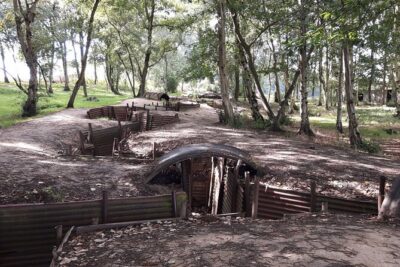
Sanctuary Wood Museum receives roughly 50 minutes, including a guided visit. Its main strength is simple: you can walk through original trenches.
That physical contact changes the tone of the day. A trench is narrow, rough, and close to the ground. It gives you a better sense of confinement than a photograph can. The museum adds context, while the guide helps connect what you see with the fighting around Ypres.
I like this stop because it offers a pause from grand memorial architecture. Cemeteries and monuments are essential, but trenches show the practical reality of military life: limited space, mud, exposure, and constant danger. The experience is not polished, and that is part of its value.
The site may be especially useful if you are introducing younger family members to the subject, though the emotional weight can still be strong. The guide’s role is important here. A good explanation keeps the stop from becoming a quick look at old earthworks with no clear sense of why they mattered.
Tyne Cot Cemetery and the human cost of Passchendaele
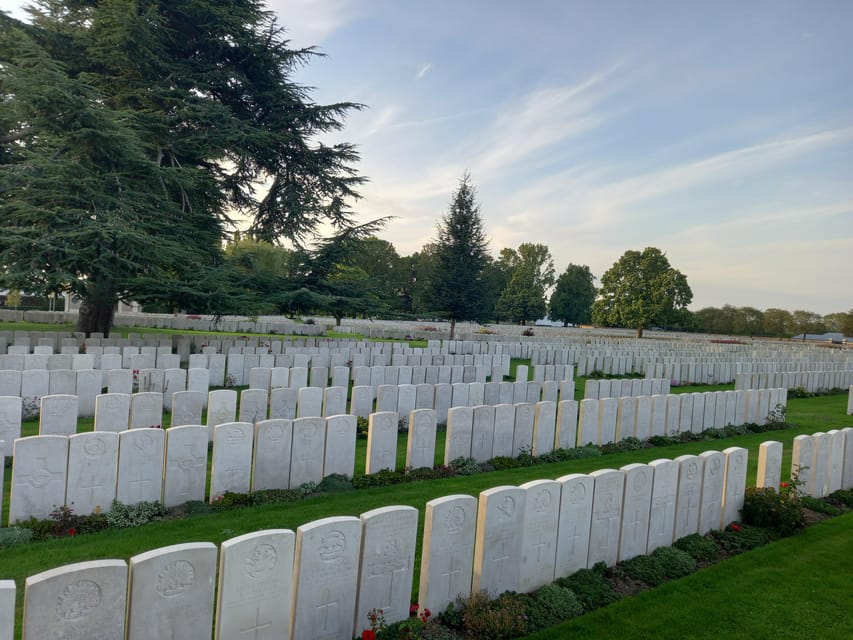
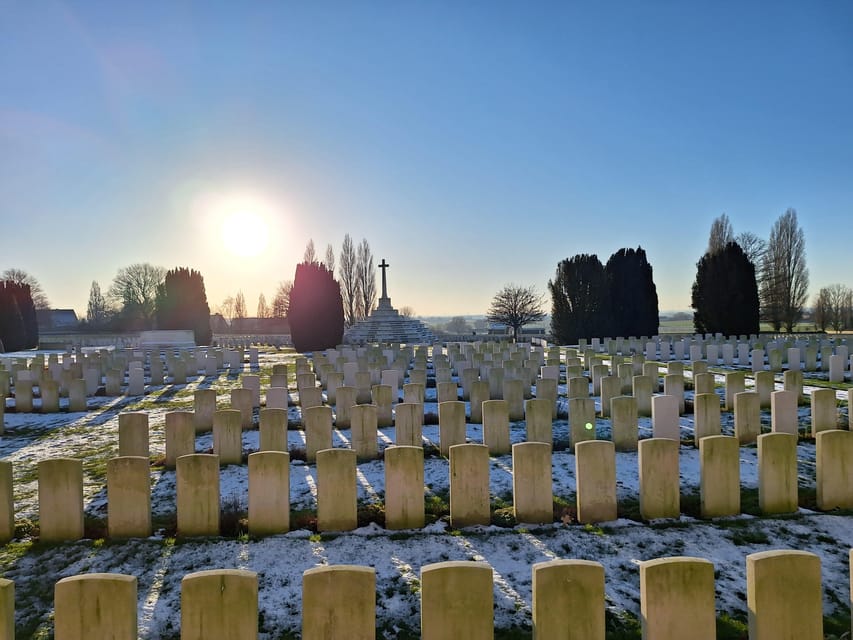
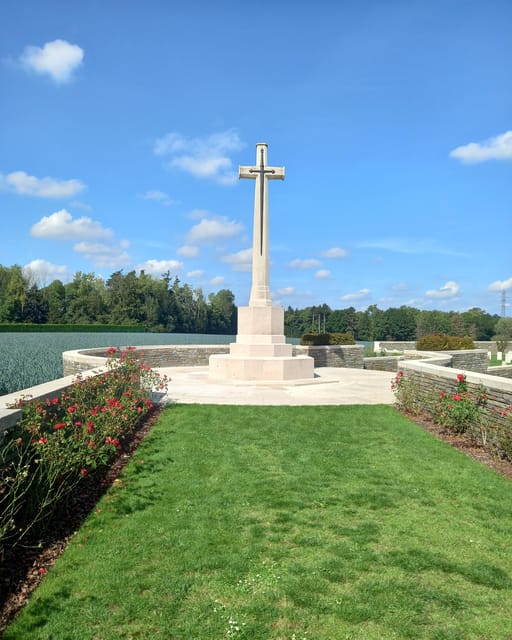
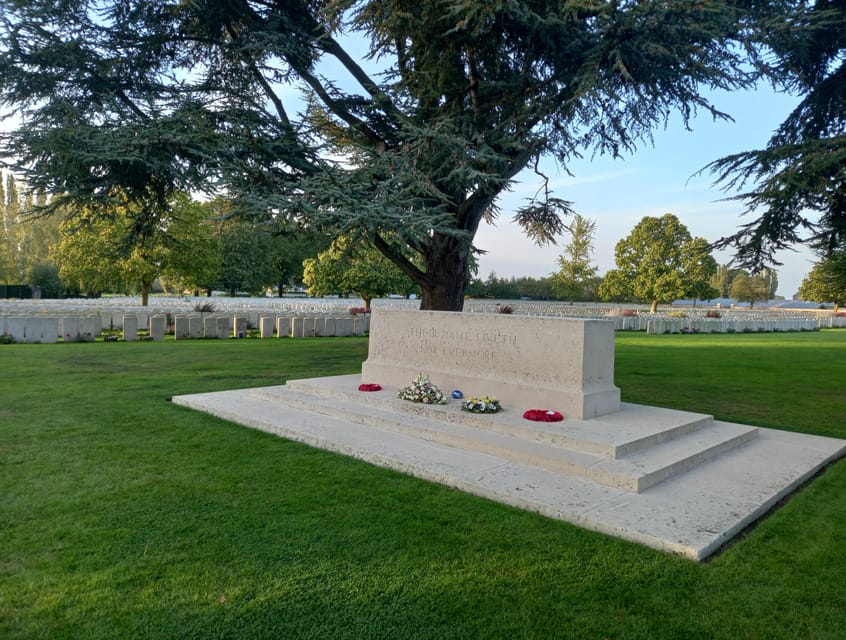
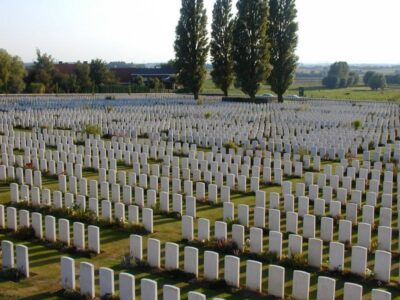
Tyne Cot Cemetery is allotted about 50 minutes, and it is likely to be one of the most moving parts of the tour. The site contains around 12,000 war dead through graves and commemorations, creating a powerful contrast with the small battlefield features you have just seen.
The cemetery helps you connect military movement with individual lives. A map can show an advance toward Passchendaele, but rows of names and graves show what that advance cost. If you have an ancestor connected with the fighting, tell the guide before the tour. Søren has helped guests locate family graves and identify a Victoria Cross recipient, and he has researched service records and diaries in advance.
Do not rush this stop. The schedule allows a useful amount of time, but you may want to tell the guide if you need a quiet moment. One of the best features of a private tour is that the pace can be adjusted more easily than on a large group outing.
Tyne Cot can also make the tour feel personal even if you have no family connection. The site is not only about famous commanders or large offensives. It brings attention back to the ordinary soldiers whose names are recorded there.
More Ypres trips:
- Ypres: An exploration of the deadly salient battlefields
★ 5.0 · 76 reviews - e-Scavenger hunt Hasselt: Explore the city at your own pace
★ 4.0 · 31 reviews - From Ypres, The Christmas Truce to Passchendaele Ypres Based WW1 private tour
★ 5.0 · 29 reviews - In Flanders Fields and Passchendaele Grand Tour
★ 5.0 · 25 reviews
The Brooding Soldier and the first gas attack
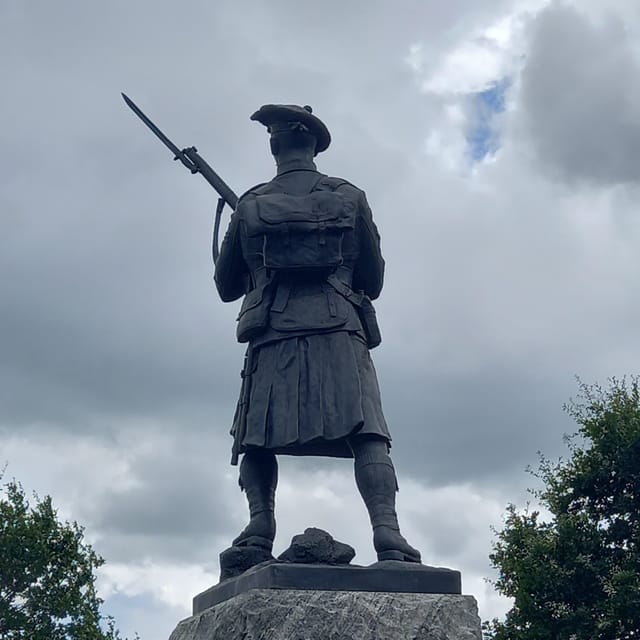
The Brooding Soldier memorial takes about 20 minutes. It commemorates the Canadian soldiers affected by the first German gas attack of 1915.
This stop adds an important layer to the tour because it shifts the focus from the 1917 Passchendaele fighting to an earlier and disturbing development in the war. The memorial is not simply another monument. It points to the arrival of chemical warfare and the changing nature of combat.
The timing is sensible. After the scale of Tyne Cot, a shorter stop gives you time to absorb a different part of the story without overloading the visit. The guide can place the memorial within the wider sequence of battles around the Ypres Salient.
If your family connection is Canadian, this part of the route may carry extra weight. The Canadian itinerary also covers 1915 and the 1916 to 1917 period, so it may suit you better than a general route if your relatives served in those actions.
John McCrae’s dressing station and In Flanders Fields
The tour then stops at the John McCrae dressing station for about 35 minutes, mainly for photographs and explanation. This is the place associated with McCrae writing In Flanders Fields, one of the best-known poems connected with the First World War.
The value here comes from linking a familiar poem with the working setting around a wartime dressing station. You are not only hearing famous lines in the abstract. You are seeing the place associated with the medical side of the fighting and the conditions that shaped the poem.
Because this is listed as a photo stop, do not expect a long museum visit. The guide’s explanation supplies the context, while the location gives you time to consider how literature, memory, and battlefield history became linked.
Bring a camera, but keep the tone respectful. This is still a site connected with wounded soldiers and wartime loss, not just a scenic stop.
Essex Farm Cemetery closes the circuit
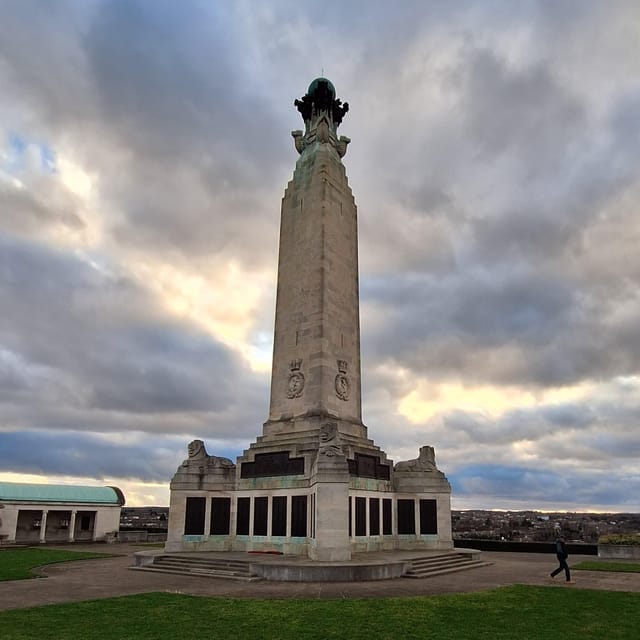
Essex Farm Cemetery receives about 10 minutes and provides a final, shorter cemetery visit before returning to Ypres.
The stop fits well at the end because it reinforces the personal scale of the day. You have seen a crater created by mass explosives, trenches used by troops, a major cemetery, a gas attack memorial, and McCrae’s dressing station. Essex Farm brings the focus back to individual graves and the men who did not return.
Ten minutes is not much, so your expectations should be realistic. It is enough for a guided introduction and a brief look around, but not for extensive family research unless the guide has planned the stop around a specific grave.
Choosing the Australian, Canadian, or Kiwi route
There are three stated route options:
- Australian 1917 Ypres Battlefields
- Canadian 1915 and 1916 to 1917 Ypres Battlefields
- Kiwi 1917 Ypres Battlefields
This choice is more than a label. It gives the guide a starting point for selecting battle sites, memorials, and explanations that match your interests.
The Australian route suits you if your family research points to the 1917 fighting around Ypres and Passchendaele. The Canadian route covers a wider time span, including the 1915 gas attack and later actions. The Kiwi route is a natural fit for New Zealand military connections.
You can also combine interests within a private group. One party included a New Zealand family connection and a United States companion, and the guide adjusted the discussion for both. Another group with a Canadian connection received help following the story of the Princess Patricia’s Canadian Light Infantry.
Before pickup, send every useful detail you have: name, regiment, service number, date of death, cemetery, diary notes, or family documents. The guide may be able to build the route around that information. The more precise your records, the more personal the day can become.
The guides make the difference
Søren Hawkes is repeatedly praised for his preparation, storytelling, humor, courtesy, and willingness to adjust the day. Guests have described him as attentive to every person in the vehicle, easy to talk with, and willing to answer questions without rushing.
His local knowledge also has practical value. He knows the winding roads and farm lanes around the Ypres Salient, including small sites that can be difficult to find alone. He has pointed out wartime ammunition waiting in a farmer’s field for disposal, a reminder that the war left hazards behind long after the fighting ended.
Sabine receives equally strong praise for tailoring routes, using maps, and preparing around New Zealand and family interests. The important point is not which guide you get, but the style of guiding offered: personal, flexible, and rooted in the particular ground you are visiting.
The tone is not heavy every minute. Søren is known for balancing solemn subjects with appropriate English humor. That can help on a four-hour tour, when the material is emotionally demanding. You should still expect a serious visit, but not a stiff one.
Comfort, timing, and what to bring
The tour includes pickup and return to your Ypres accommodation, or you can meet at Ypres Railway Station. The vehicle is air-conditioned and was described as clean and comfortable, including during hot weather.
The standard group limit is up to four people at the advertised $530 price. Private transport means you are not waiting for strangers or following a rigid large-group schedule. It also makes it easier to discuss family records without sharing a personal story with a busload of people.
Wear comfortable shoes. You will walk at Hill 60 B and Sanctuary Wood, and cemetery paths may still be affected by weather. Bring a camera and clothing suited to the forecast. Mineral water is included, but food is not, so plan accordingly if you need a meal around the four-hour outing.
The tour is in English and is wheelchair accessible. Starting times depend on availability. You can cancel up to 24 hours ahead for a full refund, and the reserve-now, pay-later option keeps your plans flexible.
Who should book this tour?
I would choose this tour if you have a family connection to the First World War, especially an Australian, Canadian, New Zealand, British, or South African relative. The guide’s willingness to research names and units can turn a general battlefield visit into a meaningful family day.
It also suits anyone staying in Ypres who wants a clear introduction to the Salient without renting a car. The private format is helpful if you have different interests in one group, such as Canadian military history for one person and New Zealand sites for another.
You may want something longer if you have already visited the main sites or want a full study of Passchendaele. Four hours covers a lot, but the itinerary moves steadily. Some stops are brief, and you cannot explore every cemetery and battlefield in the region.
Should you book the Ypres battlefield tour?
Book it if you value a personal guide, family research, and the freedom to ask questions. The combination of trenches, the Caterpillar Mine Crater, Tyne Cot, the Brooding Soldier, McCrae’s dressing station, and Essex Farm gives you a strong four-hour introduction to the Ypres battlefields.
The $530 group price makes the most sense when shared by up to four people who want private transport and a route shaped around their interests. I would send the guide your family information before booking and choose the Australian, Canadian, or Kiwi focus that best matches your story. If the weather is rough, the subject is emotional, or you need long quiet periods at cemeteries, say so at the start. This tour works best when you treat it as a guided conversation, not a race through monuments.
FAQ
Where does the tour begin and end?
Pickup and drop-off are available at your Ypres-based accommodation, or you can meet the guide at Ypres Railway Station. The tour returns to Ypres.
How long does the tour last?
The scheduled duration is four hours. Some private tours may run longer when the group has strong family or historical interests, but the stated tour duration is four hours.
How much does the tour cost?
The price is $530 per private group of up to four people.
Which languages are available?
The live tour guide speaks English, and the listed tour language is English.
Is the tour private?
Yes. It is offered for a private group, rather than as a shared group outing.
Is the tour wheelchair accessible?
Yes, the activity is listed as wheelchair accessible.
Which battlefields and memorials are included?
The route includes the Caterpillar Mine Crater at Hill 60 B, Sanctuary Wood Museum, Tyne Cot Cemetery, the Brooding Soldier, John McCrae’s dressing station, and Essex Farm Cemetery.
Can the tour focus on a family ancestor?
Yes. Tell the guide about your ancestor before the tour. The route can be tailored to include relevant graves, memorials, and battle locations where possible.
Are food and drinks included?
Food is not included. Mineral water is included.
Just added in Ypres
- From Ypres, The Christmas Truce to Passchendaele Ypres Based WW1 private tour★ 5.0 · 29 reviews
- In Flanders Fields and Passchendaele Grand Tour★ 5.0 · 25 reviews
- From LIlle or Bruges, Christmas Truce to Passchendaele Ypres 1 day WW1 private★ 5.0 · 5 reviews
- e-Scavenger hunt Ypres: Explore the city at your own pace★ 4.5 · 6 reviews
- Discover Tournai while playing! Escape game – The alchemist★ 4.0 · 3 reviews
- Full Day Canadian WW1 Vimy and Somme Battlefield Tour from Ypres★ 5.0 · 6 reviews
- Private 4hr Australian Fromelles Battlefield WW1 Tour★ 5.0 · 2 reviews
- Full Day Private Tour to WWI Passchendaele Base in Ypres★ 5.0 · 1 review
WWI Battlefield Tours, compared.
From Bruges: Great War Flanders Fields Minibus Tour w/ Lunch
Read our review →
Flanders Fields Remembrance Tour from Brussels
Read our review →
In Flanders Fields and Passchendaele Half Day Morning Tour
Read our review →
From Bruges: Flanders Fields Remembrance Full-Day Trip
Read our review →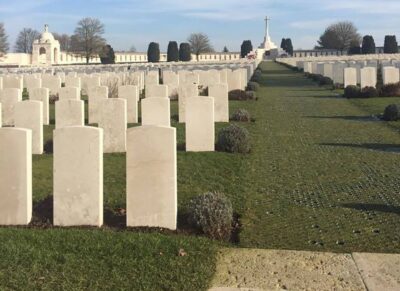
From Brussels: Flanders Fields Remembrance Full-Day Trip
Read our review →
Remembrance Tour: The Battle of the Bulge in the Ardennes
Read our review →
From Brussels: The Battle of the Bulge Remembrance Tour
Read our review →Browse the lists this tour appears in