
Reviewed · WWI BATTLEFIELD TOURS
Full Day Private Tour to WWI Passchendaele Base in Ypres
The ground still carries the battle. This private Ypres tour follows the Australian advance through Messines, Polygon Wood, Passchendaele, and the Menin Gate, with time for mine craters, cemeteries, bunkers, and original trenches. I especially like the door-to-door pickup and the chance to explore difficult-to-reach battlefield sites with a dedicated local guide. The tour also includes the poignant John McCrae site and the enormous Tyne Cot Cemetery, two places that give the fighting a human scale.
The main drawback is the packed eight-hour schedule. You cover many sites, but several stops are short, and lunch is not included. The booking information also gives two different cancellation statements, one mentioning possible refunds up to 72 hours before departure and another describing the experience as non-refundable, so I would confirm that point before paying the $707.76 per person price.
In This Review
- Key points at a glance
- Why this Passchendaele tour works
- Messines Ridge and the opening story
- Hooge Crater Cemetery and the Menin Road
- The Black Watch and Australia’s September headquarters
- Polygon Wood’s bunkers and memorials
- Hill 60 and the mine at 3:10 a.m.
- Tyne Cot, the largest Commonwealth cemetery
- John McCrae and the making of In Flanders Fields
- Zonnebeke and the approach to Passchendaele
- Sanctuary Wood’s trenches and small museum
- Menin Gate and 55,000 missing names
- Timing, transport, and lunch
- Who should book this private day?
- Final call: is the $707.76 price worth it?
- FAQ
- How long does the private Passchendaele tour last?
- Where can pickup and drop-off take place?
- Is transportation included?
- Is lunch included?
- Is the tour offered in English?
- How many people participate in the tour?
Key points at a glance
- Messines sets the scene: Spend two hours at mine craters, the New Zealand memorial, the Christmas Truce site, and the crypt where Adolf Hitler was treated for wounds.
- Australia’s advance shapes the day: The route links the Black Watch, Polygon Wood, Zonnebeke, and Passchendaele positions in a clear geographic sequence.
- Tyne Cot puts the losses into scale: The Commonwealth cemetery contains about 12,000 burials, while another 35,000 missing names are recorded on its memorial.
- You get original battlefield remains: Sanctuary Wood preserves WWI trenches, and Polygon Wood has concrete bunkers connected with the fighting.
- The tour ends at Ypres’s best-known memorial: The Menin Gate brings the day back to the city with 55,000 names of missing soldiers.
- Private transport saves time: Air-conditioned transportation and city-center or hotel pickup make a long, scattered route much easier.
Why this Passchendaele tour works
The Passchendaele battlefield is not one single place. It is a wide zone east and south of Ypres, spread across villages, woods, cemeteries, memorials, roads, and former gun positions. Seeing it properly requires a car, a clear route, and enough background to understand why one field mattered more than another.
This tour does that by following the Australian advance. Instead of treating each cemetery as an isolated stop, the route connects Messines, Polygon Wood, Zonnebeke, and the Passchendaele sector. That order helps you picture movement across the ground rather than simply collecting names.
I also like the private format. Your group has the guide’s attention, and pickup is offered from central Ypres or your hotel. That matters on a full day with ten stops, because there is less time lost finding parking, getting oriented, or waiting for other people.
The guide named in the feedback is Mike. He was praised for arriving promptly, keeping the schedule on track, making sure the right locations were included, and following up with extra information after the day. That is useful here. Battlefield touring depends on timing and local judgment, especially when many sites are spread across rural roads.
The tour costs $707.76 per person. That is a high price for one person, but the value changes if you are traveling as a small private group and want a full day of transport and guiding without joining strangers. You are paying for a vehicle, a professional local guide, pickup and drop-off, and a route that would be hard to reproduce efficiently on your own.
More battlefield tours:
- From IEPER Private 4-hour Tour of the Ypres Battlefield
★ 5.0 · 154 reviews - In Flanders Fields and Passchendaele Half Day Morning Tour
★ 5.0 · 117 reviews - From Brussels: Flanders Fields Remembrance Full-Day Trip
★ 4.4 · 65 reviews
Messines Ridge and the opening story
The day begins at the Messines Ridge New Zealand memorial, with about two hours here. This is the longest stop, and that is a good choice because Messines carries several important threads at once.
You hear about the Battle of Messines and see mine craters connected with the underground work that shaped the attack. The crater gives the story physical force. It is one thing to hear that mines were used beneath the front; it is another to stand beside the ground altered by the blast.
The site also includes the scene associated with the Christmas Truce and the crypt where Adolf Hitler was treated for wounds. Those details broaden the visit beyond troop movements. You are looking at a place tied to both battlefield action and individual wartime stories.
I would give this opening stop your full attention. Two hours allows the guide to explain the ground rather than rush you through a photo stop. If you have limited WWI knowledge, this is where the rest of the day should begin to make sense.
Hooge Crater Cemetery and the Menin Road
The stop at Hooge Crater Cemetery lasts about 30 minutes and places you directly beside the iconic Menin Road. You will hear about Pat Bugden VC, a 20-year-old recipient of the Victoria Cross, and see the area where Australian gun pits were positioned for the assault on Passchendaele.
The short timing means this is likely a focused stop rather than a long cemetery visit. Listen for the connection between the road, the gun positions, and the attack. The value is in standing on the actual line of movement, not simply reading names on a headstone.
For me, this is the kind of place where a guide adds real value. Without context, a road can look like an ordinary route through Belgium. With the battlefield story, its position becomes part of the military plan.
The Black Watch and Australia’s September headquarters
The Black Watch stop lasts around 30 minutes. The site served as Australian headquarters in September 1917, and the tour also covers earlier actions on the same ground in November 1914.
That time span matters. You are not seeing a location connected to one isolated day. The same ground saw fighting at different stages, and the guide can show how the meaning of the site changed as the war moved on.
This is another place where you should expect explanation rather than a large museum or a long list of formal exhibits. The appeal is the location itself and the chance to connect the earlier actions with the later Australian presence.
More Ypres trips:
- Ypres: An exploration of the deadly salient battlefields
★ 5.0 · 76 reviews - e-Scavenger hunt Hasselt: Explore the city at your own pace
★ 4.0 · 31 reviews - From Ypres, The Christmas Truce to Passchendaele Ypres Based WW1 private tour
★ 5.0 · 29 reviews - In Flanders Fields and Passchendaele Grand Tour
★ 5.0 · 25 reviews
Polygon Wood’s bunkers and memorials
The Battle of Polygon Wood receives about 20 minutes. You walk through the woods, see concrete bunkers that remained from the fighting, visit a cemetery, and stop at the Australian 5th Division monument.
The timing is brief, so wear shoes that are comfortable for walking on uneven ground. The tour information does not promise a long woodland hike, but even a short walk gives you a closer sense of the physical setting than viewing the area from a vehicle.
The bunkers are the key feature. Concrete remains make the battlefield tangible, while the cemetery and division monument link the surviving structures to the people and units who fought there. If military remains interest you, this may be one of the day’s most memorable stops.
Hill 60 and the mine at 3:10 a.m.
At Hill 60, the guide tells the story of Captain Woodward and the 1st Australian Tunnelling Company. The focus is a massive mine blown at 3:10 a.m. on June 7, 1917, with time to see the crater.
The exact time gives the story a sharp edge. It turns a broad campaign into a single moment: men working underground, a timed explosion, and a landscape permanently marked by the blast.
This stop lasts about 40 minutes. That is enough time for an explanation and a close look, though you should not expect a long independent exploration period. Hill 60 works best when you pay attention to the guide’s account and then take a moment to look across the crater and consider the scale of the engineering involved.
After Hill 60, the vehicle follows the line of the Australian advance. That driving time is not just a transfer between attractions. It helps connect the separate points on the map and gives you a chance to rest during a long day.
Tyne Cot, the largest Commonwealth cemetery
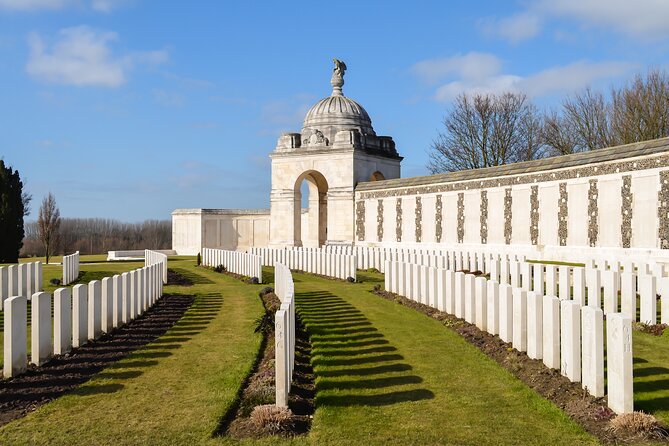
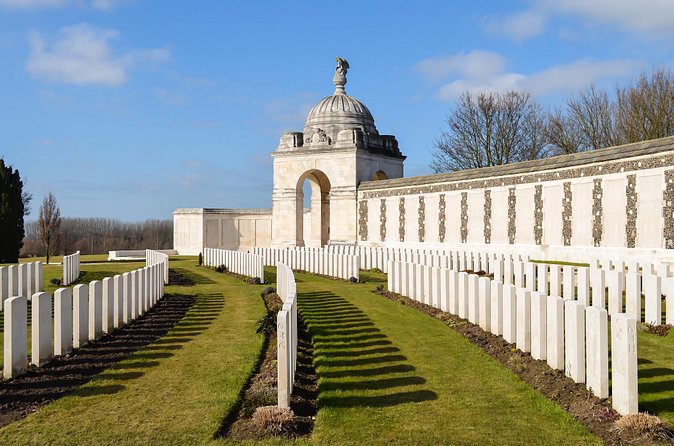
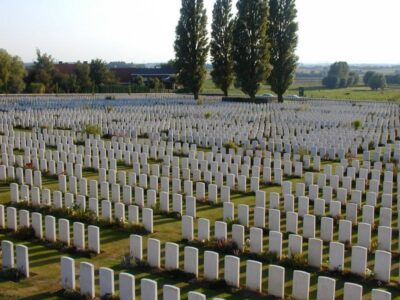
Tyne Cot Cemetery receives about 45 minutes. It is described as the world’s largest Commonwealth War Graves Commission cemetery, with about 12,000 soldiers buried there. Only around 3,000 have known names, while the memorial records about 55,000 missing soldiers.
The numbers can feel abstract, so take your time with the contrast. Rows of marked graves represent those identified and buried, while the names on the memorial represent a far larger group whose final resting places are unknown.
Two Australian Victoria Cross recipients are buried at Tyne Cot, adding a specific Australian connection to this vast cemetery. The stop is free to enter, but its importance is not measured by an admission ticket. This is one of the places where a guide can help you focus on the details rather than simply walk through a very large cemetery.
Forty-five minutes is enough for a meaningful visit, though you may wish for longer if you like reading inscriptions. The full itinerary leaves little room for lingering, so decide in advance whether you want to hear the full explanation, walk through the cemetery, or focus on selected graves.
John McCrae and the making of In Flanders Fields
The John McCrae site lasts about 30 minutes. Here you see the hospital site where Lieutenant Colonel John McCrae composed In Flanders Fields.
This stop changes the tone of the day. Much of the tour deals with attacks, mines, gun pits, headquarters, and advances. McCrae’s poem brings the experience back to writing, memory, and the way wartime places live on after the fighting ends.
Thirty minutes is a sensible amount of time for a focused stop. It gives you room to hear the story and reflect without turning the visit into a long literary detour. If the poem is familiar to you, seeing the hospital site adds a physical setting to words that are often read far from Flanders.
Zonnebeke and the approach to Passchendaele
The vehicle passes through Zonnebeke along the line of the Australian advance, with about 15 minutes allocated to this part of the route. This is the shortest named stop, so expect a drive-through explanation rather than a full visit.
Zonnebeke matters because it helps show how the route fits together. You are moving through the same broad area tied to the Passchendaele fighting, and the guide can point out the direction of the Australian advance as the day progresses.
Do not choose this tour expecting every location to offer a long walk or a formal exhibition. Some places are included because their position on the route matters. Zonnebeke is one of those stops.
Sanctuary Wood’s trenches and small museum
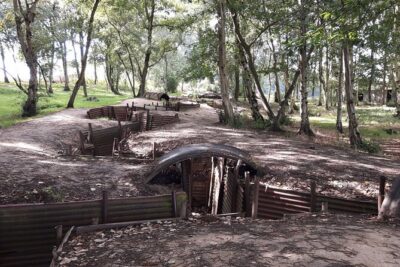
Sanctuary Wood closes the battlefield portion of the day, with about one hour here. You see original WWI trenches and visit a small, quaint WWI museum.
The trenches offer a different experience from the cemeteries and monuments. They show the cramped, defensive side of the war, while the museum gives you a place to look at wartime objects and displays at a slower pace.
The word quaint is important. This is not presented as a large modern museum complex. Its appeal is its modest character and the presence of original trench remains. If you prefer preserved sites and personal atmosphere to polished exhibition halls, you will likely appreciate this stop.
An hour gives you enough time to look around without making the museum the entire focus of the day. It also provides a change of pace before returning to Ypres.
Menin Gate and 55,000 missing names
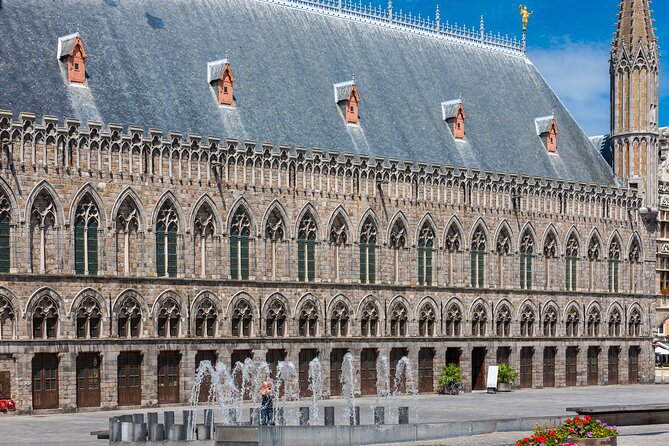
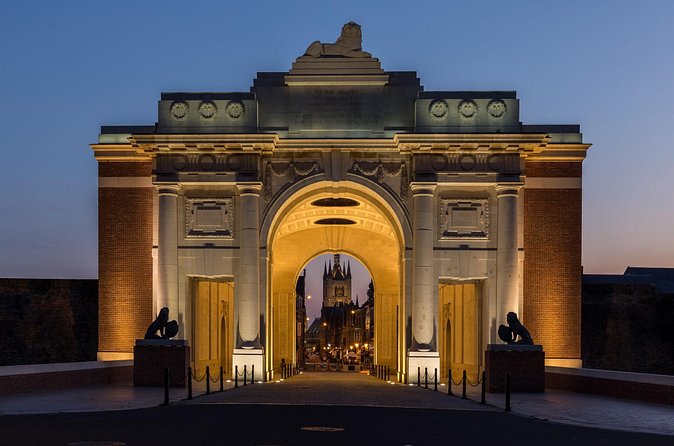
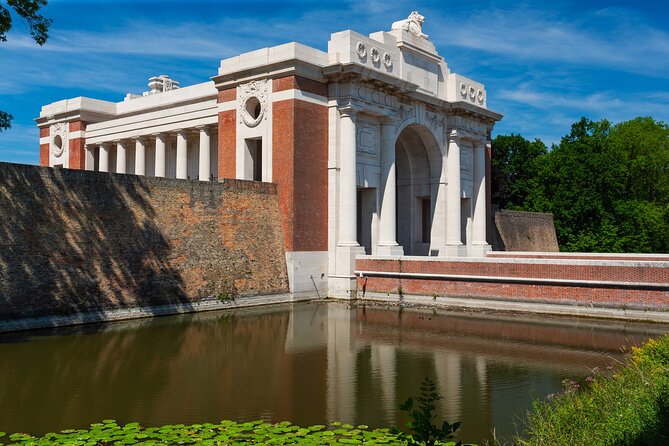
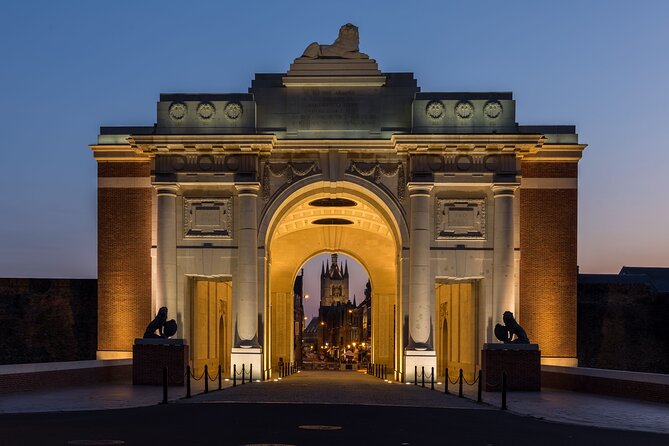
The Menin Gate receives about one hour. The guide explains how the memorial came about and shares stories connected with the 55,000 names of missing soldiers recorded there.
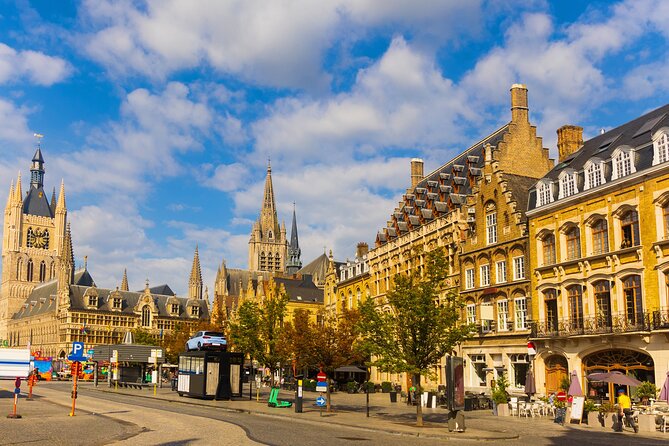
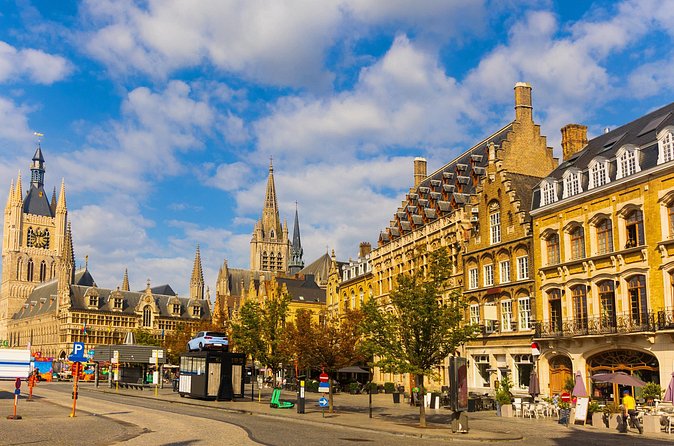
This is a fitting return to Ypres. The day begins outside the city, among craters and wartime positions, then ends at one of Ypres’s major memorials. The Menin Gate brings the broad battlefield back to the people who disappeared within it.
One hour is generous compared with some of the smaller stops. Use it to look closely at the names and listen to the explanation of the memorial’s purpose. The scale can be overwhelming, but the stories help keep the place from becoming just another large monument.
Timing, transport, and lunch
The tour lasts about eight hours and includes air-conditioned private transportation. Pickup and drop-off are available in central Ypres or at your hotel, with the driver meeting you under your name.
That convenience is important because the route covers many separate sites. You will spend part of the day driving between stops, but private transport keeps the day practical and protects time for the actual battlefield visits.
Lunch is not included. Plan for that before departure, since the schedule is tight and the tour moves between rural sites. In one reported experience, Mike bought lunch because local places were closed. That was a kind gesture, but I would not rely on it as part of the service. Ask about the lunch plan when you book, and carry something if needed.
The tour is offered in English, and confirmation is provided when you book. Most people can participate, but the information does not give a detailed accessibility statement. If you need specific assistance, ask the provider before committing.
Who should book this private day?
I would recommend this tour to someone with a strong interest in WWI, Australian military history, cemeteries, battlefield archaeology, or memorial design. It also suits you if you have only one day in Ypres and want a broad overview without arranging several separate excursions.
The private format is useful for families, couples, or small groups who want to ask questions and adjust their attention at each site. Group discounts may also improve the per-person value, although the exact discount is not provided.
I would be more cautious if you prefer a slow pace. Ten stops in roughly eight hours means the day is full. Hooge Crater Cemetery, the Black Watch, Polygon Wood, Zonnebeke, and the John McCrae site each receive limited time, so you will not have hours at any one location.
The tour is also less suited to someone looking only for Passchendaele proper. It covers a wide collection of places tied to the campaign and the Australian advance, including Messines, Hill 60, Tyne Cot, Sanctuary Wood, and Ypres. That breadth is a strength, but it means the day is not a single-site study.
Final call: is the $707.76 price worth it?
I would book this tour if you value private transport, a local English-speaking guide, and a carefully connected route through the Ypres battlefield. The strongest parts are the two-hour Messines visit, the Australian focus, Tyne Cot, Hill 60, Sanctuary Wood, and the final hour at the Menin Gate.
The price is easier to justify for a small group sharing the private experience than for one person traveling alone. Before booking, confirm the cancellation terms, ask how lunch will work, and be ready for a brisk schedule.
If those points suit you, this is a strong way to see the Passchendaele area in one day. Mike’s prompt service and helpful follow-up add confidence, while the mix of craters, cemeteries, bunkers, trenches, and memorials gives you far more than a quick stop at the Menin Gate.
FAQ
How long does the private Passchendaele tour last?
The tour lasts approximately eight hours.
Where can pickup and drop-off take place?
Pickup and drop-off are offered in Ypres city center or at your hotel.
Is transportation included?
Yes. The tour includes an air-conditioned vehicle and private transportation.
Is lunch included?
No. Lunch is not included in the tour price.
Is the tour offered in English?
Yes. The experience is offered in English with a professional local guide in Ypres.
How many people participate in the tour?
This is a private activity, so only your group participates.
Just added in Ypres
- From Ypres, The Christmas Truce to Passchendaele Ypres Based WW1 private tour★ 5.0 · 29 reviews
- In Flanders Fields and Passchendaele Grand Tour★ 5.0 · 25 reviews
- From LIlle or Bruges, Christmas Truce to Passchendaele Ypres 1 day WW1 private★ 5.0 · 5 reviews
- e-Scavenger hunt Ypres: Explore the city at your own pace★ 4.5 · 6 reviews
- Discover Tournai while playing! Escape game – The alchemist★ 4.0 · 3 reviews
- Full Day Canadian WW1 Vimy and Somme Battlefield Tour from Ypres★ 5.0 · 6 reviews
- Private 4hr Australian Fromelles Battlefield WW1 Tour★ 5.0 · 2 reviews
- From Ypres 4hr Christmas Truce and Monster Mines of Messines PRIVATE Tour★ 5.0 · 5 reviews
WWI Battlefield Tours, compared.
From Bruges: Great War Flanders Fields Minibus Tour w/ Lunch
Read our review →
Flanders Fields Remembrance Tour from Brussels
Read our review →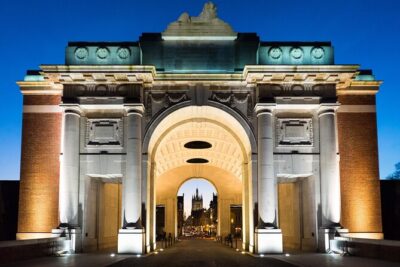
In Flanders Fields and Passchendaele Half Day Morning Tour
Read our review →
From Bruges: Flanders Fields Remembrance Full-Day Trip
Read our review →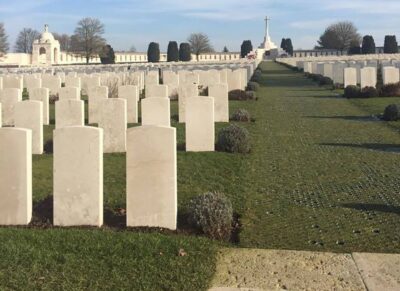
From Brussels: Flanders Fields Remembrance Full-Day Trip
Read our review →
Remembrance Tour: The Battle of the Bulge in the Ardennes
Read our review →
From Brussels: The Battle of the Bulge Remembrance Tour
Read our review →Browse the lists this tour appears in