
Reviewed · YPRES TOURS
Ypres: An exploration of the deadly salient battlefields
History feels close here. This small-group tour links Ypres’ most important First World War sites with clear explanations, personal stories, photographs, and a guide who knows how to make difficult history understandable. I especially like the visit to Essex Farm Cemetery and the John McCrae memorial, followed by the chance to see preserved trench remains at Yorkshire Trench and Dug-out. The main consideration is pace: 210 minutes covers a lot of ground, so this is a focused introduction rather than a slow, specialist study of every battlefield site.
I also like the balance between Commonwealth and German sites. Tyne Cot Cemetery is powerful, but Langemark German Military Cemetery gives you another perspective on the war and its cost. Kim is the usual guide, though Lucas and Roger may lead some departures, and the tour can sometimes be adjusted around family connections or national background. Comfortable shoes matter, since you will leave the van at several stops.
In This Review
- Key points at a glance
- Why this Ypres battlefield tour works
- Essex Farm Cemetery and the John McCrae memorial
- Yorkshire Trench and Dug-out: close to the ground
- Langemark German Military Cemetery and another point of view
- The Brooding Soldier at Vancouver Corner
- Across the Passendale battlefields
- Tyne Cot Cemetery: the tour’s grandest and quietest stop
- Kim’s guiding style and the value of a small group
- Is $88 good value for 210 minutes?
- Practical advice before you book
- Who should book this tour?
- Should you book the Ypres battlefield tour?
- FAQ
- Where does the tour begin and end?
- How long does the tour last?
- What is the price?
- Is pickup included?
- What vehicle is used?
- How large is the group?
- What language is the tour in?
- Which cemeteries are visited?
- Does the tour visit preserved trenches?
- What should I bring?
Key points at a glance
- John McCrae’s Essex Farm connection: Learn about the casualty system and visit the place linked with the Canadian doctor and poet.
- Yorkshire Trench and Dug-out: See surviving trench features that make the conditions of trench warfare easier to picture.
- Two sides of the conflict: Langemark offers a German viewpoint, while the Canadian memorial at Vancouver Corner recalls Commonwealth service.
- Tyne Cot’s enormous scale: Visit the largest Commonwealth War Graves Commission cemetery in the world.
- Small group transport: Ride in a dark blue Mercedes minivan with space for no more than seven participants.
- Strong personal guiding: Kim uses photographs, maps, family research, and clear explanations to connect military events with individual lives.
Why this Ypres battlefield tour works
Ypres is not a place where the First World War sits safely in a museum. The roads, fields, cemeteries, and memorials are spread around the town, and many important places are easy to miss if you are driving yourself without a plan.
This tour solves that problem in a practical way. You are collected in Ypres, driven from site to site, and returned to the same area after roughly three and a half hours. The short transfers keep the morning moving, while the guided stops give you time to listen, look around, and take in the setting.
The group limit of seven is a real advantage. It should be easier to hear the guide and ask questions than on a large coach tour. The minivan also means less time dealing with parking and directions. The transport received a 95 percent perfect score, and the comments about the vehicle describe it as clean, comfortable, warm, and well driven.
Kim’s style seems to be one of the main reasons this tour earns such strong praise. She explains the build-up to the war, the military action, the casualty system, the Commonwealth War Graves Commission, and the years after the war without assuming that everyone arrives as a history expert. She also uses photographs and maps to show how the places looked during the fighting.
That personal approach can make a major difference. One couple received help locating a great-uncle’s grave, while another family was assisted with research into a relative’s last known movements. These extra touches are not guaranteed, but they show the kind of flexibility that can make a battlefield visit especially meaningful.
More Ypres trips:
- From IEPER Private 4-hour Tour of the Ypres Battlefield
★ 5.0 · 154 reviews - In Flanders Fields and Passchendaele Half Day Morning Tour
★ 5.0 · 117 reviews - From Brussels: Flanders Fields Remembrance Full-Day Trip
★ 4.4 · 65 reviews
Essex Farm Cemetery and the John McCrae memorial
The tour begins at Essex Farm Cemetery, with about an hour here. This is the longest stop, and rightly so. It gives your guide time to set out the medical, military, and human story before the itinerary moves into the wider Ypres Salient.
The site is closely linked with John McCrae, the Canadian physician and poet associated with In Flanders Fields. The visit is not simply about reciting a famous poem. It is also a chance to consider the work of doctors, nurses, stretcher bearers, and soldiers dealing with mass casualties close to the front.
The explanation of the casualty system is one of the tour’s more useful features. Instead of treating cemetery names as a long list of dates, the guide explains how the Commonwealth War Graves Commission recorded, managed, and commemorated the dead. You will also hear about the years after the war and the effort that went into creating and maintaining these sites.
That context helps you read the cemetery properly. The neat rows are not just a visual feature. They reflect a deliberate post-war decision to give individual casualties a permanent place of remembrance, even when their original burial locations were lost or unknown.
Allow yourself a quiet moment here. The guide provides a lot of information, but the stop also needs space for reflection. If you prefer a very slow, solitary visit, the scheduled hour may feel structured. For most people, though, it is enough time to understand the site without losing the morning’s momentum.
Yorkshire Trench and Dug-out: close to the ground
After a short five-minute drive, you reach Yorkshire Trench and Dug-out for around 25 minutes. This is where the tour shifts from cemetery design and remembrance to the physical reality of trench warfare.
Surviving trench remains can be more revealing than a battlefield map. You can begin to understand how narrow, exposed, and uncomfortable these positions were, and why movement across open ground was so dangerous. The name itself connects the site with British troops, but the wider lesson is the same: trench warfare was a grinding contest fought from cramped defensive lines rather than a clean advance across open country.
The stop is brief, so expect a guided explanation rather than an extended walk. Wear shoes that are comfortable for standing and walking over uneven ground. The tour information does not promise a long hike, but comfortable footwear is specifically recommended and is sensible for every stop.
I like the order here. Starting with Essex Farm gives you the human and medical background. Yorkshire Trench then gives that story a physical setting. You are no longer thinking only about dates and formations. You are thinking about where soldiers lived, moved, waited, and were wounded.
Langemark German Military Cemetery and another point of view
A ten-minute drive brings you to Langemark German Military Cemetery. The guided visit lasts about 45 minutes, making it one of the more substantial stops.
This is an important part of the tour because it avoids presenting the war through only one national memory. Langemark helps you consider the German experience and the effect of the conflict on Germany. The site also gives the guide a natural opening to explain differences between cemetery and memorial traditions.
The visit is not designed to excuse or soften the causes of the war. Instead, it places the human cost on both sides. That is useful in Ypres, where many memorials naturally focus on Commonwealth forces. Seeing both perspectives can give you a more complete sense of how the Great War shaped Belgium, Germany, Britain, Canada, Australia, and other countries.
The 45-minute stop should suit anyone who wants more than a quick photograph. Kim’s explanations are reported to be clear and well researched, with the history presented in a lively but unsentimental way. That balance matters at a site like this. A battlefield guide should not turn tragedy into theatre, and the strongest parts of this experience appear to come from calm explanation rather than dramatic performance.
A completely different kind of day:
- e-Scavenger hunt Hasselt: Explore the city at your own pace
★ 4.0 · 31 reviews - From Ypres, The Christmas Truce to Passchendaele Ypres Based WW1 private tour
★ 5.0 · 29 reviews - In Flanders Fields and Passchendaele Grand Tour
★ 5.0 · 25 reviews - From Ypres: WWI Battlefields Private Tour
★ 5.0 · 25 reviews
The Brooding Soldier at Vancouver Corner
The next transfer takes about ten minutes, followed by roughly 25 minutes at the St Julien Canadian War Memorial, commonly known as the Brooding Soldier at Vancouver Corner.
The memorial’s design gives this stop a different mood from the cemeteries. Instead of rows of graves, you encounter a single figure representing remembrance and mourning. The guide connects the monument with Canadian service in the Ypres Salient and helps place the memorial in the wider military story.
This is also a good place to think about how countries chose to remember the war. Essex Farm focuses attention on medical care and individual casualties. Langemark presents a German cemetery setting. Vancouver Corner uses a large symbolic figure. Together, the sites show that remembrance is not one fixed idea.
The stop is short enough to keep the tour moving, but long enough for an explanation and photographs. You may find that the sequence begins to make more sense here. The tour is not simply ticking off famous names. It is building a chain from wartime conditions to death, burial, memory, and national identity.
Across the Passendale battlefields
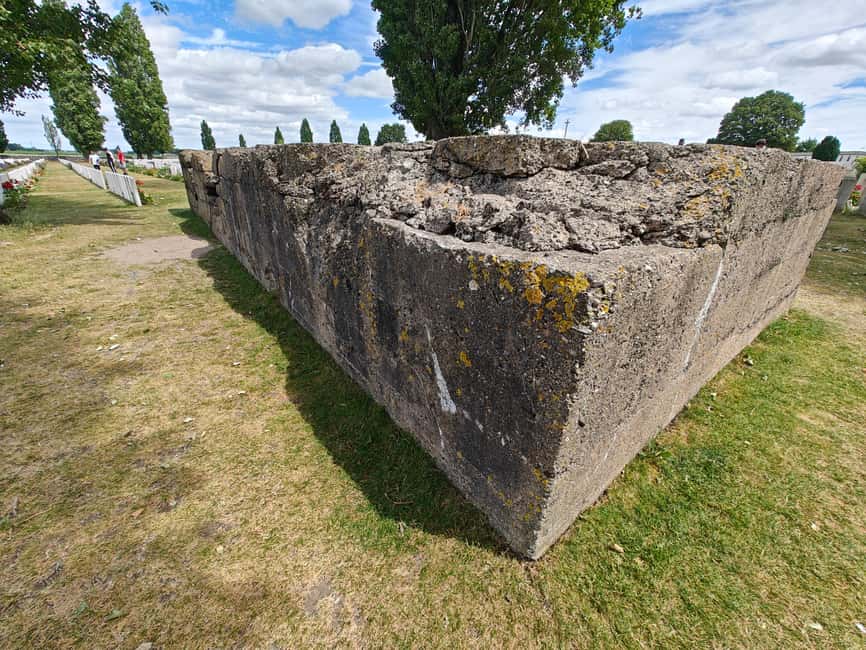
Between the Canadian memorial and Tyne Cot, the van crosses the Passendale battlefields. This part is easy to underestimate because there is no single building or monument to enter. Yet seeing the terrain from the road helps you understand the scale of the fighting.
The guide uses the drive to explain how the ground and distances shaped the campaign. The information provided for the tour specifically highlights the Passendale area, and several people appreciated having military action related to the present-day countryside. That connection is valuable because modern farmland can look peaceful while hiding the intensity of the battles fought there.
This is a driving section, not a long walking tour across open fields. That makes the experience manageable within 210 minutes, especially in poor weather. It also means you should listen carefully during the drive. The view from the van is part of the lesson, not just a transfer between attractions.
Some departures may include a small detour, such as a chocolate stop in Passchendaele, but you should not treat that as a guaranteed part of the published route. The dependable feature is the drive across the battlefield area and the guide’s explanation of what happened there.
Tyne Cot Cemetery: the tour’s grandest and quietest stop
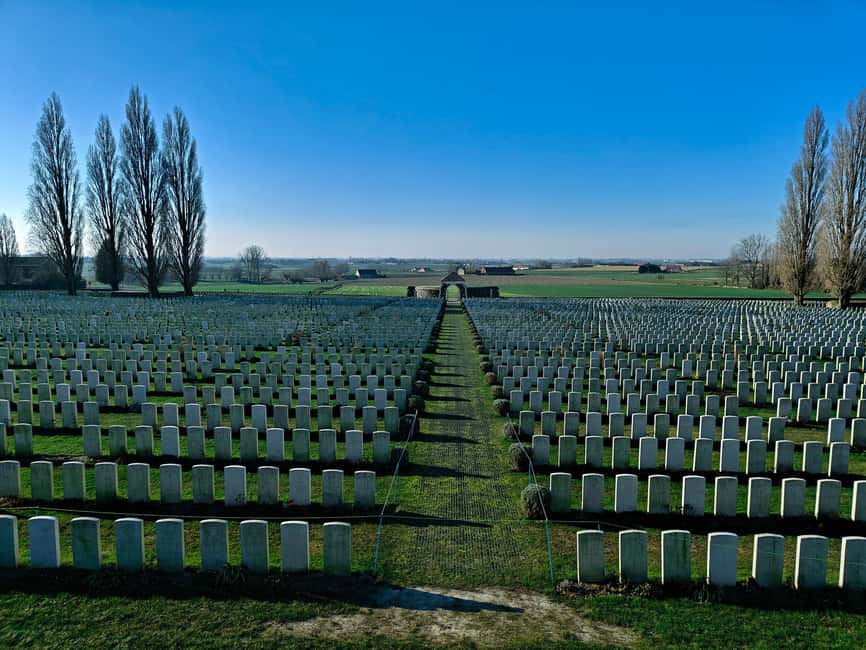
The final major visit is Tyne Cot Cemetery, with about 45 minutes on site. It is the largest Commonwealth War Graves Commission cemetery in the world, and its scale can be difficult to grasp from photographs alone.
Rows of white headstones stretch across the grounds, creating a powerful sense of how many lives were lost. The size is striking, but the guide keeps the focus on individuals and the system of remembrance rather than allowing the cemetery to become a spectacle.
This is where the earlier discussion of the casualty system and post-war years pays off. You will have already learned how graves and memorials were handled, so Tyne Cot becomes more than a famous stop. It becomes a place where those choices can be seen on a vast scale.
The 45-minute visit is a sensible compromise. You have time to walk, listen, take photographs, and pause quietly. If you want to read every inscription or search for a particular name, you may need more time on a separate visit. For a first tour of the Salient, the stop gives you a strong final impression without stretching the day too far.
Tyne Cot is likely to be the emotional high point, but it should not overshadow the smaller sites. Essex Farm offers intimacy. Yorkshire Trench offers physical evidence. Langemark adds balance. Vancouver Corner offers symbolism. Tyne Cot brings the numbers and the long memory into view.
Kim’s guiding style and the value of a small group
The strongest feature of this experience is the guide. Kim is repeatedly praised for clear speech, a comfortable walking pace, warmth, good timing, and the ability to adjust her explanations to the people in the van. Some national groups received examples suited to their own background, including Australian visitors.
That does not mean the tour is only for military specialists. In fact, the guide’s ability to simplify the build-up and causes of the war is helpful if your knowledge is limited. At the same time, people with a serious interest in military history appreciated the careful research, accurate locations, photographs, maps, and discussion of both the strengths and failures of the campaign.
A small group also makes personal questions practical. You can ask about a regiment, a cemetery, or a family connection without waiting for a large crowd to move on. Kim has sometimes helped people trace relatives and locate graves, though you should contact the company ahead of time if family research is important to you.
Other guides may lead the tour. Lucas and Roger are also named as guides, and both are described as informative and engaging. The exact guide is therefore not certain when you book, but the consistently strong feedback points to a well-prepared guiding team.
Is $88 good value for 210 minutes?
At $88 per person, this is not the cheapest way to spend a morning in Ypres. But price alone misses the main point. You are paying for a driver, a small group, pickup and drop-off at an agreed location, transport between spread-out sites, and an English-speaking guide who provides the historical framework.
Hiring a car would not automatically give you the same value. You would still need to plan the route, understand what you are seeing, find parking, and build the story yourself. A large coach may cost less per person, but it is unlikely to offer the same small-group feel or the same ability to adjust around questions and family interests.
The value is strongest if you are visiting Ypres for a limited time. In three and a half hours, you see six significant places and receive background on the war, the casualty system, the cemeteries, and the post-war years. It is also useful if you want to visit both Commonwealth and German sites without arranging separate transport.
The price is less compelling if you already have a car, extensive battlefield knowledge, and a full day to explore independently. You may prefer to spend longer at one cemetery or follow a specific regiment. This tour is built for breadth, clear interpretation, and convenience.
Practical advice before you book
Plan on about 210 minutes from pickup in Ypres to return. The listed drive times are short, but the schedule includes six substantial stops, so stay aware of the meeting time at each location.
Wear comfortable shoes. You do not need to prepare for a long-distance hike based on the information provided, but cemeteries and trench sites are best approached in practical footwear.
The dark blue Mercedes van carries the Kims Battlefield Tours logo. Pickup and drop-off are included at an agreed location in Ypres. If you are arriving by train or staying outside the normal pickup area, contact the company before booking rather than assuming an adjustment can be made.
Short-notice reservations may not always be possible. The company asks you to email [email protected] with questions, especially if your booking is close to departure or you have a family-history request.
The tour is in English. You can cancel up to 24 hours ahead for a full refund, and the reserve-now, pay-later option keeps your plans flexible.
Who should book this tour?
I would choose this tour if you want a serious but approachable introduction to the Ypres Salient. It suits couples, families, first-time battlefield visitors, and anyone who wants the main sites explained rather than simply photographed.
It is especially good for people with a family connection to the First World War. Share names and details before the visit, and the guide may be able to add useful context or help locate a grave. That kind of assistance cannot be promised, but it has been a meaningful part of past tours.
I would be more cautious if you want a full-day military study, extensive walking, or long periods alone at each cemetery. The route is carefully packed into 210 minutes, and its strength is the clear overview.
Should you book the Ypres battlefield tour?
Yes, if you value context, personal guiding, and efficient transport. The combination of Essex Farm, Yorkshire Trench, Langemark, Vancouver Corner, Passendale, and Tyne Cot gives you a strong understanding of how the war was fought and remembered.
Book it early if your schedule is fixed, and contact Kim in advance if you have a relative to trace. For $88, the small group, minivan, pickup service, and detailed English guiding make this a solid choice for seeing the key Ypres battlefields without spending your day working out the route yourself.
FAQ
Where does the tour begin and end?
The tour starts in Ypres and returns to Ypres after visiting the battlefield sites.
How long does the tour last?
The experience lasts 210 minutes, or about three and a half hours.
What is the price?
The price is $88 per person.
Is pickup included?
Yes. Pickup and drop-off are included at an agreed location.
What vehicle is used?
You will travel in a dark blue Mercedes van with the Kims Battlefield Tours logo.
How large is the group?
The tour is limited to seven participants.
What language is the tour in?
The live tour guide speaks English, and the listed tour language is English.
Which cemeteries are visited?
The tour visits Essex Farm Cemetery, Langemark German Military Cemetery, and Tyne Cot Cemetery.
Does the tour visit preserved trenches?
Yes. The route includes Yorkshire Trench and Dug-out, with a guided visit of about 25 minutes.
What should I bring?
Bring comfortable shoes. If you are booking at short notice or have questions about pickup, contact the company at [email protected].
Just added in Ypres
- From Ypres, The Christmas Truce to Passchendaele Ypres Based WW1 private tour★ 5.0 · 29 reviews
- In Flanders Fields and Passchendaele Grand Tour★ 5.0 · 25 reviews
- From LIlle or Bruges, Christmas Truce to Passchendaele Ypres 1 day WW1 private★ 5.0 · 5 reviews
- e-Scavenger hunt Ypres: Explore the city at your own pace★ 4.5 · 6 reviews
- Discover Tournai while playing! Escape game – The alchemist★ 4.0 · 3 reviews
- Full Day Canadian WW1 Vimy and Somme Battlefield Tour from Ypres★ 5.0 · 6 reviews
- Private 4hr Australian Fromelles Battlefield WW1 Tour★ 5.0 · 2 reviews
- Full Day Private Tour to WWI Passchendaele Base in Ypres★ 5.0 · 1 review
Ypres Tours, compared.
In Flanders Fields and Passchendaele Half Day Morning Tour
Read our review →
From Brussels: Flanders Fields Remembrance Full-Day Trip
Read our review →
e-Scavenger hunt Hasselt: Explore the city at your own pace
Read our review →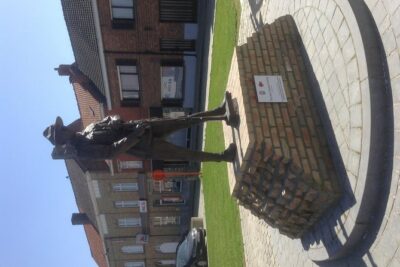
From Ypres, The Christmas Truce to Passchendaele Ypres Based WW1 private tour
Read our review →
In Flanders Fields and Passchendaele Grand Tour
Read our review →
Experience Authentic Belgian Cuisine: Cooking Lesson and Meal with a Ghent Local
Read our review →
e-Scavenger hunt Turnhout: Explore the city at your own pace
Read our review →Browse the lists this tour appears in