
Reviewed · WWI BATTLEFIELD TOURS
From LIlle or Bruges, Christmas Truce to Passchendaele Ypres 1 day WW1 private
The ground still tells the story. This private, nine-hour tour through the Ypres Salient brings together trenches, mine craters, cemeteries, bunkers, and memorials with the help of an expert local guide. I like the private format, which lets you ask questions and shape the day around family history or a particular regiment. I also like the broad route, from the Christmas Truce site and Messines Ridge to Tyne Cot Cemetery and the Menin Gate.
The main drawback is the packed schedule. You cover a great deal of ground in one day, so several stops last only 15 to 45 minutes. Lunch is not included, and the $532.32 per-person price is a serious outlay, though private transportation, hotel pickup, and a full day with a specialist guide make it more defensible for a small group.
In This Review
- Key points to know before booking
- A private day through the Ypres Salient
- Messines Ridge and the Christmas Truce
- Hooge Crater Cemetery and the Menin Road
- Australian headquarters and the ground of 1914
- Polygon Wood and the Australian 5th Division
- Hill 60 and the mine blown at 3:10 a.m.
- Tyne Cot Cemetery and the scale of loss
- The John McCrae site and In Flanders Fields
- The Menin Gate and 55,000 missing names
- Zonnebeke and the route toward Passchendaele
- Sanctuary Wood and original trenches
- Is $532.32 per person good value?
- Who should book this Ypres battlefield tour?
- Should you book it?
- FAQ
- How long is the Ypres WW1 tour?
- Where can pickup be arranged?
- Is the tour private?
- What language is the tour offered in?
- Is lunch included?
- Which First World War sites are visited?
- Is admission to Sanctuary Wood included?
- Can the tour be tailored to family history?
- Can I cancel for a full refund?
Key points to know before booking
- Messines Ridge connects several powerful stories: mine craters, the Christmas Truce, and the place where Adolf Hitler was treated for wounds.
- The tour follows the Australian advance: Polygon Wood, the Menin Road, Hill 60, Zonnebeke, and Passchendaele fit together as one military story.
- Tyne Cot Cemetery is the emotional center: around 12,000 Commonwealth soldiers are buried here, while about 35,000 missing men are named on its memorial.
- Søren is the guide to request: the strongest praise centers on his clear explanations, thoughtful details, passion, humor, and willingness to tailor the day.
- Pickup is unusually useful: collection is offered from hotels and B&Bs within a 66-kilometer radius of Ypres, plus locations including Bruges, Lille, Ghent Dampoort Station, and Arras.
- The day ends with original trenches: Sanctuary Wood gives you a chance to see preserved First World War trench works rather than only monuments and grave markers.
A private day through the Ypres Salient
This is not a quick stop at the Menin Gate followed by a drive past a few cemeteries. It is a full circuit of the Ypres Salient, the area where British, Australian, Canadian, and other Commonwealth forces fought through much of the First World War.
The tour begins at 9:00 a.m. with pickup from your hotel or B&B. The stated pickup area reaches 66 kilometers from Ypres and includes Bruges, Lille, Arras, and Ghent Dampoort Station. That arrangement matters because battlefield sites are spread across rural roads and small communities, not gathered around one convenient visitor center.
You travel in a private group, so the day can respond to your interests. If your family has a connection to a particular unit, cemetery, or village, the tour can be adapted around that background. The guide can also spend more time on questions than a large coach tour usually allows.
The tour is offered in English, includes bottled water, and does not include lunch. I would plan food ahead rather than assume you will have a long meal break. Nine hours is a long time to be out, and the itinerary is built around site visits and driving.
More battlefield tours:
- From IEPER Private 4-hour Tour of the Ypres Battlefield
★ 5.0 · 154 reviews - In Flanders Fields and Passchendaele Half Day Morning Tour
★ 5.0 · 117 reviews - From Brussels: Flanders Fields Remembrance Full-Day Trip
★ 4.4 · 65 reviews
Messines Ridge and the Christmas Truce
Messines Ridge receives about two hours, making it the most generous stop of the day. That is useful because the area carries several separate stories, and the guide has time to connect them rather than rush from one memorial to the next.
You hear about the Battle of Messines and visit the mine craters made by enormous underground explosions. The craters are among the clearest physical reminders that First World War battles were fought below the surface as well as above it. The scale of the work, and the force released when the mines were fired, gives this part of the tour a strong sense of place.
The Christmas Truce is another major thread here. The event has become one of the best-known human stories of the war, but seeing the ground associated with it gives the story a more tangible setting. Your guide can place the truce within the wider fighting around the ridge.
You also hear about a crypt where Adolf Hitler was treated for wounds. That detail adds another layer to the site, linking the First World War to a later figure in European history. It is an unusual stop and one of the details that makes this tour more than a standard cemetery circuit.
Hooge Crater Cemetery and the Menin Road
Hooge Crater Cemetery is a brief 15-minute stop, but its location gives it extra importance. Here you visit the grave of Pat Bugden VC, a 20-year-old recipient of the Victoria Cross. The age alone is sobering, and the stop gives the guide a chance to explain the personal cost behind a military award.
You also stand beside the Menin Road, directly alongside the area where Australian gun pits supported the assault on Passchendaele. The road was a key route through the Ypres Salient, and standing beside it helps you understand why control of roads and ridges mattered so much.
Do not expect a long walk here. Fifteen minutes is enough for a focused explanation and a look at the cemetery, but not for a slow visit. If Pat Bugden or Australian actions are central to your family research, tell the guide before the day begins so the short stop can have the right emphasis.
Australian headquarters and the ground of 1914
One unnamed stop takes you to the site of the Australian headquarters in September 1917. You also hear about earlier actions on the same ground in November 1914.
This is a valuable part of the route because it shows how the same patch of land could matter during different phases of the war. The battlefield was not a single event with one neat beginning and end. Positions changed, units rotated, and places that mattered in 1914 could become important again in 1917.
The supplied details do not give this stop a fixed duration, so expect it to be handled as part of the driving route and wider explanation. That is one reason a private guide helps. The significance may not be obvious if you pass through on your own.
More Ypres trips:
- Ypres: An exploration of the deadly salient battlefields
★ 5.0 · 76 reviews - e-Scavenger hunt Hasselt: Explore the city at your own pace
★ 4.0 · 31 reviews - From Ypres, The Christmas Truce to Passchendaele Ypres Based WW1 private tour
★ 5.0 · 29 reviews - In Flanders Fields and Passchendaele Grand Tour
★ 5.0 · 25 reviews
Polygon Wood and the Australian 5th Division
At Polygon Wood, you walk through the woods and see concrete bunkers that remained from the fighting when Australian soldiers captured the area. You also visit the cemetery and the Australian 5th Division monument.
This stop lasts about 30 minutes. It offers a useful change of pace after the road-based explanations at Hooge and the headquarters site. Here you are not only looking at names on stone. You are also seeing surviving wartime structures and moving through the wooded ground where the fighting took place.
The concrete bunkers are especially helpful for understanding how soldiers used reinforced positions for protection and command. The cemetery and division monument then connect the physical remains to the units involved.
The visit is fairly short, so it works best if you arrive with one or two questions. Ask about the Australian 5th Division, the bunkers, or the action that took place here, and the private format should give the subject room to breathe.
Hill 60 and the mine blown at 3:10 a.m.
Hill 60 receives about 45 minutes and is one of the tour’s most distinctive stops. The focus here is Captain Woodward and the 1st Australian Tunnelling Company, which placed a massive mine beneath the hill.
The mine exploded at 3:10 a.m. on June 7, 1917, and you see the resulting crater. That single detail gives the site a precise moment, not just a general account of wartime destruction. Your guide can explain the underground work and the planning that went into preparing the blast.
Hill 60 also helps you picture the Australian advance as a connected operation. After leaving the site, the route continues along the line of that advance. The drive itself becomes part of the lesson, linking the separate places you have already visited.
As with much of the Ypres area, the current setting may appear calm. That contrast is part of the experience, but it also means you need a guide to explain what is no longer visible. Without context, a crater and a quiet road can be easy to underestimate.
Tyne Cot Cemetery and the scale of loss
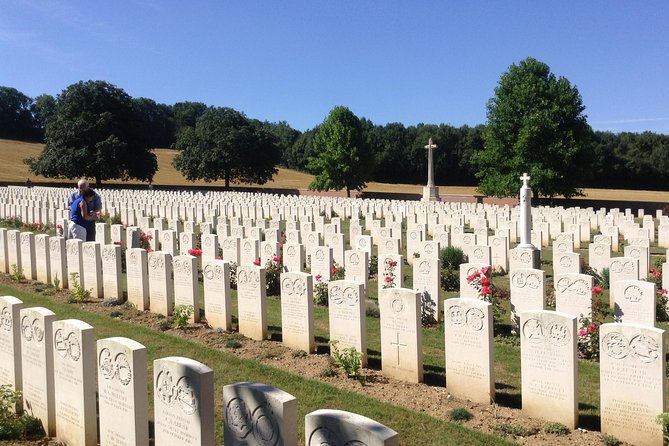
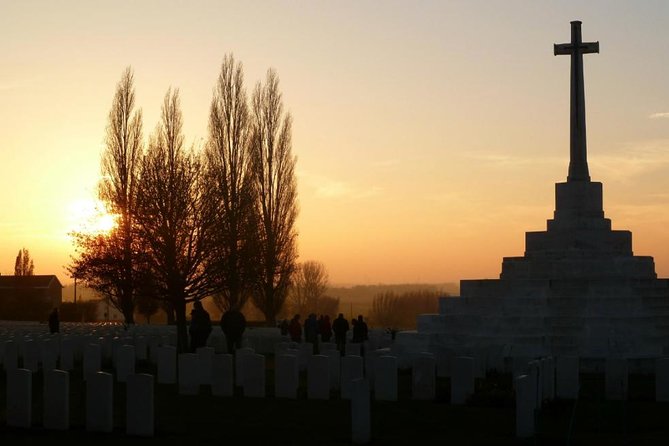
Tyne Cot Cemetery is allotted about 45 minutes. It is the largest Commonwealth War Graves Commission cemetery in the world, with around 12,000 soldiers buried there. Only about 3,000 of those graves have identified names, while the memorial records roughly 35,000 missing men.
Those numbers are difficult to absorb, which is why the guide’s explanations matter. The cemetery’s size turns the war from a series of military movements into a record of individual deaths. Even a short visit can feel heavy, and you should allow yourself time to look quietly rather than try to rush through every name.
Two Australian Victoria Cross recipients are buried at Tyne Cot. If you have an Australian family connection, or a particular unit in mind, tell the guide early in the day. The tour is designed to make room for that kind of personal focus.
Tyne Cot is also a practical reason to choose a private tour. A large group may give you a fixed speech and a fixed departure time. In a private vehicle, you can ask for clarification, discuss a name, or spend a little more time with the parts that matter most to you, within the overall schedule.
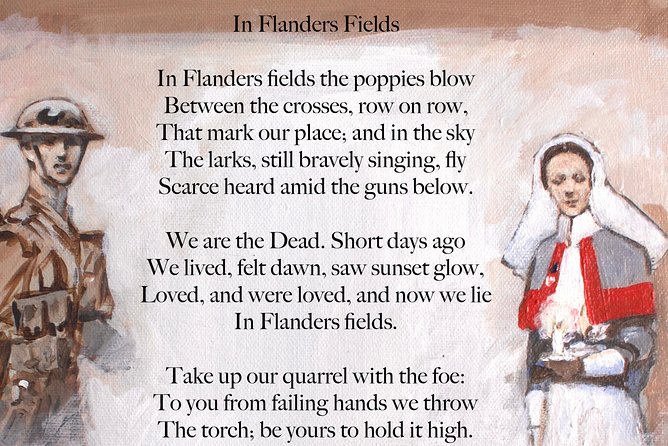
The John McCrae site and In Flanders Fields
The John McCrae site marks the hospital location where Lieutenant Colonel John McCrae composed In Flanders Fields. The stop lasts about 30 minutes.
The poem is familiar to many people, but the location gives it a human setting. You can consider the difference between a famous literary work and the wartime conditions in which it was written. The guide’s job here is to connect the poem to the medical and military world around it without turning the stop into a simple literary anecdote.
This is one of the quieter visits on the route. It is a good place to pause after Tyne Cot and before the Menin Gate, particularly if you prefer a day that mixes military events with personal stories.
The Menin Gate and 55,000 missing names
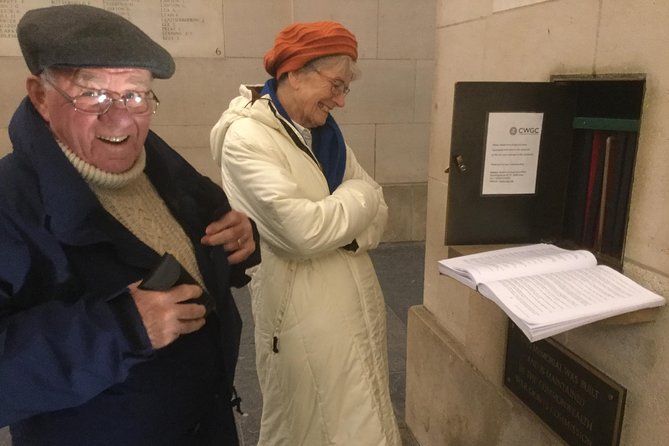
The Menin Gate Memorial is one of Ypres’s best-known sights. The visit lasts about 20 minutes and focuses on how the memorial came about, along with the stories behind the 55,000 names of missing soldiers listed there.
The short time is enough for an introduction, but you may want to return later if you want to read more names or attend the Last Post ceremony. One particularly useful tip from the tour experience is to ask about staying for the Last Post if the timing works. It can add a formal act of remembrance to an already serious day, though the tour details do not promise that the schedule will allow it.
The Menin Gate works best after you have visited the rural sites. By this point, you have seen the ground, cemeteries, bunkers, and craters. The memorial then gathers the missing into one immense list. It is a fitting urban counterpart to Tyne Cot’s rows of graves.
Zonnebeke and the route toward Passchendaele
The drive through Zonnebeke follows the line of the Australian advance. This is not a separate timed visit, but it matters because it gives the day a clear military direction.
Passchendaele is often treated as a single name, but the fighting involved a series of positions, roads, woods, ridges, and villages. Driving through the area with someone who can point out how the advance unfolded helps you connect the stops into a campaign rather than a collection of unrelated sites.
This portion also shows the value of having a guide who can tailor the narrative. If your interest is Australian military history, the route can stay focused on those movements. If your family story involves another force or a particular action, raise it during the drive.
Sanctuary Wood and original trenches
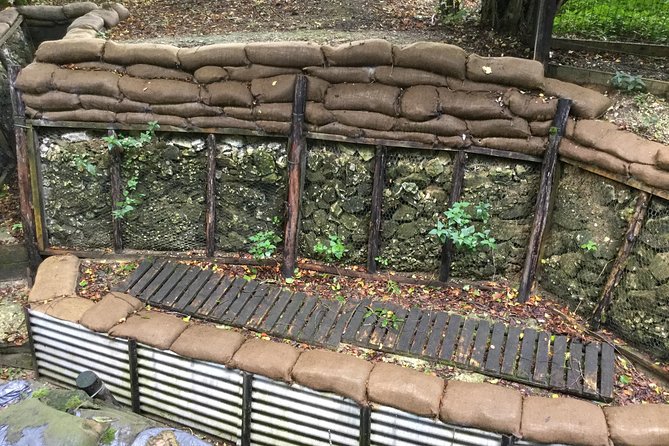
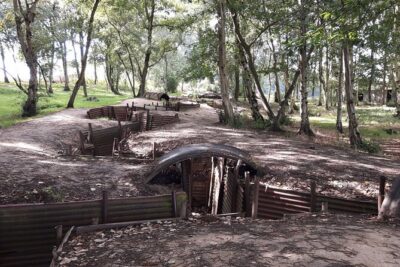
Sanctuary Wood Museum is the final listed stop and lasts about 40 minutes. Its main draw is a set of original First World War trenches.
After a day of memorials and cemeteries, the trenches give you a more immediate sense of the conditions soldiers faced. They are not reconstructed scenery for a theatrical display. The appeal is that you can see surviving wartime works in the place where they were used.
The museum is the only stop specifically marked as having an admission charge included in the tour. Other listed sites have no admission ticket charge. That keeps the cost structure simple, although lunch remains your responsibility.
Ending at Sanctuary Wood is sensible. The visit leaves you with a physical image of the front after the day has covered mines, roads, woods, cemeteries, hospitals, and memorials.
Is $532.32 per person good value?
At $532.32 per person, this is not a budget sightseeing day. The price makes the most sense for a private group that values door-to-door transport and specialist guidance.
You are paying for about nine hours, hotel pickup and drop-off, a private vehicle, bottled water, and a guide who can adjust the day to family history or personal interests. You also avoid arranging transport between widely scattered sites, working out the battlefield geography, and trying to understand what you are seeing from plaques alone.
The value is strongest if two or more people share the experience and care about First World War history. A solo visitor may find the price harder to justify, especially since lunch is not included. The short duration of some stops is another factor to weigh. You cover a large area, but you will not have unlimited time at every cemetery.
The guide is central to the value. Søren receives the strongest praise for clear explanations, strong subject knowledge, passion, thoughtful attention to detail, and a good sense of humor. He is also described as willing to answer questions and shape the day around your interests. Ask for him if possible, though guide availability is not guaranteed by the supplied information.
Who should book this Ypres battlefield tour?
I would choose this tour if you want a serious introduction to the Ypres Salient but do not want to drive yourself between sites. It suits people with family connections to Australian units, Passchendaele, Messines, or the Commonwealth cemeteries.
It is also a good fit for a couple or small private group with different levels of interest. A strong guide can explain the basics without making someone with a deeper interest feel ignored. The tour is offered in English, and most people can participate. Service animals are allowed, and the experience is near public transportation, though pickup is already offered from many hotels and stations.
I would hesitate if you want a slow, reflective day at only one or two cemeteries. The schedule is full, and the route covers many stops. You should also be comfortable with a long day of site visits and driving.
Cancellation is free if you cancel at least 24 hours before the start time. Changes or cancellations inside that window are not accepted for a refund, and all times follow local time in Belgium.
Should you book it?
Book this tour if you want the widest possible Ypres battlefield circuit in one day, with private transport and a guide who can explain why each place matters. The mix of Messines, Hill 60, Polygon Wood, Tyne Cot, the John McCrae site, the Menin Gate, and Sanctuary Wood gives you both military context and remembrance.
Think twice if the price is too high for your group, or if you prefer to linger at each cemetery. For everyone else, the practical pickup options and the chance to tailor the day make this a strong choice from Bruges, Lille, Ghent, or Arras. If possible, request Søren and ask in advance about family names, regiments, or the Last Post ceremony.
FAQ
How long is the Ypres WW1 tour?
The tour lasts approximately nine hours, with pickup scheduled for 9:00 a.m.
Where can pickup be arranged?
Pickup is offered from hotels and B&Bs within a 66-kilometer radius of Ypres. Listed pickup areas include Bruges, Lille, Arras, and Gent Dampoort Station for Ghent.
Is the tour private?
Yes. Only your group participates in the private tour or activity.
What language is the tour offered in?
The tour is offered in English.
Is lunch included?
No. Lunch is not included. Bottled water is included.
Which First World War sites are visited?
The route includes Messines Ridge, Hooge Crater Cemetery, the Australian headquarters site, Polygon Wood, Hill 60, Tyne Cot Cemetery, the John McCrae site, the Menin Gate Memorial, Zonnebeke on the driving route, and Sanctuary Wood Museum.
Is admission to Sanctuary Wood included?
Yes. Admission to Sanctuary Wood Museum is included. The other listed stops have no admission ticket charge.
Can the tour be tailored to family history?
Yes. The tour can be tailored if you have family history connected to the region.
Can I cancel for a full refund?
Yes, if you cancel at least 24 hours before the experience starts. Cancellations or changes made less than 24 hours before the start time are not accepted for a refund.
Just added in Ypres
- From Ypres, The Christmas Truce to Passchendaele Ypres Based WW1 private tour★ 5.0 · 29 reviews
- In Flanders Fields and Passchendaele Grand Tour★ 5.0 · 25 reviews
- e-Scavenger hunt Ypres: Explore the city at your own pace★ 4.5 · 6 reviews
- Discover Tournai while playing! Escape game – The alchemist★ 4.0 · 3 reviews
- Full Day Canadian WW1 Vimy and Somme Battlefield Tour from Ypres★ 5.0 · 6 reviews
- Private 4hr Australian Fromelles Battlefield WW1 Tour★ 5.0 · 2 reviews
- Full Day Private Tour to WWI Passchendaele Base in Ypres★ 5.0 · 1 review
- From Ypres 4hr Christmas Truce and Monster Mines of Messines PRIVATE Tour★ 5.0 · 5 reviews
WWI Battlefield Tours, compared.
From Bruges: Great War Flanders Fields Minibus Tour w/ Lunch
Read our review →
Flanders Fields Remembrance Tour from Brussels
Read our review →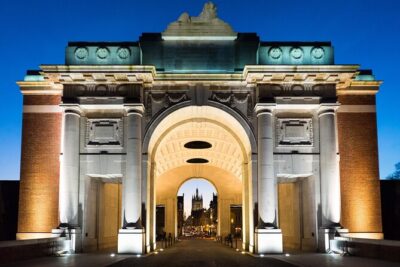
In Flanders Fields and Passchendaele Half Day Morning Tour
Read our review →
From Bruges: Flanders Fields Remembrance Full-Day Trip
Read our review →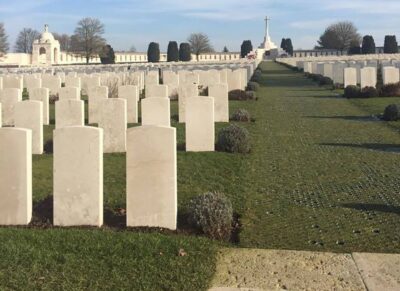
From Brussels: Flanders Fields Remembrance Full-Day Trip
Read our review →
Remembrance Tour: The Battle of the Bulge in the Ardennes
Read our review →
From Brussels: The Battle of the Bulge Remembrance Tour
Read our review →Browse the lists this tour appears in