
Reviewed · HISTORICAL TOURS
Historical Bruges: Jerusalem Chapel and Univ. of Commerce
Bruges has more than canals and chocolate. This 150-minute Spanish walking tour takes you beyond the usual postcard route, linking the city’s trading past with the Jerusalem Chapel, lace-making, old guilds, and medieval mills. I especially like the Jerusalem Chapel, with its replica of the Holy Sepulcher, and the way the walk connects ordinary streets to Bruges’ former commercial power. I also like that the tour ends at the mills, where you get a different view of the city.
The main thing to consider is that this is not a standard introduction to central Bruges. Much of the route explores a less familiar part of town, so it may feel unusual if you expected canals, famous paintings, and the Belfry at every turn. The tour is also in Spanish, and the chapel is only partly wheelchair accessible because some sections have stairs.
In This Review
- Key points at a glance
- Starting at the Markt, where commerce began
- Crane Square and the merchant quarter
- The oldest bar in Bruges and the Golden Fleece
- Entering the Jerusalem Chapel and Adornes domain
- Almshouses and the women of Bruges
- The San Sebastian Archers Guild
- Finishing at the medieval mills
- What the Spanish guide adds
- Is the $29 price good value?
- Who should book this Bruges walk?
- Should you book Historical Bruges?
- FAQ
- Where does the tour meet?
- How long does the tour last?
- What language is the tour in?
- Is admission to the Jerusalem Chapel included?
- Is the tour wheelchair accessible?
- Are drinks at the Adornes estate included?
- What are the child prices?
Key points at a glance
- A replica of the Holy Sepulcher: Enter the Jerusalem Church and see the tomb replica that gives this small chapel its unusual character.
- Bruges as a medieval trading center: Follow the route from the Markt through customs buildings, merchant guild houses, and the family connected with the first Stock Exchange.
- A 1515 drinking stop: See the oldest bar in Bruges, a reminder that city history also happens over a drink.
- Lace-making in its original setting: Learn about the women who made Flemish lace and visit the area around the Lace Museum.
- Mills beside the city: Finish among Bruges’ surviving medieval mills, with a broad view that feels far removed from the crowded center.
- A small Spanish-speaking group: The tour allows a maximum of 25 people, making the guide’s explanations easier to follow than on a large city walk.
Starting at the Markt, where commerce began
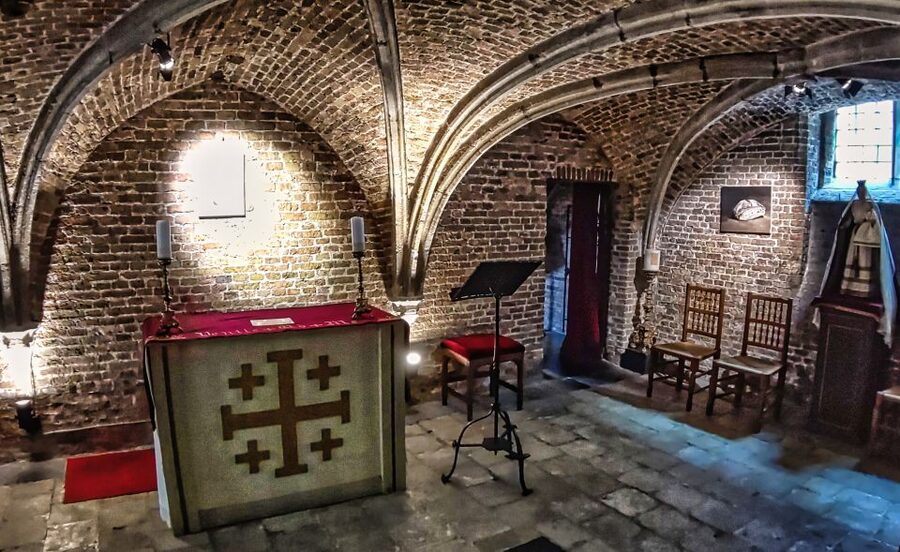
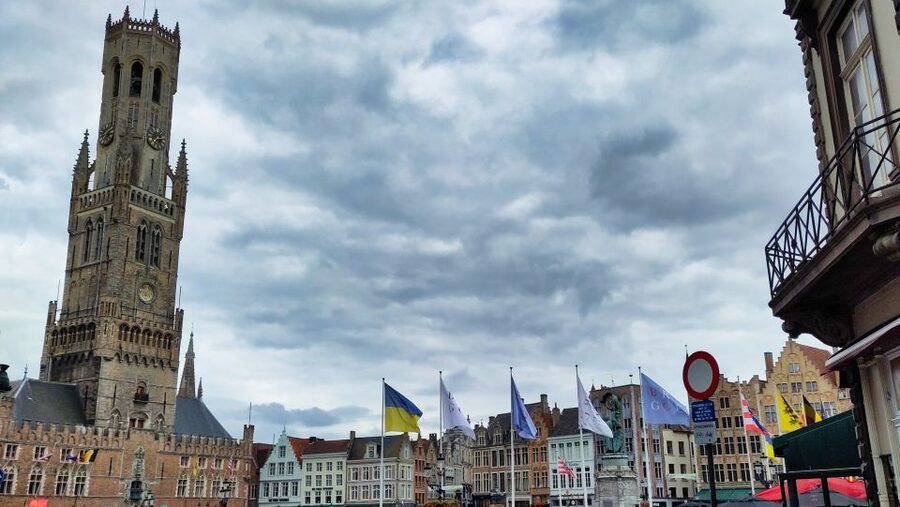
The meeting point is Markt 1, on the square in front of the Historium museum. Look for the guide wearing a Curiositas Mundus badge. This is a sensible place to begin because the Markt was not simply Bruges’ main square for ceremonies and sightseeing. It was tied to the old commercial port, where goods and people moved through the city.
From here, you start walking through the streets that shaped Bruges’ business life. The point is not just to look at old façades. You learn how the city functioned, who traded there, and why Bruges became known as a University of Commerce, a phrase linked to Anselm Adornes.
I like this opening because it gives the rest of the walk a clear purpose. Instead of treating medieval Bruges as a collection of pretty buildings, the guide explains the systems behind them: merchants, customs, shipping, guilds, money, and international contacts.
The Markt can be crowded, so arrive with a few minutes to spare. The tour is on foot and lasts two and a half hours, so comfortable shoes are a practical choice. Bruges is easy to walk, but cobbled streets and wet weather can make a long route feel longer.
More History Tours in Bruges
- Historical Walking Tour: Legends of Bruges
★ 5.0 · 2,541 reviews - THE Storytelling Tour of Bruges | First Day Must | History & Tips
★ 5.0 · 925 reviews - Historical Walking Tour: The Story of Bruges – by Legends
★ 4.7 · 483 reviews
Crane Square and the merchant quarter
The route moves toward Crane Square and the former customs house. These places help explain how Bruges handled trade before modern ports, railways, and warehouses changed European commerce.
You also see the old guild houses linked with Italian, Spanish, English, and other European merchants. That range matters. Bruges was not an isolated Flemish town. Its trade drew people from across Europe, and their presence shaped the city’s architecture and daily life.
The guide also points out the house of the family connected with the origins of the Stock Exchange. This is one of the more unusual parts of the tour because the story is about the beginning of finance rather than one grand monument.
The 13th-century Stock Exchange building is another important stop. You will see the place associated with the beginnings of organized exchange in Bruges. The visit gives you a useful answer to a basic question: how did merchants manage business before modern banks and electronic markets? The tour connects the building to the city’s wider trading network.
Do not expect a long indoor museum visit at every stop. Several points are best understood through the guide’s explanation while you look at the street, façade, or historic site. If you prefer a tour built around major interiors, this route may feel light on formal museum time.
The oldest bar in Bruges and the Golden Fleece
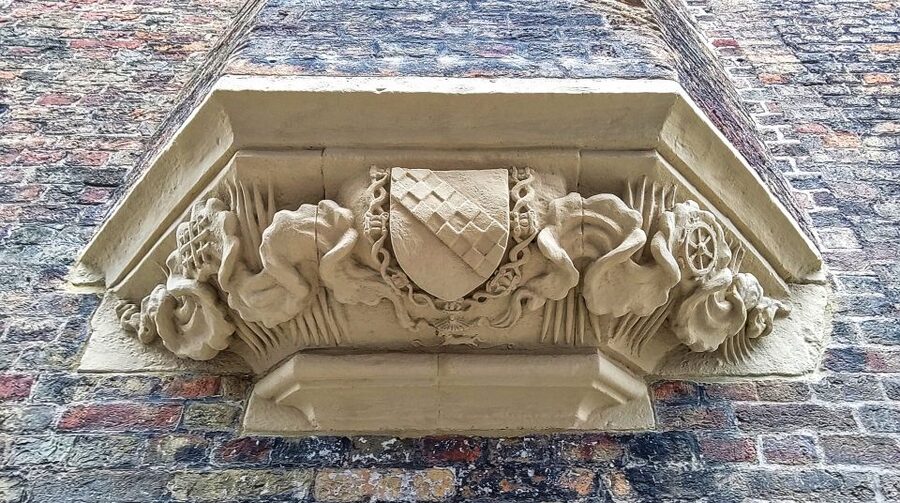
One stop is the oldest bar in Bruges, dating to 1515. The attraction is not only the age of the building. It gives you a glimpse of the social side of medieval and early modern city life.
I like this inclusion because it keeps the walk from becoming a parade of religious buildings and merchant houses. Trade required contracts and warehouses, but it also required places where people met, talked, and spent time.
The route also explains the Brotherhood of Our Lady of the Dry Tree and its connection with the Order of the Golden Fleece. These names may sound obscure at first, but they show how religious devotion, elite social groups, and political prestige overlapped in medieval Bruges.
The tour does not reduce the Golden Fleece to a decorative symbol. Instead, you get a sense of how brotherhoods and ceremonial groups helped organize city life. The guide also introduces the Brotherhood of the White Bear, which arranged jousting events for knights.
These stories are useful if you enjoy the people behind the monuments. You hear about organizations, competitions, and local loyalties that are easy to miss when you simply walk from the Markt to the canals.
Entering the Jerusalem Chapel and Adornes domain
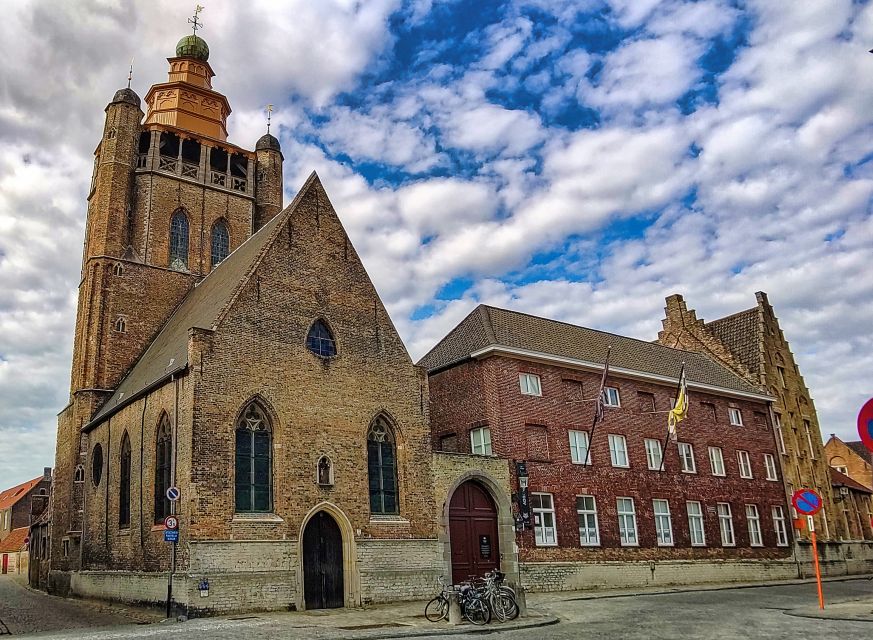
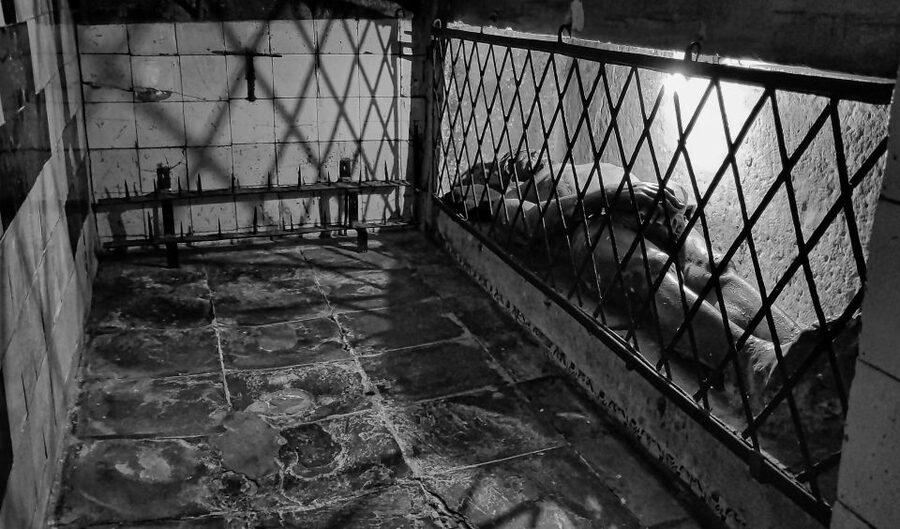
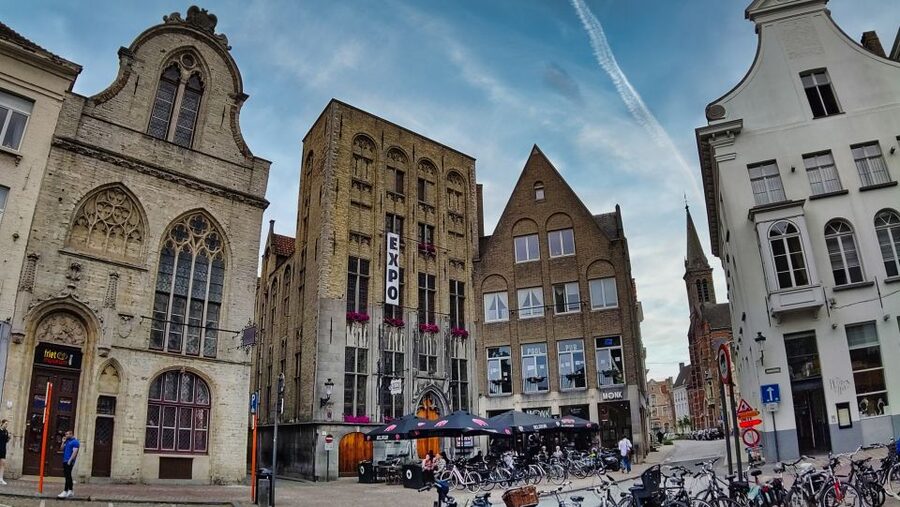
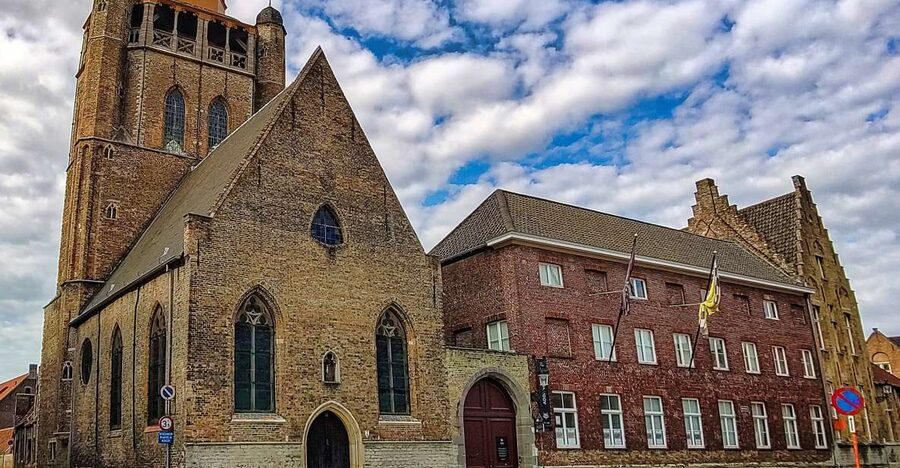
The central stop is the Jerusalem Chapel, with entrance included in the tour. It was inspired by the Church of the Holy Sepulcher in Jerusalem and includes a replica of the tomb itself.
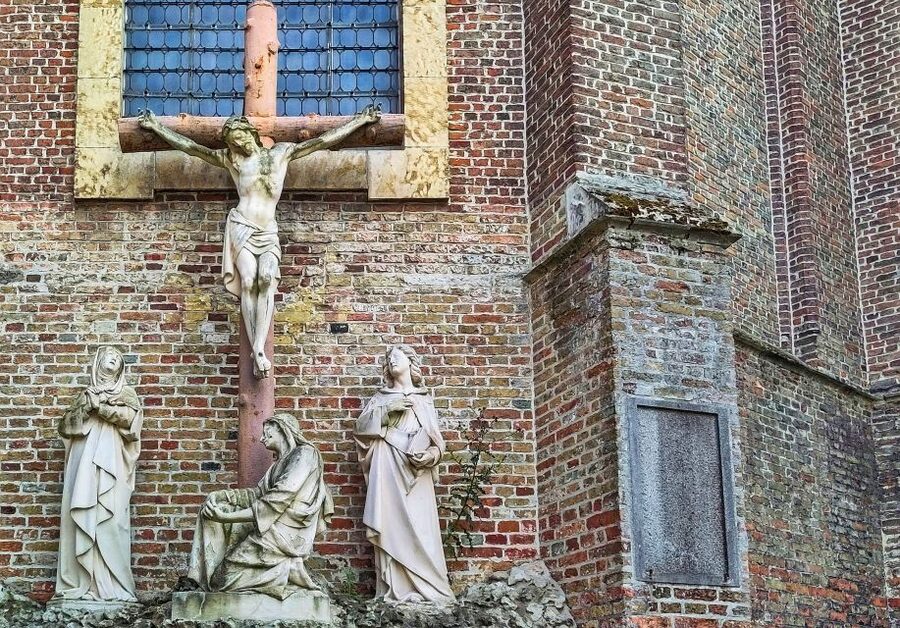
This is not just another medieval church visit. The chapel’s design and the presence of the Holy Sepulcher replica make it a personal and unusual religious monument. It shows how medieval Europeans tried to bring the meaning of faraway holy places into their own cities.
The chapel is part of the Adornes domain, which is also included. The Adornes family is tied to the commercial and civic story of Bruges, so this visit brings several strands of the tour together: faith, wealth, family status, and international connections.
Give this stop the attention it deserves. The chapel is one of the few places on the route where you go inside and see a major feature rather than only hearing about it from the street.
There is one practical limitation. The Jerusalem Chapel is partly wheelchair accessible, but some areas have stairs. If full step-free access is essential for you, check the route before booking. The overall tour is listed as wheelchair accessible, but the chapel itself has this qualification.
A completely different kind of day:
- Bruges: Small Group Boat Cruise and Guided Walking Tour
★ 4.8 · 4,102 reviews - Bruges: Walking Tour, Canal Boat Trip w/Beer Tasting Option
★ 4.4 · 2,759 reviews - Bruges: Choco-Story Chocolate Museum Guided Tour w/Tastings
★ 4.2 · 1,379 reviews - From Bruges: Great War Flanders Fields Minibus Tour w/ Lunch
★ 4.9 · 1,257 reviews
Almshouses and the women of Bruges
The walk continues to the Almshouses, described as a small beguinage for widowed women. This stop adds a quieter social history to the tour.
You learn how these women lived in a community setting, separate from the grand merchant families and knightly brotherhoods discussed earlier. That contrast is valuable. Bruges’ story was not only about rich traders and noble visitors. It also included women whose lives were shaped by widowhood, work, faith, and communal support.
The route then reaches streets associated with bobbin lace-making. Women known as bolilleras sat here creating Flemish cloth, and the tour connects those streets with the present Lace Museum.
Lace can look like a delicate souvenir, but the explanation gives it economic weight. It was skilled labor, and it formed part of Bruges’ identity and trade. You see where this work belonged in the city rather than treating lace as a shop display disconnected from local life.
The information provided for the tour includes the Lace Museum among the highlights, but the included admissions specifically name the Jerusalem Chapel and Adornes domain. I would therefore treat the museum as a stop or nearby point of explanation, not assume that a separate museum ticket is included unless the current booking details say so.
The San Sebastian Archers Guild
Another distinctive stop concerns the San Sebastian Archers Guild. The tour explains its place in Bruges and notes that the Queen of England was a member.
This is a good example of the tour’s wider approach. You are not only seeing churches and trading houses. You are learning about clubs and guilds that brought together sport, ceremony, social rank, and civic identity.
Archery guilds were not simply recreational groups in the modern sense. They could carry real prestige and connect members to local authority and international figures. The stop helps you see how organized communities shaped Bruges outside the formal government.
If you enjoy military history or traditional sports, this part may be a highlight. If your main interest is art and architecture, it will probably feel like a short but worthwhile change of subject.
Finishing at the medieval mills
The tour ends at the medieval mills, described as surviving from the 13th century. These mills were important economic engines for Bruges, not merely scenic structures placed along the edge of town.
Their location also changes the mood of the walk. After narrow streets, merchant houses, guild stories, and chapel interiors, you reach a more open setting with views across the city.
This is one of the strongest reasons to choose the route. You finish somewhere different from where you began, rather than returning to the same central square. The mills provide a clear sense of Bruges beyond its tourist core.
The weather can matter here. A verified tour account from July 2024 described cold, rainy conditions and noted that the guide allowed time to buy hot chocolate. The bad weather did not prevent the group from learning and visiting the sites, but you should bring a rain jacket and dress for exposure, especially because the final mill section is outdoors.
What the Spanish guide adds
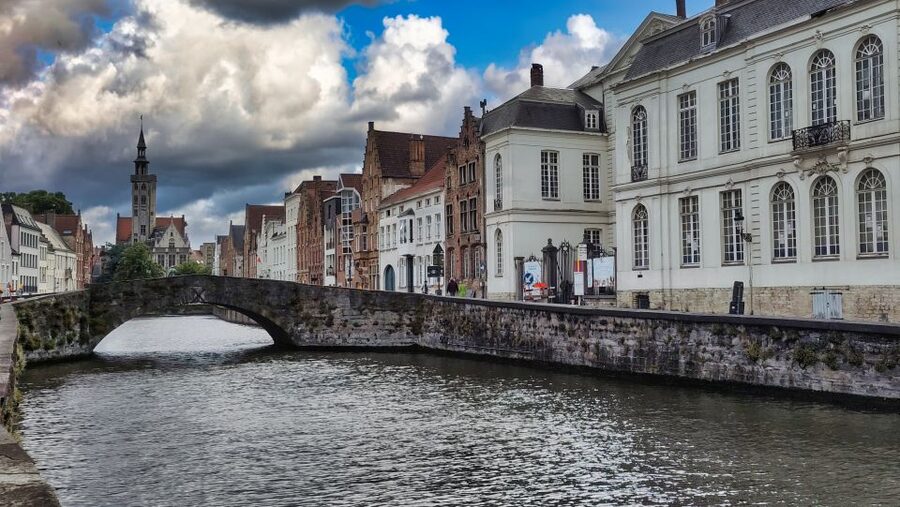
The tour is conducted in Spanish by a live professional guide. That is the deciding factor for the right audience.
If you understand Spanish well, the route offers a steady flow of context that you would be unlikely to gather from signs alone. The subjects are varied, and the guide has to connect them: the old port, foreign merchant houses, the Stock Exchange, the Golden Fleece, lace workers, archers, and mills.
The group limit is 25 people. That is not a private tour, but it is still modest enough for a guide to address the group without the scale of a large bus excursion.
The guide also appears to allow some flexibility. During a cold and rainy visit, the group was given time to buy hot chocolate. That does not mean you should expect an open-ended shopping break, but it suggests a practical approach to weather and the pace of the group.
No guide name is provided, so you cannot request a particular person in advance. What matters more is that you choose the Spanish-language departure and arrive at the marked meeting point.
Is the $29 price good value?
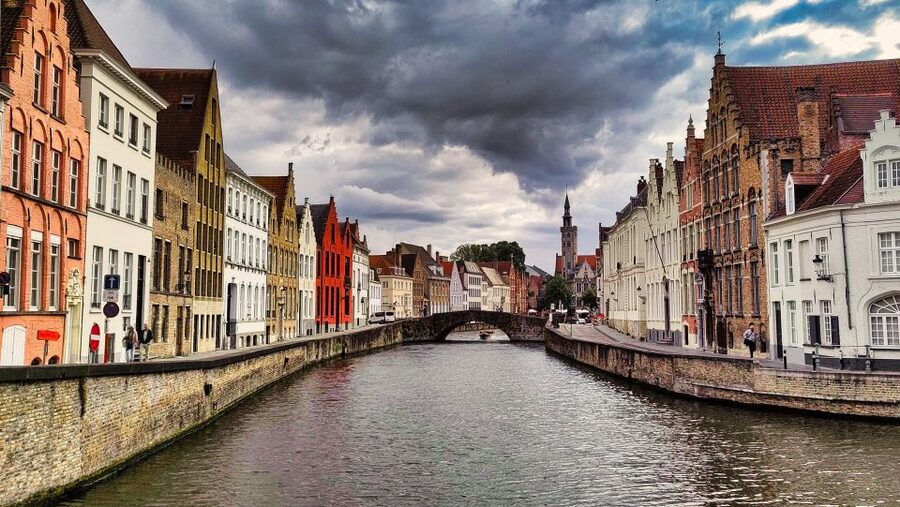
The advertised summary price is $29 per person. The detailed fare information lists adults over age 10 at $27, children ages 7 to 10 at $10, and infants ages 0 to 6 at no charge. Since prices can vary by booking date or sales channel, check the amount shown when you reserve.
At that price, the tour offers good value if you want a guided walk with a paid interior visit. Admission to the Jerusalem Chapel and Adornes domain is included, along with the professional guide.
The value is strongest for people who have already seen the Markt and central canals, or who prefer local history to a basic city overview. You are paying for interpretation and access to a less familiar side of Bruges, not for a long list of major attractions.
Drinks at the Adornes estate are not included. You should also budget for any separate Lace Museum admission if it is offered as an optional stop rather than part of the included entry. The tour price does not cover transport because this is a walking tour.
Who should book this Bruges walk?
I would recommend it to you if you:
- Want a Spanish-language tour with a clear historical theme
- Have already seen Bruges’ most famous central sights
- Prefer merchant history, guilds, religious buildings, and local traditions
- Like walking tours that include less familiar neighborhoods
- Want entry to the Jerusalem Chapel and Adornes domain
- Enjoy finishing with outdoor views at the medieval mills
You may want a different tour if you need a broad first-time introduction to Bruges, with the Belfry, canals, and major art collections as the main focus. This route is more specialized.
It also may not suit you if you want to spend most of the time inside museums, or if a partly stair-accessible chapel creates a problem. And while the tour is listed as wheelchair accessible, the Jerusalem Chapel qualification should be taken seriously.
Should you book Historical Bruges?
Book this tour if you want Bruges explained through commerce, faith, guilds, and working life rather than only through its most photographed streets. The Jerusalem Chapel is the main draw, but the route earns its price through the connections between the chapel, merchant families, lace-makers, archers, and mills.
I would choose it especially for a second day in Bruges, or for a first visit if you prefer a quieter and more unusual route. Bring good walking shoes, prepare for rain, and confirm the current adult price and museum entry details. If you understand Spanish, this is a thoughtful way to see the city’s less familiar side and finish with a view that most central walking routes do not provide.
FAQ
Where does the tour meet?
The meeting point is Markt 1, on the square in front of the Historium museum door. The guide will wear a Curiositas Mundus badge.
How long does the tour last?
The walking tour lasts 150 minutes, or two and a half hours.
What language is the tour in?
The live guided tour is in Spanish. Some content may be shown in its original language.
Is admission to the Jerusalem Chapel included?
Yes. The price includes entrance to the Jerusalem Chapel and the Adornes domain.
Is the tour wheelchair accessible?
The tour is listed as wheelchair accessible, but the Jerusalem Chapel is only partially accessible because part of it has stairs.
Are drinks at the Adornes estate included?
No. Drinks at the Adornes estate are not included in the tour price.
What are the child prices?
Infants from 0 to 6 years old join free. Children from 7 to 10 pay €10, and adults over 10 are listed at €27 in the detailed pricing information. The summary price is shown as $29 per person, so check the current booking price before reserving.
Just added in Bruges
- Unknown Bruges: A Self-Guided Audio Tour to the Heart of the Medieval Metropole★ 5.0 · 1 review
- 2-Hour Private Walking Tour of Bruges★ 5.0 · 13 reviews
- Tour of Historical Bruges knowing The Jerusalem Chapel★ 5.0 · 2 reviews
- Ticket Expo Body Worlds in Bruges, Belgium★ 4.5 · 11 reviews
- 6 Hour Bruges Shore Excursion from Zeebrugge Cruise Port★ 4.5 · 23 reviews
- The Waffles ‘n Coffee Breakfast in Bruges Centre★ 4.5 · 9 reviews
- Explore the Instaworthy Spots of Bruges with a Local★ 5.0 · 3 reviews
- Surprise Walk of Bruges with a Local★ 5.0 · 1 review
Historical Tours, compared.
Historical Walking Tour with Chocolate & Waffle Tasting
Read our review →
THE Storytelling Tour of Bruges | First Day Must | History & Tips
Read our review →
Historical Tour with Chocolate & Waffle Tasting
Read our review →
Historical Walking Tour: The Story of Bruges – by Legends
Read our review →
Browse the lists this tour appears in