
Reviewed · WWI BATTLEFIELD TOURS
Dunkirk Operation Dynamo Battlefield tour from Ypres,Arras, Bruges or Lille
History feels different beside the sea. This private Dunkirk tour follows the desperate 1940 evacuation through beaches, fortifications, memorial sites, and command posts, giving you a clear sense of how Operation Dynamo unfolded. I like the hotel pickup and drop-off, especially for a full day that crosses borders and scattered wartime sites. I also like that lunch and entrance fees are included, so the $589.78 price covers more than a ride and a guide.
The main drawback is cost. This is a private tour with a minimum booking of two people, so it makes the most sense for couples, families, or a small group willing to share the expense. The seven-hour schedule also moves at a steady pace, and anyone hoping for a long, quiet stretch on the beach may find the sightseeing more structured than leisurely.
In This Review
- Key points to know before you book
- Why Operation Dynamo is best understood on site
- A private day from Bruges, Lille, Ypres, or Arras
- Plage de Zuydcoote and the Crested Eagle wreck
- Fort des Dunes, the day’s main historical stop
- Lunch with the guide
- Dunkirk War Museum and the former command post
- The beaches where 338,000 men left for England
- Is the $589.78 price good value?
- Who will get the most from this tour?
- Should you book the Dunkirk Operation Dynamo tour?
- FAQ
- Where does the Dunkirk Operation Dynamo tour start?
- How long does the tour last?
- Is this a private tour?
- What is the minimum number of people required?
- Is lunch included?
- Are admission fees included?
- Can cruise ship passengers book this tour?
- Can children take the tour?
- What is the cancellation policy?
Key points to know before you book
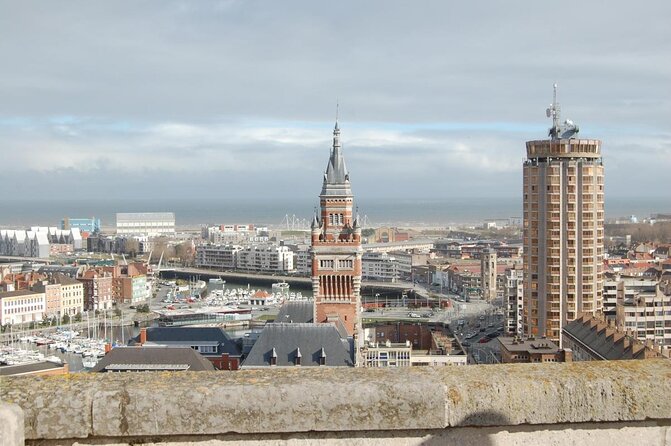
- Claude Verhaeghe leads the tour: Past guests praise his punctuality, driving, English, personal interest in the world wars, and care in choosing a good lunch stop.
- Fort des Dunes gets two hours: This is the longest stop and includes an exhibition connected with Operation Dynamo.
- The Crested Eagle wreck appears at low tide: At Plage de Zuydcoote, you may see the remains of the ship used during the troop evacuation, but timing depends on the tide.
- The Dunkirk War Museum occupies a former command post: Its exhibits put the evacuation into a military setting rather than treating it as a simple beach visit.
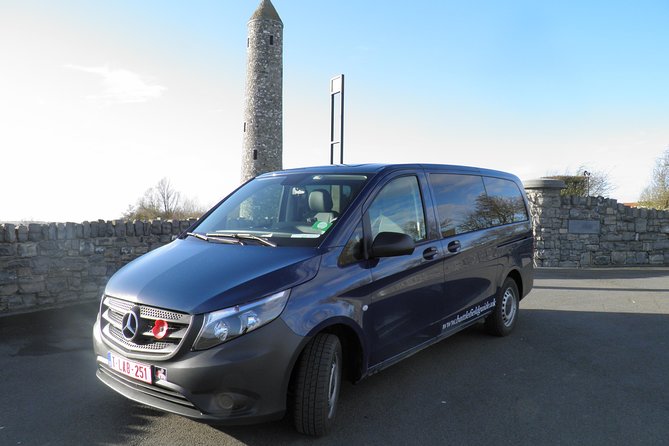
- The tour is genuinely private: Only your own group participates, with pickup available from Bruges, Lille, Ypres, Arras, and ports.
- Lunch, water, admission, and transport are included: Alcohol and souvenir photographs cost extra, and cancellation is free up to 24 hours before departure.
Why Operation Dynamo is best understood on site
Operation Dynamo was the 1940 evacuation of Allied troops from Dunkirk. With German forces closing in, soldiers were pulled back from the beaches and moved across the English Channel toward Britain. The evacuation became one of the best-known episodes of the Second World War, not because it was a clean victory, but because a military disaster was turned into a large-scale rescue.
The tour helps you connect the separate pieces. You see the beaches where troops waited, the fortifications that shaped the fighting, the wreck left behind by the evacuation, and the command center where decisions were made. That sequence matters. A museum alone can give you dates and maps, but the physical distance between the sites helps you understand the pressure of the operation.
I also appreciate the tour’s focus on both military and human details. The day includes beaches, museums, memorials, and cemeteries. This is not simply a drive around former battlefields. It is a guided look at the people caught in the retreat, the soldiers who waited for rescue, and the officers who tried to organize it.
More battlefield tours:
- From Bruges: Great War Flanders Fields Minibus Tour w/ Lunch
★ 4.9 · 1,257 reviews - Flanders Fields Remembrance Tour from Bruges
★ 4.5 · 207 reviews - From Bruges: Flanders Fields Remembrance Full-Day Trip
★ 4.8 · 65 reviews
A private day from Bruges, Lille, Ypres, or Arras
The advertised start time is 9:00 in the morning, with hotel pickup and drop-off available. Port pickup and drop-off are also offered, but cruise passengers need to provide the ship name, docking time, disembarkation time, and re-boarding time when booking. That information is essential for planning a day tour around a ship’s schedule.
The pickup options make this practical if you are staying in Bruges, Lille, Ypres, or Arras. You do not need to arrange a separate train, rental car, or local taxi for each part of the route. Dunkirk sites are spread out, and the private vehicle keeps the day from becoming a puzzle of connections.
This is a private activity, so only your group participates. That gives you more room to ask questions and adjust the conversation to your interests than you would get on a large coach trip. It also means you are paying for a dedicated vehicle and guide rather than a seat on a cheaper shared excursion.
The seven-hour length is enough for the major stops, lunch, and transport, but it is not an exhaustive survey of every Dunkirk site. You should think of it as a focused introduction to Operation Dynamo. If you want to examine every display or cemetery at length, you may need more time than this format allows.
Plage de Zuydcoote and the Crested Eagle wreck
The first listed stop is Plage de Zuydcoote, a beach used to bring troops back to England. At low tide, you may see the wreck of the Crested Eagle, a detail that gives the shoreline a direct link to the evacuation.
The stop lasts about 20 minutes and admission is free. That is enough to look across the beach, take in the setting, and hear the guide explain what happened there. It is not long enough for a broad walk along the coast, so you should arrive ready to focus on the wartime connection rather than treat this as a beach outing.
The tide is an important practical point. The wreck can be seen at low tide, so its visibility depends on the conditions on the day of your visit. I would ask about the timing when booking, especially if seeing the ship is one of your main reasons for taking the tour.
There is something useful about starting here. Before entering a museum, you are placed in the open setting where troops actually waited for transport. The sea, sand, and wreck make the evacuation easier to picture. It also reminds you that the operation involved uncertainty and exposure, not just orderly movement from one transport to another.
Fort des Dunes, the day’s main historical stop
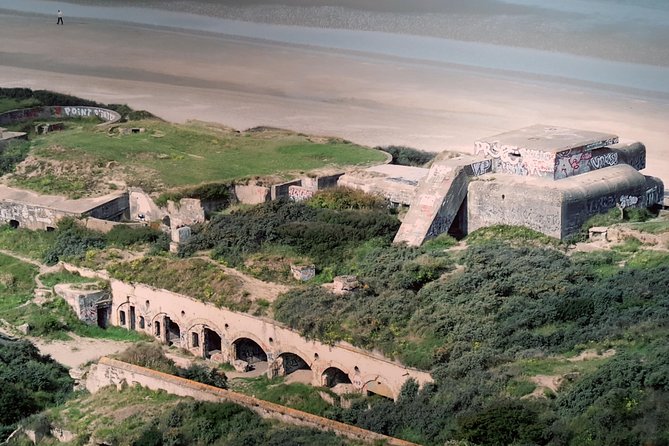
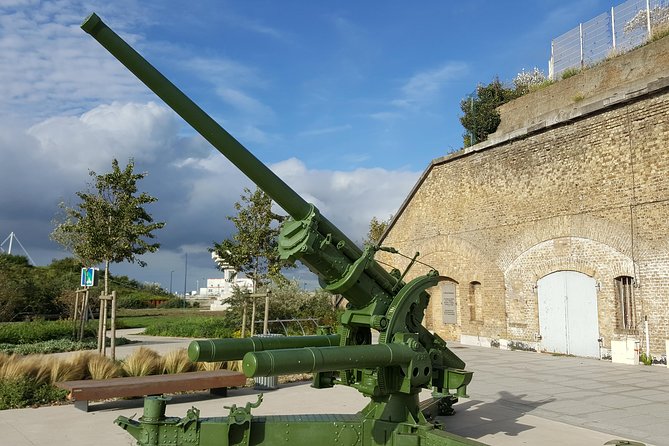
The tour gives Fort des Dunes around two hours, making it the longest scheduled visit. Admission is included, and the fort contains an exhibition about Operation Dynamo.
This is likely the strongest stop for visitors who want more than a quick look at the coastline. The fort provides a physical military setting, while the exhibition supplies the maps, objects, and explanations needed to follow the campaign. The combination helps you connect the defensive structure with the events taking place around it.
Two hours is a sensible amount of time here. You have room to move through the fort and study the exhibition without reducing the visit to a rushed photo stop. At the same time, the guide controls the pace of the overall day, so you should not assume you can spend the entire morning examining every display in great detail.
The fort also gives the tour a needed change of rhythm. The first stop is open and coastal. Here, you move into a wartime structure and a more organized presentation of the battle. I like that contrast because it prevents the day from becoming a series of similar beaches and monuments.
If you have a strong interest in military architecture, ask Claude to explain how the fort fit into the wider defense of the area. The supplied information confirms his interest in both world wars, and his guiding style is praised for making the subject more personal and easier to follow. The private format should make that sort of question straightforward.
More things to do in Bruges:
- Bruges: Small Group Boat Cruise and Guided Walking Tour
★ 4.8 · 4,102 reviews - Bruges: Walking Tour, Canal Boat Trip w/Beer Tasting Option
★ 4.4 · 2,759 reviews - Historical Walking Tour: Legends of Bruges
★ 5.0 · 2,541 reviews - Bruges: Choco-Story Chocolate Museum Guided Tour w/Tastings
★ 4.2 · 1,379 reviews
Lunch with the guide
Lunch is included, and the tour stops at a local restaurant. Alcoholic drinks are not included, but the meal itself is part of the price.
This is more useful than it may sound. A seven-hour battlefield tour needs a proper break, and including lunch removes the need to search for a restaurant during a tight schedule. It also keeps the group together rather than sending you off with a meeting time and a map.
Claude receives repeated praise for selecting a pleasant lunch spot and for the quality of the food. That detail matters because a poor meal can drag down a long sightseeing day, while a well-chosen local restaurant gives you a chance to rest and talk through what you have seen.
Do not expect lunch to turn the excursion into a food tour. The main subject remains Dunkirk and Operation Dynamo. Still, a meal in a local restaurant adds a human pause to a serious day and gives you a chance to ask the guide about Belgium, France, and the wartime sites you are visiting.
Dunkirk War Museum and the former command post
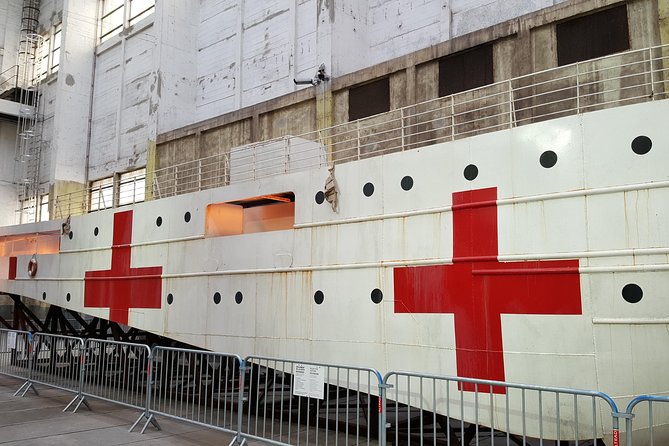
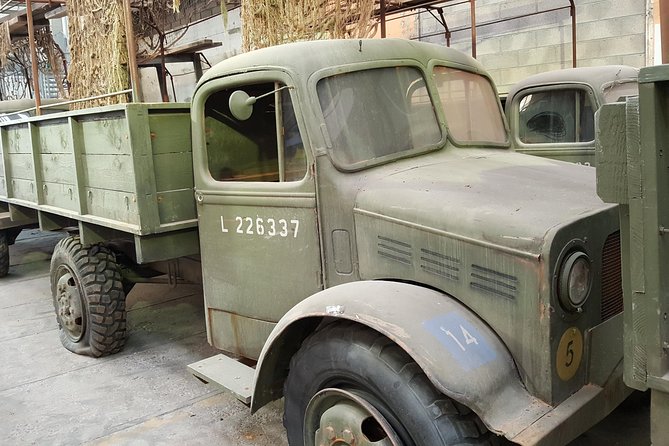
The Dunkirk War Museum, also called Museum Dunkerque 1940 Operation Dynamo, occupies a command post used during the evacuation. The visit lasts about one hour, with admission included.
The building’s former role is important. You are not only looking at objects in a modern gallery. You are entering a place tied to the organization of the evacuation itself. That setting gives the museum a stronger connection to the events than a collection displayed in an unrelated building would have.
The museum is a good place to pull the day’s details together. At the beach, you see the route toward England. At Fort des Dunes, you consider defense and battle. At the command post, you can focus on planning, communication, and the decisions behind the evacuation.
The one-hour visit should work well for most people. It offers time for the displays and the guide’s explanation without taking over the whole excursion. If you read every label slowly, you may want more time, but the tour is designed to give you a clear picture rather than an academic study of every artifact.
Claude’s role is especially useful here. The information provided about his tours describes him as punctual, an excellent driver, and strongly interested in the world wars. Past guests also value his good English and his ability to make the subject feel more immediate. That combination is important in a museum where maps and military terms can quickly become confusing.
The beaches where 338,000 men left for England
The tour includes another beach stop lasting about 30 minutes. This is the shoreline connected with the evacuation of approximately 338,000 Allied troops.
The beach can look peaceful now. That contrast is part of the point. A quiet modern shore does not announce the fear, waiting, confusion, and urgency of 1940. You need the guide’s explanation to connect the ordinary view in front of you with the scale of the evacuation.
Thirty minutes gives you time to see the coast and consider the setting, but not to wander far. Wear comfortable shoes and be prepared for outdoor conditions. The tour includes several indoor and outdoor locations, so your day will not be spent entirely in climate-controlled museums.
I would treat this stop as a moment for reflection rather than another major exhibit. The fort and museum carry much of the factual detail. The beach gives that information space and scale. You can look toward the water and understand the basic problem facing the Allied troops: the route to safety was visible, but reaching it was far from simple.
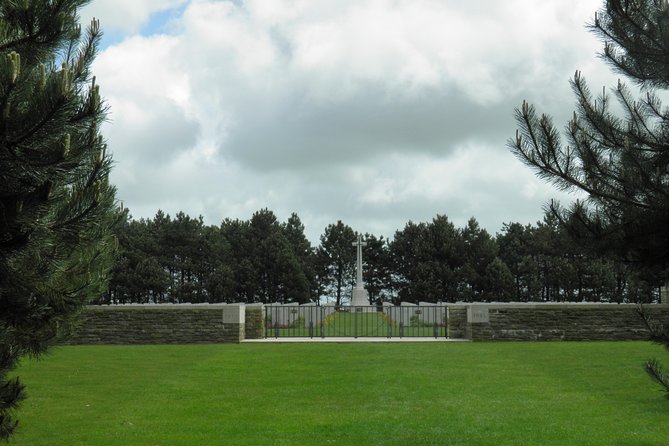
The wider tour may also include cemeteries and memorial sites, according to the experience description and past comments about the day. These places require a respectful tone. This is not a light sightseeing loop, and the best experience comes when you allow time for the human cost as well as the military story.
Is the $589.78 price good value?
At $589.78 per person, this is an expensive day out, especially for two people. The price becomes easier to justify when you count what is included: private transport, hotel or port pickup and drop-off, a driver-guide, bottled water, lunch, local taxes, and entrance fees.
You are also paying for convenience. The tour links sites that are not presented as one compact attraction. A private vehicle means you can start from Bruges, Lille, Ypres, Arras, or a port and visit the locations without arranging the route yourself.
For a couple or small family with a serious interest in the Second World War, the private format may offer good value. You get direct access to the guide and can shape your questions around your own interests. Claude’s personal interest in both world wars is a useful part of that value.
For a solo visitor, the economics are less appealing because the booking requires at least two people. A larger group can spread the cost, making the private arrangement more reasonable. Group discounts are available, although the exact discount is not specified, so ask for the current price before you commit.
The tour is booked an average of 190 days ahead, which suggests that planning early is sensible. That is especially true if you need port timing or a pickup from a particular hotel. The free cancellation policy gives you some flexibility: you can cancel up to 24 hours before the start time for a full refund. Changes or cancellations inside that window are not accepted for a refund.
Who will get the most from this tour?
I would choose this tour if you want a clear, guided account of Dunkirk rather than a self-guided beach visit. It suits people who enjoy military history, families introducing older children to the Second World War, and anyone who wants transport handled from start to finish.
It also suits you if you value personal guiding. The comments about Claude repeatedly point to punctuality, friendly service, strong English, solid driving, and a genuine interest in the subject. Those qualities can make a major difference when the day includes several sites and a serious topic.
Children can participate, but they must be accompanied by an adult. Most people can take part, according to the available tour information. No special accessibility details are provided, so you should ask the provider about specific mobility needs before booking.
I would think twice if you mainly want free time by the sea, a relaxed restaurant day, or a broad tour of northern France and Belgium. The experience is centered on Dunkirk, the evacuation, and wartime sites. Its strength is focus, not variety.
Should you book the Dunkirk Operation Dynamo tour?
Book it if you want the practical ease of private transport and the emotional weight of seeing the beaches, Fort des Dunes, and the former command post in one day. The included lunch and admissions help soften the high price, while Claude’s personal attention appears to be a major part of the experience.
Before paying, confirm the pickup point, port schedule if relevant, and the tide timing for the Crested Eagle wreck. If you are a group of two or more and Operation Dynamo matters to you, this is a strong, well-planned way to visit Dunkirk. If you are alone or watching every dollar, compare the cost carefully, since the private format is the reason this tour feels convenient and personal.
FAQ
Where does the Dunkirk Operation Dynamo tour start?
The tour starts at 9:00 am. Pickup is available from hotels in Bruges, Lille, Ypres, or Arras, as well as from ports.
How long does the tour last?
The tour lasts approximately seven hours.
Is this a private tour?
Yes. Only your own group participates in the activity.
What is the minimum number of people required?
A minimum of two people per booking is required.
Is lunch included?
Yes. Lunch at a local restaurant is included. Alcoholic drinks are not included.
Are admission fees included?
Yes. Admission to Fort des Dunes and the Dunkirk War Museum is included. The beach stops do not require an admission ticket.
Can cruise ship passengers book this tour?
Yes. Cruise passengers can book, but they must provide the ship name, docking time, disembarkation time, and re-boarding time when booking.
Can children take the tour?
Yes. Children can participate, but they must be accompanied by an adult.
What is the cancellation policy?
You can cancel up to 24 hours before the experience start time for a full refund. Cancellations or changes made less than 24 hours before the start time are not accepted for a refund.
Just added in Bruges
- Unknown Bruges: A Self-Guided Audio Tour to the Heart of the Medieval Metropole★ 5.0 · 1 review
- Tour of Historical Bruges knowing The Jerusalem Chapel★ 5.0 · 2 reviews
- Ticket Expo Body Worlds in Bruges, Belgium★ 4.5 · 11 reviews
- 2-Hour Private Walking Tour of Bruges★ 5.0 · 13 reviews
- 6 Hour Bruges Shore Excursion from Zeebrugge Cruise Port★ 4.5 · 23 reviews
- The Waffles ‘n Coffee Breakfast in Bruges Centre★ 4.5 · 9 reviews
- Explore the Instaworthy Spots of Bruges with a Local★ 5.0 · 3 reviews
- Surprise Walk of Bruges with a Local★ 5.0 · 1 review
WWI Battlefield Tours, compared.
From Bruges: Great War Flanders Fields Minibus Tour w/ Lunch
Read our review →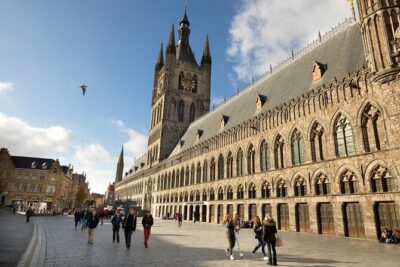
Flanders Fields Remembrance Tour from Brussels
Read our review →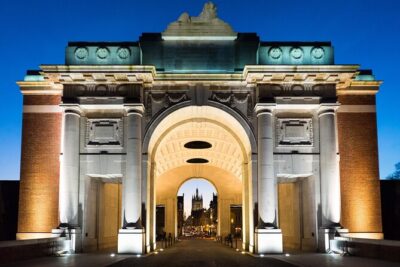
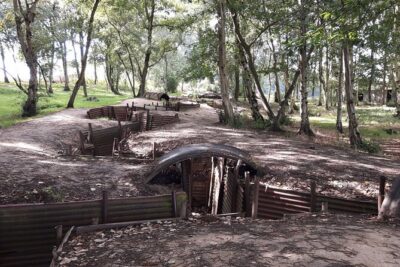
In Flanders Fields and Passchendaele Half Day Morning Tour
Read our review →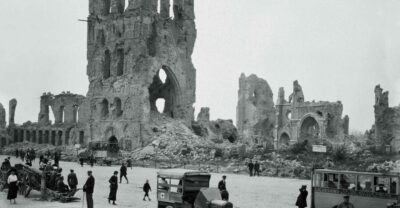
From Bruges: Flanders Fields Remembrance Full-Day Trip
Read our review →
From Brussels: Flanders Fields Remembrance Full-Day Trip
Read our review →
Remembrance Tour: The Battle of the Bulge in the Ardennes
Read our review →
From Brussels: The Battle of the Bulge Remembrance Tour
Read our review →Browse the lists this tour appears in